Culture & Customs · Palestine
Palestine: Embroidery, Coffee and Kinship
A society built around family and hospitality, where Muslim and Christian communities share an Arab heritage and where embroidery, dance, storytelling and soap-making are recognised as living traditions
By Worldlore Editorial · 30 September 2026
A guest arrives at a Palestinian family home and is met at the door with "ahlan wa sahlan", a greeting that roughly means "you are among family here". Before long, glasses of tea and juice appear, followed by a plate of sweets or fruit. When something more is offered, the guest politely declines; the host insists, and on the second or third offer the guest gives in. Conversation turns to family: who is related to whom, and which town or village each side comes from. Only when small cups of coffee are finally poured does everyone understand that the visit is drawing to a close. This article describes such customs in order to explain Palestinian culture, not to encourage travel to the territories, where conditions are shaped by the conflict outlined briefly below.
Faith, identity and values
Most Palestinians are Sunni Muslims; Muslims make up around 97 per cent of Palestinians in the West Bank and Gaza, according to one widely cited estimate. Christians form a long-established minority, numbering tens of thousands and belonging to the Greek Orthodox, Roman Catholic, Greek Catholic, Syrian Orthodox, Lutheran and Armenian Orthodox churches, among others. Religion plays a large part in daily life: the great majority of Muslims describe it as very important to them, and matters such as marriage, divorce and inheritance are governed by religious law, Islamic for Muslims and ecclesiastical for Christians.
The territories hold places of deep significance to several faiths. Six properties are inscribed on UNESCO's World Heritage List for the State of Palestine, including the Church of the Nativity and the pilgrimage route in Bethlehem, the Old Town of Hebron/Al-Khalil, ancient Jericho/Tell es-Sultan, the terraced cultural landscape of Battir and the Saint Hilarion Monastery. Jerusalem, whose holy sites include the Al-Aqsa Mosque and the Dome of the Rock, is central to Jewish, Christian and Muslim tradition, and its status is one of the most disputed questions in the conflict.
Family is the foundation of Palestinian society. Households are often large and extended families, organised into clans known as hamulas, provide security, financial support and social stability; families are traditionally patrilineal, and newly married couples often live with or near the husband's parents. Honour, sharaf, is a closely held value: a person's conduct reflects on the whole family, and education, modesty and attachment to the land are all regarded as sources of honour. Education is highly prized for both women and men. The Cultural Atlas describes a deep attachment to land and home town or village, symbolised above all by the olive tree, valued for its longevity and endurance, while the chequered keffiyeh scarf has become a widely recognised emblem of Palestinian identity.
These customs are practised against the background of the Israeli-Palestinian conflict. The West Bank, including East Jerusalem, and the Gaza Strip were captured by Israel in 1967 and are regarded by the United Nations as occupied territory. Since October 2023, war in Gaza has caused widespread destruction and displacement; a ceasefire took effect in October 2025, and UN humanitarian reporting has continued to describe severe damage in Gaza and demolitions and displacement in the West Bank. Much of the social life described here therefore takes place under considerable constraint.
Greetings and meeting people
The usual greeting is a handshake with the right hand and a smile, in both social and professional settings. Close friends, particularly women, often hug and kiss on the cheek. Because some Muslims avoid physical contact with the opposite sex, the courteous approach is a spoken greeting and a nod, leaving the other person to offer a hand if they wish; placing the right hand over the heart while greeting is a polite alternative. The everyday word of greeting is "marhaba", and the Islamic greeting "as-salamu alaykum", "peace be upon you", is answered with "wa alaykum as-salam". It is good manners to acknowledge everyone present and to stand when an adult enters the room.
Forms of address show respect and kinship. Formal titles such as sayyid (Mr), sayyidah (Mrs) and anisah (Miss) are used until a person invites something more familiar. Parents are often known by the name of their eldest son, with "abu" (father of) or "umm" (mother of), so that a man may be widely called Abu Ahmad. Older people are addressed as ammo or amto, the words for a paternal uncle or aunt, or khalo and khalto for the maternal side, whether or not they are related. Taking an interest in someone's family and where it comes from is a natural way to open a conversation. Criticism is best raised privately and gently, so that no one loses face in front of others, and it is unwise to assume anything about a person's political views.
Hospitality and being a guest
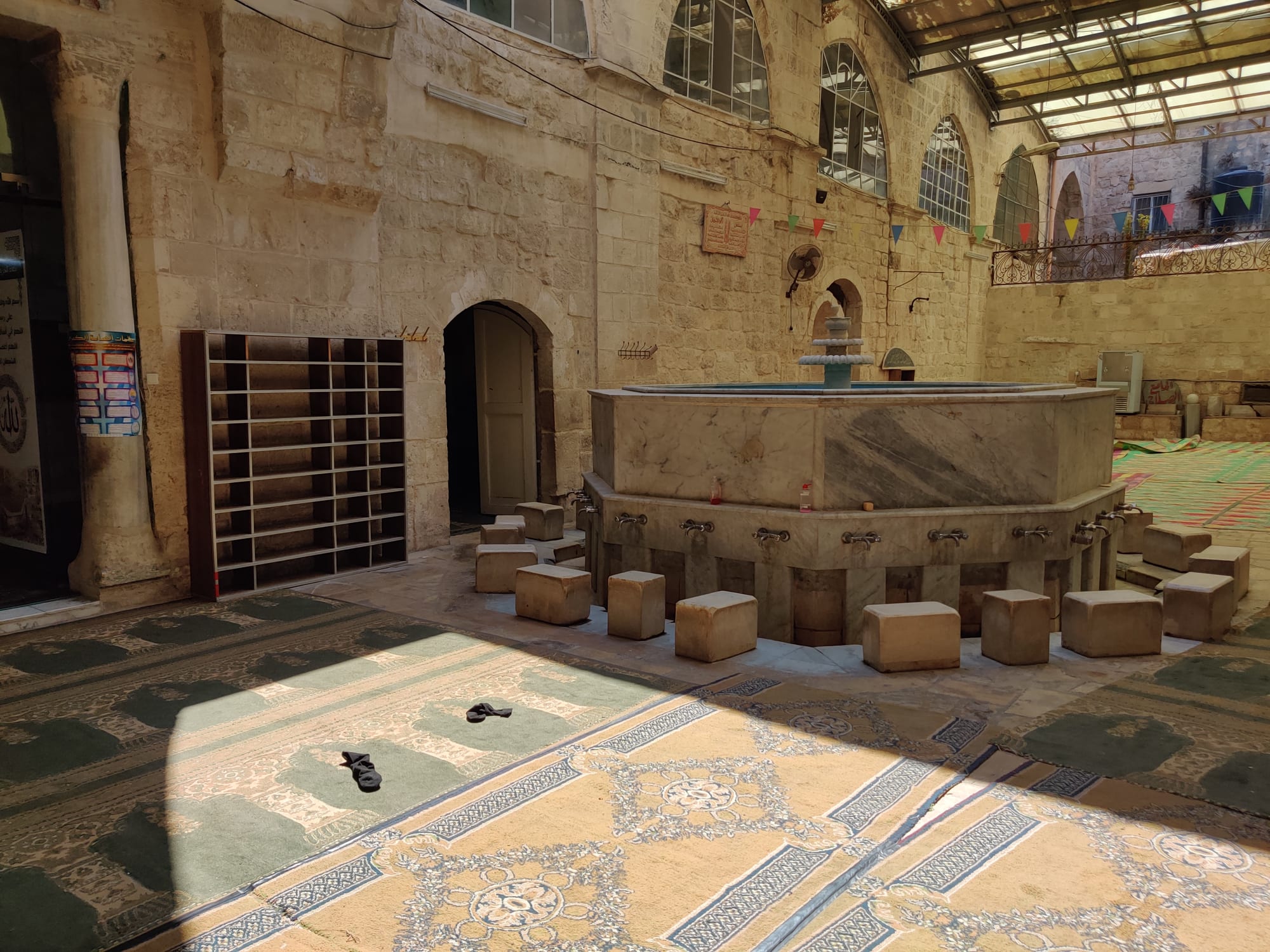
Visiting is at the heart of Palestinian social life, and it is best to arrange a visit in advance where possible. Hosts are generous and attentive, and the word "tafaddal", meaning "come in" or "please, help yourself", is heard constantly. Guests are expected not to wander into other rooms uninvited, and it is considered more polite to wait for an invitation than to ask directly for the bathroom. Tea, juice and snacks come first, and coffee usually marks the end of a visit; once it has been drunk, it is time to take leave.
A gift is appreciated when visiting a home or attending a special occasion: flowers, sweets or something for the children are all suitable, presented with both hands or with the right hand. Alcohol and anything containing pork should be avoided. A gift that is too cheap can seem thoughtless, while one that is too lavish may leave the host feeling obliged to reciprocate. Offers of food or drink are traditionally declined once out of modesty and accepted when the host insists.
At the table, it is polite to wait until everyone is ready before eating; the father of the household traditionally begins, although guests are given priority. Food is eaten and passed with the right hand. Accepting a second helping is a compliment to the cook, and leaving a little food on the plate signals that the guest has had enough, since an empty plate invites more. Tea or coffee usually follows the meal. Modest dress is expected; women in particular are advised to cover their legs, arms and shoulders, and going barefoot in public is frowned upon.
Festivals and life's big moments
For the Muslim majority, the year is shaped by Ramadan, which follows the lunar calendar and so moves about 11 days earlier each year, when believers fast from dawn to sunset, abstaining from food, drink and smoking, break the fast each evening with iftar and eat a pre-dawn meal, suhur, before the next day's fast begins. The month ends with Eid al-Fitr, and Eid al-Adha, the festival of sacrifice, follows some weeks later.
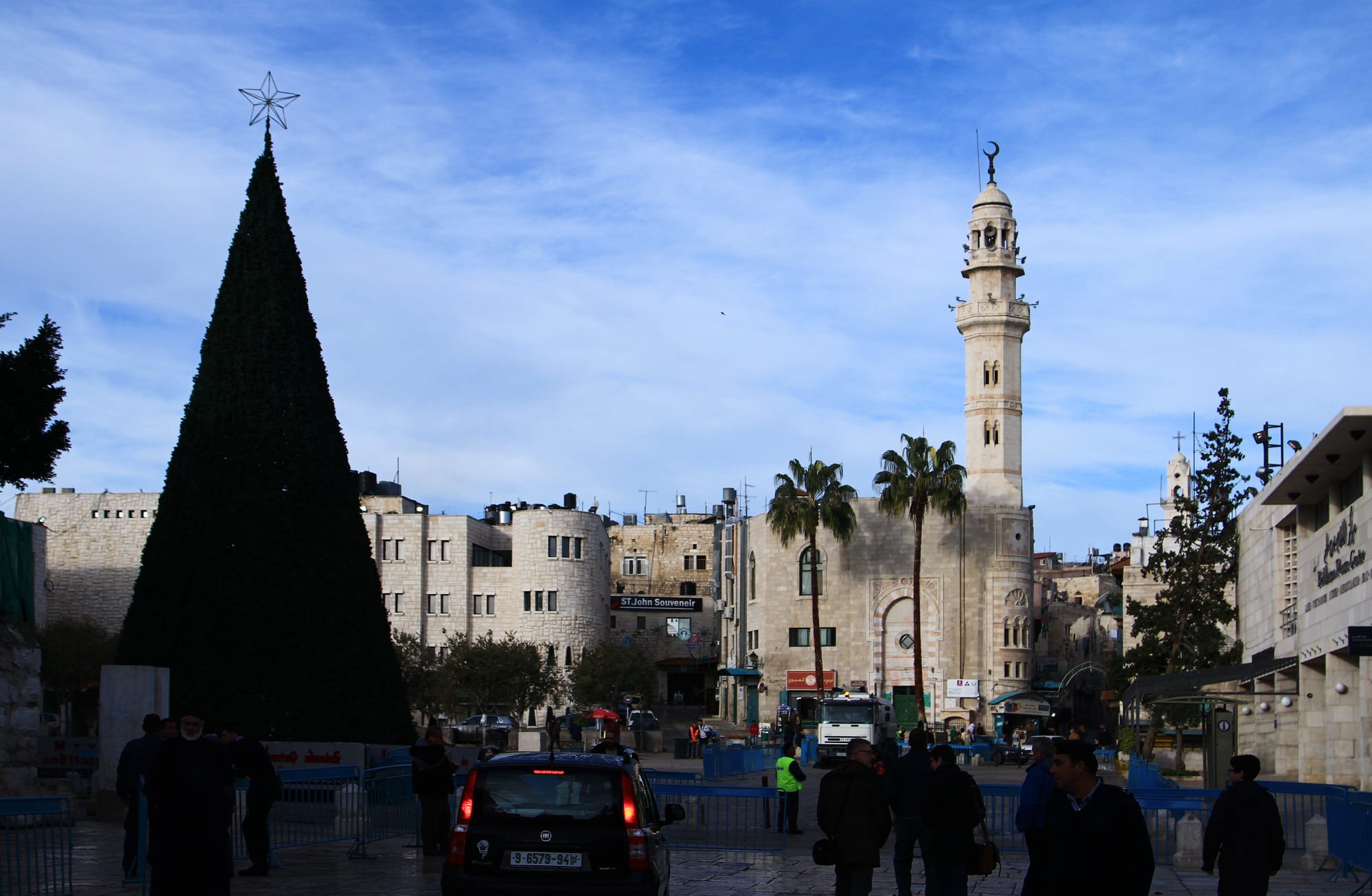
Christmas in Bethlehem is celebrated on three different dates, because the churches follow different calendars: 25 December for Roman Catholics and other Western churches, 7 January for the Greek Orthodox and other Eastern Orthodox churches, and 19 January for the Armenian Patriarchate of Jerusalem, which marks Christmas and Epiphany together. On each occasion the church's patriarch travels in procession from Jerusalem to Manger Square and the Church of the Nativity.
Weddings are among the largest events in family life, often spanning several days with a great deal of food, music and dancing. Couples are commonly introduced through their families, and it is generally considered inappropriate for them to spend time alone together before marriage; in more traditional families, the fathers may discuss the match between them. Traditions include a procession in which the bride is brought to the groom's home, and the line dance known as dabkeh is a fixture of wedding celebrations. Henna rituals are also on UNESCO's intangible heritage list for Palestine. In Muslim families, the birth of a child may be marked on the seventh day with an aqiqah, when the baby's head is shaved and its name announced.
Funerals follow religious rites. In customary practice, the body is washed and brought to the family home, where women of the family say their farewells, before being taken to the mosque, where the men pray over it, and then carried or driven in procession to the cemetery. Relatives gather to receive condolences, often in a mourning tent, and bitter coffee and dates are traditionally served as a mark of mourning.
Arts, crafts and music
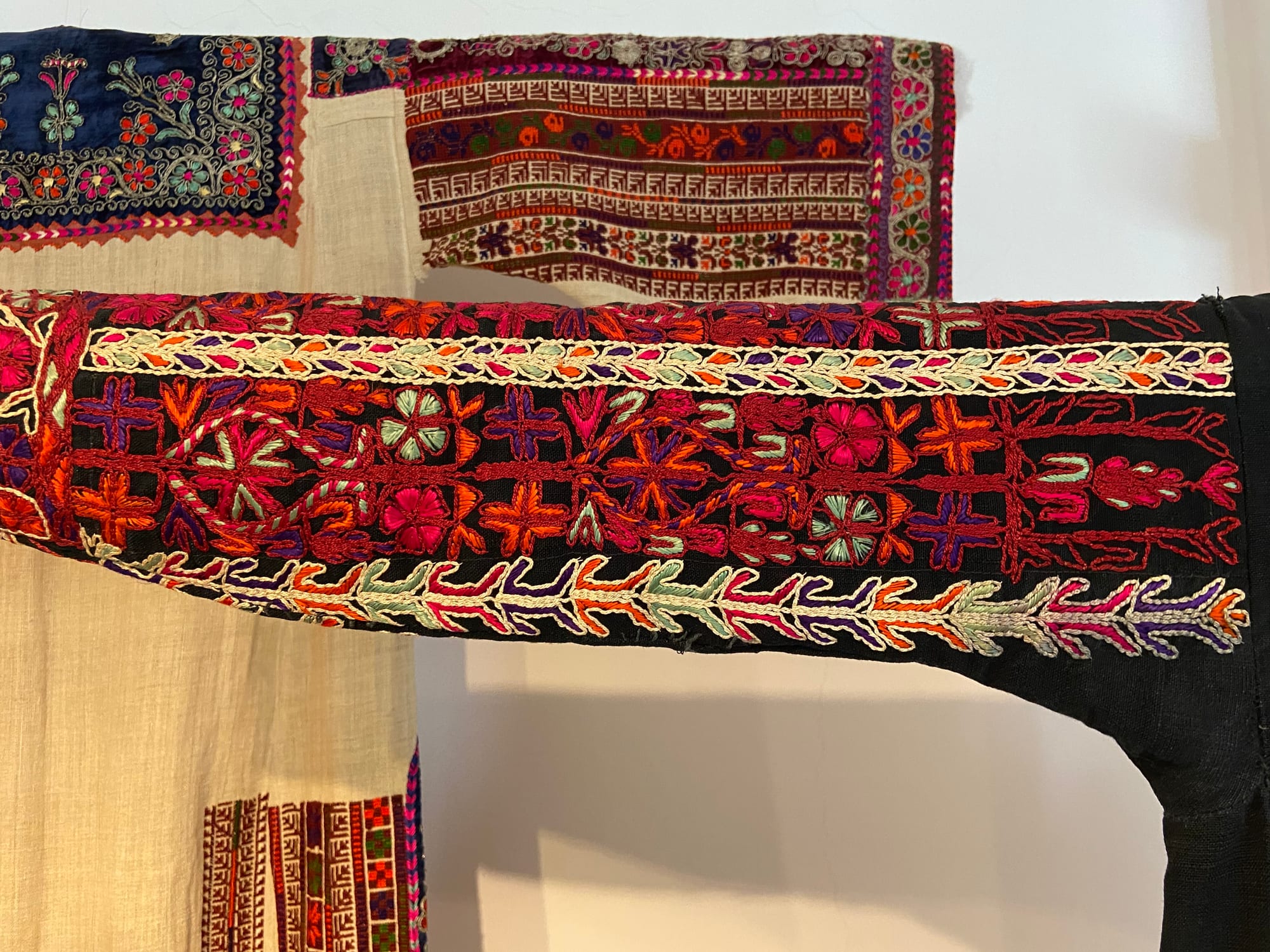
Embroidery is the best-known Palestinian art. UNESCO, which inscribed the art of embroidery in Palestine on its intangible heritage list in 2021, describes a tradition practised mainly by women, once centred on village clothing and now common throughout Palestinian society and the diaspora. The long dress, or thob, is embroidered across the chest, sleeves, cuffs and vertical side panels with birds, trees and flowers in silk thread on wool, linen or cotton. The choice of pattern and colour can indicate the wearer's region, marital status and economic circumstances, and the skills pass from mother to daughter as well as through training programmes.
Dabkeh, also on UNESCO's list, is performed at festivals, weddings, graduations and other celebrations. The dancers stand in a straight line or semicircle, clasping hands or shoulders, and the steps involve jumping and striking the ground with the feet, to the sound of traditional wind instruments and folk songs whose lyrics speak of courage, strength and affection. Many people learn it simply by joining in at family occasions.
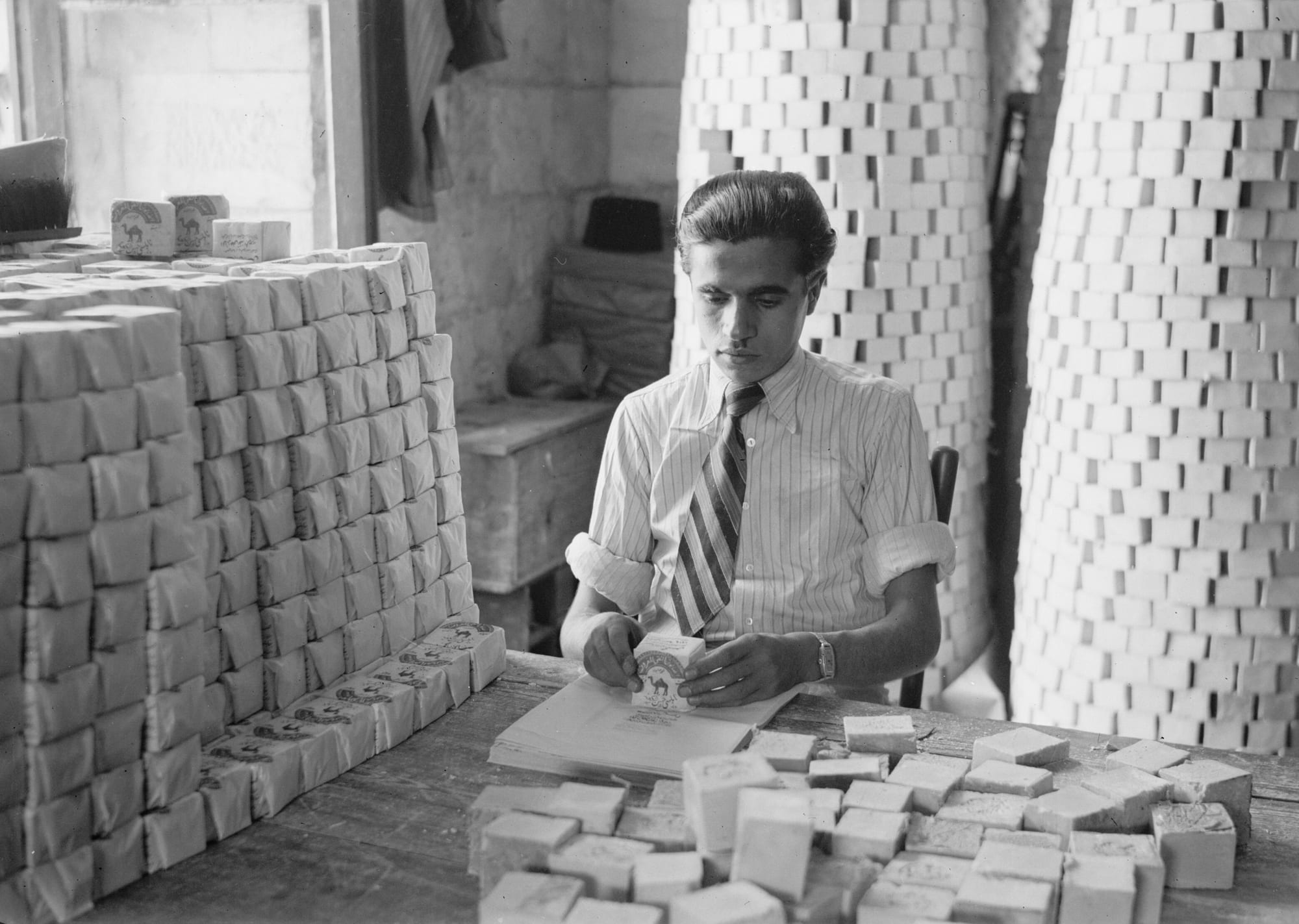
Nabulsi soap is a craft rooted in the olive harvest. Made from just olive oil, water and lye, it is produced after the harvest, marked with the maker's seal and left to dry for between three months and a year before packaging. Whole families take part, and bars of homemade soap are given as gifts at weddings and birthdays and to visitors. UNESCO's list for Palestine also includes Arabic calligraphy, the engraving of metals, the traditions of the date palm and the use of kohl.
Dos and don'ts for visitors
- Do check the latest government travel advice before any trip; governments advise against all travel to Gaza and against all or all but essential travel to much of the West Bank, and conditions can change quickly.
- Do greet everyone present, stand when an adult enters the room, and address older people with a title or kinship term.
- Do wait for a person of the opposite sex to offer a hand first; a nod with the right hand on the heart is a courteous alternative.
- Do use the right hand for eating, passing things and giving gifts, and never bring alcohol or pork as a gift.
- Do decline a first offer politely, accept when the host insists, and take the coffee at the end of a visit as the cue to leave.
- Do dress modestly; women in particular are advised to cover their legs, arms and shoulders.
- Don't wander into other rooms of a home without being invited.
- Don't criticise anyone in public or presume to know a person's political views.
What to take away
Palestinian customs centre on family, faith and a hospitality that is offered with great care, and they continue to be practised, and passed on, under very difficult circumstances.