Culture & Customs · Oman
Oman: The Courtesy of the Shaken Cup
A distinctive school of Islam known for tolerance, a majlis where coffee is poured by the right hand and elders are served first, and a living heritage of sung poetry, sword dances and the silver khanjar
By Worldlore Editorial · 30 September 2026
A visitor arrives at an Omani home and slips off their shoes at the door. In the majlis, the sitting room kept for guests, cushions line the walls and a bowl of dates is set down. The host lifts the coffee pot with the right hand and pours a small measure of cardamom-scented kahwa, serving the eldest and most honoured guests first. Cups are refilled until the guest, having had enough, gives the cup a gentle shake. No word is needed. Only when the visit is drawing to a close are incense and perfume brought out; offered too early, the Oman Observer notes, they would suggest that the host wants the guest to leave. The sequence is unhurried and precise, and it says a great deal about Oman, where courtesy, generosity and quiet restraint are points of honour.
Faith, identity and values
Oman is a Muslim country with a distinctive religious identity. According to the Carnegie Endowment for International Peace, it is the only state whose official form of Islam is neither Sunni nor Shia but Ibadi, a separate school to which the head of state and ruling class belong. Official accounts describe Ibadis as the large majority, while outside estimates put Ibadis and Sunnis at roughly 45 per cent each, with a smaller Shia community. Omanis commonly regard religious tolerance as part of their national identity, the Middle East Institute notes, and it is not unusual for Ibadi and Sunni colleagues or students to pray side by side or at their own times. Friday is the holy day, and the call to prayer sets the rhythm of daily life.
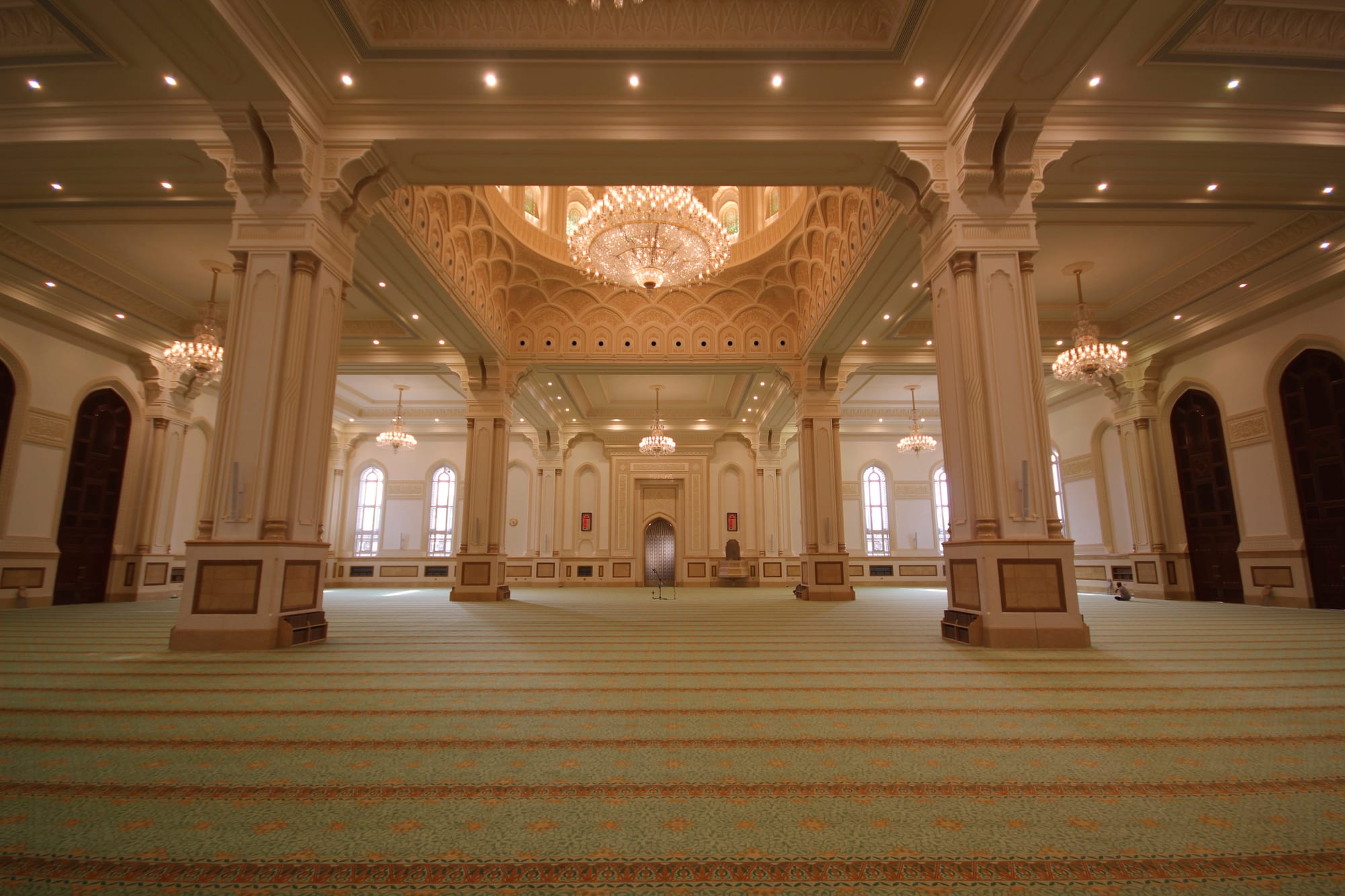
The majlis is central to Omani social life, and it is on UNESCO's list of intangible heritage, shared with several Gulf countries. UNESCO describes it as a space where family members, neighbours and tribes gather to discuss local affairs, resolve problems, pay condolences and hold wedding receptions, and where elders pass on knowledge, stories and poetry. Children who accompany the adults learn, in UNESCO's words, the manners of their community, the skills of dialogue and listening, and respect for the opinions of others. Women keep their own majlis gatherings.
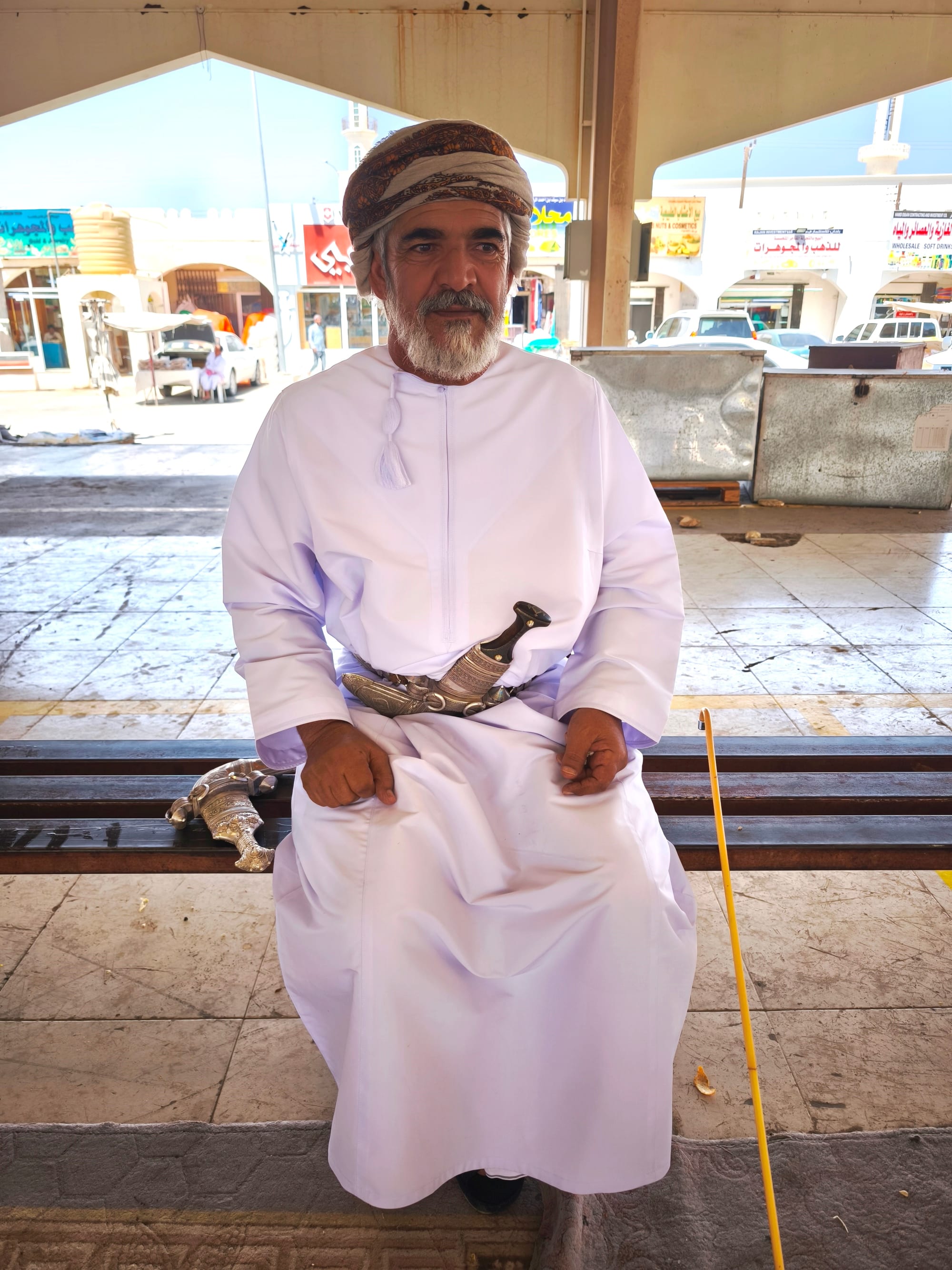
National dress is worn with pride and carries meaning. Men wear the ankle-length dishdasha, often with an embroidered cap or a wrapped turban, and on formal occasions the khanjar, the curved silver dagger that also appears on the state emblem. UNESCO, which added the khanjar's craft and social practices to its list in 2022, notes that it is worn at national and religious events and at weddings, and that Omanis present khanjars to official guests as a sign of the ties between nations. Modesty in dress and behaviour is expected of everyone, and Experience Oman, the national tourism site, describes the clothing code as "modest and courteous".
Greetings and meeting people
The standard greeting is a salaam, the Arabic "peace be upon you", which is answered in kind, and a few words of Arabic greeting go a long way in breaking the ice. Among men, the handshake is almost universal, though a column in the Oman Observer points out its many subtle variations in grip and vigour, and notes that the left hand is never used. Close friends and relatives often kiss on both cheeks or hug, while a handshake remains the norm between men who do not know each other well. Experience Oman, the national tourism brand, notes that men often greet each other by pressing their noses together, a gesture of friendship and deep respect. Some men clasp a right fist in the palm of the left hand, and a hand placed on the heart with a slight bow is a warm greeting from a distance.
Greetings between men and women remain conservative: typically a spoken salaam and polite questions about the other person's family and health. Members of the opposite sex do not generally touch, and visitors are best advised not to offer a hand to an Omani of the opposite sex unless a hand is offered first. Introductions are not rushed. Titles are used where appropriate, meetings often open with informal conversation, and hurrying through these preliminaries can come across as disrespectful or as a lack of interest.
Shoes carry a particular significance. The Oman Observer reports that elders consider it seriously inappropriate to enter a home with shoes on, and that some traditionally minded people will even remove their sandals before shaking hands in the street, since greeting someone while wearing shoes can be seen as impolite. The right hand is used for greeting, eating, passing objects and receiving gifts. Customs around conversation also vary from one part of the country to another. In some areas, a guest is first given refreshments and time to rest before family news is discussed, while in others news is exchanged first and hospitality follows.
Hospitality and being a guest
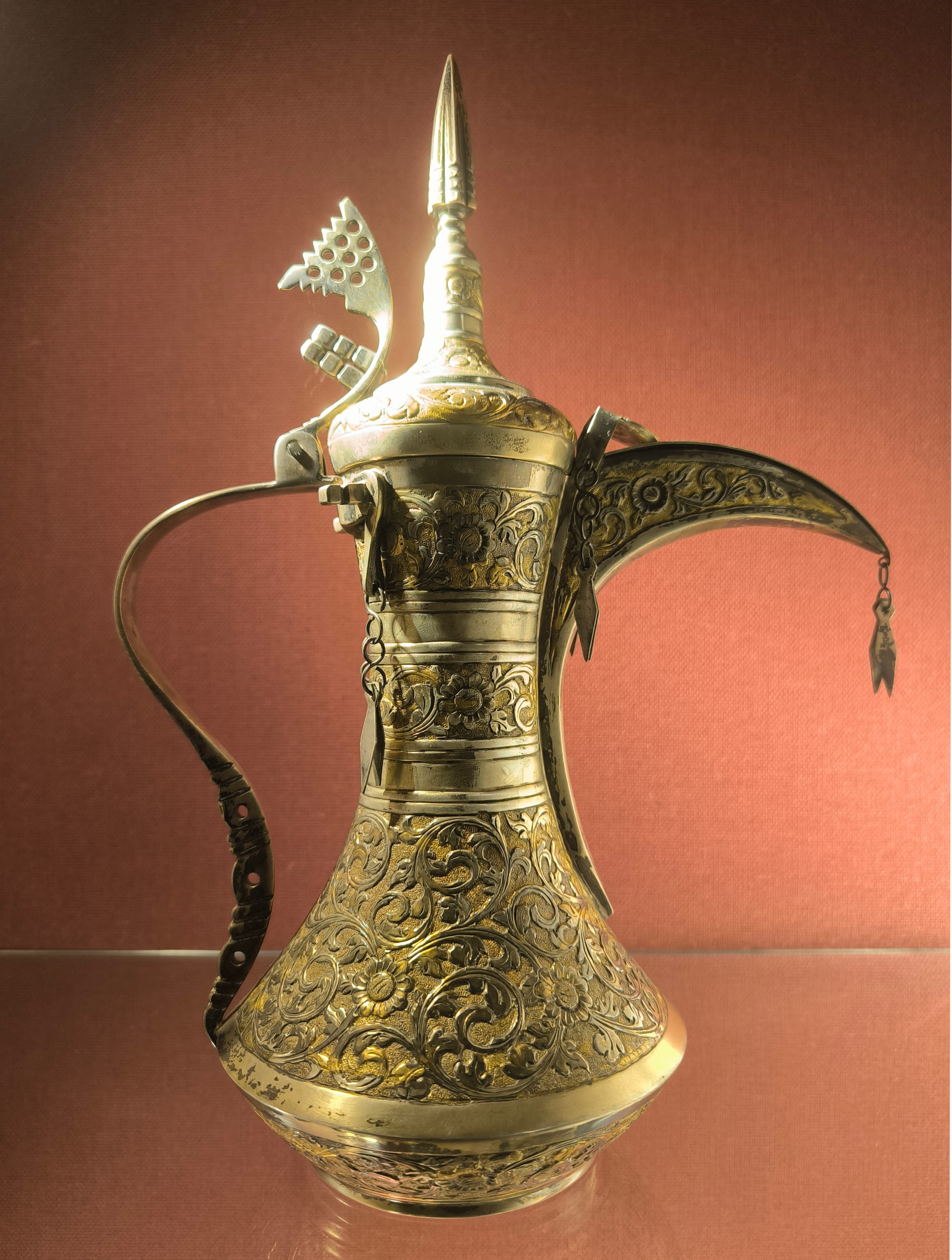
Hospitality is treated almost as a duty. The Sultan Qaboos Institute for Teaching Arabic to Non-Native Speakers notes that visitors are regarded as a blessing to the home, and that the traditional sabla, the communal guest room, historically offered food and shelter to travellers at no cost. The ritual of coffee is at the centre of any visit. UNESCO, which lists Arabic coffee as "a symbol of generosity" shared by Oman and other Arab states, describes the rules: the coffee is poured with the right hand, older people and guests are served first, and drinkers shake the cup to show they have had enough. UNESCO adds that coffee gatherings are often accompanied by poetry, conversation and shared memories.
Invitations to Omani homes are common, even on short acquaintance, and it is polite to accept whatever food or drink is offered, since a refusal can be taken as disapproval. For a formal meal, a small wrapped gift such as dates or chocolates is a suitable offering. Gifts are given modestly and are not usually opened at once. Food is eaten with the right hand, and leaving a little on the plate is a sign of satisfaction.
Guests are seated in the majlis and are not expected to rush. The end of a visit is marked by the offering of incense and perfume; timing matters, since bringing them out early would be read as a hint to leave. Public behaviour is restrained. The UK Foreign Office notes that public displays of affection are frowned upon, that swearing and rude gestures are illegal, including at the wheel, and that alcohol is served only in licensed hotels and restaurants, with public drunkenness an offence.
Festivals and life's big moments
The religious year shapes the calendar. During Ramadan, the UK Foreign Office advises, visitors should not eat, drink, smoke or chew gum in public during daylight hours, play loud music or dance, and should be patient with people who are fasting. Before each Eid, traditional open-air markets known as habta spring up; the name refers to people "descending" from villages and mountains to buy livestock, clothes, perfume and sweets. On Eid morning, according to the Oman Observer, families attend prayers, exchange greetings and visit relatives, children receive gifts of money called eidiya, and in many places men perform traditional arts such as al-razha to the beat of drums. At Eid al-Adha, animals are sacrificed and the meat shared among relatives and people in need, and homes stay open to visitors throughout the day. National Day, on 20 and 21 November, is a two-day national occasion celebrating the country's heritage and achievements.
Weddings unfold in stages. The Oman Observer describes a public ceremony called the malka that announces an engagement with a large feast, followed by an engagement period of several months before the wedding itself. Before the wedding, the bride's hands and feet are decorated with henna, a practice used at weddings and births that is on UNESCO's list. In one old custom still kept by some families, elderly women bring a palm branch for the bride and groom to step on, and rose water is poured over their feet as a wish for happiness. The groom and male guests wear the khanjar, and performances of traditional music and dance are common.
Funerals follow Islamic teaching, with small variations between communities. According to Oman's Ministry of Endowments and Religious Affairs, the body is washed, perfumed and wrapped in a white shroud, then carried on a bier on men's shoulders to the cemetery, where prayers ask for mercy and forgiveness for the dead. The grave is a simple pit; the body is covered with stones before it is filled with earth, and it usually bears no name, only plain upright stones. A Times of Oman columnist has described friends passing the coffin from one to another on the way to the cemetery, and mourners then queuing to offer their condolences to the family. In the days that follow, the community gathers to comfort the bereaved, often in the majlis.
Arts, crafts and music
Oman's living traditions are unusually well represented on UNESCO's list, which now includes more than fifteen Omani elements. Many are performing arts that combine poetry, song and movement. Al 'azi, from the north of the country, is a contest of sung poetry in which a poet leads a chorus through improvised and memorised verses, punctuated by sword and step movements; UNESCO describes it as an emblem of pride and unity performed at national and social occasions. In al-razfa, shared with the United Arab Emirates, two lines of men face each other and sing in antiphonal chorus while dancers carrying wooden replica rifles move between them. Al-bar'ah, a Bedouin tradition from the Dhofar mountains, features two male dancers holding khanjars above shoulder level, surrounded by a semicircle of singers, drums and a flute, and is performed at weddings and religious feasts.
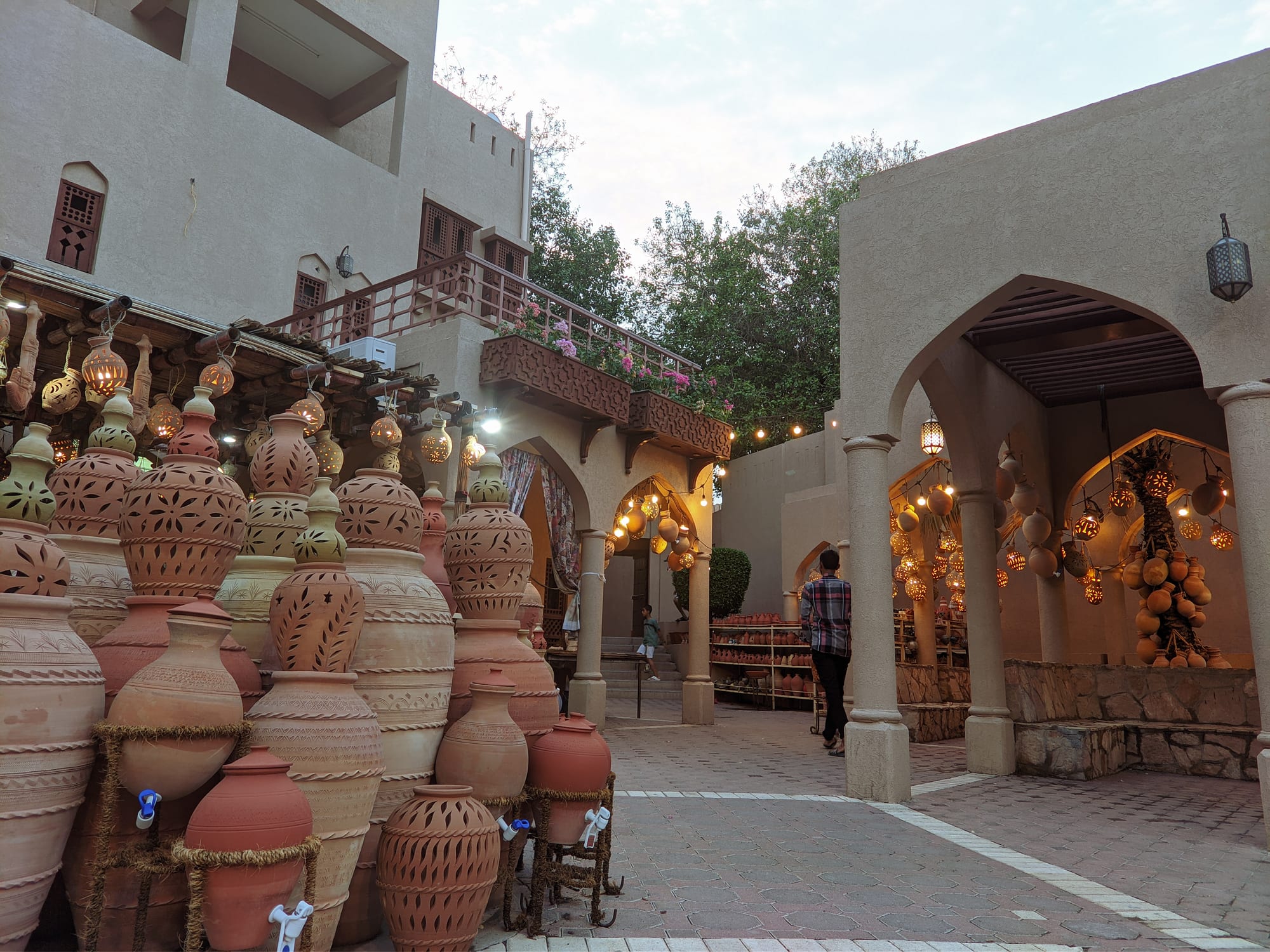
Craft traditions remain strong. Experience Oman lists woodwork, pottery, palm-leaf weaving, silverware, fine textiles, khanjars and swords, and rosewater distillation among the country's handicrafts. The khanjar alone brings together several crafts, with its belt, handle, blade and sheath worked in wood, leather, cloth and silver, and its engraved patterns understood as a link to the land. Arabic calligraphy, camel racing and the traditional chants used to call camel herds are also on UNESCO's list.
Dos and don'ts for visitors
- Do check the latest official travel advice before travelling; the war involving Iran since February 2026 has disrupted shipping and air travel around the Gulf.
- Do greet people with a salaam and shake hands with the right hand; between men and women, wait for a hand to be offered.
- Do take shoes off before entering a home or majlis.
- Do accept at least one cup of kahwa, and shake the cup gently when no more is wanted.
- Do dress modestly in public, with shoulders, chest and knees covered.
- Don't eat, drink, smoke or chew gum in public during daylight hours in Ramadan.
- Do ask before photographing people, and don't photograph government or military sites.
- Don't show affection in public, swear or make rude gestures, including while driving.
- Don't drink alcohol outside licensed hotels and restaurants.
What to take away
Oman's customs rest on generosity, modesty and respect, and visitors who greet people properly, accept the coffee and follow the country's quiet codes of conduct will find its hospitality as sincere as it is gracious.