History · North Korea
North Korea: The Guerrilla State
A Korea partitioned by the great powers in 1945 — a devastating war, a family dynasty in its third generation, a self-reliance doctrine, famine, and a nuclear-armed state that has outlasted every prediction of its collapse
By Worldlore Editorial · 10 September 2026
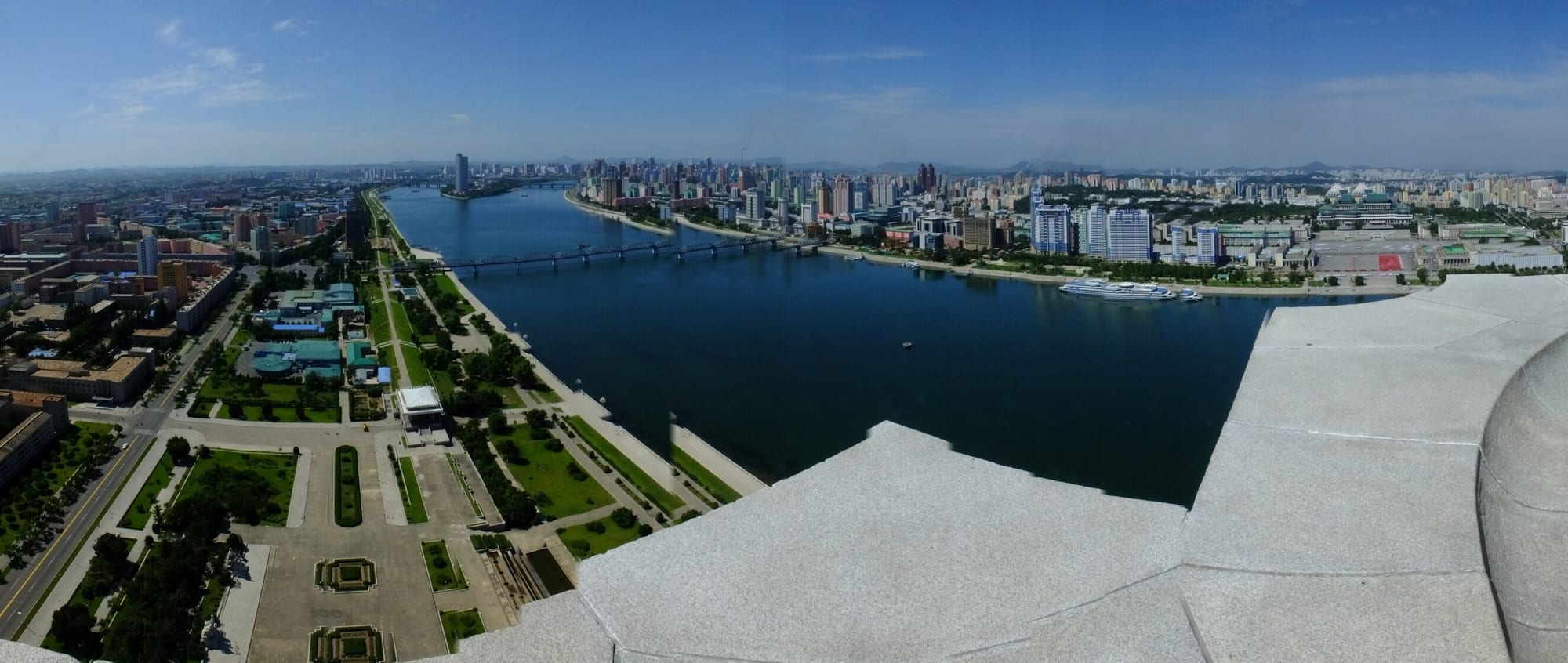
A state built to survive
The Democratic People's Republic of Korea occupies the northern half of the Korean peninsula, with about 26 million people, a one-party system led by the Workers' Party of Korea, and a leadership that has passed through three generations of one family: Kim Il Sung, his son Kim Jong Il, and his grandson Kim Jong Un. It is one of the most closed countries in the world. Outside assessments of its economy, politics and human-rights record rely heavily on defector testimony, satellite imagery and intelligence, and the state disputes many of them; where accounts differ, this article notes the source.
A short history
- 1910–1945
Japanese rule
Korea is a colony of Japan.
- 1945
Division
The US and USSR split the peninsula at the 38th parallel.
- 1948
Two states
The DPRK is founded in the north, the Republic of Korea in the south.
- 1950–1953
The Korean War
Millions die; an armistice, but no peace treaty.
- 1950s–1960s
Consolidation
Kim Il Sung sidelines rivals; the Juche doctrine emerges.
- 1994
First succession
Kim Il Sung dies; Kim Jong Il takes over.
- 1994–1998
The famine
Mass death from starvation; estimates vary widely.
- 2006
First nuclear test
Followed by further tests and long-range missiles.
- 2011
Second succession
Kim Jong Un becomes leader.
- 2018–2019
Summits
Talks with South Korea and the US; no lasting agreement.
Colony, division, war
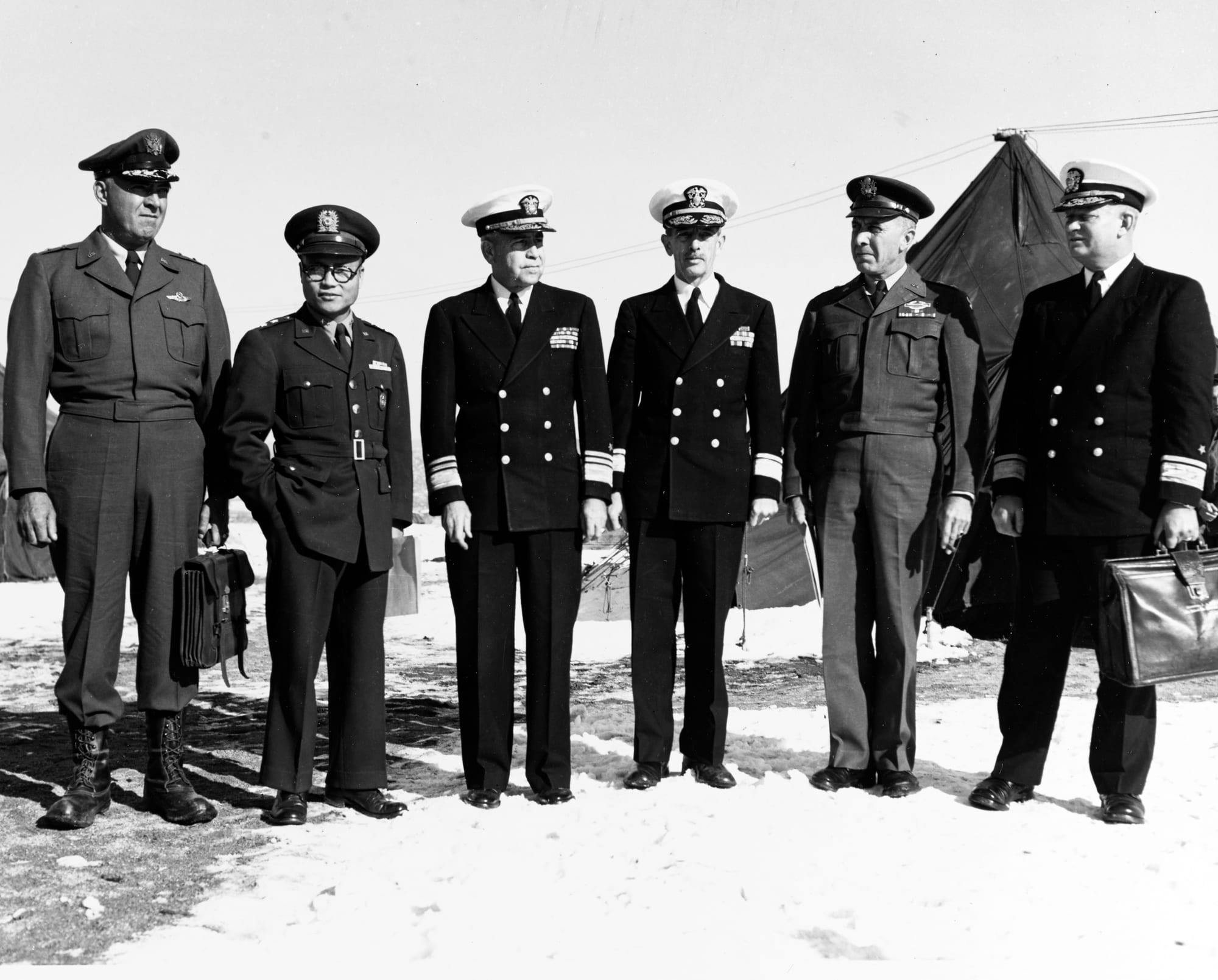
Japan annexed Korea in 1910 and ruled it until 1945, a period of industrialisation concentrated in the north and of harsh cultural suppression that shaped later Korean nationalism, north and south. In August 1945 the United States and the Soviet Union agreed to divide the peninsula at the 38th parallel to accept the Japanese surrender; the line hardened into a border. In 1948 two rival governments were established, each claiming the whole country. On 25 June 1950 North Korean forces invaded the South. The war drew in a US-led UN coalition and, after UN forces neared the Chinese border, hundreds of thousands of Chinese troops. US bombing levelled North Korea's cities. Estimates of total deaths range from about two to three million, most of them civilians. The fighting ended with an armistice on 27 July 1953; no peace treaty has ever been signed.
Kim Il Sung's system
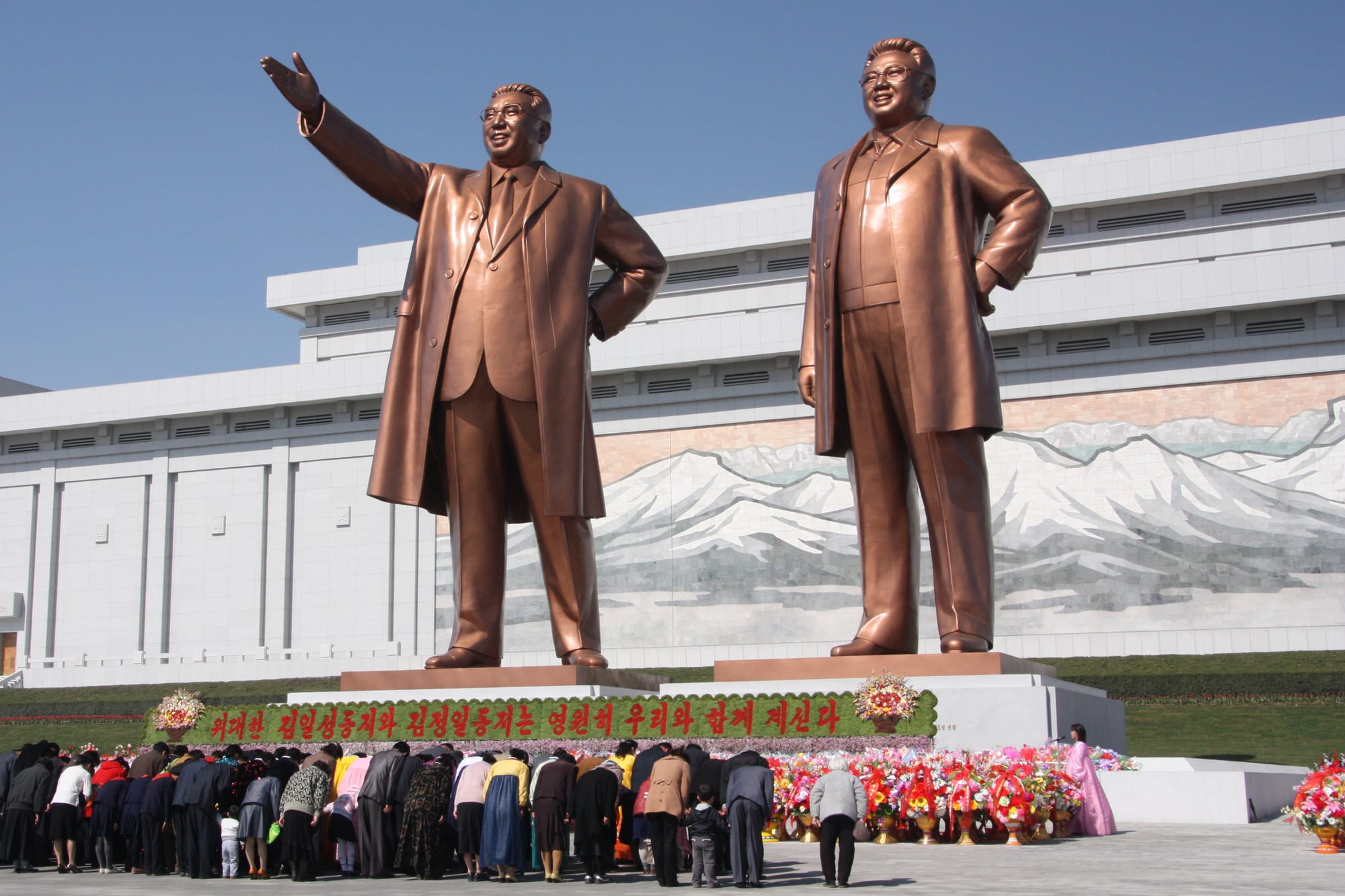
Kim Il Sung, a former anti-Japanese guerrilla installed with Soviet backing, consolidated power through the 1950s by purging pro-Soviet, pro-Chinese and domestic communist factions. The state promoted "Juche" — usually translated as self-reliance — as its guiding idea, and built a personality cult around Kim of a scale unusual even among communist states. The economy, centrally planned and initially aided by the USSR and China, grew rapidly in the 1950s and 1960s, by some measures outperforming the South into the early 1970s, before stagnating as it fell behind technologically and the subsidies dried up.
Famine and succession
Kim Il Sung died in 1994 and was succeeded by his son Kim Jong Il — the first hereditary succession in a communist state. It coincided with catastrophe: the loss of Soviet support, failed harvests and floods, and the collapse of the public distribution system produced a famine in the mid-1990s that the state calls the "Arduous March". Estimates of the death toll vary from a few hundred thousand to over two million; the government has not released figures. The crisis gave rise to private markets that the state has alternately tolerated and suppressed, and to a steady outflow of refugees into China.
The nuclear state
North Korea's nuclear programme, developed over decades, produced a first test in 2006, followed by five more through 2017 and by intercontinental-range missile tests. The UN Security Council has imposed successive rounds of sanctions. Kim Jong Un, who took power on his father's death in 2011, has combined the weapons programme with limited economic loosening. A period of summitry in 2018–19 — meetings with South Korea's president and, unprecedentedly, with US President Donald Trump — produced declarations but no agreement on denuclearisation or sanctions relief, and relations have since cooled, with North Korea declaring reunification with the South a dead goal and deepening ties with Russia.
Human rights
A 2014 United Nations Commission of Inquiry concluded that the state commits crimes against humanity, describing a network of political prison camps, systematic use of forced labour, executions, and severe restrictions on movement, expression and religion. North Korea rejects the report as a fabrication by hostile powers and denies that the camps exist. Independent verification inside the country is not possible, and the finding rests on defector testimony and satellite analysis.
What North Korea carries
North Korea was created by a line drawn on a map by two outside powers, forged by a war that was never formally ended, and organised around the family that has led it since. Predictions of its collapse — after the Cold War, after the famine, after each succession — have not come true. It has instead become a nuclear-armed state whose central purpose, by most outside readings, is the survival of the system that built it.