Daily Life · North Korea
North Korea: A Life Assigned at Birth
A hereditary loyalty ranking that still shapes where people may live and work, informal markets that grew out of a 1990s famine and never fully went away, and a country so closed that almost everything known about daily life comes from those who have escaped it
By Worldlore Editorial · 30 September 2026
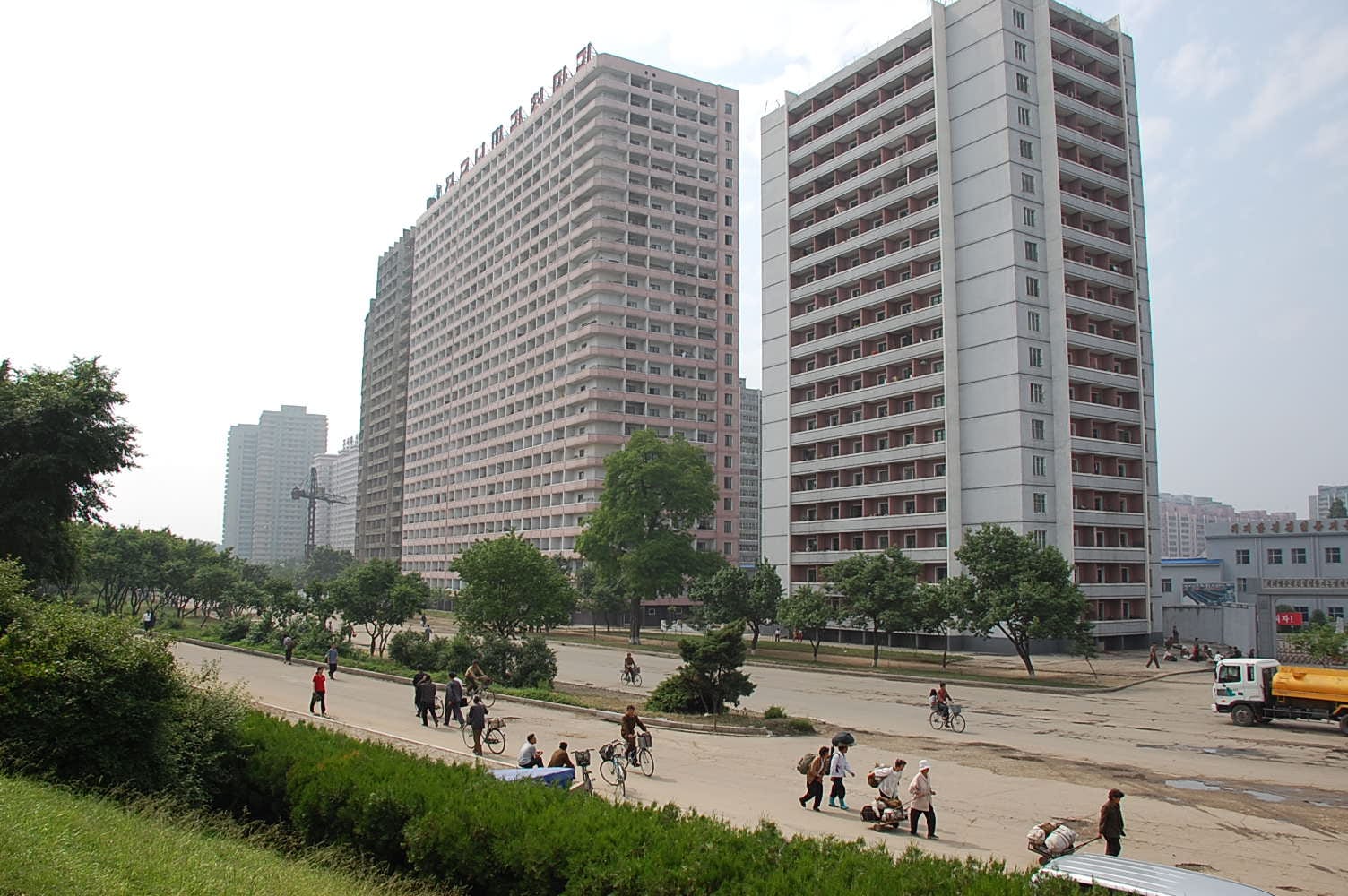
North Korea is among the most closed societies on earth, and very little about ordinary life there can be verified in the way it can for most countries. There is no free press inside the country, foreign journalists are effectively barred, and independent researchers cannot travel freely to check what they are told. What follows is drawn from defector testimony, United Nations and human-rights reporting, and journalism from outlets that maintain networks of sources inside the country, such as NK News and Daily NK — all methods with real limits, since accounts can be dated, regionally uneven, or shaped by what a defector's own experience happened to be. Where a claim rests on this kind of evidence rather than on independent verification, it is presented that way, deliberately hedged rather than stated as settled fact.
Family and home life
Nearly every account of North Korean society, from the 2014 UN Commission of Inquiry to years of defector interviews, describes songbun, a hereditary classification that sorts families into three broad loyalty classes — core, wavering and hostile — based on what the state judged their ancestors' conduct to have been since 1948. Research compiled by the Committee for Human Rights in North Korea has found that these three classes are further split into around fifty-one more detailed categories, assigned at birth and rarely improved, though they can be downgraded by a family member's political or criminal offence. Songbun reportedly shapes where a family is permitted to live, including whether they may live in Pyongyang, itself the most provisioned part of the country. Households outside the capital are described by defectors and by NGO reporting as living with far less reliable electricity and heating, often burning coal where it is available. Portraits of the country's leaders, long those of Kim Il-sung and Kim Jong-il, are displayed in homes and are reportedly subject to inspection for dust and correct display. Almost every household also belongs to an inminban, a neighbourhood unit of typically 25 to 50 families that organises shared duties such as street cleaning and is widely reported, including by 38 North's analysis of the system, to double as a channel for monitoring residents.
Work, school and the rhythm of the day
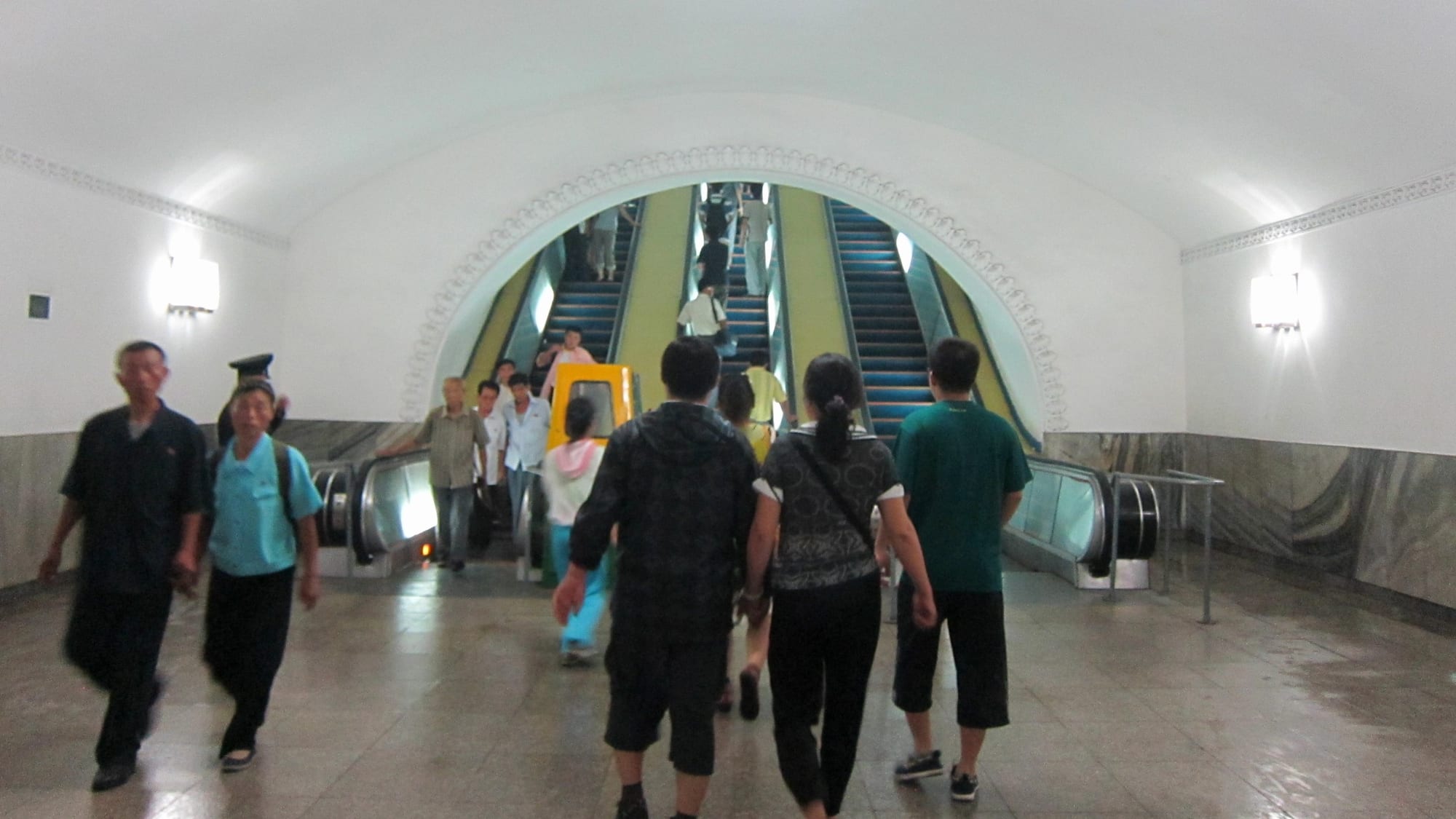
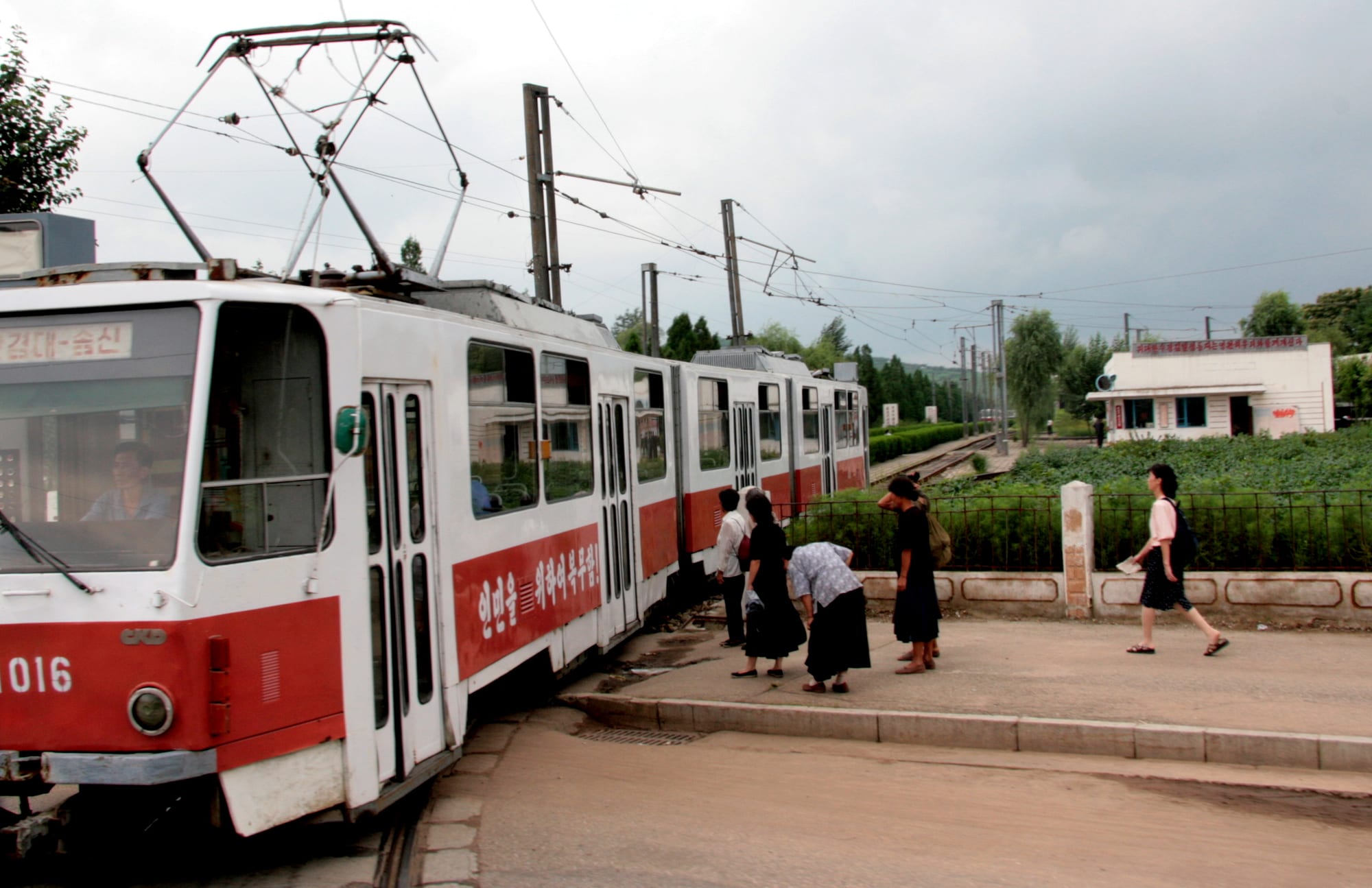
Most working-age adults are assigned a job by the state rather than choosing one, historically on a collective farm, in a factory or on a construction crew, and are not generally free to leave that assignment. Some defectors have described workdays stretching well beyond eight hours in certain sectors, though conditions are reported to vary considerably by industry, region and the individual workplace, and no comprehensive, independently verified figures exist for hours worked nationwide. Since the state rationing system effectively broke down during the famine of the 1990s, wages from an assigned job have often been reported as insufficient on their own, with many households depending on informal trading for a meaningful share of their income. Schooling runs from a year of kindergarten through five years of primary school and six of lower and upper secondary school, with a curriculum that combines core subjects such as maths and science with sustained instruction in the state ideology and the biographies of the Kim family. All children from seven to fourteen belong to the Korean Children's Union, whose uniformed Young Pioneer Corps admits them from about age nine, before they move into youth organisations as teenagers. In Pyongyang, commuting runs on the metro, trams and trolleybuses; outside the capital, walking and bicycles are reported to be the ordinary way of getting around.
Community life and public spaces
The jangmadang, informal markets that emerged as the state rationing system collapsed in the 1990s, are described by defector accounts and by outlets such as NK News and Daily NK as the backbone of household survival for a large share of the population, and the government has alternated over the years between tolerating, taxing and periodically cracking down on them. Officially sanctioned markets and shops also operate, particularly in Pyongyang, where department stores and street-food stalls serve a population that is, on average, more provisioned than the rest of the country. Travel outside one's home county requires a state-issued permit, a restriction confirmed by UN and human-rights reporting, so an ordinary resident's contact with people from other regions is more limited than in most countries. The inminban neighbourhood unit, described above, functions as the most consistent point of organised community contact for most households, more so than any market, park or civic building.
Free time and weekends
Organised leisure for the more trusted or favoured parts of the population has reportedly included mass gymnastic and artistic performances and organised outings to monuments, though how much of this extends to the general population outside showcase events is not well documented. Televisions and radios have long been required by law to be fixed to state channels only; the revised Radio Wave Control Law sets fines and up to three months of unpaid labour or "labour education" for serious violations, according to 38 North, and a 2020 law against "reactionary" culture reportedly sets penalties ranging from forced labour to death for keeping or distributing films, books and music from countries such as South Korea. Despite this, defector testimony consistently describes a black market in smuggled South Korean dramas and music, watched in secret and at real personal risk. Many workplaces and schools have also been reported to hold regular self-criticism sessions, in which attendees account for their own and others' ideological shortcomings, a practice documented across decades of defector accounts.
A visitor's ordinary day
For a visitor, there effectively is no ordinary day to describe, and it would be misleading to invent one. Independent travel has never been permitted, and since a near-total border closure from 2020 to 2023, one of the strictest pandemic lockdowns anywhere, tourism has been suspended almost entirely, with only limited exceptions, chiefly small Russian groups since 2024 and a one-month reopening to Western tourists in 2025. When group tours have operated, visitors moved everywhere by chartered bus on a fixed, pre-approved route, accompanied at all times by state-assigned guides, staying in designated hotels and paying in advance in euros or Chinese yuan rather than the North Korean won, which visitors cannot obtain. Photographing soldiers, checkpoints or construction has been prohibited, unsanctioned contact with residents has not been permitted, and any perceived disrespect toward the leaders or their images has carried serious risk. None of this resembles an ordinary day as the term is used elsewhere in this series, and Worldlore covers North Korea so that it can be understood, not to encourage travel there.
What to take away
Far less can be said with confidence about daily life in North Korea than about almost anywhere else, but what defector testimony, UN reporting and independent journalism agree on is consistent: a system that assigns status at birth and rarely lets it change, and a population that has, since the 1990s, had to build much of its actual survival around markets the state never fully approved of and never fully shut down either.