Culture & Customs · Niue
Niue: A Lock of Hair and a Gift Returned
A boy's first haircut and a girl's ear-piercing celebrated with cash, quilts and feasts, a Sunday kept for church and rest, and a small island whose customs are sustained as much in New Zealand as at home
By Worldlore Editorial · 30 September 2026
A young boy sits at the centre of a family gathering, his long hair gathered into braids tied with ribbons. One by one, relatives and guests of honour step forward to snip off a lock. Each leaves a gift in return: an envelope of money, a quilt, a tablecloth, a cushion. When the last braid is cut, the family answers with a feast from the earth oven, laid out for everyone who came. The hifi ulu, a Niuean boy's haircutting ceremony, marks his first step towards manhood, but it also sums up how Niuean society works: relationships are built and shown through gifts, every gift is remembered, and generosity is always eventually returned.
Faith, identity and values
Niue is a single raised coral island in the South Pacific, self-governing since 1974 in free association with New Zealand. Niueans are New Zealand citizens, and far more of them live in New Zealand — nearly 35,000 — than on the island itself, where fewer than two thousand people are spread across fourteen villages. Much of Niuean culture is therefore sustained in two places at once.
According to Tāoga Niue, the government's culture and heritage body, Niuean customs trace back to early settlers from Samoa and Tonga, and have been reshaped by the arrival of Christianity in 1846, the colonial period and self-government. Christianity is now central to island life. It was a Niuean, Nukai Peniamina, who brought it home, returning in 1846 after training as a pastor in Samoa; Samoan teachers and the London Missionary Society followed. At the 2022 census about 61 per cent of residents belonged to the Ekalesia Niue, the island's Congregational church, with Latter-day Saint, Catholic and smaller congregations alongside it. Pastors are leading figures in village life.
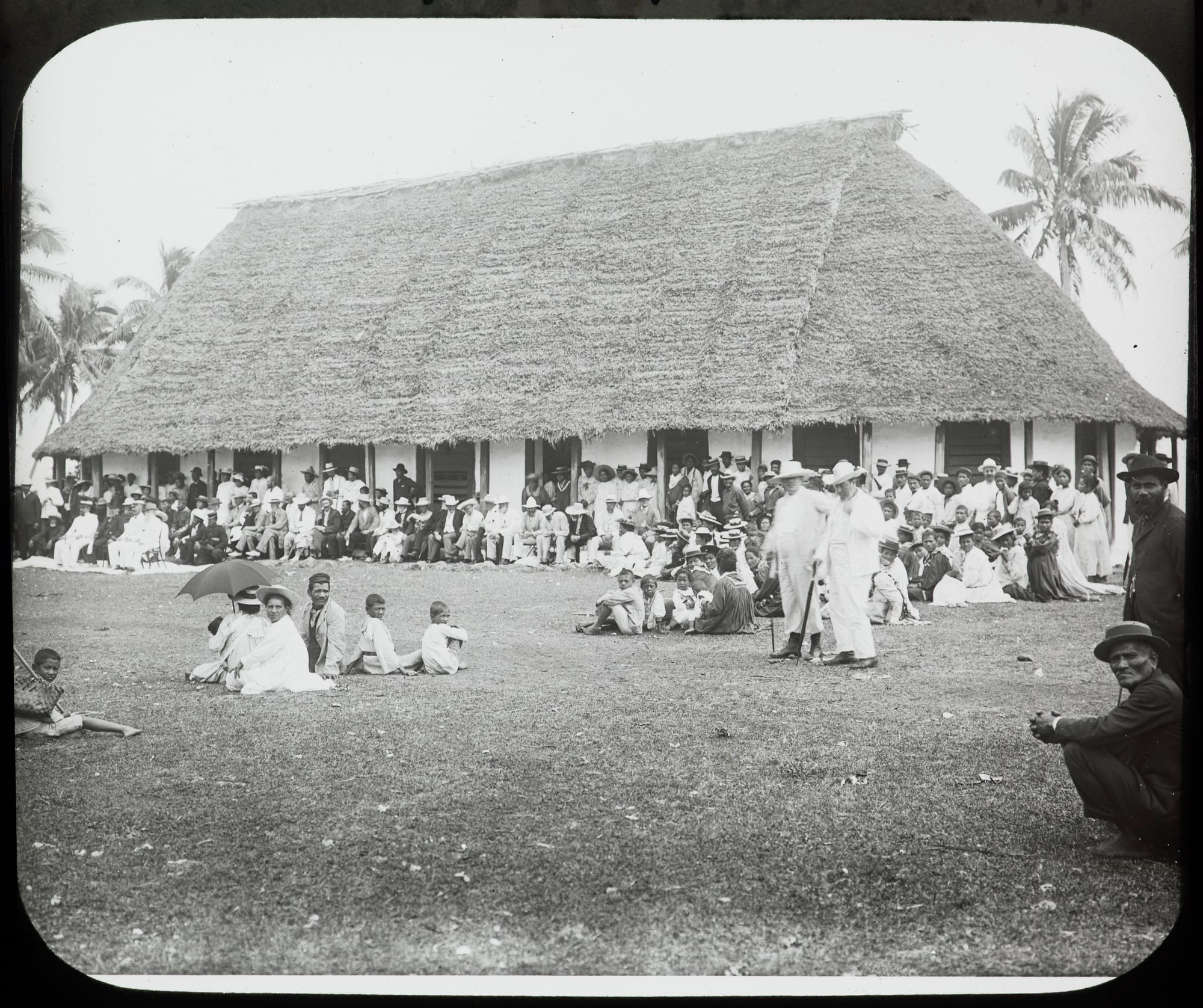
Older beliefs persist alongside the church. Many Niueans hold that aitu, the spirits of ancestors, keep a close eye on how the living behave, and places where unexpected deaths occurred may be placed under tapu, a sacred restriction.
Society has traditionally been organised around respect for age: older people are deferred to, with special regard given to men and to first-born children. The extended family, the magafaoa, is the unit that holds and manages land, and land on Niue is inalienable — it cannot be sold or permanently transferred to non-Niueans. Gift-giving binds these relationships together. Food, shell necklaces and money are exchanged both informally and on formal occasions as signs of esteem and friendship, and every gift is expected to be returned in time. The Niuean word fakaalofa covers greetings, handshakes and gifts alike, reflecting values of generosity, reciprocity, respect and hospitality.
Greetings and meeting people
The traditional welcome is "fakaalofa lahi atu". Everyday greetings are relaxed and friendly, and on Niue's ring road it is customary to wave at everyone who passes, whether driving, cycling or on foot — a habit that visitors quickly pick up.
Vagahau Niue, the Niuean language, is spoken alongside English, which almost everyone uses. The language is at risk, and with most Niueans now living in New Zealand, its future depends heavily on families there. Niue Language Week, Faahi Tapu he Vagahau Niue, is celebrated each October in New Zealand to encourage people to use it every day, and a few words of Niuean are warmly received.
Hospitality and being a guest
Visitors are welcomed, but the island has clear expectations. Modest dress is the norm in villages and public places: swimwear is for swimming, and a shirt or sarong goes on over it everywhere else. Sunday is kept as a sacred day of rest and worship. Fishing, diving, kayaking and boating are forbidden, and swimming or using the sea tracks near a village church or green while a service is under way is considered disrespectful.
Visitors are welcome at church services. Men are expected to wear a collared shirt and long trousers, and women a covered top with a skirt or dress to the knee or below. A small cash gift to the collection plate is customary.
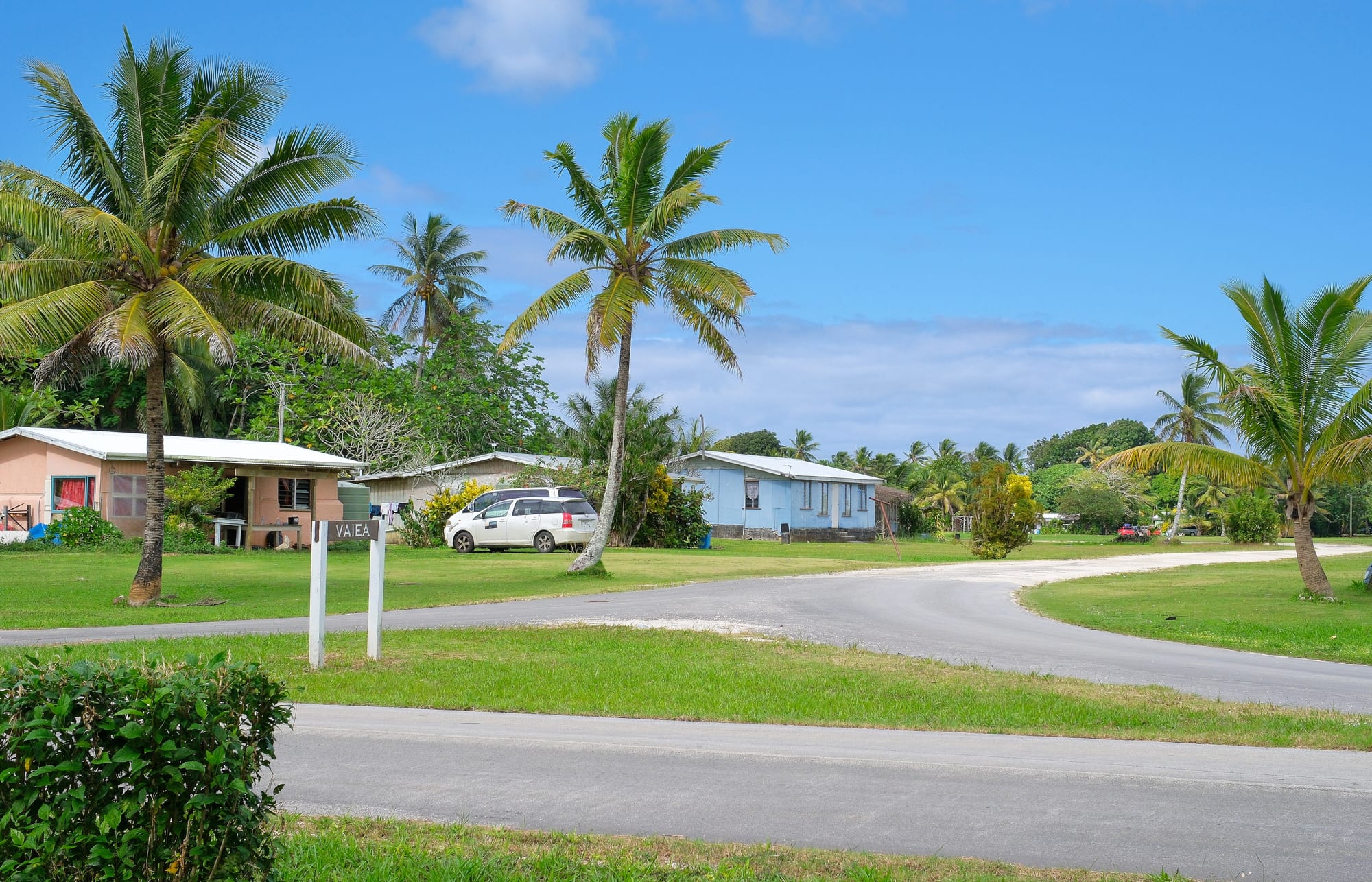
Because every piece of land belongs to a family, nothing growing on it — fruit, coconuts or plants — should be taken without the owner's permission. Areas marked by tied coconut leaves, a traditional sign of prohibition, should not be entered, and canoes, vaka, drawn up on the shore should be left untouched. Haggling is not part of local custom.
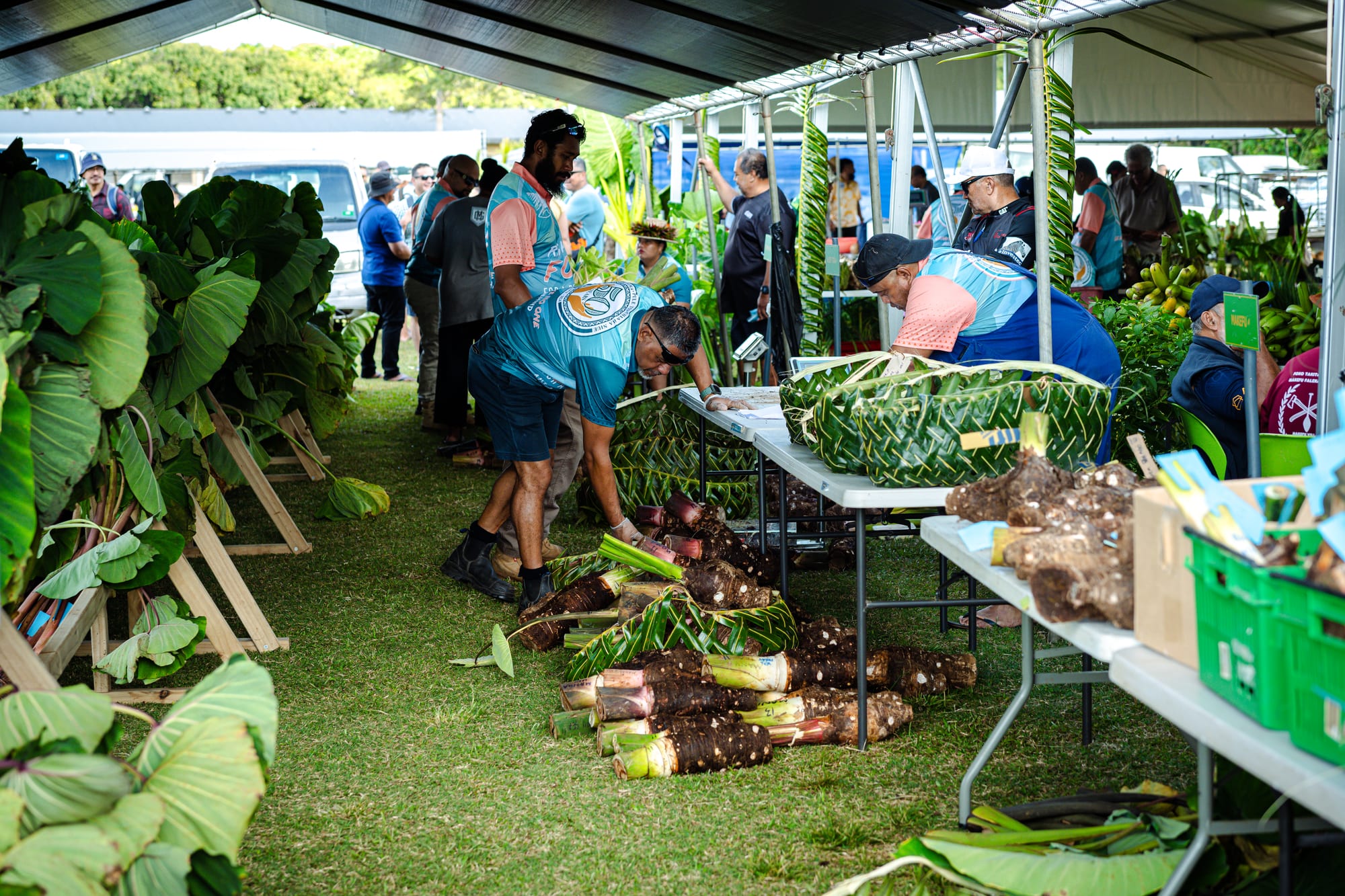
At a feast, food cooked in the umu, the earth oven — pork, chicken, fish, taro and yams — is laid out after a blessing, and guests fill baskets with food to take home as well as to eat on the spot.
Festivals and life's big moments
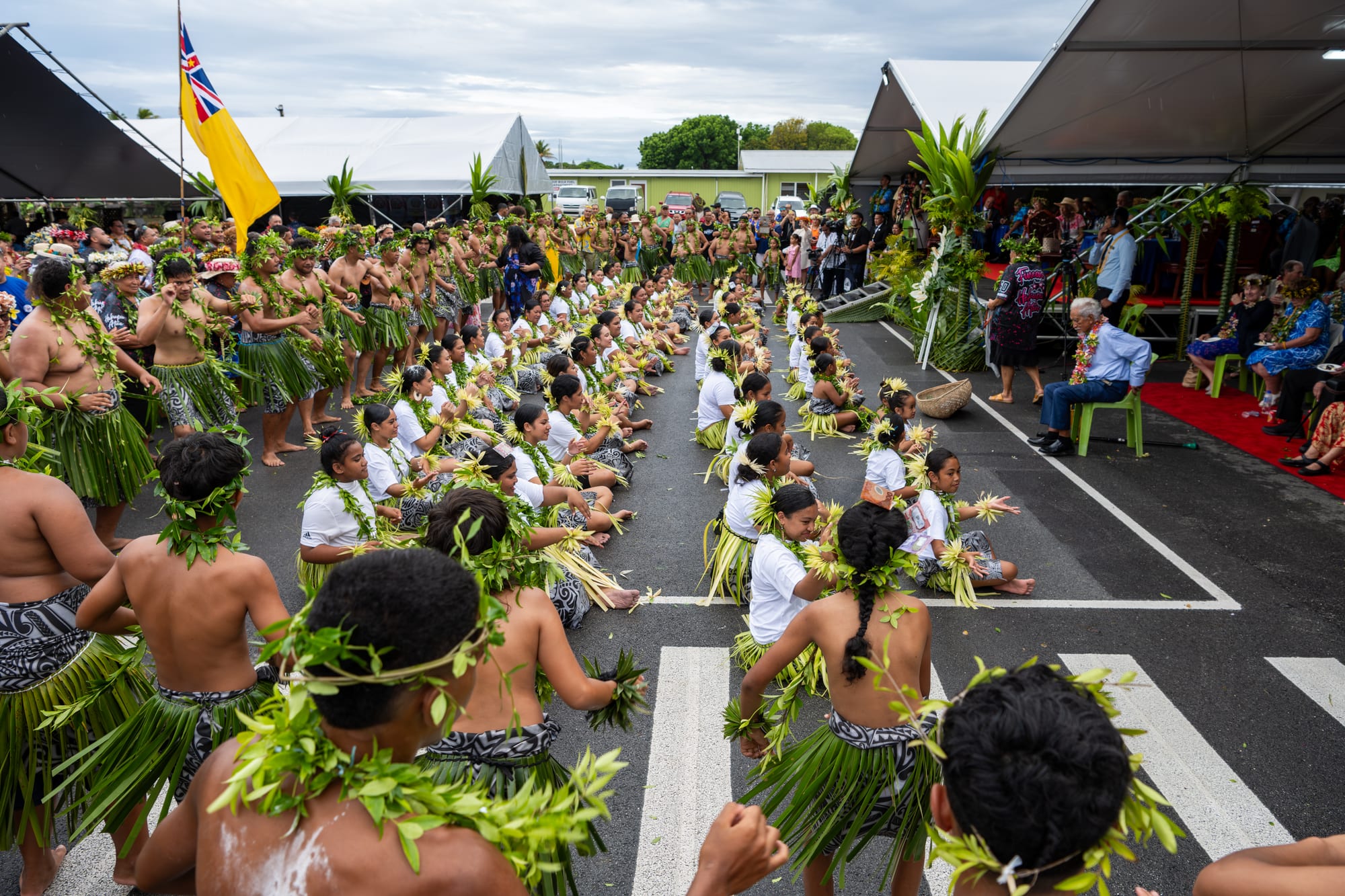
The biggest celebration of the year is Constitution Day, 19 October, which marks the day in 1974 when Niue's constitution took effect and the island became self-governing. The public holiday stretches over several days, and the whole week is filled with a flag-raising ceremony, dancing, music, sport and feasts. Around the same time, the fourteen villages each hold a show day, with dance, food, sport, traditional arts and handicrafts for sale. Peniamina Gospel Day, in late October, commemorates the arrival of Christianity, and the new year is welcomed with village celebrations.
The great rites of passage are those of childhood. The hifi ulu, a boy's first haircut, is traditionally held for a first-born son as he begins the journey towards manhood; family members and guests of honour cut locks of his braided hair and give money and gifts such as quilts and tablecloths, and the gifts are often stored away for his future. For girls, the huki teliga is the ear-piercing ceremony, usually held around puberty, when her ears are pierced by a relative from each side of the family and she receives envelopes of money and jewellery. Both are occasions for a family to show its solidarity, wealth and standing, and the gifts are answered with an elaborate public presentation of feast foods.
Weddings follow the same pattern of gifts and feasting, with long tables of taro, roast pork and other food from the umu. When someone dies, the family gathers and receives visitors for several days, and services may be held in a temporary shelter built for the purpose.
Arts, crafts and music
Niuean women are renowned weavers, turning coconut and pandanus leaves into mats, baskets and hats, and weaving groups still meet through the week in many villages. Hiapo, bark cloth made from the paper mulberry tree, took on a distinctive Niuean form after Samoan methods of making it were introduced in the 1830s: intricate line work and detailed motifs based on plants, with fine examples held by Te Papa and other museums in New Zealand. The art had died out on the island by the early 1900s, but contemporary Niuean artists such as John Pule have revived it. Pandanus baskets and skirts of hibiscus fibre are among the other traditional crafts, and the national museum, Fale Tau Tāoga, opened in 2018 after Cyclone Heta destroyed its predecessor and most of its collections in 2004.
Traditional dance and song are central to weddings and official occasions. The takalo, once a war dance performed before battle, is now used to welcome distinguished guests, and dance groups perform at Constitution Day and at the village show days.
Dos and don'ts for visitors
- Do wave to everyone passing on the road — it is what everyone on Niue does.
- Do keep Sunday: no fishing, diving, kayaking or boating, and no swimming near a church or village green while a service is on.
- Do dress modestly away from the water, and for church wear a collared shirt and long trousers or a knee-length skirt with covered shoulders.
- Do put a small donation in the collection plate if attending a service.
- Don't take fruit, coconuts or plants from any land without the owner's permission; all of it belongs to a family.
- Don't enter areas marked with tied coconut leaves, and leave canoes on the shore untouched.
- Don't haggle; it is not part of local custom.
What to take away
On Niue, customs are woven from gifts given and returned, respect for elders and the rhythm of the church week — and visitors who show the same courtesy, modesty and generosity will find a small island with a very large welcome.