Daily Life · Niger
Niger: Where Half the Country Is Under Sixteen
Large families raising more children than almost anywhere else, days set by the single short rainy season and the five calls to prayer, and a river and its markets that carry ordinary life through one of the world's poorest and hottest countries
By Worldlore Editorial · 30 September 2026
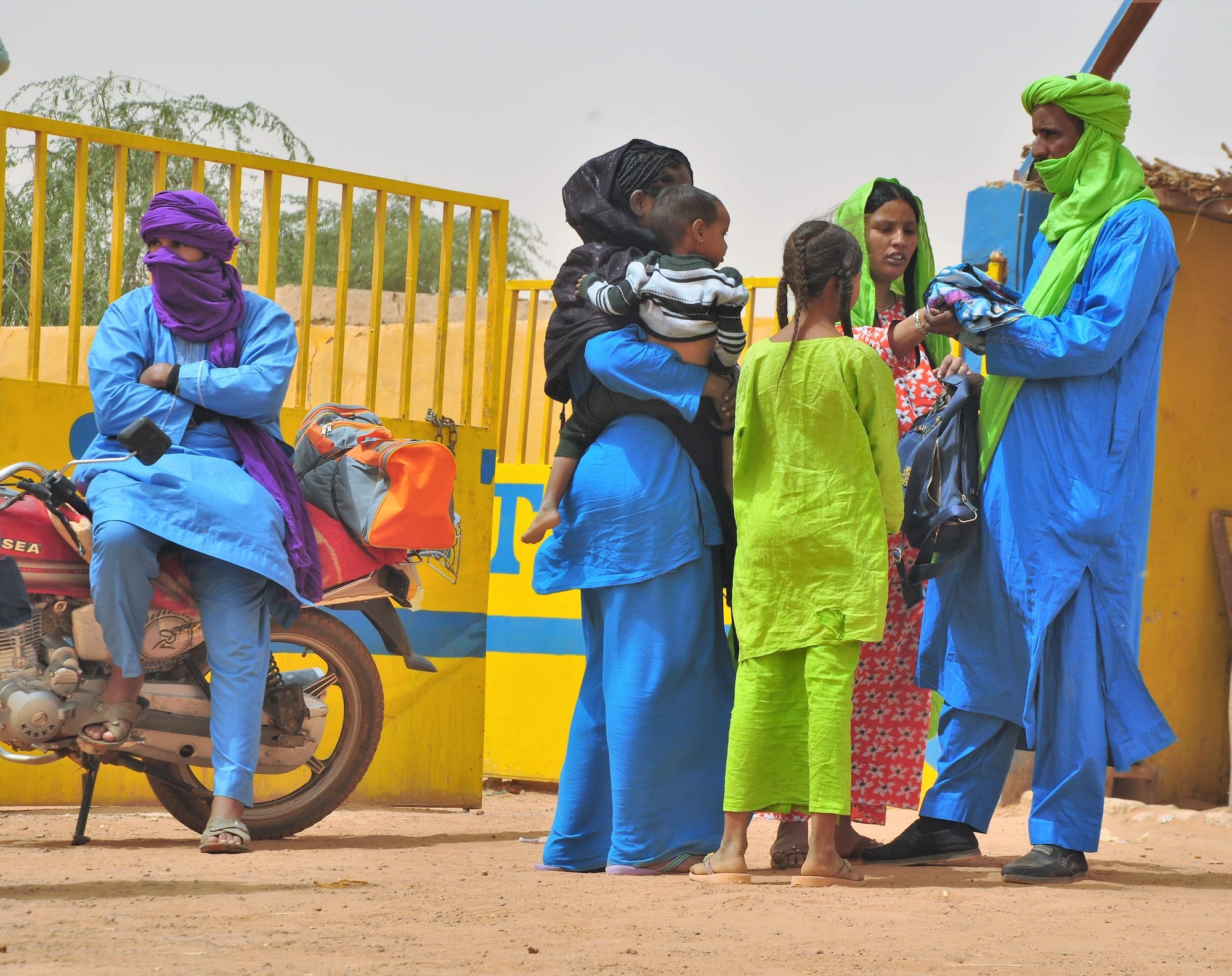
Niger has one of the youngest populations and one of the highest birth rates of any country on Earth, and that fact shapes almost everything about an ordinary day: large households, crowded classrooms, and a workforce that skews remarkably young. Life for most people still runs on the land, in the narrow Sahel band across the south where the one short rainy season decides whether the year will be good or difficult, and on the rhythm of the five daily prayers, audible from mosques in every town and village. It is also, by nearly every economic measure, one of the poorest countries in the world, and since a 2023 coup it has been ruled by a military government contending with jihadist insurgencies on two fronts, a backdrop that shapes daily life mostly through insecurity and a constrained economy rather than through any visible change to how households actually run.
Family and home life
Households are large by almost any global standard, extended families sharing walled compounds and raising, on average, more children than almost anywhere else in the world; Niger's total fertility rate has been recorded at around six births per woman, and the population is doubling roughly every twenty years. Family and identity in Niger vary by people: Hausa households in the densely settled south, Zarma-Songhai families along the river, Tuareg households organised around the wider clan and, for some, a seasonal camp near the herds, and Fula and Wodaabe families whose lives follow the movement of cattle to and from pasture. Across these groups, the extended family, rather than the individual household, remains the basic unit that organises daily life, work and support.
Work, school and the rhythm of the day
Most people farm millet and sorghum or herd livestock, work governed less by a clock than by the single rainy season, roughly June to September, on which the whole agricultural year depends; a poor rains year can quickly become a food security crisis. In the towns, trade, small workshops and government or aid-sector jobs follow more conventional hours, and Niamey, Maradi and Zinder are the main commercial centres. Because the population is so young, schools are often crowded and under-resourced, and nearly half the population is under the age of fifteen; getting children into and through school remains a genuine daily struggle for many families rather than a settled routine.
Community life and public spaces
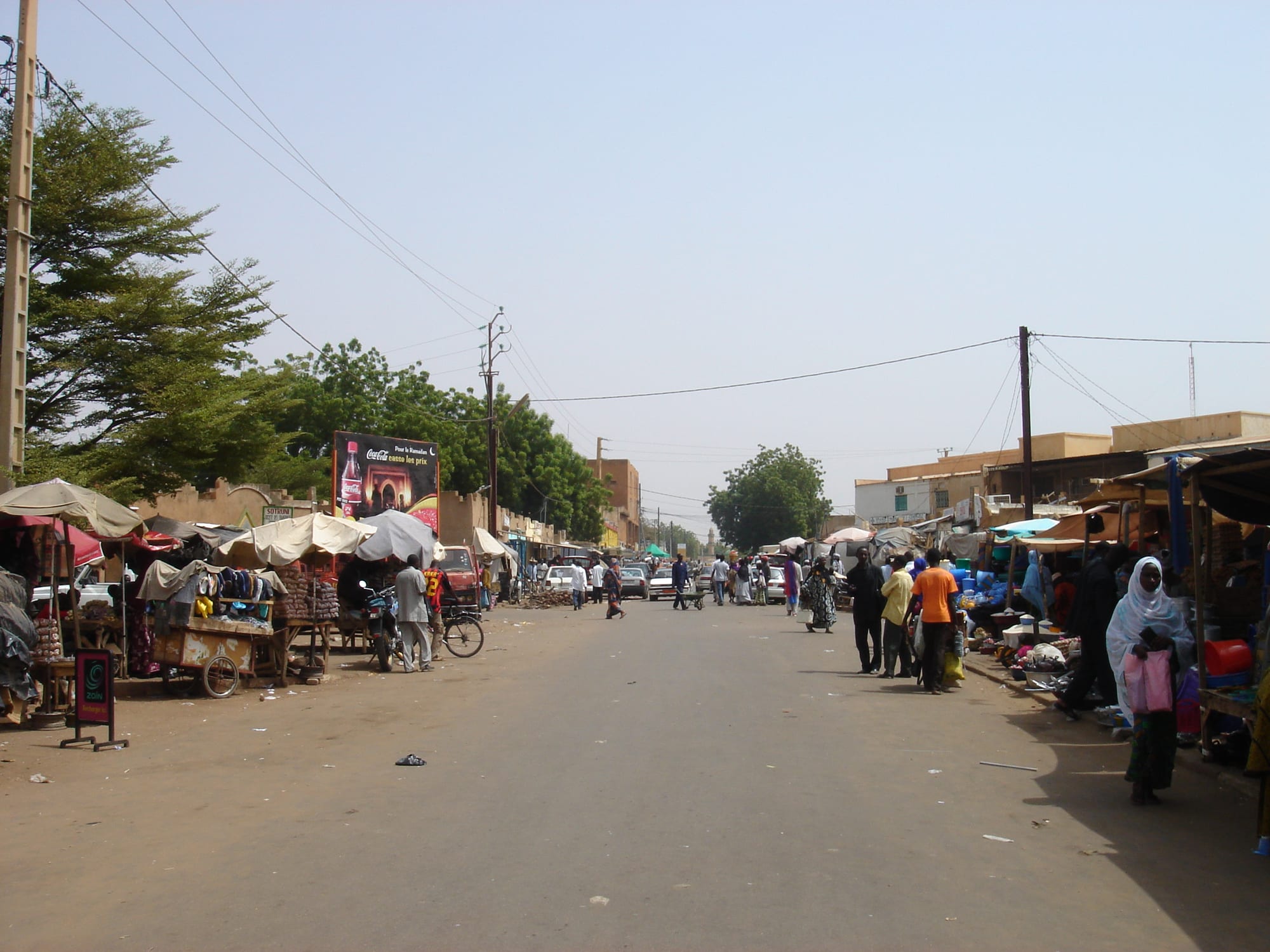
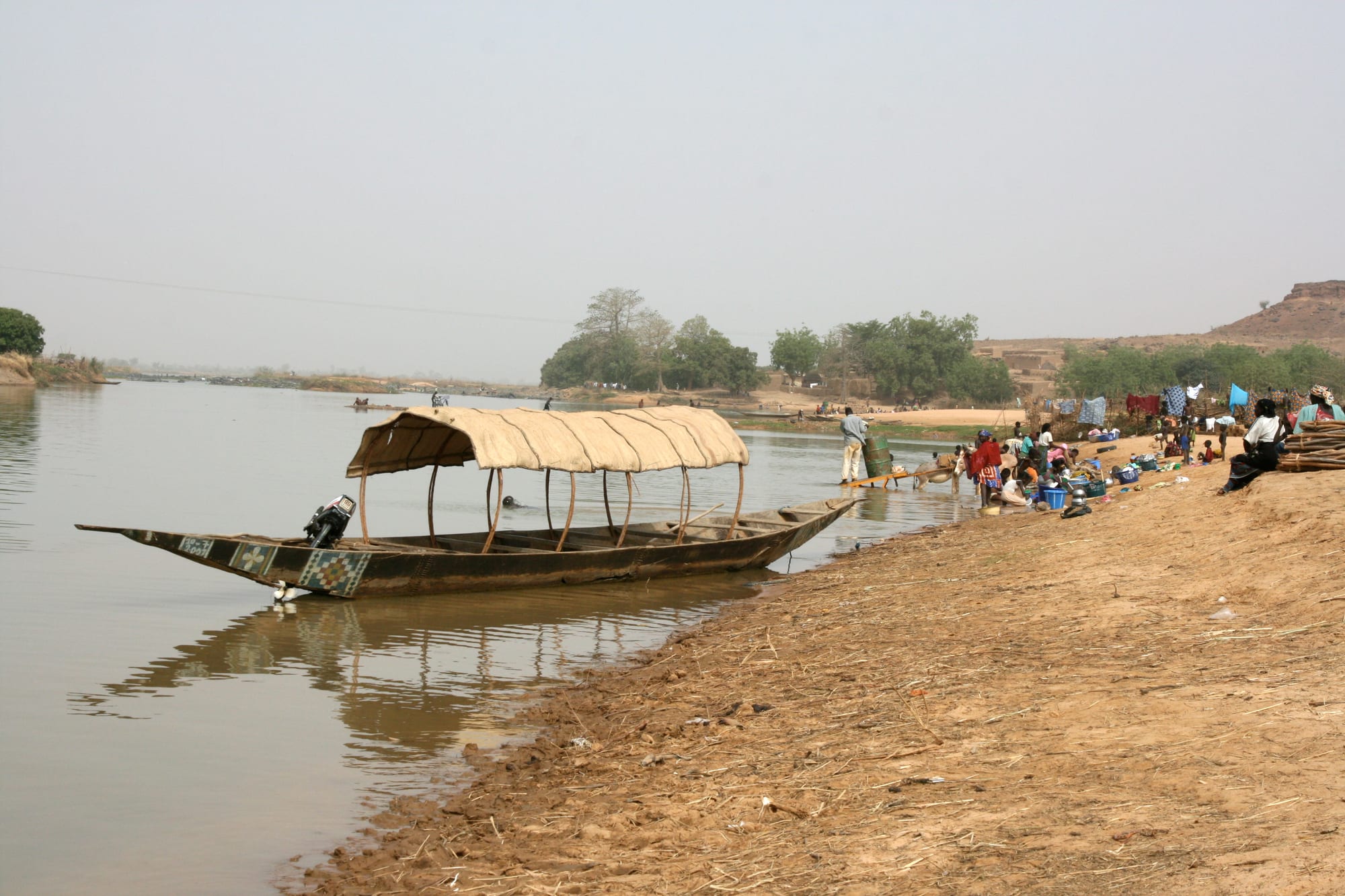
The market is the country's central public space, whether the Grand Marché in Niamey or a smaller weekly market in a Sahel town, where produce, livestock and household goods change hands and much of the week's social contact outside the family happens. Along the Niger River, the country's one major waterway, riverbank settings such as the village of Boubon serve as a genuine communal space: pirogues loaded and unloaded, washing done at the water's edge, and animals watered, all in the same stretch of bank. Mosques anchor neighbourhood life at prayer times in towns and villages alike, and, for Tuareg, Fula and Wodaabe communities, seasonal gatherings such as the Cure Salée near In-Gall bring together herding families who are otherwise spread across the desert and Sahel for much of the year.
Free time and weekends
Traditional wrestling, lutte traditionnelle, is hugely popular, and its yearly national championship draws large, enthusiastic crowds, alongside informal wrestling matches that are a common sight in towns and villages. Storytelling and music from griots, accompanied by the one-stringed goje and calabash drums, remain a living part of free time rather than a historical curiosity, particularly in the evening once the day's heat has broken. For herding communities, the Gerewol courtship dances held during the Cure Salée gathering are a major yearly social occasion, in which young Wodaabe men spend hours in elaborate makeup dancing to be judged the most beautiful. Family visiting, tea drinking and, in the evening, sitting outside once temperatures drop are the ordinary way most free time nationwide is actually spent.
A visitor's ordinary day
There is effectively no independent tourism to describe honestly: most governments advise against all but essential travel to Niamey and against all travel to large parts of the rest of the country, and since the 2023 coup, Western security cooperation has ended while consular help on the ground has become very limited. Where travel happens at all, it is arranged through an established local operator, typically with a hired vehicle, a guide and, in places, a military escort, and it is a cash economy in CFA francs and euros, with card acceptance minimal outside Niamey. Heat is a constant practical factor: the cool season from December to February is the only comfortable time to be outdoors for any length of time, and even then daytime temperatures climb quickly once the sun is up.
What to take away
Ordinary life in Niger is organised, more completely than in almost any other country, around raising the next generation: a very young population, large households, and a day shaped by the rains, the harvest and the five calls to prayer, carried on within a security and poverty picture that remains genuinely difficult.