History · Niger
Niger: The River and the Sahara
A vast, landlocked country two-thirds desert — the caravan city of Agadez, the trans-Saharan trade, a late and violent French conquest, uranium wealth that never reached the people, and a run of coups ending in a 2023 military takeover
By Worldlore Editorial · 10 September 2026
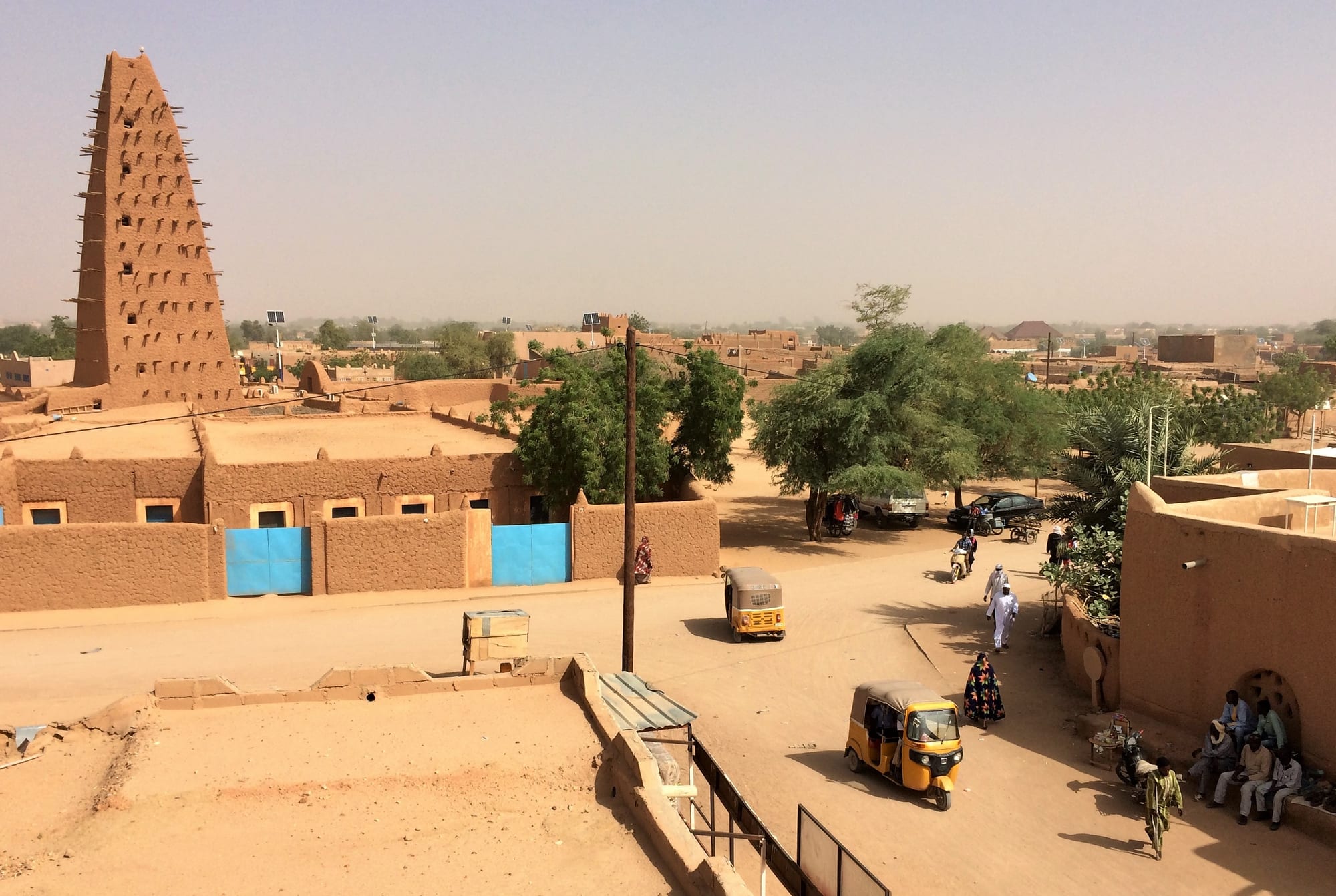
Desert, Sahel, and a sliver of river
Niger is one of Africa's largest countries and one of its poorest, landlocked in the middle of the continent, with the Sahara covering the north and the semi-arid Sahel across the south. Almost all of its 26 million people live in the far south, along a short stretch of the Niger River and the border with Nigeria. It has the highest birth rate in the world, and it holds some of the planet's richest uranium deposits — a combination that captures the gap between the country's resources and its people's lives.
A short history
- to 15th century
Trade and empires
The Niger bend under Mali then Songhai; caravan routes north.
- 15th century
The Sultanate of Agadez
A Tuareg state controlling the desert trade.
- 1804–1900s
Sokoto's reach
The Hausa lands of the south drawn towards the Sokoto Caliphate.
- 1899
The Voulet–Chanoine column
A French expedition burns its way across the south.
- 1922
Colony of Niger
Incorporated into French West Africa.
- 1916–1917
The Kaocen revolt
A Tuareg uprising at Agadez is crushed.
- 1960
Independence
Hamani Diori becomes the first president.
- 1974
First coup
The army takes over amid a devastating drought.
- 1990s–2010s
Tuareg rebellions
Two northern insurgencies over neglect and uranium revenue.
- 2023
The coup
The presidential guard removes an elected president.
Empires and caravans
The southern belt of Niger was for centuries a periphery of the great Sahel states — the empires of Mali and then Songhai controlled the Niger bend, and the Hausa city-states and Kanem-Bornu traded and warred across what is now the south. From the 15th century the Sultanate of Agadez, a Tuareg polity, taxed and protected the caravans that carried salt, gold, cloth and enslaved people between West Africa and the Mediterranean. The Sokoto jihad of the early 1800s pulled the Hausa areas towards its caliphate.
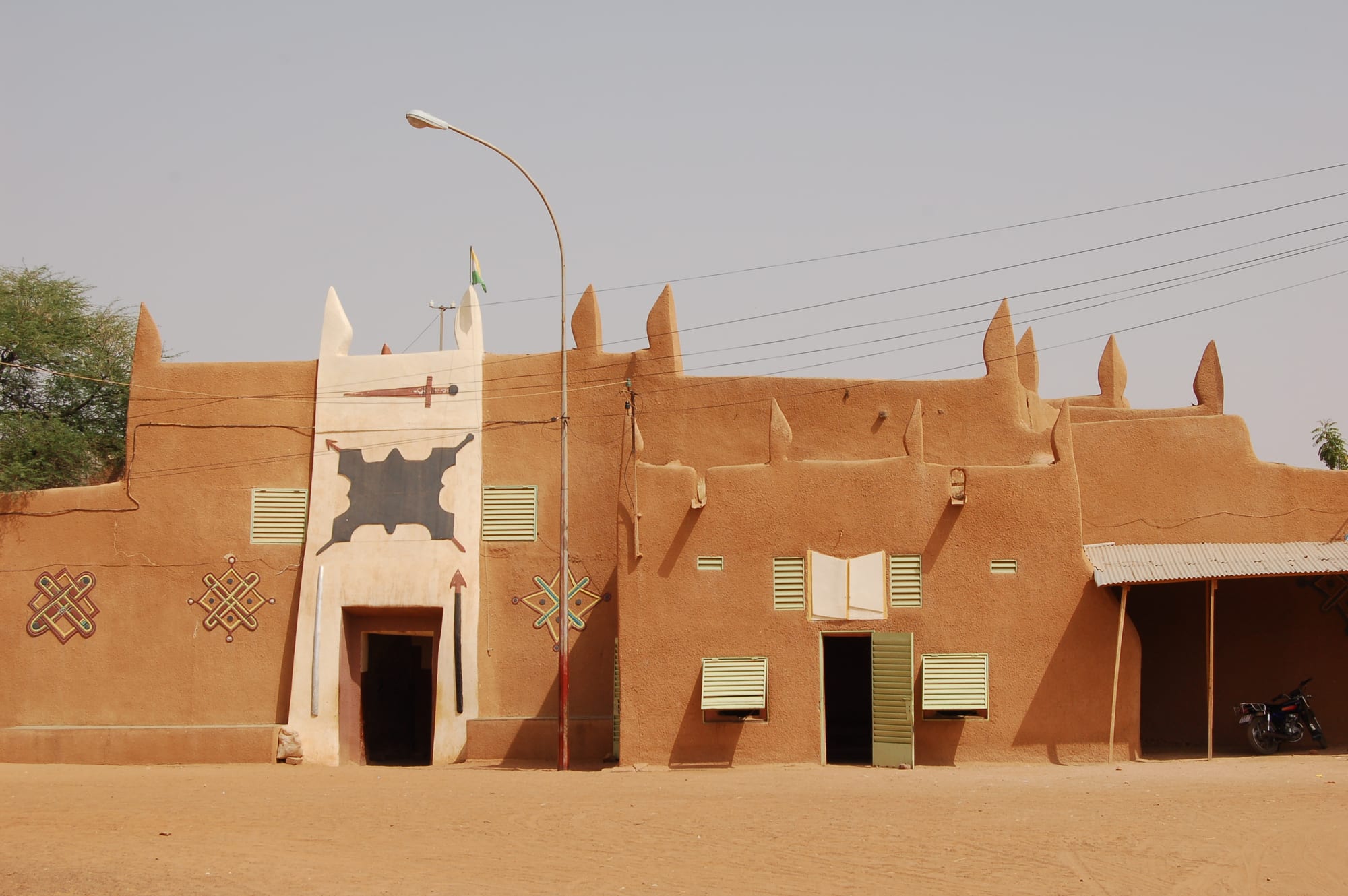
The conquest
France reached the Niger from the west and pushed east in the 1890s. The most notorious episode was the Voulet–Chanoine mission of 1898–99, sent to link France's Saharan and Chadian claims: it massacred villagers, burned towns and enslaved people along its route in southern Niger, and when Paris sent an officer to stop it, the two commanders had him killed and declared they would found their own empire before their own troops shot them. France organised the territory as a military district, made it a civilian colony in 1922 within French West Africa, and put down a major Tuareg revolt around Agadez, the Kaocen rising of 1916–17, with great severity.
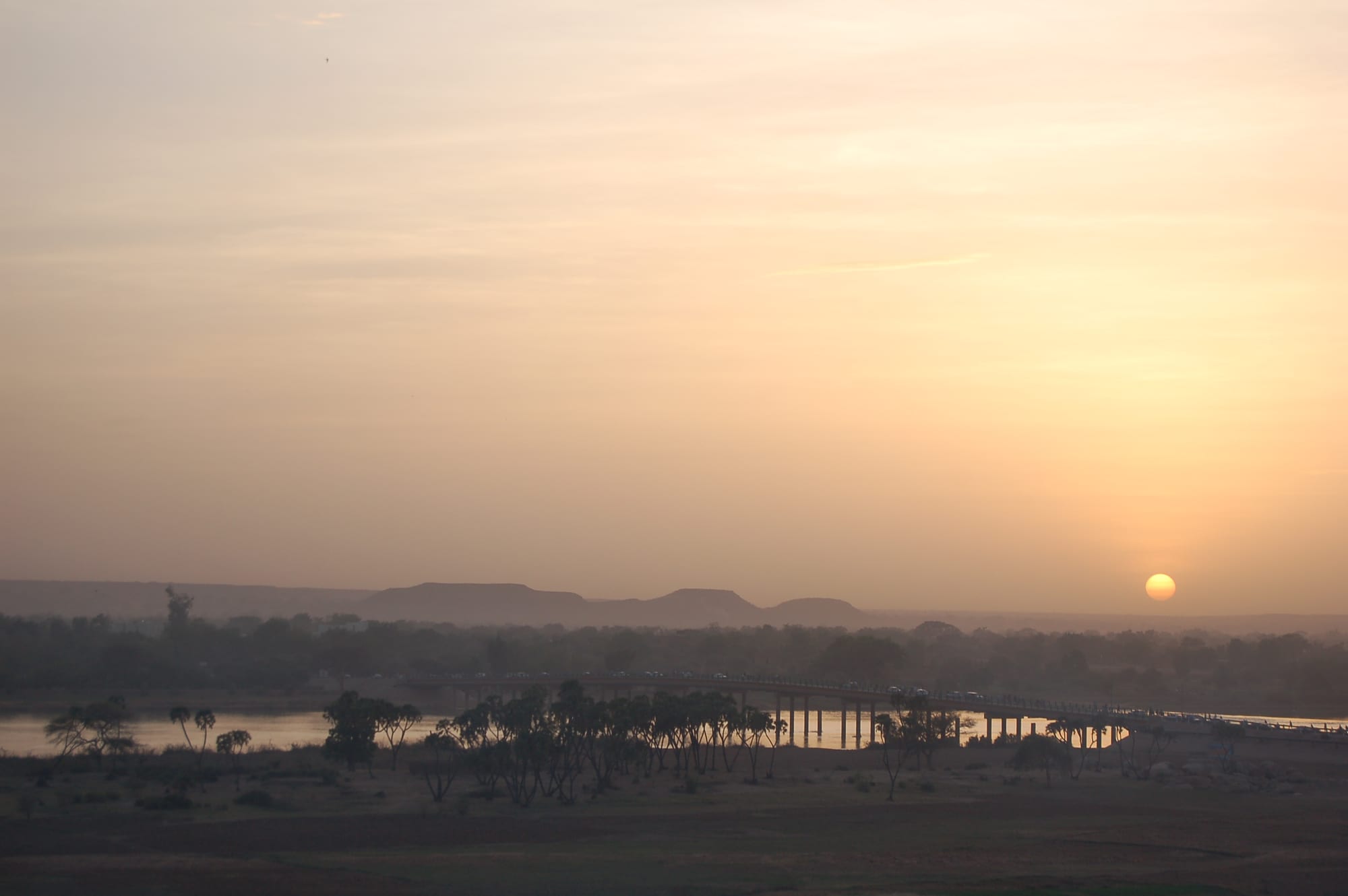
Independence, drought, and coups
Niger became independent on 3 August 1960 under Hamani Diori, who ran a one-party state closely tied to France. The Sahel drought of 1968–74, which killed livestock and people across the region, discredited his government, and in 1974 Lieutenant Colonel Seyni Kountché seized power. Military and single-party rule continued until a national conference in 1991 opened the way to multiparty politics — which then cycled through elected governments, further coups in 1996, 1999 and 2010, and one peaceful handover between elected presidents, in 2021.
Uranium, Tuareg revolt, and jihad
France began mining uranium at Arlit in the northern desert in 1971, and for decades Niger's ore powered French nuclear plants under contracts widely criticised as favouring the French company Areva (now Orano) while Niger stayed near the bottom of the UN's human development index. Grievances over the neglect of the north and the distribution of mining revenue fed two Tuareg rebellions, in 1990–95 and 2007–09. From the 2010s, jihadist groups linked to al-Qaeda and the Islamic State spread from Mali and around Lake Chad into Niger's borderlands, killing thousands and displacing hundreds of thousands, and drawing in French and American troops and drone bases.
The 2023 coup
In July 2023 the presidential guard detained President Mohamed Bazoum, elected two years earlier, and its commander declared a junta. The new government expelled French troops, turned towards Russia, and joined Mali and Burkina Faso — both under their own coup regimes — in leaving the West African bloc ECOWAS to form an Alliance of Sahel States. The jihadist violence that the takeovers were partly justified as addressing has continued to worsen.
What Niger carries
Niger sits on top of a nuclear fuel supply and beneath one of the world's fastest growing populations, in a strip of farmland squeezed between the advancing desert and an insurgency. Its history since the brutal French conquest has been a search for a workable government — one-party, then military, then fitfully democratic, now military again — that could turn the country's mineral wealth into something its people could feel. That search is still going on.