Culture & Customs · Niger
Niger: The Joking Cousin and the Third Glass
A greeting before anything else, tea poured three times over, teasing between allied peoples that keeps the peace, and a Sahel year marked by naming days, weddings, wrestling and the herders' great gathering
By Worldlore Editorial · 30 September 2026
A guest sits in the shade while the host prepares tea. Green tea, sugar and sometimes mint are mixed, and the tea is poured back and forth between pot and glass before it is served in small glasses. There will be three rounds, each sweeter than the last. In the Tuareg saying, the first glass is bitter like life, the second sweet like love, and the third light like a breath of death. The ritual cannot be hurried, and that is the point: in Niger, time given to a guest — to greet them properly, to sit with them, to share a glass — is the clearest measure of respect.
Faith, identity and values
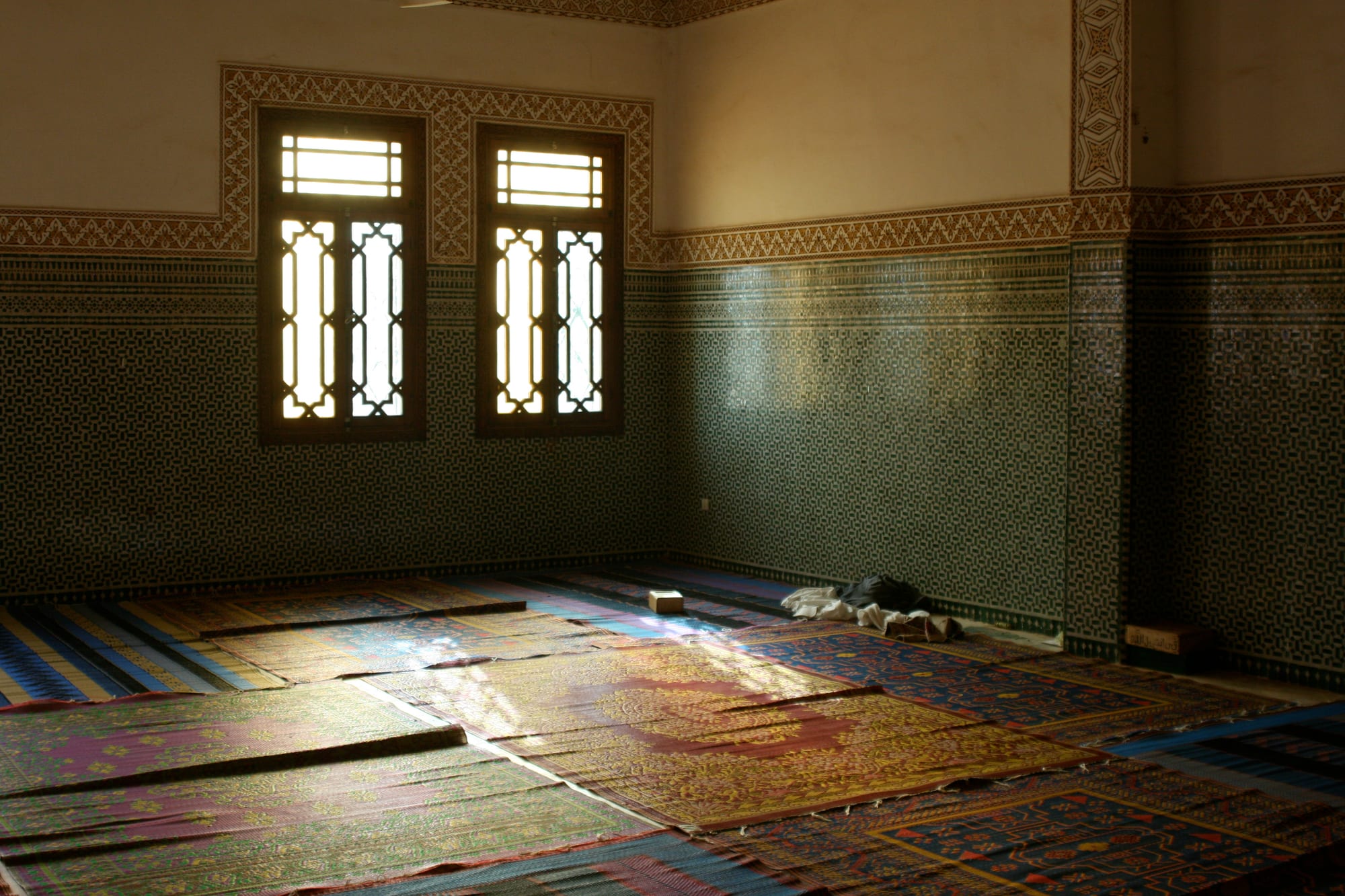
Niger is one of the most thoroughly Muslim countries in the world. More than 98 per cent of the population is Muslim, most of them Sunni following the Maliki school, and Christians and followers of other faiths together make up less than 2 per cent. The rhythm of the five daily prayers shapes the day in towns and villages alike, and Islamic festivals are the high points of the year.
Within that shared faith, Niger's peoples keep distinct identities. Hausa farmers and traders form the largest group, across the densely settled south. The Zarma, close relatives of the Songhai whose oral traditions place their origins in Mali, live in the west, around Niamey and Dosso, where the Zarmakoy, the traditional ruler of Dosso, long held pre-eminence. The Tuareg live across the desert north, Fula herders, including the Wodaabe, move with their cattle through the Sahel, and the Kanuri live in the south-east. Older social distinctions persist in places: among the Zarma, for instance, griot genealogists, the jasare, and leatherworking artisans form distinct groups, and these distinctions can still weigh on marriage choices.
Among the Tuareg, the veil is worn by men rather than women. Adult men traditionally covered the face in the presence of women, strangers and in-laws, though the practice has loosened with life in towns, while Tuareg women do not veil their faces.
What binds these communities together as much as anything is the joking relationship, a practice inscribed by UNESCO in 2014. Certain peoples, clans and families are linked as symbolic cousins, and when their members meet they are expected to tease and taunt one another — in the market, in the fields, at the office, at the well, and at weddings, naming ceremonies and funerals. Behind the play lies a serious code: joking partners must tell each other the truth, help each other and settle disputes peacefully. The practice is valued as a tool of reconciliation, one that also softens the barriers of age and hierarchy.
Greetings and meeting people
In Niger, nothing should begin without a greeting. Before asking a question, making a purchase or starting any business, people greet — and greet everyone in a group, not just the person they have come to see. Greetings are also a chain of polite questions about health, family, work and the night's sleep, and the answers are always positive, even for someone who is unwell; bad news, if it comes, comes afterwards. Thanking God is part of the reply.
In Hausa, the most widely spoken language, the all-purpose greeting is "sannu", which can be extended to fit whatever someone is doing: "sannu da aiki", greetings on your work, "sannu da zuwa", welcome, or "sannu da kula", thanks for taking the time to visit, all answered with "yawwa". In the morning the question is "ina kwana?" — how did you sleep? — and the answer "lahiya lau", in health. The Islamic "salamu alaikum" is answered with "alaikum salam". Zarma greetings follow the same pattern, with formal and informal forms depending on who is being addressed.
Physical contact follows conservative lines. Men are advised not to shake hands with married women, and it is simplest to let the other person decide whether to offer a hand. The right hand is used for eating and for giving or receiving anything.
Hospitality and being a guest
Hospitality begins with the greeting itself, and a visitor is formally welcomed, thanked for coming and asked after before anything else happens. Among the Tuareg, the tea ceremony is the great expression of welcome, prepared for guests and drunk before and after work, with its three glasses poured one after another.
Food and drink are shared and passed with the right hand, and the Hausa language has set phrases for every stage of a visit: "sannu da zuwa" to welcome a guest on arrival, and "sannu da kula" to thank someone for taking the time to call. Joking relationships reach into homes and families as well as public life, so a guest who turns out to belong to a "cousin" people may find the conversation turning to good-humoured teasing — which is meant, and taken, as a sign of closeness rather than offence.
Festivals and life's big moments
The Islamic calendar sets the main festivals, from the month of Ramadan to Tabaski, the Feast of the Sacrifice, and the festival greeting in Hausa is "barka da salla". The civic calendar centres on 3 August, Independence Day, marked with official ceremonies and the planting of trees.
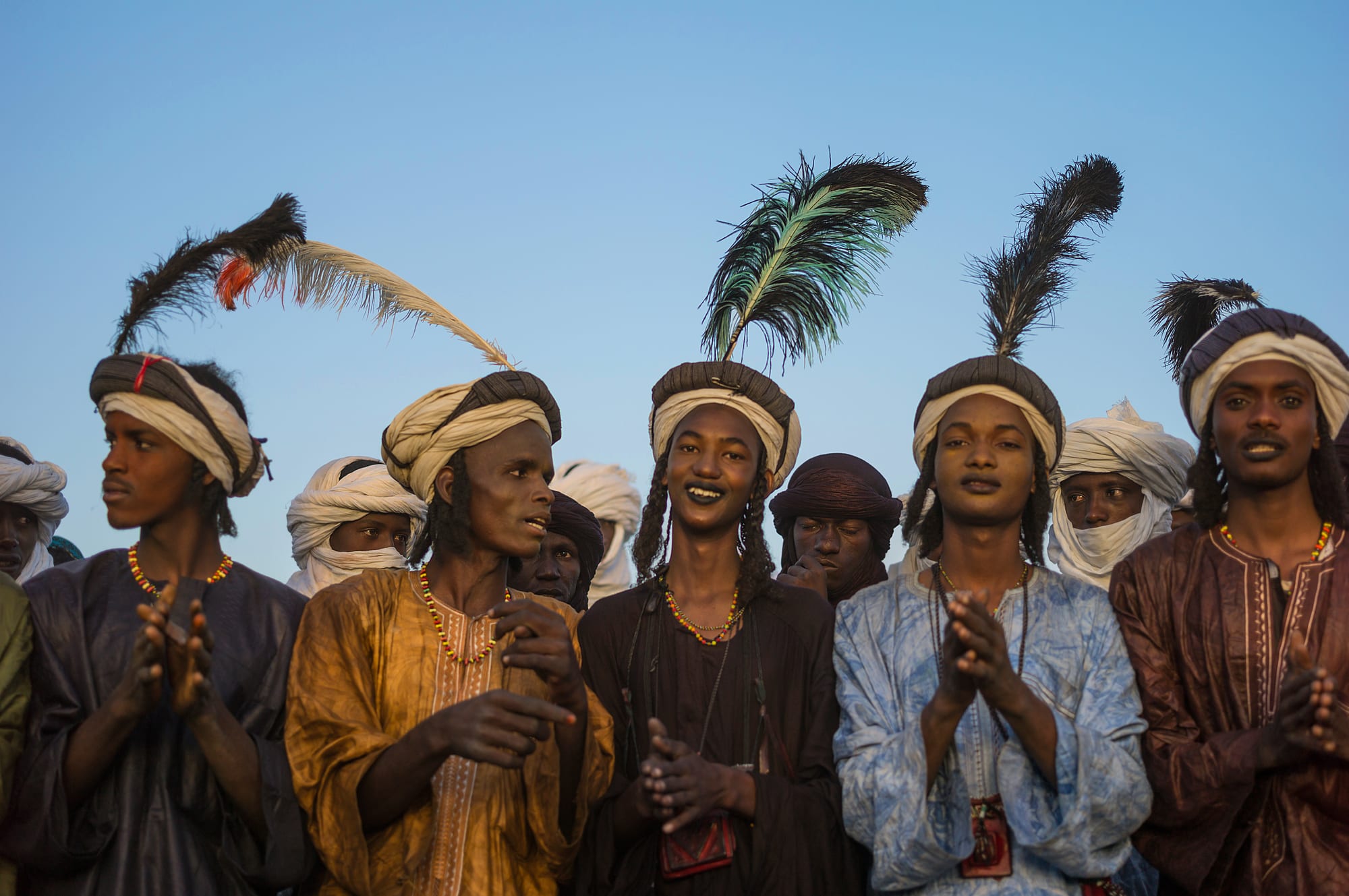
Towards the end of the rainy season, herders converge on the pastures and salt flats near In-Gall for the Cure Salée, a great gathering of Tuareg and Wodaabe herders. Its most famous spectacle is the Wodaabe Gerewol, a male beauty contest and courtship ritual in which young men in make-up, jewellery and their finest clothes line up to be inspected by young women, grinning broadly and rolling their eyes to show off the whiteness of their teeth and eyes. It is the women who choose.
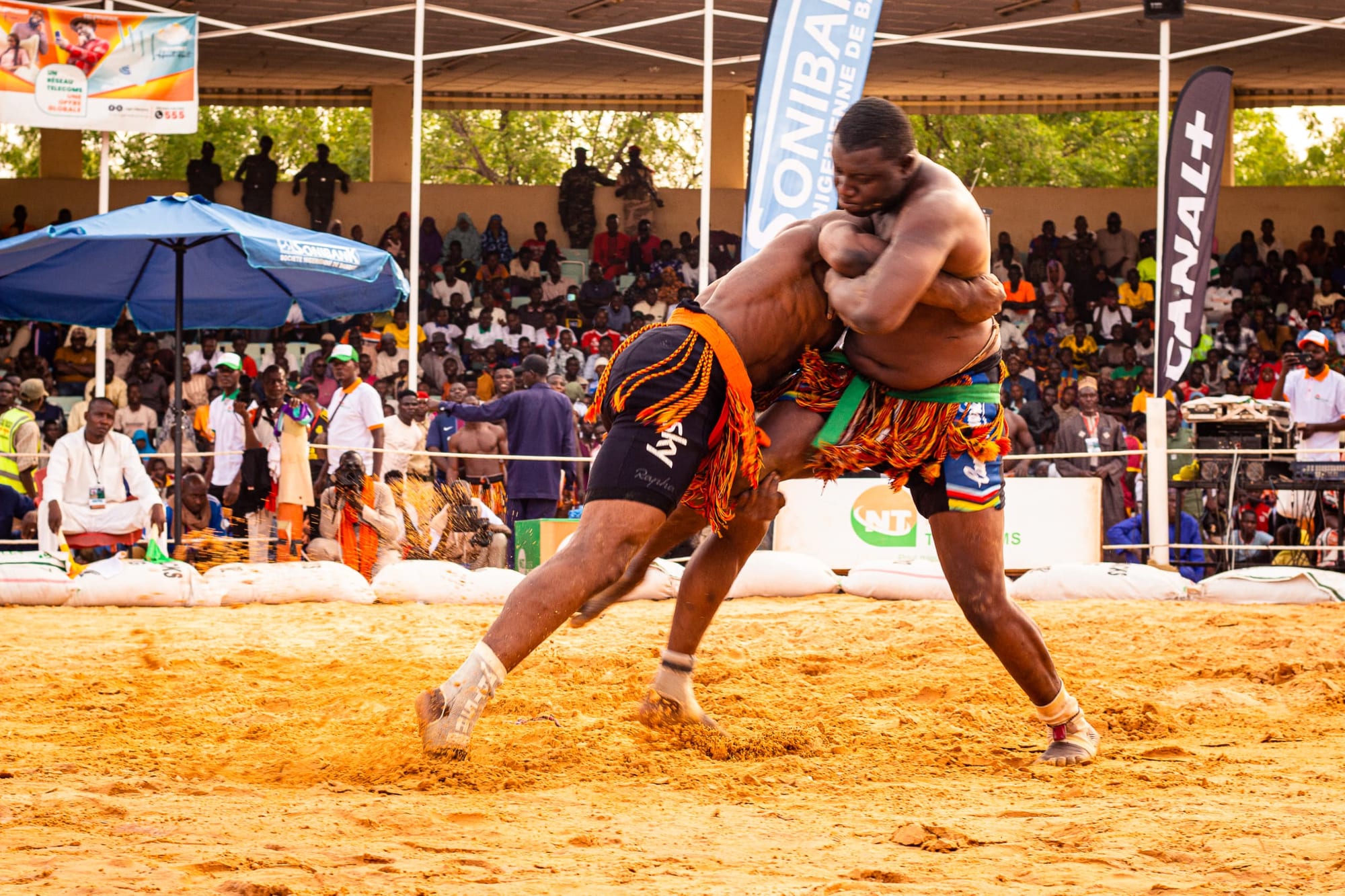
Traditional wrestling, lutte traditionnelle, is the national sport, and its annual championship, the Sabre national, has been held since 1975. The best wrestlers from each region meet in a different city each year, and the champion is presented with a ceremonial sabre before crowds that fill the arena.
A birth is celebrated a week later with a naming ceremony, known as bon-cabey in Zarma and zanan suna in Hausa. An imam takes part, the child's name is announced, and families who can afford it slaughter a ram or even a bull. Well-wishers offer blessings such as the Zarma "Irikoy m'a no alomar kuku", may God give the child long life.
Marriage unites families more than individuals. Among the Zarma, a go-between traditionally opens the request with symbolic gifts of money, one of them called "my child wants your child", followed by an engagement gift for the bride and, to seal the engagement, a sheep presented by the groom's friends. At the marriage itself, the families agree on the marriage payment and marabouts bless the union in the couple's absence; later the groom's friends come to fetch the bride, who is led to her husband's home hidden under a woven cotton blanket while her unmarried friends sing of separation. Weddings that once lasted seven days now usually take one to three. Among the Hausa, the marriage is sealed by the fatiha, the religious contract, before a delegation that includes an imam, with kola nuts and small sums of money shared among relatives and guests; the bride's hands and feet are decorated with henna, and her new room is furnished with woven mats, decorated pottery, calabashes and colourful cloth.
Funerals follow Muslim rites, and mourners offer short prayers for the dead — in Zarma, "Irikoy ma yaffa", may God pardon them. Funerals are also among the occasions at which joking relationships come into play.
Arts, crafts and music
Much of Niger's cultural memory is carried by griots, the hereditary genealogists and praise singers who recite the histories of families and lineages at ceremonies; among the Zarma they form a distinct group, the jasare.
Among the Tuareg, music has a remarkable guardian. The imzad, a single-stringed bowed instrument made from half a gourd covered in animal skin, with a string of horsehair, is played only by women and is used to carry messages of peace and social cohesion. The practices and knowledge linked to it, shared by the Tuareg of Algeria, Mali and Niger, were inscribed by UNESCO in 2013.
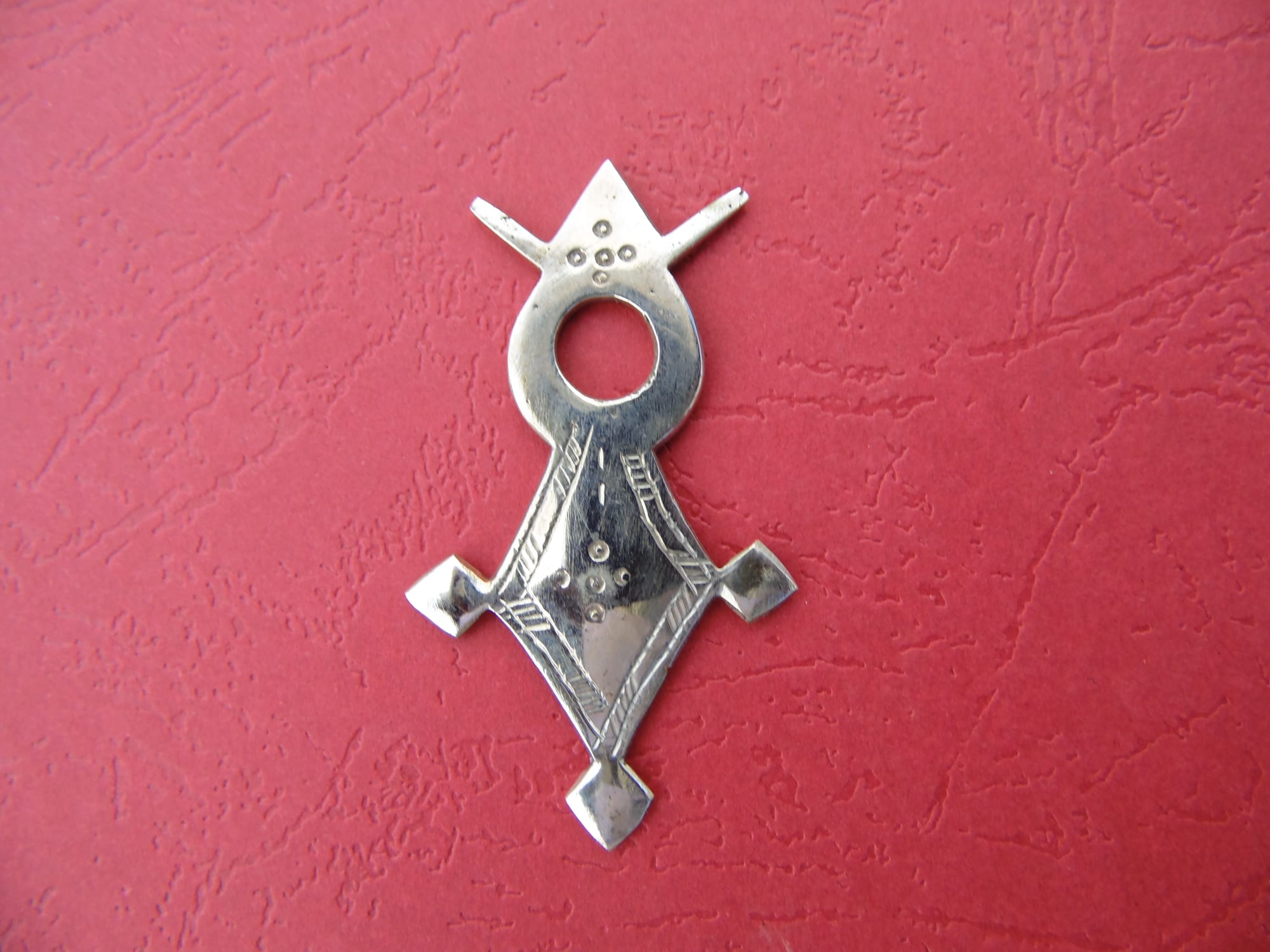
Tuareg smiths, the inaden, are also the makers of the country's best-known jewellery, the silver pendant known as the Agadez cross, one of a family of regional "crosses". According to popular accounts it is a symbol of love, and it is traditionally handed down from father to son as he comes of age.
Craft and decoration also fill domestic life. The furnishing of a Hausa bride's room, with its mats, patterned pottery, calabashes and bright fabrics, is a display of skill and family pride, and the elaborate make-up, beadwork and embroidered robes of the Gerewol turn the Wodaabe dancers themselves into works of art.
Dos and don'ts for visitors
- Do check the latest government travel advice before any trip; most governments advise against all travel to Niger, or against all but essential travel to Niamey, citing terrorism, kidnapping and armed banditry.
- Do greet before anything else — before asking directions, buying or starting business — and greet everyone present, not just one person.
- Do answer greetings positively, even on a bad day; "lahiya lau", in health, is always the right reply in Hausa.
- Do use the right hand to eat, give and receive.
- Don't, as a man, offer to shake hands with a married woman; let others decide whether to offer a hand.
- Do accept tea when it is offered and give the ritual the time it takes.
- Do ask before photographing people, and be discreet around mosques and ceremonies.
What to take away
In Niger, respect is measured in time — the time taken to greet, to ask after a family, to drink three glasses of tea — and visitors who slow down to match it will find a courtesy that runs deeper than any rule.