Culture & Customs · Nicaragua
Nicaragua: Who Causes So Much Joy?
Home altars to the Virgin and a shouted question answered across whole towns, a masked colonial comedy that outwits authority, marimbas and maypoles, and a courteous greeting for everyone in the room
By Worldlore Editorial · 30 September 2026
It is the evening of 7 December, and all over Nicaragua front doors stand open. Inside, families have built altars to the Virgin Mary, decked with flowers, lights and fabric. Groups of neighbours, children in front, move from house to house. At each doorway someone calls out, "¿Quién causa tanta alegría?" — "Who causes so much joy?" — and the answer comes back in a single shout: "¡La Concepción de María!" The visitors sing to the Virgin, and the household hands out sweets, fruit and drinks before the group moves on to the next altar, while fireworks crack overhead. La Gritería, "the shouting", is the climax of the country's best-loved religious season, and it captures something essential about Nicaragua: a faith lived in the home and the street as much as in church, and a hospitality that opens the door to anyone who comes to sing.
Faith, identity and values
Nicaragua holds two broad cultural worlds. The Pacific side, where most people live, is Spanish-speaking, mestizo and shaped by Catholic tradition. The Caribbean coast is home to Creole, Miskito, Garifuna, Rama and Mayangna communities, with their own languages, churches, music and festivals. The Garifuna, whose ancestors combined Indigenous Caribbean and West African roots and settled the Central American coast after leaving Saint Vincent in the eighteenth century, share a language, music and dance tradition with Belize, Guatemala and Honduras that is on UNESCO's list of intangible cultural heritage.
Christianity runs through daily life. A 2019 survey cited by the US State Department put Catholics at around 43 per cent of the population and evangelical Protestants at around 41 per cent, a share that has been growing, with most of the remainder describing themselves as believers without a church; a 2025 poll found Protestants outnumbering Catholics. On the Caribbean coast, Moravian, Anglican, Adventist and Baptist congregations have deep roots. Older Nicaraguans in particular tend to be religiously conservative in manner and appearance, and even the everyday "adiós" carries an echo of that heritage.
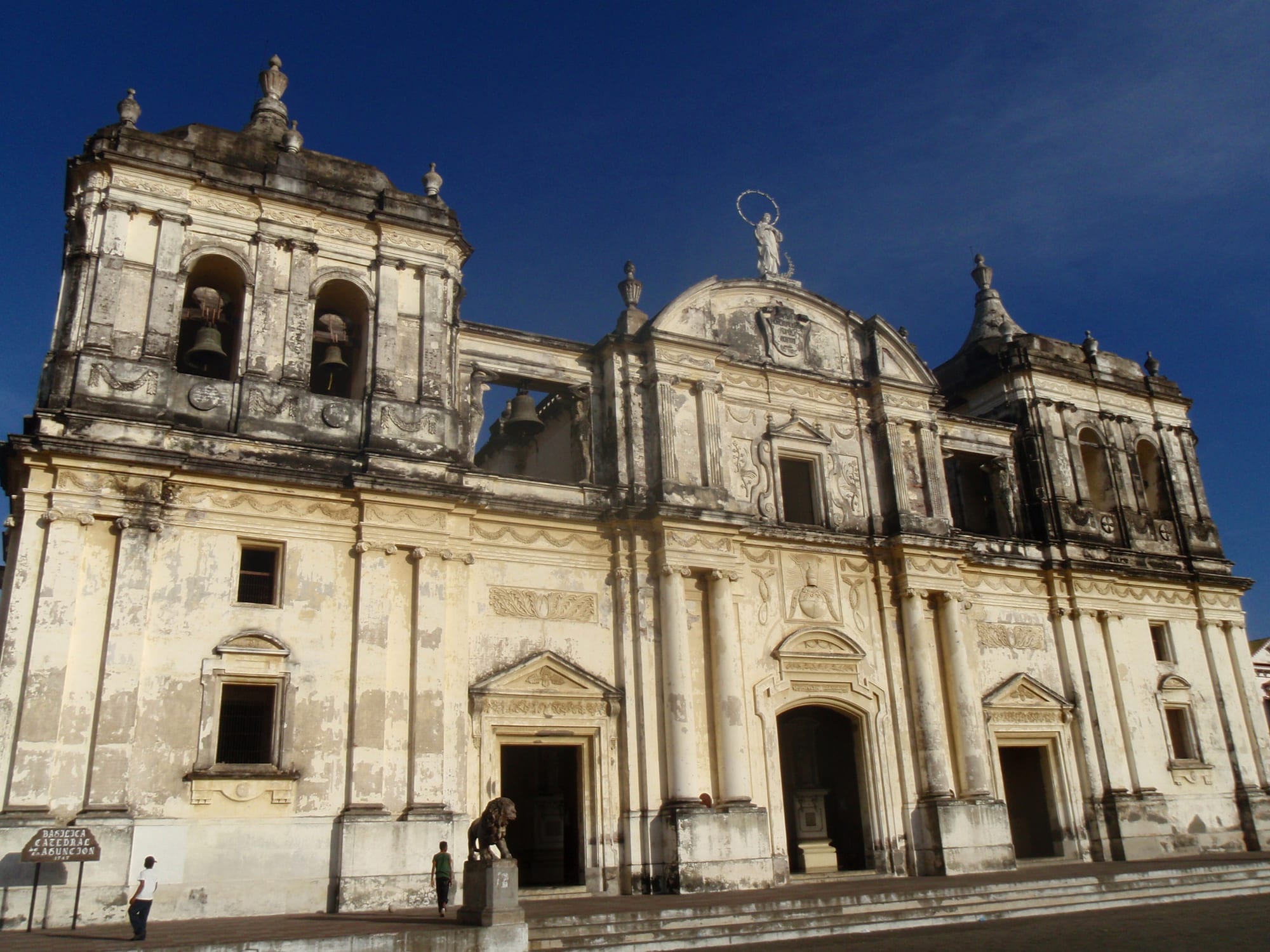
The relationship between church and state has become strained. For several years the authorities have banned religious processions in the streets, and Holy Week observances have been confined to church interiors and grounds, while many Catholic clergy have been expelled or forced into exile. The government attributes the restrictions to the church's alleged role in the 2018 protests; church leaders and foreign governments describe them as violations of religious freedom. For visitors, the practical point is that religious and political subjects are sensitive, and best left alone in conversation with strangers.
Family is the other anchor of identity, and much of social life — meals, celebrations, the building of a home altar — is organised around it. Nicaraguans are proud of their cultural heritage, from folk dances such as El Güegüense to the poet Rubén Darío, and courtesy is valued highly in return.
Greetings and meeting people
Greetings are warm and expected. "Buenos días", "buenas tardes" and "buenas noches" are said to people met in the street or on entering a shop, and "adiós" is used both as a passing greeting and as a farewell. Between women, and between men and women who know each other, a kiss on the cheek is usual; men shake hands, and younger men may slap each other on the shoulder. When introduced to someone, a kiss or a handshake is expected, and in business a handshake is the norm.
At a party or family gathering, each guest is greeted individually, however many people are present, rather than with a single wave to the room. Leaving is simpler: goodbyes are spoken, usually without a second round of handshakes or kisses. Strangers and older people are addressed with the polite "usted" rather than the familiar "tú" or "vos". On the Caribbean coast, a few words of Miskito or Creole English are appreciated.
Hospitality and being a guest
Nicaraguans are known for generous hospitality to foreigners, and volunteers who have lived with Nicaraguan families describe it as humbling. Food offered in a home is part of that welcome, so it is received graciously, and anything that must be declined — even for dietary reasons — is declined with tact rather than a flat refusal.
The same open-handed spirit shapes the great celebrations. During La Purísima, households that build an altar feed and treat everyone who comes to sing at it, and in Masaya the dancers of the Baile de las Negras are received into homes, where hosts offer them traditional drinks and dishes. At a Creole wake on the Caribbean coast, the family serves meals to all who attend, day after day.
In restaurants, upmarket places in the tourist towns often add a service charge to the bill, which is officially optional; outside the tourist areas tipping is uncommon, and taxi drivers do not expect it. Haggling is normal in markets and with street vendors, but not in shops.
Festivals and life's big moments
La Purísima, a novena of nine days of devotion to the Virgin Mary, builds towards La Gritería on 7 December. Its roots are traced to colonial León, where friars at the San Francisco convent used sweets and fruit to draw children to sing before an image of the Virgin, and later asked townspeople to set up altars in their own homes. The famous call and response is credited to Monsignor Gordiano Carranza, parish priest of San Felipe in León, on 7 December 1857. Today the altars go up in late November or early December, and on the night itself thousands of people take to the streets.
Every town also has its fiestas patronales in honour of its patron saint. In Managua, the image of Santo Domingo de Guzmán is carried down from its hilltop church on 1 August to the church of Santo Domingo in the old city centre, where it stays until 10 August before being returned. Many of the faithful take part to fulfil promesas, vows made in gratitude for favours received, and repeat them year after year. In Diriamba, in January, the feast of San Sebastián brings out El Güegüense and other traditional dances such as the Toro Huaco, which accompany the saints' images through the streets. Masaya, named the country's capital of folklore by the National Assembly in 2000, holds some of the richest festivities of all.
On the Caribbean coast, May belongs to Palo de Mayo. Once celebrated mainly in Creole communities such as Bluefields, Pearl Lagoon, Corn Island and Puerto Cabezas, it was declared a festival for all the country's peoples in 1980, when the rallying cry "Mayo Ya!" also took hold. A tree decorated with coloured ribbons becomes the centre of dancing that welcomes the rains and new life, to calypso and soca rhythms traditionally played on instruments that include coconut graters, donkey jawbones, washing tubs and hand drums.
Death is marked with particular care. On the Pacific side, a wake at the family home is followed by the novenario, nine nights of prayer for the soul of the departed. Creole families on the Caribbean coast hold a "Set Up", a vigil that can last several days, with food and drink served to everyone who comes, including breads baked for the occasion with ginger tea and hot chocolate. On the day of the funeral the deceased is dressed in their finest clothes, the service can last for hours, and mourners walk in procession from the home to the church and on to the cemetery, dressed in white, black, lilac or pale blue.
Arts, crafts and music
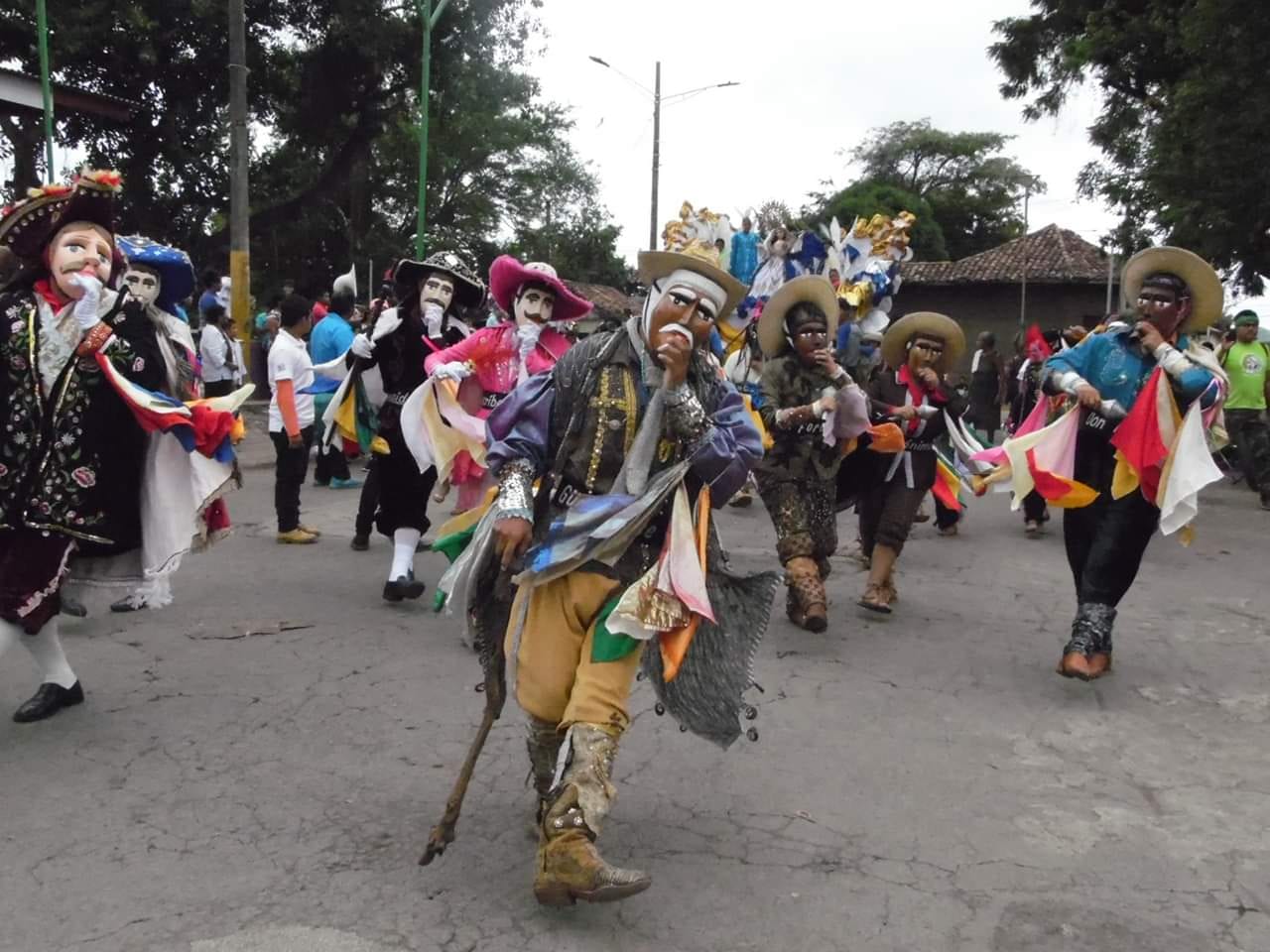
El Güegüense is Nicaragua's signature piece of theatre, and one of the most distinctive expressions of colonial-era Latin America. Combining drama, dance and music, it is performed by a cast of characters in wooden masks and period costume, accompanied by violins, guitars and drums, with dialogue in Spanish mixed with Nahuat, the Nicarao language. Its hero answers the charges of the Spanish authorities with a stream of verbal tricks, appearing to comply while mocking them. UNESCO added it to its list of intangible heritage, while noting that economic hardship and waning interest among the young threaten its future.
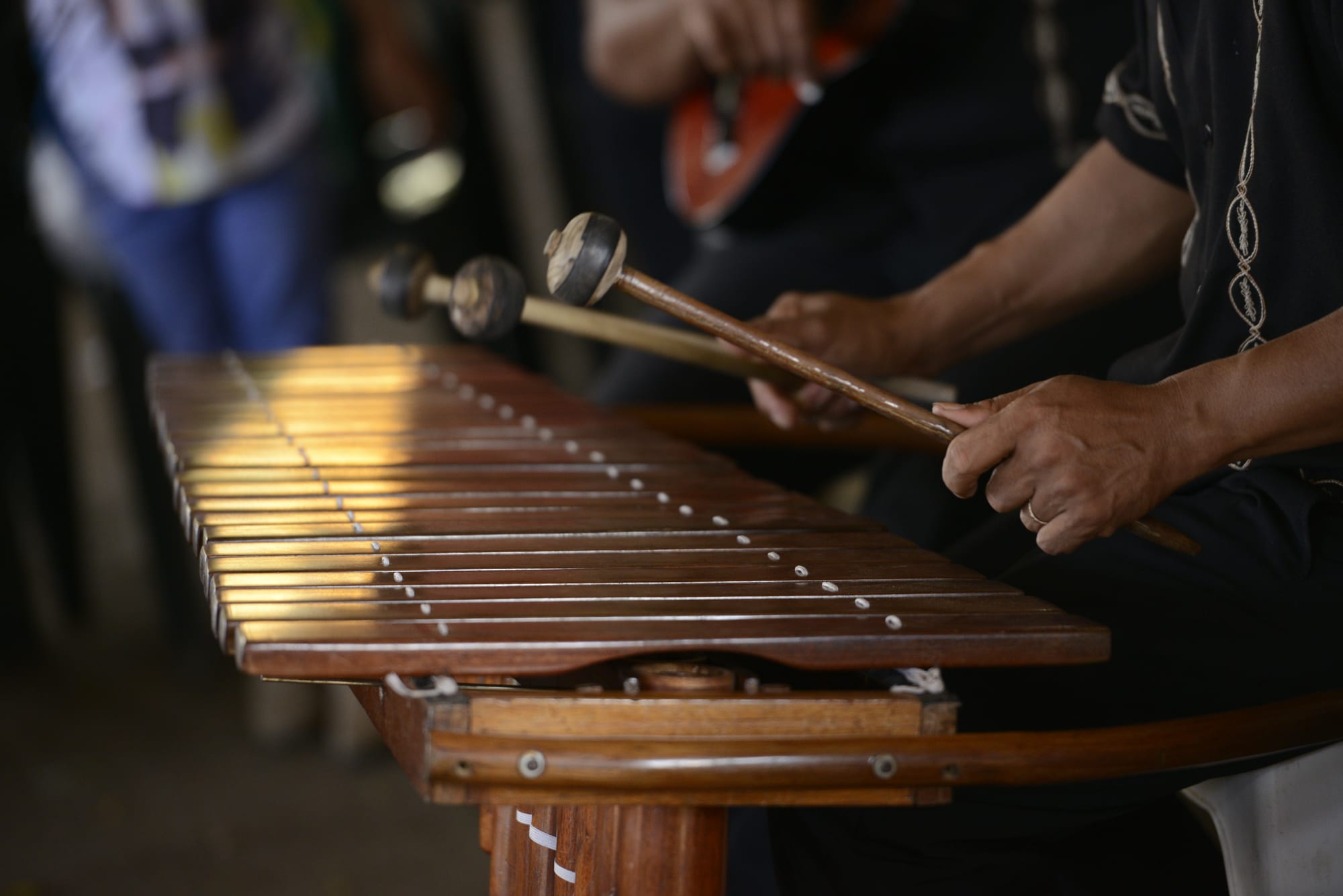
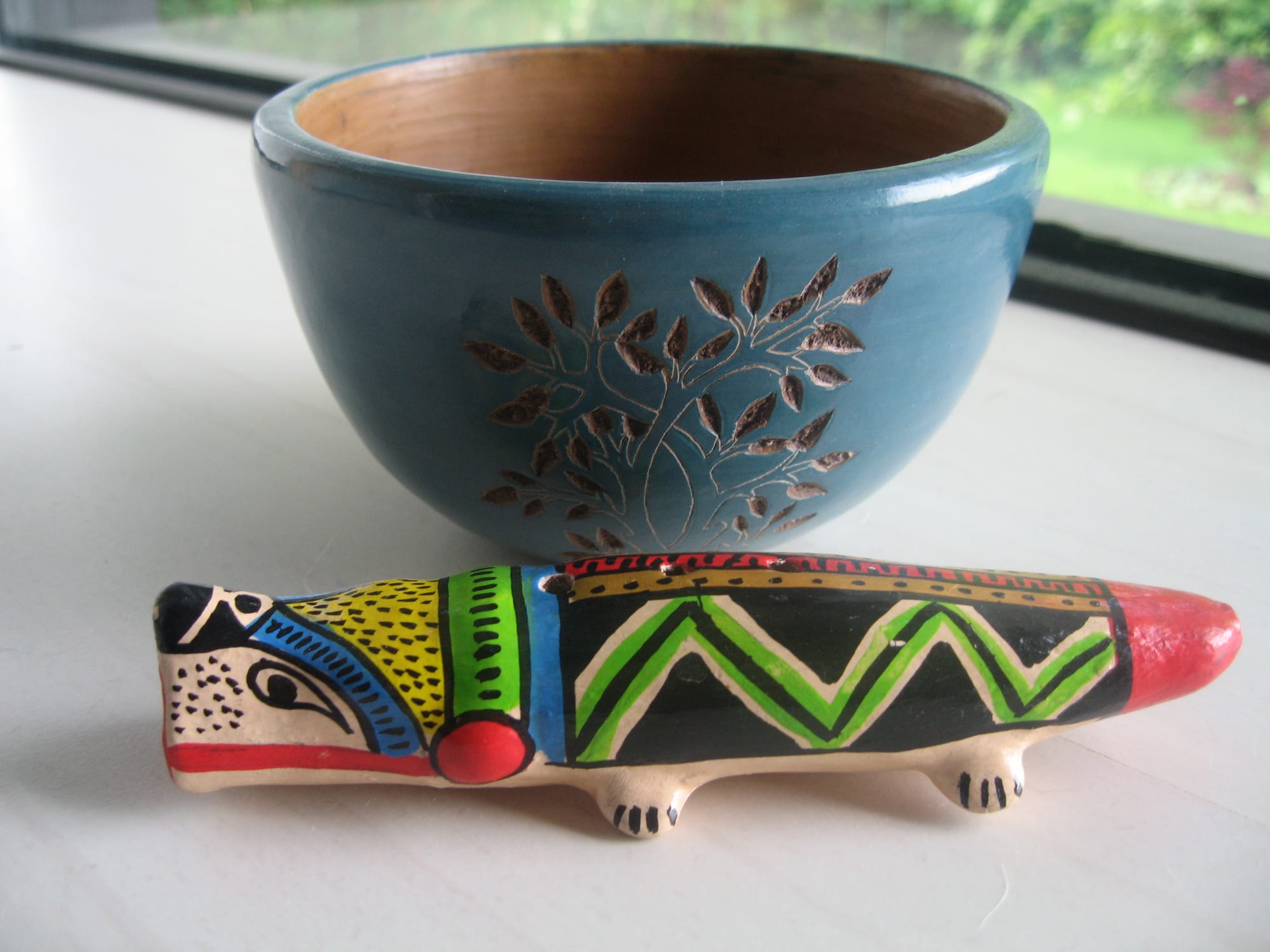
Music is dominated on the Pacific side by the marimba, and especially the marimba de arco, sometimes described as the Indigenous Nicaraguan piano. Masaya's Baile de las Negras, performed in honour of San Jerónimo in the Indigenous community of Monimbó, is danced by couples made up entirely of men, expert dancers who move to the marimba's rhythm. Masaya is also the heart of Nicaraguan craftsmanship, with workshops in Monimbó producing leatherwork, woodcarving, fibre weaving, textiles and ceramics.
Literature holds a special place. Rubén Darío, born in 1867 in Metapa, now Ciudad Darío, and raised in León, led the Spanish-language movement known as Modernismo; his 1888 collection Azul is widely regarded as its first work, and the national library bears his name. Painting found an unusual home in the Solentiname islands of Lake Nicaragua, where, from the mid-1960s, the priest and poet Ernesto Cardenal's community encouraged local farming families to paint. Workshops led by the painter Róger Pérez de la Rocha gave rise to a school of brightly coloured "primitivist" painting, often setting biblical scenes among the islands' own landscapes, which won international recognition and is still practised today.
Dos and don'ts for visitors
- Do check the latest government travel advice before any trip; several governments advise reconsidering travel, and anything that could be read as political or religious activism, including photographing police or protests, is best avoided.
- Do greet people with "buenos días" or "buenas tardes", and use "usted" with strangers and older people.
- Do greet each person individually on arriving at a gathering, rather than with a single wave to the room.
- Do accept hospitality graciously when invited into a home, and decline any food tactfully if it must be declined.
- Do join in if invited to sing at a Purísima altar — the answer to "¿Quién causa tanta alegría?" is "¡La Concepción de María!"
- Do haggle good-naturedly in markets, but not in shops, and check whether a service charge has already been added to a restaurant bill.
- Don't raise politics or the situation of the church with people met casually; these subjects are sensitive.
What to take away
Nicaragua's customs are, above all, generous and communal — doors opened to singers, every guest greeted in turn, food shared with whoever comes — and visitors who answer that warmth with courtesy and discretion will be welcomed like family.