Culture & Customs · New Caledonia
New Caledonia: The Gift and the Word
A length of cloth and a few careful words to open every visit, a yam calendar kept by the clans, stockmen's rodeos in the bush, and several communities sharing an island whose future is still being negotiated
By Worldlore Editorial · 30 September 2026
A visitor arrives at a Kanak homestay. Before anything else, before bags are unpacked or a meal is shared, there is a small ceremony. The visitor stands in front of the host and places a folded length of cloth on the table, a banknote tucked into it, and says a few words: who they are, where they have come from, why they are here. The host listens with head slightly lowered, a sign of respect and attention, then answers and accepts. The exchange, known as la coutume, takes a minute or two. Its value lies not in the gift but in the gesture: a relationship has been opened properly, with humility on one side and welcome on the other. The same logic, on a far grander scale, binds Kanak clans together at births, marriages and deaths — and it is the thread that runs through a territory where several cultures live side by side and are still working out what they share.
Faith, identity and values
New Caledonia is a French territory in Melanesia of around 270,000 people. The Kanak, the Indigenous people, make up roughly two-fifths of the population; people of European descent — both Caldoche families settled for generations and more recent arrivals from France — form the next largest group, alongside Wallisian and Futunan, Tahitian, Vietnamese, Indonesian and Ni-Vanuatu communities. French is the common language, but the Académie des langues kanak counts 28 Kanak languages, along with many dialects and a creole.
Christianity, brought by Catholic and Protestant missions, is the majority faith. The two main traditions draw on different communities: the largest Protestant church, the Evangelical Church in New Caledonia and the Loyalty Islands, is overwhelmingly Kanak, while the Catholic Church has a larger following among the other population groups. For many Kanak, Christian belief sits alongside an older world of ancestors and spirits, in which people share the land with the dead and a bird settling on a branch may be understood as an ancestor keeping watch over the living.
Kanak identity is anchored in the clan. At birth a child receives a name, land rights and a totem from the father's clan, and each clan has its own history, sacred sites, totem and associated colour. Clans are grouped under customary chiefdoms, the chefferies, and relations between them are maintained through exchanges of gifts and speeches. Words carry real weight: at important ceremonies designated speakers, often elders, recall the origins of the families involved, and in the Kanak view speech does not merely describe an agreement but makes it.
Custom also has a formal place in the institutions. The Customary Senate is made up of sixteen members, two from each of the territory's eight customary areas, designated by the customary councils rather than elected, and it must be consulted on laws touching Kanak identity, customary civil status and customary land. Kanak with customary civil status marry and inherit under custom, with official recognition.
Beyond the Kanak world, the rural west of the main island has its own settler culture, known as broussard, from la brousse, the bush. It is built on cattle ranching, horses, hunting and fishing, with echoes of Australian and American frontier life and a strong sense of attachment to the land.
The relationship between these communities is shaped by an unresolved political question. Under the Nouméa Accord of 1998, three referendums on independence were held between 2018 and 2021; all three returned a majority against, but the main pro-independence movement boycotted the third and disputes its legitimacy. Deadly unrest in 2024 over proposed changes to the electoral roll deepened divisions. In 2025 France and most of the territory's parties signed the Bougival agreement on a new status, but the main pro-independence front rejected it, and the question remains unresolved. People hold strong and differing views, and the subject is best left for hosts to raise.
Greetings and meeting people
Politeness matters a great deal. People greet one another in the street, strangers included, with a simple "bonjour", and away from the main roads drivers routinely raise a hand to each other as they pass. On leaving, "au revoir" is standard, and the local "tata" is common too. The territory's tourism body describes the idea of vivre ensemble, living together, as a genuine state of mind: respect for others and a cheerful atmosphere are prized.
In Kanak communities, la coutume is the formal way of introducing oneself. It is made on arriving at a host's home, again on leaving, and before entering tribal land in order to ask permission to be there. The visitor stands before the host, announces the gesture and offers the gift, either on a table or in the hands, with a few words of introduction. Typical offerings for visitors are a 500 or 1,000 CFP franc note, a length of cloth known as manou, a sarong, or a small speciality from home; among Kanak themselves, yams, taro, pandanus mats or Kanak money, traditionally made of shell, may be given. The recipient may lower their head while listening, and once the gift is accepted the visitor is received. What matters, hosts stress, is sincerity rather than the size of the gift.
For tribal stays run through the provincial tourism charter, making la coutume is not a condition of a warm welcome, but it is always appreciated. Arrivals may also be welcomed with a garland of flowers.
Hospitality and being a guest
A stay in a tribu, as Kanak villages are called, is one of the most direct ways to meet Kanak culture, and hosts often invite guests to join in daily life: fishing, planting, weaving pandanus leaves or preparing a shared meal, which is cooked and eaten together as a community effort. Guests are expected to arrange their visit through a homestay or local operator rather than simply turning up, and to follow their host's lead on where they may go. Many places on customary land, from caves and rock formations to petroglyphs, are revered sites, and some are tabu — restricted — so it is wise to ask before walking, swimming or taking photographs.
Much social life happens outdoors. Picnics on woven mats, family barbecues and relaxed gatherings fill weekends, and bingo is a popular social pastime in Kanak communities. Kava, the drink made from pepper root, is served in nakamals, simple kava bars. In the bush, broussard hospitality takes the form of the table d'hôte and the farm stay, where guests eat at the family's table and generous portions are part of the welcome.
In Nouméa, restaurant manners follow French habits, and tipping is not part of local custom.
Festivals and life's big moments
The Kanak year turns on the yam, the crop at the heart of identity, exchange and ceremony. The new yam season opens early in the year with prémices, or first fruits, rites: intimate clan ceremonies in which the clan entrusted with the yam eats the first of the new harvest while invoking the clan's spirits, marking the start of a new year in the yam calendar. These private rites are distinct from the public yam festivals held later in the season, where the new yams are presented and celebrated with dancing and song.
The most sensitive date in the civic calendar is 24 September, the anniversary of France's annexation in 1853. It is now a public holiday under the name Fête de la Citoyenneté, a citizenship day meant to bring all communities together to share their customs. Its meaning remains contested: for many Kanak the date is one of mourning and political mobilisation, while others mark it as a historical milestone. Recent editions have leaned on shared meals, cultural workshops and events such as gatherings at the Tjibaou Cultural Centre.
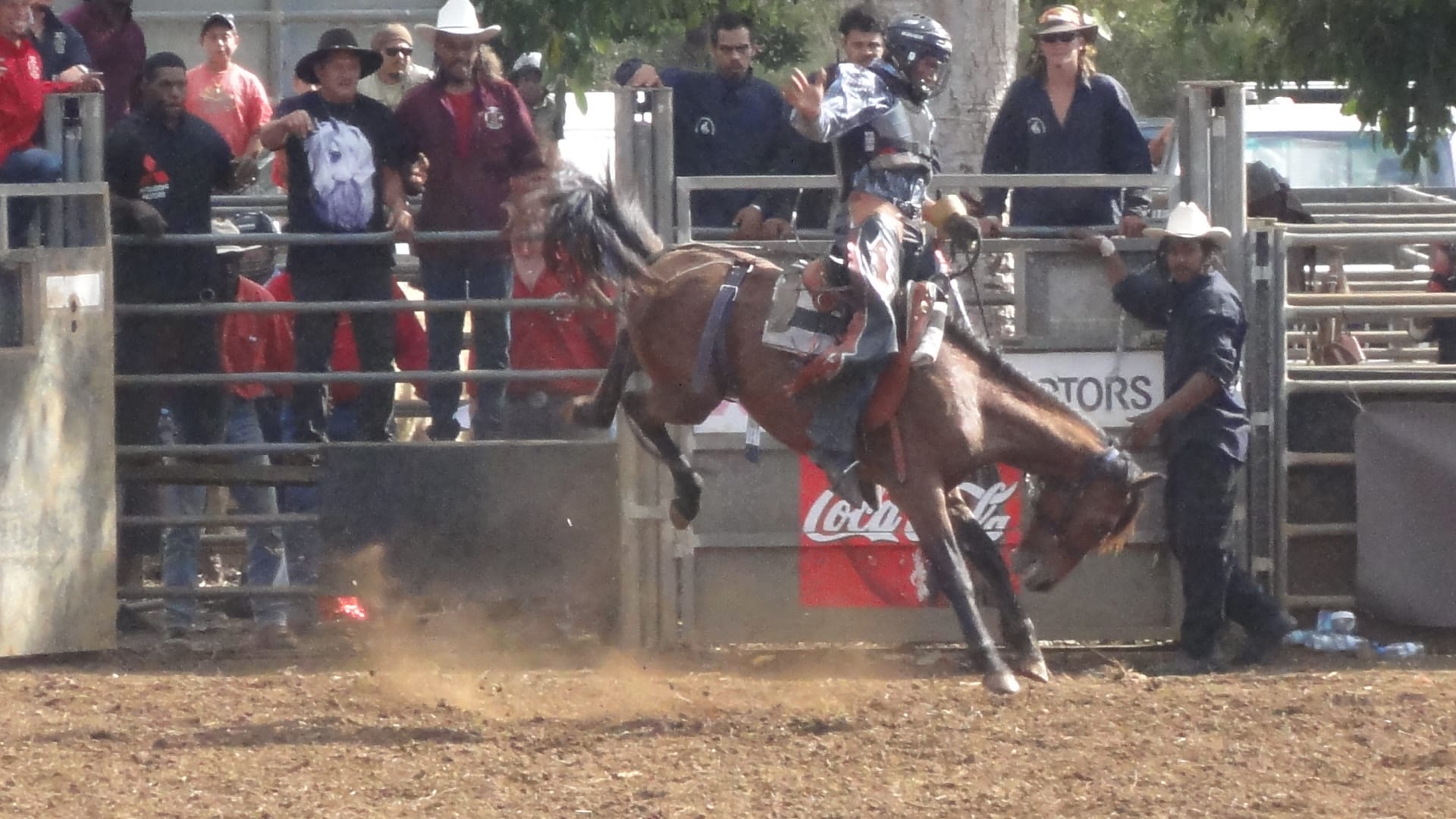
Broussard culture has its own great event: the Bourail agricultural fair, held each year in mid-August and drawing some 20,000 to 25,000 visitors over its three days. Rodeo is the highlight, alongside equestrian games, stock races, sheep-shearing demonstrations and competitions for local produce.
A Kanak customary marriage is an alliance between clans rather than a private arrangement between two people. Months before the ceremony, the groom's maternal uncles speak on behalf of their clan and ensure the rules of custom are followed. At the wedding itself, the clans exchange yams, which stand for fertility, coloured fabrics, Kanak money and cash, and elders give formal speeches recalling the origins of both families. The bride leaves her family to join her husband's clan, receiving household goods as she goes, and becomes a link between the two groups. Festivities and dancing follow. Such weddings can be costly, and some chiefdoms have moved to limit the value of gifts to ease the burden while keeping the meaning.
Mourning follows an equally precise order. News of a death travels along customary paths to the allied clans of the father's family and to the mother's clan. Clans arrive at the mourning in a set sequence, the maternal uncles last of all, and they hold the central role: they symbolically take back the body until burial and close the coffin. Traditionally, the mourning and the ceremony that lifts it, the levée de deuil, unfold over one to two weeks, with exchanges of gifts and speeches between the clans. When pandemic restrictions limited gatherings, the disruption to these rites was keenly felt.
Arts, crafts and music
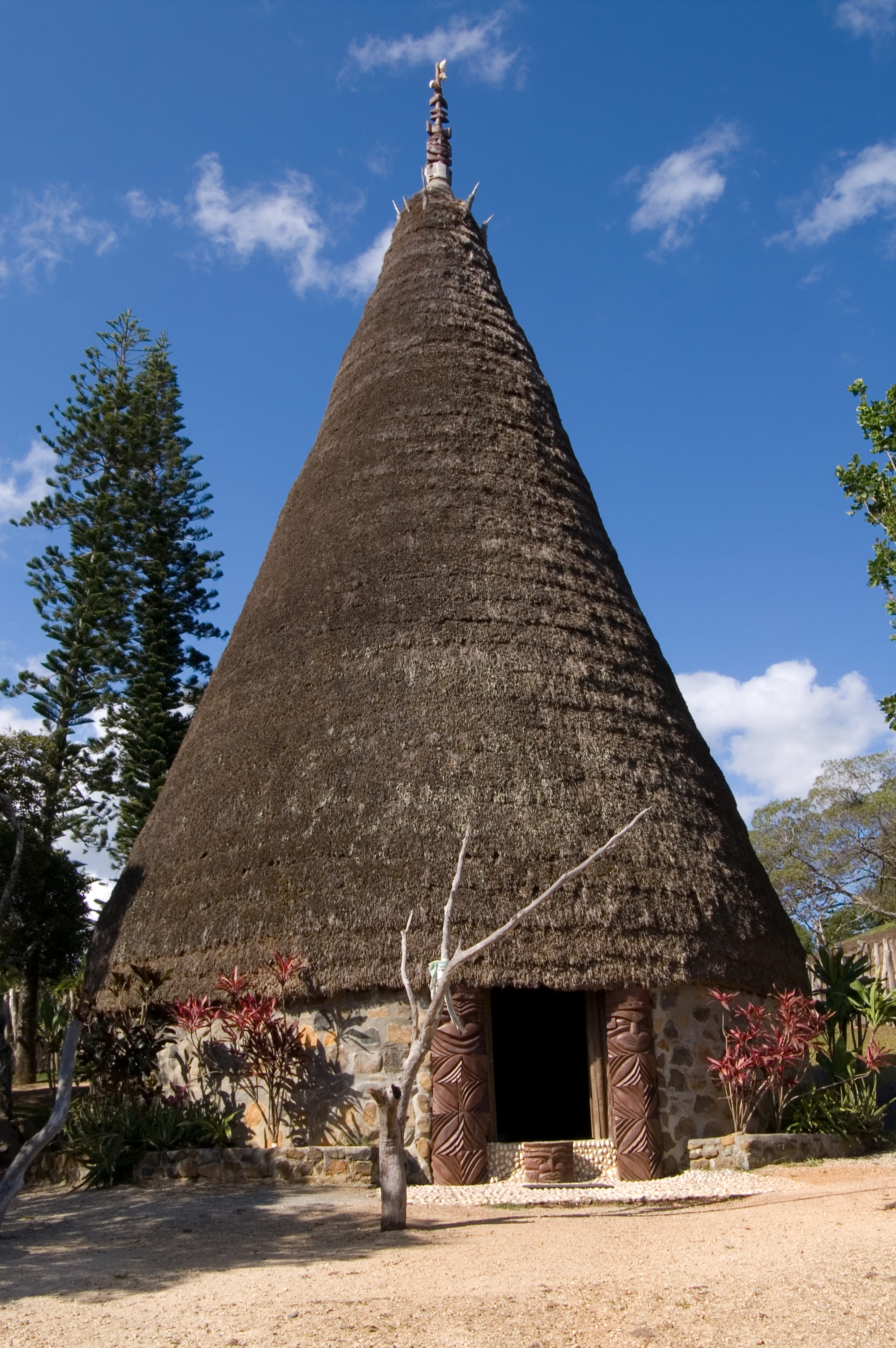
The grande case, the round great house of a chiefdom built around a single central post, is the central symbol of Kanak culture, and much of its art is concentrated on it. At the top of the conical roof stands the flèche faîtière, a carved spire representing the stylised face and body of the chief, threaded with conch shells that evoke assembly and the chief's role as a link between earth, sky and sea. Large carved door jambs flank the entrance, placing everyone who enters under the protection of ancestral figures.
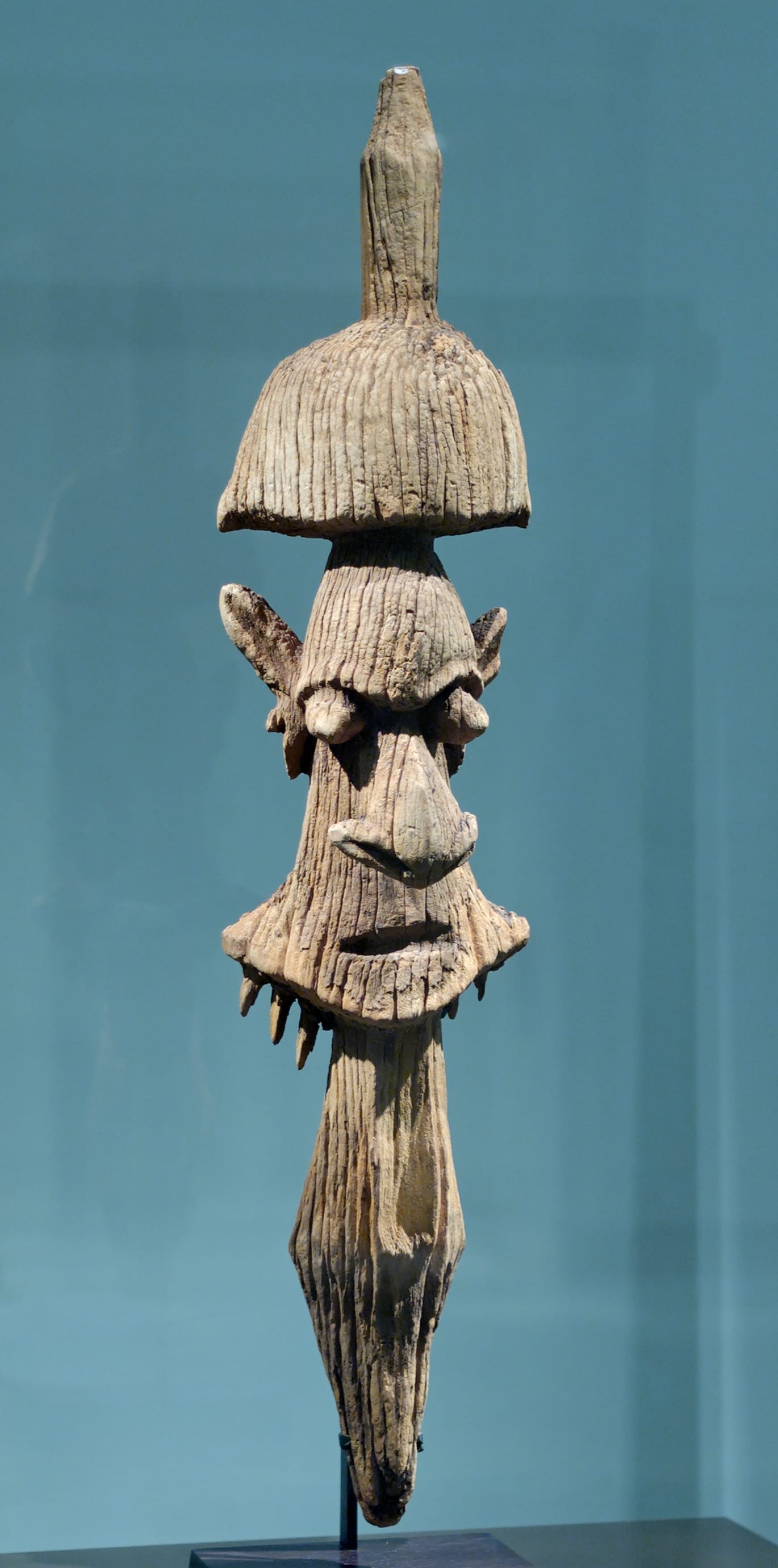
Other traditional arts include ceremonial masks topped with human hair and feather mantles, which represented the spirit of a dead chief returning for the length of a ritual from the underwater land of the dead, and engraved bamboos whose scenes include some of the earliest Kanak depictions of encounters with Europeans. Weaving remains part of everyday skill: pandanus and coconut leaves are braided into mats, baskets, hats, wreaths and the decorations that dress a wedding.
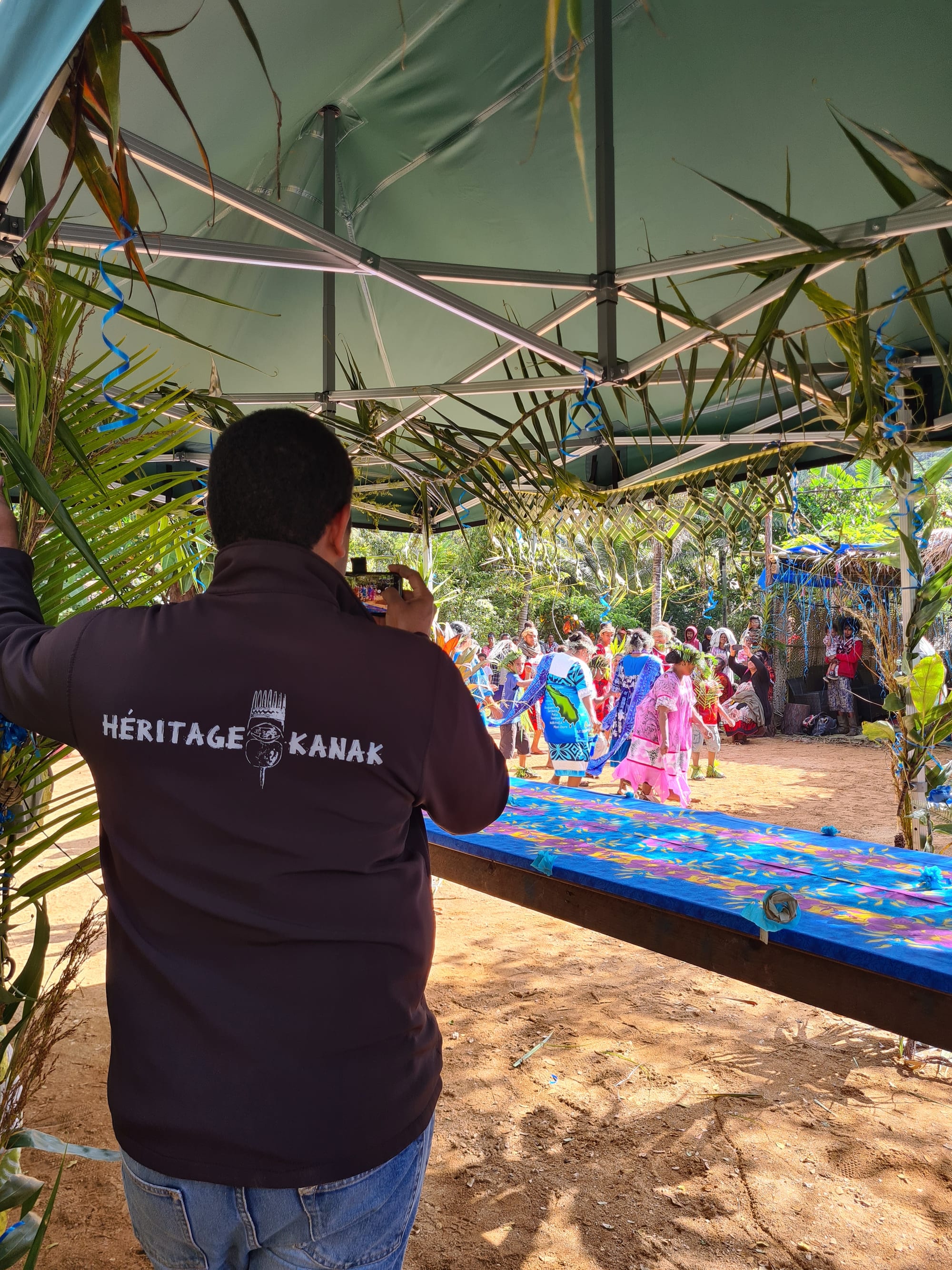
Dance is at the heart of ceremony. The pilou, described by the territory's museum service as the high point of traditional Kanak ceremonial life, is a ritual dance performed at customary gatherings, now rarely seen in its full form, that links the world of the living with that of the dead. Traditionally it lasted through an entire night until first light, with genealogical speeches, chants and exchanges of ornaments and weapons, as dancers stamped with bamboo tubes and bark clappers beat out the rhythm.
Modern Kanak music found its voice in kaneka, which emerged in the 1980s, during the rise of the independence movement, blending Kanak rhythms and vocal harmonies with reggae and other modern styles. A younger generation of musicians is now updating the style. Kanak and wider Pacific art has a permanent showcase at the Tjibaou Cultural Centre in Nouméa, opened in 1998 and designed by the architect Renzo Piano, whose tall curved wooden pavilions echo the form of the grande case.
Dos and don'ts for visitors
- Do check the latest government travel advice before any trip; some governments have advised caution or against non-essential travel since the 2024 unrest, and demonstrations and roadblocks should be avoided entirely.
- Do make la coutume — a few words and a small gift such as a length of cloth or a 500 or 1,000 CFP franc note — when received by a Kanak host or before entering tribal land.
- Do arrange visits to tribal land through a homestay or local operator, and ask permission before going anywhere on customary ground.
- Do greet people with a "bonjour", including strangers, and return the wave of passing drivers on country roads.
- Do listen quietly while elders or hosts are speaking during a ceremony, and wait for a gift to be accepted rather than simply handing it over.
- Don't photograph people, grandes cases or ceremonies without asking first, and respect any site described as tabu.
- Don't raise the independence question casually; views differ sharply, and it is best discussed only if hosts bring it up.
What to take away
In New Caledonia, respect is shown less through rules of etiquette than through a willingness to introduce oneself properly — with a small gift, a few honest words and the patience to listen — and visitors who make that gesture will find it returned.