Daily Life · New Caledonia
New Caledonia: An Island Still Finding Its Balance
A yam-growing calendar in the Kanak villages of the interior, a French civil-service town on the coast, and an economy still recovering from the worst unrest in decades
By Worldlore Editorial · 30 September 2026
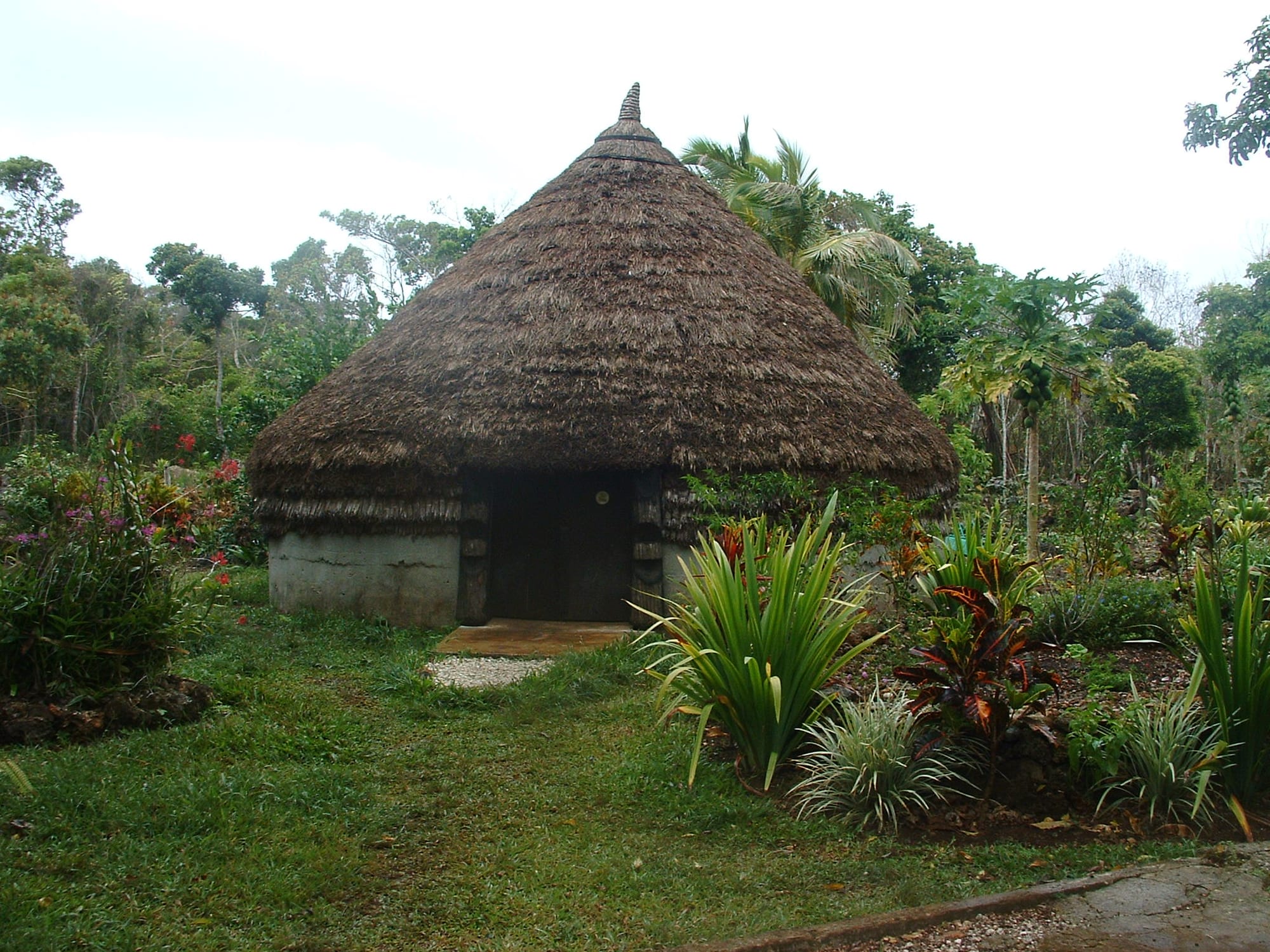
New Caledonia holds two daily rhythms that rarely fully merge. Away from the capital, in the Kanak villages of the interior, the Loyalty Islands and much of the north, life still runs partly on the old calendar of the yam, planted and harvested through clan land held in common, and organised around the extended family rather than the office. In Nouméa and its suburbs, home to about two-thirds of the territory's roughly 265,000 people, daily life looks far more like a French coastal town, running on civil-service jobs, supermarkets and French schools, though on a school year that runs from February to December. Since May 2024, both have been reshaped by the worst unrest the territory has seen in decades: rioting that killed more than a dozen people and caused billions of euros of damage has been followed by a deep recession, mass job losses and a wave of departures, and daily life for many households, Kanak and non-Kanak alike, is still being lived under that shadow. The political question behind the unrest remains open: the Bougival Accord signed in July 2025 by France and most of the territory's parties was rejected by the main pro-independence alliance, the FLNKS, and the referendum meant to approve it has been postponed.
Family and home life
Kanak family life is organised through clans, several thousand family-based kinship groups grouped into tribes and chiefdoms, tracing descent from a common ancestor and holding land rights collectively rather than as individual property. Villages on clan land are typically small and spread out, built around family compounds rather than a dense centre, with several related households living close together. In and around Nouméa, household life looks closer to metropolitan France: apartment blocks and suburban houses, smaller nuclear households, and a population that also includes long-established Caldoche settler families along with Wallisian, Tahitian and Vietnamese communities, each keeping distinct traditions of their own within the same territory.
Work, school and the rhythm of the day
Schools follow the French curriculum, with the long holidays moved to the southern summer, and for decades the economy leaned heavily on nickel mining and processing, which accounts for roughly a fifth to a quarter of private-sector jobs. That industry has been in serious difficulty since well before 2024, squeezed by low world nickel prices, and the unrest deepened the crisis: the major Koniambo nickel plant in the north stopped production in February 2024, three months before the rioting, and the territory's economy contracted by an estimated 13.5 per cent that year, one of the steepest falls in its modern history. Thousands of private-sector jobs were lost after the unrest, and youth employment has become one of the territory's most pressing problems. Public-sector and administrative work, concentrated in and around Nouméa, remains a mainstay of paid employment.
Community life and public spaces
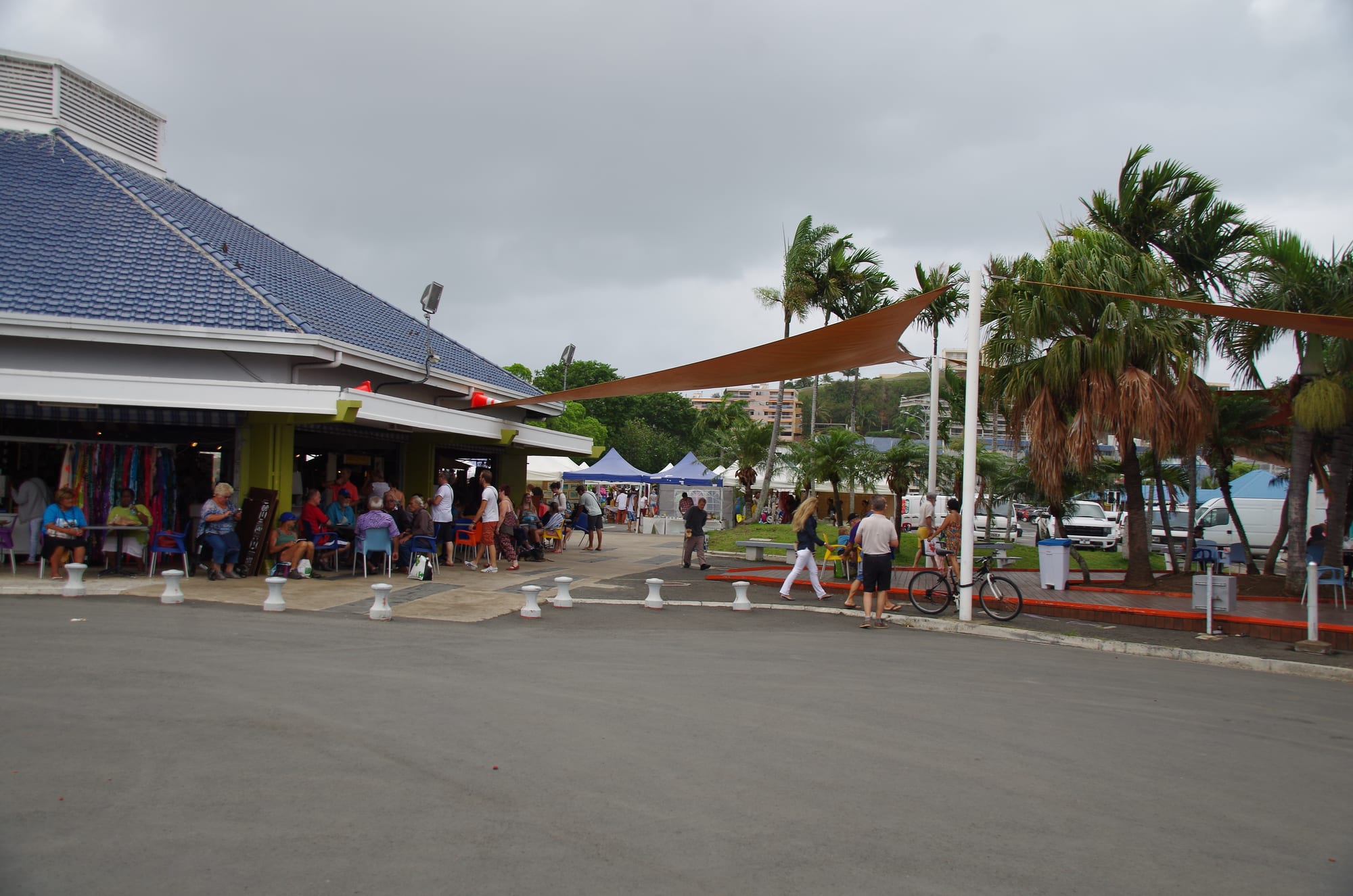
Port Moselle market in Nouméa is the territory's best-known gathering point, a produce and craft market where French bakery goods sit alongside Vietnamese snack food and fresh reef fish, reflecting the port town's genuinely mixed population. Beyond the capital, village life in the tribus, as Kanak communities are often called locally, centres on the chefferie, the customary chief's seat, and on shared spaces for ceremony and community gathering rather than any commercial high street. Since 2024, ordinary movement around Nouméa has also been shaped by the aftermath of the unrest: damaged buildings and infrastructure in parts of the city and a general wariness about safety that was largely absent before.
Free time and weekends
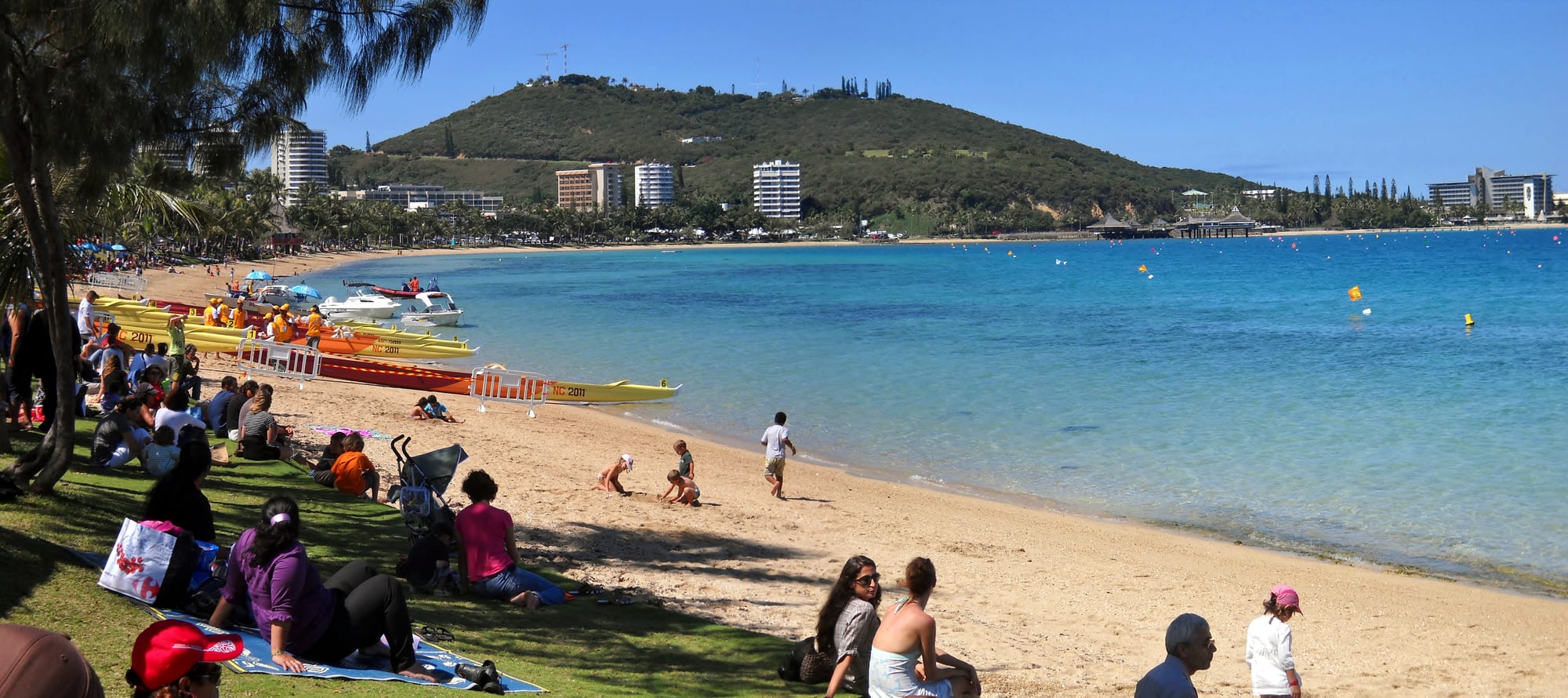
Nouméa's town beaches, Baie des Citrons and Anse Vata among them, draw families for swimming and simply sitting out on the sand at weekends, and outrigger canoeing, va'a, is a genuinely popular participation sport rather than only a spectacle. The lagoon and reef, a UNESCO World Heritage site, make diving, snorkelling and boat trips a normal weekend activity for those who can afford them. In Kanak communities, weekend and free time more often centres on shared work: tending yam gardens, fishing, and preparing for ceremonies or family gatherings that run on their own calendar rather than the standard Saturday-Sunday pattern followed in Nouméa.
A visitor's ordinary day
New Caledonia uses the CFP franc, pegged to the euro, and cards are widely accepted in Nouméa and the main towns, though cash is more useful on the Loyalty Islands, the Isle of Pines and in tribal areas. Normal tourism infrastructure has been badly disrupted since 2024, so it is essential to check current government travel advice and confirm which roads, sites and transport links are actually operating before planning a day's movements, rather than assuming pre-2024 information still holds. Where conditions allow travel outside Nouméa, a hire car is the practical way to see the main island, and inter-island flights or the Betico ferry serve the Isle of Pines and the Loyalty Islands. Entering tribal land generally requires prior arrangement through a homestay or tour operator rather than simply driving in.
What to take away
An ordinary day in New Caledonia still runs on two different clocks, a Kanak calendar set by the yam and the clan, and a French administrative one centred on Nouméa, and since 2024 both have had to absorb a serious shock to the territory's economy and sense of security that daily life here has not yet fully worked through.