Culture & Customs · Namibia
Namibia: Many Peoples, One Handshake
A largely Christian country of many languages and peoples, where greetings are never skipped, traditional authorities still gather their communities, and a marula harvest, a horned headdress and a three-part handshake all say something about who Namibians are
By Worldlore Editorial · 30 September 2026
Walking into a Namibian shop, office or waiting room is a little like walking into a chorus. Greetings come from several directions at once, and the newcomer is expected to join in. A handshake follows, often in three parts: an ordinary clasp, then a switch to a grip with the thumbs locked and pointing upwards, then back to the ordinary clasp again. "How are you?" is asked and properly answered, not waved away. Only then does anyone get down to the business at hand. In a country of many languages and peoples, spread thinly across a vast land, the greeting is one custom almost everyone shares — a small daily acknowledgement that no one is simply passing through unseen.
Faith, identity and values
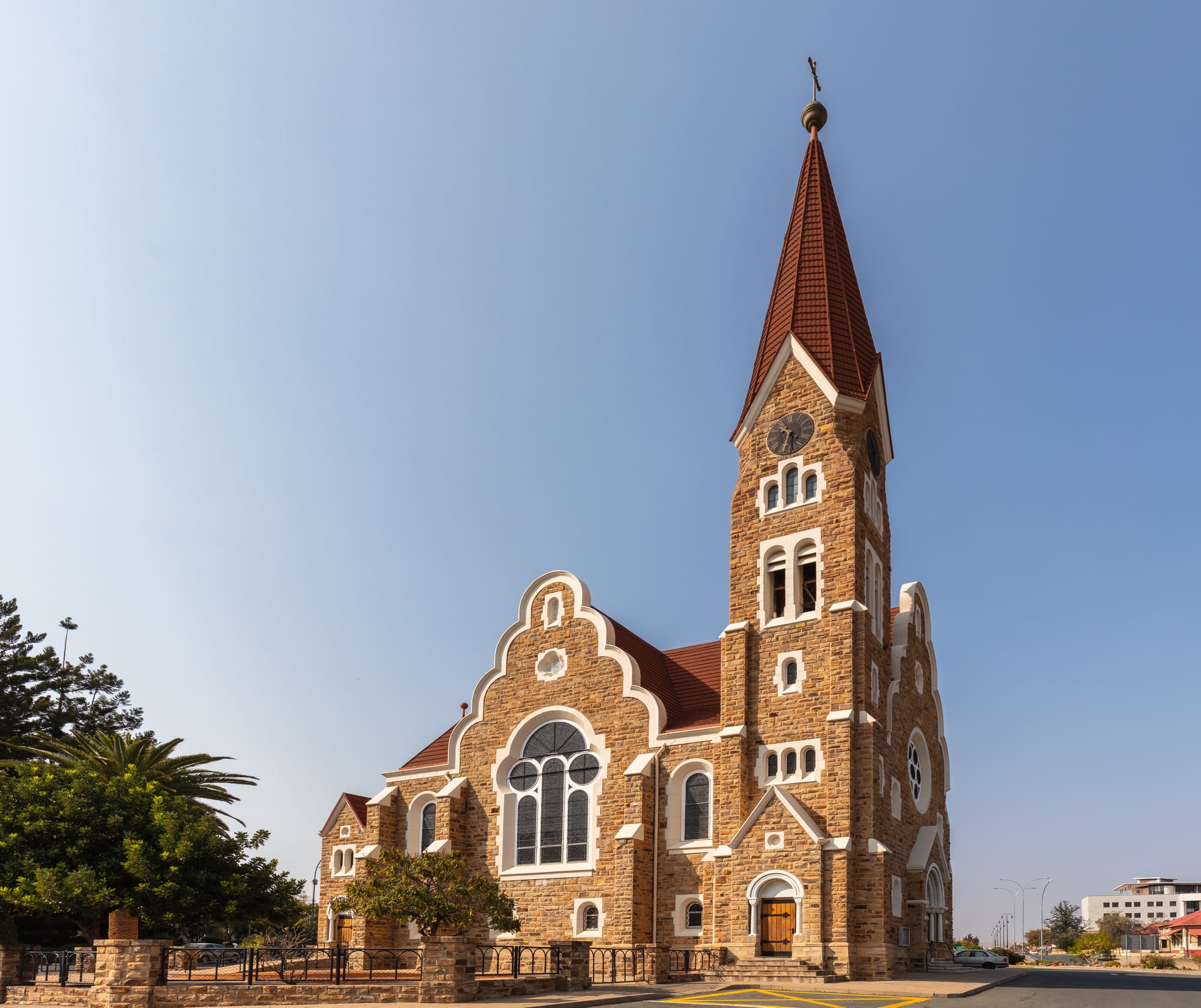
Namibia is overwhelmingly Christian. More than 90 per cent of the population identifies as Christian, and more than 40 per cent belongs to the Lutheran churches that grew out of nineteenth-century missionary work; other churches account for much of the rest, and there are small Muslim, Jewish and Baha'i communities. Sunday church remains a fixed point of the week for many families, and for many Namibians faith sits comfortably alongside a strong respect for the customs handed down by earlier generations.
Namibia's peoples remain distinct in language and custom. The Ovambo of the north are the largest group; alongside them are the Kavango, the Herero, the Damara and Nama, who speak Khoekhoegowab with its click consonants, the San, among the oldest peoples in southern Africa, and the semi-nomadic Himba of the far north-west, along with long-settled Afrikaner, German and mixed communities. English is the sole official language, chosen at independence as a neutral option, but Oshiwambo is the most common home language, and Afrikaans, German, Otjiherero, Rukavango and San languages are all widely spoken.
Traditional authorities still play a real part in public life. The eight Aawambo communities of the north, for example, each have their own traditional leadership, and a traditional queen or king may host a cultural festival attended by the country's president. Respect for elders and for traditional leaders is repeatedly stressed as a core value, and so is ubuntu — a Southern African idea of shared humanity and mutual obligation, often invoked when a community rallies around a family in need. Public manners tend towards the calm and modest: loud behaviour is frowned upon, particularly in small towns, and people take pride in dressing neatly.
The colonial past is part of present-day identity too. The German campaign against the Herero and Nama between 1904 and 1908 is remembered as the twentieth century's first genocide, and it is commemorated each year by the communities concerned. It remains a sensitive subject, best approached with care and a willingness to listen.
Greetings and meeting people
Greeting is not optional. Walking into a shop, an office or a home without saying hello is considered rude, and skipping straight to a question or a request can make a poor impression. A handshake is standard, and the three-part version — clasp, thumb lock, clasp — is widely used. Asking "How are you?" is part of the ritual, and it is worth taking a moment to answer, since the exchange is valued as social glue rather than small talk.
Respect for age shows in greetings as well. In rural areas especially, elders are addressed respectfully, and "sir" or "ma'am" in English is appreciated from visitors. Some people offer extra respect to an older person by holding their own right elbow with the left hand while shaking. A few words in a local language, such as "dankie", Afrikaans for thank you, are always well received.
Hospitality and being a guest
Welcoming guests is a matter of pride, and a visitor will usually be offered something to eat or drink. Turning it down flatly can seem impolite; it is better to accept and at least try a little. Meals, especially in traditional settings, are often eaten from shared dishes, and people wash their hands before and after eating. A guest waits for the host to begin, follows the host's lead on whether to use cutlery or fingers, and uses the right hand for eating. Meals are about time spent together rather than speed, and lingering over a shared table is normal.
Neat, modest clothing is appreciated when visiting rural communities, homes and churches; covering the shoulders and knees is a simple sign of respect. Photography calls for particular courtesy. Namibia's tourism board advises always asking before photographing someone, since not everyone wishes to be photographed; asking a parent or guardian before photographing a child; and checking with a guide in cultural villages. Some people, including Himba and Herero women, may expect a payment for a photograph. Photographing police and other people in uniform is best avoided, government buildings call for a check first, and visitors have been detained for photographing the President's official residence.
Festivals and life's big moments
Christmas and Easter are the great religious holidays, marked with church services and family gatherings, and Independence Day on 21 March recalls the end of South African rule in 1990. Alongside the national calendar runs a rich set of community celebrations.
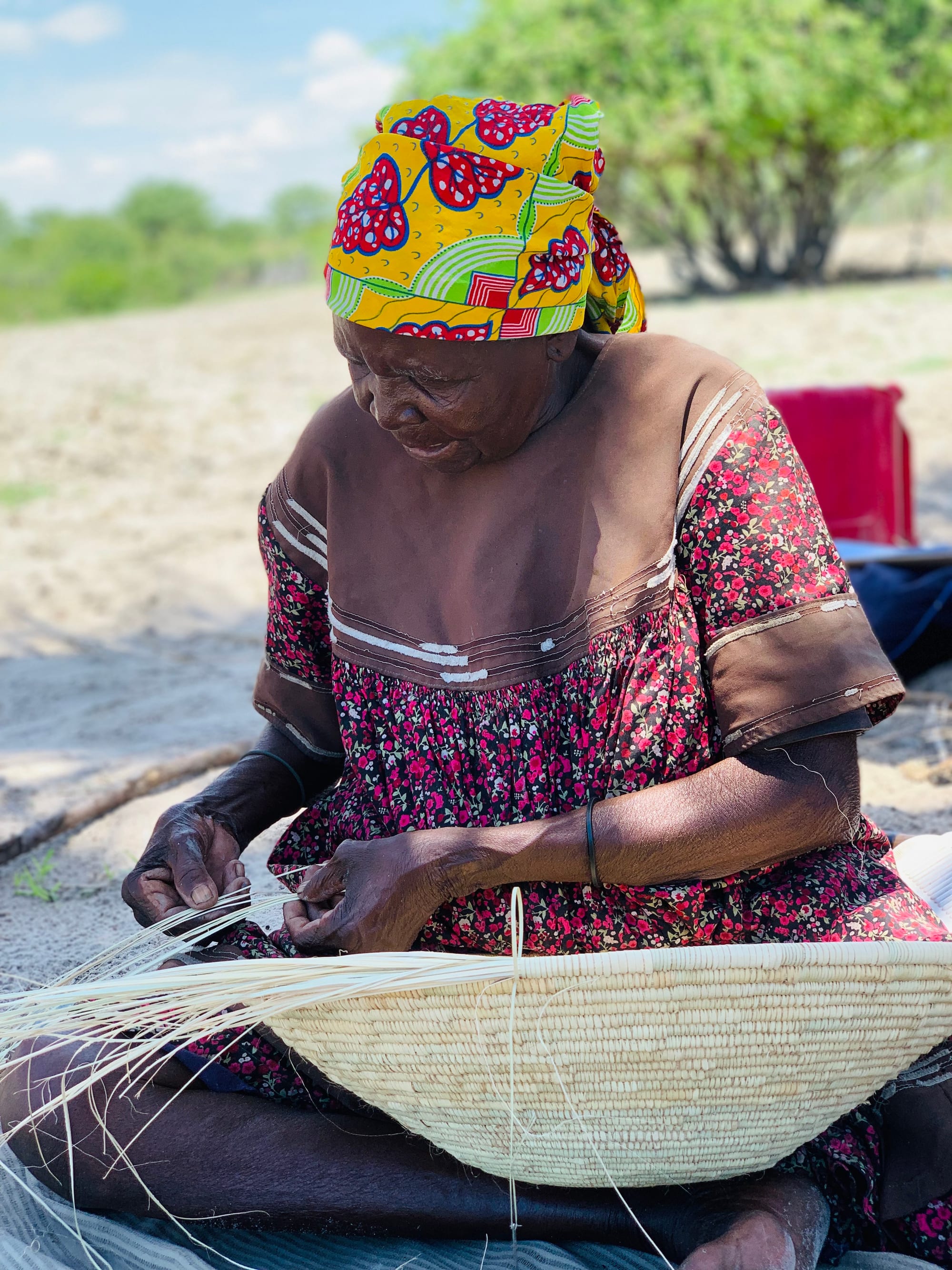
In the north, the eight Aawambo communities celebrate Oshituthi shomagongo, the marula fruit festival, which UNESCO added to its list of intangible cultural heritage in 2015. It takes place between March and April and lasts two to three days. Before it, men carve wooden goblets and small serving gourds and make horn tools for piercing the fruit, while women make the baskets and clay pots, harvest the marula and ferment its juice for up to a week to make omagongo. The preparation is itself a social occasion, when people discuss family matters, sing and recite poems; the festival that follows is a relaxed gathering of songs, dances and shared food, when men recite histories. Each year a different traditional authority also hosts an Omaongo festival celebrating the marula drink, where women wear decorated odhelela dresses and leather aprons adorned with white shells. Much of the knowledge involved, from basketry to pottery, is still passed on simply by watching and taking part.
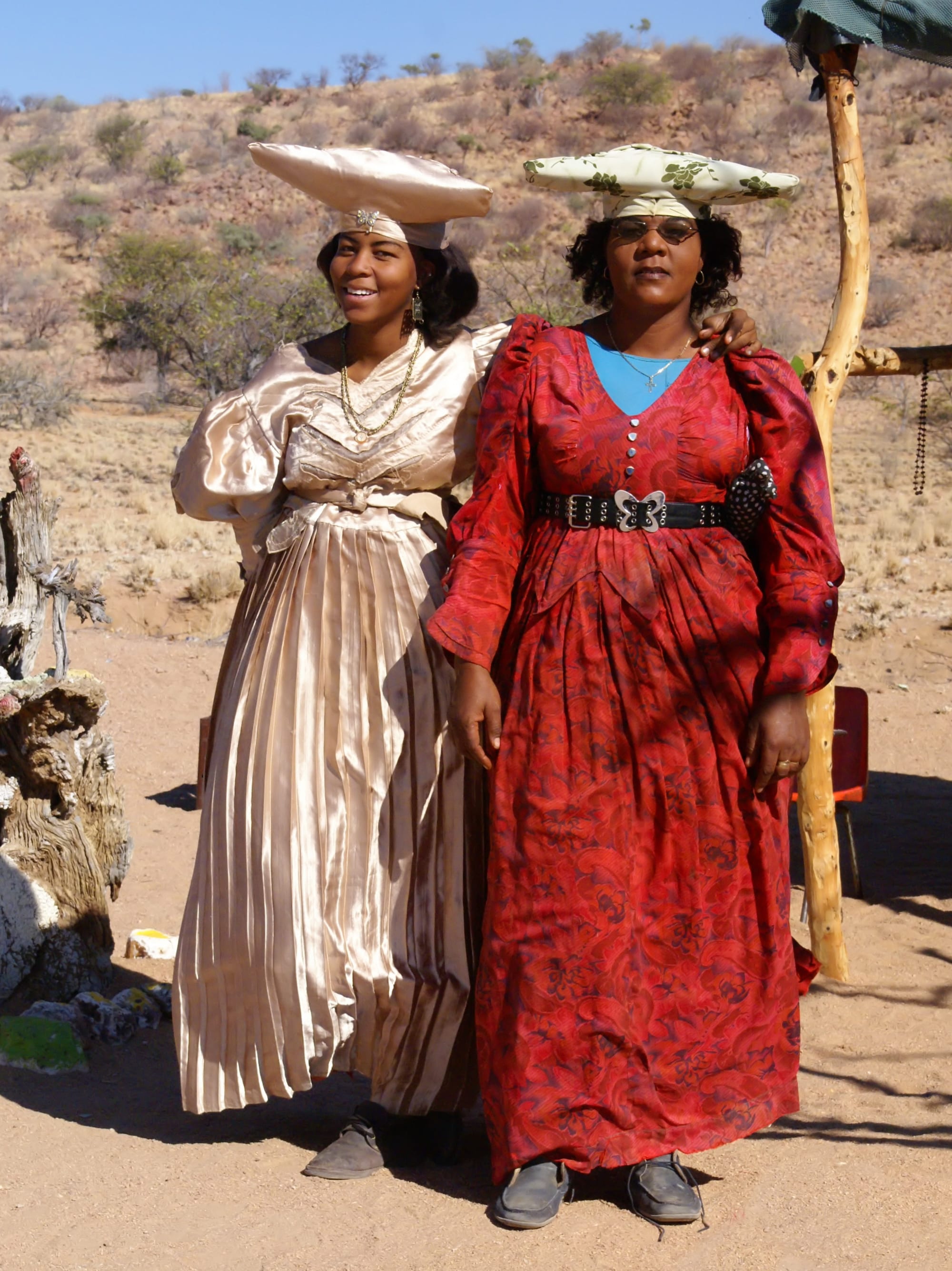
In August, Herero communities gather at the graves of their chiefs for annual commemorations that have been held for about a century. Men parade in uniforms modelled on old military dress, and women attend in long dresses and headdresses in the colours of their community's flag — red for the best known of these groups — processing past the graves in a solemn, deeply emotional ceremony.
Weddings are major family undertakings. In Owambo tradition, celebrations ran over two days, beginning at the bride's home before moving to the groom's, and the groom's family provided cattle, which were given to the bride's family to feed their guests. A wedding suitcase was sent ahead of the day, containing the bride's dress, veil, a blanket and a lamp, symbolising the groom's promise to care for her. Today many couples combine a church ceremony with receptions for each family, often under large hired tents, and elders keep considerable influence over how things are done. The pressure to stage ever more lavish celebrations, fuelled in part by social media, has become a subject of public debate.
Funerals are among the most important communal events in Namibian life. Relatives travel from across the country, and the gathering can stretch over several days, with memorial services, candlelight vigils and meals for the many mourners. Costs are high: families sometimes borrow money or sell livestock to meet them, and rely heavily on contributions from relatives, neighbours and colleagues — the spirit of ubuntu in its most practical form.
Arts, crafts and music
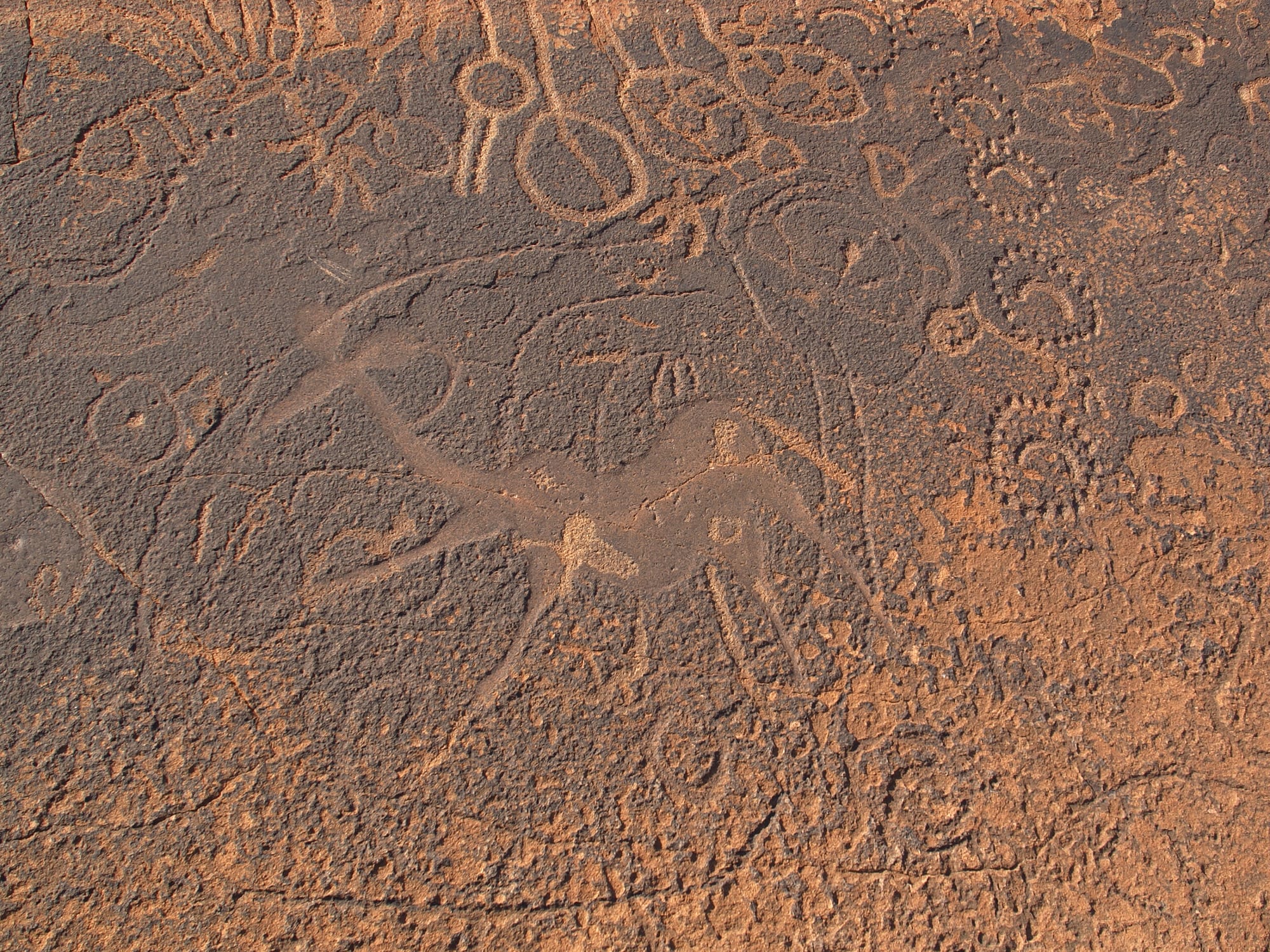
The oldest art in Namibia is carved into its rocks. Engravings and paintings made by San hunter-gatherers and Khoekhoe herders over thousands of years survive at many sites, the best known of them now a World Heritage Site.
Music ranges from ancestral traditions to a busy modern scene. Aixan, the ancestral music of the Nama and Damara, combines the khab, a musical bow, with a traditional guitar and the harmonica, accompanied by singing, humming, ululating. It has been played at key social occasions and used to teach young people, including about the environment, but only a few elders now hold the full knowledge, and UNESCO placed it on its list of heritage in need of urgent safeguarding in 2020. Herero communities have their own popular style, oviritje, sung in Otjiherero, while kwaito — influenced by the South African genre but developed with a distinctly Namibian sound since the early 2000s — is one of the most popular styles, and The Dogg, whose debut album appeared in 2004, is among its best-known names.
Crafts remain part of everyday life as well as a source of income. Baskets, coiled and stitched from palm leaf, are made largely by women and used in homesteads; the same skills produce the clay pots used at the marula festival. Wood carving, beadwork and the tailoring of Herero dresses, now also taken up by young designers who update the style while keeping its essentials, are flourishing crafts in their own right.
Dos and don'ts for visitors
- Do greet people and ask how they are before making any request, and take the time to answer when asked in return.
- Do go along with the three-part handshake, and greet older people with particular respect.
- Do accept at least a little of any food or drink offered, wash hands before eating, and wait for the host to begin.
- Do dress neatly and cover shoulders and knees when visiting rural communities, homes and churches.
- Do ask before photographing anyone, and ask a parent or guardian before photographing a child.
- Don't photograph police, soldiers or anyone else in uniform, and check before photographing government buildings; people have been detained for photographing the President's official residence.
- Don't buy ivory, rhino horn or other products made from protected wildlife.
- Don't be loud in public, and keep public displays of affection low-key, especially in rural areas.
What to take away
Namibia's many peoples keep customs of their own, but they share a deep regard for greeting, for elders and for community — and visitors who take the time to say hello properly will find that time repaid in warmth.