Food · Morocco
Morocco: Food and the National Dish
Friday couscous, the slow-cooked tagine, a spice trade that never stopped, and an Amazigh kitchen layered with Andalusi, Saharan and French borrowings
By Worldlore Editorial · 16 September 2026
The far Maghreb kitchen
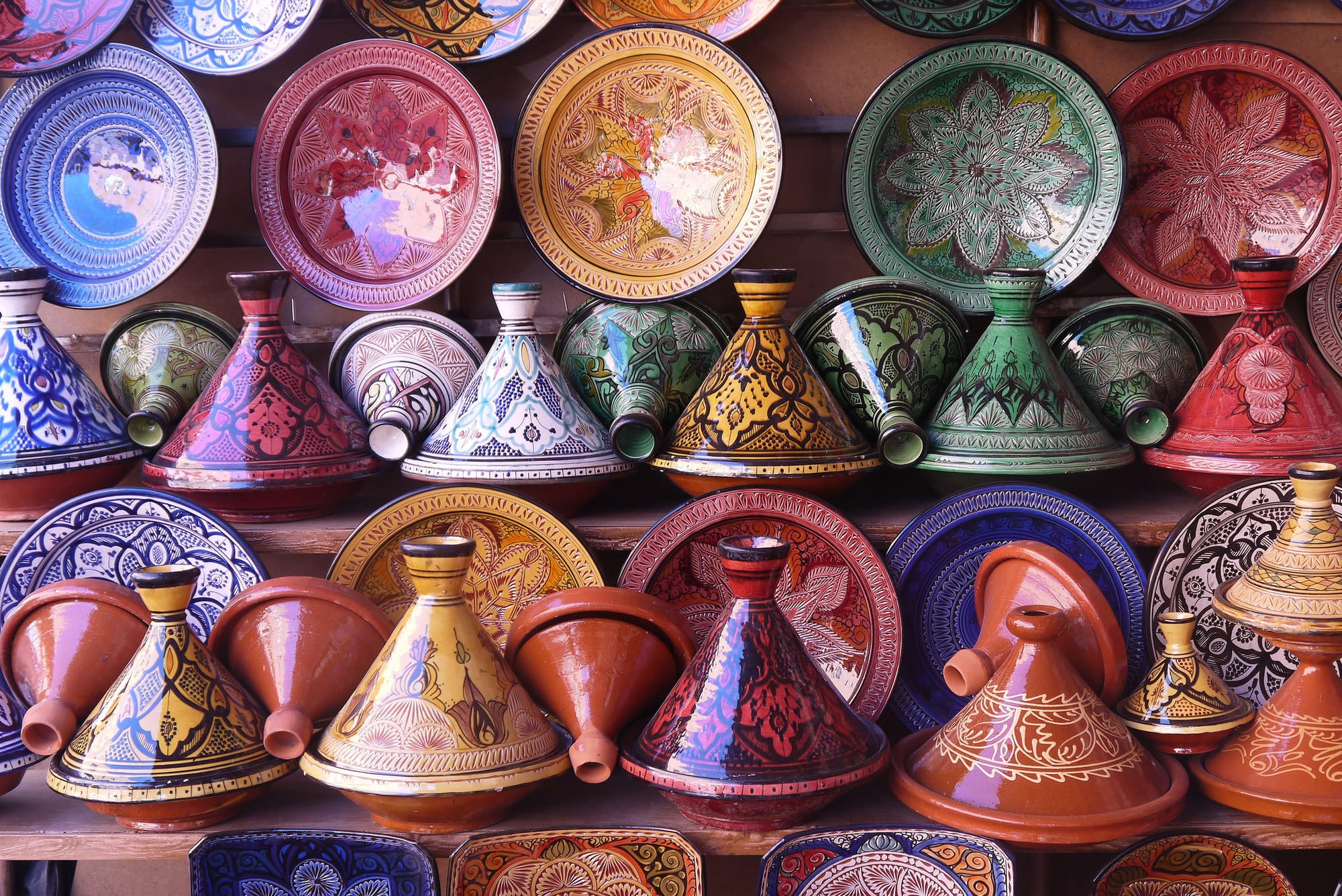
Morocco sits at the western end of the Arab world, with the Sahara at its back, the Atlantic down one side, and Spain visible across the strait. Its food carries all of that. The base is Amazigh — Berber — and very old: grain, olive oil, preserved meat and butter, and a pot with a lid shaped like a witch's hat. On top of that base sit centuries of borrowing. Arab and Andalusi cooks brought pastry, almonds, oranges and the habit of putting fruit and sugar into savoury dishes. The caravan trade brought pepper, ginger, cinnamon and dates up from the south. Forty-four years as a French protectorate left cafés, baguettes and a national sweet tooth for pastries. The result is one of the most worked-on cuisines in Africa, and the one most likely to make a first-time visitor start planning a second trip around meals.
The national dish: couscous
If Morocco has a single national dish, it is couscous. It is not really a product so much as a ritual: tiny grains of steamed semolina, piled into a dome, with a stew of meat and vegetables spooned over and into the mound and a ladle of broth poured around it. Traditionally the grains are rolled by hand from durum wheat flour and steamed two or three times in a couscoussier — a two-part pot that sets a colander of couscous over the simmering stew, so the grain cooks in the rising steam and takes on its flavour.
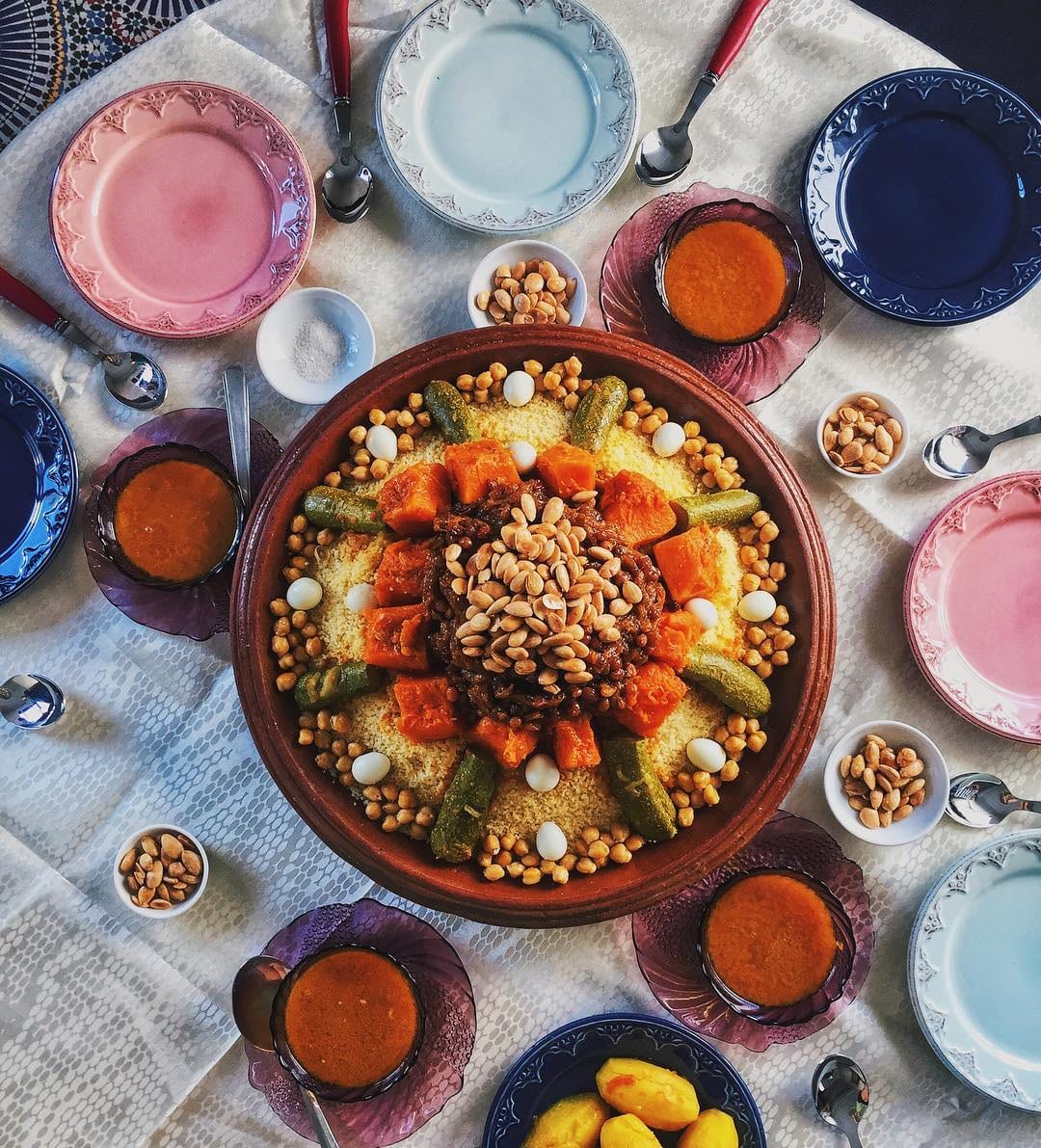
The most common form is couscous seffa or the "seven-vegetable" couscous — squash, turnip, carrot, courgette, cabbage, chickpeas and whatever else is good that week, over lamb, beef or chicken. There are sweet versions too: tfaya couscous is finished with caramelised onions, raisins, cinnamon and fried almonds, the sweet-and-savoury note that runs all through Moroccan cooking. In most Moroccan households couscous is the Friday meal, cooked after the midday communal prayer and eaten from one dish by the whole family. In 2020 UNESCO added couscous to its list of intangible cultural heritage, on a joint application from Morocco, Algeria, Mauritania and Tunisia — a rare piece of regional agreement.
The other dish with a claim to the title is the tagine, and many Moroccans would give it the crown instead. It is fairer to say Morocco has two: couscous for Fridays and gatherings, tagine for everyday.
What a Moroccan kitchen runs on
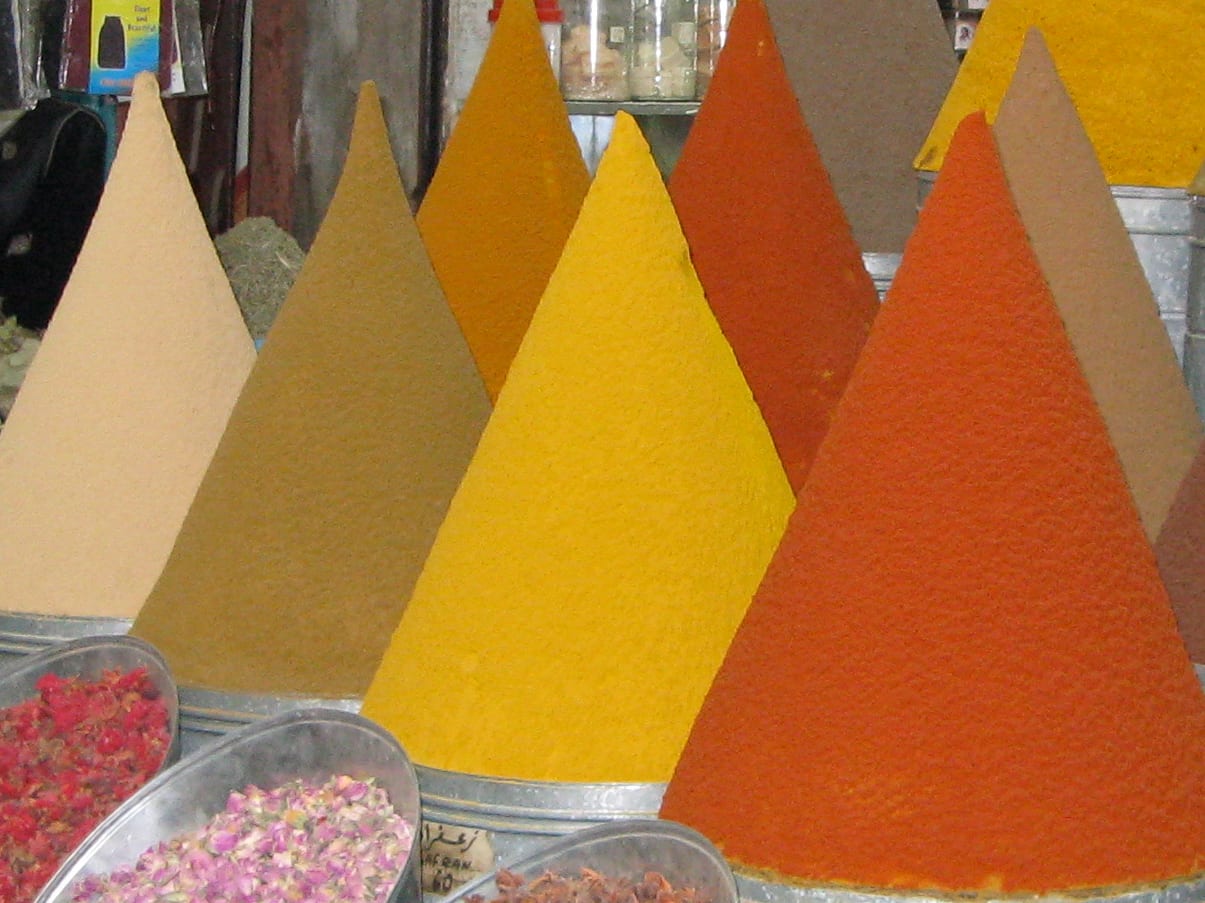
Moroccan food is built on spices, but used with more restraint than the colour of a spice stall suggests. The everyday set is cumin, sweet paprika, ginger, black pepper, turmeric, cinnamon, saffron (real, from around Taliouine) and dried coriander and parsley. Behind them sits ras el hanout — "head of the shop" — a house blend that every spice merchant mixes differently and that can run from a dozen ingredients to thirty or more, including things like rosebuds, grains of paradise and dried lavender.
Just as important are a handful of preserved things that give the food its particular tang. Preserved lemons — whole lemons packed in salt and their own juice for a month until the rind goes soft and savoury — are chopped into chicken tagines, salads and fish. Cracked green and violet olives turn up in the same dishes. Smen is butter that has been salted and aged, sometimes for years, until it is closer to a cheese than a fat; a small spoonful enriches a couscous broth or a plate of lentils. Bread, olive oil, mint, tomatoes, chickpeas and lentils, and huge quantities of fresh flat-leaf parsley and coriander round out the everyday larder.
How the food got this way
The Amazigh foundation is grain and slow fire: barley and wheat, flatbread baked in a communal oven, porridges in the mountains, and meat and vegetables cooked gently in a sealed clay pot because fuel was scarce and cuts were tough. That is the tagine, and it is probably North Africa's oldest cooking method still in daily use.
The refinements came from the east and from Muslim Spain. When Andalusi Muslims and Jews were pushed out of Iberia from the 13th century onward, many settled in Fez, Tétouan and Rabat, bringing paper-thin warqa pastry, the taste for almonds and orange-flower water, and elaborate court dishes like pastilla. Trans-Saharan caravans, running for a thousand years between Morocco and the Sahel, carried gold and salt north and also black pepper, ginger, dates and enslaved people whose cooking left its own mark. Morocco's Jewish communities, in the country for two millennia until most left in the 1950s and 60s, contributed slow Sabbath stews, preserved and fried fish, and much of the pickling tradition. And the French protectorate of 1912–56 added café culture, French bread, dairy, and the pastry shops that now sit on every city square.
From the mountains to the sea
Moroccan food shifts sharply by region, which is why a country page can only sketch it. Fez is the acknowledged culinary capital, home of the most worked-on dishes and the sweet-savoury style at its most extreme. Marrakech is meat country — the home of tanjia, beef or lamb sealed in an urn and cooked for hours in the embers of a bathhouse furnace — and the great food-stall city. Tangier and the north lean Andalusi and Spanish, with more seafood, fried fish and calamari. Chefchaouen and the Rif do fresh goat's cheese and thick bean soups. The Atlantic coast — Essaouira, Safi, Agadir — grills sardines straight off the boats. The Souss around Agadir is argan-oil country, home of amlou, a dip of argan oil, almonds and honey. And in the Sahara and the date oases of Tafilalet, the food narrows to dates, camel meat, barley, and medfouna, a stuffed bread baked in the sand and sold to tourists as "Berber pizza."
Dishes to know
Five to recognise on any Moroccan menu (regional specialities are covered on the region pages):
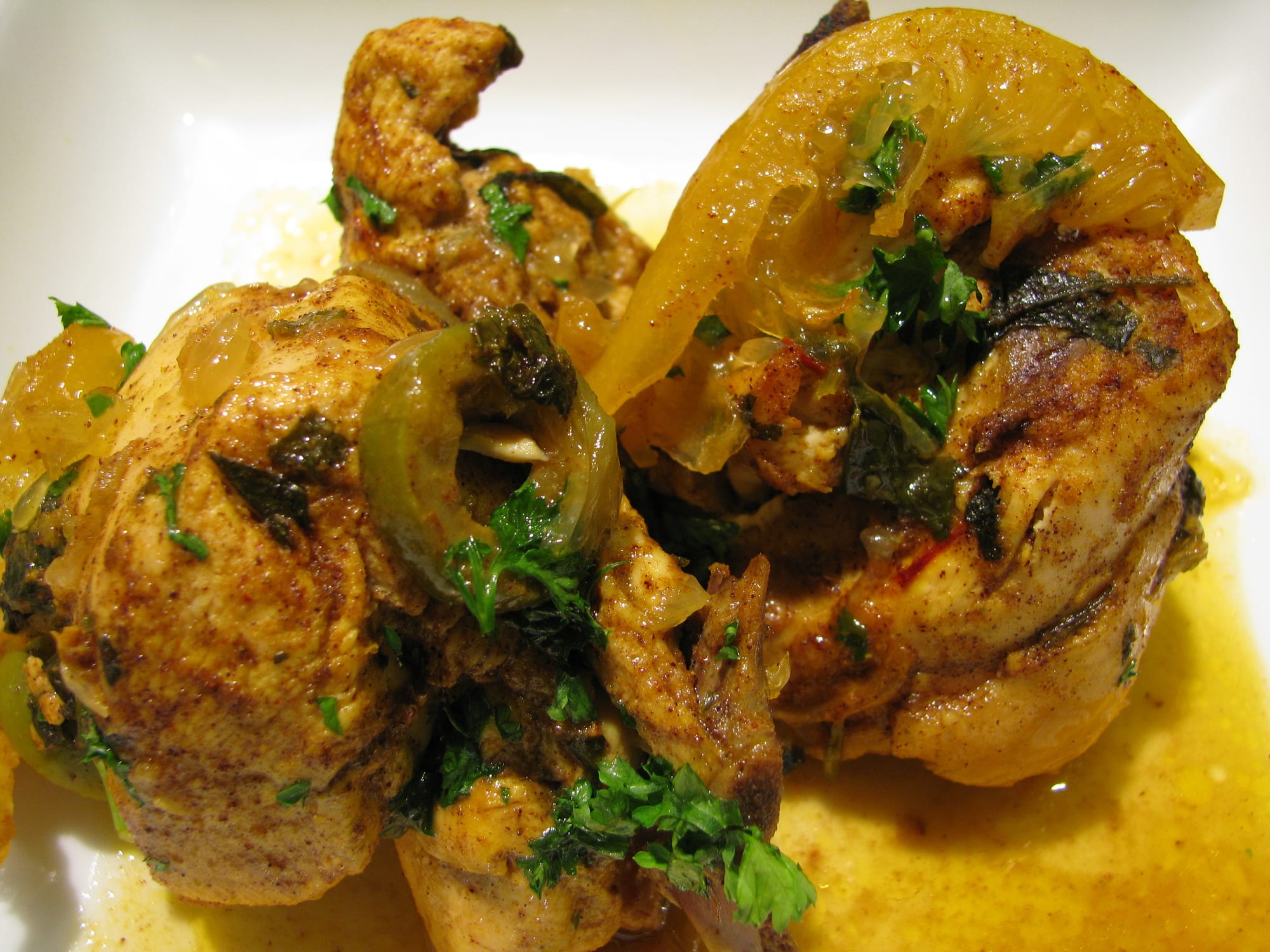
- Tagine — both the pot and the stew cooked in it. The classics are chicken
with preserved lemon and olives; lamb with prunes, almonds and cinnamon; and kefta (spiced meatballs) baked with tomato and eggs.
- Harira — the national soup: tomato, lentils, chickpeas, lamb and a mass of
herbs, thickened with a flour-and-water paste. Eaten year-round, but above all to break the fast in Ramadan, with dates and sticky chebakia pastries.
- Pastilla (bastilla) — a round pie of warqa pastry over shredded pigeon or
chicken, almonds, egg and cinnamon, dusted with icing sugar. A Fez showpiece; coastal towns make a seafood version.
- Mechoui — a whole lamb or shoulder slow-roasted until it pulls apart,
eaten with cumin and salt. Feast food, and an Eid al-Adha tradition.
- Cooked salads — most meals open with small dishes of zaalouk (aubergine
and tomato), taktouka (grilled pepper and tomato) and a plate of olives, scooped up with bread.
Beyond the mains, Morocco has a deep bench of sweets and snacks: briouat (little stuffed pastry triangles, savoury with meat or cheese, sweet with almond), sellou (a pressed sweet of toasted flour, almonds, sesame and honey, made for Ramadan and weddings), makouda (fried potato cakes sold from carts), and stands of fresh orange juice on every second corner.
Bread and the table
Bread — khobz, a round, close-textured flatbread — is on the table at every meal, and it is also the main utensil. You eat with the right hand, tearing off a piece of bread and using it to pinch up meat and vegetables or to wipe up sauce; couscous is often eaten the same way, or with a spoon. Breakfast and tea-time bring their own breads: msemen, flaky squares griddled in oil, and baghrir, a spongy semolina pancake full of holes, both eaten with honey and butter. Food comes to the middle of the table in one large dish and everyone eats from the section in front of them. It is polite to let the host steer the best pieces of meat toward guests.
Hospitality is close to a point of honour. A visitor will be given tea and something to eat almost regardless of the hour, and refusing outright is awkward; accepting a little is the graceful move. The rhythm of the year matters too. In Ramadan the daytime streets go quiet and the evening meal opens with harira, dates, hard-boiled eggs and chebakia. Fridays mean couscous. Eid al-Adha means lamb, in quantity, for days. Tipping in restaurants is modest — rounding up, or around 10% in a smarter place.
Mint tea and other drinks
The national drink is atay b naana — Chinese gunpowder green tea brewed strong with a large bunch of spearmint and a startling amount of sugar. It is served all day, to guests, to close a deal, to end a meal.
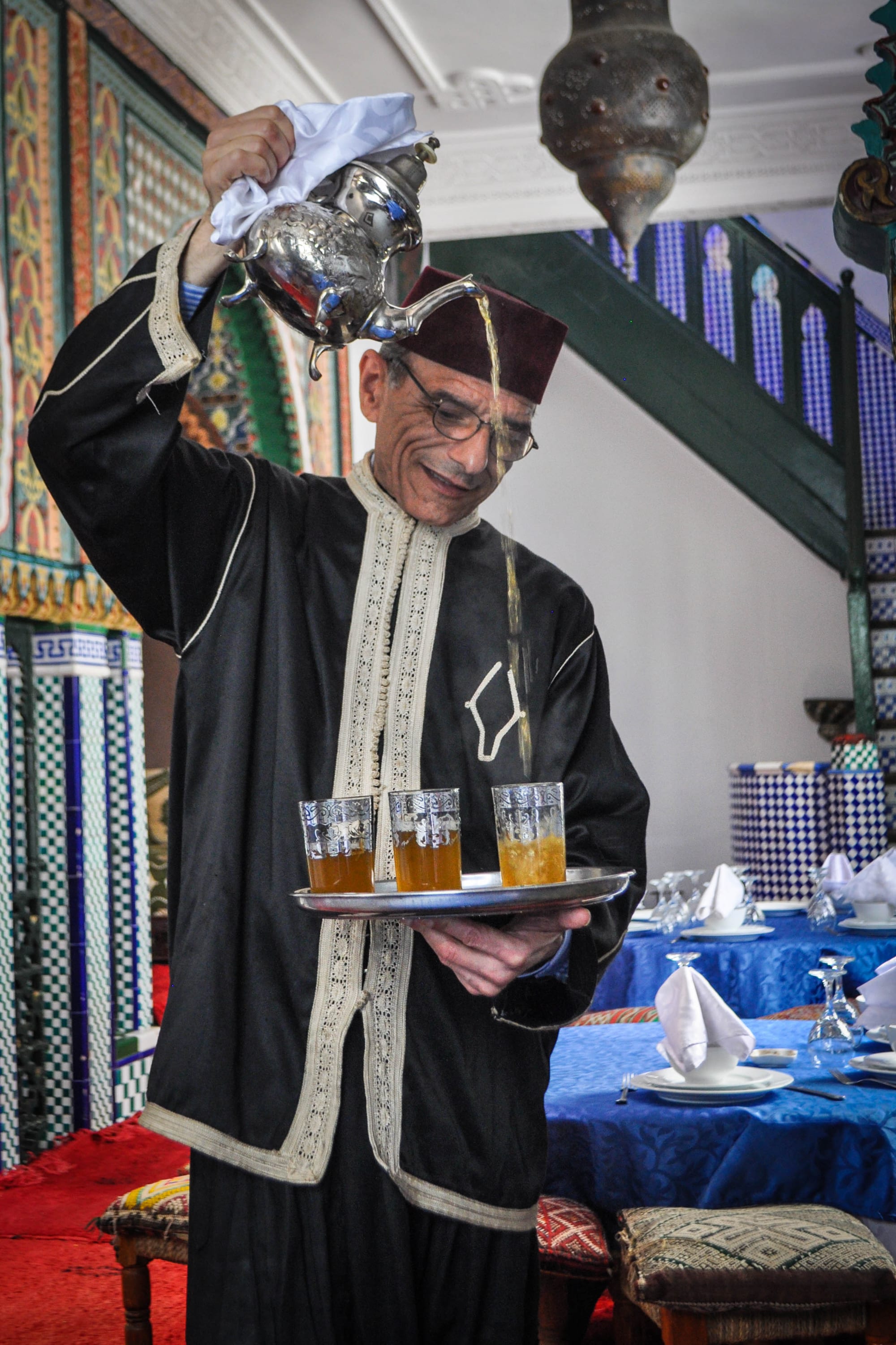
The tea is poured in a thin stream from high above the glass, which mixes it, cools it slightly and builds the foam that marks a good pour. Coffee is popular too, often as nous-nous, half coffee and half hot milk. Fresh orange and avocado juices are everywhere. Morocco is a Muslim country and most people do not drink alcohol, but it is legal, produced domestically — the Meknès region makes respectable wine — and sold in tourist hotels, licensed restaurants and some supermarkets.
Eating as a traveller
Vegetarians do reasonably well: vegetable couscous, vegetable tagines, lentil and bean dishes, and the cooked salads are all common, though a "vegetable" broth may still be built on meat stock, so it is worth asking. Strict vegans have a harder time, mostly because of butter, smen and eggs. Nearly all food is halal and pork is almost never encountered. Tap water is chlorinated in the cities but most visitors stick to bottled. Street food — the grilled meat, snail soup and fried fish of the Jemaa el-Fna in Marrakech, the sandwich carts everywhere — is part of the experience; pick the busy stalls with high turnover.
What to take from the table
Moroccan food rewards slowing down. The best of it is not on restaurant menus but in homes, on a Friday, around one dish of couscous, and the country's habit of feeding visitors means travellers sometimes get a seat at exactly that table. Eat the tagine, drink the tea whenever it is offered, and leave room for the pastries.