Culture & Customs · Morocco
Morocco: A Hand on the Heart
A Sunni Muslim kingdom with deep Amazigh roots, where greetings take their time, guests are fed before questions are asked, and the year turns on Ramadan, the feast of the sheep and the galloping salute of the tbourida
By Worldlore Editorial · 30 September 2026
A visitor knocks at the door of a Moroccan home. The greeting that follows is not hurried. "Salam alaykum" — peace be upon you — comes first, then a handshake, and then the host's right hand moves briefly to rest on his heart, a small gesture that says the welcome is meant. Questions follow about health, about family, about the journey, each one answered and returned before anyone thinks of moving on. Shoes are left at the edge of the sitting room, a box of pastries changes hands without being opened, and within minutes a tray of tea glasses appears. Nothing about the scene is unusual in Morocco, and that is the point: courtesy here is built into the ordinary rhythm of a visit, and a guest is treated less as an interruption than as an honour.
Faith, identity and values
Islam shapes the shared calendar and much of daily life. More than 99 per cent of Moroccans are Sunni Muslims, and the country follows the Maliki school of Islamic law. Under the constitution Islam is the religion of the state, and the king holds the title Commander of the Faithful, protector of the faith and guarantor of the freedom to practise religion. The call to prayer, Friday as the day of congregational worship, and the month of Ramadan all give the week and the year their shape. Moroccan Islam also has a long mystical side: Sufi brotherhoods, the tombs of local saints, and the moussems, or saints' festivals, that gather pilgrims, music and markets around them.
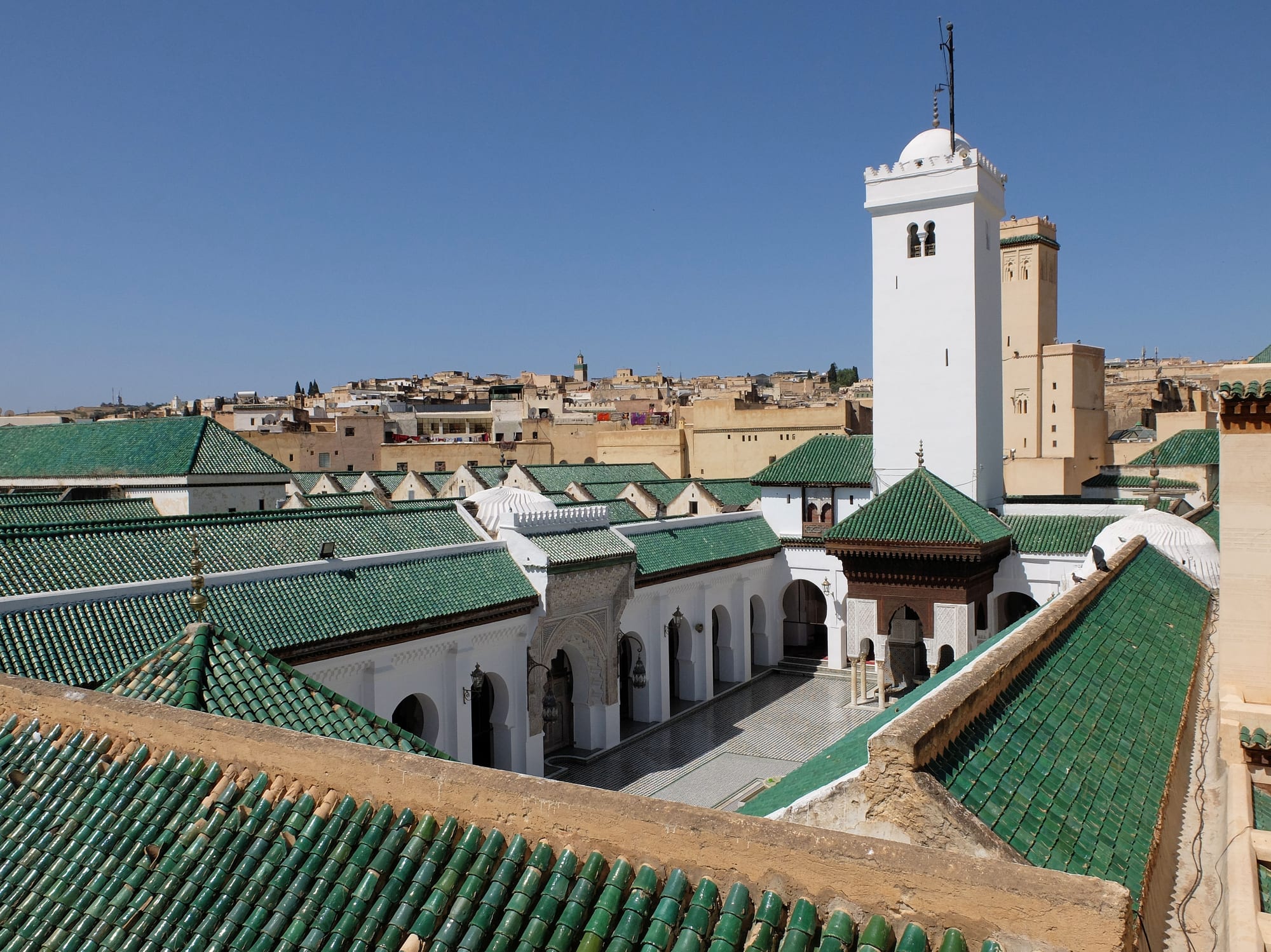
Small religious minorities have long roots. Morocco's Jewish community, once large, now numbers only around one or two thousand people, and the monarchy has supported the restoration of synagogues and Jewish cemeteries across the country as part of its heritage. Christians, mostly foreign residents, form another small community. Most mosques are closed to non-Muslims, a rule that surprises some visitors, though a handful of historic and modern mosques do admit them. Attempting to convert a Muslim to another faith is illegal, and public criticism of Islam can lead to heavy fines or prison.
Identity is not only religious. Morocco is both Arab and Amazigh — the Indigenous people often called Berbers — and Tamazight has been an official language alongside Arabic since 2011. Everyday speech is mostly Darija, Moroccan Arabic, with French widely used in business and government. The Amazigh New Year, Yennayer, became an official paid public holiday on 14 January following a royal decision in 2023, a sign of how far that heritage has moved into the national mainstream.
Beneath these layers sit values that shape everyday behaviour. Family comes first: the extended family provides identity, support and obligations, and helping relatives is seen as a duty rather than a favour. Much of social life is governed by hshuma, a sense of shame or propriety that makes public embarrassment something to be avoided at almost any cost — criticism is usually given privately and gently, and a polite "yes" can sometimes mean agreement in spirit rather than a firm commitment. The phrase "insha'Allah", God willing, runs through conversation, attached to plans large and small.
Greetings and meeting people
Greetings are warm, unhurried and repeated. "Salam alaykum" is the standard opening, answered with "wa alaykum salam", and it is followed by a string of enquiries about health, family and general well-being. Rushing past this exchange to get down to business can come across as cold. At a gathering, each person is greeted individually on arrival and again on leaving.
Between people of the same sex, a handshake is usual, often followed by the right hand being placed on the heart as a sign of sincerity; friends and relatives may also exchange kisses on the cheek. Between men and women, physical contact is more reserved. A man generally waits to see whether a woman offers her hand, and if she does not, a nod of the head and a hand on the heart is a perfectly respectful alternative.
The right hand is used for greeting, eating and passing things, since the left is associated with the toilet. Respectful forms of address matter, especially with older or senior people: Sidi for a man and Lalla for a woman, roughly "sir" and "madam", are used alongside names and professional titles. Older people receive particular deference in greetings, in seating and in conversation.
Hospitality and being a guest
An invitation to a Moroccan home is a sign of growing trust, and it is taken seriously on both sides. A guest usually brings something modest: pastries, nuts, dates, figs or flowers are all suitable, while alcohol is best avoided unless it is certain the host drinks. Gifts are generally not opened in front of the giver. Shoes come off before entering the reception rooms, and it is wise to follow the host's lead about where to sit.
Tea is offered almost as soon as a guest is settled, and accepting at least a glass is the gracious response; a flat refusal of hospitality is awkward for everyone. At the table, food is often served from one large shared dish in the middle. The meal begins once the host has said the blessing, "bismillah", or started eating, and each person eats from the part of the dish directly in front of them, using the right hand or a piece of bread. Reaching across for the choicest morsels is poor form; it is the host who steers the best pieces of meat towards guests.
The neighbourhood hammam, or public steam bath, has its own manners. Men and women bathe separately, either in different buildings or at different hours. Visitors usually keep on underwear or a swimming costume, and taking photographs inside is not done.
Festivals and life's big moments
The religious calendar, which follows the lunar year and so moves earlier each season, sets the country's rhythm. During Ramadan, Muslims fast from dawn to sunset; daytime life slows, working hours shorten, and the evenings fill with the meal that breaks the fast and with visits to family and neighbours. Non-Muslims are not expected to fast, but eating, drinking or smoking in public during the day is considered disrespectful. The month ends with Eid al-Fitr, the festival of breaking the fast, marked with prayers and family visits.
The greatest feast of the year is Eid al-Adha, known locally as Eid el-Kbir. In the days beforehand, sheep are bought and sold in huge numbers, and on the morning of the festival, after prayers, many families sacrifice a sheep at home, traditionally dividing the meat between the household, relatives and friends, and people in need. The celebrations stretch over several days of visits, sweets and shared meals.
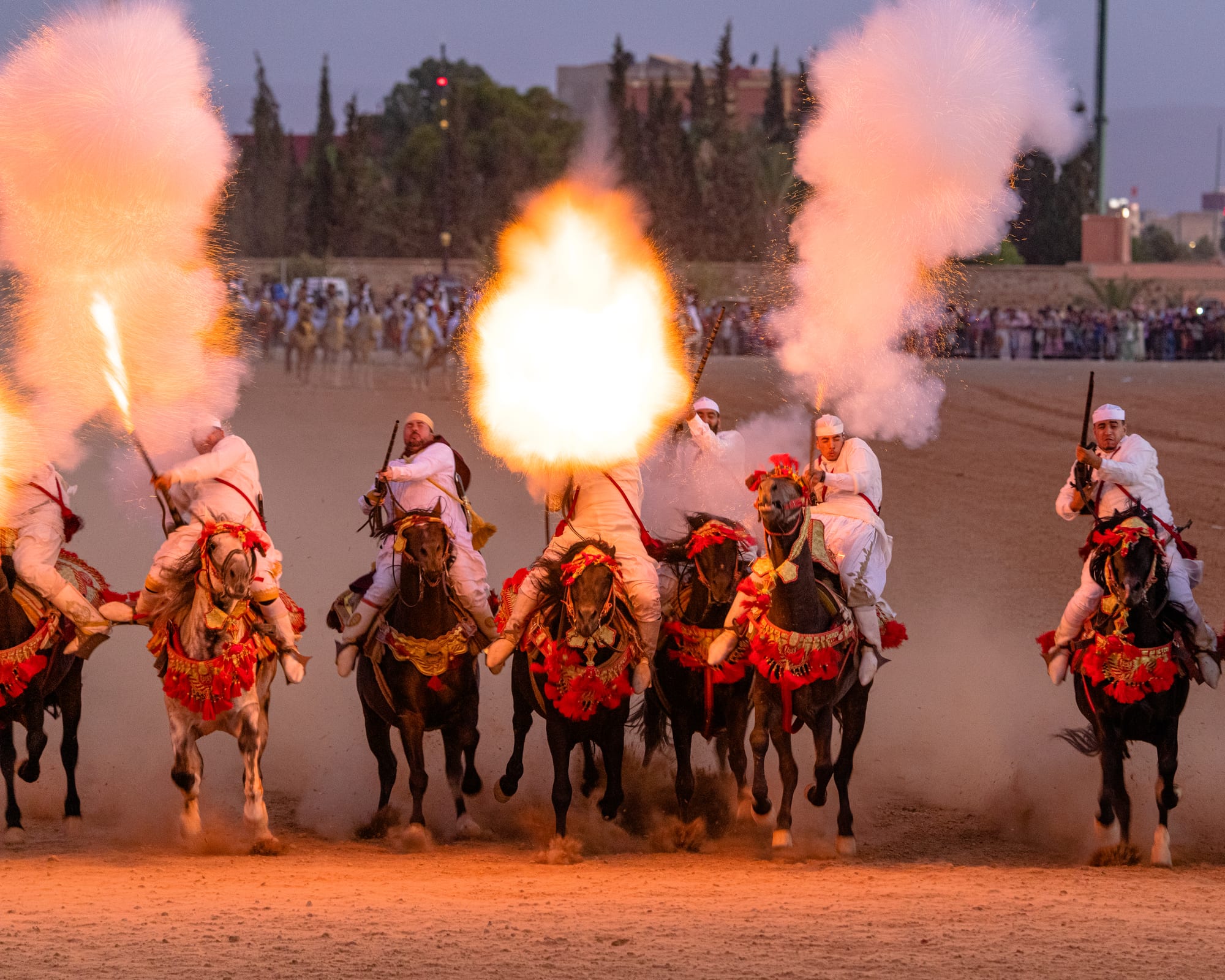
Beyond the Islamic calendar come the national and the local. Yennayer, the Amazigh New Year, is now celebrated as a public holiday in mid-January. Moussems, gatherings around a saint's shrine or a seasonal event, combine devotion with trade, music and horsemanship; the Moussem of Tan-Tan is on UNESCO's list of intangible cultural heritage. The most spectacular performance at such gatherings is tbourida, also known as fantasia, which has been practised for centuries: a troupe of riders in traditional dress charges forward in a line and fires its muskets in a single synchronised volley, re-creating an old military parade. It is performed at moussems, festivals and family celebrations, and is on UNESCO's list too.
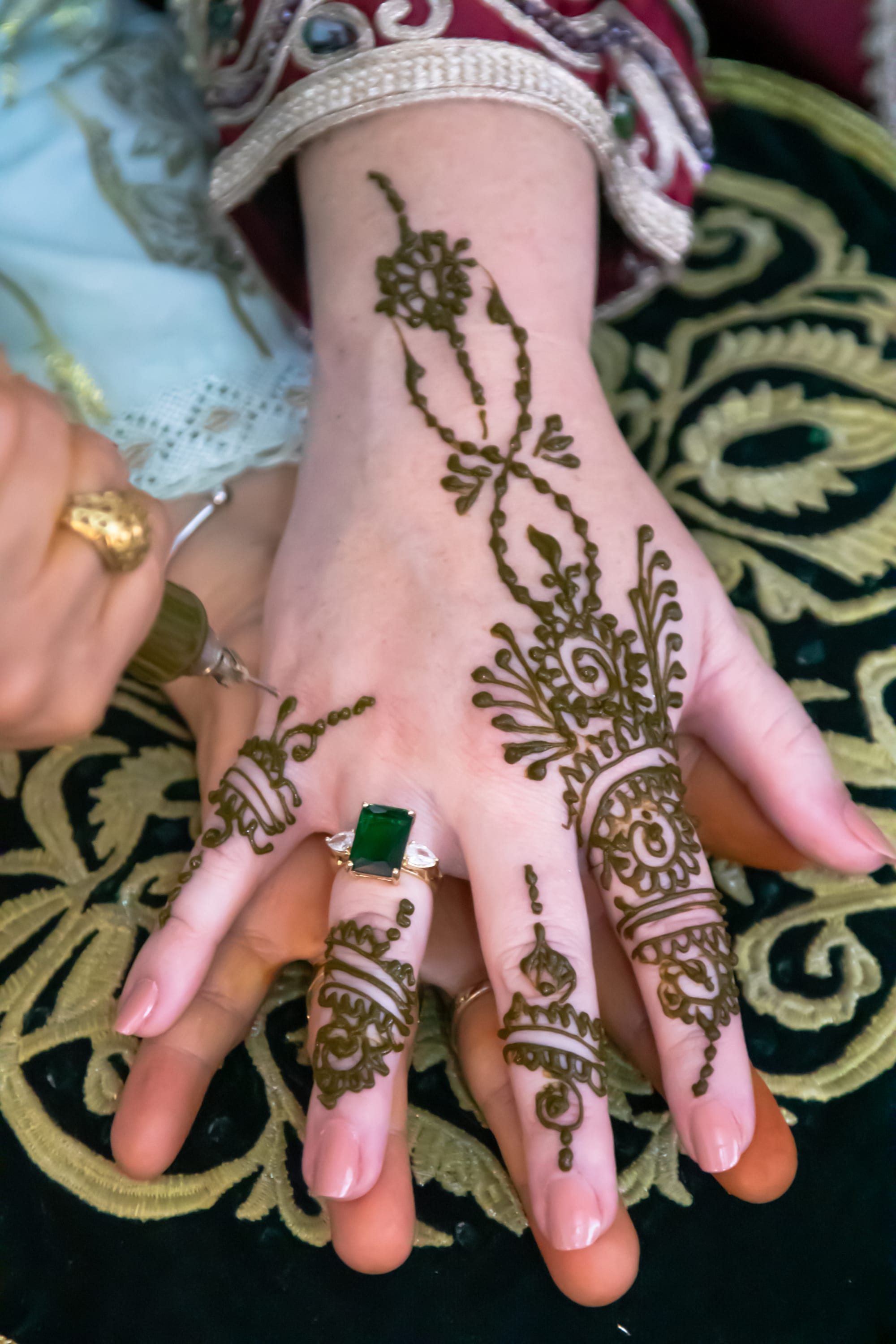
Weddings are the biggest private celebrations and often run over several days. Henna is central to them: the bride's hands are painted with intricate designs to the accompaniment of songs, chants and blessings, and henna, which UNESCO describes as a symbol of joy, also marks births and other happy occasions. The dress of choice is the caftan, the long embroidered tunic that UNESCO lists as worn at weddings, naming ceremonies, coming-of-age rituals and religious festivals, and which is also a marker of status and belonging.
The birth of a child is celebrated with a naming ceremony, traditionally held on the seventh day, when the name is announced to relatives and neighbours and, in keeping with Islamic custom, a sheep is often sacrificed for a shared meal. Funerals follow Islamic practice, with the body washed, wrapped in a white shroud and buried quickly. Relatives, friends and neighbours call at the house of the bereaved to offer condolences and pray together, and food — couscous above all — plays a central part in the meals of mourning, often cooked and brought by others so that the grieving family is spared the work.
Arts, crafts and music
Morocco's music reflects every strand of its history. Gnawa, on UNESCO's list of intangible cultural heritage, began among communities descended from people brought to Morocco through slavery and the slave trade, and blends African, Arab-Muslim and Amazigh elements. Its players, organised in brotherhoods, perform on the guembri, a three-stringed bass lute, backed by the clatter of qraqeb, heavy iron castanets; in towns, the tradition includes the lila, an all-night ritual of rhythm and trance with a therapeutic purpose. Gnawa has also found a wide audience on concert stages and at festivals.
At the other end of the scale is Andalusian classical music, known in Morocco as al-Ala, which traces its roots to Muslim Spain. It has been passed on orally for centuries and is built around the nawba, a long suite performed by an orchestra, soloists and choir, with the violin prominent among its instruments. Malhun, a sung poetry in Moroccan Arabic, covers love, faith, nature and social life, and is performed everywhere from family gatherings to concert halls. Amazigh music and dance belong to the same broad picture — Taskiwin, a martial dance of the western High Atlas, is on UNESCO's list of heritage in need of urgent safeguarding — alongside a large modern scene of rap and fusion.
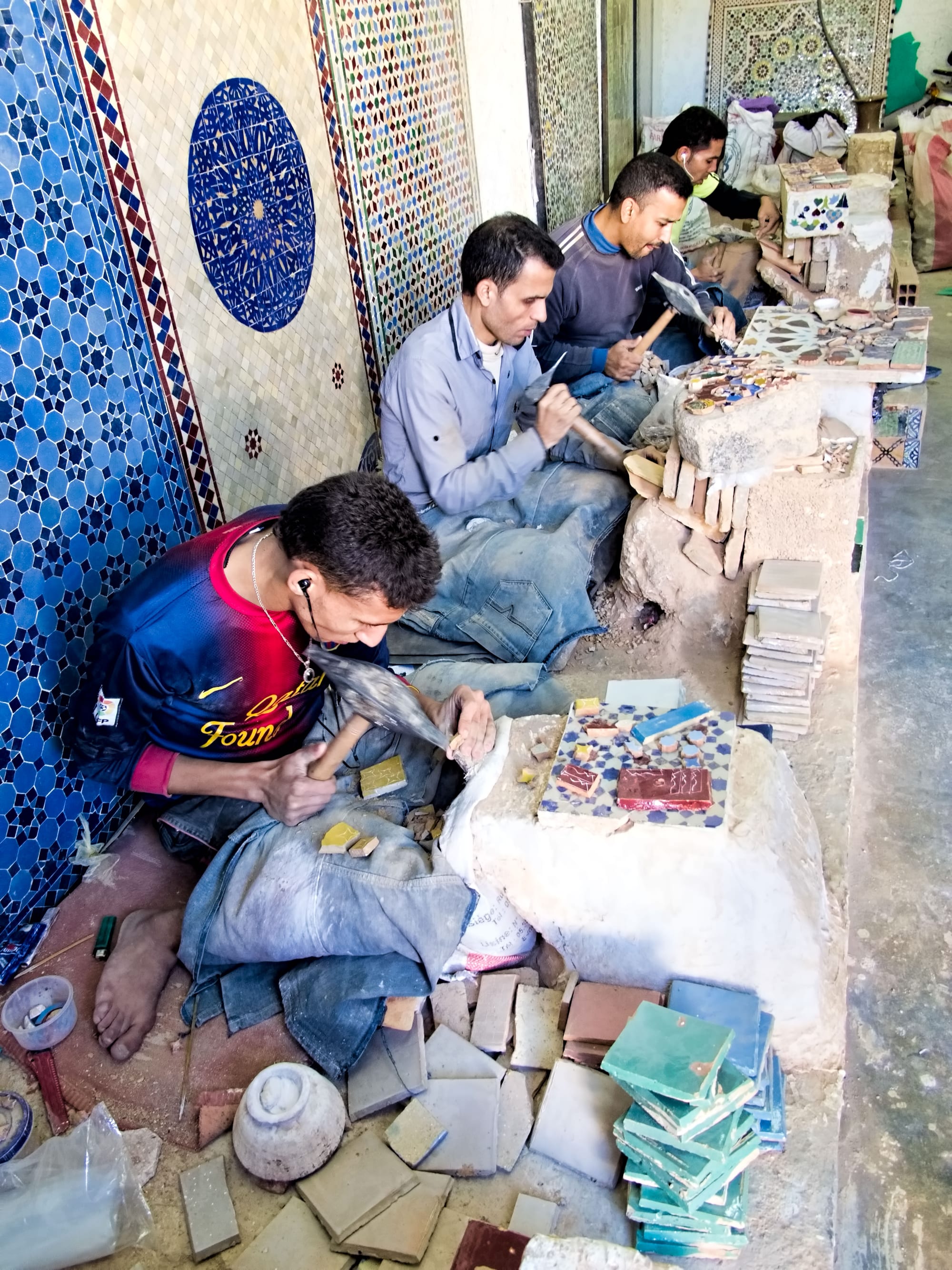
Craft remains a living livelihood rather than a museum piece. Zellige, the geometric tile mosaic seen on fountains, walls and floors, is made by chipping glazed tiles by hand into small stars, lozenges and polygons, then fitting them together into intricate patterns. Metal engraving in gold, silver and copper, Arabic calligraphy, and the tailoring and embroidery of the caftan are all on UNESCO's list. Knotted and woven carpets, leather, cedarwood carving and pottery continue to be made in workshops across the country, often passed down through families and apprenticeships.
Dos and don'ts for visitors
- Do check the latest government travel advice before any trip; most governments advise against travel to much of Western Sahara, especially near the berm, where landmines remain.
- Do greet with "salam alaykum" and take time over the exchange; wait for a woman to offer her hand, and use a nod and a hand on the heart if she does not.
- Do use the right hand for shaking hands, eating and passing things.
- Do dress modestly, with shoulders and knees covered, particularly near religious sites and during Ramadan.
- Do bring a small gift such as pastries, dates or flowers when invited to a home, remove shoes where the hosts do, and eat from the part of a shared dish nearest to oneself.
- Don't eat, drink or smoke in public during daylight hours in Ramadan, and don't drink alcohol in the street or outside licensed venues.
- Don't enter a mosque unless it is clearly open to non-Muslims, and ask before entering a saint's shrine, as many are also closed to them.
- Don't photograph people, especially children, without asking first, or near military and other sensitive sites, and don't fly a drone without permission from the civil aviation authority.
- Don't show affection in public, which can lead to prosecution; same-sex relations are illegal in Morocco.
What to take away
Moroccan manners rest on patience and generosity — time taken over a greeting, food pressed on a guest, a hand laid on the heart — and visitors who slow down to match that rhythm will find the welcome returned many times over.