Daily Life · Morocco
Morocco: A Day Still Measured by the Souk and the Call to Prayer
A country urbanising fast along its Casablanca-Rabat-Tangier corridor, where household size has been shrinking for a decade even as the neighbourhood souk, hammam and mosque still anchor an ordinary day
By Worldlore Editorial · 30 September 2026
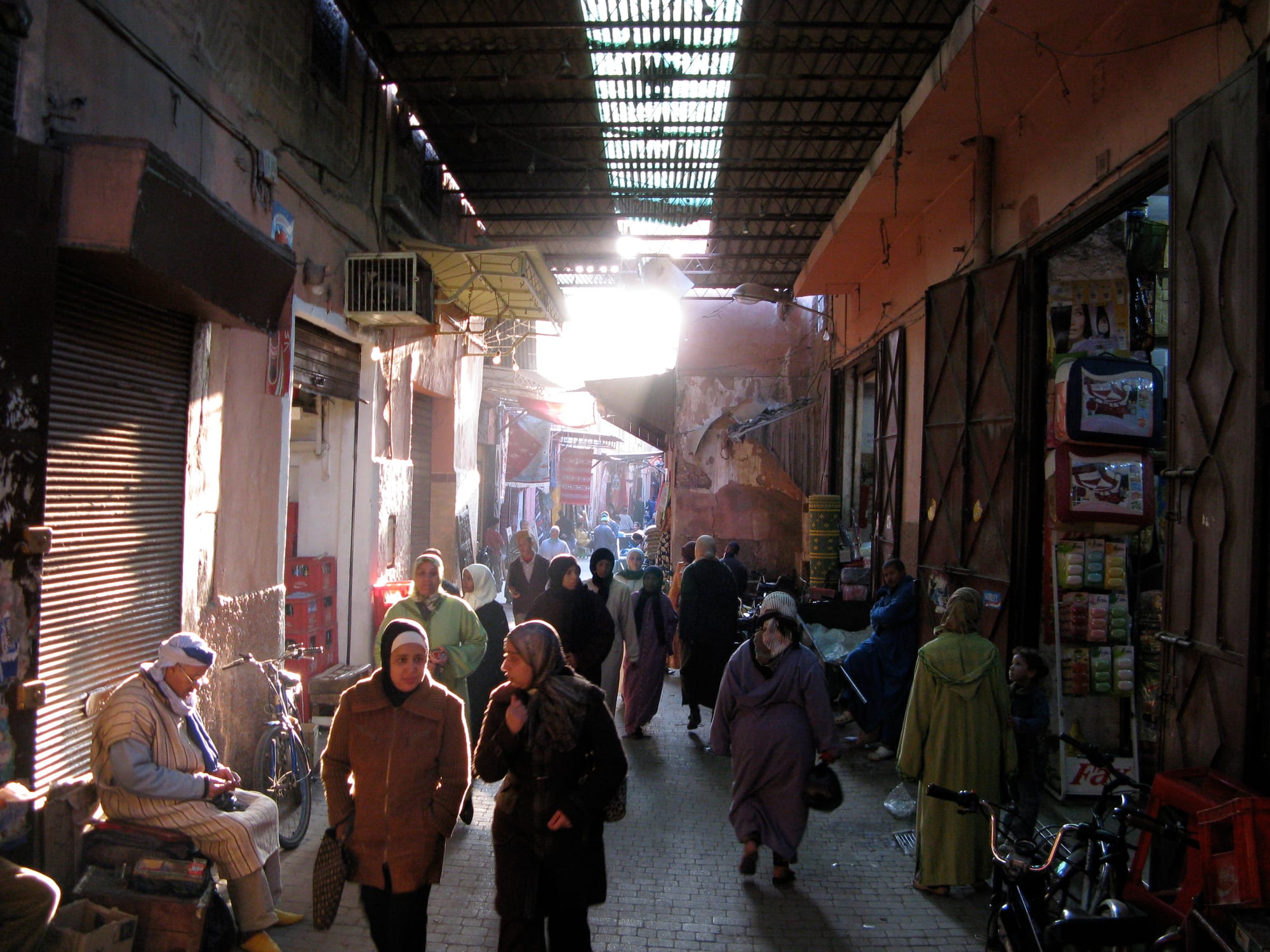
Morocco's ordinary day still runs on institutions that are centuries old even as the country urbanises fast around them. The souk, the covered market lanes found in every town and city, remains a genuine daily thoroughfare rather than a tourist backdrop, and the call to prayer, heard five times a day from mosques nationwide, marks out the day's structure much as it has for generations. At the same time, Morocco is changing quickly: households are smaller than they were a decade ago, more people live in cities than ever before, and a fast train now links the country's economic spine along the Atlantic coast.
Family and home life
The average Moroccan household has shrunk from 4.6 people in 2014 to just under 4 by 2024, according to Morocco's census, as nuclear families become ever more common and the multigenerational household less so. Extended-family living remains far more common in rural areas than in the cities, where younger, connected middle-class households increasingly live apart from their parents. That said, family networks stay practically important well beyond the household: remittances sent home by a large diaspora in France, Spain and the Low Countries are a major source of household income in many families, urban and rural alike.
Work, school and the rhythm of the day
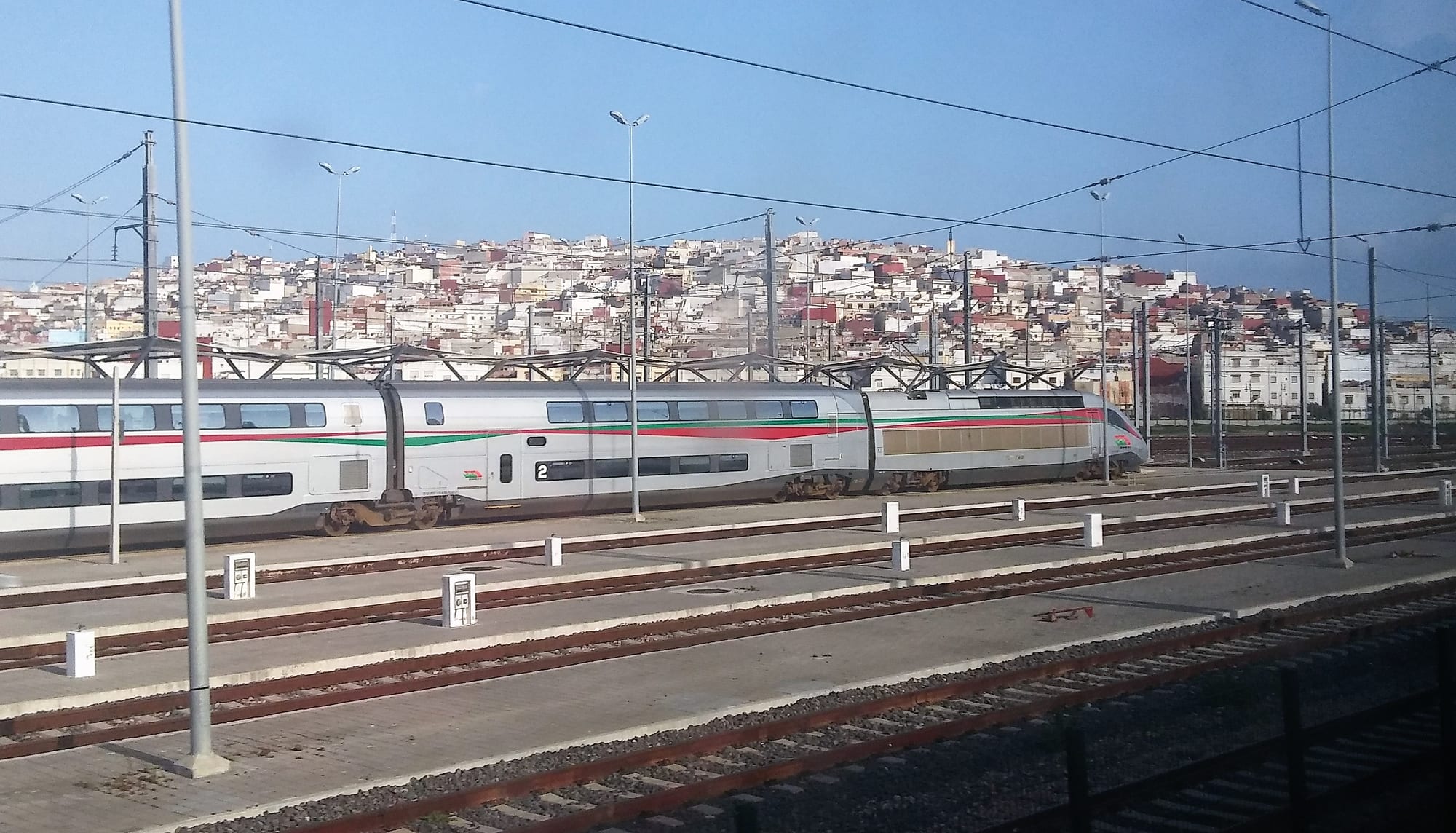
Morocco's economic centre of gravity runs along the Casablanca-Rabat- Kénitra corridor, served by Al Boraq, Africa's first high-speed rail line, which has shortened the working commute between the country's largest cities considerably since it opened. A large share of the workforce, by some estimates as much as 80 percent, works informally rather than in registered employment, particularly in agriculture, small trade and services, which makes actual working hours far more variable than any official figure would suggest. Ramadan reshapes the working day nationwide for a month each year: opening hours contract, the midday period slows considerably, and the working day effectively restructures itself around the fast and the evening meal that breaks it.
Community life and public spaces
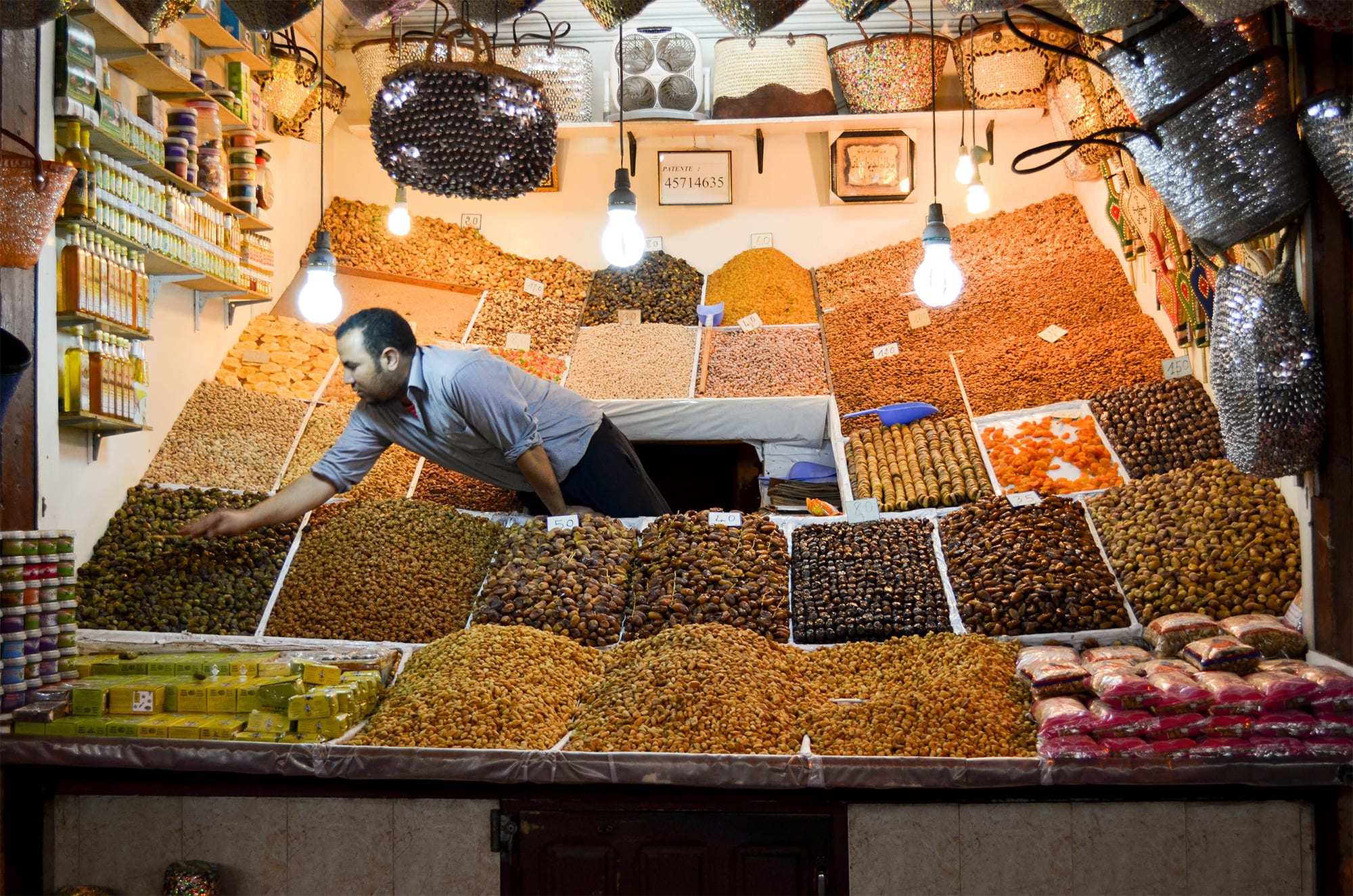
The souk is the clearest everyday public space in Moroccan towns and cities: a network of covered and open lanes selling food, spices, household goods and cloth, doubling as the place neighbours run into each other on an ordinary errand. Alongside the souk, the neighbourhood hammam, a public bathhouse, is one of the fixed institutions of a traditional Moroccan quarter, built close to the mosque, the Quranic school and the souk and long counted among the essential buildings of a medina neighbourhood. Public transport in the larger cities runs on buses and, in Casablanca and Rabat, tram networks, while shared "grand taxis" and coach services such as CTM and Supratours link towns across the country.
Free time and weekends
Football commands a level of everyday attention in Morocco that few other interests match, a passion only deepened since the national team reached the World Cup semi-finals in 2022, and matches are followed as closely in neighbourhood cafés as in stadiums. Weekend and evening leisure for families often means a walk, a visit to relatives, or time spent in a café over the mint tea that punctuates Moroccan social life throughout the day. In the cities, a growing middle class increasingly spends free time in shopping centres and modern cafés alongside the traditional souk and medina, while rural free time is shaped far more by the agricultural calendar and the availability of transport to the nearest town.
A visitor's ordinary day
The Moroccan dirham is a restricted currency, best exchanged after arrival and converted back before departure, since it is difficult to obtain abroad. Cards work in hotels, cities and larger shops, but cash is essential in medinas, for taxis and in rural areas. Trains and the CTM and Supratours coach networks are comfortable, affordable ways to move between cities, while "petit taxis" within a city often do not run their meter for visitors, so agreeing a fare before setting off avoids disputes. During Ramadan, expect reduced daytime opening hours and limited daytime dining options in many areas, with life shifting toward the evening once the fast is broken. Night driving on rural roads carries real hazards from unlit carts, pedestrians and animals, so it is worth avoiding where possible.
What to take away
An ordinary day in Morocco runs on the same institutions, the souk, the hammam, the call to prayer, that have shaped Moroccan life for generations, even as the country's growing cities pull daily life toward a faster, more modern rhythm around them.