Culture & Customs · Mayotte
Mayotte: Where the Bride Keeps the House
A Sufi-shaped Islam, a family home that passes through women, and a wedding season of processions, salouva and sandalwood masks on a French island that remains Comorian in its customs
By Worldlore Editorial · 30 September 2026
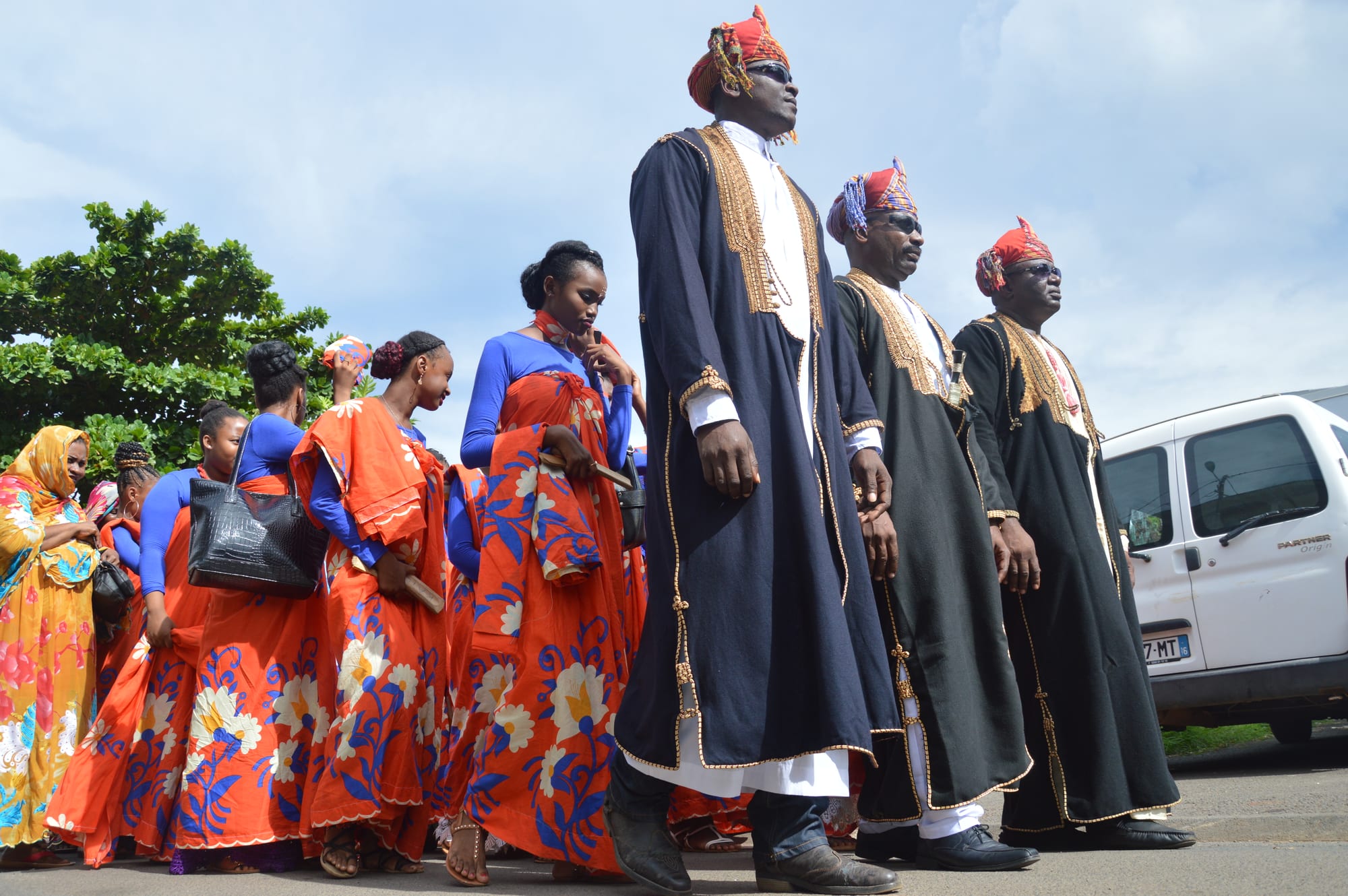
On the final day of a traditional Mahorais wedding, a procession forms under a large tent. Men and women walk together to the beat of drums, the women in their finest salouva, the brightly patterned wraps knotted at the chest, their hands decorated with henna and their faces with msindzano, a pale paste of ground sandalwood. The procession, the manzaraka, escorts the groom to the marital home. It is the groom who makes the journey, not the bride: in Mayotte the family house belongs to her. The scene brings together most of what shapes Mahorais life — Islam, the extended family, the central place of women and a love of music and ceremony — on an island that is legally part of France and culturally part of the Comoros archipelago.
Faith, identity and values
Mayotte is an overseas department of France and part of the European Union. The neighbouring Union of the Comoros also claims the island as part of its territory, a position it has put before the United Nations General Assembly, while France rejects the claim and Mahorais voters have repeatedly chosen in referendums to remain French. Whatever the politics, the island's customs are shared closely with the other Comoros islands.
The population is overwhelmingly Muslim, following Sunni Islam of the Shafi'i school. The call to prayer sounds from neighbourhood mosques, Friday is the day of the main congregational prayer, and most children attend Quranic school alongside the French school system, learning to recite the Quran and, often, the religious songs that later accompany the island's ceremonies. Islamic judges, the cadis, have long dealt with matters of family life and inheritance, and imams and the heads of Sufi brotherhoods are held in particular respect.
The researcher and linguist Mlaïli Condro has described how Islam reached Mayotte through Sufism and took root as a joyful faith, bound up with song and gathering; he also notes tension between this older style of practice and stricter religious movements that seek to strip out elements they regard as un-Islamic. Islam here has long coexisted with local beliefs from African and Malagasy tradition. Anthropologists describe possession by spirits, known as patros and, in their Malagasy form, trumba, and rituals held at ziara, holy sites such as the ruins of old mosques and the tombs of sheikhs, where the spirits of the earth or of ancestors are addressed.
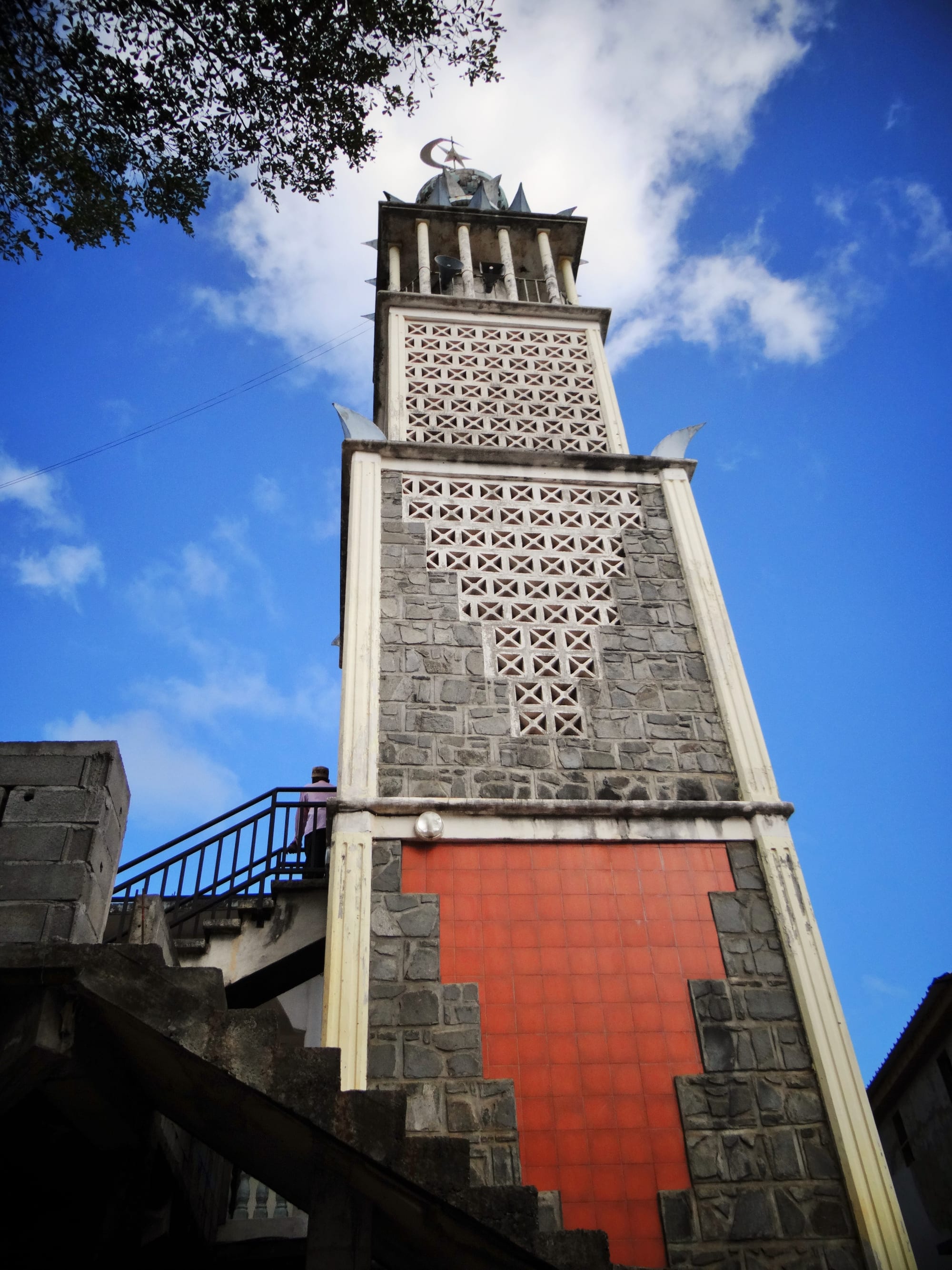
Family organisation is one of the most distinctive features of Mahorais society. Residence is matrilocal: a woman traditionally receives a house from her family at her first marriage, and her husband comes to live there, so the mother's home becomes the fixed point of the family. Women hold a strong position within the household and gain authority with age, though many of the formal public roles in village and religious life are held by men. Respect for elders runs through everyday behaviour, alongside a keen sense of how one should appear and conduct oneself in public. Standing in the community is measured by education and wealth, but also by belonging to one of a village's older families.
Living under French law has brought its own negotiations. Islamic custom calls for the dead to be buried quickly and without a coffin; French regulations, applied fully since departmentalisation, allow burial without a coffin only within a short time after death, after which a coffin is required for health reasons. Local officials have worked out arrangements that respect both.
Greetings and meeting people
A gentle handshake is the usual greeting for both men and women. Greetings are not rushed: they are a sign of respect, and elders in particular are greeted with care. French is the language of administration and school, but Shimaore, a Bantu language close to Comorian, and Kibushi, a Malagasy language, are what most people speak at home. Language carries social weight. In formal settings, good French signals education; in a village, speaking French where Shimaore would do can come across as acting like a mzungu, an outsider, so even a visitor's attempt at a local greeting tends to be warmly received.
Dress signals respect as much as words do. Many men combine Western clothes with the long white kandzu robe and the embroidered kofia cap, especially when going to the mosque and at ceremonies. Women wear the salouva, a length of cotton knotted at the chest, often with a kishali, a shawl draped over the shoulders or worked into the hair. Some salouva carry the outline of the island itself in their pattern, and the wrap is seen as a strong marker of Mahorais identity, worn in its brightest forms on Fridays. Msindzano, the sandalwood paste, was traditionally applied to protect and soften the skin in the sun; younger women now often paint it in decorative patterns, and unlike henna it washes off easily with water. Visitors are expected to dress modestly, especially away from the coast: knee-length skirts or loose trousers for women, and for men, shirts on anywhere away from the beach.
Hospitality and being a guest
Hospitality is shaped by the Islamic calendar and by the extended family. Shoes come off before entering a home or a mosque. Permission should be asked before photographing anyone, and especially women in ceremonial dress. At weddings and other celebrations, the shared meal centres on rice, curdled milk and meat, and it is as much a social occasion as a meal, with music, dance and a great deal of visiting between families.
Ramadan is the high point of shared eating. Each evening the fast is broken with futari, the meal after sunset, and it has traditionally been an occasion for gathering. Older Mahorais recall neighbours sharing courtyards to prepare the evening meal together, pounding rice side by side and then eating in large groups. Changes in housing since the 1970s and 1980s removed many of those shared courtyards, but the custom has adapted: large futari gatherings are now organised among colleagues, associations, neighbourhoods and branches of families spread across the island, though some observers feel these have become as much about displaying social standing as about sharing. During daylight hours in Ramadan, visitors should avoid eating or drinking in public.
Festivals and life's big moments
Both French and Muslim holidays are observed. Eid al-Fitr at the end of Ramadan and Eid al-Adha are major family occasions, and Ramadan evenings bring their own entertainments, including mourengué, a traditional form of boxing performed to the rhythm of drums. For older generations it was a good-natured way to gather and show strength; after clashes in recent years, some municipalities have banned it during the holy month. Mayotte also keeps its own date to mark the end of slavery, 27 April, chosen by local elected representatives, since slavery was abolished on the island in 1846, nearly two years before the decree of 1848 that ended it across France's other colonies. The day is marked with official ceremonies and festivities, and many Mahorais say the history behind it deserves to be better taught.
Religious song accompanies the big events of life. The mawlida shenge is a Sufi singing ritual in which men and women gather in public squares to praise the Prophet, each with their own distinct place and role, in performances of song, music and dance that can build towards trance. It is held to mark major social, family, spiritual or political events and has been entered in France's national inventory of intangible cultural heritage.
The traditional wedding, the harusi, is the island's grandest ceremony and can stretch over two full weekends. It unfolds in stages. The families, not the couple, negotiate the date and the dowry at the engagement. A contract ceremony follows at the bride's home, then a religious ceremony at which verses of the Quran are recited before dignitaries. There is a procession accompanied by percussion, a choreographed dance, the shigoma, and the mbiwi, a ceremony for women only that honours the bride's mother for raising and marrying her daughter. The celebrations end with the manzaraka, the public procession at which the bride is presented and the groom is escorted to the marital home. Guests dress in their best salouva, with henna and msindzano, and weddings are also occasions for the gold necklaces, bracelets and earrings that complete a woman's ceremonial dress. For the families involved, a grand wedding affirms their standing in the community and shows how much Mahorais society values its older customs.
Arts, crafts and music
Mayotte's best-known performing art is the debaa, practised only by women. It combines song, choreographed dance and Sufi poetry, drawing on African, Indian Ocean and Arab-Muslim influences, and it is performed at weddings, at celebrations of success and at the lifting of mourning. Groups perform in matching costumes, moving in close, carefully drilled lines with graceful movements of the hands and arms. A debaa recording won a France Musique prize in 2009, and the art is now practised by Mahorais communities in Réunion, mainland France, the Comoros and Madagascar, and was entered in France's national inventory of intangible cultural heritage in 2025.
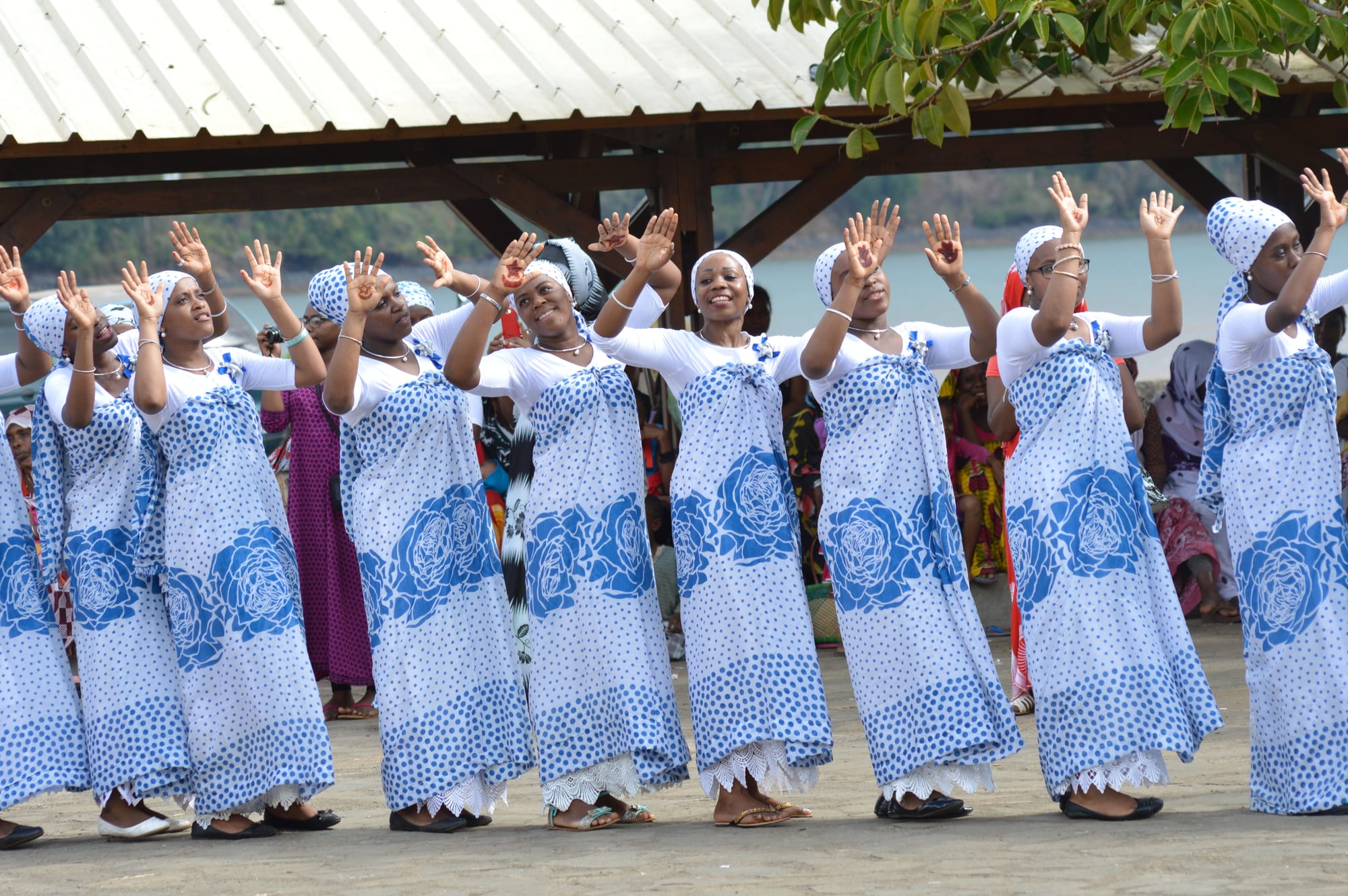
The mbiwi is another women's art, a music and dance in which the rhythm is beaten out on pairs of bamboo sticks, accompanied by rapid movements of the hips. It belongs above all to weddings, and its performers both pass on old songs and compose new ones about present-day life; it too has been added to the national inventory. The wadaha, sometimes called the pestle dance, is danced by women in a circle around a large wooden mortar. Dancers take turns pounding it, tossing the pestle into the air for the next woman to catch, while the others clap and dance to rhythms kept by men. It recalls the days when rice was grown widely on the island and villagers came together to pound the harvest, and it now appears at weddings, celebrations and official events.
The shigoma, a music associated with ceremonial dance, is among the traditions currently being documented, along with crafts and skills such as salt-making, net fishing and the building of the laka, the local outrigger canoe; traditional pottery has already joined the national inventory. Beyond these traditions, contemporary Mahorais music mixes Comorian and Malagasy styles with Creole and European ones, and theatre in the local languages uses humour and social criticism to explore family relationships, marriage and changing social values.
Dos and don'ts for visitors
- Do check the latest government travel advice before any trip; several governments advise against non-essential travel to Mayotte because of rising violent crime, frequent demonstrations and roadblocks, and lasting damage from the 2024 cyclone.
- Do dress modestly, particularly in villages and near mosques: knee-length skirts or loose trousers for women, and shirts on for men away from the beach.
- Do take shoes off before entering a home or a mosque.
- Do greet people unhurriedly with a gentle handshake, and show particular respect to elders.
- Do ask before photographing anyone, especially women in ceremonial dress.
- Don't eat or drink in public during daylight hours in Ramadan.
- Don't rely on French alone in village settings; a greeting in Shimaore is appreciated.
What to take away
Mayotte's customs rest on faith, family and a strong sense of occasion — and a visitor who dresses modestly, greets people with care and treats the island's ceremonies with respect will find a welcome shaped by all three.