Culture & Customs · Mauritius
Mauritius: Sweets Over the Garden Wall
Hindu, Christian, Muslim and Chinese calendars kept side by side, elders greeted as aunt and uncle, and a habit of sharing other people's festivals that has become part of what it means to be Mauritian
By Worldlore Editorial · 30 September 2026
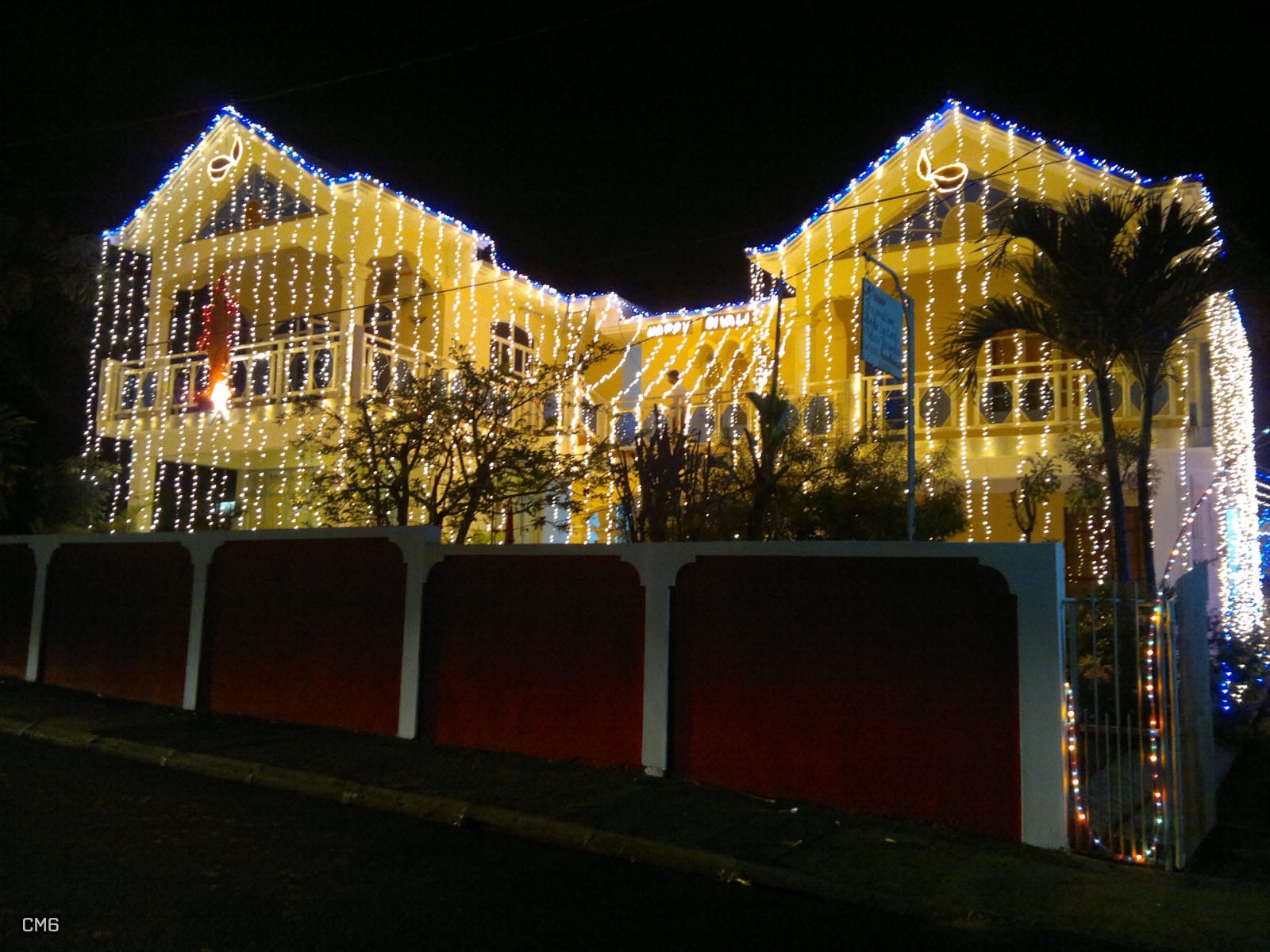
On the evening of Divali, small clay lamps are lit along doorsteps, balconies and garden walls, and strings of electric lights pick out the outlines of whole houses. Earlier in the day, boxes of homemade and shop-bought sweets have been carried next door and to friends, and many of the people receiving them are not Hindu at all. Mauritian newspapers describe the festival as a symbol of sharing, a moment when people of every faith exchange good wishes and sweets. The same thing happens, in different forms, at Eid, at Christmas and at the Spring Festival. On an island with no Indigenous population, where every family arrived from somewhere else, this habit of taking part in each other's celebrations has become one of the clearest expressions of what Mauritians call mauricianisme.
Faith, identity and values
Religion runs close to the surface of Mauritian life, and it maps closely onto ancestry. At the 2022 census, roughly 48 per cent of the population was Hindu, 32 per cent Christian, most of them Roman Catholic, and 18 per cent Muslim, with small Buddhist and non-religious minorities. Mauritians of Indian descent are mostly Hindu or Muslim; Creoles, of African and Malagasy descent, and Franco-Mauritians are mostly Catholic. The constitution protects freedom of religion and there is no state religion. Hindu temples, statues and shrines are visible across the country, Catholic churches stand in most towns, and mosques, many of them small neighbourhood buildings, are found in towns and villages alike.
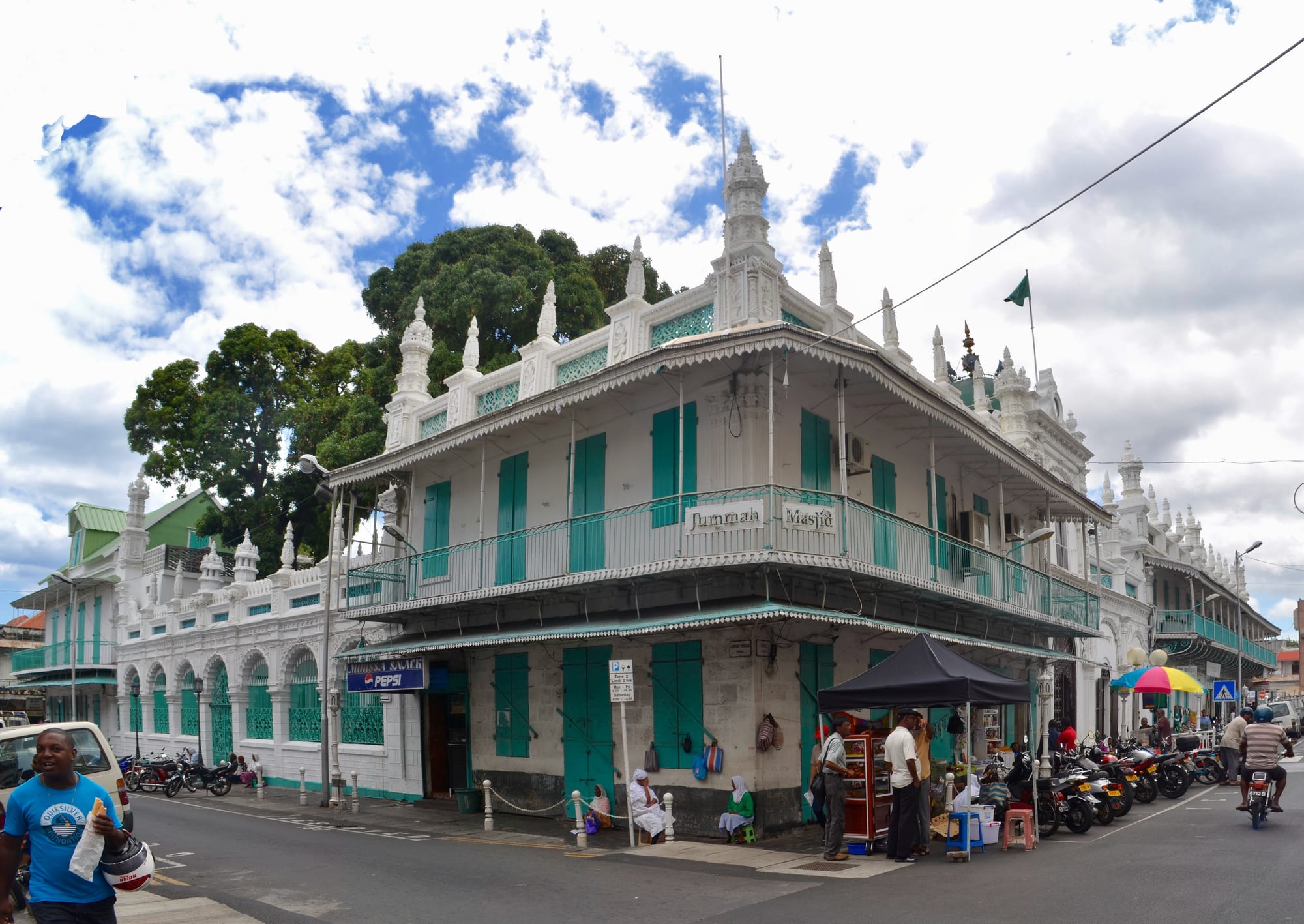
What stands out to many observers is how readily people cross these lines. Mauritians often share in the observances of religious groups other than their own, and syncretism, the blending of customs from different traditions, is common. Cultural Atlas lists the country's core values as diversity, tolerance, hospitality, communalism, adaptability and pragmatism, and the pairing of tolerance with communalism is telling. Identity is still strongly tied to community: Mauritians speak of noubann, "our lot", and zotbann, "their lot", and ethnicity is often considered more important than social class when choosing a marriage partner. Yet these loyalties sit alongside a broadly peaceful coexistence, and younger Mauritians increasingly describe themselves first as Mauritian, with marriages across communities becoming more common.
Language is the great leveller. English is the language of government and schooling and French is prominent in the media, but Kreol Morisien is spoken by the great majority of the population across every community and is widely regarded as one of the things that unites the country. People are used to hearing several languages at once and are rarely offended by conversations they cannot follow. Communication tends to be indirect: open confrontation is avoided, and people may say what they think the listener would like to hear rather than deliver an unwelcome truth bluntly. Behaviour in public is generally modest and reserved, even though Mauritians are warm and welcoming among friends and family.
Greetings and meeting people
A first meeting usually begins with a firm handshake. Once people know each other, it is common to greet with la bise, the French-style kiss on both cheeks. Greetings also vary by community. Hindu Mauritians often press their palms together at the chest and say "namaste", sometimes with a nod or a slight bow, while Muslim Mauritians may greet one another with "salaam alaykum", "peace be upon you". Some Muslims from more traditional families prefer not to shake hands with someone of the opposite sex and will offer a smile and a nod instead; following their lead is the polite response.
In formal settings "bonjour" or "how are you?" does the job, while among friends a Kreol "ki position?", roughly "how are things?", is typical. The most distinctive custom lies in forms of address. Elders are rarely called by their first names. Instead, they are addressed with family titles such as uncle, aunt, grandfather or grandmother, even when there is no family connection, and people of a similar age may call each other "cousin". Children in particular are brought up to use these titles and to show respect to parents and grandparents. Greeting older people properly on arrival matters, and skipping over them is noticed.
Mauritians usually stand about an arm's length apart when talking with friends and family, a little further apart with strangers and further still between men and women. Direct eye contact is normal. Hand gestures are used freely in conversation, but clicking the fingers to attract someone's attention is considered impolite. To beckon someone, the palm is held facing down and the fingers are waved inwards, rather than curling a single finger.
Hospitality and being a guest
Hospitality is taken seriously. Traditionally, friends and relatives could drop in unannounced, and although busier working lives have made this less common, Sunday afternoon remains a favoured time for visiting. A guest who arrives around a mealtime will be invited to eat. Even on a short call, the host will usually offer something, often tea and biscuits, and will insist that it is accepted. The gracious response is to accept and try a little of everything that is offered. Gifts are not required, but a small present for the children, such as fruit, is appreciated.
Religious rules shape both gifts and the table. Many Hindus avoid beef and Muslims avoid pork, so leather goods are best avoided as gifts for Hindu hosts and anything connected with pigs for Muslim ones. During the month of Ramadan, Muslim guests and hosts may be fasting during daylight hours. Most everyday meals are eaten with a spoon and fork, but at Indian celebrations it is common to eat with the right hand, and guests may be offered the choice. In Indo-Mauritian homes, food and other items should be passed and received with the right hand or with both hands, never with the left alone.
Dress is generally conservative, in lightweight fabrics, and the degree of covering varies by community, with many Muslim women dressing more fully. On the beach, topless sunbathing and nudity are not accepted. At places of worship, visitors are expected to dress modestly and to remove their shoes before entering temples and mosques; at Hindu temples, leather items are left outside too. When unsure, the simplest approach is to watch what others do, or to ask.
Festivals and life's big moments
The public holiday calendar is itself a portrait of the country. Alongside New Year, Labour Day, Christmas and National Day on 12 March, the official list for 2026 includes Thaipoosam Cavadee, Maha Shivaratree, the Chinese Spring Festival, Ugaadi, Eid-ul-Fitr, the Assumption, Ganesh Chaturthi and Divali. Two holidays mark the founding migrations of modern Mauritius: the Abolition of Slavery on 1 February and the Arrival of Indentured Labourers on 2 November.
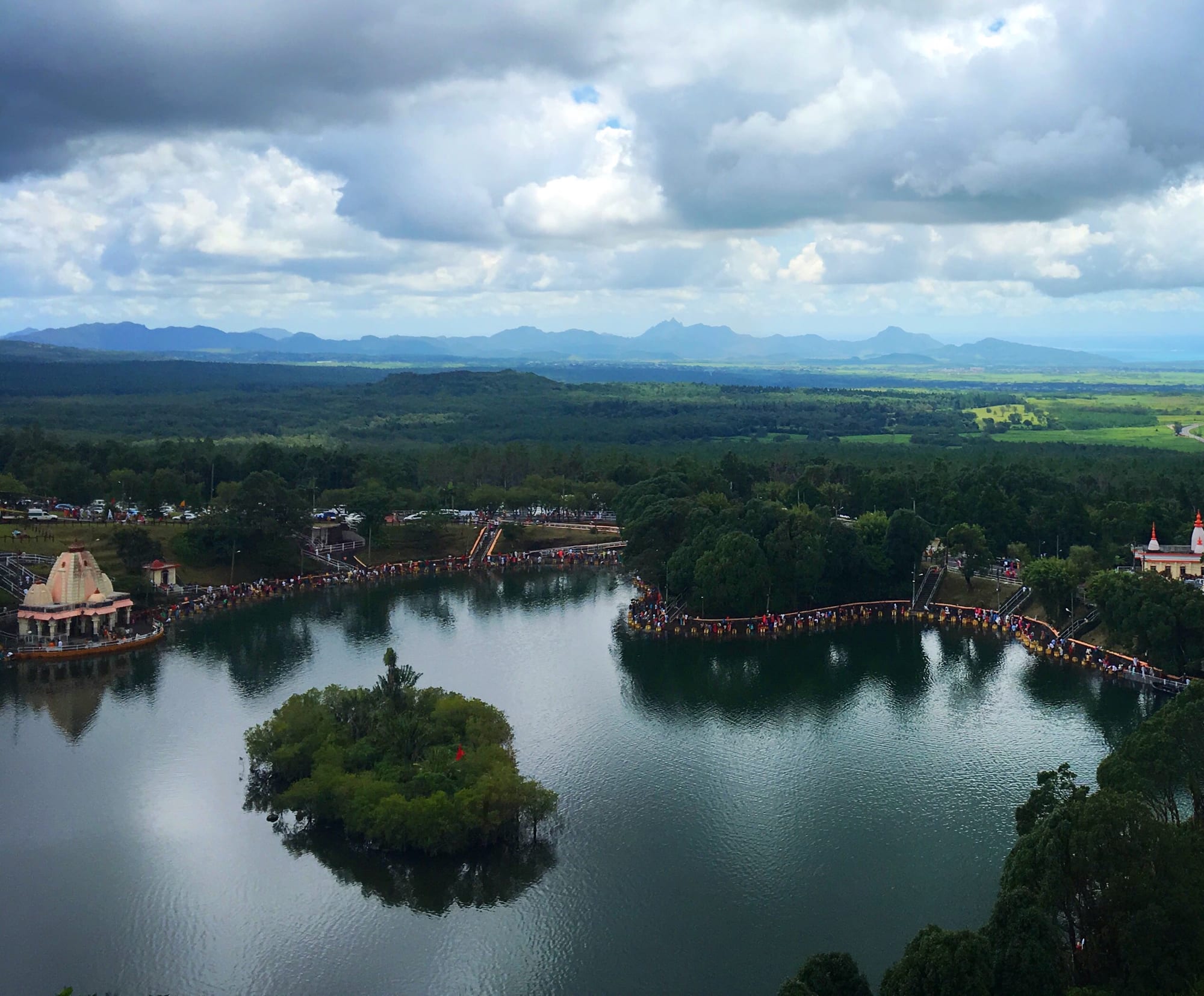
Maha Shivaratree, the great night of Shiva, is the largest Hindu observance of the year. Devotees prepare for a week or more, giving up meat and alcohol and praying daily. In the days before the festival, pilgrims set out from across the island for the crater lake of Ganga Talao, many of them on foot, dressed in white and carrying kanwars, wooden frames decorated with paper flowers, garlands and images of Shiva. At the lake they fast, recite sacred texts and make offerings, and the observance ends with a shared meal that breaks the fast. Thaipoosam Cavadee, the great festival of Tamil Hindus, brings colourful processions to temples early in the year.
The Catholic calendar has its own great gathering. Each September, on the anniversary of his death in 1864, thousands of pilgrims make their way to the tomb of Father Jacques-Désiré Laval, a French missionary who came to Mauritius after the abolition of slavery and was beatified in 1979. The pilgrimage is known for drawing Hindus and Muslims as well as Christians, and people of other faiths hand out food and drinks to pilgrims along the route.
Weddings follow the customs of each community, and families remain closely involved. In more traditional Hindu and Muslim families marriages are often arranged with parental consent, and even where couples choose freely, parental approval carries weight. Hindu weddings can stretch over several days of ceremonies and feasts. Before the wedding itself, many Bhojpuri-speaking families hold Geet-Gawai at the home of the bride or groom: five married women sort turmeric, rice, grass and money into a piece of cloth while songs honouring Hindu deities are sung, the mother of the bride or groom and a drummer honour the instruments, and the evening builds into singing and dancing. Muslim couples marry in the nikah, a shorter ceremony at which men and women guests are sometimes seated separately, while Catholic weddings take place in church and are followed by a reception.
Funerals likewise follow each faith. Hindus traditionally cremate their dead, and Christian families hold a wake before the funeral. Christian and Muslim graves are visited around important religious occasions, and flowers are planted on them.
Arts, crafts and music
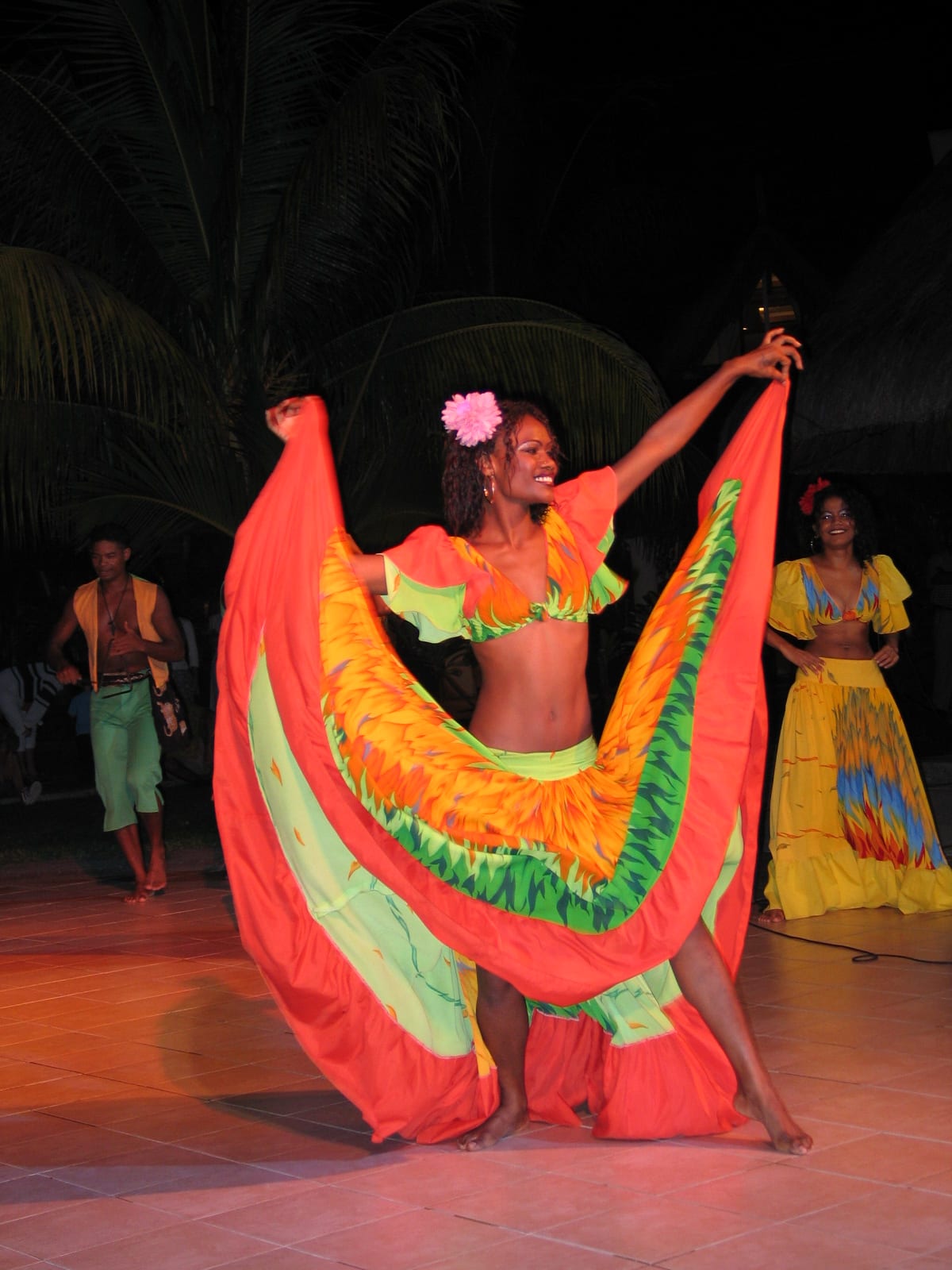
Sega is the island's own music and dance, and the art form most closely tied to the Creole community. Songs begin in a minor key and gradually gather speed while dancers move their hips and hands in short steps to the beat of a frame drum, a box rattle and a triangle. A soloist improvises the words in Kreol, sometimes mixed with other languages, and the meaning of a song is often acted out in the choreography. Women traditionally dance in long skirts and petticoats, and men in rolled-up trousers, colourful shirts and straw hats, a costume that recalls the dress of their ancestors. Musicians have traditionally made their own instruments, passing on the craft by apprenticeship, and the music is heard at family gatherings as well as in public. UNESCO describes it as a tradition that breaks down cultural and class barriers.
Geet-Gawai carries a different inheritance: the Bhojpuri wedding songs brought by indentured labourers from northern India. Led mainly by women and accompanied by the dholak, a two-headed drum, the songs are performed in family homes before a wedding. Men now take part too, and the tradition is also taught in community centres and academies and performed on public stages. Participants describe it as a source of pride and of collective memory, and as something that crosses lines of class and caste.
Beyond these, the religious festivals themselves are occasions for craftsmanship. The kanwars carried to Ganga Talao are decorated by hand by groups of pilgrims, in forms that range from simple frames hung with paper flowers to elaborate structures shaped like houses, crocodiles or even the dodo. Indian music and literature also remain important in the cultural life of Indo-Mauritian communities.
Dos and don'ts for visitors
- Do greet elders first and properly; answering a namaste with palms pressed together is always well received.
- Do accept the tea and biscuits a host offers and try a little of everything on the table.
- Do dress modestly at temples, mosques and churches, and remove shoes before entering temples and mosques, leaving leather items outside Hindu temples.
- Do pass and receive things with the right hand or both hands, especially in Indo-Mauritian homes.
- Don't take it personally if someone from a traditional Muslim family declines to shake hands with a person of the opposite sex; a smile and a nod is the courteous reply.
- Don't give leather goods to Hindu hosts or anything pork-related to Muslim ones, and bear in mind that many Hindus avoid beef.
- Don't click the fingers to call someone over; beckon with the palm facing down instead.
- Don't sunbathe topless or nude on the beach, which is not accepted.
What to take away
Mauritius holds its many inheritances together less by blending them into one than by sharing them generously — and a visitor who greets the elders, accepts what is offered and joins in the festivities will find a place in that exchange.