Daily Life · Mauritius
Mauritius: A Day That Answers to Several Calendars
A plateau of Indo-Mauritian, Creole, Sino-Mauritian and Franco-Mauritian households living side by side, a working week that runs to French, English and Creole in the same conversation, and a festival calendar so full that a major public holiday is never far away
By Worldlore Editorial · 30 September 2026
Mauritius has no indigenous population at all — everyone's family arrived by ship, whether as Dutch or French settlers, enslaved Africans and Malagasy, indentured labourers from India, or traders from China, and that history still shapes an ordinary day nationwide. A large share of people live inland on the cooler central plateau rather than on the postcard coast, moving between English at school, French in the media, and Mauritian Creole at home and with friends, often in the same afternoon. Public holidays follow Hindu, Christian, Muslim and Chinese calendars all at once, so almost no stretch of the year passes without a major celebration reshaping the day for the whole country.
Family and home life
Extended family ties remain strong across all of Mauritius's communities, even as urban households have grown smaller and more nuclear over recent decades. Indo-Mauritians form the largest community, descended from the indentured labourers brought to work the sugar estates after the abolition of slavery in 1835; alongside them are Creoles of African and Malagasy descent, and smaller Sino-Mauritian and Franco-Mauritian communities. Most families keep close to their own community's customs at home — food, language and religious practice differ noticeably from one household to the next — while sharing a common civic life outside it, a balance Mauritians and outside observers alike tend to describe as the country's defining social achievement.
Work, school and the rhythm of the day
Mauritius has high literacy and free schooling and healthcare, and education runs mainly in English, with French taught alongside it from the early years and Asian or Creole languages offered as options in many schools. The workforce has moved a long way from its sugarcane past: cane still covers much of the countryside but now matters far less to the economy than it once did, and most Mauritians today work in services, manufacturing, tourism or financial and information technology, concentrated around Port Louis and the plateau towns of Curepipe, Vacoas and Quatre Bornes. Offices keep regular weekday hours, while small shops and market stalls keep longer, more irregular hours, especially early in the morning when produce is freshest.
Community life and public spaces
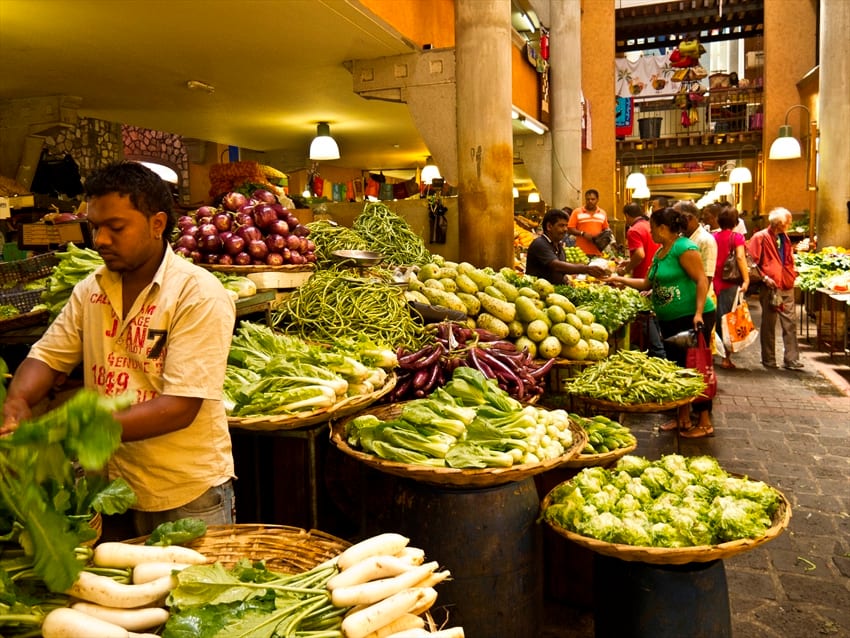
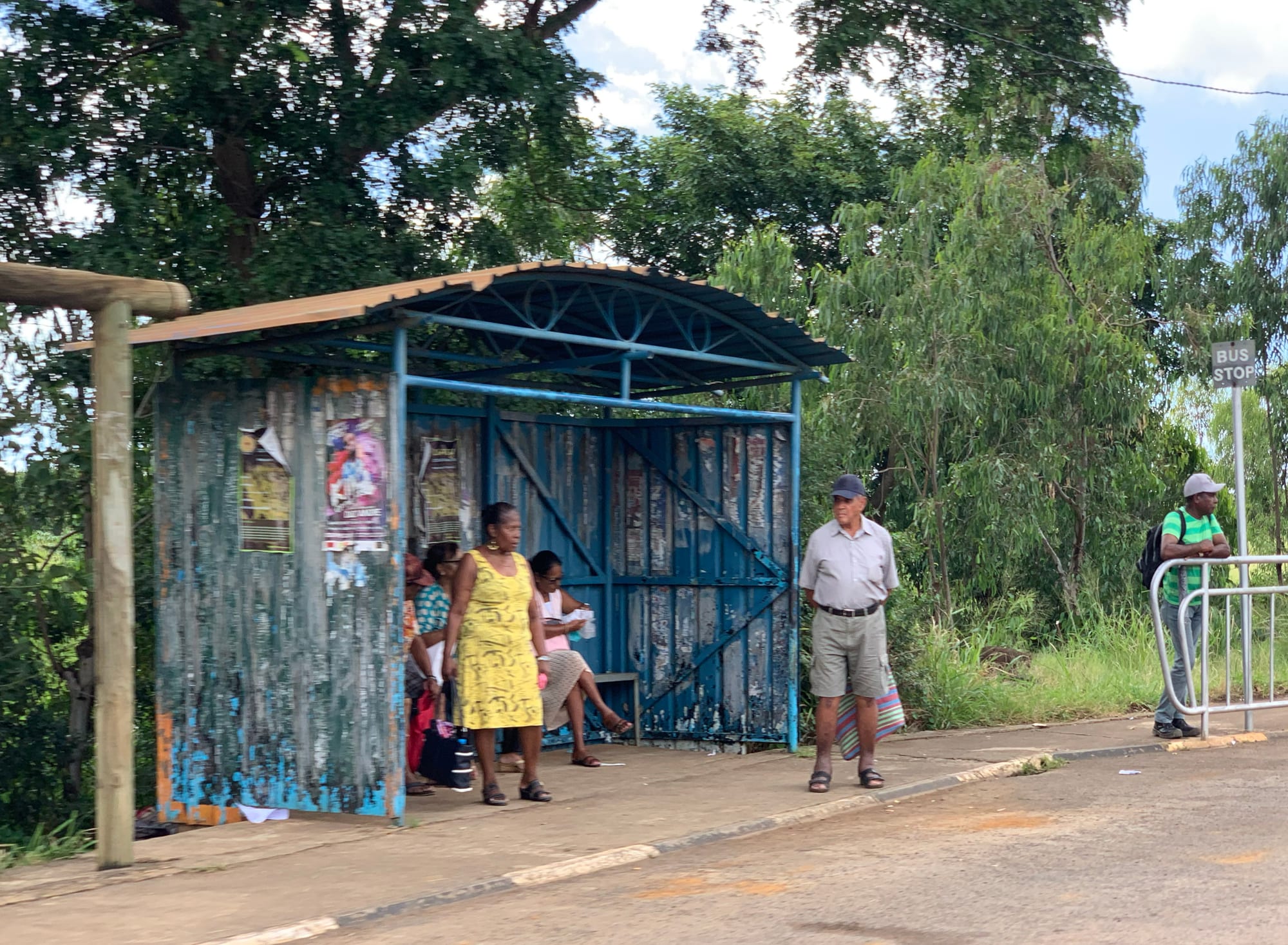
Markets remain a genuine daily gathering point: the Central Market in Port Louis and smaller town markets are where fresh vegetables, fish and household goods are bought each morning, and where the plural character of the country is most visible in a single space. Buses, run by the state-owned National Transport Corporation and several private operators, cover the island fairly comprehensively but slowly, and waiting at a roadside bus stop, often a simple covered shelter, is a routine part of getting around for anyone without a car. Horse racing at the Champ de Mars in Port Louis, one of the oldest racecourses in the southern hemisphere, and football draw the biggest everyday crowds.
Free time and weekends
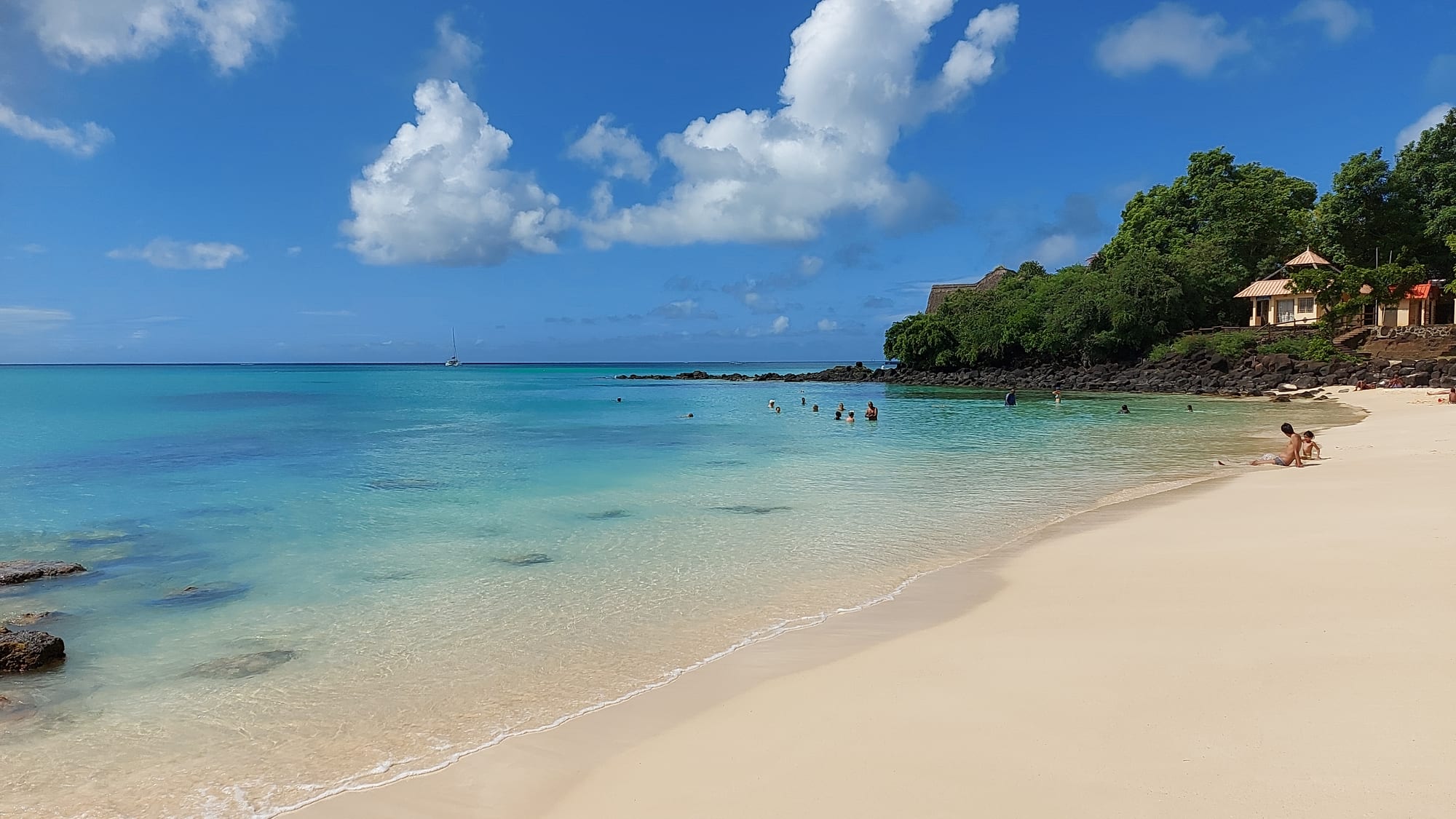
Weekends bring family gatherings and, depending on the household and the season, a public holiday from one of the island's several religious calendars — Divali, Maha Shivaratri and Thaipoosam Cavadee for Hindus, Eid for Muslims, Christmas and the Assumption for Catholics, and the Chinese Spring Festival, all officially marked. Sega, a music and dance style of drum, rattle and call-and-response singing that grew out of the songs of enslaved people and is now recognised by UNESCO, remains the island's own popular art form, performed at family celebrations, community events and in hotels and restaurants alike. Weekend outings to the beach or a riverside picnic spot are common wherever a household has transport to get there.
A visitor's ordinary day
Cards are widely accepted in shops, supermarkets and restaurants, and ATMs are common, though small vendors, market stalls and local buses generally expect cash. Buses are cheap but slow, and cross-island journeys take longer than the distance suggests, especially through traffic around Port Louis at peak times; many visitors hire a car instead, driving on the left. Shops and markets are typically open by mid-morning, and a public holiday can arrive with little warning to a first-time visitor, since the calendar shifts across several different religious traditions rather than following a single fixed list.
What to take away
An ordinary day in Mauritius runs on a kind of quiet arithmetic — several languages, several faiths, several communities, all sharing the same small island and, more often than most countries manage, the same public holidays too.