Culture & Customs · Martinique
Martinique: Where the Drum Answers the Dancer
A Catholic, Creole island that mixes French formality with Caribbean ease, burns its carnival king in black and white, sings Christmas for weeks and keeps the conversation between drum and dancer alive
By Worldlore Editorial · 30 September 2026

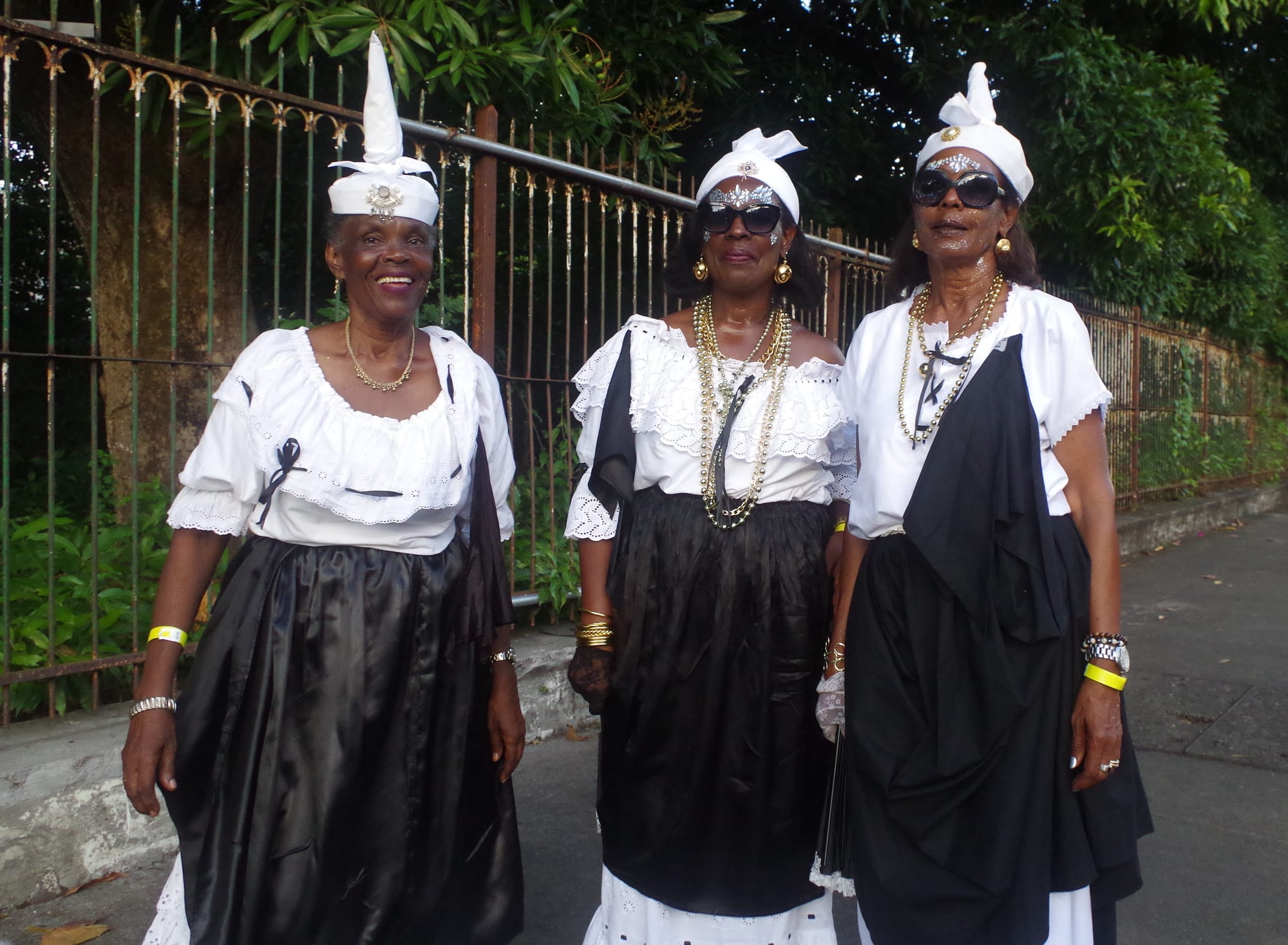
On the afternoon of Ash Wednesday, the colour drains out of Martinique's Carnival. After days of costumes in every shade, the crowds that fill the streets are dressed in black and white, the colours of mourning. Women dressed as diablesses, in black and white costumes, carry leaves of the soursop tree, said to soothe the grief of the revellers. Mourners, often men dressed as women, sob and wail theatrically, and mock priests lead a parody funeral. At nightfall the giant effigy of Vaval, king of the Carnival, is burned on the waterfront, a gesture that commentators link to the Catholic reminder that all flesh returns to dust. Faith and satire, grief and laughter, French ritual and African rhythm: the whole island is there in a single evening.
Faith, identity and values
Martinique is a French overseas territory, and its institutions, schools and official language are those of France. Its culture, though, is Creole, a word used here for the society that grew out of the plantation era, blending African, European and later Indian and other influences. French is spoken by almost everyone, but Martinican Creole is the language of home, humour and music, and people move between the two depending on the situation. Questions of identity, autonomy and the relationship with mainland France are debated openly and remain unresolved.
Catholicism is the main religion, and the church calendar still shapes the year, from Advent and Christmas to Lent, Easter and All Saints. Evangelical Protestant churches have been growing, and there are smaller Hindu, Adventist, Muslim and Jewish communities. Alongside formal religion runs quimbois, a body of plant remedies, healing and belief in the power of spirits and sorcery that is deeply embedded in popular culture, even among people who would not describe themselves as practitioners.
Everyday values combine French formality with a Caribbean sense of time and community. Between strangers, courtesy and a certain reserve are expected, and language is one of the main ways social distance is kept or closed. Family ties are strong, elders are treated with respect, and older habits of mutual help survive: koudmen, a Creole word for a helping hand, describes neighbours coming together to share a large task such as farm work. The pace of life is slower than in mainland France, and patience is regarded as good manners rather than a lack of urgency.
Greetings and meeting people
A "bonjour" or, later in the day, a "bonsoir" opens almost every exchange, whether with a neighbour, a shopkeeper or a bus driver, and visitors who make the effort in French are appreciated. Friends and family greet one another with la bise, kisses on the cheek, usually two, though the number can vary. In formal or business settings a handshake is the norm.
The choice between formal and familiar speech matters. The polite "vous" is expected at first with elders, officials and in business, but Martinicans are generally less formal than people in mainland France, and the familiar "tu" is used quite freely, even between customers and staff in shops. Language carries a further layer of meaning. Creole is the language of intimacy and informality, and addressing a stranger in Creole when both could speak French can be taken as condescending, so it is wiser for visitors to start in French and follow the other person's lead.
Time is treated flexibly in social life. At a private gathering in someone's home, arriving half an hour or more after the stated time is normal and not considered rude, while impatience with slow service in a shop or restaurant is seen as inappropriate.
Hospitality and being a guest
An invitation to someone's home is a warm gesture, and a guest is often welcomed with a ti-punch, the island's short rum drink, before the meal. It is courteous to bring a small gift, such as flowers or a bottle of wine. Smoking indoors is avoided unless the hosts themselves smoke; a guest who wants a cigarette will usually step outside without being asked.
Lunch has traditionally been the main meal of the day, eaten between noon and one o'clock, with many people going home for it, and dinner is taken late, around half past eight. Coffee closes every meal. The Sunday lunch remains the great family occasion of the week, a long, unhurried gathering of several generations. In restaurants, a tip of around ten per cent is courteous but not essential, and it is worth checking whether service has already been added to the bill.
Festivals and life's big moments
Carnival is the high point of the year. It builds over several weeks and climaxes in the days before Lent, each with its own character: queens are presented on Sunday, mock weddings fill the streets on Monday, with men dressed as brides, often pregnant ones, and women as grooms, married on the carnival route by a pretend registrar and priest; red-costumed devils dominate Mardi Gras; and on Ash Wednesday comes the black and white of mourning and the burning of Vaval. The diablesse herself comes from folklore, where she is a seductive figure said to hide a goat's or horse's hoof beneath her skirts, and on the last day of Carnival she is played by women who parade with branches of soursop leaves. Vaval, meanwhile, is built new each year by local artists and often caricatures the issues of the moment. Commentators see Carnival as more than a party, describing it as a place where Martinican identity is affirmed.
Christmas has its own tradition, the chanté Nwèl. From the start of Advent, and above all on weekends in December, families, friends and neighbours gather to sing Christmas songs together: old French carols, some dating back to medieval popular song, reworked with Creole improvisation and set to the rhythms of biguine, mazurka, Creole waltz and even zouk, with drums, ti-bwa percussion sticks and guitars. The tradition owes much of its modern popularity to Loulou Boislaville, who collected and popularised the songs in the decades after the Second World War. Today groups of singers, musicians and dancers perform the carols in public, but the heart of the chanté Nwèl is still the gathering of family and neighbours singing together, and it remains one of the pillars of Creole culture.
The island's own holiday falls on 22 May, the day of the 1848 uprising by the enslaved that pushed the colonial authorities to proclaim abolition the next day, without waiting for the decree from Paris to arrive. It has been a public holiday since 1983 and is marked across the island with ceremonies, torchlit marches, exhibitions and, above all, drumming, bèlè and danmyé.
Marriage is a matter of personal choice, made by mutual consent, and it is common for couples to live together for some time before they marry, and many households are headed by single mothers. Families can still weigh in on a match, and questions of class have long coloured how suitable a partner is judged to be.
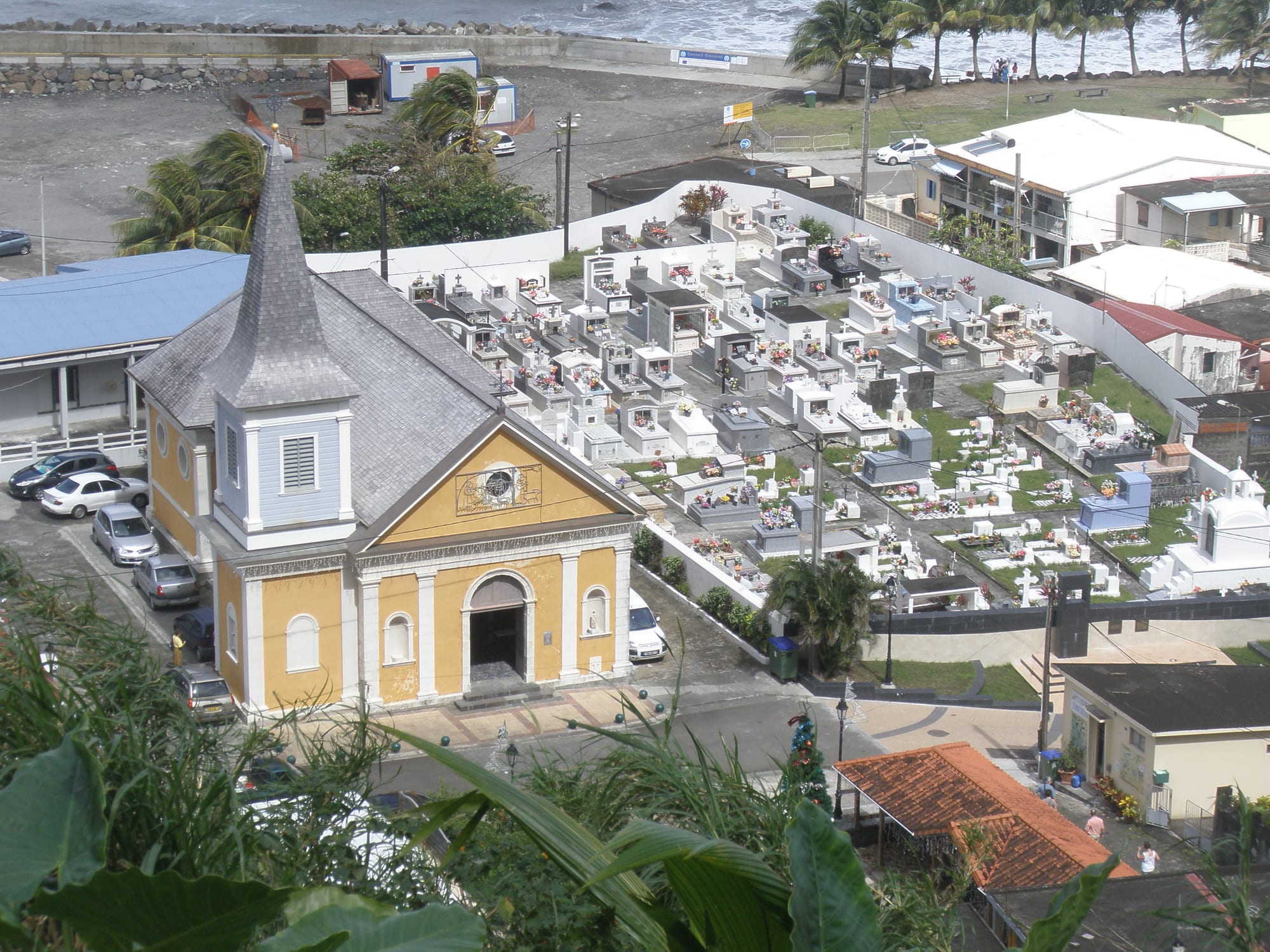
The dead are remembered with great care. Funerals generally follow Catholic rites, and funeral processions are formal: men traditionally wear black suits, white shirts and black ties. The wake, the veillée, has long brought family, friends and neighbours together through the night with prayers, and the storyteller has been an important figure at it, calling out "Yé krik!" to hold the audience's attention and receiving an answering "Yé krak!" before each tale and riddle in Creole. At All Saints and All Souls, on 1 and 2 November, families clean and whitewash the family tombs and gather in the cemeteries after dusk to light candles, so that graveyards across the island glow. Some older Martinicans regret that these gatherings are quieter than they used to be.
Arts, crafts and music
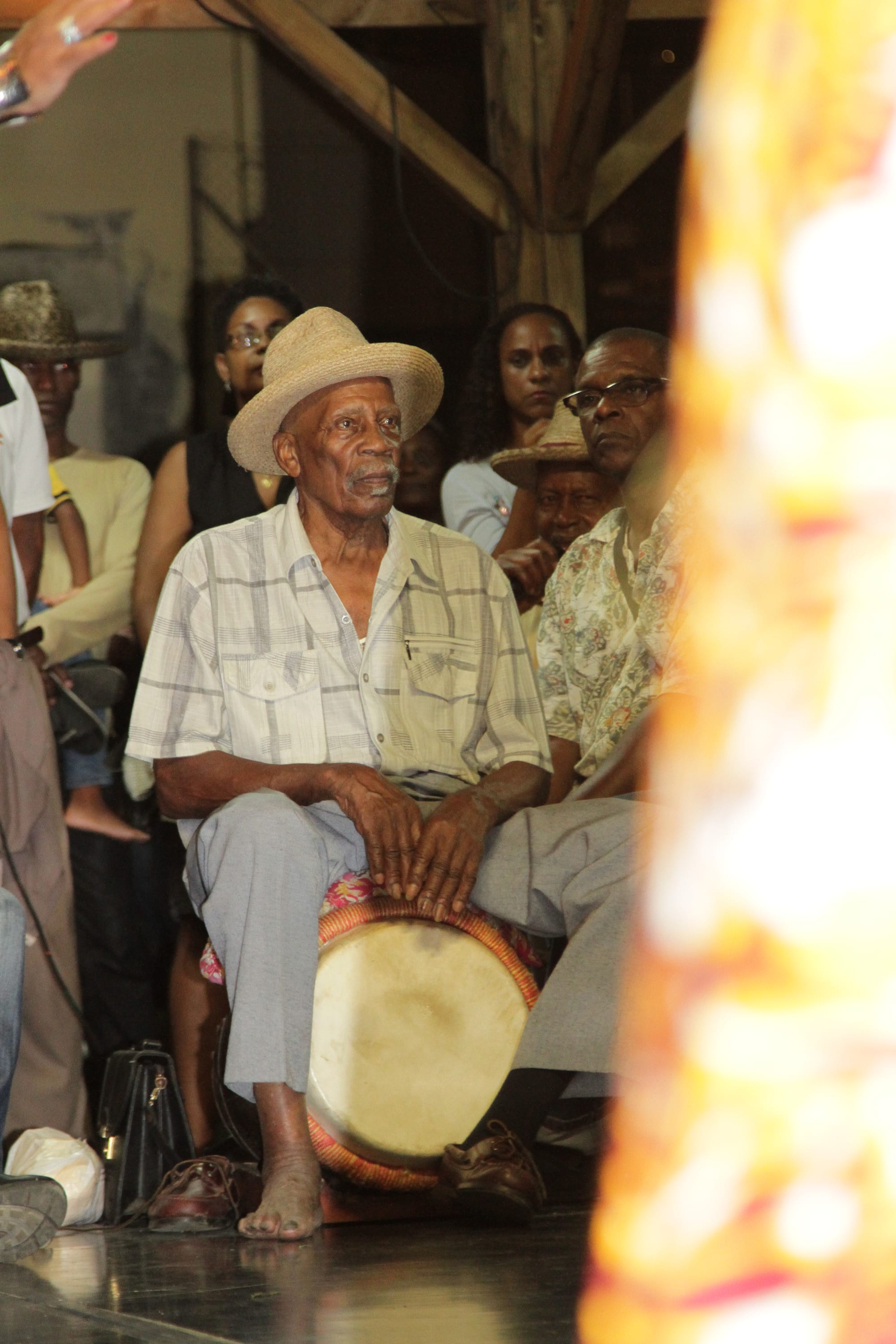
Bèlè is the heart of Martinique's traditional music and dance. Rooted in the period of slavery, it is built around the dialogue between a drum, the tanbou bèlè, and the tibwa, a pair of percussion sticks, with a lead singer answered by a chorus. In the classic form, four couples dance in a double square, and a conversation develops between the dancers and the drummer, who shapes his rhythms around the steps of the dancer who inspires him most. Related traditions include kalennda and danmyé, a danced combat traced back to African ancestors. Bèlè evenings, swaré bèlè, draw dancers of every age, and associations work to keep the tradition alive.
Popular music has travelled further. Biguine and the chouval bwa music of the travelling merry-go-round are older folk forms, and zouk, pioneered by Kassav', a band formed in neighbouring Guadeloupe in 1979 that also drew singers and musicians from Martinique, carried the sound of the French Caribbean around the world. Storytelling, in Creole and often at night, remains a treasured art, and Martinicans place a high value on their literary heritage and on the Creole language itself.
The sea has produced one of the island's most celebrated traditions. The yole, a light, shallow-draught boat with one or two sails, was once a working fishing craft. As motorboats replaced it in the 1950s and 1960s, fishermen began organising races, and a movement grew to save the boats, the carpentry that builds them and the skills needed to sail them. Races are now held in harbours around the coast, and the annual Tour des Yoles, a multi-day race around the island, draws thousands of supporters. In 2020 UNESCO selected the safeguarding of the yole for its Register of Good Safeguarding Practices. On festive occasions, many women also wear dresses and head-ties made from madras, the bright checked cotton that has become an emblem of Creole dress.
Dos and don'ts for visitors
- Do say "bonjour" or "bonsoir" when entering a shop or starting any conversation.
- Do use French and the polite "vous" with strangers and elders; switching to Creole uninvited can come across as condescending.
- Do expect la bise between friends, and offer a handshake in formal settings.
- Do bring flowers or a bottle of wine when invited to a home, and don't smoke indoors unless the hosts do.
- Do allow for a relaxed pace: arriving a little after the stated time is normal at private gatherings, and impatience in shops or restaurants is frowned upon.
- Do check whether service is included before tipping; around ten per cent is courteous but not required.
What to take away
Martinique's customs balance French courtesy with Creole warmth — and a visitor who greets everyone with a "bonjour", lets the day run at island pace and listens when the drums start will find that balance easy to share.