History · Lithuania
Lithuania: The Last Pagan Empire
The medieval great power that stretched from the Baltic to the Black Sea, joined to Poland for four centuries, partitioned by Russia, and reborn twice in the 20th century
By Worldlore Editorial · 10 September 2026
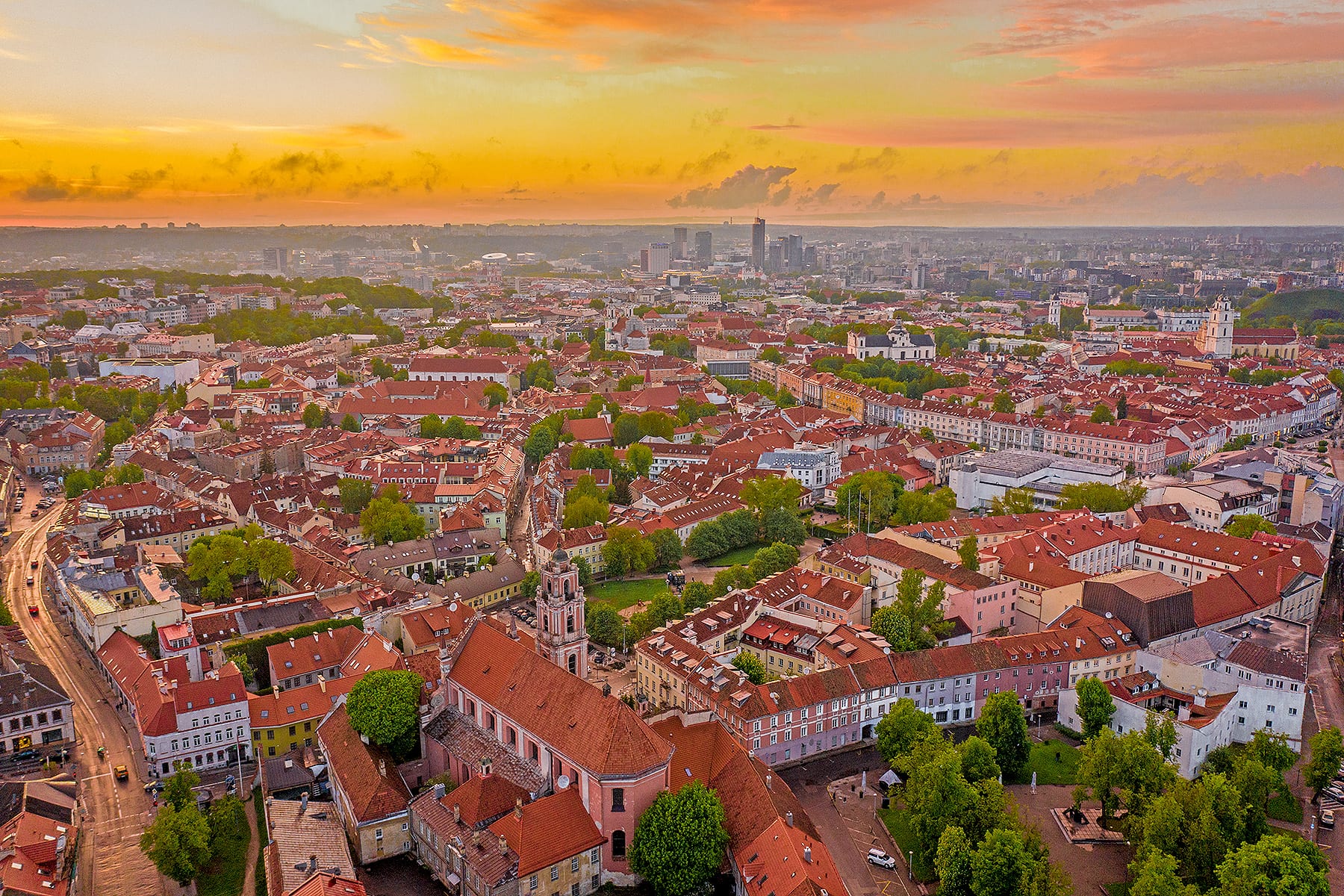
A small country with an imperial past
Lithuania is the largest of the three Baltic states, with about 2.9 million people and one of the most archaic living languages in Europe. Unlike its northern neighbours, it was never conquered by the medieval German crusaders — it was the last pagan state on the continent, and it became a great power, ruling a realm that ran from the Baltic Sea to the Black Sea. That empire, its four-century union with Poland, and its two 20th-century rebirths are the frame of Lithuanian history.
A short history
- 1253
Mindaugas
Lithuania's only king is crowned; the state forms against the crusaders.
- 1323
Vilnius
Founded by Grand Duke Gediminas.
- 14th–15th centuries
The Grand Duchy
Lithuania becomes the largest state in Europe.
- 1385–1387
Union with Poland
Jogaila becomes King of Poland; Lithuania is Christianised.
- 1410
Grunwald
The Teutonic Knights are decisively defeated.
- 1569
The Commonwealth
Poland and Lithuania merge into one state.
- 1795
Partition
Most of Lithuania is annexed by the Russian Empire.
- 1918
Independence
Lithuania declares statehood.
- 1940–1990
Occupation
Soviet, then Nazi, then Soviet again; the Holocaust and deportations.
- 1990
Restoration
Lithuania is the first Soviet republic to declare full independence.
The Grand Duchy
The Lithuanian state coalesced in the 13th century as a military answer to the Teutonic and Livonian Orders pressing from the north and west. Then it expanded the other way — east and south, into the fragmented, Mongol-weakened lands of the Rus'.
The last pagan power
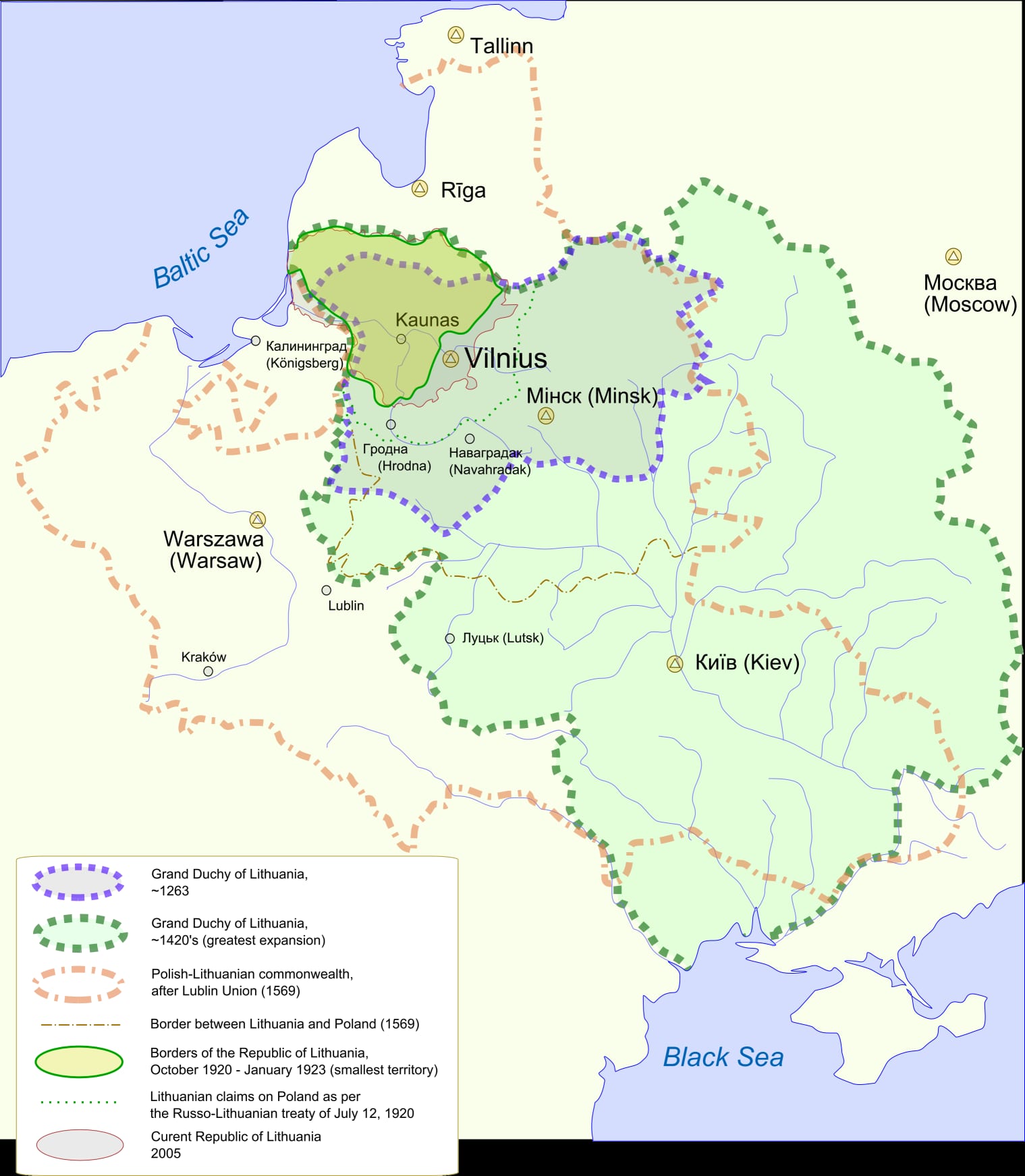
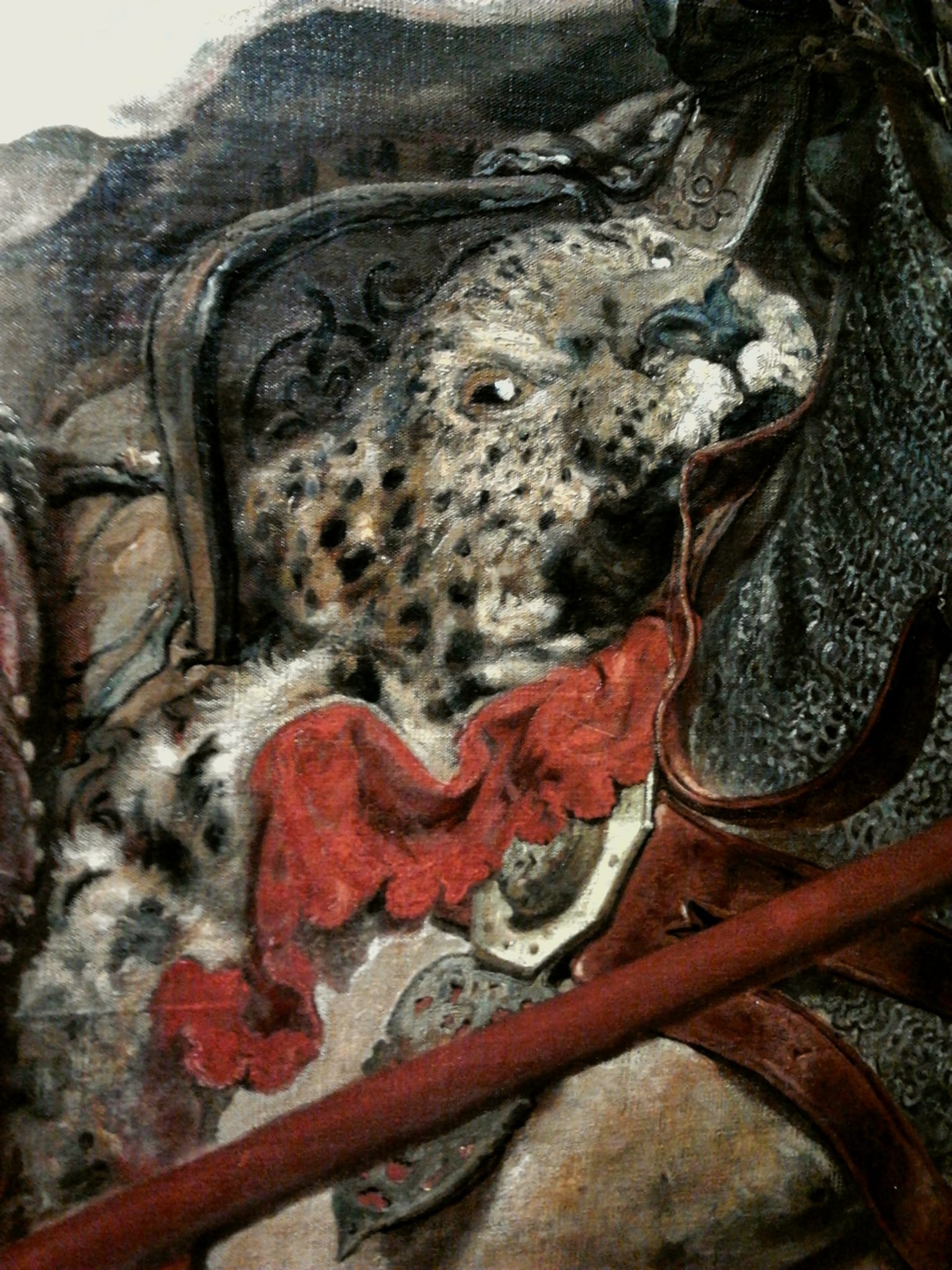
Lithuania remained pagan until 1387, when — as part of a dynastic union in which Grand Duke Jogaila became King of Poland — it accepted Catholic baptism, the last major European people to convert. The two states drew closer until the Union of Lublin in 1569 merged them into the Polish–Lithuanian Commonwealth, one of Europe's largest states, a noble republic with an elected king. Over the following centuries the Lithuanian nobility Polonised, and Lithuanian survived mainly as a peasant language. Vilnius, meanwhile, became a world centre of Jewish learning — "the Jerusalem of the North".
Partition and the press ban
The Commonwealth was carved up by Russia, Prussia and Austria between 1772 and 1795, and most of Lithuania passed to the Russian Empire. After failed uprisings in 1830–31 and 1863–64, Russia closed Vilnius University and, from 1865, banned printing Lithuanian in the Latin alphabet — a ban defied for forty years by book smugglers carrying Lithuanian books from Prussia. Out of that resistance grew a distinct Lithuanian national movement, separate from the Polish one.
Independence, occupation, and the Holocaust
Lithuania declared independence on 16 February 1918, then fought wars against Soviet Russia and Poland — which seized Vilnius, the historic capital, and held it throughout the interwar period, forcing Lithuania to govern from Kaunas. A parliamentary democracy gave way to an authoritarian government after a 1926 coup.
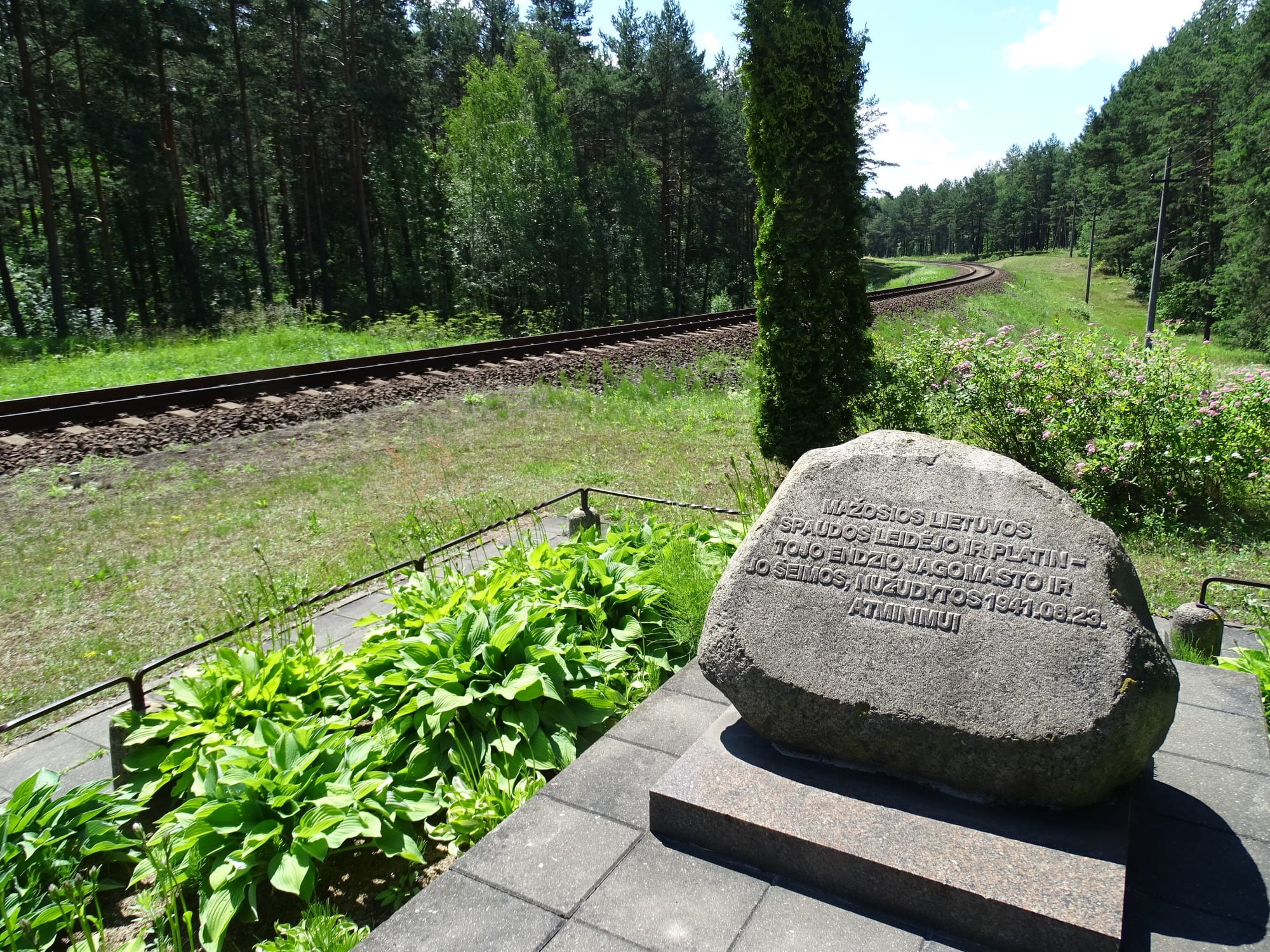
The Molotov–Ribbentrop Pact assigned Lithuania to the Soviet Union, which occupied and annexed it in June 1940. Nazi Germany then occupied Lithuania from 1941 to 1944, and the Holocaust there was almost total: about 95 per cent of Lithuania's roughly 200,000 Jews were murdered, mostly by shooting in 1941, with heavy local collaboration.
The Red Army returned in 1944. An armed anti-Soviet partisan movement, the "Forest Brothers", fought on until about 1953, and mass deportations to Siberia — more than 130,000 people — broke rural resistance and forced collectivisation.
Restoration
Lithuania led the Baltic push for independence.
1988–1991
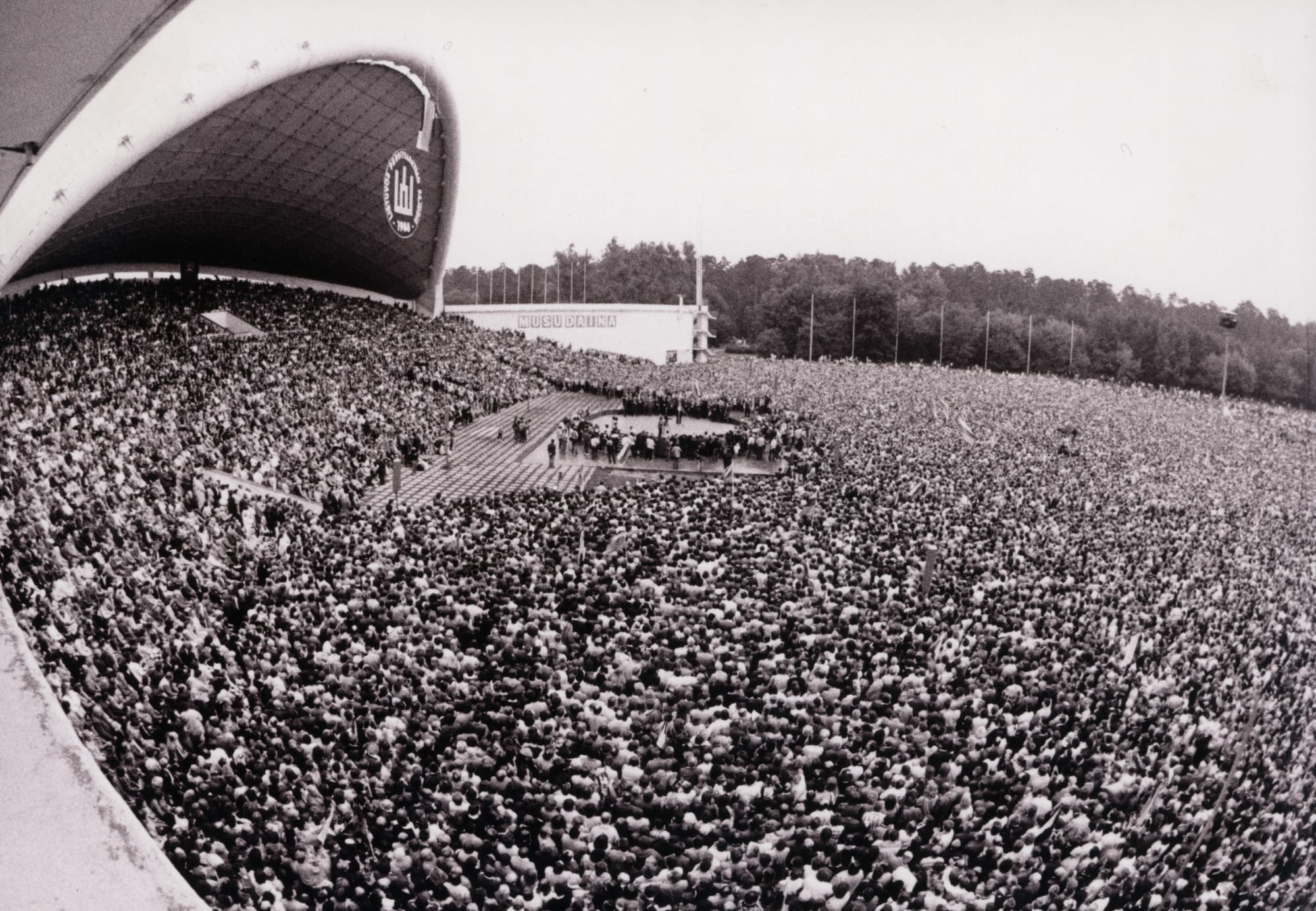
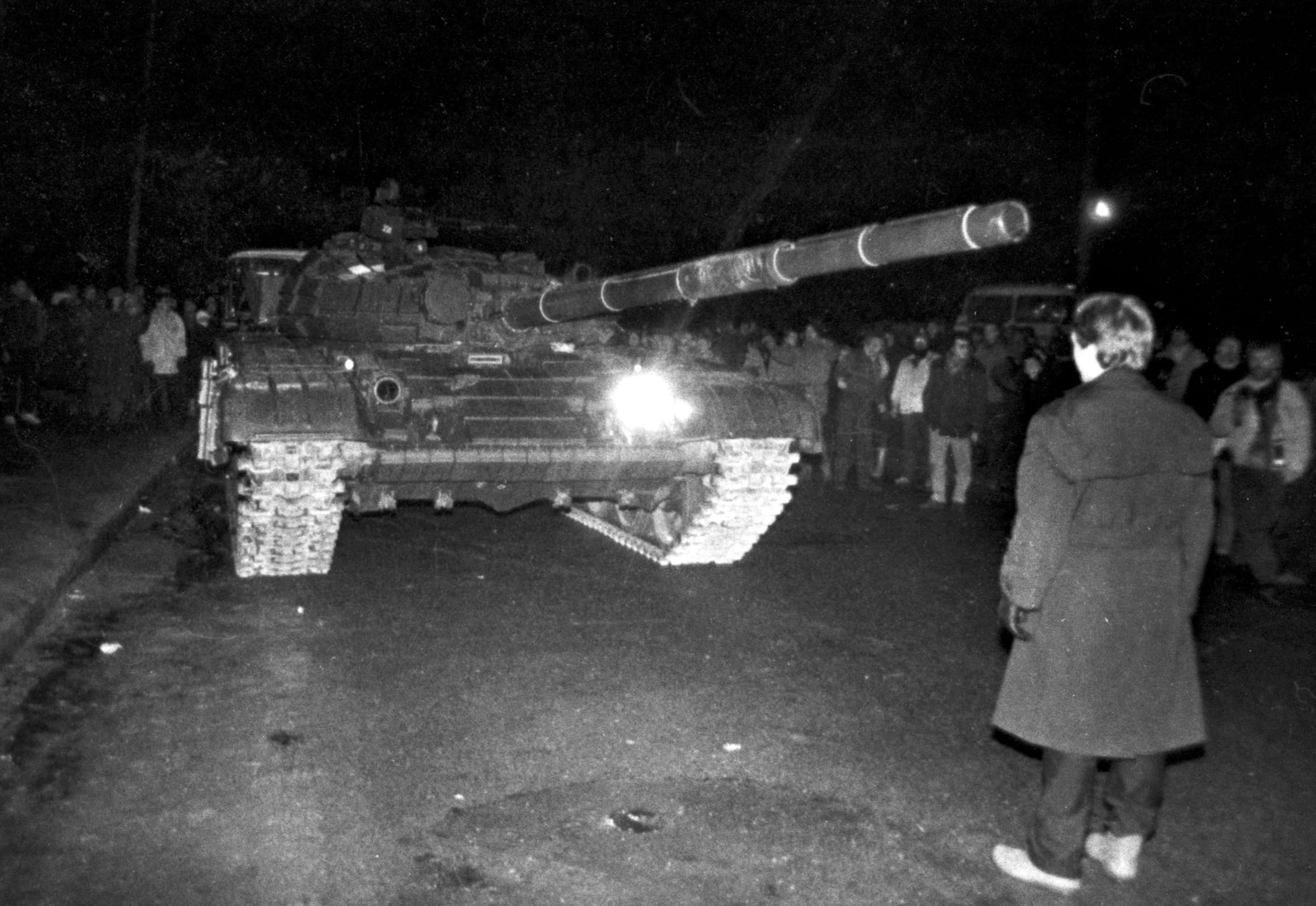
On 11 March 1990 Lithuania became the first Soviet republic to declare the full restoration of its independence. Moscow imposed a blockade and, in January 1991, tried force — and failed. Recognition followed the August 1991 coup, and the last Russian troops left in 1993.
Lithuania now
Lithuania joined NATO and the EU in 2004 and the euro in 2015. Emigration has cut the population by about a quarter since 1990. Because Soviet-era immigration was lighter than in Estonia or Latvia, Lithuania stayed about 80 per cent ethnic Lithuanian. It has taken a hard line toward Russia and Belarus — hosting NATO forces, sheltering the Belarusian opposition, and clashing with China over Taiwan — as a front-line state bordering both Belarus and Russia's Kaliningrad exclave.
What Lithuania carries
Lithuania is the only Baltic nation that was once an empire, and the memory of the Grand Duchy — vast, multi-ethnic, tolerant, and joined to Poland — sits behind its modern identity. Between that height and the present lie the partitions, the press ban, the Holocaust that erased Vilnius's Jewish world, and fifty Soviet years. That the small modern republic exists at all is, as in 1918, a recovery from an empire's fall.