Food · Libya
Libya: Food and the National Dish
A firm barley dough shaped into a dome and shared from one plate, at the meeting point of North African, Arab and Mediterranean cooking
By Worldlore Editorial · 16 September 2026
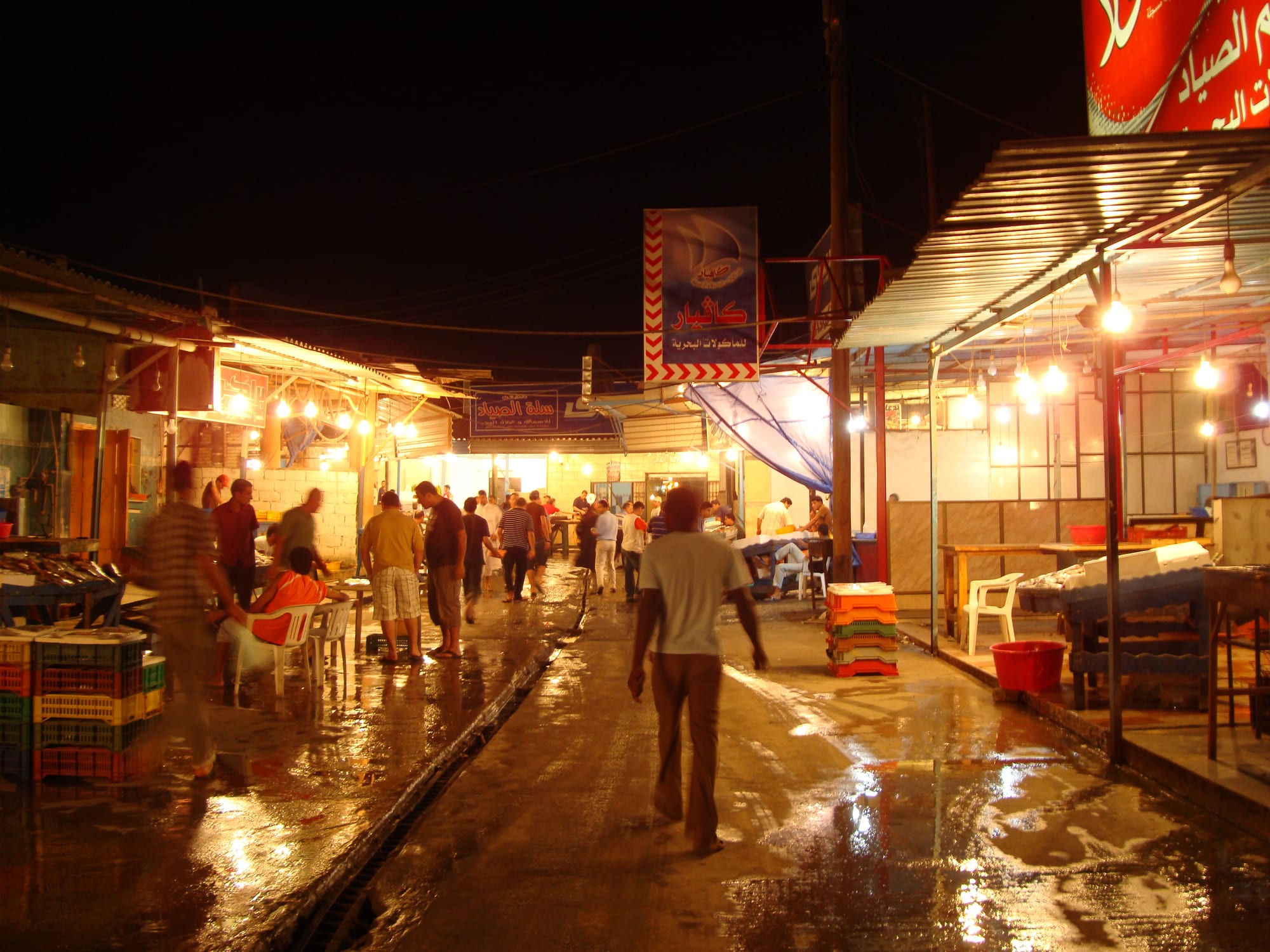
A North African table on the Mediterranean coast
Libya's food sits at a genuine crossroads: North African and Arab cooking traditions meet a long Mediterranean coastline, giving Libyan food both the barley, olive oil and dried fruit of the wider Maghreb and the fresh seafood of a country with an extensive coast. Communal eating, sharing from one large plate, remains central to how many traditional Libyan meals are served.
The national dish: bazin
Bazin, a firm, smooth dough made from barley flour and shaped into a dome on a communal plate, surrounded by a well of tomato-and-meat sauce and hard-boiled eggs, is Libya's national dish. Eaten by hand, diners tear off pieces of the dough and dip them into the surrounding sauce, making the dish as much a shared social occasion as a specific recipe.
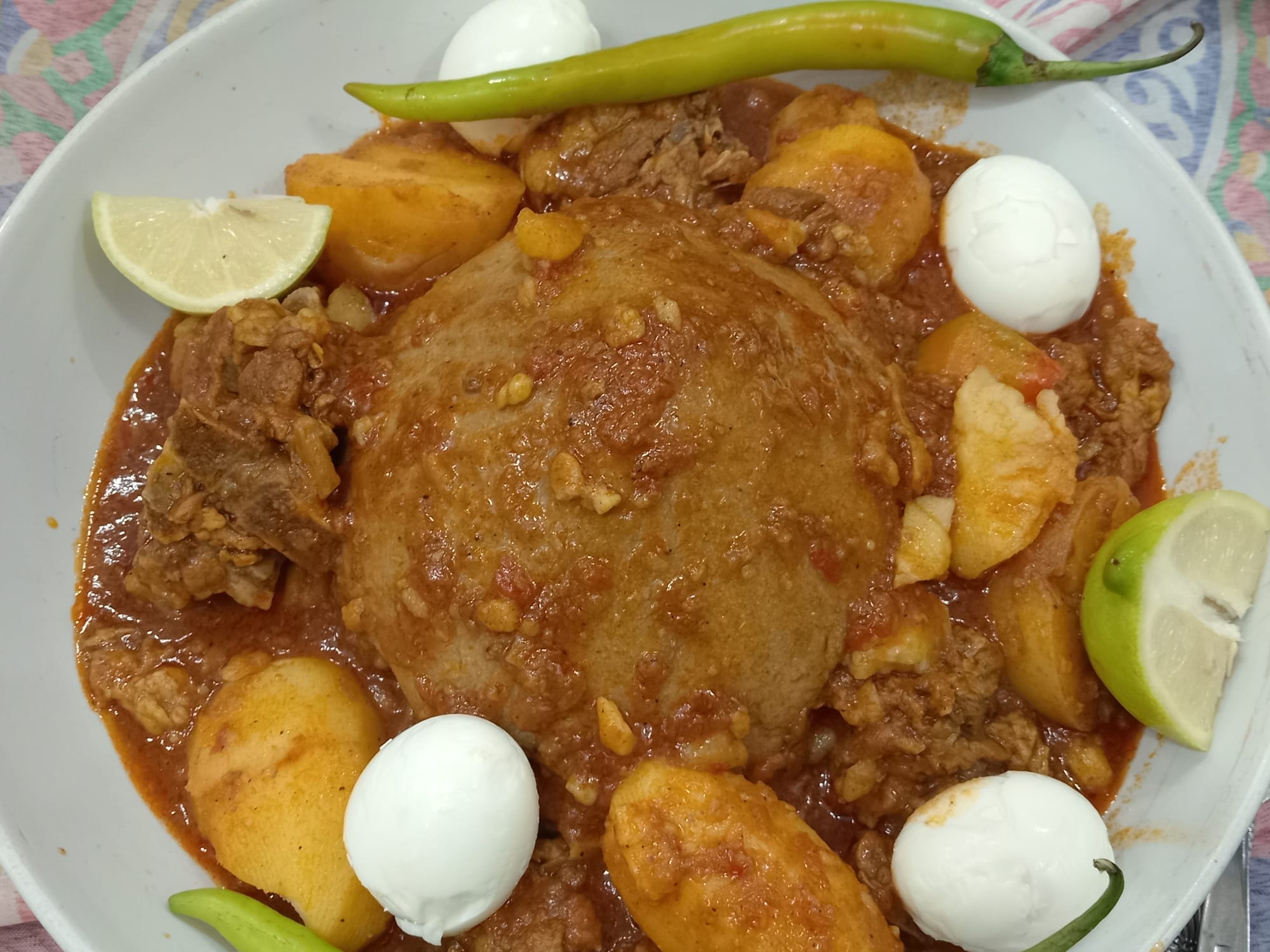
Barley, dates and the Mediterranean pantry
Barley, used in both bazin and couscous-like dishes, olives and olive oil, and dates, grown across Libya's oases, form the backbone of the everyday Libyan pantry. Fresh seafood, particularly along the coast around Tripoli and Benghazi, and a wide range of dried fruit and nuts, reflect both Libya's Mediterranean geography and its desert interior.
History behind the plate
Libyan food carries visible influence from Ottoman rule, Italian colonisation in the early 20th century, still faintly present in pasta dishes eaten alongside more traditional Libyan food, and the older Amazigh (Berber) and Arab culinary traditions of the wider Maghreb. That layered history sits within a genuinely North African foundation built on barley, dates and olives long before any of those later influences arrived.
Dishes to know
Five more to recognise across Libya:
- Couscous — steamed semolina grains, served with vegetables and meat,
shared across the wider Maghreb.
- Shakshuka — eggs poached in a spiced tomato and pepper sauce, eaten
widely across Libya as in much of the region.
- Usban — a stuffed sheep's stomach dish, similar to a sausage, filled
with rice, meat and herbs.
- Libyan soup (shorba) — a spiced tomato-based soup with pasta or
vermicelli, especially eaten to break the fast during Ramadan.
- Asida — a smooth, sweet semolina dish, often served with honey or
date syrup for special occasions.
Drinks
Tea, often brewed strong and sweet and sometimes flavoured with mint or peanuts, is a genuine daily social ritual in Libya, poured in small glasses and often served across several rounds. Coffee is also widely drunk, and alcohol is prohibited given Libya's Muslim-majority population.
Eating as a traveller
Vegetarians will find couscous, vegetable dishes and asida manageable, though meat is central to most traditional main dishes including bazin itself. Tap water is not reliably safe; stick to bottled water. If invited to share bazin from a communal plate, eating from the section directly in front of you, rather than reaching across, is the polite local custom.
What to take from the table
Bazin, shaped by hand and shared from one plate, is the dish that best represents Libyan food — a genuinely communal meal built from the barley and dates that have sustained the country's oases for centuries.