Attractions & Natural Wonders · Libya
Libya: Seven Attractions and Natural Wonders
Some of the best-preserved Roman cities on earth, a mud-brick Saharan oasis town, and prehistoric rock art deep in the desert — a portrait of a country closed to almost all travel since 2011
By Worldlore Editorial · 9 September 2026
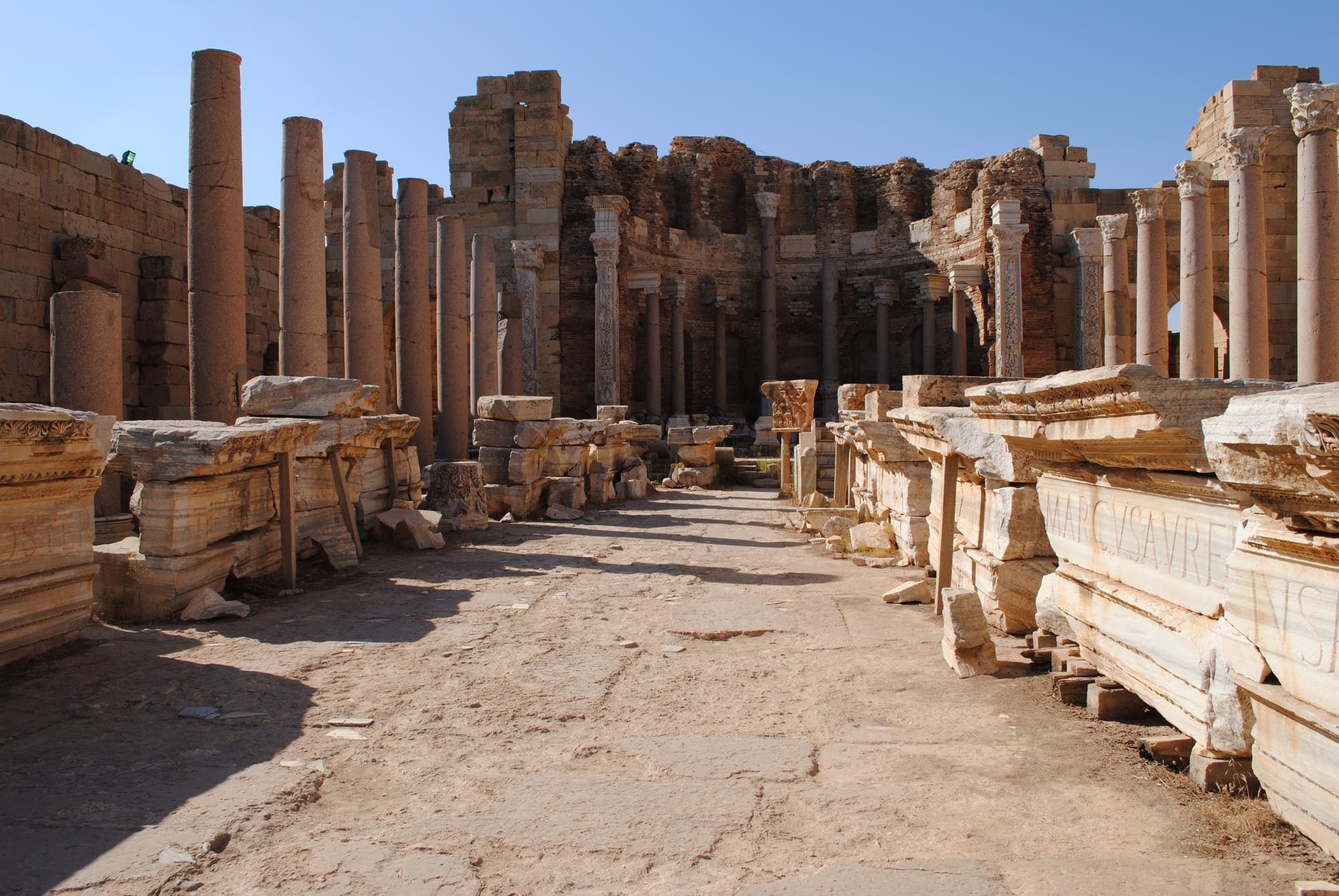
Rome's grandest ruins, in a country closed to travel
Libya, on the Mediterranean coast of North Africa, holds some of the best-preserved Roman cities anywhere — a legacy of the wealth Rome drew from this coast — as well as Saharan oasis towns and rock art tens of thousands of years old across its enormous desert interior. Since the fall of Muammar Gaddafi in 2011, the country has been fractured by civil conflict between rival governments and armed factions, and it has effectively been closed to tourism for over a decade.
The seven below are Libya's landmark sights, described for reference. Read the note at the end first: at the time of writing, virtually all foreign governments advise against all travel to Libya, and this article does not function as an itinerary.
1. Leptis Magna
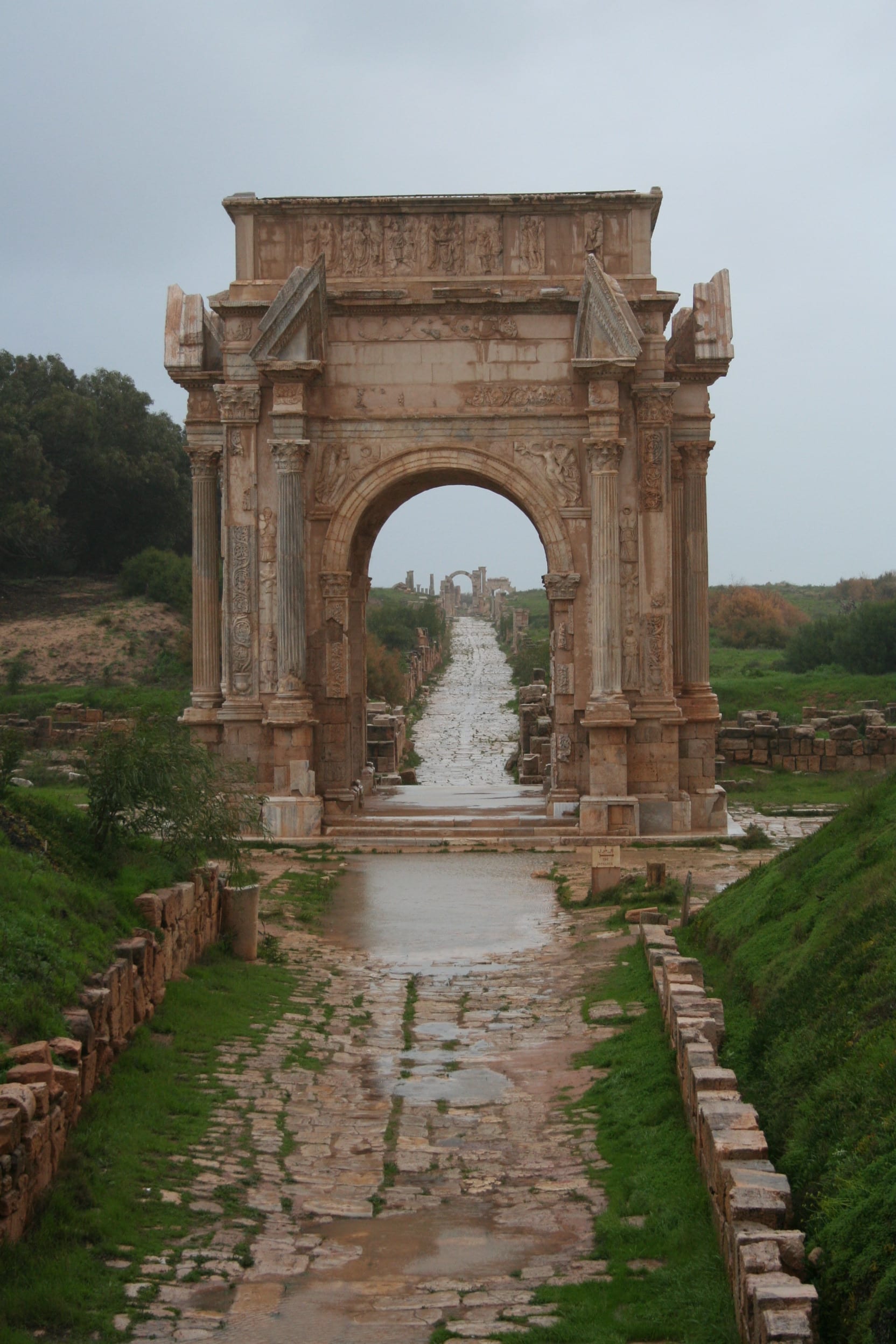
Leptis Magna, east of Tripoli, was one of the grandest cities of the Roman Empire — enlarged and beautified by the emperor Septimius Severus, who was born here, with a triumphal arch, a vast basilica, baths, a market, an amphitheatre, and a harbour, much of it buried and preserved by sand until 20th-century excavation. Archaeologists and historians rank it among the best-preserved Roman sites anywhere, arguably rivalling Pompeii. It is a UNESCO World Heritage Site.
2. Sabratha
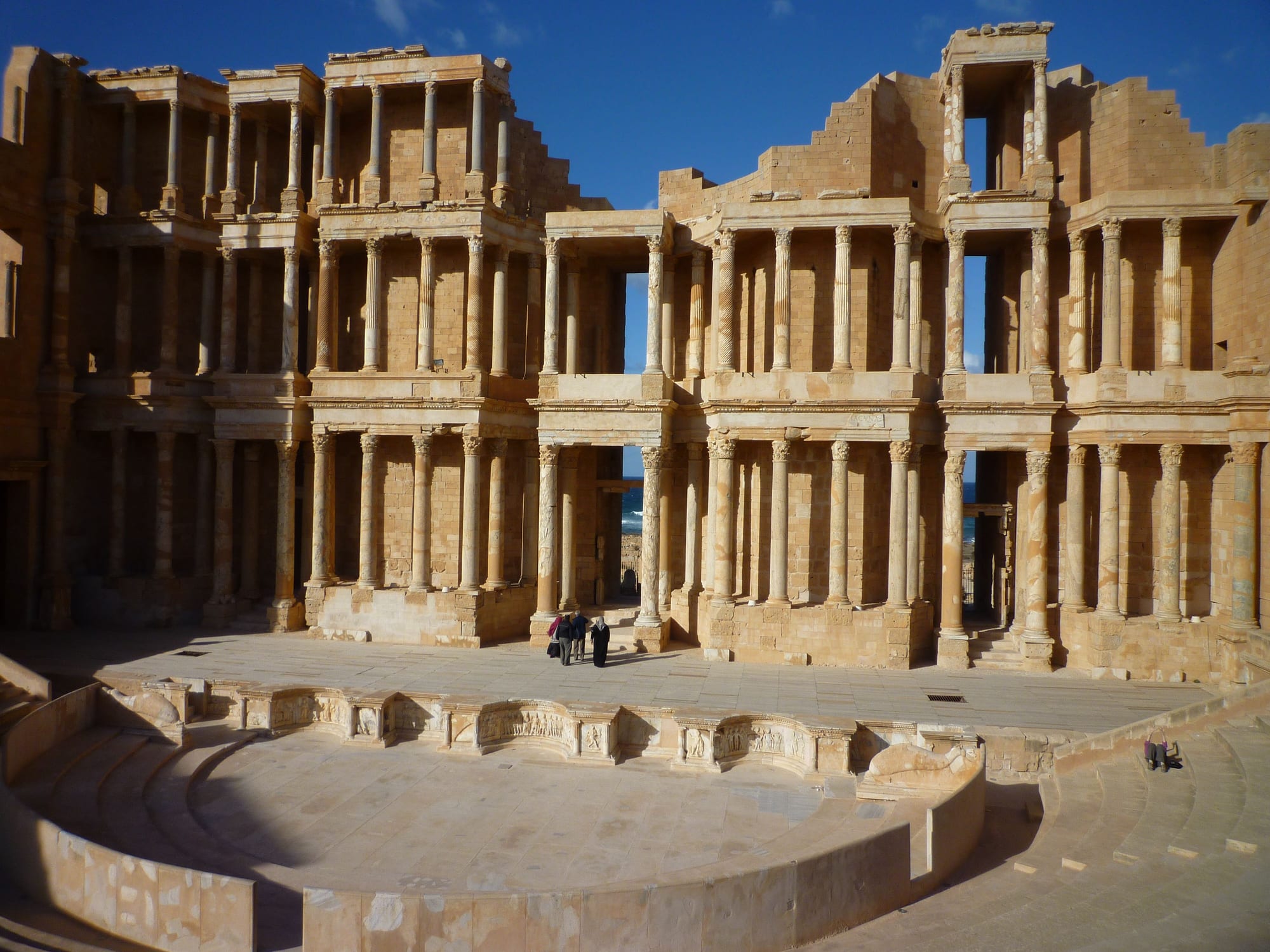
Sabratha, west of Tripoli, was a Phoenician trading post that became a wealthy Roman city and, later, part of the Byzantine and early Islamic world. Its showpiece is a three-storey Roman theatre right on the shoreline, one of the most complete in the Roman world, alongside a forum, temples, and Byzantine basilicas with surviving mosaics. It is also a UNESCO World Heritage Site.
3. Tripoli and the Red Castle
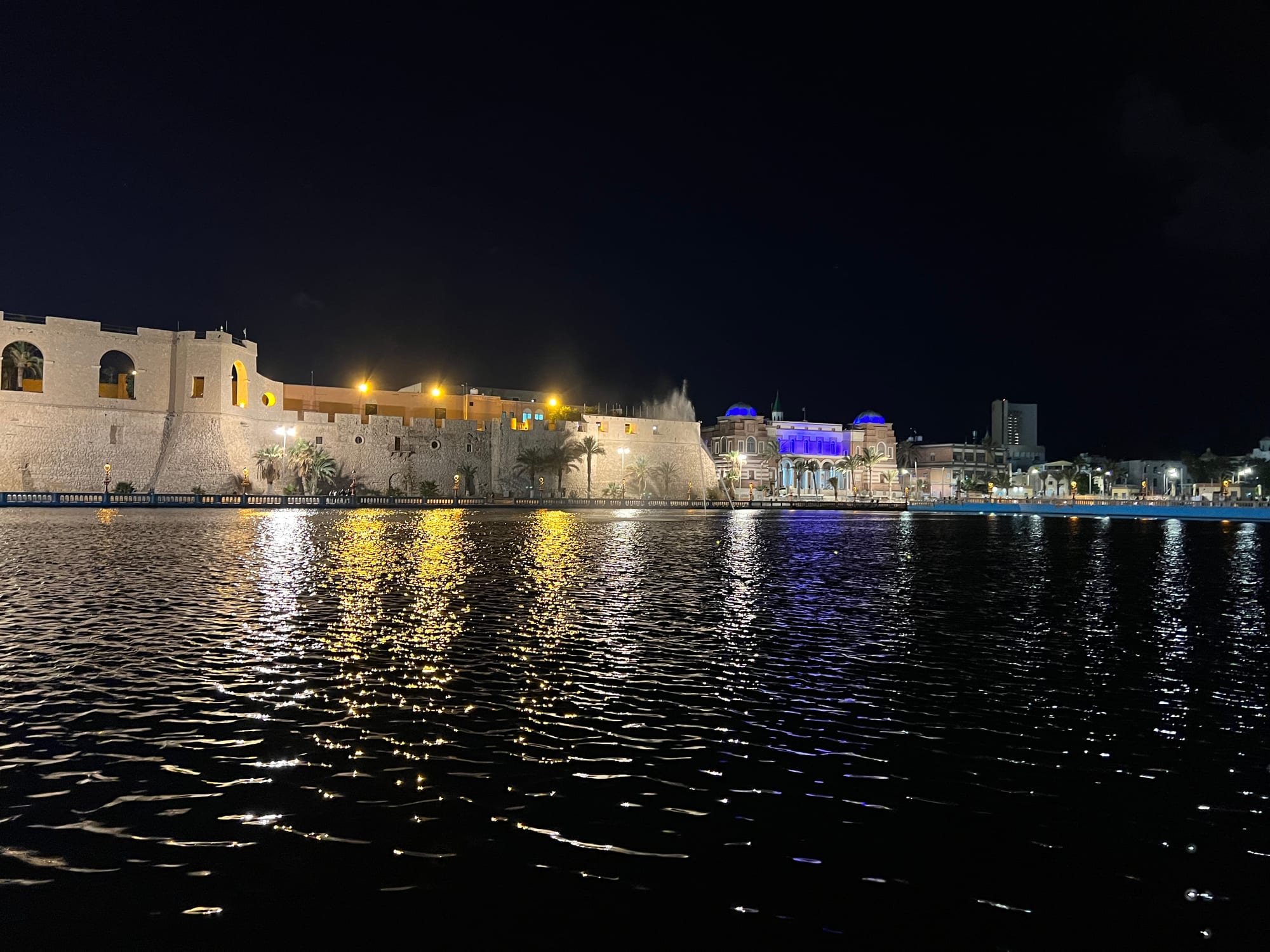
Tripoli, the capital, has a walled Ottoman-era medina of narrow lanes, mosques, and a covered gold souk, anchored by the Red Castle — a fortress built up over Roman, Spanish, and Ottoman periods that once housed the national museum's antiquities collection. The city also holds the well-preserved Arch of Marcus Aurelius, the last surviving Roman monument in central Tripoli.
The capital has been a centre of factional fighting at various points since 2011.
4. Ghadamès
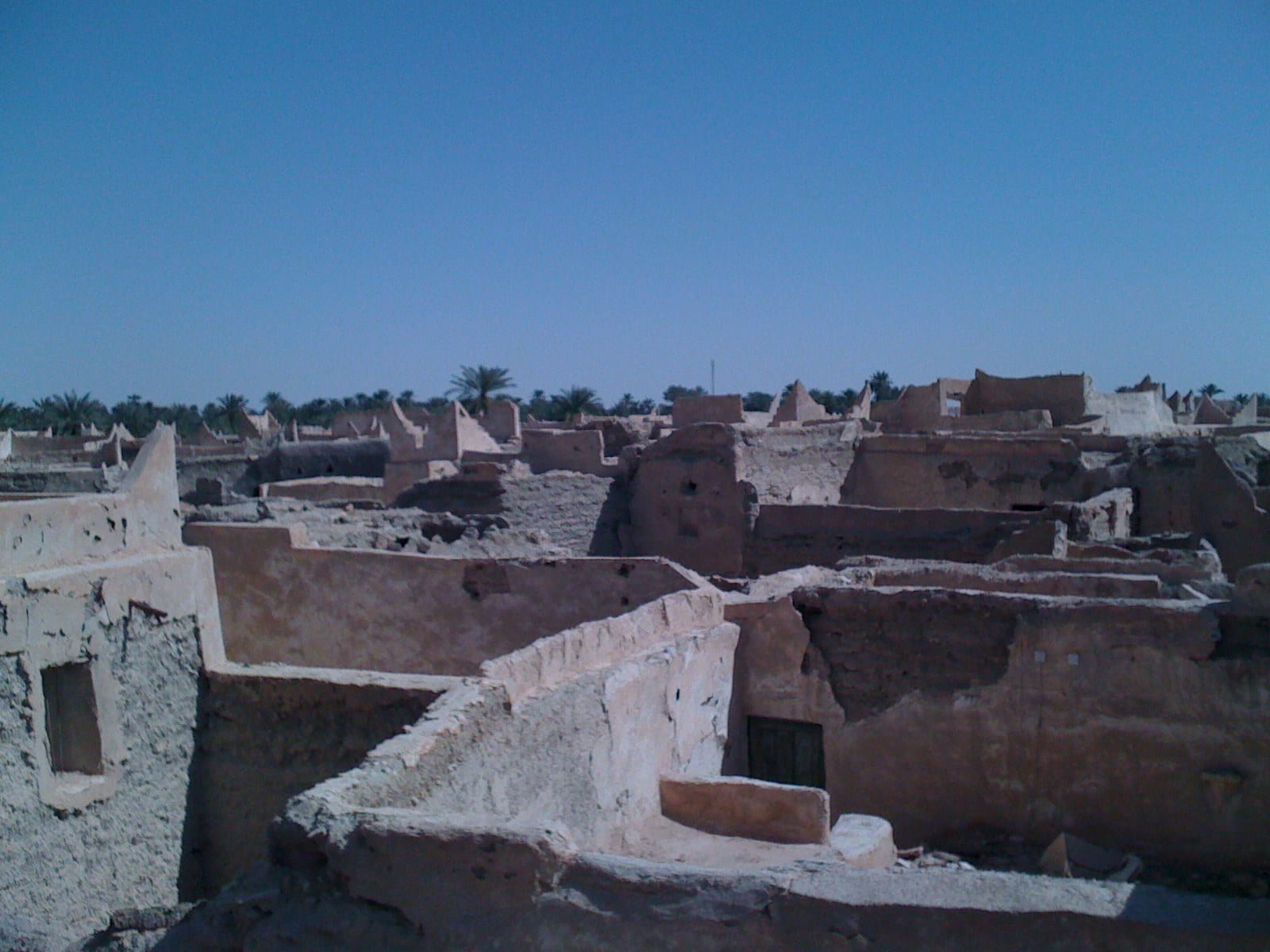
Ghadamès, "the pearl of the desert", is an ancient Saharan oasis town built almost entirely of covered, interconnecting mud-brick passages designed for the extreme heat, with women traditionally moving between houses across the rooftops while men used the shaded ground-level lanes below. A UNESCO World Heritage Site, its old town has been uninhabited since residents moved to modern housing in the 1980s, leaving it a remarkably preserved architectural relic.
5. Cyrene
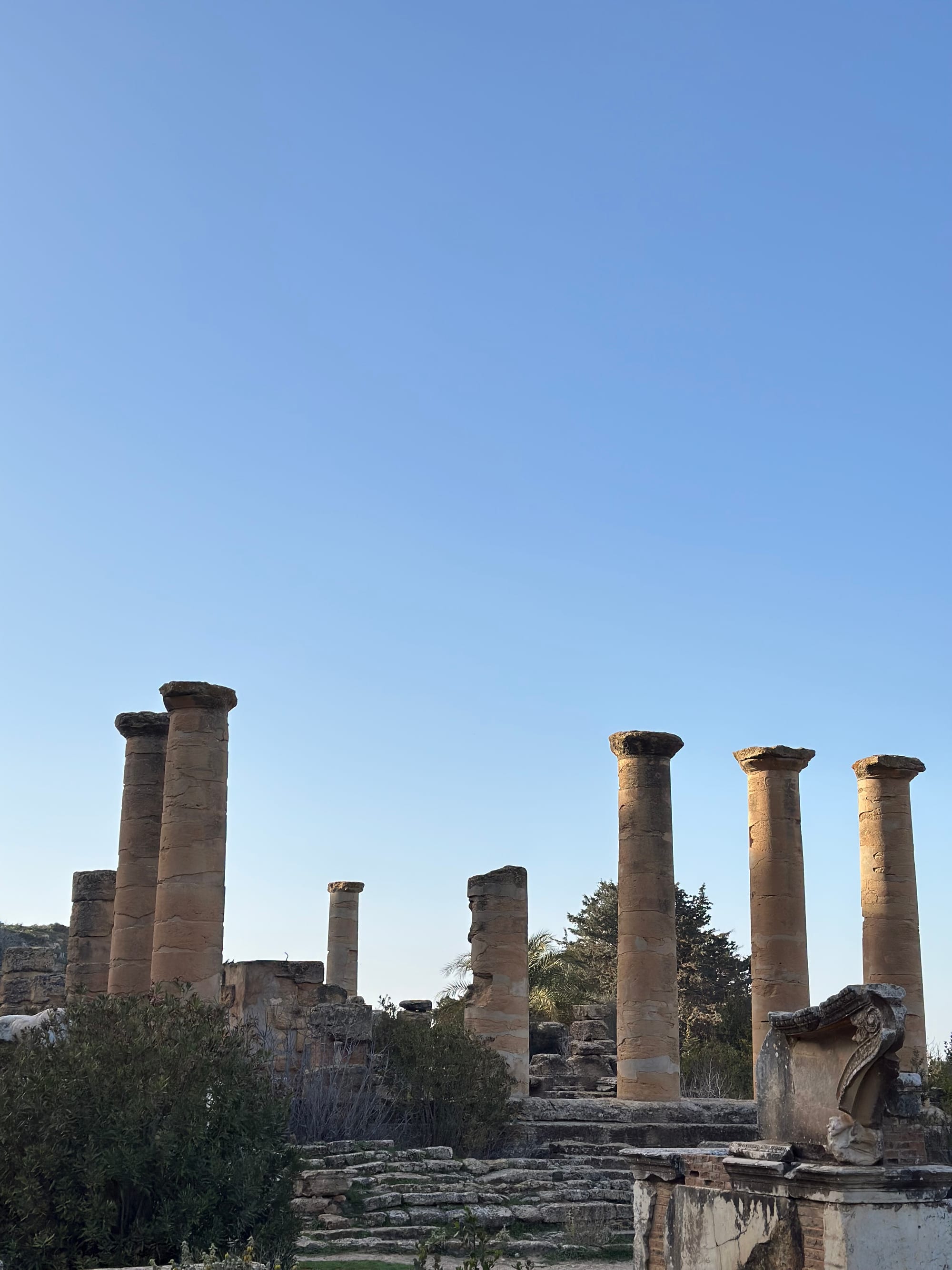
Cyrene, in the green hills of Cyrenaica near modern Shahhat, was the chief city of ancient Greek settlement in Libya and later a major Roman provincial capital — its Temple of Zeus rivals the Parthenon in scale, and its necropolis, agora, and gymnasium survive across a large, dramatically sited hillside site. It is a UNESCO World Heritage Site, part of it damaged by a 1963 earthquake and by neglect since.
6. The Tadrart Acacus
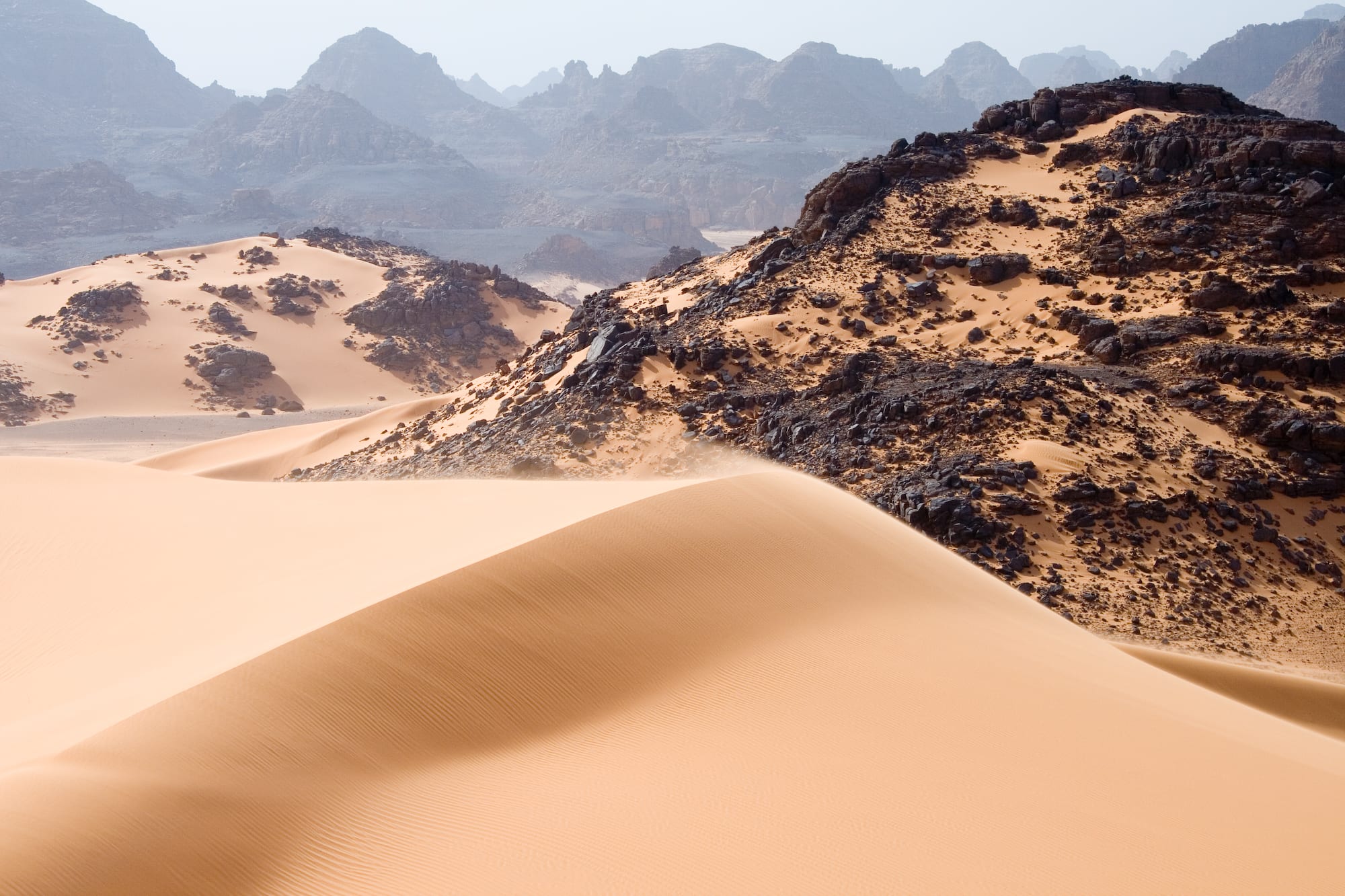
Deep in the southwestern Sahara near the Algerian border, the Tadrart Acacus mountains hold one of the richest concentrations of prehistoric rock art in the world — paintings and engravings spanning some 12,000 years, from a time when this desert was savanna grazed by giraffe and elephant, through to camel-herding peoples. It is a UNESCO World Heritage Site, though also listed as "in danger" given the region's insecurity.
7. Benghazi
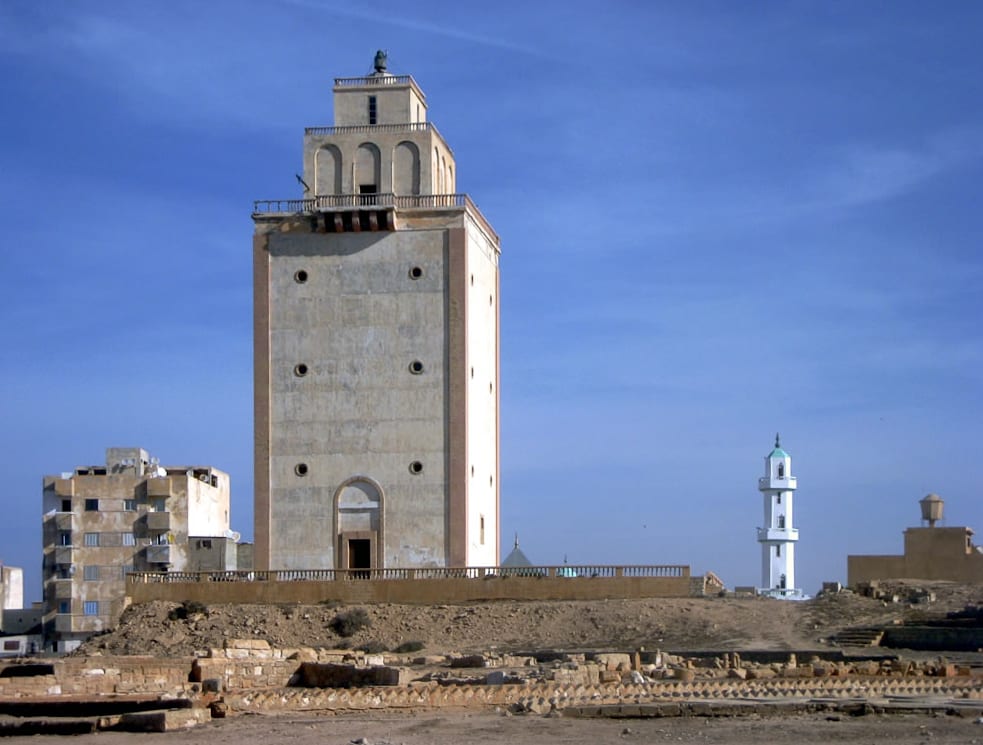
Benghazi, the main city of the east and, for years, the seat of a rival government to Tripoli, has an Italian colonial waterfront, a cathedral-turned- mosque, and old souks, alongside heavy damage from the 2014–2017 battle for the city against Islamist militants — reconstruction is ongoing. It is the gateway to Cyrene and the eastern archaeological sites.
Before you go: a serious note
Libya has had no single functioning central government since 2011, and armed conflict between rival administrations, militias, and, at times, extremist groups has continued in various forms since. At the time of writing, essentially every Western government advises against all travel to Libya, citing the risk of armed conflict, kidnapping, terrorism, landmines and unexploded ordnance, and the absence of reliable consular support. Some archaeological sites have also suffered damage or looting amid the instability.
This article describes what makes Libya's sites significant, for readers following the country or planning far ahead, not as a travel recommendation. Anyone actually considering a visit should treat current government advisories as decisive and understand that the security situation can change abruptly and that assistance if something goes wrong may be very limited.