Daily Life · Laos
Laos: The Day Begins Before Sunrise
Extended households that rise before dawn to prepare sticky rice for the monks, a farming and market rhythm set by the Mekong, and a legal working week of up to six days
By Worldlore Editorial · 30 September 2026
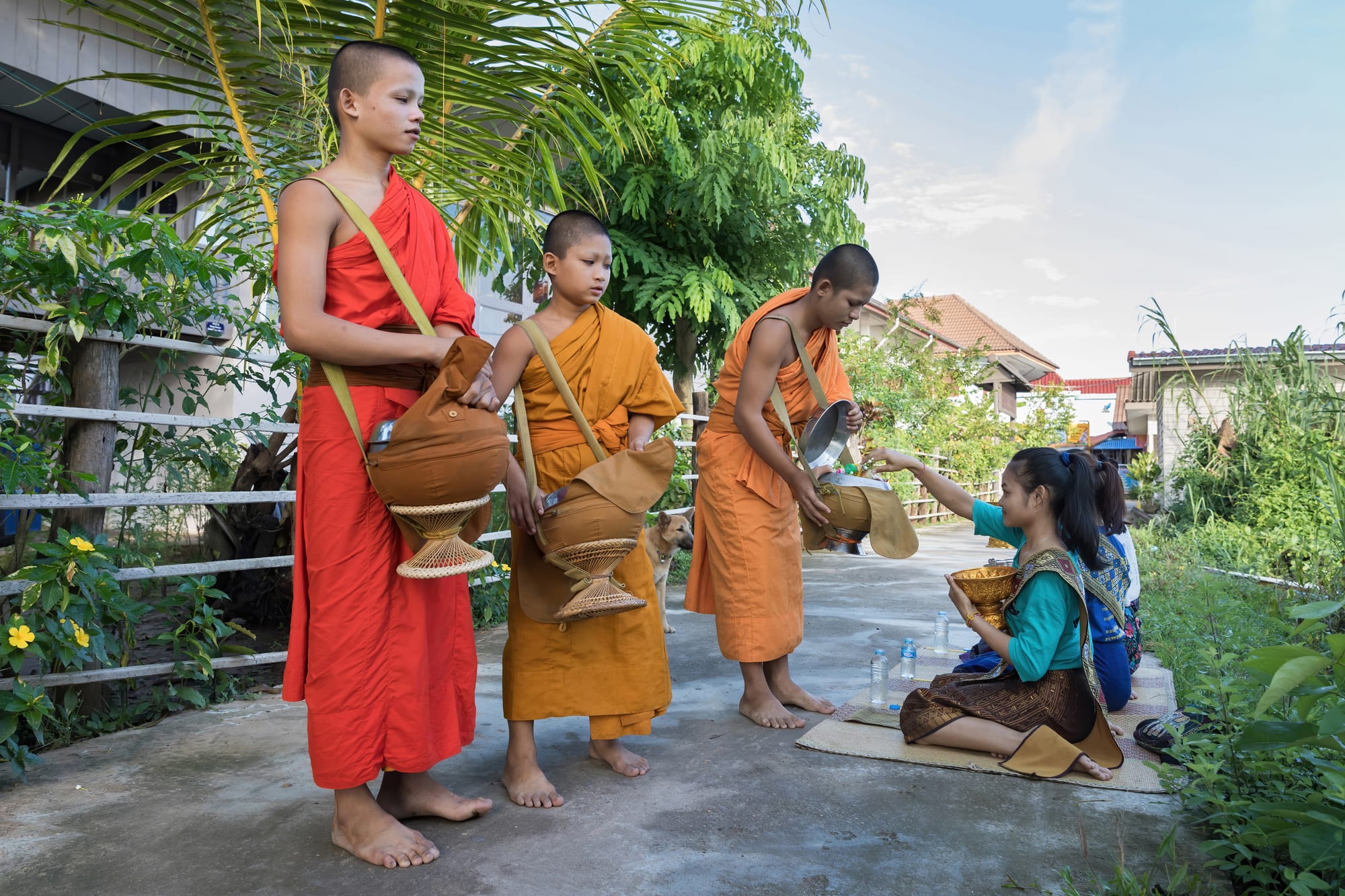
Laos wakes early. Long before most of the country is properly up, women in households nationwide are already cooking sticky rice, the staple eaten at every meal, part of it set aside for the barefoot monks who walk the streets and lanes at first light collecting alms. The rhythm that follows is unhurried but full: farming and market work through the heat of the day, a country still largely rural, and the Mekong River running through the middle of it all as transport route, food source and boundary. Laos remains one of the poorest and least developed countries in Southeast Asia, and daily life reflects that plainly, in patchy rural infrastructure and in a working week that the law allows to run six days rather than five.
Family and home life
Many Lao households are extended ones, often with three generations sharing one house or family compound, with grandparents playing an active part in raising grandchildren. Meals are eaten together, often seated on a mat or the floor rather than at a table, sticky rice served in a shared woven basket and rolled into balls by hand to scoop up the other dishes. Ethnic Lao form the majority in the lowlands and river valleys, while dozens of upland minority groups, including the Hmong and Khmu, keep their own languages and household patterns, often in more remote, harder-to-reach communities. Housing ranges from wooden stilt houses in rural villages, raised above flood level and livestock, to concrete homes and low apartment blocks in Vientiane and the larger towns.
Work, school and the rhythm of the day
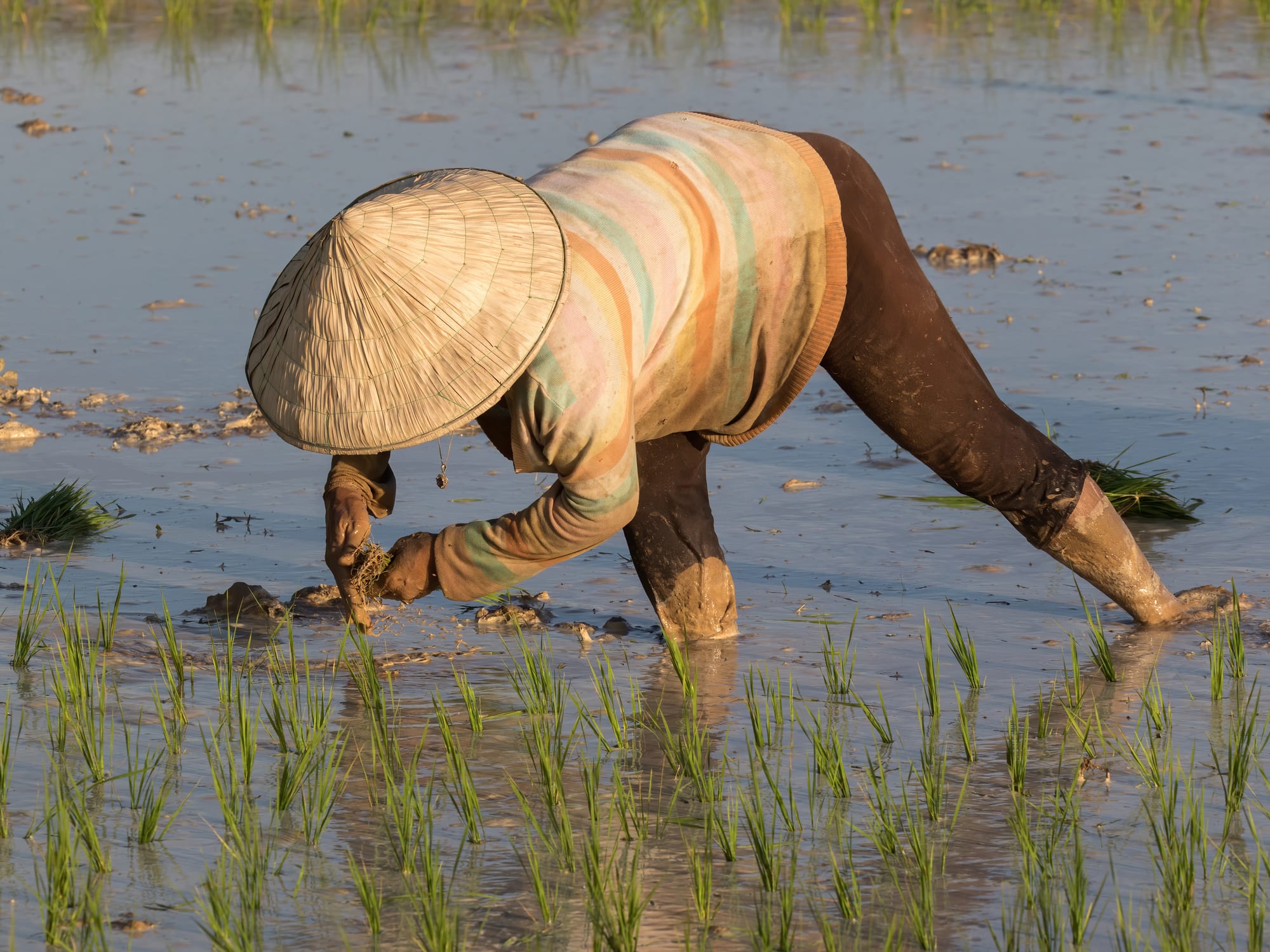
The law allows up to eight hours a day across a six-day week, and many Lao workers, whether farming, driving, or running a market stall, keep long days. Wages are low by regional standards, and the high inflation of recent years, which peaked above 40 per cent in 2023, has pushed some workers from wage jobs back toward farming or self-employment in recent years. Rice farming still occupies the greater part of the rural workforce, and the agricultural calendar, planting in the wet season and harvesting as it ends, sets the working year outside the cities far more firmly than any office clock does. School hours and the shape of the school week vary by school and province.
Community life and public spaces
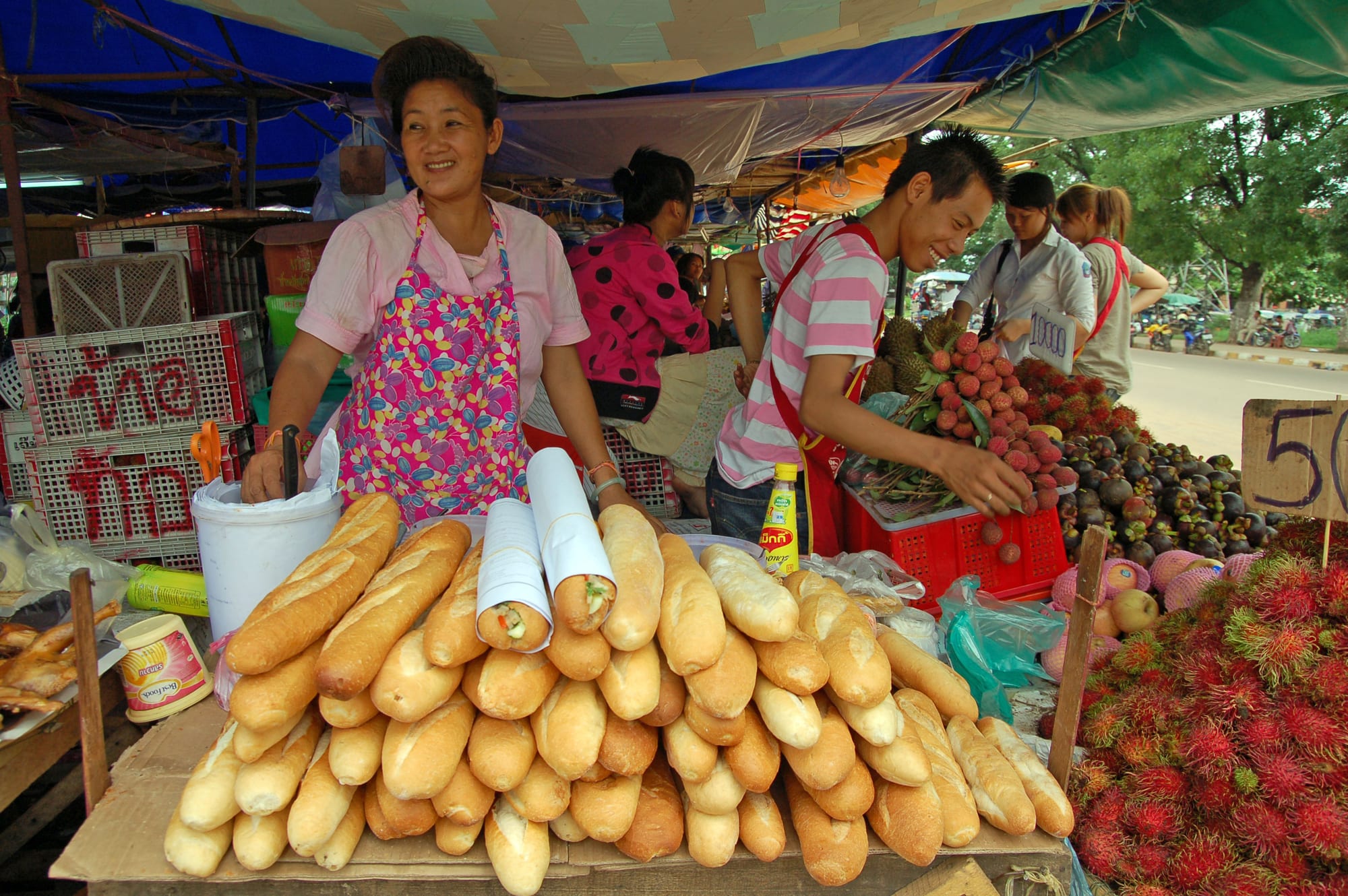
The market, talat, is the real centre of daily public life in Lao towns and cities, open from early morning and selling fresh produce, meat, fish, baguettes (a legacy of French rule, sold as khao jii sandwiches), and household goods side by side. Tuk-tuks, shared songthaew pickup trucks and, increasingly, motorbikes carry most everyday local transport, since public buses and the still-limited passenger rail network serve only the main routes. In river towns and villages, the Mekong itself doubles as a public space: boats for fishing and transport, and riverside paths where people gather in the cooler hours of the evening.
Free time and weekends
Weekends are given over to family, to the local temple, and, for many Lao men, to football, watched and played with real enthusiasm nationwide. Where a household has the means, a weekend outing might mean a boat trip on the Mekong or a visit to relatives in another village; in the cities, younger Lao increasingly spend free time in cafés and at the growing number of shopping centres. Buddhist festival days, tied to the lunar calendar, punctuate the year with communal merit-making at the temple alongside the more private routine of daily almsgiving.
A visitor's ordinary day
Laos still runs substantially on cash: the kip has lost much of its value in recent years, so US dollars and Thai baht circulate widely alongside it, and it is worth carrying both, since cards are accepted only in larger hotels and towns and ATMs cap withdrawals. Markets and shops generally open early and close by early evening. Getting around locally usually means tuk-tuks or shared songthaews rather than a metered taxi system, and negotiating the fare before getting in is normal practice. One serious, practical point for anyone travelling beyond the main towns: Laos remains littered with unexploded ordnance from bombing decades ago, heaviest in the east, so staying on marked paths and roads in the affected provinces is a genuine safety necessity, not a formality.
What to take away
An ordinary day in Laos is set less by the clock than by two things that have not changed in generations: rice, grown, cooked and offered before most other things happen, and the Mekong, which still carries much of the country's food, transport and daily life along with it.