Daily Life · Kuwait
Kuwait: A Day Built Around the Heat
A small, wealthy Gulf state where summer heat can pass 50 degrees, outdoor work is banned by law at midday, and the evening diwaniya gathering still does as much political and social business as any office
By Worldlore Editorial · 30 September 2026
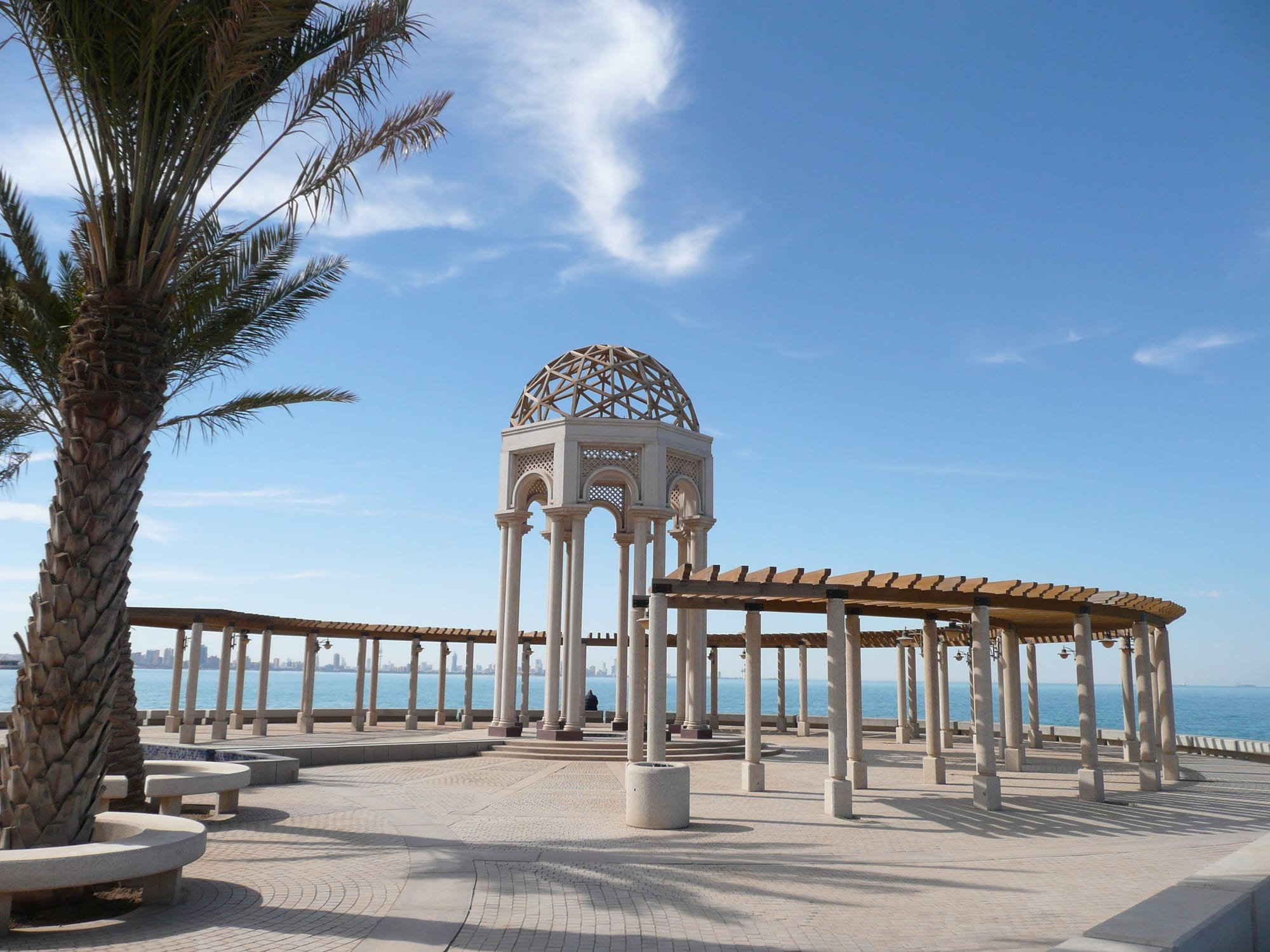
In Kuwait, the clock that actually governs a day is the thermometer. Summer temperatures regularly climb past 45 degrees and have reached some of the highest readings reliably recorded anywhere in Asia, and by law, outdoor manual work stops altogether at midday from June through August. Offices open early to get business done before the worst of the heat, shops and malls fill through the afternoon in air-conditioned comfort, and it is only once the sun drops that Kuwait's real social life gets going — on the corniche, in the souq, and above all in the diwaniya, the evening gathering that has shaped Kuwaiti public life for generations.
Family and home life
Family and tribe carry real weight in Kuwaiti society, and hospitality toward guests and relatives is elaborate and taken seriously. Around three in five of the people living in Kuwait are foreign residents, chiefly from India, Egypt, other Arab countries, Bangladesh and the Philippines, so an ordinary household's makeup varies enormously: many Kuwaiti citizen families live in large, extended, multigenerational households, often with a diwaniya room or annex attached to the house, while an expatriate household is more often a single worker or a smaller nuclear family living apart from wider relatives back home. That divide between citizen and expatriate life runs through nearly every part of daily routine, from housing to leisure time to how the working day is actually spent.
Work, school and the rhythm of the day
Private-sector law caps the working day at eight hours and government offices keep shorter ones; the week generally runs Sunday to Thursday, with Friday and Saturday as the weekend, and hours are shortened during Ramadan. In summer, the law bans outdoor manual labour entirely between eleven in the morning and four in the afternoon, a protection aimed at construction and other outdoor workers exposed to genuinely dangerous heat, and some private businesses split their day into a morning and a late-afternoon shift to work around the same problem. Oil dominates the economy so thoroughly that public-sector jobs, generous subsidies, and no personal income tax for citizens are simply background facts of working life for Kuwaitis, while the country's foreign majority fills most private-sector and manual roles.
Community life and public spaces
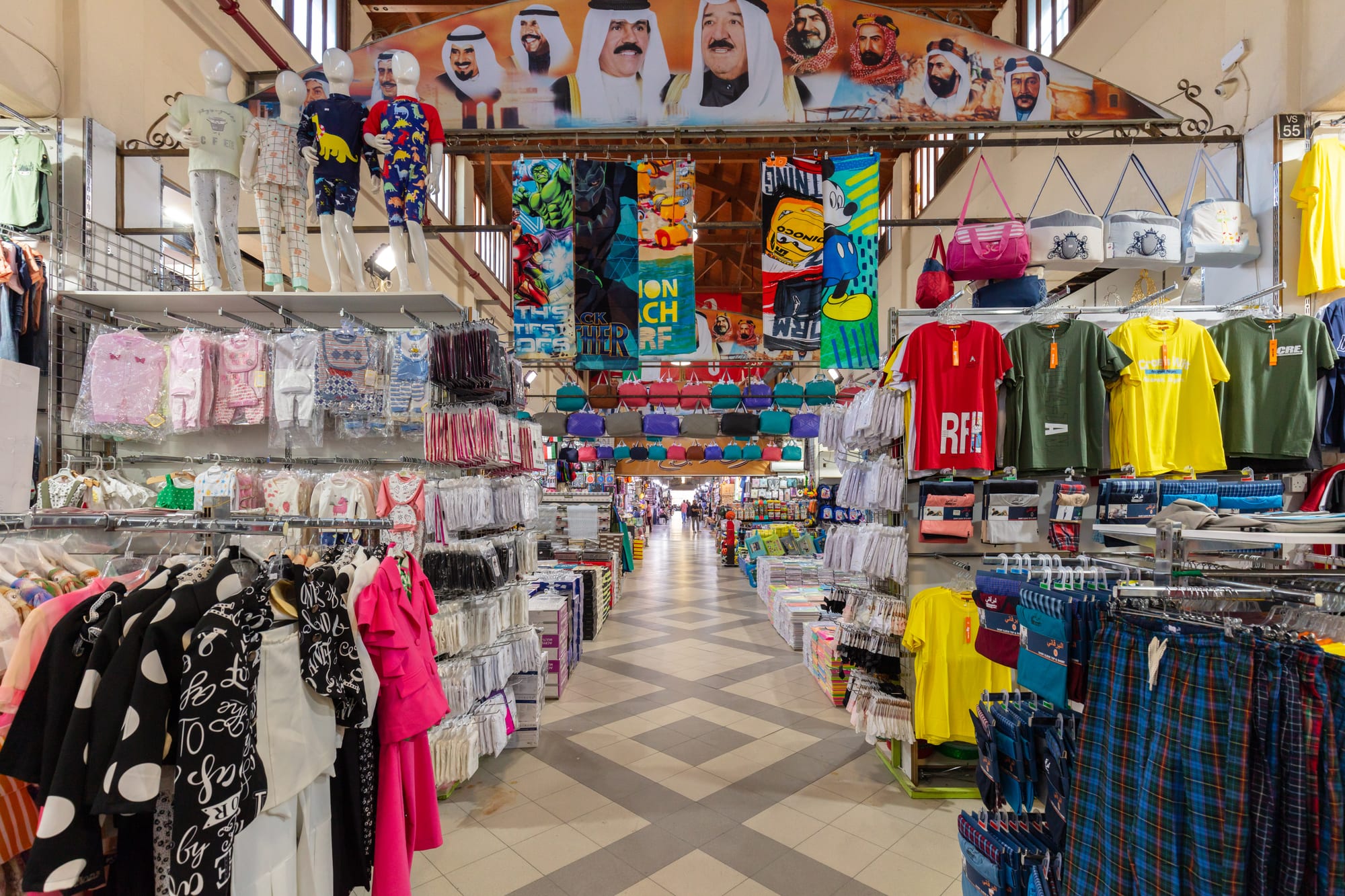
Malls are Kuwait's dominant public space by necessity as much as choice, air-conditioned and open long hours, and function as the default venue for almost any outing given the heat and the absence of a bar or club scene. Souq Al-Mubarakiya, the old central market, remains a genuinely working part of the city rather than a preserved relic, selling everything from spices and dates to gold, textiles and fresh produce. The mosque anchors the day at its five prayer times, and the corniche, a long seafront promenade running past the Kuwait Towers, fills with walkers, joggers and families specifically in the cooler hours of the evening, when outdoor public life becomes possible again.
Free time and weekends
The diwaniya is the institution around which a great deal of Kuwaiti free time still revolves: a dedicated room, in a private home or sometimes a separate building, where men gather on a regular evening, often weekly, to talk politics, business, sport and daily life over coffee, tea and dates. Diwaniyas are found across the country, and in 2025 UNESCO added the diwaniya to its list of the intangible cultural heritage of humanity; the tradition is male, though women hold gatherings of their own. Come winter, when daytime temperatures turn genuinely pleasant, camping in the desert becomes a major national pastime, with families setting up tented camps, some quite elaborate, for weekends or longer stretches between November and March.
A visitor's ordinary day
Since February 2026 Kuwait has come under aerial attack in the wider Iran war, and its airspace has been closed and flights suspended, so any visit depends on what is actually running. In ordinary times, cards are accepted almost everywhere, fuel is extremely cheap, and the whole country can be crossed in about an hour by car or metered taxi and ride-hailing apps. There is no alcohol anywhere in the country and nightlife in the Western sense does not exist, so restaurants, malls and cafés fill the role evening entertainment plays elsewhere. The heat genuinely limits what is sensible outdoors between May and September, so plan main activities for morning or evening and expect to move between air-conditioned spaces through the middle of the day, and during Ramadan, expect many daytime restaurants and cafés to be closed and public eating, drinking or smoking to be against the law.
What to take away
An ordinary day in Kuwait is shaped less by custom for its own sake than by a genuinely hostile climate: nearly everything about the rhythm of work, public life and the evening diwaniya is, in the end, an adaptation to heat that would make the alternative simply unworkable.