Culture & Customs · Kazakhstan
Kazakhstan: The Guest Sent by God
A Muslim and Orthodox country with nomadic roots, where the young greet the old first, an unexpected visitor is treated as a gift, and the great moments of life are still marked with songs, blessings and a shower of sweets
By Worldlore Editorial · 30 September 2026
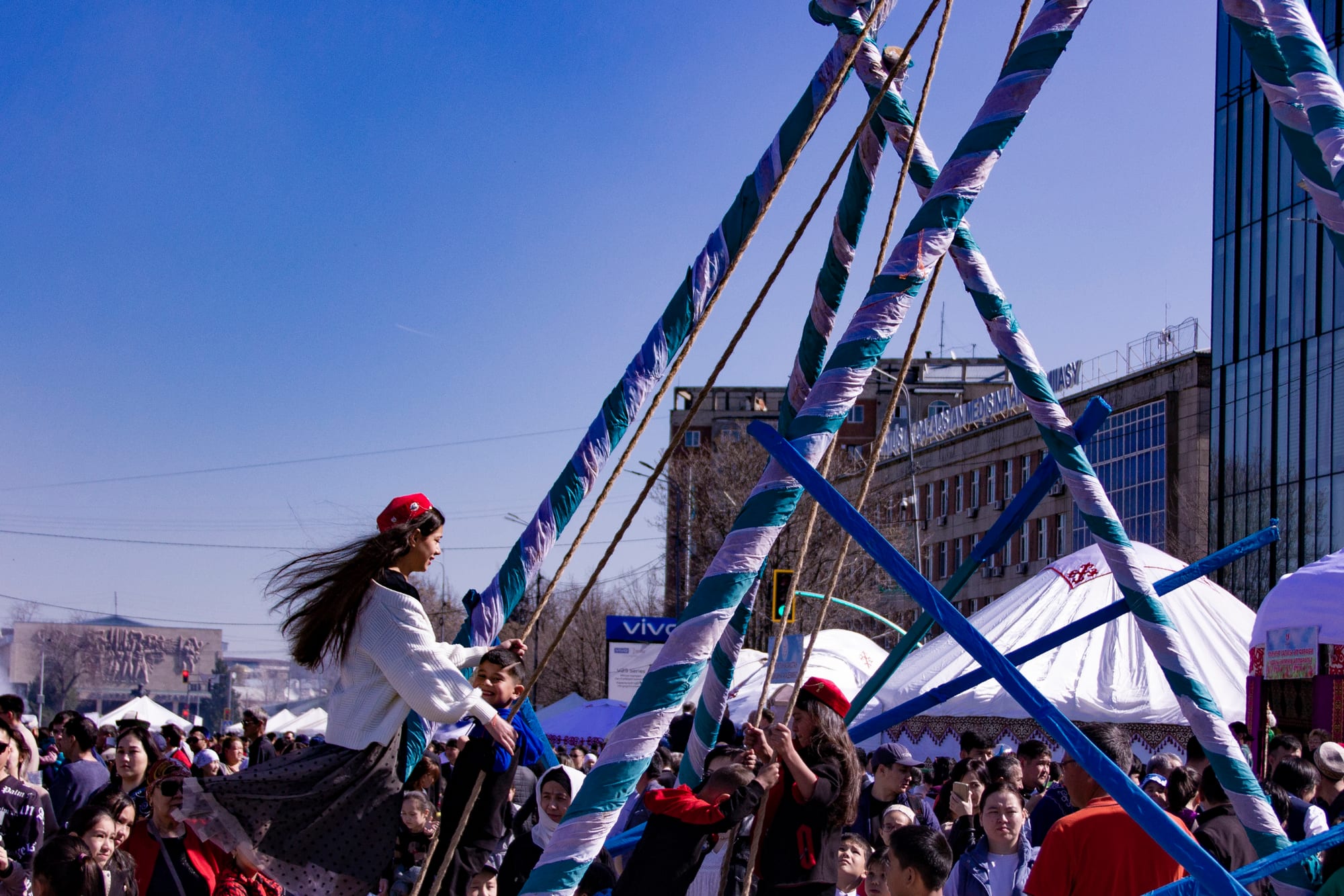
In late March, white yurts appear in town squares across Kazakhstan. Families come out in the spring sunshine, children and teenagers queue for turns on tall wooden swings, music plays from a stage, and inside the yurts tables are laid for anyone who wanders in. It is Nauryz, the spring festival of renewal, and at its heart are the things that have long defined Kazakh life: blessings from the elders, meals shared with whoever turns up, and the conviction that a guest brings good fortune into the home. Much of Kazakhstan now lives in apartment blocks rather than on the open steppe, but the manners of a nomadic people — respect for age, open-handed hospitality and a deep sense of belonging to a wider family — remain very much alive.
Faith, identity and values
Kazakhstan is a secular state with two main faiths. According to the 2021 census, about 69 per cent of the population is Muslim and about 17 per cent Christian. Most Muslims follow Sunni Islam of the Hanafi school, which the state counts among the country's traditional faiths, and ethnic Kazakhs and other Central Asian peoples are mainly Muslim, while the great majority of Christians are Russian Orthodox. The Christian share has fallen since 2009, and surveys differ widely on how many people consider themselves non-believers. Both traditions are reflected in the calendar: Orthodox Christmas on 7 January and Kurban Ait, the Muslim Feast of Sacrifice, are both public holidays.
Kazakh values grow out of centuries of life on the move. One is zheti ata, the custom of knowing seven generations of one's paternal ancestors, which ties each person into a wider lineage. Another is mutual aid: through asar, a family facing urgent work calls on relatives and neighbours to help, then feeds them all afterwards, and through zhylu, people give livestock, materials or money to those struck by disaster. Kazakhs sum it up in a saying — a burden is lighter when it is lifted together.
Respect for elders runs through everything. Older people are served first and given the best portions, and the custom of bel köterer — preparing soft, special food for the eldest — was a way of showing gratitude. Elders also give the bata, a poetic blessing spoken with the palms raised, before meals, journeys and great occasions.
Greetings and meeting people
Greeting follows a clear order. The younger person greets the elder first, and it is considered wrong to pass any older person without a greeting, whether or not the two know each other. Traditionally, a rider greeted someone on foot first, and the younger person opened with the Arabic salutation "Assalaumagaleikum", followed by polite questions about the other's health, family and livestock. People who know someone's parents are greeted with particular warmth and good wishes.
Among young people, a nod or a handshake is usual. There are moments when no handshake is expected at all: someone who comes in while a meal is under way simply nods to everyone present rather than going round the table.
Particular events call for particular words. A family with a new baby is greeted with "kutty bolsyn", a wish that the event will bring good fortune, and the same phrase welcomes a new daughter-in-law into a household. Greetings also mark departures and returns from a journey, and paying condolences after a death — konil aitu — is regarded as a moral obligation.
Hospitality and being a guest
"The guest comes and brings happiness to the home," runs an old Kazakh saying, and hospitality is the value Kazakhs are proudest of. Traditionally, guests fell into three kinds — the invited guest of honour, the passing traveller and the unexpected visitor — and the traveller who turned up unannounced was regarded as a guest sent by God. A host was not supposed to rest until a guest had been fed, and qonaqasy, the duty to offer food to guests, was one of the most important of all traditions.
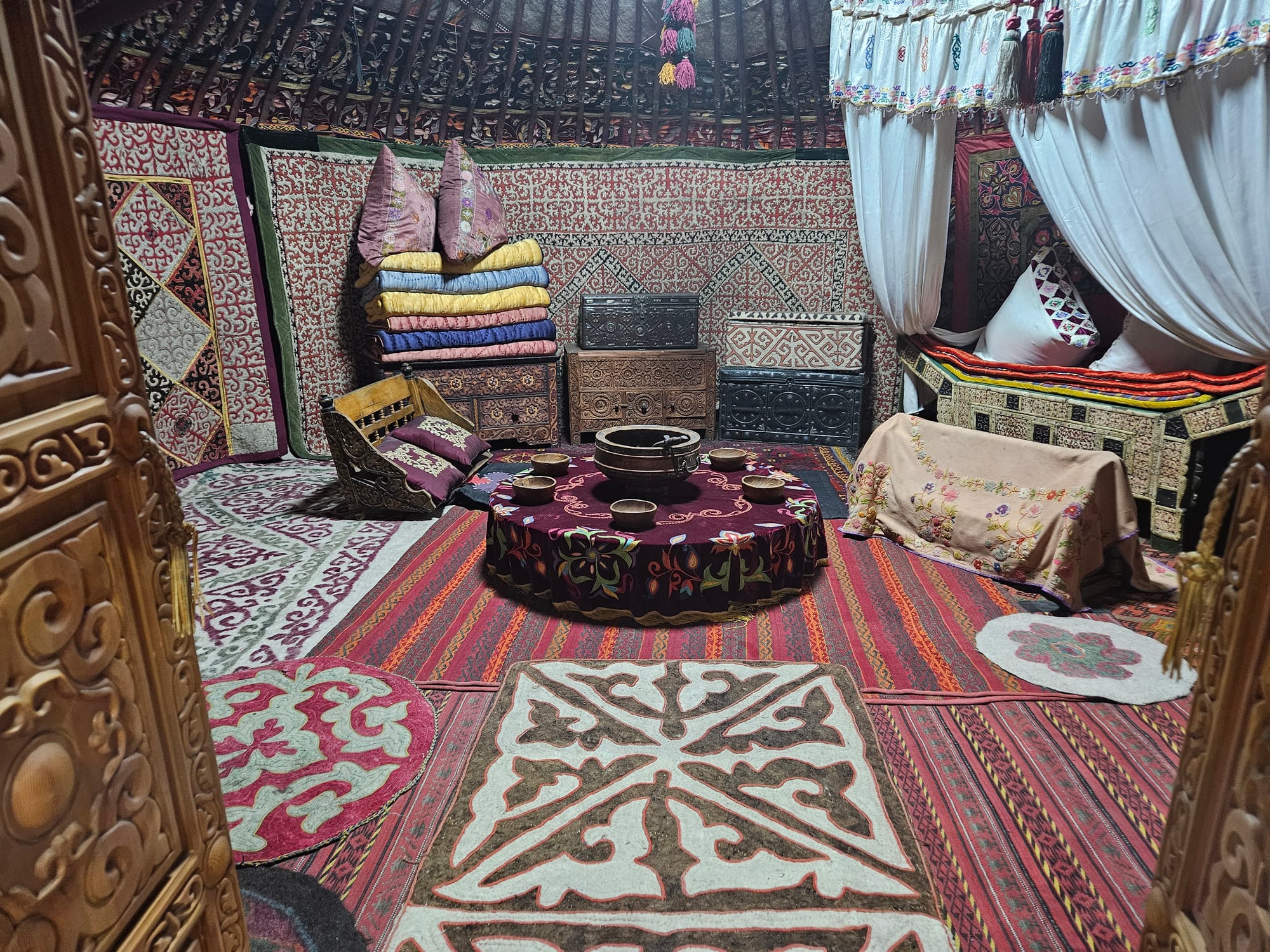
The table, or dastarkhan, is the stage for all of this. A generous spread is a symbol of peace and prosperity in the home, and homemade food is regarded as a mark of respect for guests. Guests are given the honoured places and are not expected to refuse what is offered, since turning food away can be taken as a slight on the dastarkhan itself. At a festive meal, the most honoured guest may be presented with a sheep's head and asked to share out portions among everyone at the table.
Guests may be asked to contribute too. Under the custom of konakkade, a host can invite a guest to sing, play an instrument or share a talent during the feast. When the meal ends, the eldest guest is usually asked to give a blessing. Food does not always stay at the table: under the custom of sarqyt, women traditionally carried treats home from a feast for the children and relatives who had not been able to come. And at celebrations, guests are showered with shashu — sweets and coins thrown over them — to the delight of the children who scramble to collect them.
Festivals and life's big moments
Nauryz, the spring festival of renewal, is the high point of the year. Revived in the late 1980s, it became a national holiday in 2001 and has been celebrated over three days, from 21 to 23 March, since 2009; in recent years the festivities have stretched over as much as ten days, with concerts and public events in the cities alongside the older customs of blessings from elders, communal meals and national games. In spring, too, horse-breeding communities keep rites to mark the first milking of the mares and the first sharing of koumiss, with songs, dances and games. The public calendar also includes Orthodox Christmas, Kurban Ait, the Day of Unity of the People of Kazakhstan on 1 May, Republic Day on 25 October and Independence Day on 16 December.
A child's early years are marked by a series of celebrations. A shildekhana feast welcomes a newborn, and the name is traditionally given by the most senior relative, with a mullah whispering it three times into the baby's ear. Later come the first placing in the cradle and, after forty days, a ritual bath in water holding forty silver coins. When a toddler takes its first steps, the tusau kesu ceremony follows: the child's feet are loosely tied with a black and white cord, standing for the choice between good and evil, and a respected guest — often an elder or a woman with many children — cuts it so that the child may walk and run well through life, while treats are scattered for the guests.
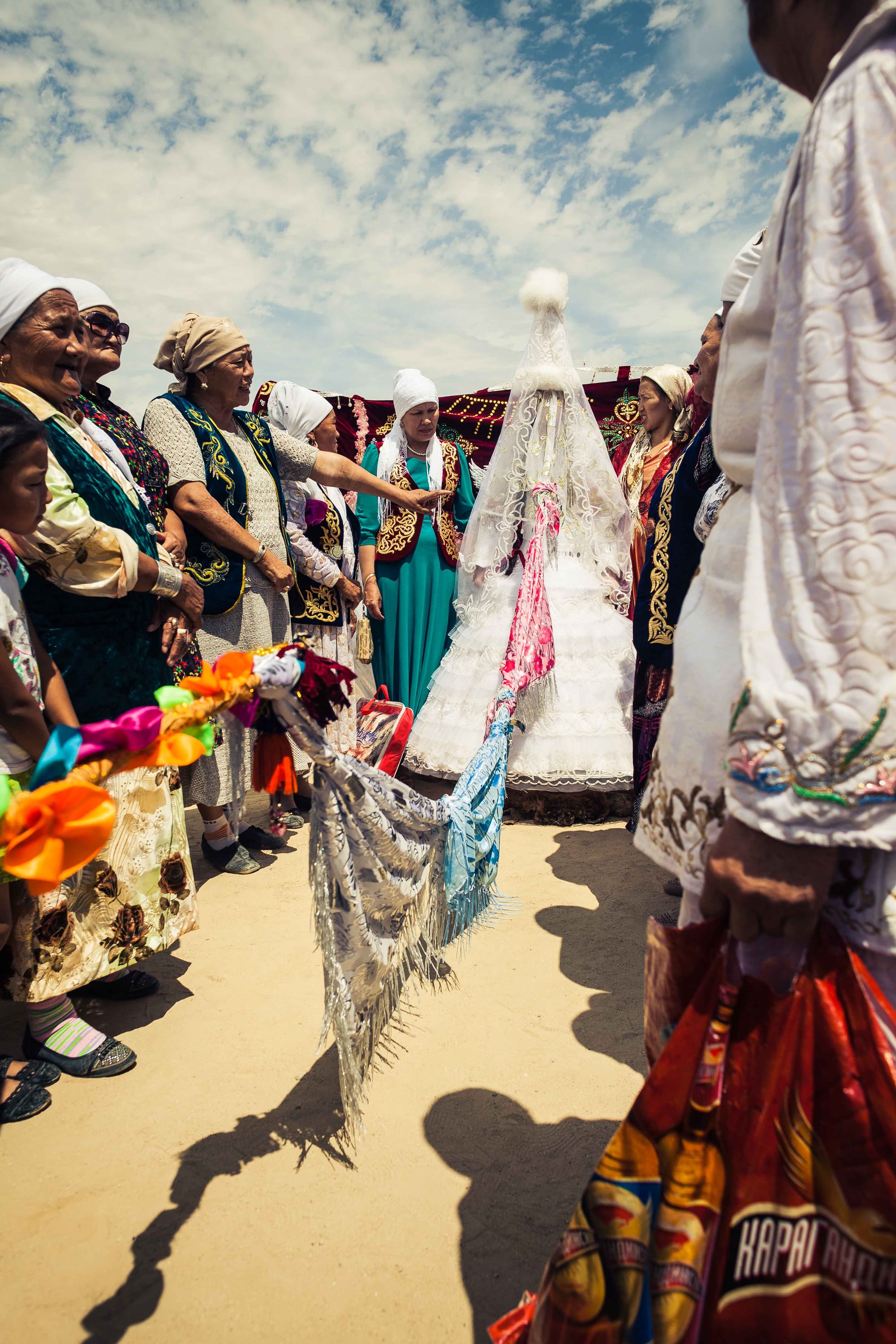
Weddings unfold in stages, from kudalyk, the matchmaking between two families, to kyz uzatu, the send-off of the bride from her parents' home. The best-known moment is the betashar, the unveiling of the bride in her new family, which is on UNESCO's list of intangible heritage. An akyn, a singer, leads a song praising the groom's family and ancestors; as each relative is named, the bride and her sisters-in-law bow in greeting, and at the end the singer lifts her veil to show her face to the guests, who shower the couple with sweets and coins.
Death, too, is met with shared ritual. Burial follows quickly, on the day of death or the next day, and every adult who attends offers condolences to the family. Relatives and neighbours visit for konil shai, the "tea of condolence", and traditionally helped with gifts of livestock, flour and food. Memorial gatherings are held on the third and seventh days, after forty days and after a year, and women once expressed their grief in zhoqtau, sung poems of lament. Being present at a time of grief is often considered more important than attending a celebration.
Arts, crafts and music
The dombra, a pear-shaped, long-necked instrument with two strings, is the national instrument, and the kuy — a short solo piece, often telling a story or legend — is its classic form. Kuys are played at gatherings, holidays and festivals, and young musicians still learn them by apprenticing to masters.
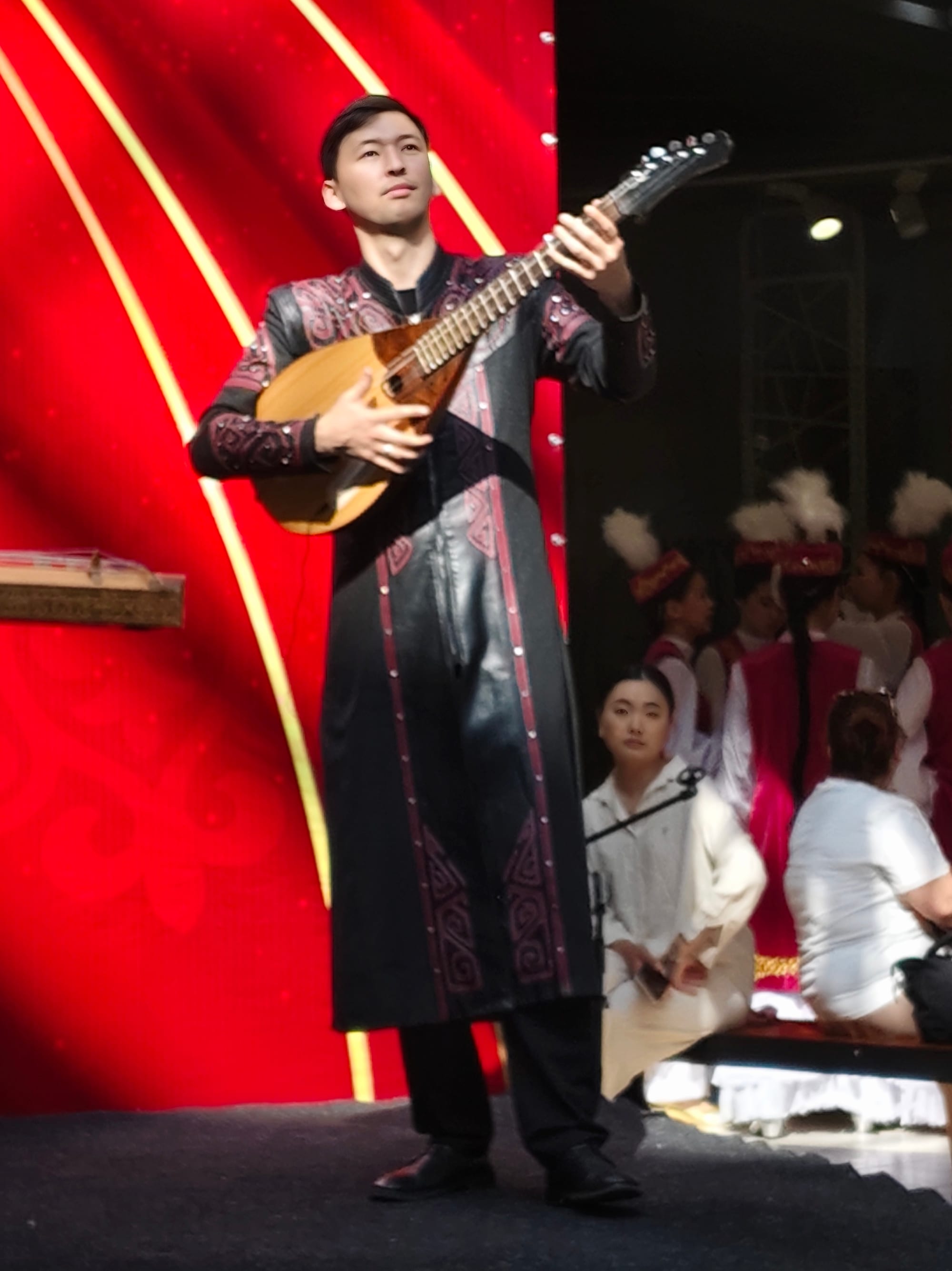
The dombra also accompanies aitys, a contest of improvised poetry in which two akyns sit side by side and trade improvised, rhymed verses, playing to the audience, swinging between humorous retorts and serious reflection; once largely a male preserve, it is now also a stage for women's voices. In orteke, a wooden mountain-goat puppet is tied by strings to a dombra player's fingers and set on a drum, so that it hops and taps in time with the music.
The yurt remains the emblem of this heritage. Men make its collapsible wooden frame by hand, while women craft the felt coverings and patterned interior decorations, and a family yurt may be handed down from parents to children as a treasured relic, still raised for celebrations and ceremonies. Kazakhstan's other living traditions on UNESCO's lists include falconry, kuresi wrestling, assyk games played with sheep knucklebones, and togyzqumalaq, a strategy board game.
Dos and don'ts for visitors
- Do greet older people first, and never pass an elder without a greeting.
- Do accept food and drink when a host offers them; refusing can be taken as disrespect to the dastarkhan.
- Do stay quiet and attentive when the eldest guest gives a blessing at the end of a meal.
- Do be ready to sing, recite or play something if a host asks during a feast.
- Do visit and offer condolences if an acquaintance loses a relative; presence at such times matters greatly.
- Don't go round shaking hands if arriving while a meal is under way; a nod to everyone is enough.
- Don't be surprised to be showered with sweets and coins at a celebration; it is a wish of good fortune.
What to take away
Kazakhstan has changed enormously in a generation, but its old code of courtesy — honour the elders, feed the guest, share the burden — still shapes daily life, and visitors who respect it will be treated as guests in the fullest sense.