Daily Life · Kazakhstan
Kazakhstan: Tea, Family and the Weekend Dacha
A tea bowl refilled all day, three generations often living close at hand, and a country of Soviet-built apartment blocks whose residents still head out to a garden plot every weekend of the growing season
By Worldlore Editorial · 30 September 2026
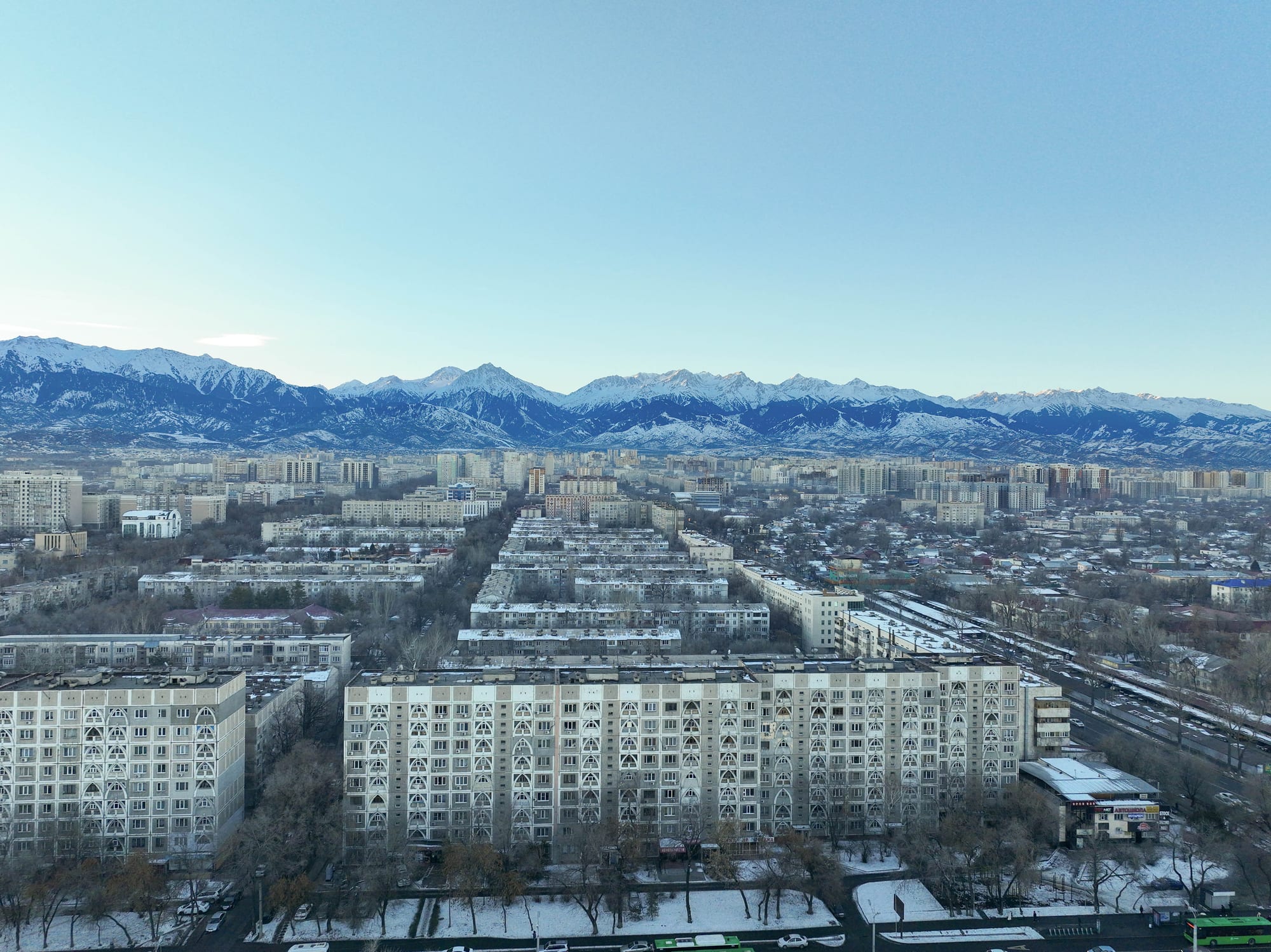
Most Kazakhstanis today live nowhere near a yurt or a herd of horses: close to two in three live in towns and cities, many in a Soviet-built apartment block in Almaty, Astana or one of the regional cities, and an ordinary day there runs on tea rather than kymyz. A pot is often kept going through the day at home, poured into small bowls a little at a time so it stays hot and someone is always refilling it. Families tend to be close and multigenerational, the working week runs Monday to Friday behind an office desk or a market stall, and when the weekend comes and the weather allows, a striking number of city households head out of town to a small garden plot, a habit inherited from Soviet times that has simply never gone away.
Family and home life
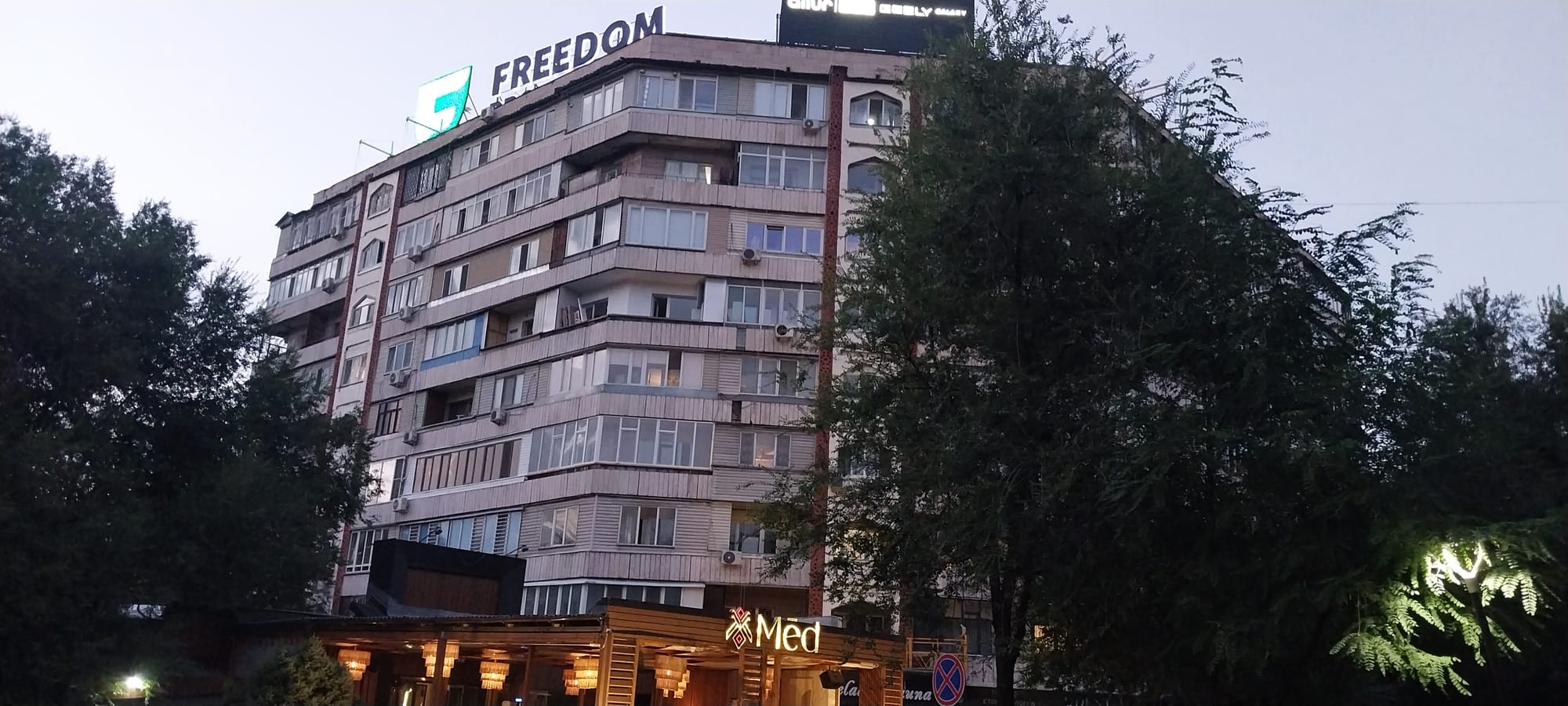
Households in Kazakhstan average a little over three and a half people, and it remains common, especially outside the biggest cities, for a married son and his family to stay in or near his parents' home, with the expectation that he will look after them in old age. Tea for family and guests is traditionally poured only part-full so it can be topped up often rather than left to go cold. Many city dwellers live in apartment blocks built during the Soviet period, many of them the compact five-storey "khrushchevka" type, with small kitchens and thin walls, many of them now showing their age and sitting alongside newer glass-fronted developments.
Work, school and the rhythm of the day
The standard working week runs Monday to Friday, eight hours a day, forty hours a week, with Saturday and Sunday usually off. Oil, gas and uranium, of which Kazakhstan is the world's largest producer, drive the economy and have made it the largest economy in Central Asia, in total and per head, though the wealth is uneven: white-collar life in the cities looks markedly different from the more modest, resource-dependent economy of the regions, where herding families still move livestock to summer pastures on an annual calendar. Lunch in the cities is often taken at a stolovaya, a canteen-style cafeteria serving simple, inexpensive food, a habit that has outlasted the Soviet system that popularised it.
Community life and public spaces
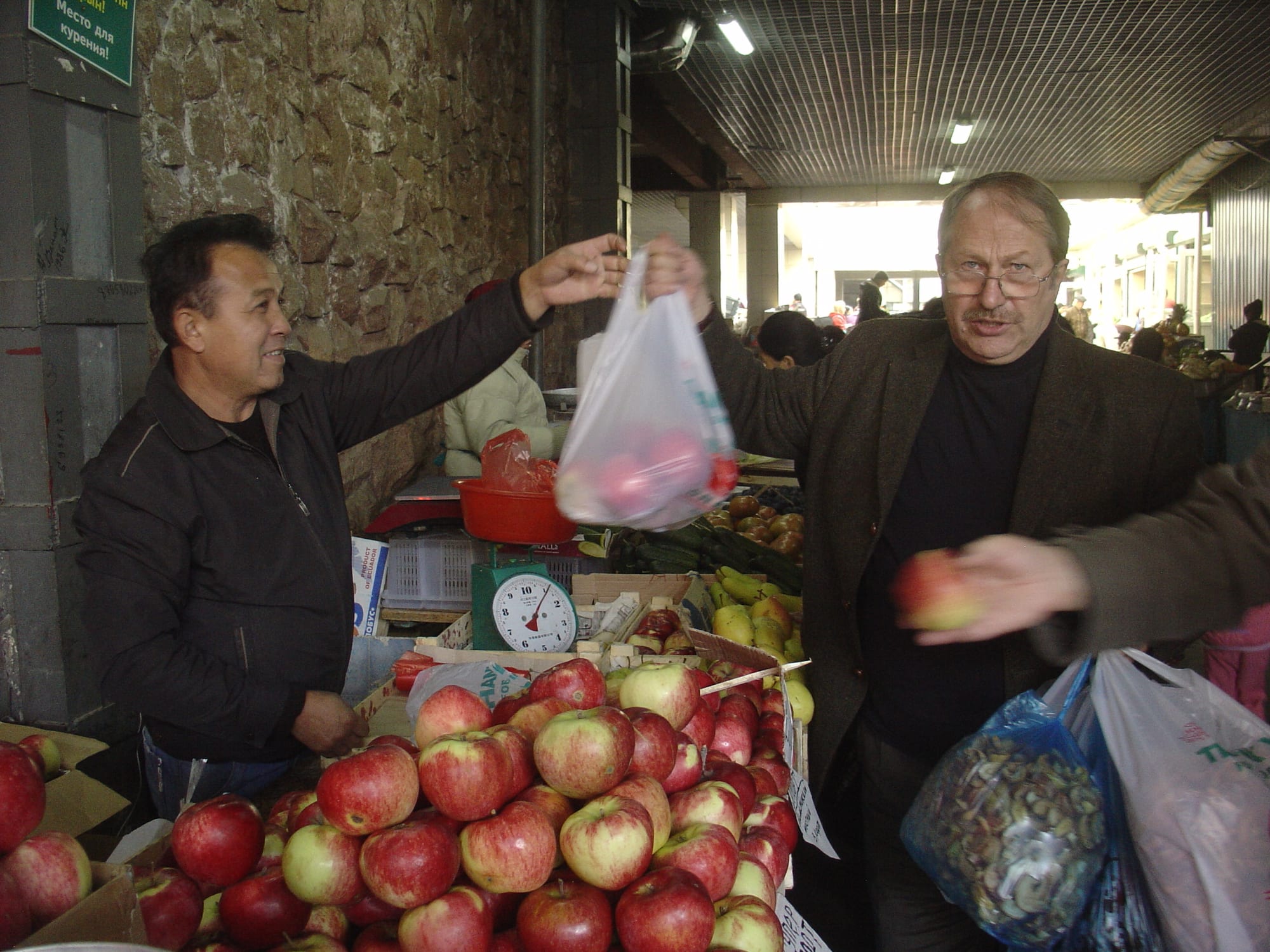
The bazaar remains a genuine daily destination rather than a novelty, covered halls of produce, meat, dried fruit and household goods where much of the week's shopping still gets done, alongside newer supermarkets and malls. Getting there and around often means a city bus or a marshrutka, a shared minibus running a fixed route, which remains an essential part of public transport, especially outside the biggest cities. Apartment courtyards function as informal neighbourhood gathering spots, where children play and older residents sit out in the warmer months, doing the job that a public square might do in a smaller, older-patterned town.
Free time and weekends
Weekends, especially from spring through early autumn, tend to mean the dacha: a drive out of town to plant, weed or harvest a small garden, followed by a meal outdoors if the weather holds. Nauryz, the spring new year festival in March, is one of the biggest dates on the calendar nationwide, marked with feasting, games and a shared holiday dish, and it draws people outdoors regardless of the region. In the cities, weekends also bring family visits, trips to the cinema or a mall, and, in winter, skiing or skating in the mountains above Almaty; further from the cities, horseback sport remains a genuine weekend spectacle rather than a staged tourist event.
A visitor's ordinary day
The currency is the tenge; cards and phone payments are widely used in the cities, though cash is still handy in rural areas and at some bazaars. Long-distance trains are the classic way to cross the country, comfortable and cheap, with overnight services on the long Almaty-to-Astana route. Within cities, a bus, a marshrutka minibus or a ride-hailing app covers most short trips; between towns, hired cars or organised transport are usually needed to reach the mountains, canyons and deserts outside the main centres. Shops generally keep long hours and many trade through the weekend, and a stolovaya canteen is a reliable, inexpensive way to eat where menus are only in Kazakh or Russian.
What to take away
What defines an ordinary day in Kazakhstan is less the scale of the country than how much of daily life still centres on the same small things: a bowl of tea kept topped up, a household that spans generations, and, come the weekend, a patch of ground outside the city that a family has been tending for decades.