Attractions & Natural Wonders · Kazakhstan
Kazakhstan: Seven Attractions and Natural Wonders
A futuristic capital raised from the steppe, a "Grand Canyon" in the desert east, glacial lakes and a drowned forest in the Tian Shan, and the greatest Timurid monument outside Uzbekistan
By Worldlore Editorial · 10 September 2026
The ninth-largest country on earth
Kazakhstan is by far the largest of the Central Asian republics — bigger than Western Europe — and the ninth-largest country in the world, yet home to only about 20 million people. Most of it is flat steppe and semi-desert, but the southeast rises into the snow peaks of the Tian Shan along the borders with Kyrgyzstan and China. It is oil-rich, fast-modernising, and Russian- and Kazakh-speaking, and it has poured money into a showpiece capital on the northern plains.
The seven below cluster in the scenic southeast around Almaty, plus the capital and the pilgrimage city of Turkestan. Late spring (May–June) and autumn (September) are best for the mountains; the capital has bitter winters and hot summers.
1. The Charyn Canyon
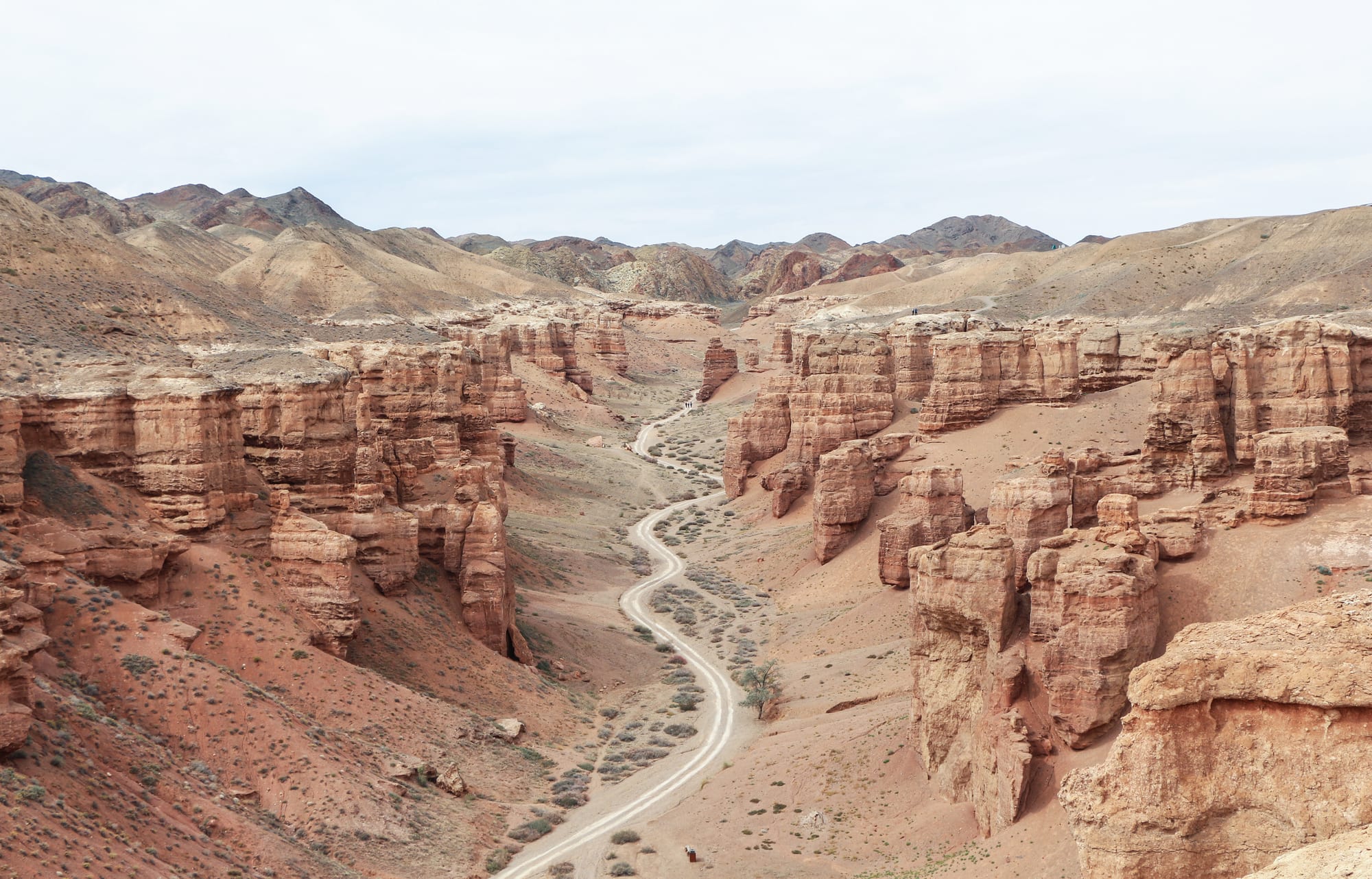
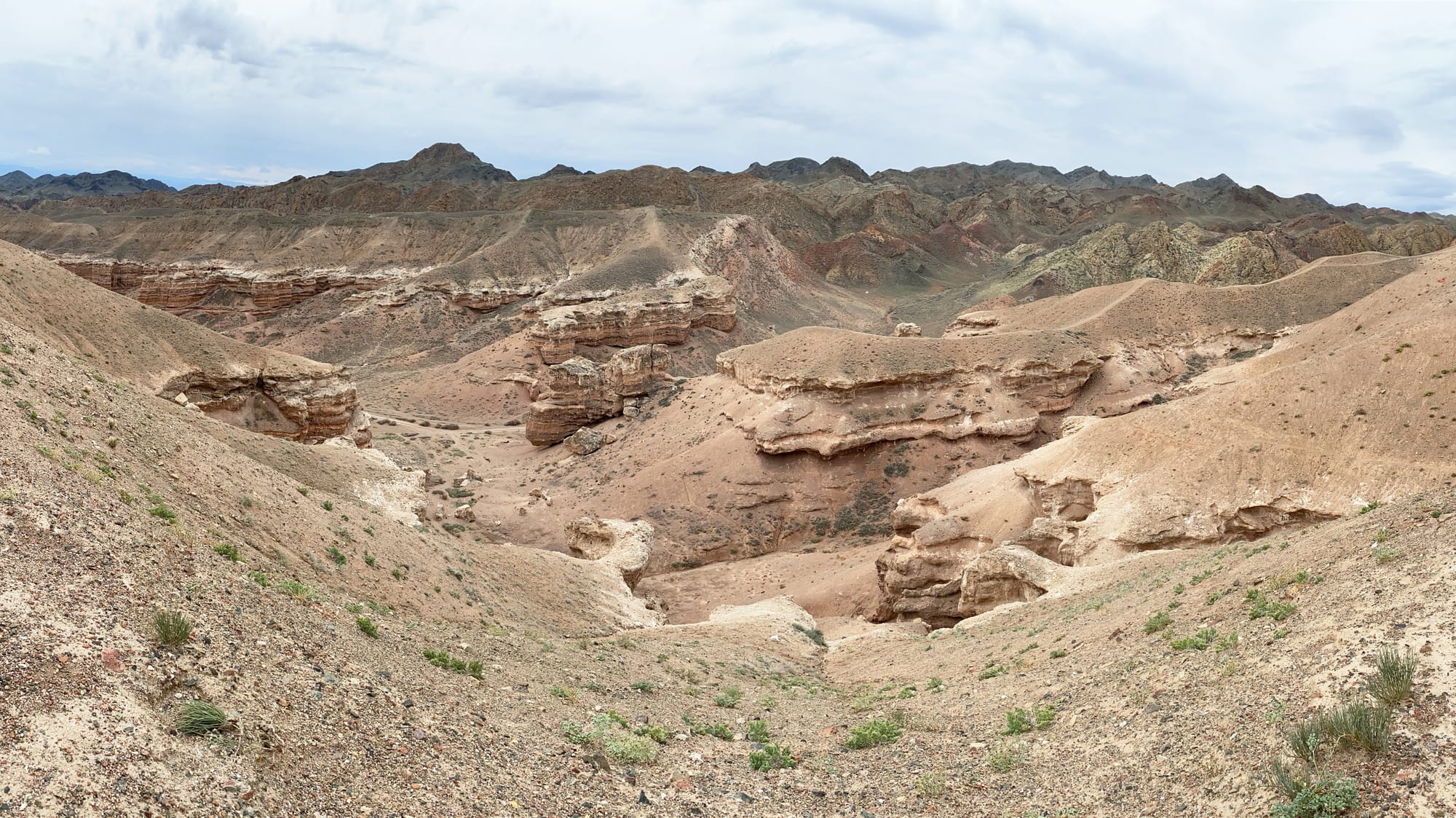
The Charyn Canyon, about three hours east of Almaty, is a 150-metre-deep gorge that the Charyn river has cut through soft red sedimentary rock, eroding it into a "Valley of Castles" of pinnacles and towers often compared to the Grand Canyon in miniature. A walking trail runs down the dry side canyon to the green riverbank, where there is a simple campsite and ash-tree grove — a relict forest species.
It is usually visited as a long day trip or an overnight from Almaty.
2. Almaty
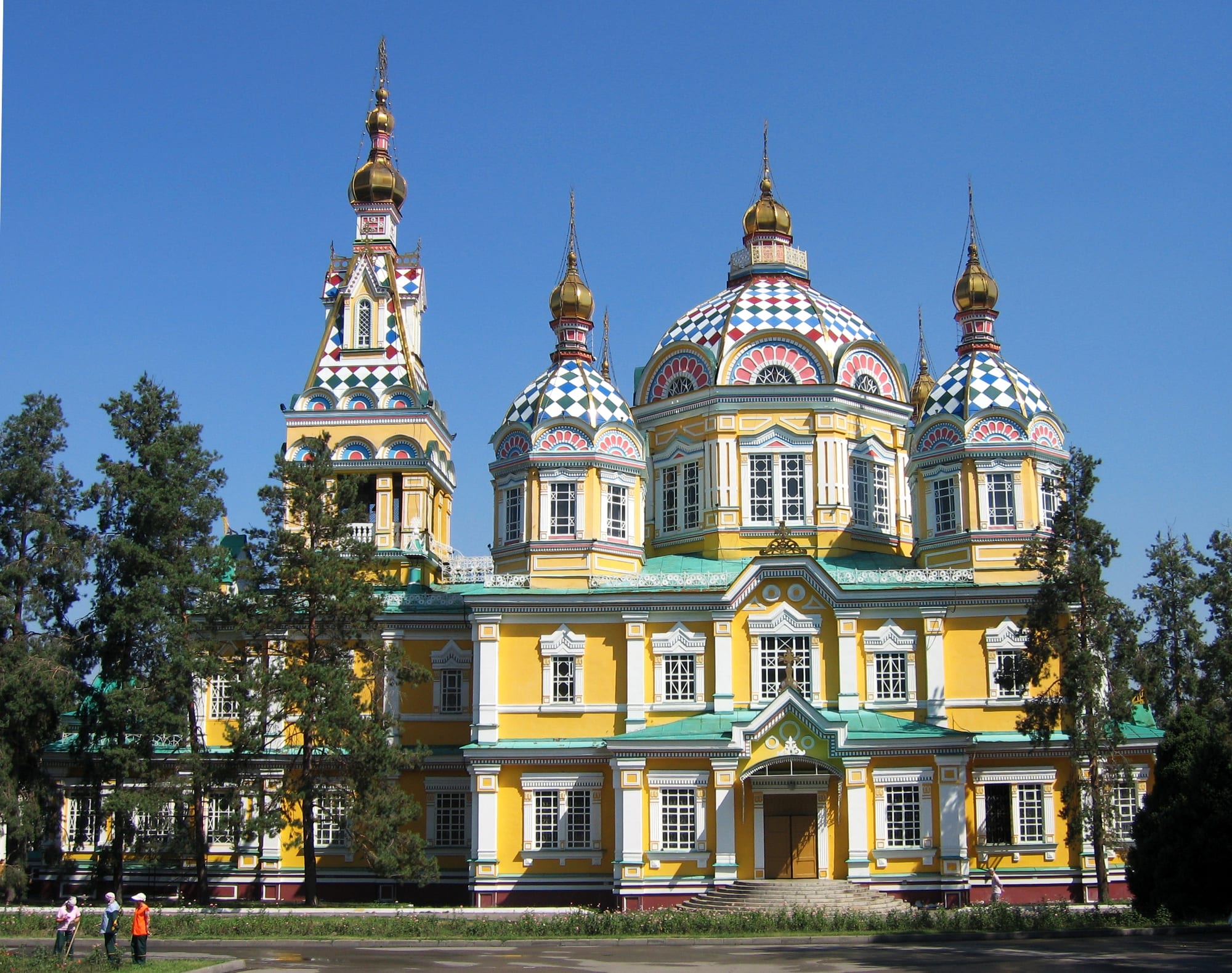
Almaty, the former capital and still the largest city and cultural centre, sits at the foot of the Trans-Ili Alatau mountains, which loom over the streets. It is a green, tree-lined, leafy city of Soviet and modern architecture, with the brightly painted wooden Zenkov Cathedral in Panfilov Park, the Green Bazaar, the Kok-Tobe hill (by cable car), and the Medeu speed-skating rink and Shymbulak ski resort just up the valley.
It is the arrival point for almost every visitor and the base for the sights below.
3. Big Almaty Lake and the Trans-Ili Alatau
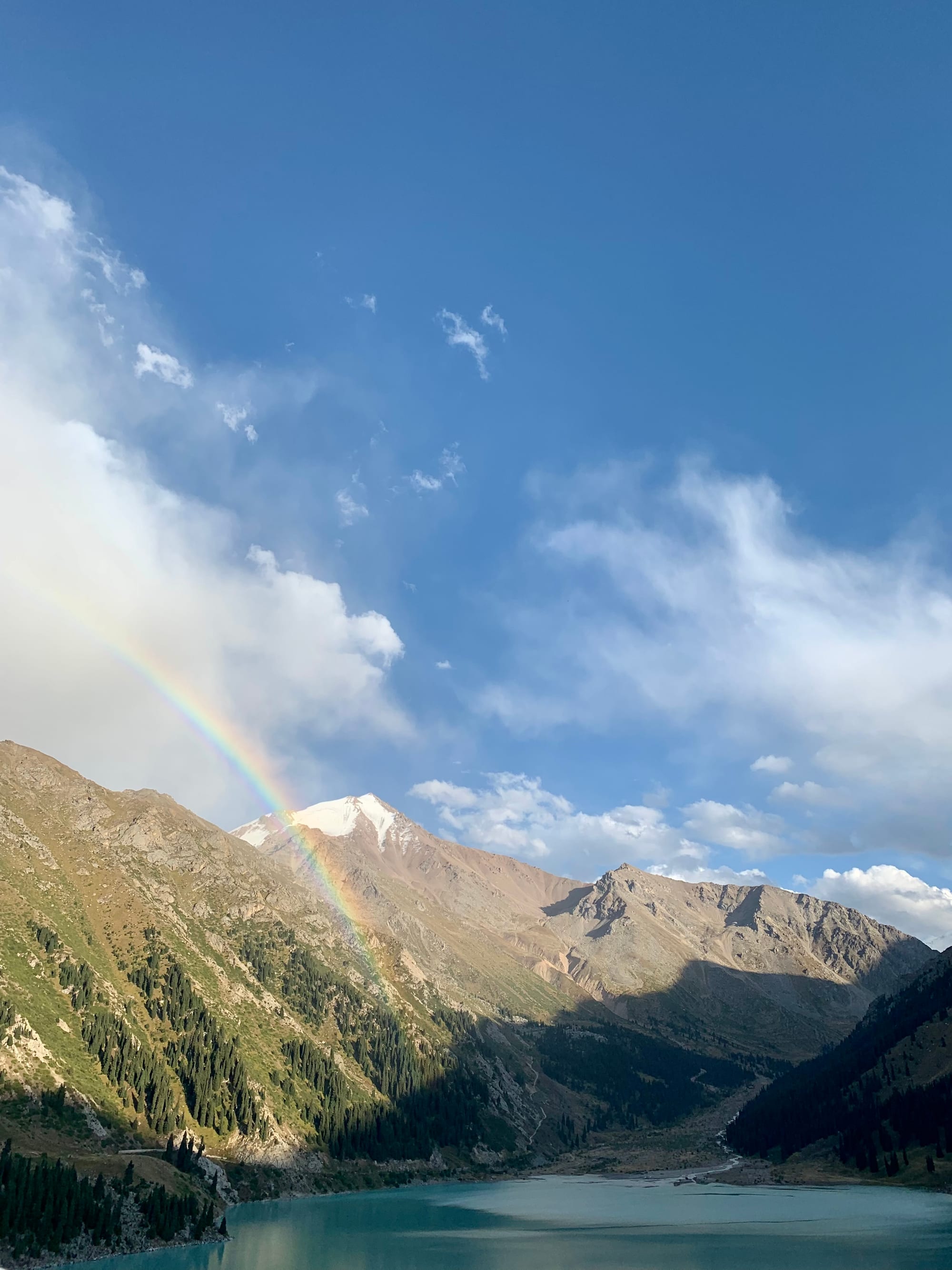
Big Almaty Lake, an hour up a mountain road (and gorge) from the city, is a striking turquoise glacial lake ringed by 4,000-metre peaks, with an astronomical observatory on the slope above and hiking toward the Almaty and Ozyorny passes. The wider Ile-Alatau National Park has waterfalls, alpine meadows, and the Butakovka and Turgen gorges.
The lake is a border zone; carry your passport, and check whether a permit is needed for hikes beyond it.
4. The Kolsai Lakes and Lake Kaindy
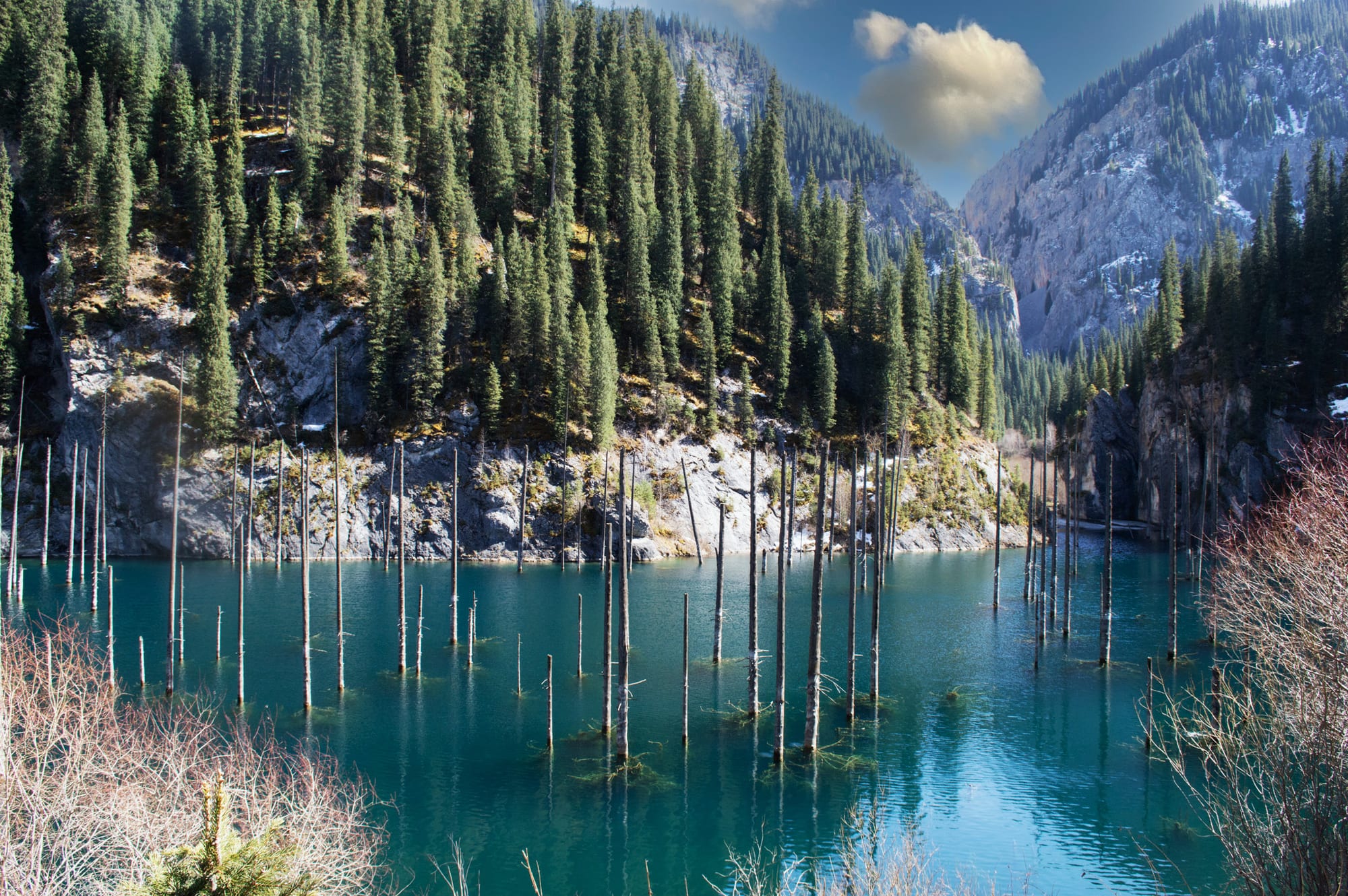
In the Kungey Alatau range near the Kyrgyz border, the three Kolsai Lakes step up a forested valley — the first reachable by road, the higher two by hiking or horse — with homestays in the village of Saty. Nearby, Lake Kaindy is a smaller lake created when a 1911 earthquake landslide dammed a valley; the submerged spruce trees still rise bone-white above and below the clear surface.
Both are usually combined with the Charyn Canyon on a two- or three-day trip.
5. Astana
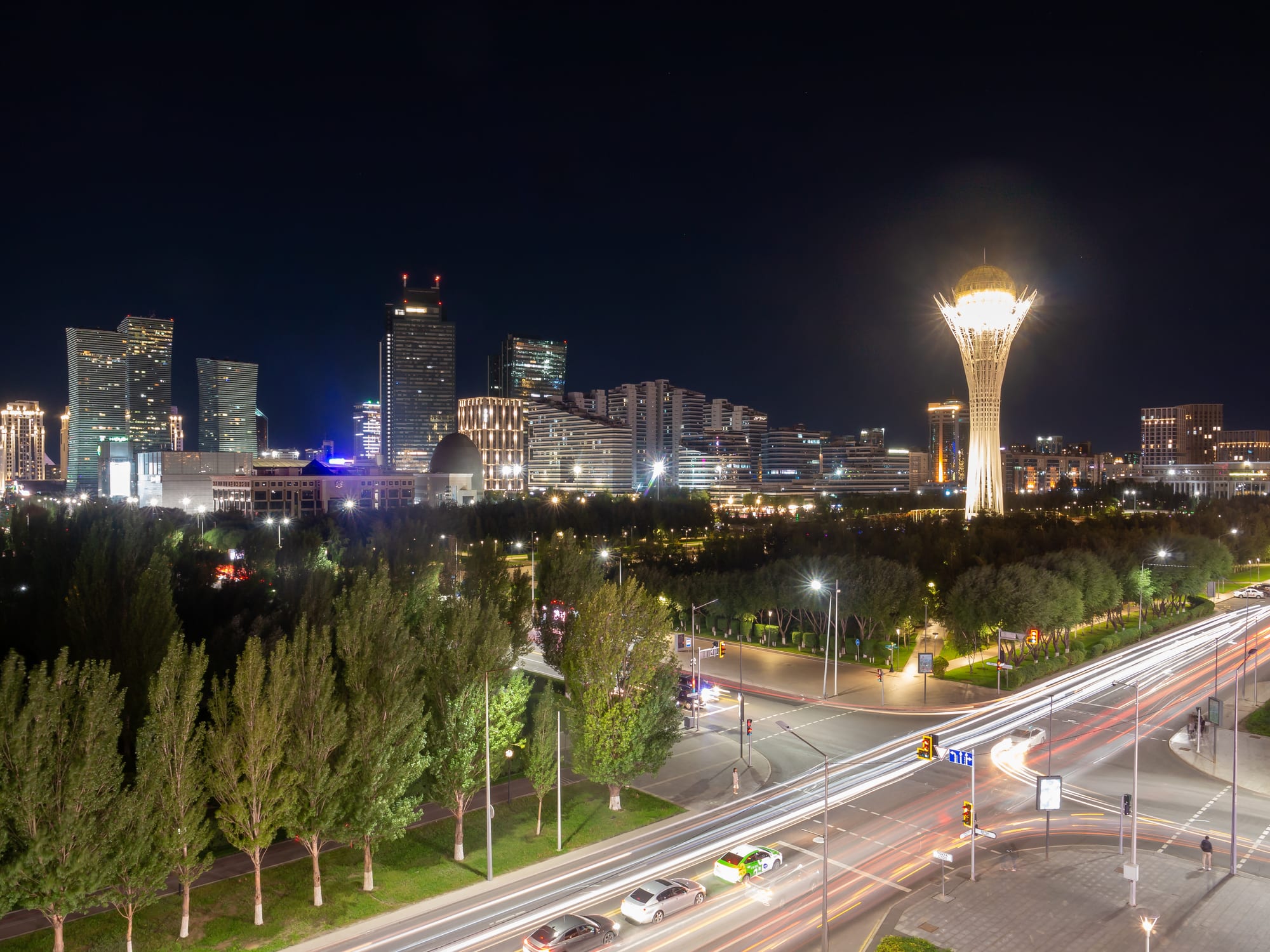
Kazakhstan moved its capital from Almaty to a small northern city, now Astana (briefly Nur-Sultan), in 1997, and has been building a showpiece government quarter on the steppe ever since — much of it designed by Norman Foster and other international architects. The Bayterek tower (a "tree of life" with a viewing sphere), the pyramid-shaped Palace of Peace, the Khan Shatyr tent-mall, and the Nur-Astana mosque line a ceremonial axis. Winters here are among the coldest of any capital.
It is a three-hour flight or an overnight train from Almaty.
6. The Mausoleum of Khoja Ahmed Yasawi, Turkestan
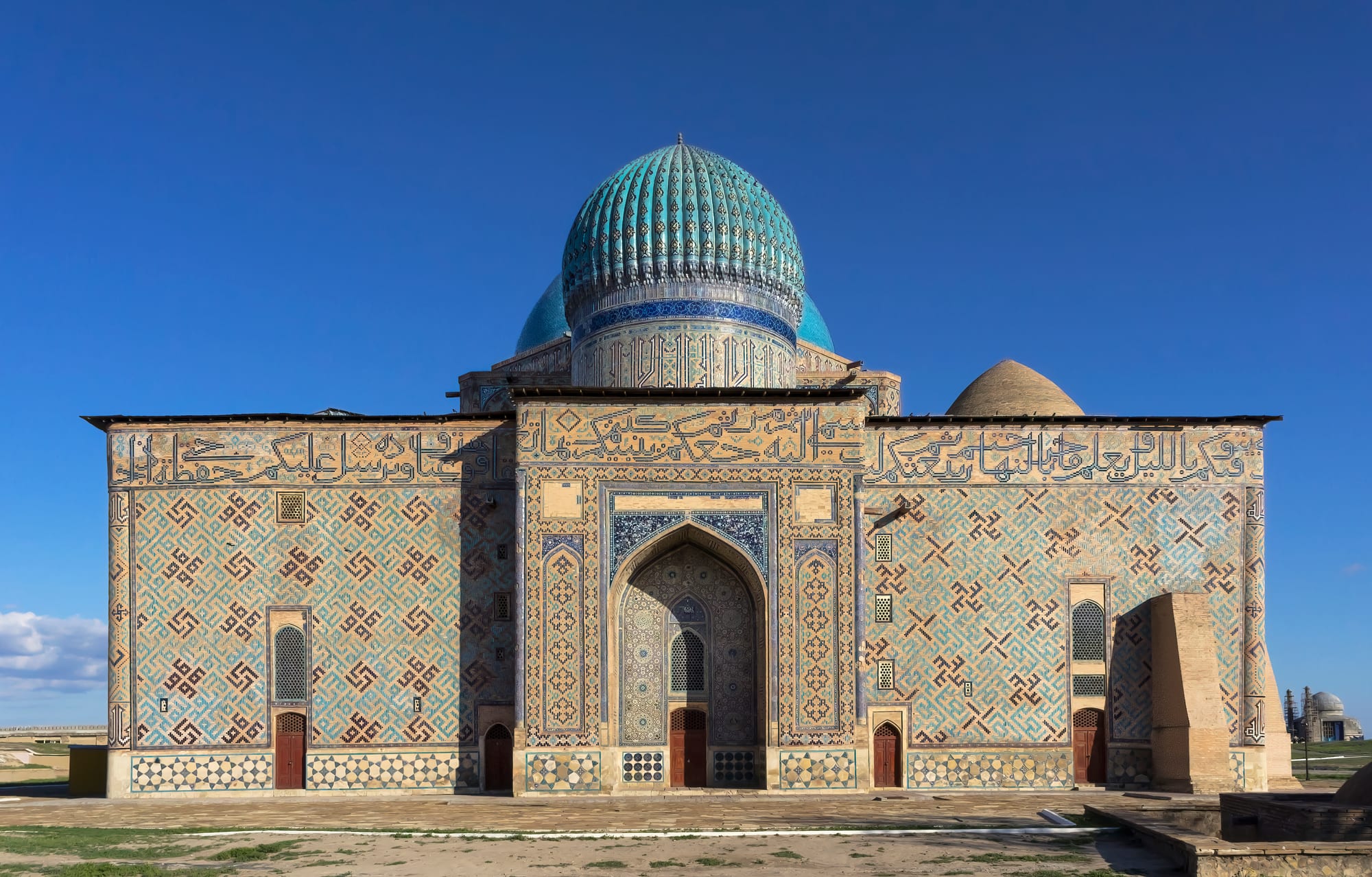
In the south, the city of Turkestan holds Kazakhstan's most important monument — the huge mausoleum Timur (Tamerlane) built over the tomb of the 12th-century Sufi poet and teacher Khoja Ahmed Yasawi. Left unfinished at Timur's death, it still shows the timber scaffolding brackets on its great portal, and its ribbed turquoise dome is the largest in Central Asia. It is a UNESCO World Heritage Site and a major pilgrimage destination.
Turkestan has a new airport and a rebuilt old town aimed squarely at tourism.
7. The steppe, the space port, and the far west
Beyond the southeast, Kazakhstan's other draws are spread thinly across a vast land. The Saryarka steppe and its lakes in the north (a UNESCO site) host huge spring and autumn bird migrations and herds of saiga antelope. Baikonur, leased to Russia, is the world's oldest and busiest space launch site, visitable on official tours around a launch. And in the far west, on the Caspian side, the Mangystau region has an otherworldly desert of chalk cliffs and rock formations, most famously the Bozjyra tract.
These take real time and planning; most short trips stay in the Almaty region.
A first trip is usually built around Almaty — the city, its mountains, the Charyn Canyon, and the Kolsai/Kaindy lakes — over about a week, adding Astana or Turkestan by internal flight if time allows.