Culture & Customs · Jamaica
Jamaica: Manners and Respect
A deeply Christian island with African-rooted faiths of its own, where a greeting comes before any business, elders are Mr and Miss, and Christmas still brings masqueraders into the street
By Worldlore Editorial · 30 September 2026
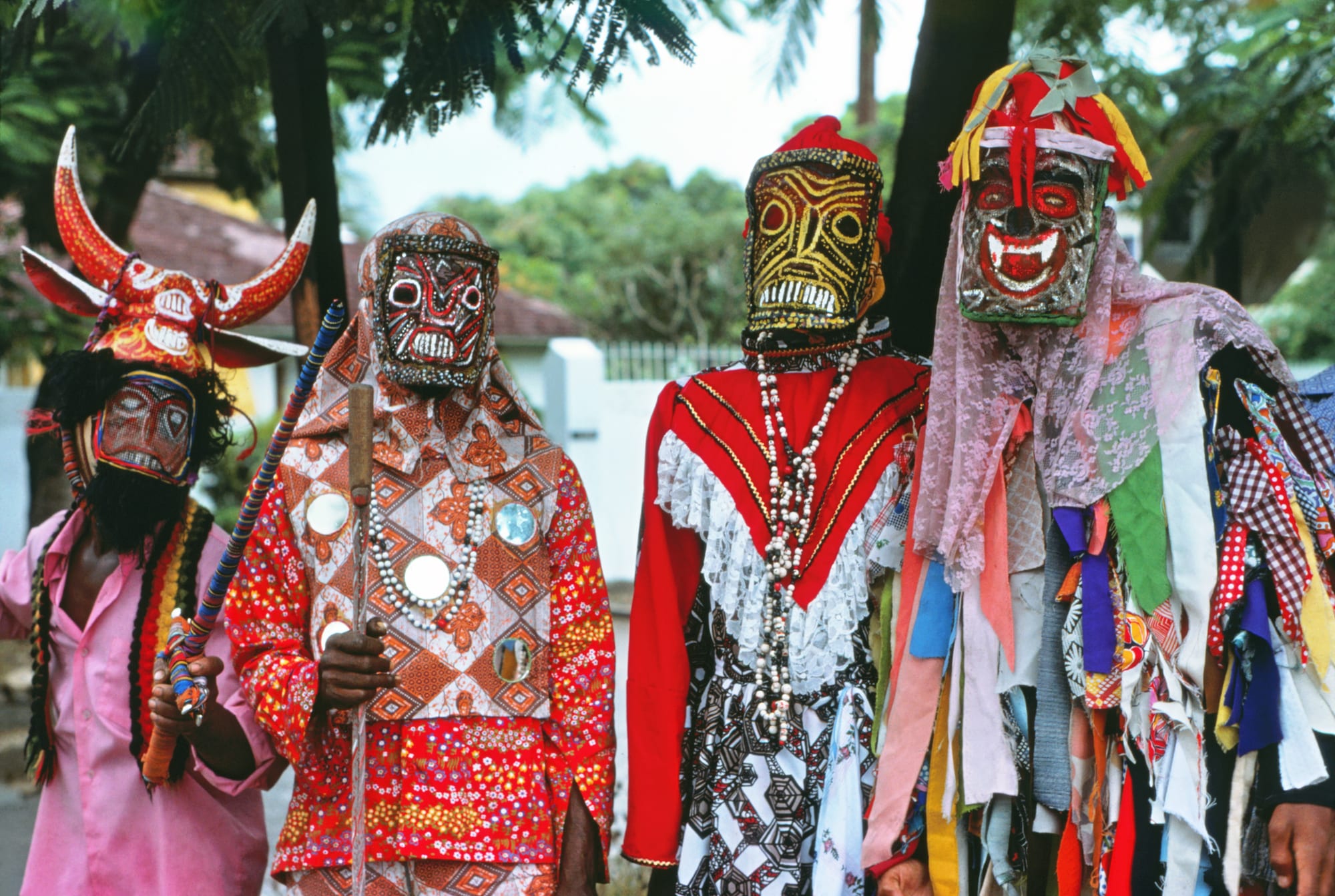
It is Christmas Eve, and the town centre is packed. Vendors have been given leave to set up stalls wherever there is space, music is playing, and families are out doing their last shopping late into the night. This is Grand Market, the high point of the Jamaican Christmas, and in some places a band of Jonkonnu masqueraders comes parading through the crowd in masks and patchwork costumes. Both traditions reach back to the era of slavery, when Christmas brought the enslaved a few days of respite, a market of their own and a chance to dance. Few moments show so clearly how Jamaica has turned a hard history into a culture of its own — sociable, musical, proud and, in its everyday manners, surprisingly formal.
Faith, identity and values
Jamaica is an overwhelmingly Christian country with a remarkable number of churches. According to the most recent census, cited by the US State Department, about a quarter of Jamaicans belong to one of the branches of the Church of God, around 12 per cent are Seventh-day Adventists, 11 per cent Pentecostal and 7 per cent Baptist, with smaller Anglican, Catholic, Methodist, Moravian and other congregations. About a fifth of people report no religious affiliation. Sunday services, choirs and church events are woven into community life, and the church is where many of the country's social rituals — from weddings to funerals — take place.
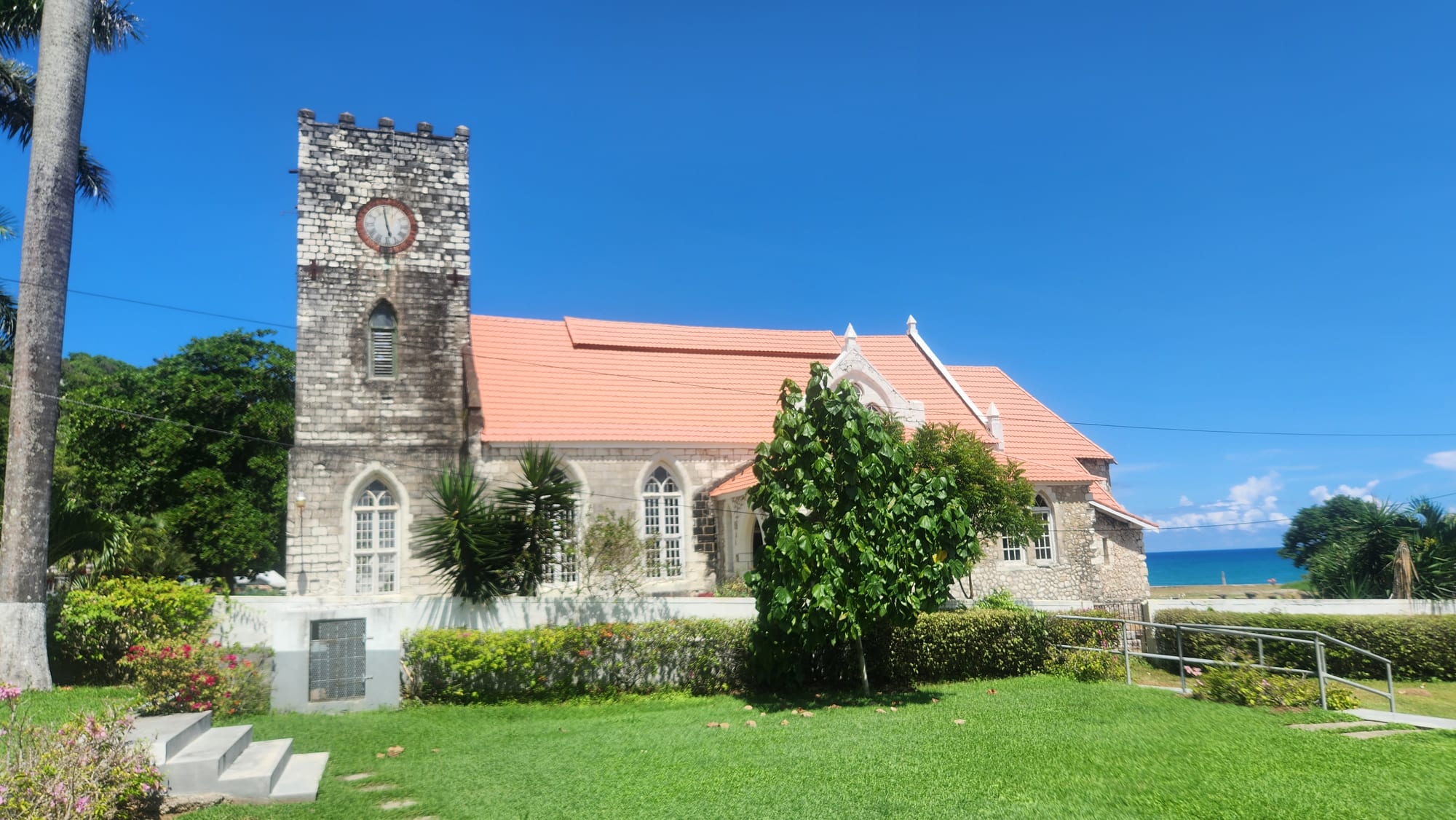
Alongside the churches sit faiths born on the island itself. Revivalism combines Christian worship with African-derived spiritual practice, and several times a year, in a cycle that begins on the first Thursday in March, Revival bands from across the country travel to Watt Town, a sacred site that once served as a refuge for enslaved Africans. There they sing and dance in brightly coloured clothing rich with symbols, move around emblems known as seals to communicate with the spirits and honour the ancestors, and bring fruit, flowers, medicinal plants and food as offerings. UNESCO, which added the pilgrimage to its list of intangible cultural heritage in 2024, describes it as a journey in search of ancestral identity, its knowledge passed on through community gatherings, healing rituals and song. A colonial-era law against Obeah, a spiritual practice with West African roots, remains on the books but is rarely enforced.
Rastafari, which has its roots in Jamaica, is followed by only about 1 per cent of the population but has an influence far beyond its numbers. For Rastafari, one of the most important holy days is 21 April, the anniversary of Emperor Haile Selassie I's arrival in Jamaica in 1966, known as Grounation Day, alongside Coronation Day on 2 November. Rastafari say they have long faced discrimination, and a 2023 national schools policy removed the requirement for Rastafarian students to cover their locs, a change the community welcomed as a sign of growing acceptance.
Underlying all this is a strong sense of manners and respect. Jamaicans are proud, expressive and quick with humour, but courtesy matters: "please", "thank you", "excuse me" and "pardon me" are expected in daily dealings, and failing to greet someone properly is noticed. Elders in particular are treated with deference.
Greetings and meeting people
A greeting comes before anything else. Starting a conversation with a shop assistant, a market vendor or a stranger asking directions without first saying "good morning", "good afternoon" or "good evening" is considered rude, and so, in the countryside, is passing someone on the road without acknowledging them. Jamaican commentators on etiquette regularly lament that younger people are letting these habits slip — which shows how much they are still valued.
Forms of address carry the same respect. It is usual to put Mr or Miss before the name of someone considerably older, and the use of Sir and Madam is regarded as a mark of good upbringing, as is giving way to the elderly, pregnant women and people with children. First names come quickly among people of the same age, but visitors do well to follow their host's lead.
Appearance is part of courtesy too. Jamaicans generally take pride in looking neat, and dressing well is a form of self-respect as much as style. Church clothes are smart and conservative, better restaurants expect long trousers for men, and nightclubs expect people to dress up. Swimwear belongs at the beach or the pool: walking through a town in a bikini or without a shirt can cause offence.
Hospitality and being a guest
Generosity is at the heart of Jamaican hospitality, and it shows most clearly at Christmas. As the season approaches, families traditionally spruce up their homes — painting and whitewashing the roadsides and tree trunks — and the smell of sorrel brewing and fruit soaking for Christmas cake fills the house. Christmas Day itself is kept for family and close friends, built around a large family dinner, and many households make sure their neighbours are fed as well. Boxing Day is for visiting relatives and friends, or a trip to the beach.
The same spirit of sharing runs through the great family occasions, from weddings to wakes, when neighbours as well as relatives are drawn in to help. A visitor who is invited into a home, or to a church service or community event, will usually find a warm welcome — and the formal courtesies of greeting, thanks and respect for elders go a long way.
Photography calls for tact. It is polite to ask before taking a picture of anyone, and some people, particularly those in tourist areas, may ask for a small payment in return. Public displays of affection are best kept low-key; Jamaica remains socially conservative, and sex between men is still illegal, so same-sex couples in particular may attract hostility.
Festivals and life's big moments
Christmas is the year's great festival. Jonkonnu, one of Jamaica's oldest dance traditions, began during the three holidays the enslaved were given at the end of the year — Christmas Day, Boxing Day and New Year's Day — and its masked, costumed figures still appear in parades and festivals. Grand Market, on Christmas Eve, grew out of the Sunday markets where the enslaved sold produce from their own provision grounds; today it is a night of music and street trading that runs late into the night. Where the stalls once sold toys, noisemakers, balloons and decorations made from ferns and crotons, many now offer electronics, appliances and clothes, and some Jamaicans lament that the occasion has become more about shopping than celebration.
The summer brings the national holidays. Emancipation Day, on 1 August, marks the abolition of slavery in 1834 — though full freedom came only in 1838 — and in the years after freedom the formerly enslaved marked it with Christian hallelujahs, Jonkonnu and dances such as the Bruckins Party. Independence Day, on 6 August, marks the end of British rule in 1962. The days between are celebrated together, with an Emancipation vigil in every parish, a national festival song competition, float and street parades, buildings decorated in the national colours, and a Grand Gala at the National Stadium on Independence Day itself.
Weddings have long been community affairs. In the traditional Jamaican wedding, the dark fruit cake known as black cake is made with dried fruit soaked in rum, sometimes from the time of the engagement. The cakes were once carried to the ceremony in a silent procession of married women dressed in white, covered in lace so that the bride would not see them until the day, and a wedding godmother and godfather took charge of the gown, the cake, the music and the drink. A decorated show bread topped with two birds stood for love.
Death is marked with equal seriousness. Nine night is a wake held on the ninth night after a death, rooted in the belief that the spirit's journey from this world to the next is not complete until then. Family, friends and neighbours gather through the night to sing, dance, drink and share memories, giving the departed a proper send-off. Some Jamaicans now worry that the custom has become an expensive party, but it remains widely observed.
Arts, crafts and music
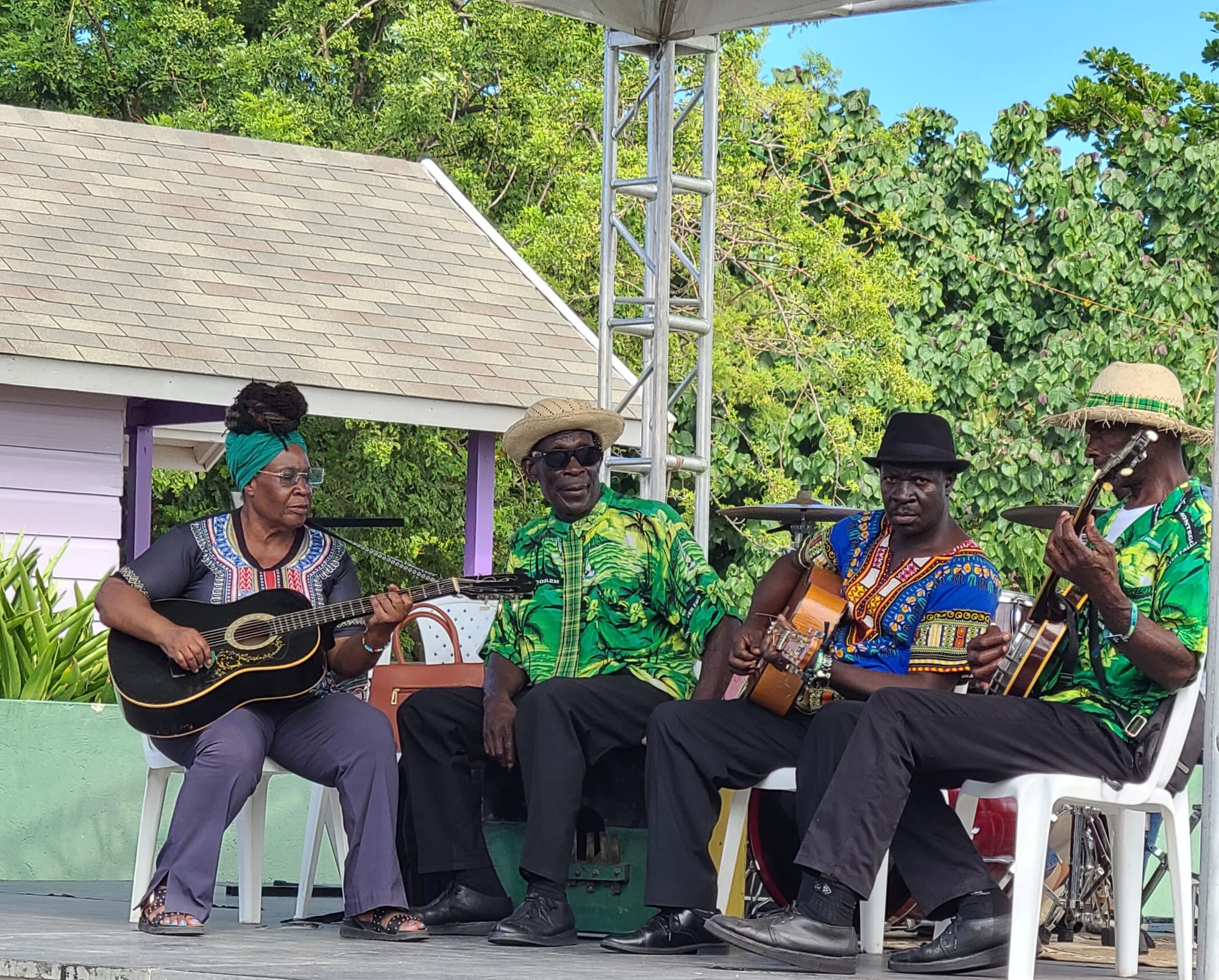
Jamaica's music is its best-known export, and much of it grew from older roots. Mento, the island's folk music, blends African and European traditions and is played on acoustic guitar, banjo, hand drums and the rhumba box, a large box-shaped instrument that carries the bass line. Its songs comment on poverty and social life with a humorous edge. Mento was at its height in the 1940s and 1950s, when the first mento records were made, before ska, rocksteady and reggae took its place.
Reggae, inscribed on UNESCO's list in 2018, emerged among marginalised communities in West Kingston, drawing on mento, other Caribbean styles, North American soul and rhythm and blues, and developing through ska and rocksteady. UNESCO describes it as having begun as the voice of the marginalised and as a vehicle for songs about injustice, resistance, love and humanity; today it is taught in schools from early childhood to university and celebrated at annual festivals such as Reggae Sumfest and Reggae Salute.
The Maroons of Moore Town keep the oldest traditions of all. Their Kromanti Play combines dances, songs and particular drumming styles to call on the ancestral spirits, using a language of African origin also known as Kromanti, alongside knowledge of medicinal plants and the abeng horn. This Maroon heritage was inscribed on UNESCO's list in 2008, though UNESCO notes that passing it on to younger generations has been made harder by past missionary opposition and economic hardship.
Dos and don'ts for visitors
- Do say "good morning", "good afternoon" or "good evening" before asking a question or making a purchase, and acknowledge people when passing in rural areas.
- Do address older people as Mr or Miss with their name, and use "please", "thank you" and "excuse me" freely.
- Do dress neatly in town, smartly for church, and with long trousers for men in better restaurants.
- Do ask before photographing anyone, and be prepared for a request for payment.
- Do join in the public celebrations at Christmas and in the first week of August, when the country is at its most festive.
- Don't wear swimwear or go shirtless away from the beach or pool.
- Don't make public displays of affection; the country is socially conservative, and same-sex couples in particular may meet hostility.
What to take away
Jamaica's worldwide fame rests on its music and its energy, but at home its culture is built just as much on courtesy — and visitors who greet first, respect their elders and dress the part will find the welcome returned many times over.