Daily Life · Indonesia
Indonesia: The World's Biggest Trip Home
A scooter-borne daily commute, a warung on every corner, and an annual homecoming migration that ranks among the largest mass journeys on Earth
By Worldlore Editorial · 30 September 2026
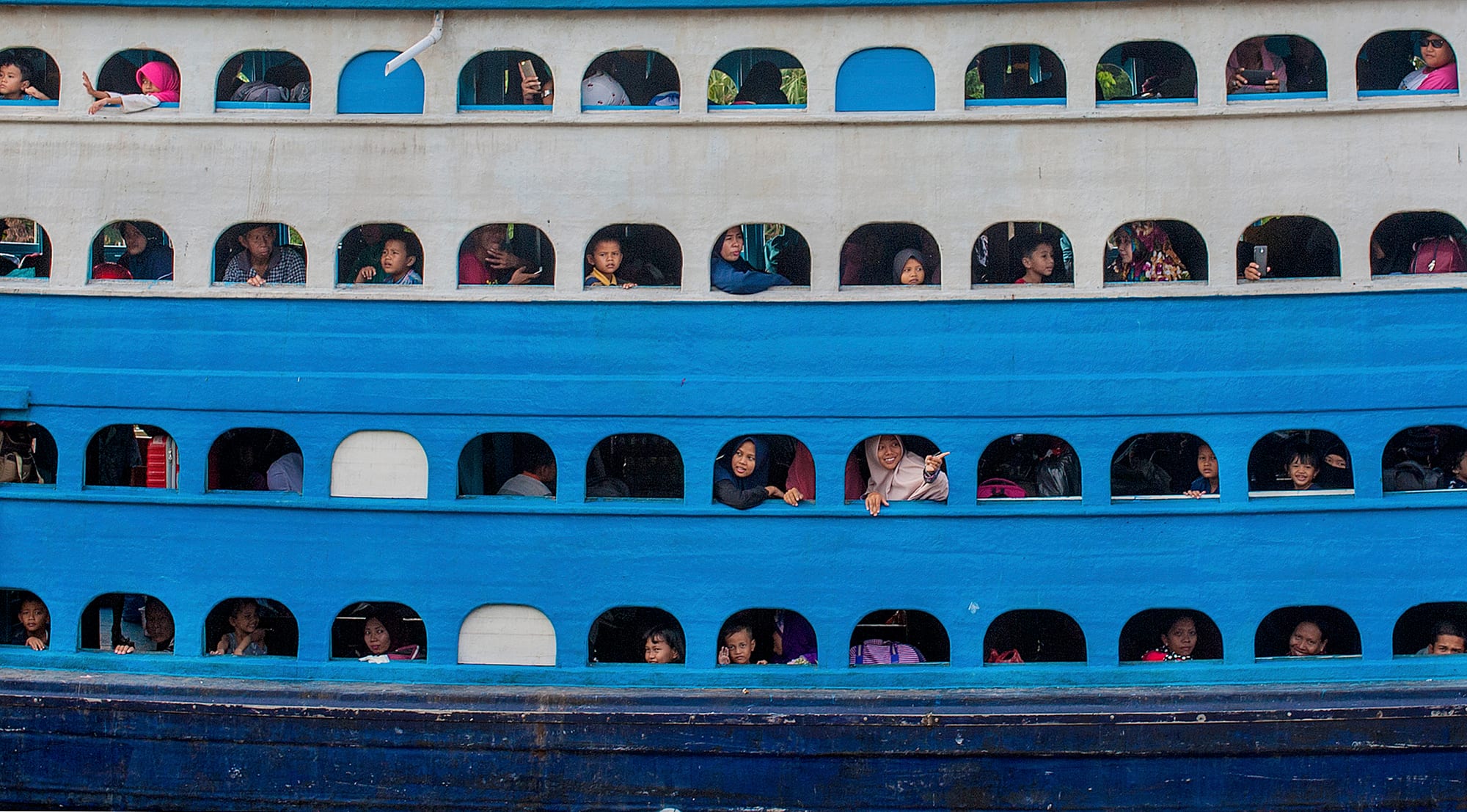
Spread across thousands of islands and hundreds of languages, Indonesia's daily life resists easy summary, but a few things hold true almost everywhere: the call to prayer marks the day's shape for most of the population, a scooter is the default way to get anywhere, and once a year, at Eid, tens of millions of people leave the cities at the same time to go home. Ordinary life is local and enormously varied, but the pull of home and family runs through nearly all of it.
Family and home life
Indonesian households average just under four people, and while the share of extended, multigenerational households has declined over recent decades as more families live as smaller nuclear units, close ties across generations remain the norm rather than the exception: many older Indonesians live with an adult child, and grown children living near or with parents is common practice. Communities also lean on gotong royong, a long-standing tradition of neighbours pooling labour for shared tasks such as maintaining a road, a drainage channel or a communal building, rather than leaving such work to individual households.
Work, school and the rhythm of the day
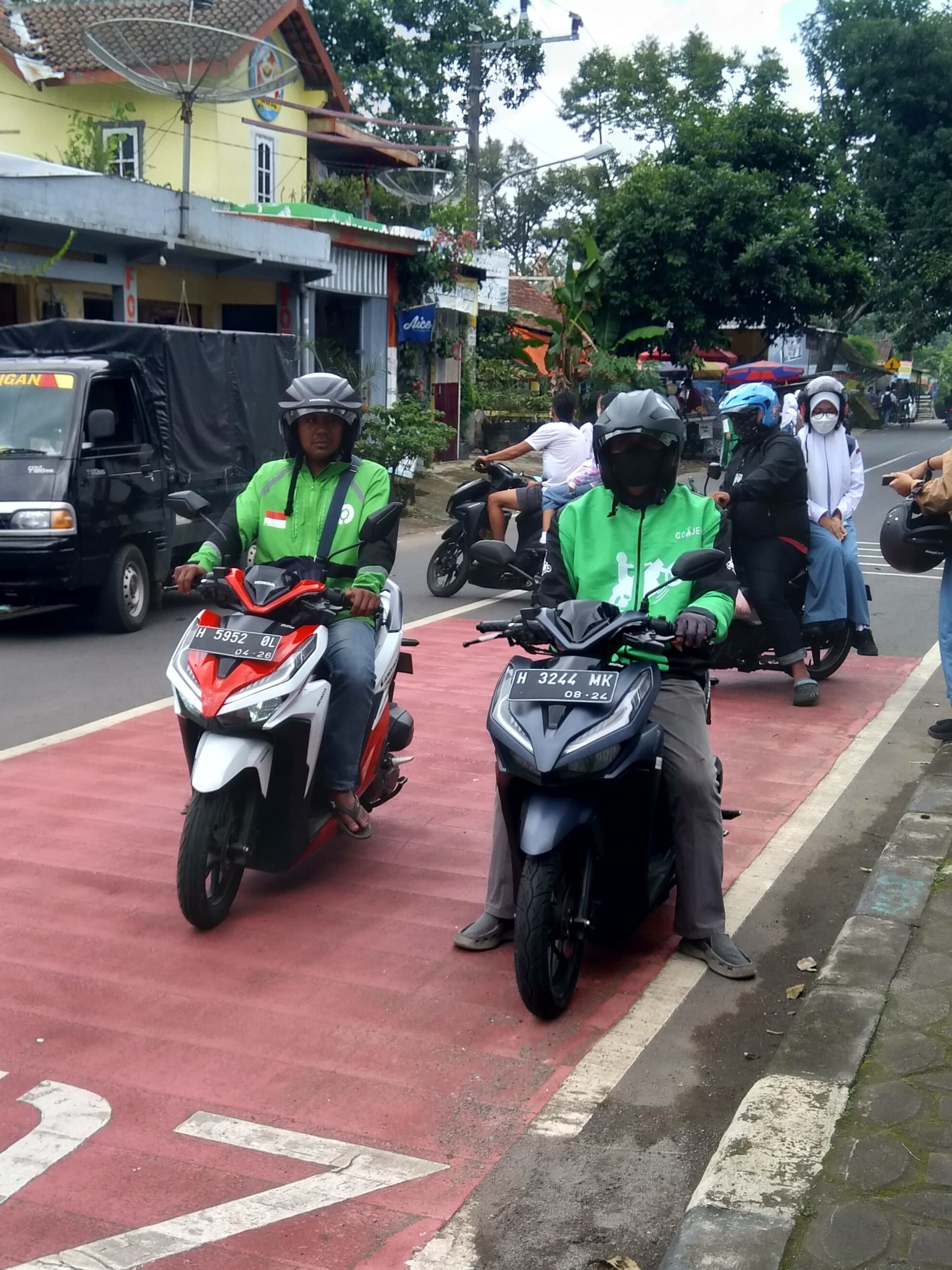
The motorbike is the backbone of daily life for most households: more than eight in ten Indonesian households own at least one, by far the most common vehicle nationwide, used for commuting to work and school, running errands and carrying entire families at once. The five daily calls to prayer structure the working day for the roughly nine in ten Indonesians who are Muslim, audible from mosques nationwide, and Friday midday prayers shape the rhythm of that particular day in most towns and cities. Small, family-run warungs, simple eateries selling home-style cooked food, are an essential part of daily life, where many people eat on an ordinary working day, a cheap and constant alternative to cooking at home.
Community life and public spaces
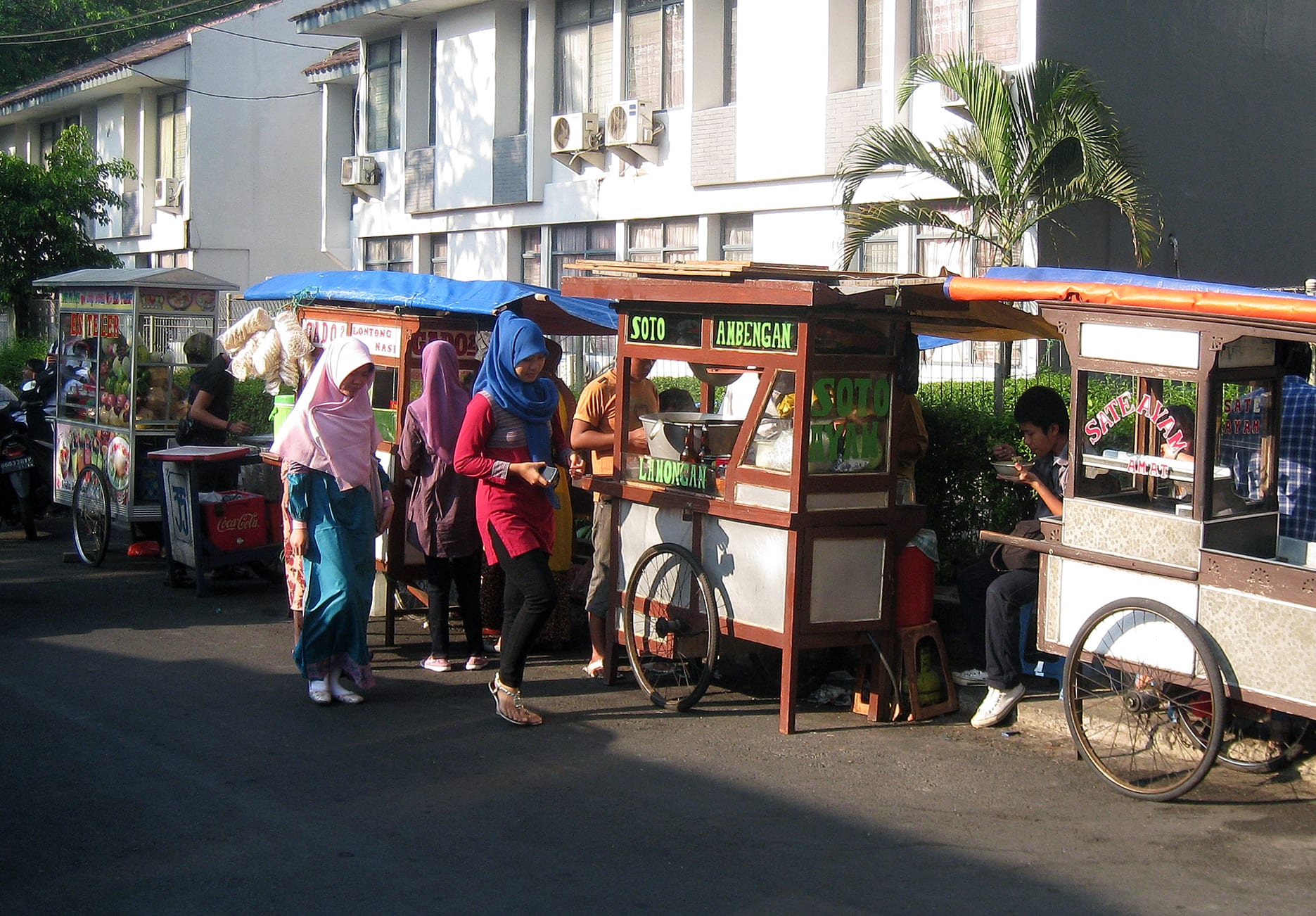
The warung and the neighbourhood market remain the places daily life actually happens in public: buying food, catching up on news, and seeing the same familiar faces day to day. Streets fill with pedagang kaki lima, street vendors whose name comes from the "five-foot way", the covered pavement in front of shops where traders once set up, selling everything from noodle soup to fried snacks from carts throughout the day. Mosques, and in Bali Hindu temples, anchor neighbourhood life well beyond worship itself, while scooters and increasingly app-based ride-hailing services carry most short trips within towns and cities.
Free time and weekends
Football is followed passionately nationwide, played on any open patch of ground as much as watched on television, and badminton, in which Indonesia has long been a world power, is a genuine national pastime at every level. Friday and Saturday evenings often mean eating out at a warung or food court with family or friends rather than cooking at home. The biggest single block of free time in the calendar comes around Eid al-Fitr, when the mudik homecoming and the days that follow are spent visiting family, exchanging food, and reconnecting with a home town many people have left for work in the cities.
A visitor's ordinary day
Cash remains the practical currency outside Bali and the larger cities, where cards are more widely accepted; ATMs are common in towns but scarcer on smaller islands. Distances between islands are large enough that a domestic flight, rather than a long ferry or road journey, is often the realistic way to cover them, and booking ahead in the weeks around major holidays such as Eid is essential, since transport of every kind sells out and prices rise. App-based ride-hailing (Gojek, Grab) covers short trips in cities reliably and cheaply, and traffic, especially in Jakarta, can turn a short distance into a long wait at almost any time of day.
What to take away
An ordinary day in Indonesia plays out differently on every one of its thousands of inhabited islands, but it keeps circling back to family, carried along by a scooter, a warung meal, and, once a year, one of the largest simultaneous journeys home anywhere in the world.