History · Indonesia
Indonesia: The Archipelago Nation
Seventeen thousand islands and seven hundred languages — Hindu-Buddhist empires, the spice trade, three and a half centuries of Dutch rule, a four-year revolution, mass killing in 1965, thirty-two years of the New Order, and a democracy built after Suharto
By Worldlore Editorial · 19 September 2026
A country stretched across an ocean
Indonesia is the largest archipelagic state on Earth — some 17,000 islands strung over 5,000 kilometres, from the northern tip of Sumatra almost to the coast of Australia — home to about 280 million people and more than 700 languages. It is the fourth most populous country in the world, the largest Muslim-majority nation, and the third-largest democracy. Its people range from the Acehnese and Minangkabau of Sumatra to the Javanese and Sundanese who make up half the population, the Balinese, the Dayak of Borneo, the Bugis of Sulawesi, and the Melanesian peoples of Papua.
That such a place holds together as a single nation is a modern achievement rather than an ancient fact. The borders are essentially those of the Dutch colony that was assembled, island by island, between 1600 and 1910. The national language, Indonesian — a form of Malay chosen precisely because it was almost nobody's mother tongue — and the national motto, Bhinneka Tunggal Ika, "unity in diversity", were adopted in the 20th century by a nationalist movement that had to invent the nation it wanted to free.
A short history
- from c. 2000 BCE
Austronesian settlement
Seafaring peoples spread through the islands from the north.
- 7th–13th centuries
Srivijaya
A Buddhist maritime empire based in Sumatra controls the straits.
- c. 780–850
Borobudur and Prambanan
The Sailendra and Mataram kingdoms build central Java's great temples.
- 1293–c. 1500
Majapahit
A Javanese empire claims a loose supremacy across the archipelago.
- 13th century onward
Islam
Spreads through the trading ports; Hindu-Buddhist courts give way to sultanates.
- 1511 / 1602
Europeans
Portugal takes Malacca; the Dutch East India Company (VOC) is founded.
- 1619
Batavia
The VOC builds its Asian capital on the ruins of Jayakarta.
- 1799–1910
The Netherlands East Indies
The bankrupt VOC is nationalised; the Dutch conquer the whole archipelago.
- 1830–1870
The Cultivation System
Forced export crops squeeze the Javanese peasantry.
- 1908–1928
The national awakening
Budi Utomo, Sarekat Islam, the PNI, and the Youth Pledge of 1928.
- 1942–1945
Japanese occupation
The Dutch are swept out; nationalism and Indonesian militias are boosted.
- 17 August 1945
Proclamation
Sukarno and Hatta declare independence; a four-year war of independence follows.
- 1949
Sovereignty transferred
The Netherlands recognises the Republic of Indonesia.
- 1955–1965
Sukarno's era
The Bandung Conference; parliamentary collapse; Guided Democracy; hyperinflation.
- 1965–1966
Mass killings
Following a failed coup, 500,000 or more alleged communists are killed.
- 1967–1998
The New Order
Suharto's military-backed authoritarian state; growth, corruption, and East Timor.
- 1998
Reformasi
Suharto resigns after 32 years; a democratic transition follows.
The peopling of the islands
The islands were settled at least 40,000 years ago; the earliest known modern humans in the region left cave paintings in Sulawesi and Borneo among the oldest figurative art anywhere. From around 2000 BCE, Austronesian-speaking farmers and seafarers — the ancestors of most modern Indonesians — spread down through the archipelago from Taiwan and the Philippines, bringing rice, outrigger canoes and the language family that today stretches from Madagascar to Easter Island. Long before any state, the islands were connected by trade in cloves, nutmeg, sandalwood, gold and forest products that reached India and China.
Indian religion, writing and ideas of kingship arrived with that trade in the first centuries CE, adopted by local rulers who used Sanskrit titles and Hindu or Buddhist ritual to raise themselves above rival chiefs — a process historians call "Indianisation", though it was Indonesian courts doing the borrowing.
Empires of the sea and the rice plain
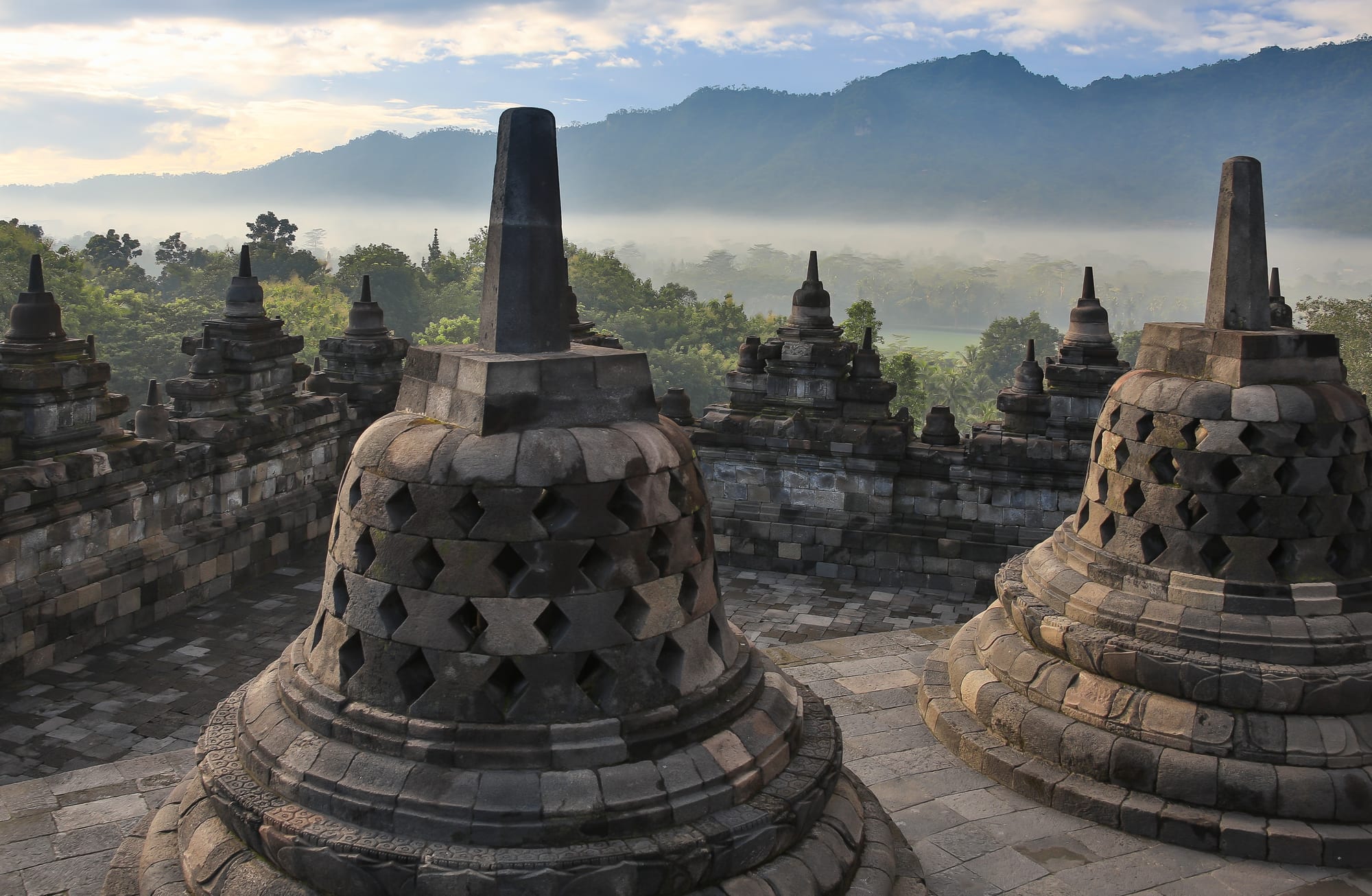
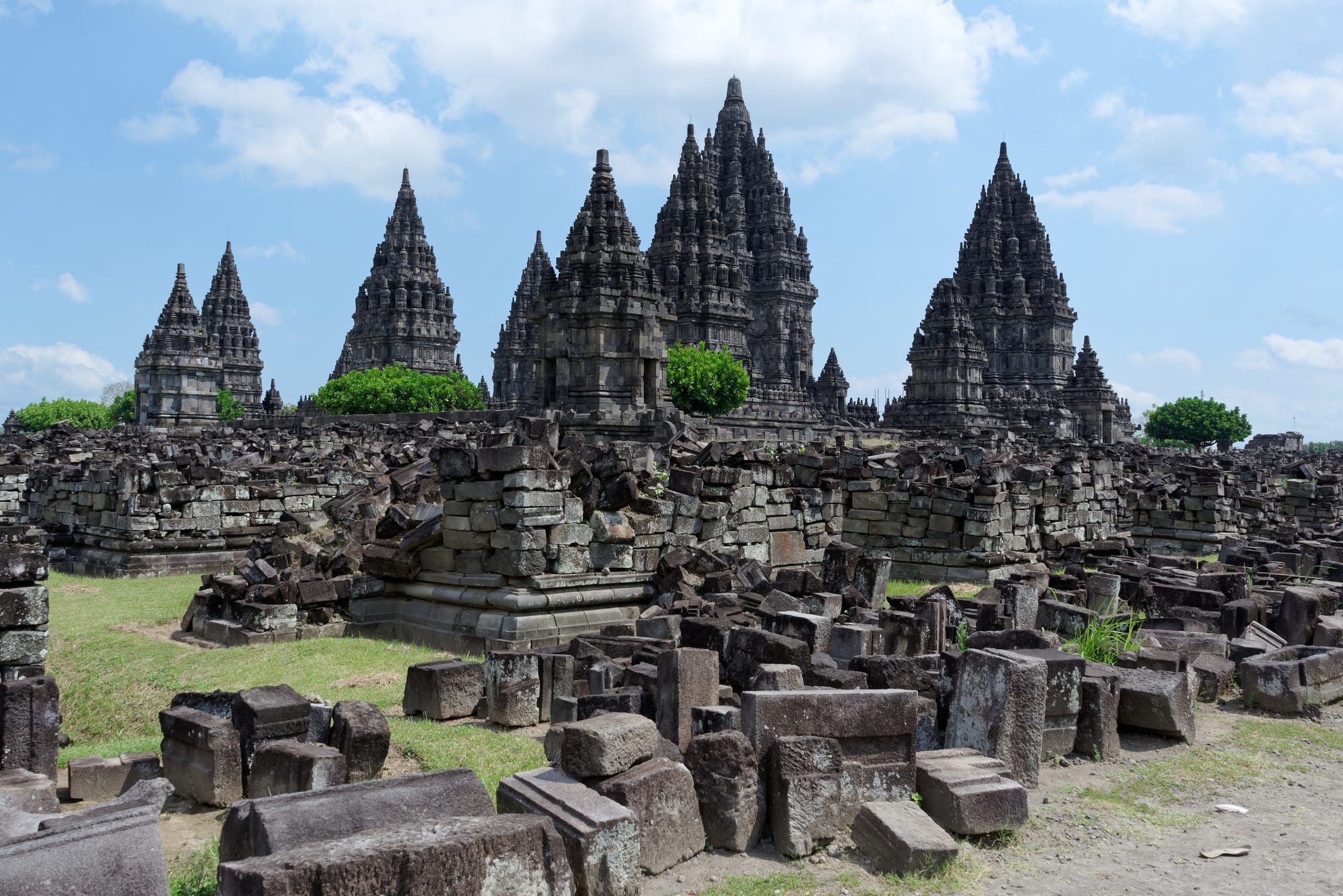
Two kinds of state emerged. On the coasts, especially in Sumatra, were trading empires that lived on control of the shipping lanes. The greatest was Srivijaya, based at Palembang from the 7th century, a Buddhist power that dominated the Malacca and Sunda straits, sent monks to study in India, and taxed the China trade for six hundred years. Inland, on the volcanic rice plains of Java, were agrarian kingdoms rich enough to raise enormous monuments: the Sailendra dynasty built Borobudur around 800, and the Hindu kingdom of Mataram built the towering Shiva temples of Prambanan a few decades later.
The last great pre-Islamic state was Majapahit, based in eastern Java from 1293. Under its chief minister Gajah Mada it claimed a loose overlordship — through tribute, marriage and naval expeditions — over much of the archipelago and the Malay peninsula. How much of that claim was real is debated, but 20th-century nationalists seized on it as proof that "Indonesia" had existed before the Dutch.
From the 13th century, Muslim traders — Arabs, Indians, and Malays from the ports of Sumatra — carried Islam along the same routes. It spread not by conquest but through the harbour towns, whose rulers converted, adopted the title sultan, and drew in Sufi teachers and scholars. By 1500 a string of Islamic sultanates — Aceh in northern Sumatra, Demak and Banten in Java, Makassar in Sulawesi, and Ternate and Tidore in the clove islands — had replaced the Hindu-Buddhist order everywhere except Bali, which remains Hindu to this day.
The spice trade and the Dutch Company
Europe wanted the fine spices — nutmeg and mace from the tiny Banda Islands, cloves from Ternate and Tidore — which grew nowhere else on Earth and were worth many times their weight in gold once shipped to Amsterdam. Portugal reached the Spice Islands after taking Malacca in 1511 and built forts, but never controlled the trade. The Dutch East India Company (Verenigde Oostindische Compagnie, or VOC), chartered in 1602 with the power to wage war, coin money and sign treaties, did.
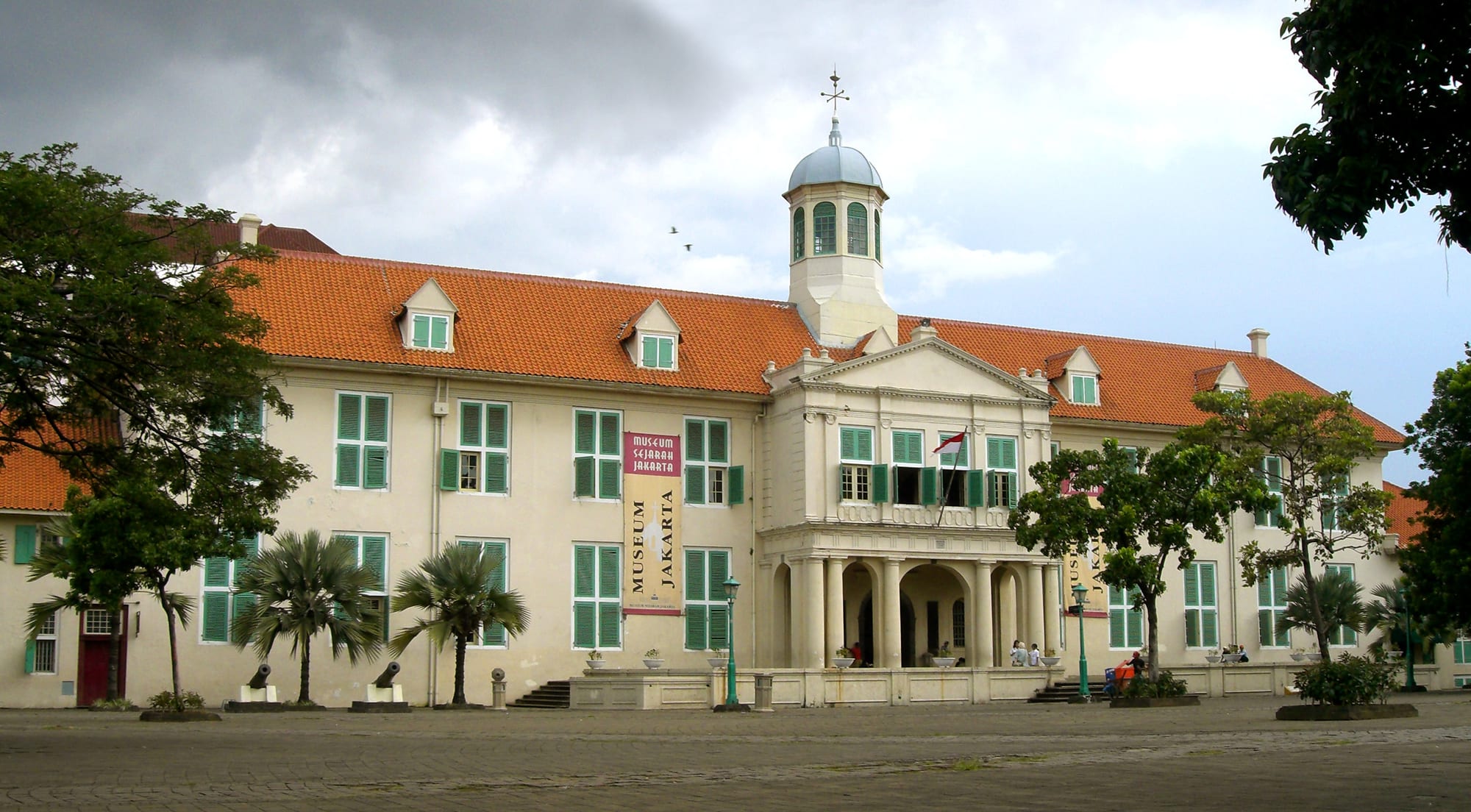
The VOC's method was monopoly enforced by violence. In 1621 its governor-general Jan Pieterszoon Coen, determined to control nutmeg, had most of the population of the Banda Islands — perhaps 14,000 people — killed, enslaved or driven out, and replaced them with enslaved labourers on Company plantations. In 1619 Coen razed the Javanese port of Jayakarta and built Batavia (modern Jakarta) as the Company's Asian headquarters, a walled Dutch town run on the labour of enslaved people from across the region.
Company and colony
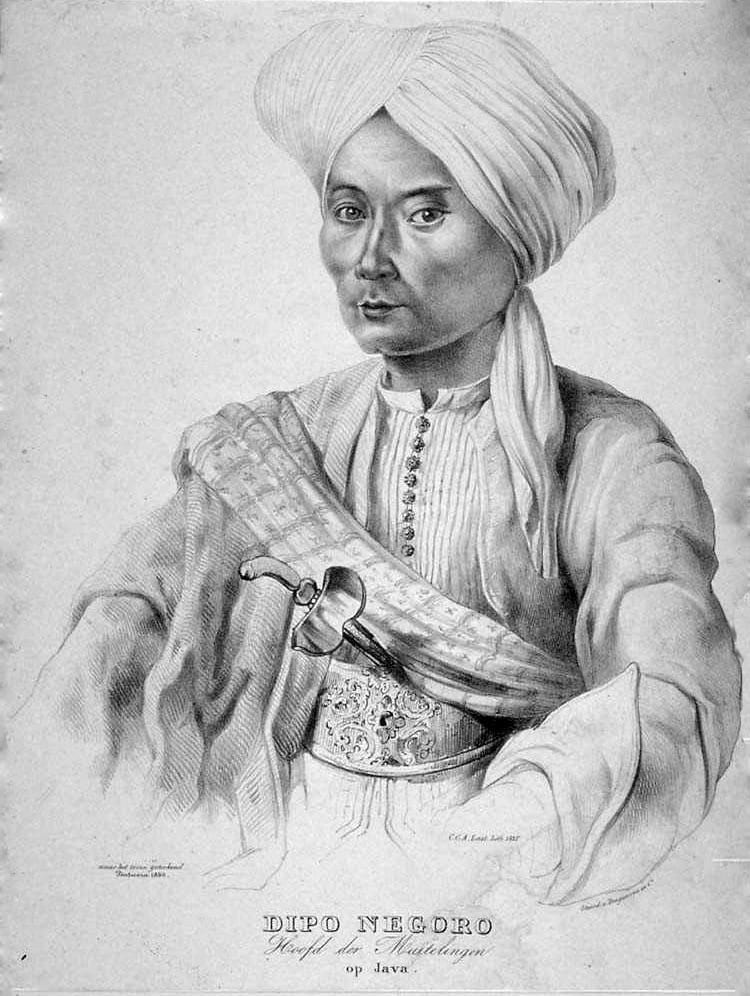
For most of the 17th and 18th centuries the VOC controlled only ports, forts and the spice islands; the interior of Java was still ruled by the sultans of Mataram, whom the Company manipulated through succession wars. The turn to full territorial rule came in the 19th century. After a brief British interlude during the Napoleonic Wars, the Dutch returned, and the ruinous Java War of 1825–30 — Prince Diponegoro's revolt, which killed a fifth of the population of central Java — left the Netherlands both dominant and broke.
Cultivation, conquest, and the Ethical Policy
To pay off the war debt, the Dutch imposed the Cultivation System (1830–70): Javanese villages had to set aside a fifth of their land, or 66 days of labour, to grow coffee, sugar, indigo and tea for compulsory sale to the government at fixed low prices. The profits — for decades a large share of the entire Dutch state budget — came at the cost of recurring local famines, most severely in the 1840s. Public criticism at home, crystallised by the 1860 novel Max Havelaar, eventually forced a shift to private plantation agriculture.
The Dutch only finished conquering the archipelago in the early 20th century: Bali was subdued in a series of campaigns ending with the puputan mass suicides of its royal courts in 1906–08, and Aceh was fought for thirty years (1873–1904) in the longest and bloodiest of the colonial wars. Only then did a territory resembling modern Indonesia exist under one administration.
From about 1901 the Dutch adopted an Ethical Policy, promising to repay a "debt of honour" through irrigation, education and welfare. In practice it reached few people, but the schools it did build produced a small Indonesian elite — doctors, teachers, clerks, engineers — who could read Dutch, absorb European ideas of nationhood, and turn them against the colony.
The national awakening
Modern Indonesian nationalism is usually dated to 1908 and Budi Utomo, a Javanese students' association. It was followed by the mass Islamic-commercial movement Sarekat Islam, the small but influential Indonesian Communist Party (the PKI, which mounted failed risings in 1926–27), and, in 1927, Sukarno's secular-nationalist Indonesian National Party (PNI). The Dutch jailed or exiled the leading nationalists — Sukarno, Mohammad Hatta, Sutan Sjahrir — through the 1930s.
The movement's defining moment came on 28 October 1928, when a youth congress in Batavia proclaimed the Sumpah Pemuda, the Youth Pledge: one homeland, one nation, one language — Indonesia. Choosing Malay rather than Javanese as that language was a deliberate act of nation-building, giving no single ethnic group ownership of the future state.
Occupation and revolution
Japan conquered the Indies in weeks in early 1942, interning the Dutch and shipping the colony's rice, oil and rubber to its war effort. The occupation was brutal: famine in Java, and the forced-labour romusha system that worked hundreds of thousands of Indonesians to death on projects such as the Burma railway. But Japan, needing local support as the war turned, released the nationalist leaders, allowed the flag and anthem, promoted the Indonesian language, and armed and trained Indonesian auxiliary forces (PETA) — the nucleus of a future national army.
When Japan surrendered in August 1945, young activists pressed Sukarno and Hatta to act before the Dutch could return. On 17 August 1945 they read a short proclamation of independence in Jakarta.
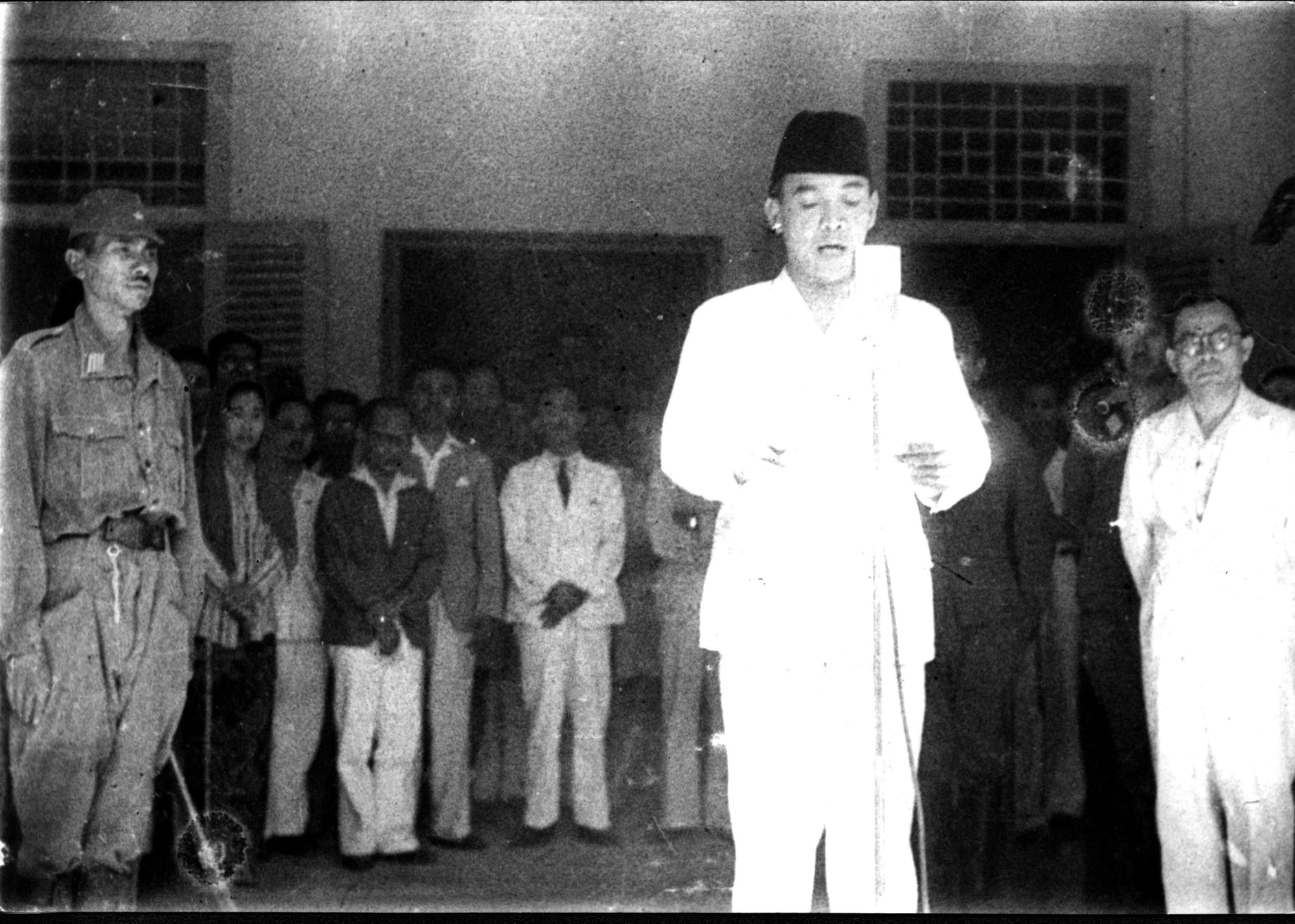
The Dutch, at first behind British troops sent to disarm the Japanese, tried to reconquer the islands. The result was four years of war — pitched battles, a guerrilla campaign, and a chaotic period known as the Bersiap in which thousands of Dutch, Eurasian, Chinese and pro-Dutch Indonesian civilians were killed. Two Dutch "police actions" (1947 and 1948) captured cities but could not hold the countryside; a Republican force even briefly retook Yogyakarta in 1949. In the middle of it, in 1948, the Republic crushed a Communist revolt at Madiun — proof to the United States that the nationalists were not Soviet clients. Under American pressure (Washington threatened to cut Marshall aid), the Netherlands transferred sovereignty in December 1949.
Sukarno, Guided Democracy, and 1965
The 1950s republic was a lively parliamentary democracy — a free press, real elections in 1955 — but an unstable one, with short-lived cabinets, regional army revolts in Sumatra and Sulawesi (covertly backed by the CIA in 1958), and an unresolved dispute with the Dutch over western New Guinea. In 1955 Indonesia hosted the Bandung Conference, a gathering of 29 African and Asian states that launched the Non-Aligned Movement and made Sukarno a leading voice of the decolonising world.
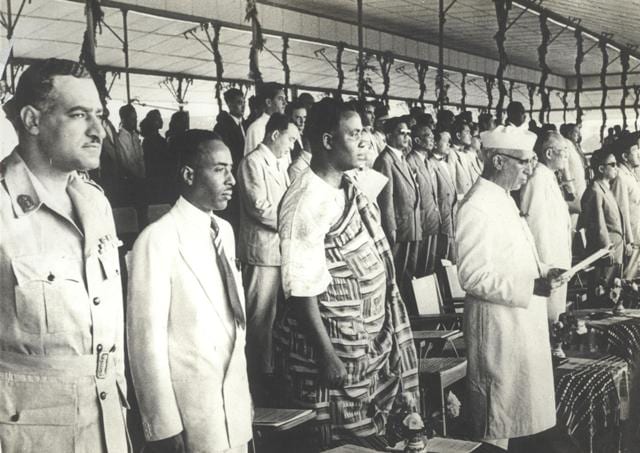
In 1959 Sukarno dissolved the elected assembly and imposed Guided Democracy, an increasingly personal rule that balanced the army against the PKI, which had grown into the largest communist party outside the Soviet bloc and China — some three million members, with millions more in affiliated unions and peasant leagues. Sukarno took western New Guinea from the Dutch in 1962 and launched Konfrontasi, a low-level military confrontation with the new Federation of Malaysia. The economy, meanwhile, disintegrated into hyperinflation.
On the night of 30 September 1965, a group of junior officers calling itself the 30 September Movement killed six army generals in an attempted coup, quickly blamed on the PKI. Major General Suharto, commander of the army's strategic reserve, took control within a day, defeated the movement, and set in motion a nationwide destruction of the left. Over the following months, the army, religious groups and vigilantes killed an estimated 500,000 to over a million people — party members, union and peasant activists, teachers, ethnic Chinese, and countless others denounced by neighbours — and imprisoned perhaps a million more, some for over a decade without trial. It is one of the largest and least acknowledged mass killings of the 20th century; no Indonesian government has held a reckoning. Sukarno was sidelined and, in 1967, replaced by Suharto.
The New Order
Suharto's New Order lasted 32 years. It was built on the army's "dual function" in defence and politics, a compulsory state ideology (Pancasila), a tame parliament, and an election ritual that the government party Golkar always won. It also delivered results that gave it broad support for decades: rice self-sufficiency by the mid-1980s, mass primary schooling, a sharp fall in poverty, family planning that halved the birth rate, and — helped by 1970s oil revenue and later by manufacturing — average growth of around 7 per cent a year.
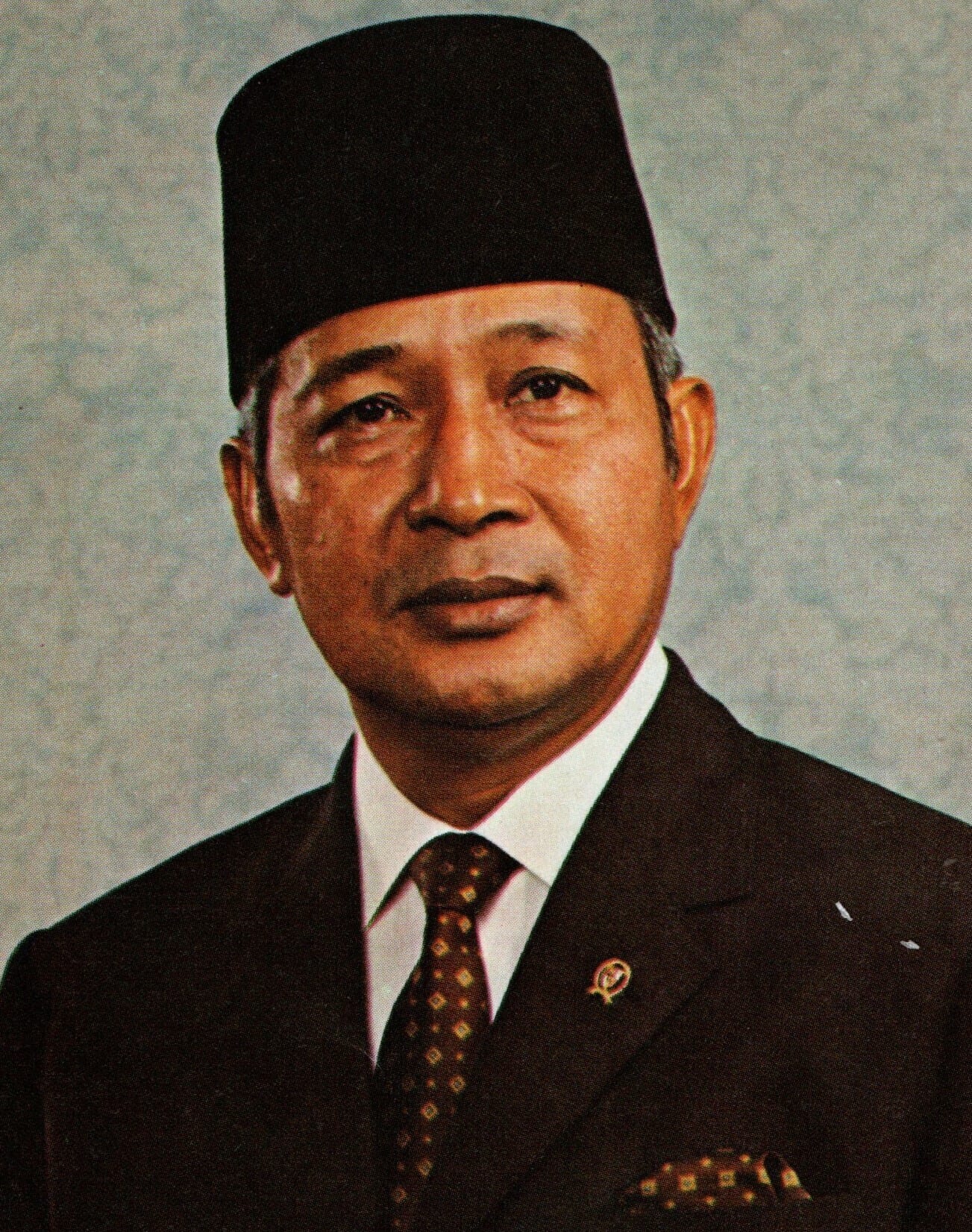
The costs were heavy. The regime invaded East Timor in 1975 as Portugal withdrew, annexed it, and held it for 24 years in an occupation that killed perhaps a third of the population. Long insurgencies simmered in Aceh and Papua. The transmigration programme moved millions of Javanese to the outer islands, stoking land conflict. And the president's children and cronies built vast business empires on state contracts, monopolies and licences, while critics were jailed and the press was muzzled.
Reformasi
The 1997–98 Asian financial crisis ended the New Order. The rupiah lost most of its value, banks and companies failed, prices of basic goods soared, and the IMF imposed austerity. Student protests spread; in May 1998 the shooting of four students at Trisakti University triggered days of riots in Jakarta in which more than a thousand people died and ethnic-Chinese neighbourhoods were targeted. On 21 May 1998, abandoned by his own party and the army leadership, Suharto resigned.
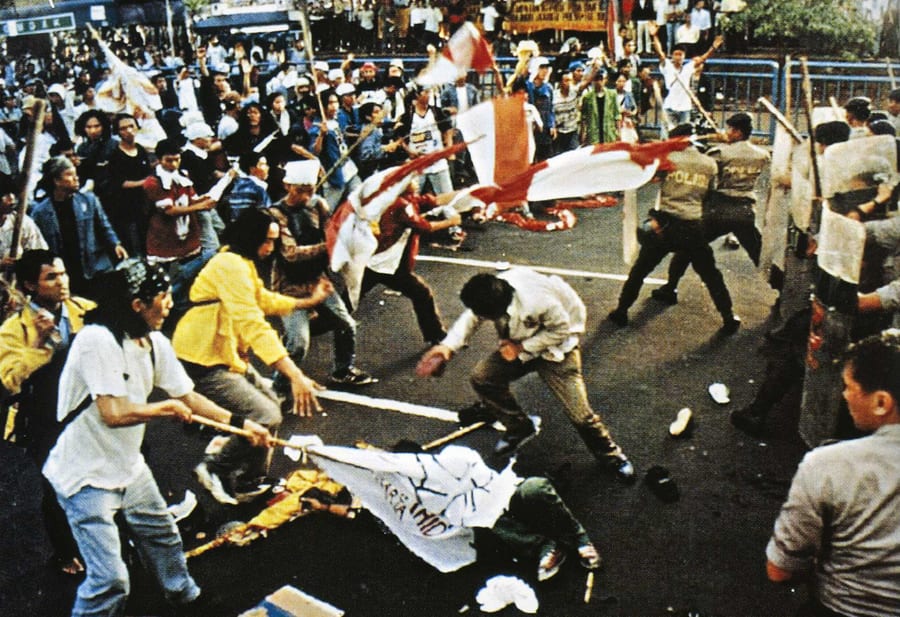
The transition that followed, Reformasi, has proved unexpectedly durable. Within a few years Indonesia held free multiparty elections (1999), amended the constitution to limit presidential terms, took the army out of parliament, freed the press, and devolved wide powers and revenue to the districts. Direct presidential elections began in 2004. East Timor voted for independence in 1999 and became sovereign in 2002. The 2004 Indian Ocean tsunami, which killed around 170,000 people in Aceh alone, helped push the government and Acehnese rebels into a 2005 peace deal that granted Aceh autonomy.
Indonesia now
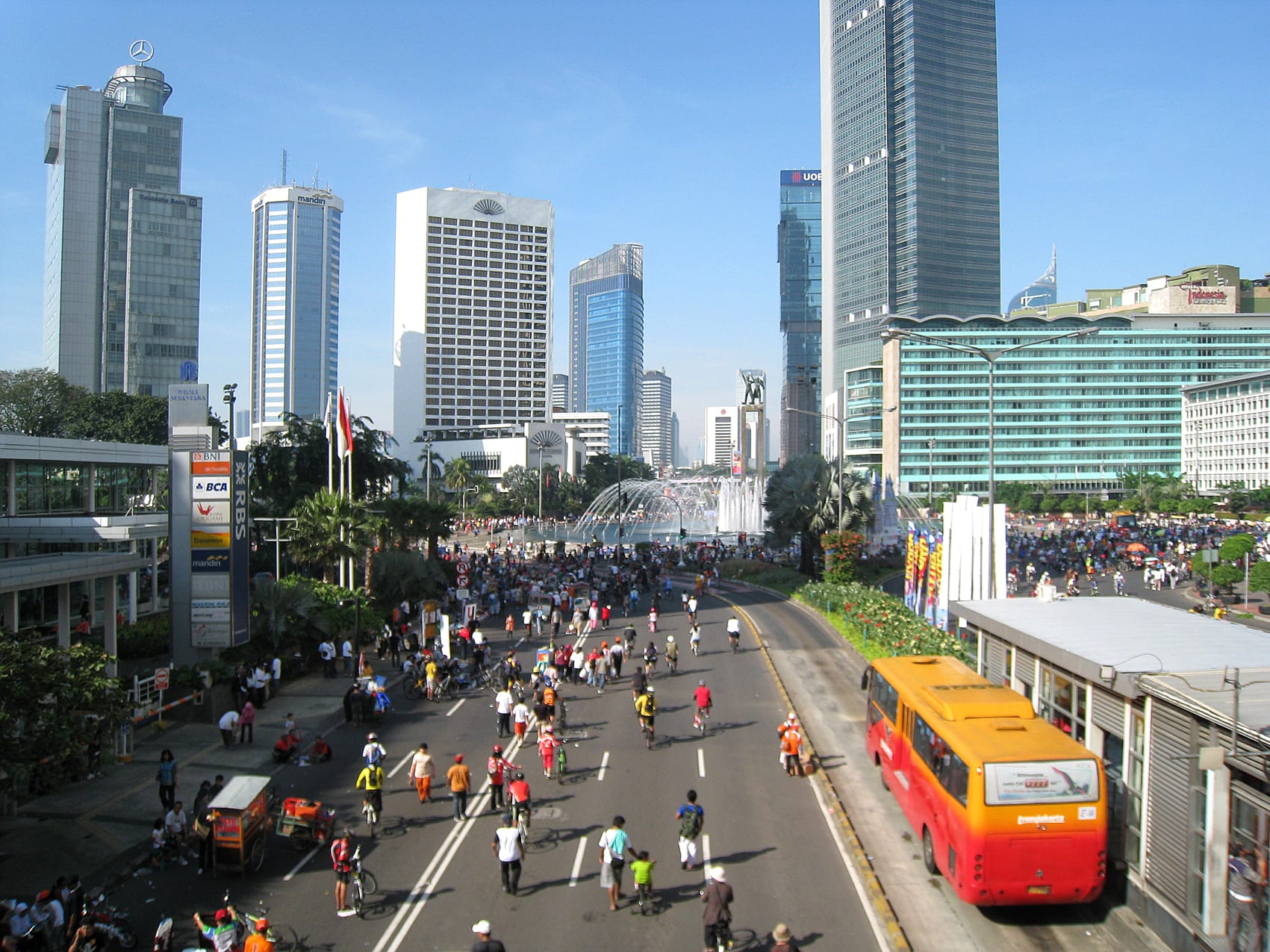
Twenty-first-century Indonesia is a G20 economy, a functioning if money-soaked democracy, and — despite occasional jihadist bombings and a slow rise in religious conservatism — a country where a large Muslim majority has mostly kept to a pluralist state rather than an Islamic one. Power has passed peacefully between presidents: the reformist Jakarta governor Joko Widodo ("Jokowi"), the first president from outside the political and military elite, served two terms from 2014 to 2024 and was succeeded by Prabowo Subianto, a former New Order general and Suharto son-in-law. Jokowi's government began building a new capital, Nusantara, in the jungle of Borneo, to relieve a Jakarta that is congested, polluted and sinking.
What Indonesia carries
Indonesia is a nation assembled from the wreckage of a European empire — its borders, its capital and much of its administrative shape are Dutch inheritances, filled in with a language and an identity built deliberately over the last century. Two things hang over the modern state. One is the unexamined mass killing of 1965–66, which cleared the ground for the order Suharto built and has never been publicly reckoned with. The other is the standing question the founders faced and answered provisionally: whether a single pluralist democracy can hold together a country this vast, this various, and this improbable.