Culture & Customs · Indonesia
Indonesia: Many Faiths, One Courtesy
Six recognised religions and hundreds of peoples, bound together by a shared code of gentle manners — the right hand, the soft voice, the respect owed to elders, and a festival season built around asking forgiveness
By Worldlore Editorial · 30 September 2026
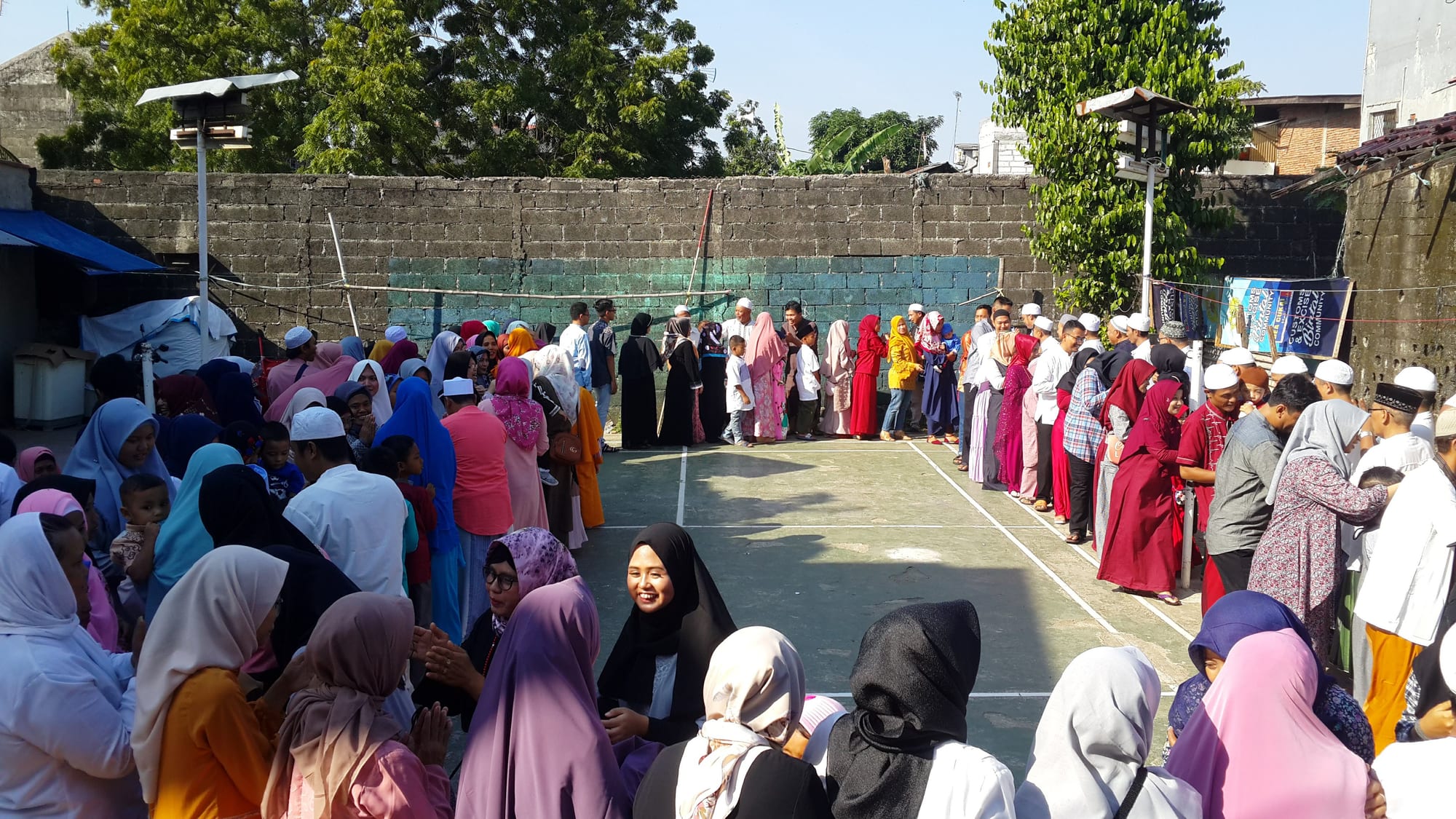
In the days after the fasting month ends, a house fills with visitors. Neighbours, cousins and old colleagues arrive in new clothes, and one by one they take their hosts' hands and say the same short phrase: "mohon maaf lahir dan batin" — "I ask your forgiveness, in body and in soul". Children are handed crisp new banknotes in decorated envelopes, and the exchange of apologies, offered and accepted all round, is meant to leave no grievance standing. It is a religious festival, but it is also a public renewal of the ties that hold people together — and that concern for harmony, for not letting friction linger, runs through Indonesian manners all year round.
Faith, identity and values
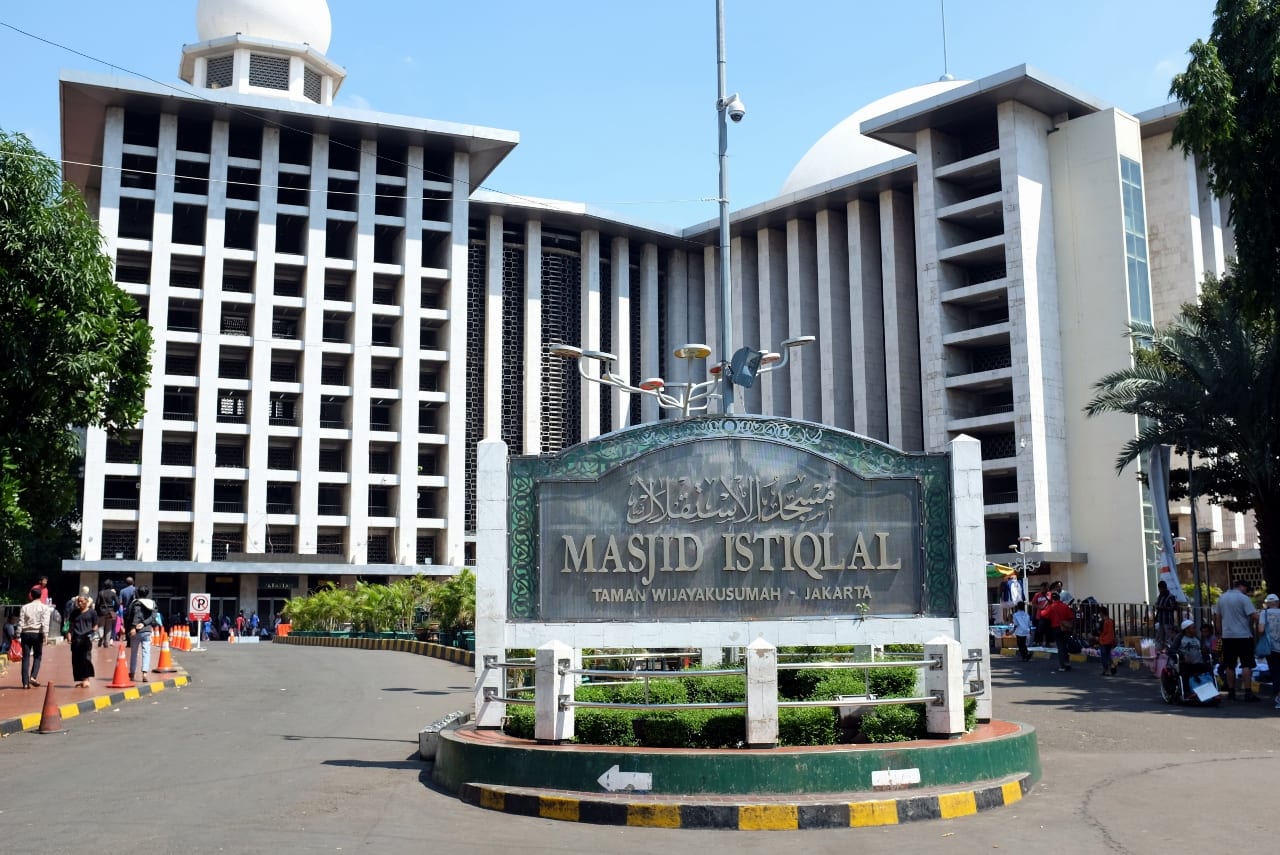
Indonesia is a deeply religious country, and faith is rarely treated as a private matter. Close to nine in ten Indonesians are Muslim, making it the largest Muslim-majority nation in the world, but the state formally recognises six religions: Islam, Protestant Christianity, Catholicism, Hinduism, Buddhism and Confucianism. Hinduism is the faith of most people in Bali, and Christian communities are significant in several provinces. The first principle of Pancasila, the five-point national philosophy, is belief in one God; the others speak of a just and civilised humanity, the unity of Indonesia, democracy through deliberation, and social justice for all.
Because religion matters so much, it often comes up early in conversation, and a new acquaintance may simply ask a visitor what their faith is. The question is meant as friendly interest rather than a challenge. Atheism is not widely accepted, and Western visitors who do not say otherwise are often assumed to be Christian. Blasphemy is illegal, and agnosticism and atheism are not officially recognised.
Beneath the religious landscape sit values shared across faiths and peoples. Harmony is a guiding philosophy, in the family and at work alike, and it inclines people to be indirect, gentle and courteous even when they disagree. Closely linked is face — a person's reputation, dignity and honour — which is protected by restrained, careful conduct and lost through public embarrassment or criticism. Society is ordered largely by age: elders are presumed to have the most wisdom and are shown deference in speech and posture. It is also strongly collectivist, with the interests of the family or group usually placed ahead of the individual's, and the behaviour of one person seen as reflecting on everyone related to them.
These values shape how people speak. A flat "no" is avoided and disagreement is hinted at. Strangers speak quietly, raising the voice in anger is taken as a sign of poor upbringing, and a pause before answering is a mark of thoughtfulness.
Greetings and meeting people
Between two people of the same gender, the usual greeting is a gentle handshake, and some people follow it by touching the hand to the heart or giving a slight bow. Devout Muslims may prefer not to touch a person of the opposite gender; a woman may instead bow slightly with her hands held together, and it is wise for visitors to let the other person decide whether to offer a hand. In family and informal settings, people are greeted in order of age, from the eldest down. Close relatives may shake hands and kiss on both cheeks.
Forms of address carry the respect that first names do not. Younger people do not call their elders by their first name. Men who are older or of higher status are addressed as Bapak, shortened to Pak, and women as Ibu, shortened to Bu, placed before the name. Naming itself follows its own logic. Legally, names are not divided into first and family names, most Indonesians have no family name, and many people have only one name, which is their full name. Titles come before the name — Haji, for example, marks a man who has made the pilgrimage to Mecca.
The body carries meanings of its own. The left hand is considered unclean and is not used to eat, wave, or give and receive things. The head is regarded as sacred and should never be touched, even a child's, while the feet are the lowliest part of the body: the soles should not be shown to anyone, and nothing should be pointed at with a foot. Pointing is done with the thumb rather than the forefinger, and standing with hands on hips is read as a sign of anger. Eye contact is often lowered when speaking to elders or superiors as a mark of respect.
Hospitality and being a guest
Shoes come off before entering a carpeted room or a place of worship, and whenever the host has removed theirs. Guests wait to be shown where to sit. Time is treated flexibly, and arriving well after the stated hour is common in social settings.
Small gifts are usual when visiting, and their value matters far less than the gesture. They are given and received with both hands together or with the right hand alone, and are generally not opened in front of the giver. Customs vary with the host's faith and background. Muslim hosts should not be given anything containing alcohol or pork. Chinese Indonesian hosts may politely decline twice before accepting, and clocks and sharp objects are avoided. For Hindu hosts, leather goods and alcohol are best avoided.
At the table, no one begins until invited to do so. Food is laid out in shared dishes in the centre; the host may serve the guest first, after which people help themselves. Food is passed only with the right hand, and both hands are kept above the table during the meal. Clearing the plate is taken as a sign that the guest would like more, so a host will keep refilling an empty plate. When the meal is over, it is polite to remain seated until everyone has finished. Tipping in restaurants and for services is appreciated but not expected.
Festivals and life's big moments
The national calendar is a map of the country's faiths. Its national holidays include Islamic, Christian, Hindu, Buddhist and Confucian days, alongside secular ones such as Independence Day and Pancasila Day. Christmas, Vesak, Chinese New Year and Nyepi, the Hindu new year observed with a day of silence, are all public holidays.
The largest celebration is Idul Fitri, known as Lebaran, which ends the fasting month of Ramadan. During Ramadan itself, Muslims fast from dawn to sunset, and it is courteous for visitors not to eat, drink, smoke or chew gum in public during daylight, and to avoid loud music. On the eve of Idul Fitri comes takbiran, when mosques resound with prayers and streets fill with processions, drumming and fireworks. The next morning, congregations gather for the Eid prayer in mosques and in open squares. Then the visiting begins: halal bihalal, the exchange of greetings and forgiveness among family, neighbours and colleagues. People buy new clothes for the occasion, children receive new banknotes in decorated envelopes, and many families visit the graves of relatives to clean them, scatter flower petals and pray.
Independence Day, on 17 August, is the country's great shared secular festival, and neighbourhoods everywhere mark it with games. Children and adults race in sacks, pull at tug-of-war ropes and try to eat crackers dangling on strings with their hands behind their backs, while the most famous contest, panjat pinang, sees teams scrambling up a greased pole to reach prizes hung at the top. Several of the games are older than the republic itself — the greased pole appears in records of colonial-era festivities — but they became part of the national celebration only some years after independence.
Life's milestones are marked with the same mix of faith and custom. Marriage signifies full adulthood, and weddings are major family occasions; the kebaya, the embroidered, front-opening blouse worn with a sarong, is a favourite for formal events and celebrations. Batik accompanies people from the beginning of life to its end: babies are carried in batik slings decorated with symbols meant to bring luck, batik is worn at weddings and pregnancy celebrations, and the dead are wrapped in funerary batik. After a death in a Muslim family, relatives and neighbours commonly gather for tahlilan, communal sessions of Qur'an recitation and prayer for the deceased held on set days after the burial, which offer support to the bereaved as well as a religious observance.
Arts, crafts and music
Indonesia's traditional arts are unusually well represented on UNESCO's list of intangible cultural heritage, from the kris, the ceremonial dagger, to the martial art of pencak silat, pinisi boatbuilding and pantun verse.
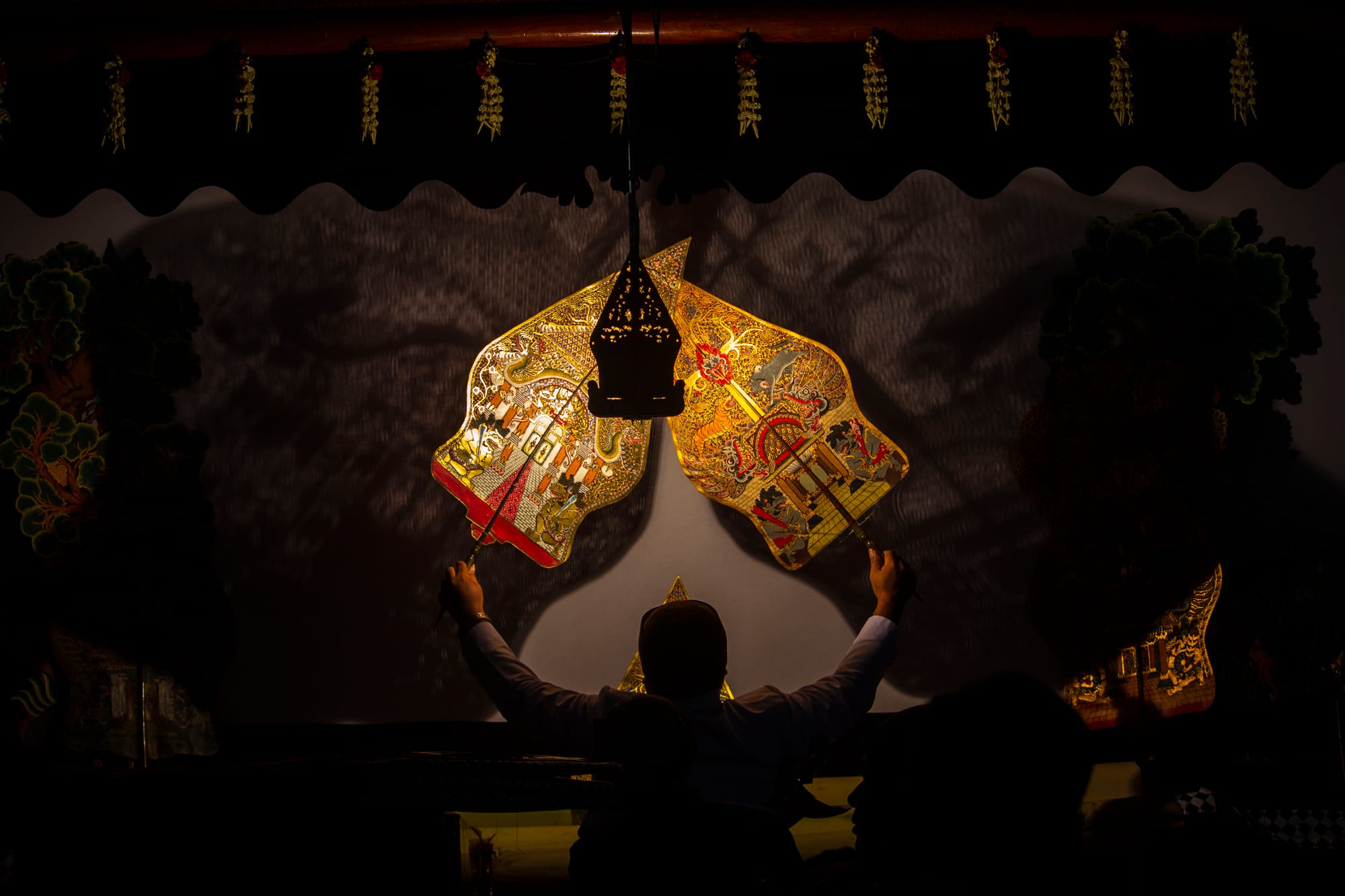
Wayang is the country's great theatrical form. It takes two principal shapes: flat, intricately cut leather shadow puppets, wayang kulit, projected onto a screen lit from behind, and three-dimensional wooden puppets. A single master puppeteer, the dalang, moves the figures on their sticks, voices every character and leads the narration, drawing on Indigenous myths, the Indian epics and heroes from Persian tales. Comic characters representing ordinary people have long given performers a way to comment on sensitive social and political issues.
Wayang is accompanied by the gamelan, Indonesia's traditional orchestra of hand-forged gongs, gong-chimes, metallophones and drums, joined by strings and bamboo flutes. Its music is collective by design: a melody is played by several instruments at once, and interlocking parts combine to form a single rhythm. Gamelan appears on eighth-century temple reliefs and still accompanies rituals, ceremonies, theatre and festivals. The bamboo angklung makes the same point: each instrument sounds only one note or chord, so a melody can only be played by a group.
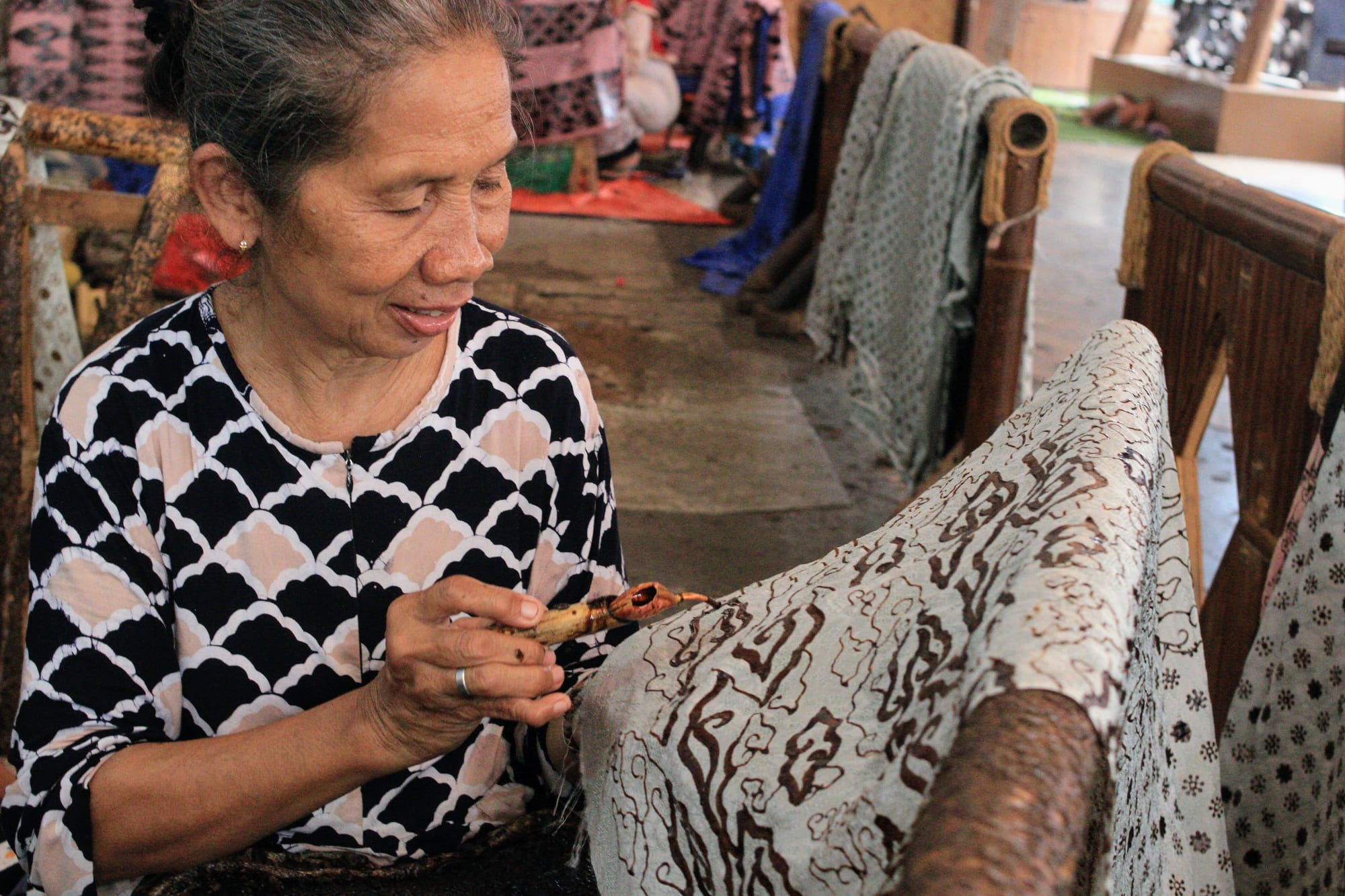
Batik is the craft most closely bound to national identity. Designs are drawn onto cloth in dots and lines of hot wax, which resists the dye; the cloth is dyed, the wax removed and the process repeated to build up colour and pattern. Its motifs show the currents that have passed through the islands, from Arabic calligraphy and Chinese phoenixes to European bouquets and Indian or Persian peacocks, and the skill is often handed down within families.
Dos and don'ts for visitors
- Do check the latest government travel advice before any trip; the UK advises against all travel within set distances of several active volcano craters.
- Do use the right hand, or both hands, to give, receive, eat and shake hands, and let the other person decide whether to offer a hand across genders.
- Do address older people as Bapak or Ibu, and greet the eldest first.
- Do take off shoes where the host has, and at places of worship, where modest dress is expected and a sarong and sash may be required at Hindu temples.
- Do refrain from eating, drinking or smoking in public during daylight in Ramadan, and respect local rules in Aceh, where Islamic bylaws ban alcohol and gambling and are enforced on Muslims with caning.
- Don't touch anyone's head, show the soles of the feet or point with a finger or foot; use the thumb instead.
- Don't raise the voice, lose one's temper or criticise anyone in public; calm, indirect disagreement preserves face on both sides.
- Don't give alcohol or pork to Muslim hosts, and don't expect gifts to be opened in front of the giver.
- Don't carry or use illegal drugs; drug offences carry severe penalties, including death.
What to take away
Indonesia holds more faiths, peoples and languages than almost any other country, yet its manners are strikingly consistent: a gentle voice, the right hand, deference to elders and a readiness to forgive — and visitors who adopt them will find themselves welcomed with remarkable warmth.