Attractions & Natural Wonders · Haiti
Haiti: Eight Attractions and Natural Wonders
A mountaintop fortress built by the first free Black nation in the Americas, a French-style seaside town of coffee-boom mansions, cobalt swimming holes, and a sacred waterfall — a portrait of a country most people cannot currently visit
By Worldlore Editorial · 19 September 2026
The first free Black republic
Haiti occupies the western third of the island of Hispaniola, which it shares with the Dominican Republic. Its enslaved population rose up in 1791 and, after 13 years of war, defeated Napoleon's armies to declare independence in 1804 — the first nation founded by a successful slave revolt, and the second republic in the Americas. That history is written into its greatest monuments. Since then, foreign occupation, dictatorship, debt, deforestation, earthquakes, and, most recently, the collapse of state authority to armed gangs have left it the poorest country in the hemisphere.
The eight below are the sights that have long defined Haiti for travellers. Read the note at the end first: at the time of writing, most governments advise against all travel to Haiti, and this article is offered as background rather than an itinerary.
1. The Citadelle Laferrière
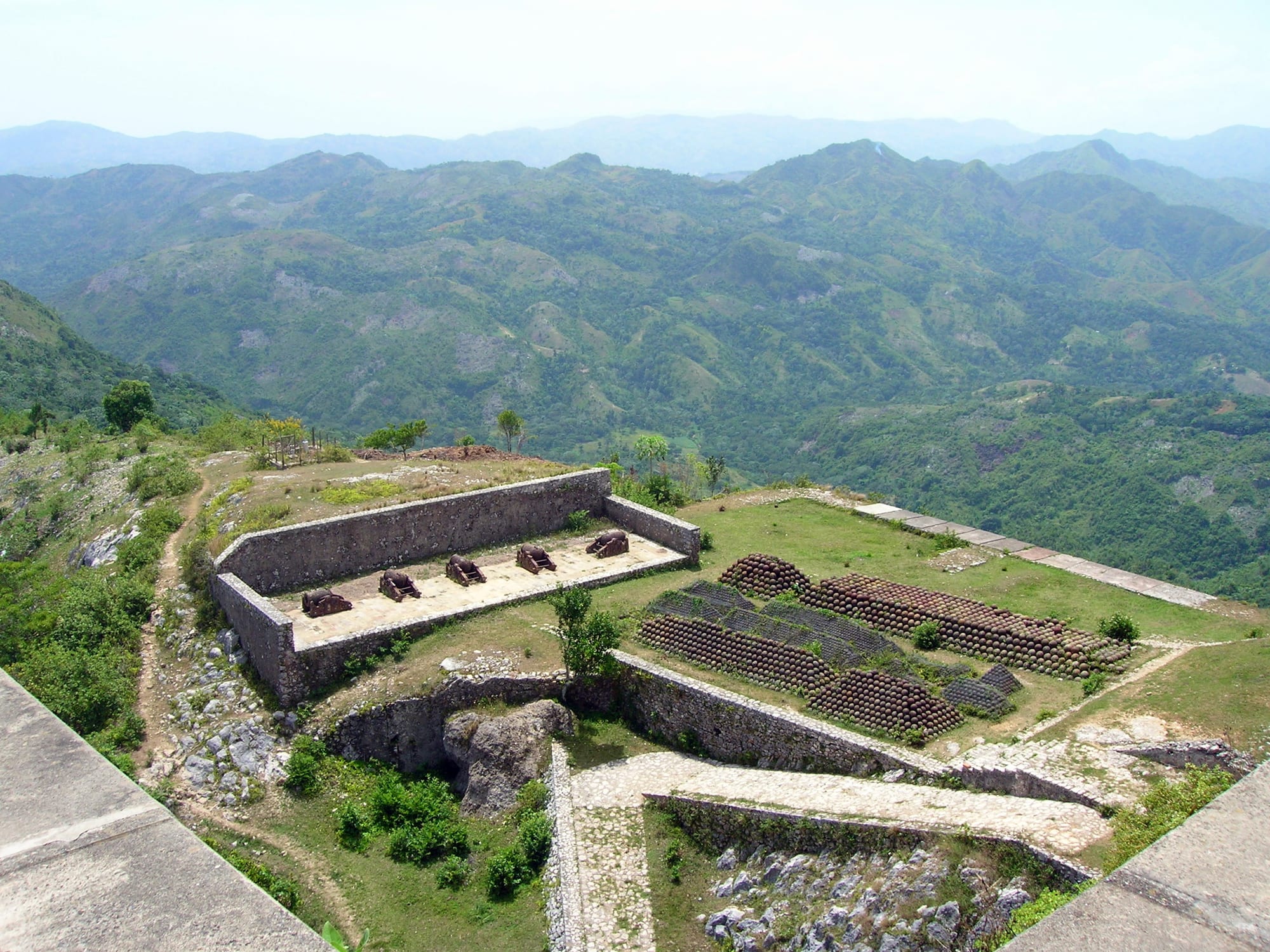
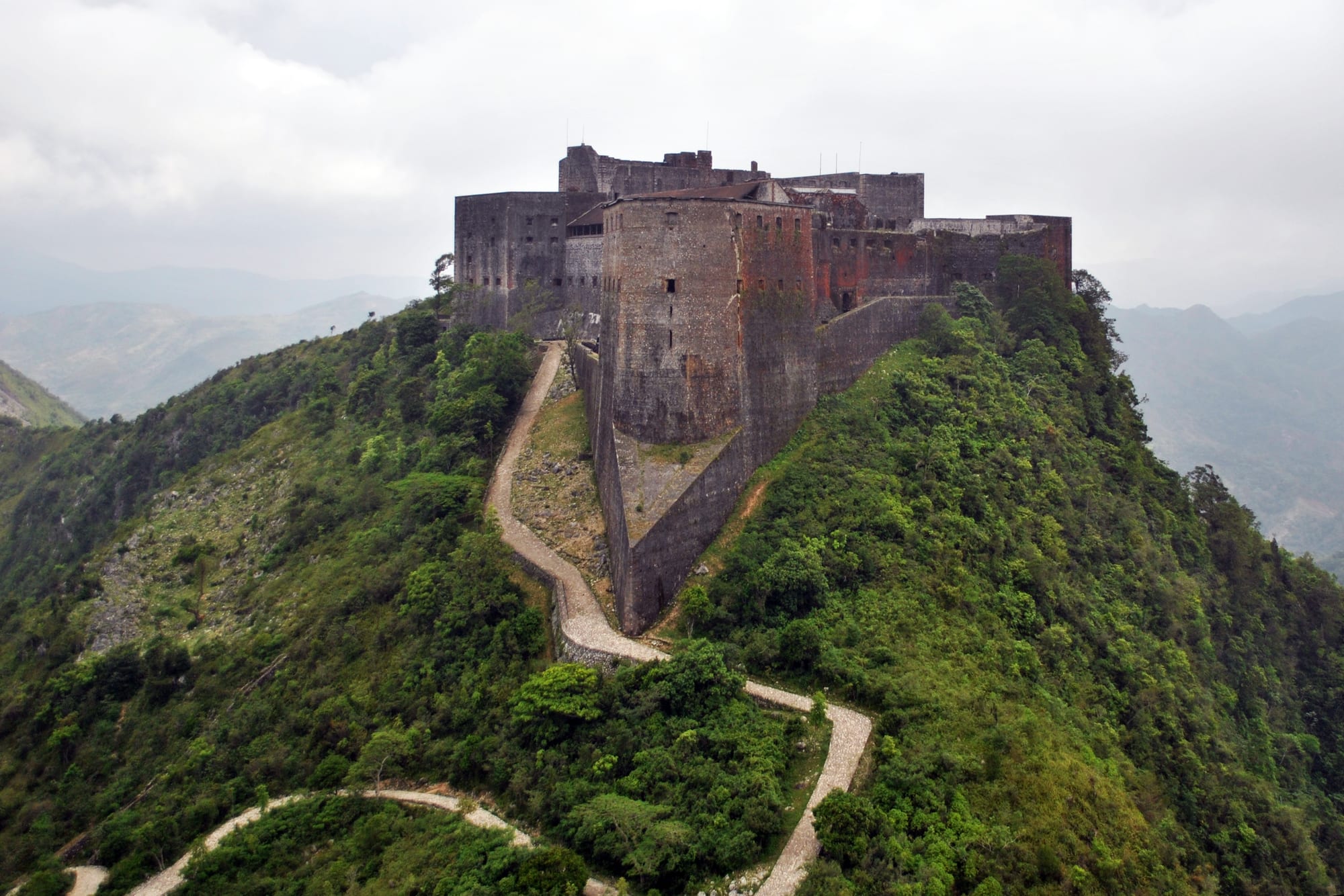
The Citadelle, on a peak south of Cap-Haïtien, is the largest fortress in the Americas — built from 1805 under King Henri Christophe with the labour of thousands, to hold out against any French attempt to reconquer the new nation. Its ship's-prow walls rise 40 metres, ringed by cannon and stacked cannonballs, with cisterns and palace quarters inside. It is Haiti's proudest symbol and, with Sans-Souci, a UNESCO World Heritage Site.
The climb from the village of Milot is about an hour on foot or by horse.
2. Sans-Souci Palace
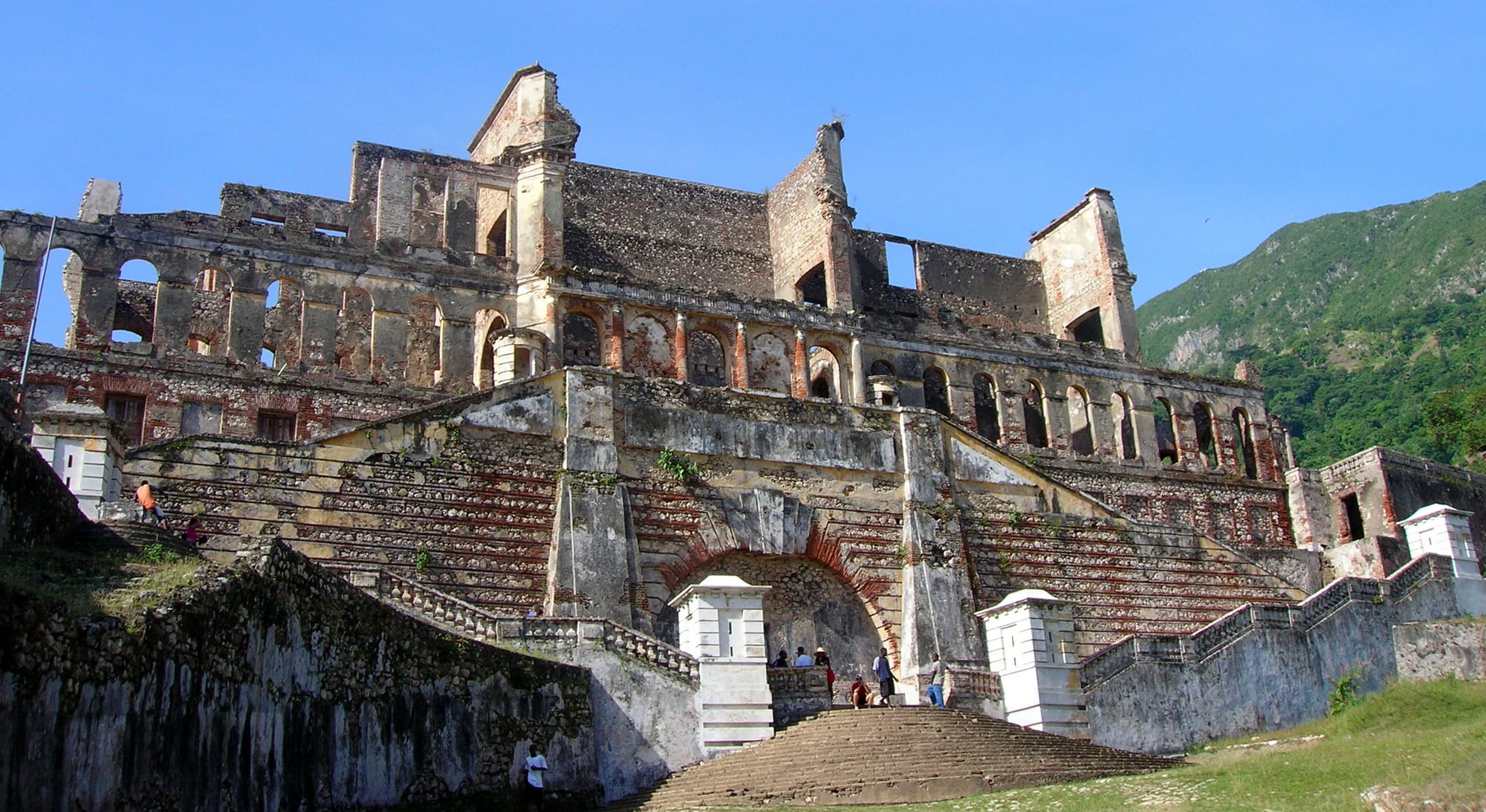
At the foot of the Citadelle, Sans-Souci was the showpiece palace of Henri Christophe — a self-declared king who ruled the north from 1811 to 1820 — consciously built to rival European courts, with terraced gardens and a water-cooling system. An 1842 earthquake left it a grand shell, but the scale and ambition are still legible. The domed church of Milot next door is still in use.
It is visited on the same trip as the Citadelle, from Cap-Haïtien.
3. Cap-Haïtien
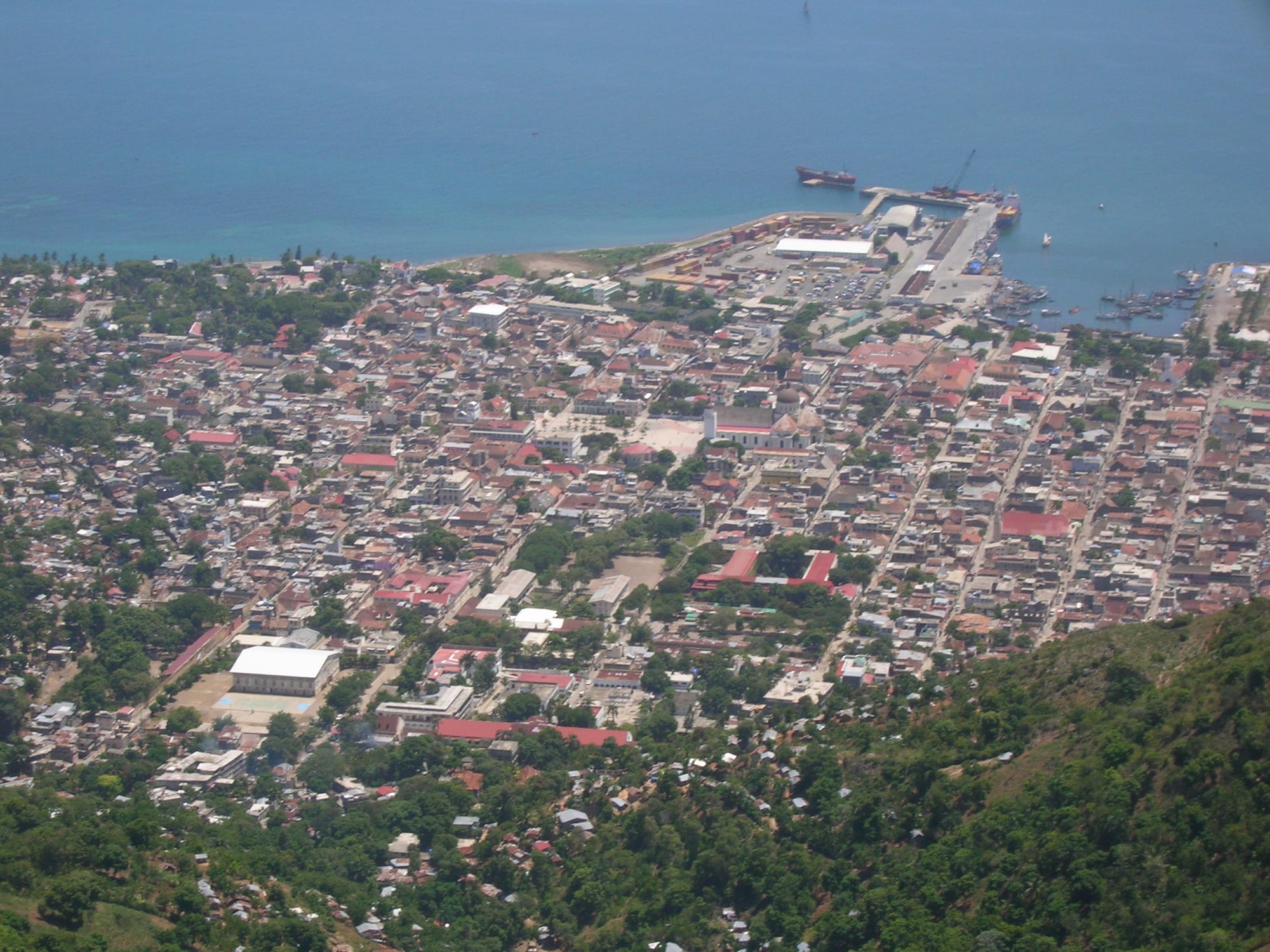
Cap-Haïtien ("Le Cap"), on the north coast, was the wealthy colonial capital of French Saint-Domingue and keeps a grid of two-storey balconied townhouses, gingerbread trim, and a seaside cathedral. It largely escaped the 2010 earthquake that devastated Port-au-Prince, and has generally been calmer than the capital. It is the base for the Citadelle and the northern beaches.
The city has a small airport with regional flights.
4. The northern beaches and Labadie
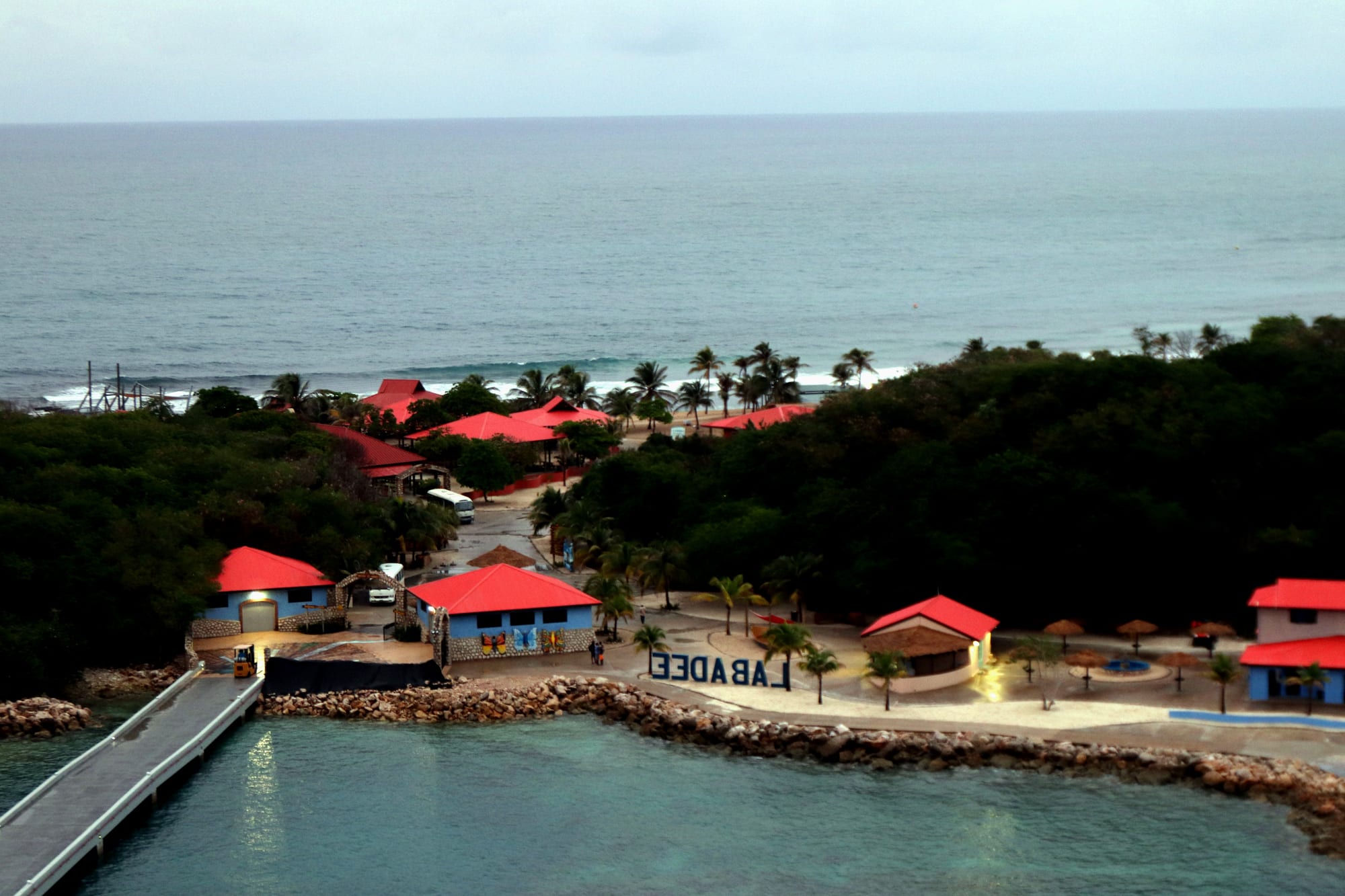
West of Cap-Haïtien, a string of coves — Cormier Plage, Belli Beach, and the fishing village of Labadie — has the country's best-known beaches, clear water, and a handful of small hotels. The fenced-off peninsula that cruise lines market as "Labadee" is leased by Royal Caribbean and kept entirely separate from the country around it; the real village of Labadie is next door and reached by boat.
These beaches were, in quieter years, Haiti's main resort area.
5. Jacmel
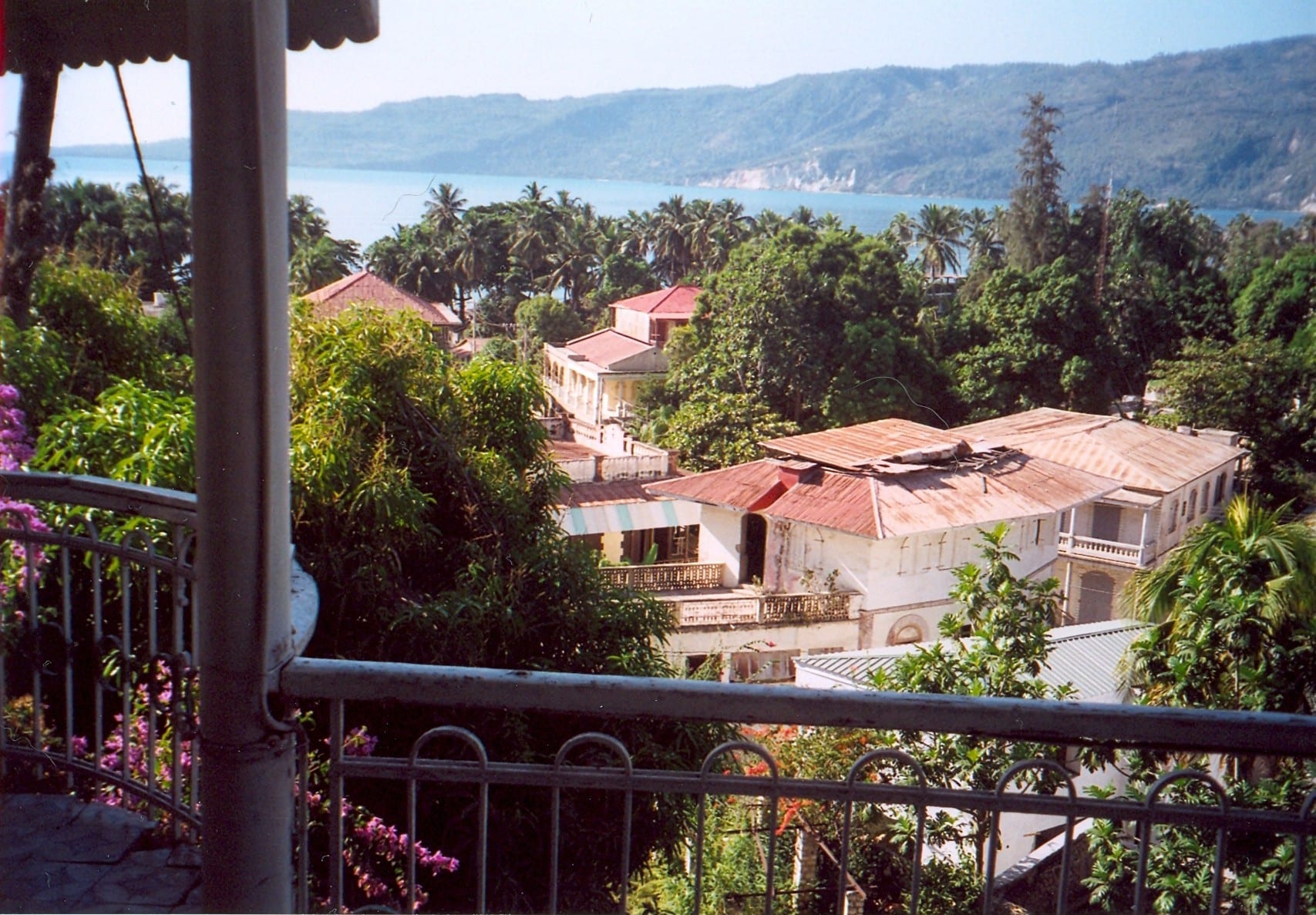
Jacmel, on the south coast, grew rich on coffee in the 1800s and built rows of cast-iron-fronted merchant houses — the ironwork shipped from Europe — around a sloping grid above the bay. It reinvented itself as Haiti's arts town, famous for papier-mâché masks and the elaborate costumes of its pre-Lenten Carnival, and had a growing boutique-hotel scene before recent years. It is on UNESCO's tentative list.
It sits about three hours by road from Port-au-Prince over a mountain pass.
6. Bassin Bleu
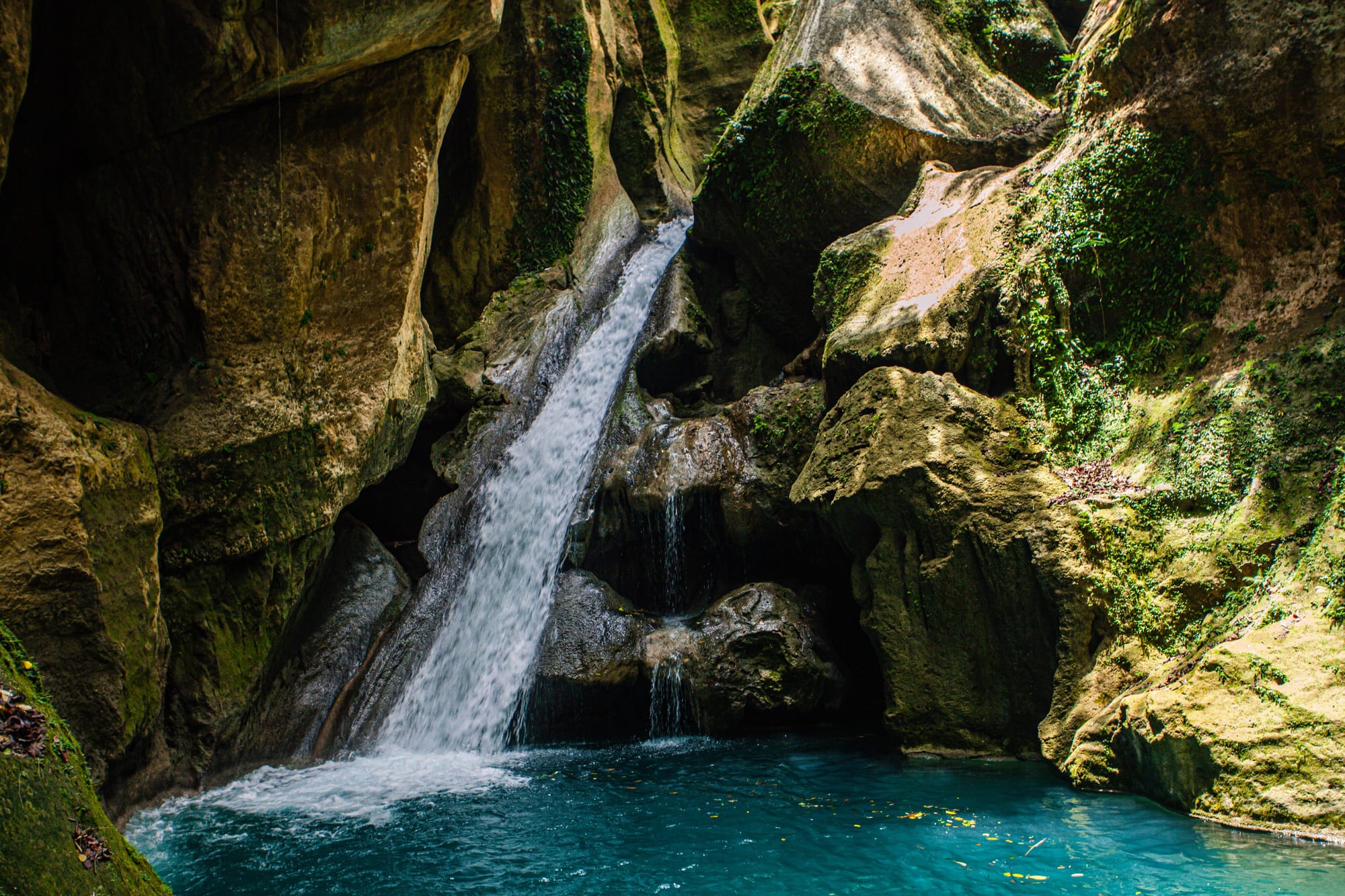
About 12 kilometres inland from Jacmel, Bassin Bleu is a series of three cobalt-blue pools linked by small waterfalls in a forested gorge, reached by a walk and a short scramble (local guides help you down the last rock face on a rope). It has long been the classic day trip from Jacmel — swim in the deepest pool beneath the fall, then walk back out.
Nearby, the beaches at Cyvadier and Raymond-les-Bains are the coastal counterpoint.
7. Saut-d'Eau
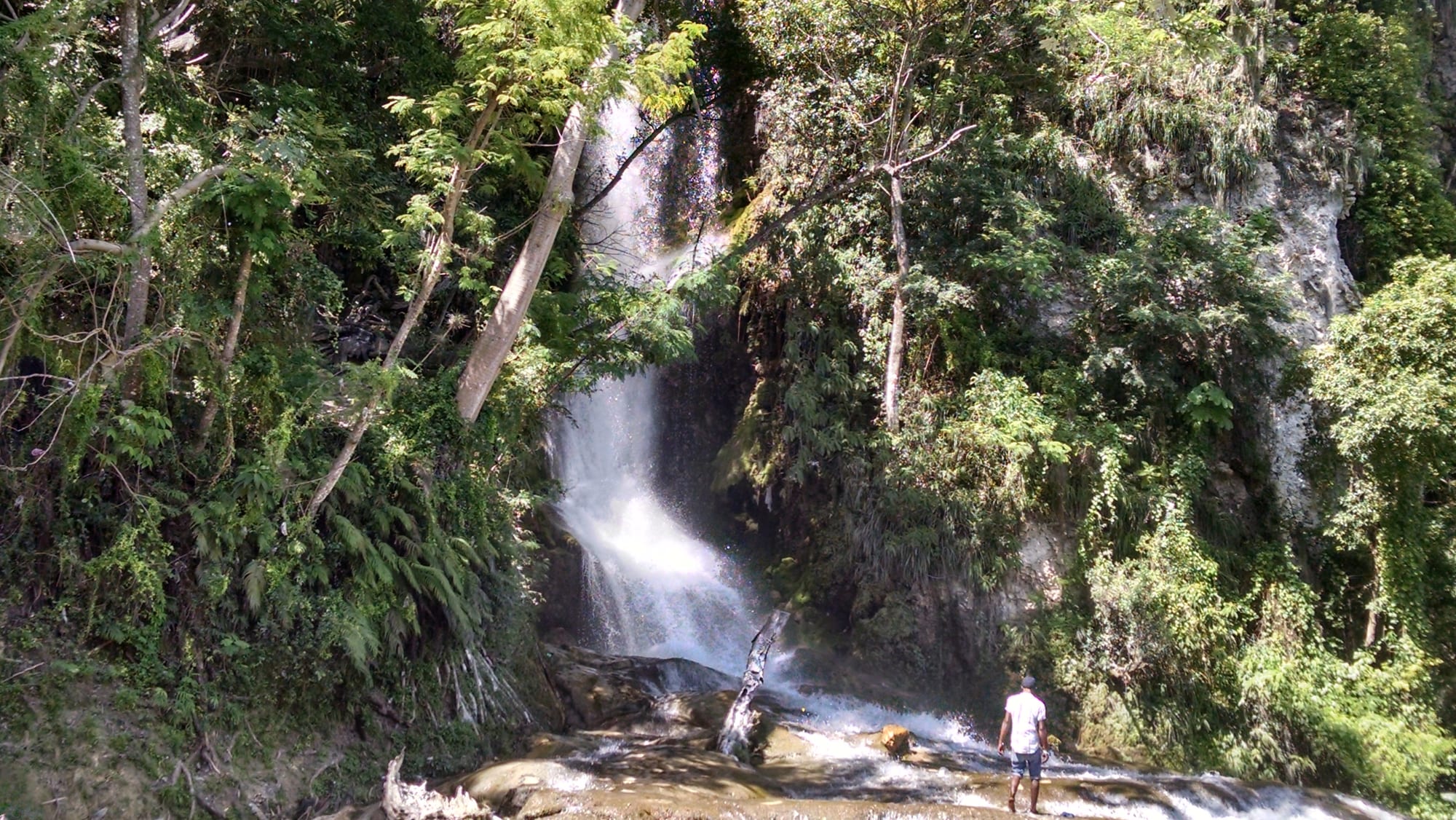
Saut-d'Eau, a broad waterfall in the hills northeast of Port-au-Prince, is Haiti's most important pilgrimage site. Each July, tens of thousands come to bathe in its waters, which are associated both with the Virgin of Mount Carmel and with the Vodou spirits (lwa) Erzulie and Damballa — one of the clearest public expressions of the way the two religions are interwoven in Haiti.
Outside the festival it is a quiet, pretty spot in the countryside.
8. Port-au-Prince
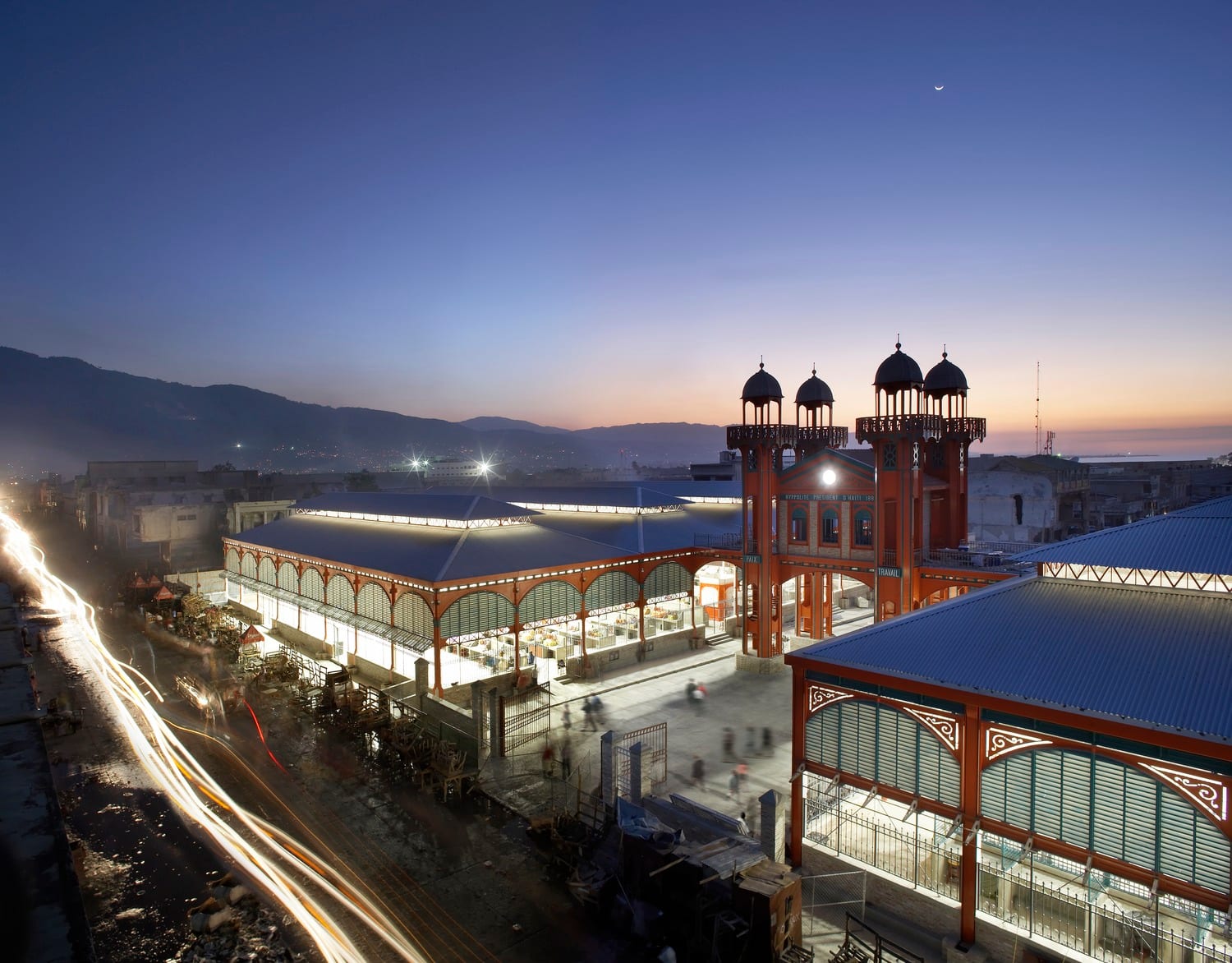
The capital, home to a large share of the population, has the striking cast-iron Marché en Fer (originally destined for Cairo, the story goes), the hillside suburb of Pétion-Ville, the Musée du Panthéon National (MUPANAH) with the supposed anchor of Columbus's Santa María, and the gingerbread mansions of the Bois Verna district. The Cathédrale de Notre-Dame was destroyed in 2010 and has not been rebuilt.
Much of the city is currently controlled or contested by armed groups; see below.
Before you go: a serious note
As of this writing, Haiti is in a security and humanitarian crisis. Armed gangs control large parts of Port-au-Prince, including routes to the main airport, which has faced repeated closures; kidnapping for ransom is widespread; police and state services are overwhelmed; and there is no functioning tourism industry in much of the country. The United States, United Kingdom, Canada, and others advise against all travel to Haiti and warn that they have very limited ability to assist citizens there.
This article describes what Haiti's landmarks are and why they matter, for readers following the country or planning far ahead. Anyone actually considering a visit should treat current government travel advisories as decisive, seek specialist security advice, and recognise that the situation can change quickly in either direction. The northern area around Cap-Haïtien has generally been more stable than the capital, but conditions vary.