Daily Life · Guyana
Guyana: Life Behind the Sea Wall
A capital that sits below the ocean at high tide behind Dutch-built dykes, a shared calendar that swings between Diwali, Eid and Christmas, and a Sunday evening ritual that turns a sea defence into the biggest gathering of the week
By Worldlore Editorial · 30 September 2026
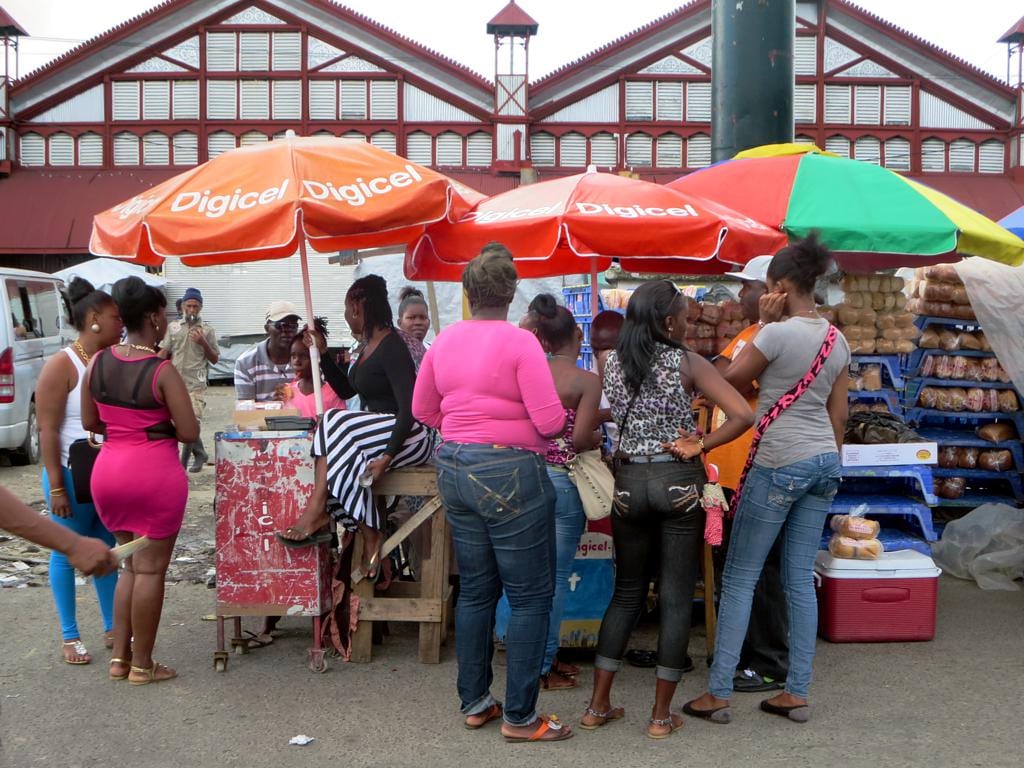
Nine in ten Guyanese live on a narrow coastal strip that sits, in Georgetown's case, up to two metres below the level of the sea at high tide, held back by a system of dykes, canals and sluice gates begun by Dutch planters and a long sea wall built under British rule. That fact sits quietly behind almost everything about an ordinary day here: the minibus routes that thread the coast, the rice and sugar work that still shapes the year in the Berbice and Demerara belts, and a national calendar that swings between Diwali, Eid, Christmas and Phagwah, each a genuine public occasion rather than a niche holiday. Since 2019, a fast -growing offshore oil industry has layered a new, faster rhythm of construction and cost onto a country that had moved slowly for decades.
Family and home life
Household patterns differ noticeably between Guyana's two largest communities. Afro-Guyanese family life tends to be organised around the mother and grandmother, with households ranging from a simple nuclear family to a multigenerational one under a single roof. Indo-Guyanese households are more often father-oriented: a newly married couple has traditionally lived with the husband's parents for the first several years, on the understanding that the parents help support the couple early on, before the son eventually sets up a separate household of his own; three -generation homes headed by a male elder have long been common. In both communities, extended family members who don't share a house often live close by and work together economically, so the practical boundary of "family" usually extends well past whoever is under one roof.
Work, school and the rhythm of the day
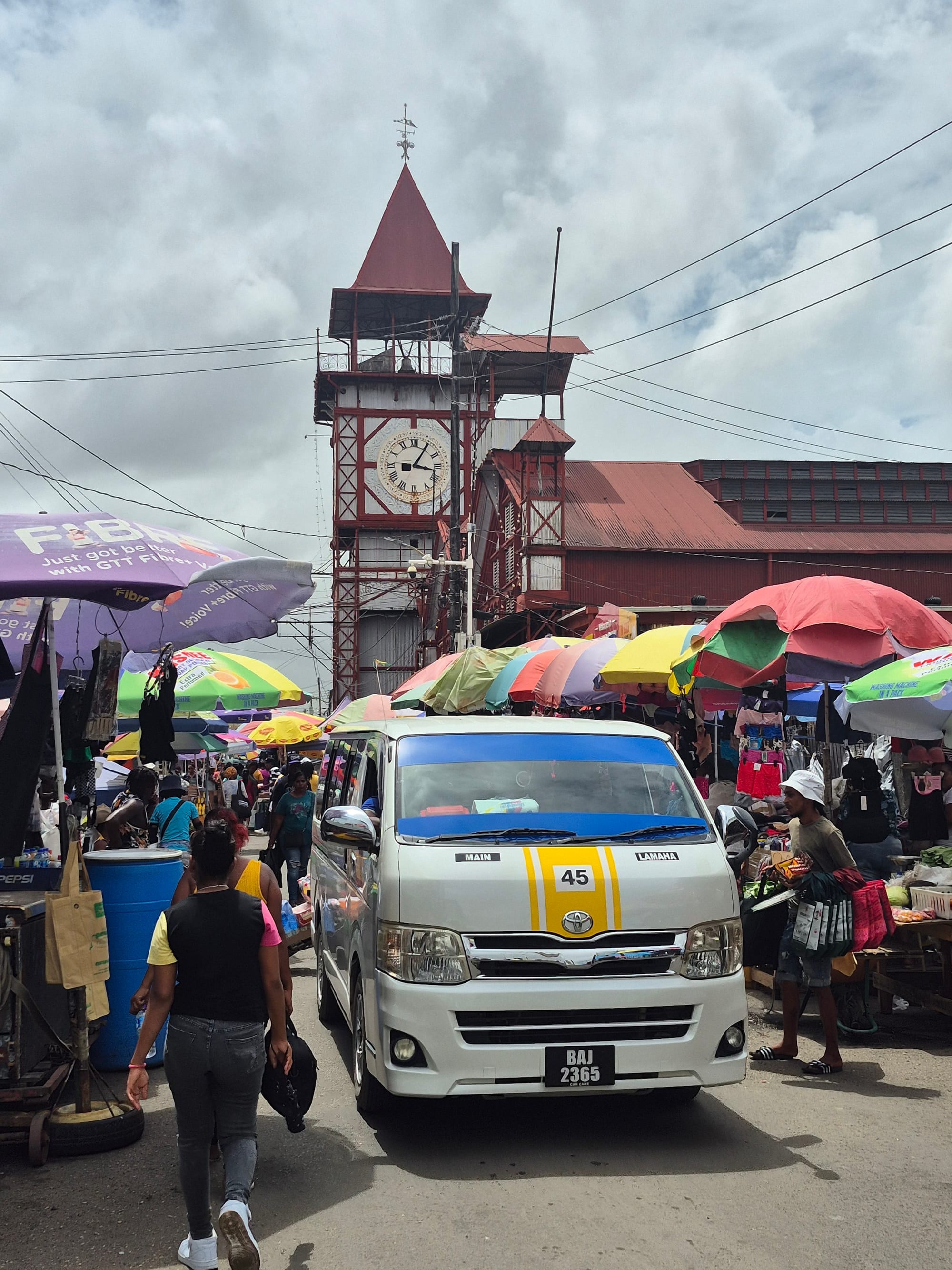
The economy has been reshaped fast: since offshore oil production began in 2019, revenue has grown enormously, and construction, retail, and rents in Georgetown have risen with it, alongside inflation that has made everyday costs noticeably higher for ordinary households. Outside the oil sector, the older economy of sugar, rice, gold, and bauxite still sets the working rhythm for much of the coast, with the sugar and rice seasons in particular still shaping the agricultural calendar in Berbice and Demerara. A privately run minibus network, numbered by route, remains the backbone of everyday transport in and around Georgetown, running frequently and cheaply, on numbered routes rather than to a fixed timetable.
Community life and public spaces
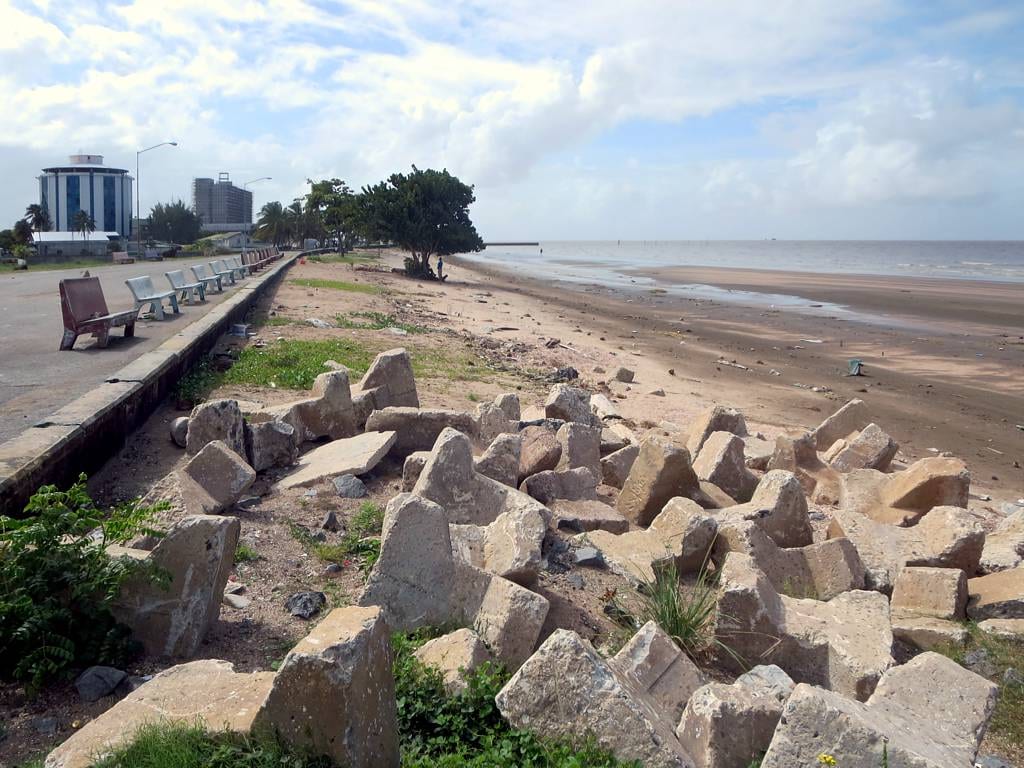
Stabroek Market, with its distinctive ironwork and clock tower, is Georgetown's central marketplace and transport hub in one, where minibus routes converge and much of the city's everyday shopping happens. Beyond the market, the sea wall itself doubles as the city's most important shared public space: built to keep the ocean out, it also functions as a walkway, running track, and open-air gathering point that draws people at all hours, but especially in the evening. Canals, sluice gates known as kokers, and the dykes that thread through and around the city are a constant, visible presence rather than background infrastructure, a legacy of the Dutch colonists who first drained this coast for plantations, later extended by the British.
Free time and weekends
Sunday evening is when the sea wall comes into its own: large crowds gather along it, with food vendors, car sound systems, and families and couples out for the walk, turning a flood defence into the week's biggest informal social event. Cricket is followed with real devotion nationwide, watched at home or wherever a set or radio can be found. Because Guyana's population is genuinely mixed between Indo-Guyanese, among whom Hinduism is the main faith alongside Muslims and Christians, and Afro-Guyanese, mostly Christian, alongside Indigenous and other communities, the yearly calendar of festivals — Diwali, Eid, Christmas, Easter, and Phagwah among them — gives most households more than one occasion a year to look forward to, regardless of their own faith.
A visitor's ordinary day
The Guyanese dollar is the everyday currency, though US dollars are widely accepted in Georgetown hotels and by tour operators; ATMs are common in the capital and coastal towns but scarce in the interior. Minibuses are the cheapest way around the coast, though most visitors travelling to Kaieteur Falls or the Rupununi savanna fly rather than attempt the long overland or river route. Georgetown has real crime concerns downtown and after dark, so arranged or hotel transport at night is the norm for visitors rather than an excessive precaution. Prices in the capital, especially for hotels, have risen noticeably since the oil boom began, a change locals themselves openly discuss.
What to take away
An ordinary day in Guyana runs on a coast that technically shouldn't be livable without the dykes and sea wall holding the Atlantic back, and, especially by Sunday evening, on that same sea wall serving as the place where the whole city turns up.