Culture & Customs · Greenland
Greenland: Where the Whole Town Comes for Coffee
An Inuit culture of sharing and understatement, a Lutheran church that sings in harmony, and an open-house coffee tradition that turns every family milestone into a day-long welcome
By Worldlore Editorial · 30 September 2026
A child has turned one, and the family has spent days getting ready. The best china is out, the tablecloth is the good one, and the table carries cakes, crowberry muffins and marzipan biscuits beside plates of reindeer, muskox and fish. From late morning the front door hardly closes. Relatives, neighbours, colleagues and people the family has only just met drift in, leave their shoes by the door, eat, talk, and make room for the next group. By evening fifty or more people may have passed through, and the coffee pot has never once been allowed to run dry. This is a kaffemik, and it says a great deal about Greenland: celebration here is kept close to home, shared widely, and offered without much ceremony to whoever walks in.
Faith, identity and values
Greenlandic culture is, at its root, the culture of the Kalaallit, the Greenlandic Inuit, who make up most of the population. Their ancestors built a way of life around hunting at sea and on the ice, and many of its values have outlasted the conditions that shaped them. In the old Inuit world, sharing was central to survival, and standing came largely from ability, whether as a hunter or as a seamstress, rather than from birth, and knowledge passed carefully from older generations to younger ones. The habit of sharing a catch among family and neighbours, still widespread, grows directly out of that outlook.
Before Christianity, Inuit belief held that souls could live in people, animals and objects, and that shamans could travel between the human and spirit worlds. Respect for the dead, and a large body of rules and prohibitions, kept the community in balance. Christianity arrived with missionaries in the eighteenth century, and today the Evangelical Lutheran church is the established church, with most Greenlanders belonging to it. Church life is woven into the calendar and into family milestones — baptisms, confirmations, weddings and funerals — and hymn singing, in particular, is loved.
Some older ideas live on quietly inside the newer faith. A newborn was traditionally given the name of someone who had died, a name understood to carry that person's soul, and many Greenlanders are still named after deceased relatives today. It is a small custom with a large meaning: the dead are not simply remembered but continued.
Identity is also bound up with language. Greenlandic, or Kalaallisut, is the official language, and West Greenlandic is the standard taught to every child, alongside Danish and English; East Greenlandic is a distinct dialect, and the Inughuit of the far north speak their own Inuktun. Greenland governs most of its own affairs under a self-government arrangement within the Kingdom of Denmark, which came into force in 2009, and Danish remains widely spoken, especially in the towns. For many Greenlanders, being Kalaallit and being part of a modern, connected society sit side by side; the national tourism board makes the point plainly that in many ways Greenland is an ordinary modern society, and visitors do well not to treat it as an exhibit.
Greetings and meeting people
Greetings are unfussy. The everyday word for hello is aluu, and goodbye is baaj — both, curiously, borrowed from English, most likely during the American presence in the Second World War. Tikilluarit means "welcome", and qujanaq, "thank you", or the warmer qujanarsuaq, "thank you very much", are worth learning. Greenlanders are widely reported to be pleased when visitors make even a small attempt at the language, and a few words go further than fluent Danish.
The social temperature is relaxed rather than effusive. Greenlanders tend to describe themselves as unpretentious and light-hearted, with a preference for understating drama rather than making a fuss about it. That same easy-going temperament shows in the national attitude to plans: when weather closes an airport or keeps boats in harbour, the usual response is a shrug and a wait. Visitors who meet delays with the same patience fit in far better than those who press for certainty.
The national tourism board's own advice to visitors is short and telling: smile and say hello, talk to people rather than about them, and ask before taking anyone's picture — accepting a "no", or a gesture meaning no, without argument. In places that receive many visitors, locals may be less willing to be photographed than elsewhere, which is entirely their right.
Hospitality and being a guest
Invitations into a home are a real gesture of welcome, and the first rule on arrival is simple: shoes come off at the door. Beyond that, a guest is expected to behave much as at home — the tourism board's own summary of good conduct is not to act in a way one would not act at home.
The kaffemik is the form of hospitality most visitors are likely to meet. The word means, roughly, "by way of coffee", and the gathering is exactly that: social life conducted around a coffee pot. Kaffemiks mark births and birthdays, a child's first day at school, confirmations, weddings and other milestones, and the person being celebrated is the host, often preparing for days. Invitations spread by word of mouth rather than formal cards, and guests come and go through the day rather than arriving together; nobody is expected to stay for hours. Dress is casual, although on very special occasions the person being honoured may wear national costume. Guests help themselves from what is laid out, accept a cup of coffee, and give their place to the next arrivals when the room fills. Visitors are sometimes invited, and the tourism board describes kaffemik as one of the best ways to understand Greenlandic life.
Tipping has no deep roots and is not expected, though a gratuity is appreciated where service has been good.
Festivals and life's big moments
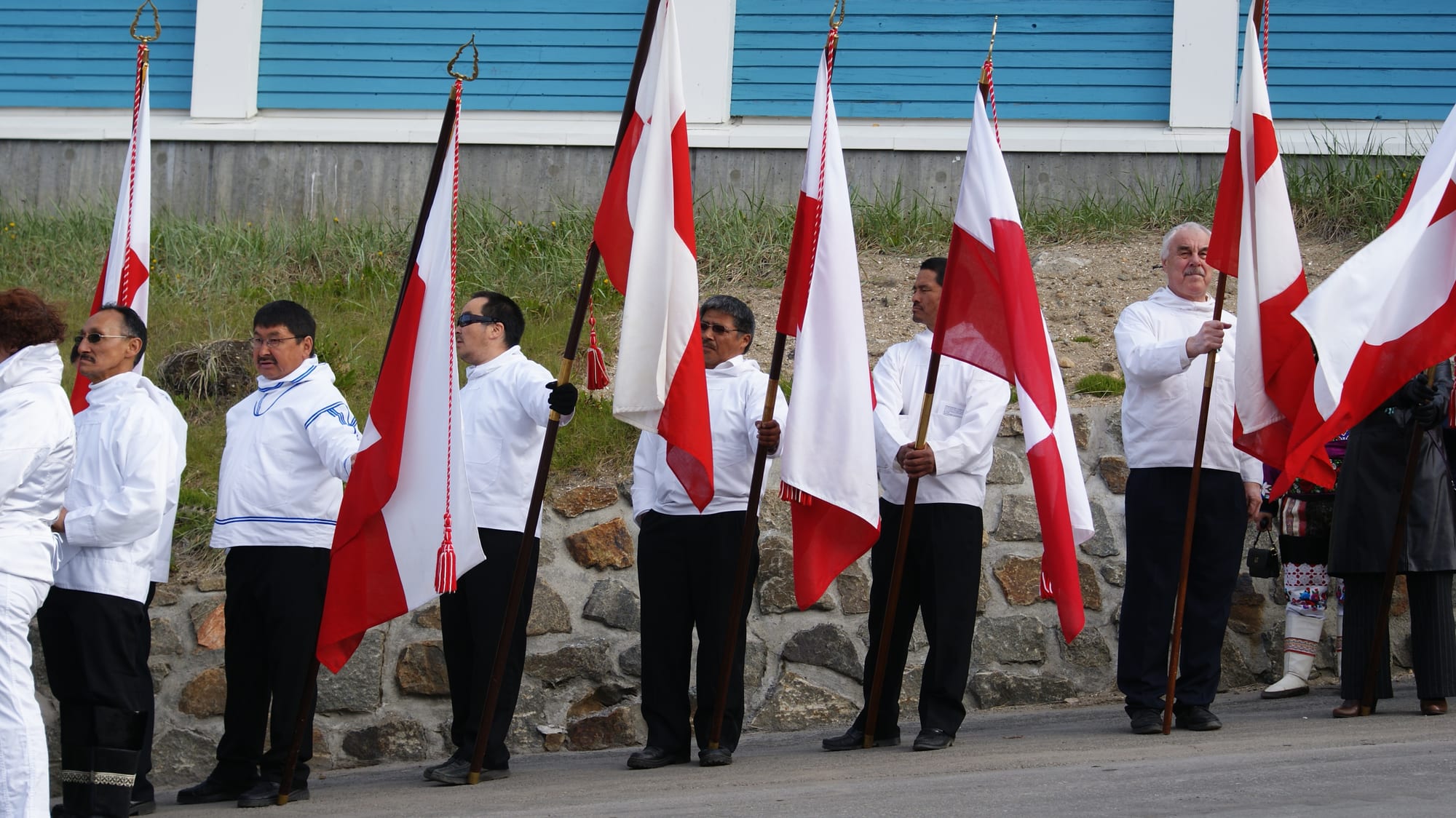
National Day, on 21 June, close to midsummer, is the most celebrated day of the Greenlandic summer. The whole country takes the day off, and celebrations reach every town and settlement; it was on National Day in 2009 that self-government came into force. It is one of the days when national costume comes out, flags fly, and drum dancing can often be seen.
The national costume, kalaallisuut, is itself a statement of identity. The women's West Greenlandic version combines a richly beaded collar, an anorak, short sealskin trousers and tall kamik boots; men wear a white anorak with dark trousers and kamiks. Its beadwork is made with glass beads first brought by European traders, and it has grown more elaborate over time. There are distinct northern and eastern versions too. The costume appears at Christmas and Easter, National Day, confirmations and weddings, and on children's first day at school.
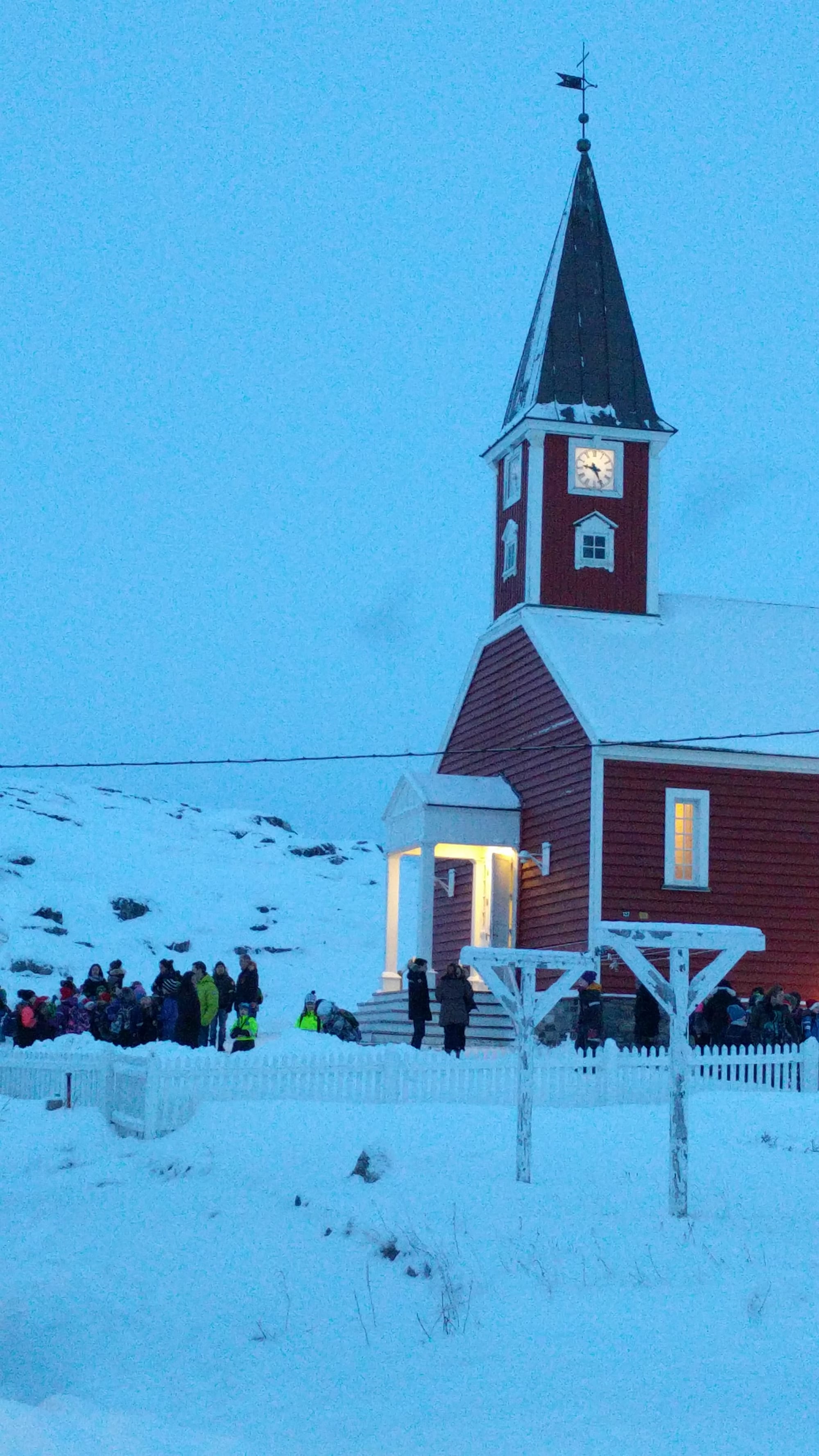
Christmas falls in the dark season and is kept with warmth and light. Candles and red-orange paper stars appear in almost every window from the first Sunday of Advent, and stay up until 6 January. The main celebration is on the evening of 24 December, as in Scandinavia, with families dancing around the Christmas tree. Singing runs through the whole season, in church, on the radio and on television, and one hymn in particular, "Guuterput", is associated with Greenlandic Christmas.
The season ends on 6 January with mitaartut. Disguised figures, often with faces sooted or pulled out of shape with string, knock on doors and walk into homes without saying a word, communicating only through comic gestures in character. Households tease them, laugh at their antics and send them off with cakes and sweets. The custom blends Inuit and Danish influences, and its spirit is humour rather than fright.
Across the life cycle, the kaffemik does much of the work that a restaurant booking or a hired hall might do elsewhere: confirmations, weddings and birthdays are celebrated at home, in a stream of visitors. The naming custom gives death, too, a sense of continuity, as a name passes on to a new generation.
Arts, crafts and music
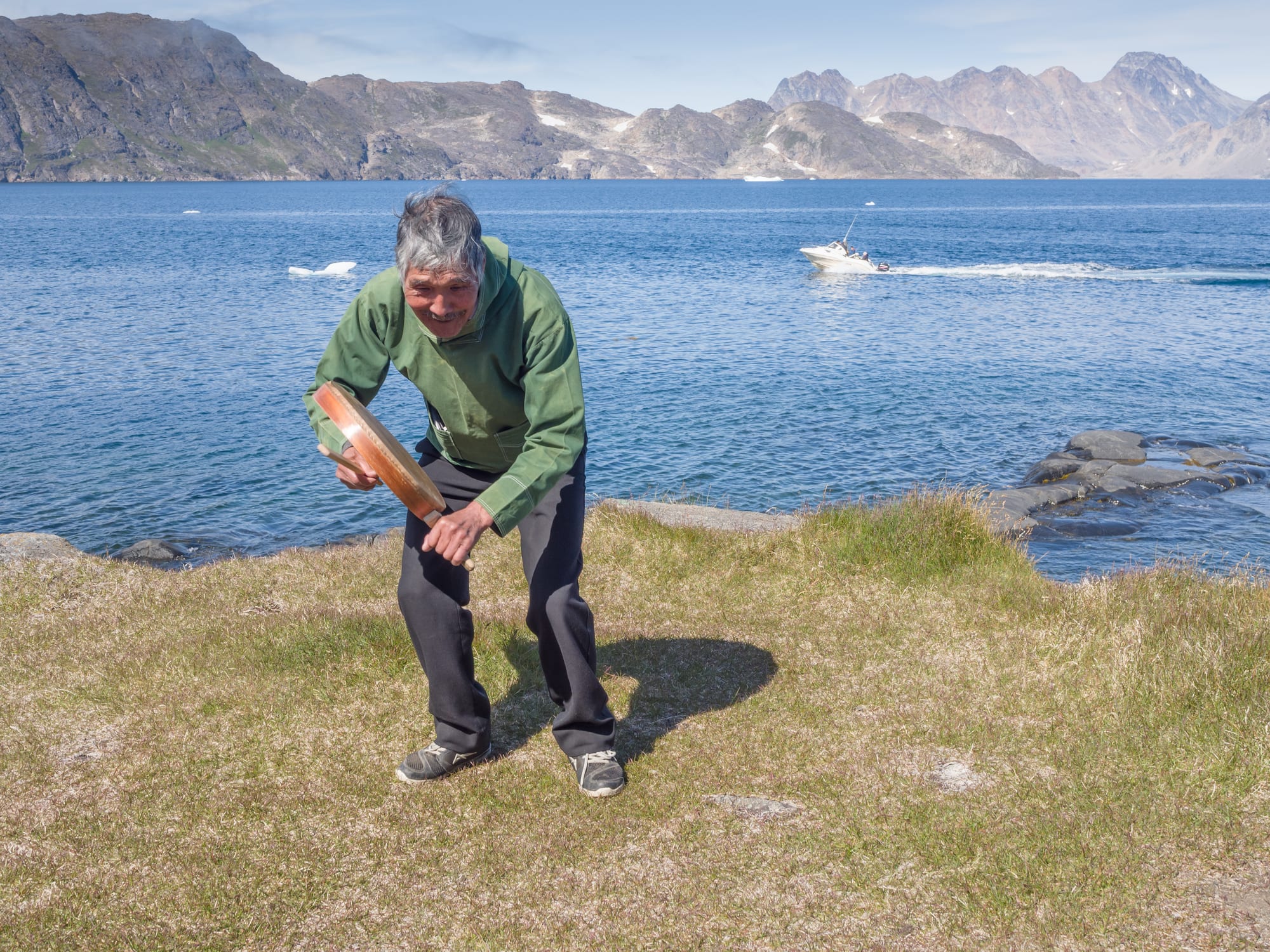
The drum dance, qilaatersorneq, is Greenland's oldest musical tradition, and Inuit drum dancing and singing was added to UNESCO's list of intangible cultural heritage in 2021. The performer raises and lowers a frame drum, the qilaat, striking its rim — not its skin — with a stick of wood or bone to make a sharp, echoing beat, while singing. The songs speak of everyday life: love, longing, humour and hunting. It is performed at national holidays, celebrations and social gatherings, by people of any age or background, and UNESCO's description stresses its role as a symbol of shared identity and equality. In the past it had another use too: drum song duels allowed rivals to settle disputes by mocking each other in song, the one who drew the most laughter winning, rather than by force.
The mask dance, uaajeerneq, is another old form. Dancers paint their faces and play at once on humour, fear and sexuality. It was nearly wiped out under missionary pressure, but it was revived from the 1970s and is performed again today.
Other traditions arrived from outside and became Greenlandic. Missionary hymn singing developed into a distinctive Greenlandic style, still heard in church. The accordion and dances such as the jig and reel, brought by European whalers and settlers, fed into kalattuut, a lively Greenlandic polka. In the 1970s the band Sume began singing rock in Greenlandic about Greenlandic life and history, and their 1973 debut album was bought by about a fifth of the population; a lively scene of pop, hip-hop and other styles, much of it in Greenlandic, has followed.
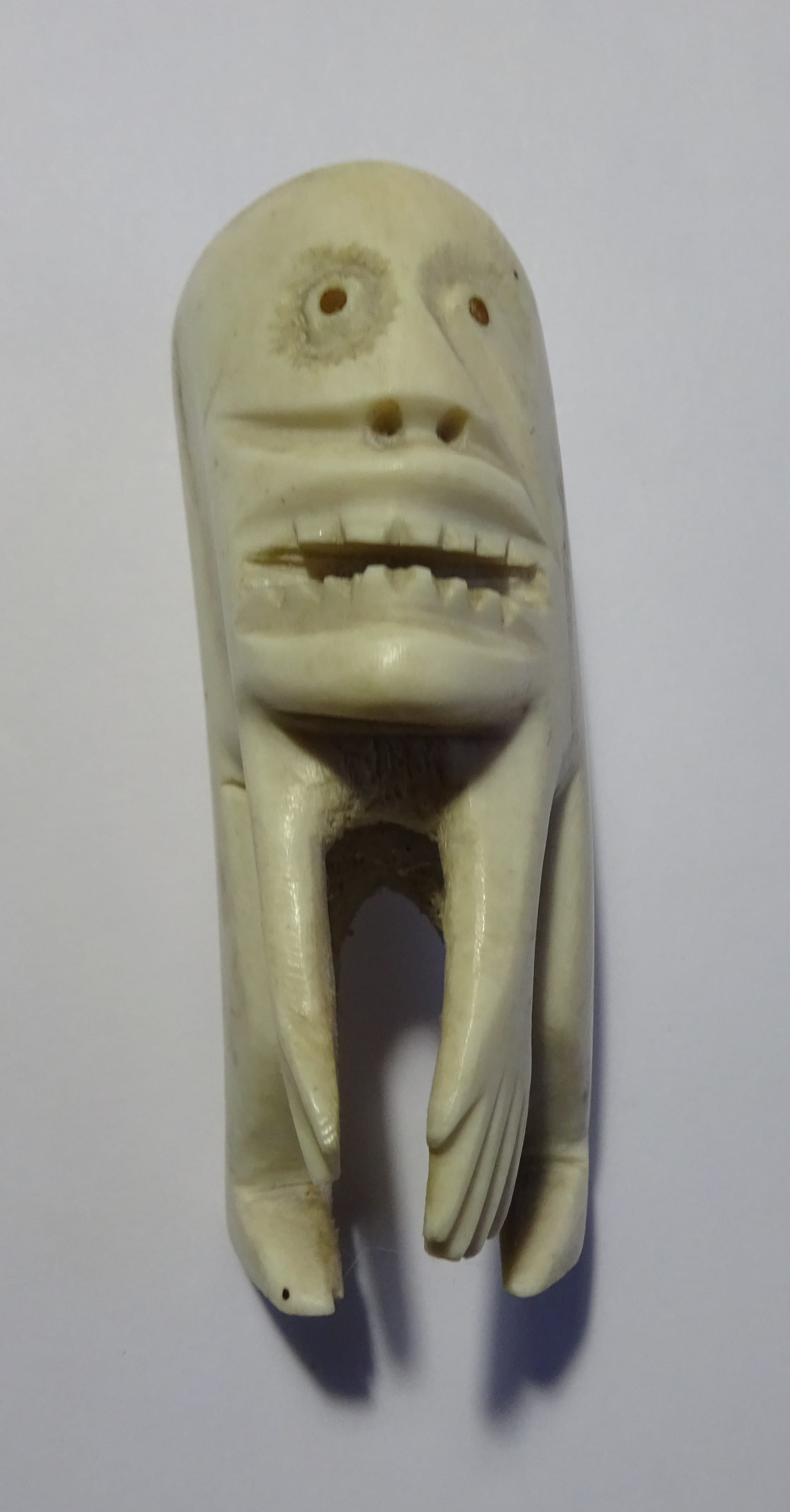
In crafts, the tupilak is the best known. It was once believed to be a spirit creature, made in secret from bone and animal parts and sent out to harm an enemy; today it is a carved figure of bone, antler, tooth or wood, inspired by Inuit myth and made as art. Soapstone, used for centuries for lamps and pots, is now carved into jewellery and reliefs. Painting has a long line of Greenlandic artists behind it, and contemporary artists continue to question and reshape inherited stories.
Tattooing, tunniit, is a revived tradition with a particular meaning. It was mainly women who wore the lines, with a first chin tattoo marking a girl's readiness to take on adult responsibilities, and the designs carried protective and spiritual intent. After missionaries suppressed the practice, it has been revived in recent years. Many Inuit prefer that tunniit be worn only by Inuit, and copying the designs is widely regarded as cultural appropriation.
Dos and don'ts for visitors
- Do learn a few words — aluu for hello, qujanaq for thank you — since any attempt at Greenlandic is welcomed.
- Do take shoes off when entering a home.
- Do accept an invitation to a kaffemik if one comes, drop in rather than stay all day, and give up a seat to new arrivals.
- Do ask before photographing anyone, and accept a refusal without argument.
- Do take weather delays calmly; waiting is simply part of life here.
- Don't approach or pet sled dogs, which are working animals, not pets; ask the musher first.
- Don't copy Inuit tattoo designs or treat them as decoration.
- Don't treat Greenlanders as curiosities; talk to people, not about them.
What to take away
Greenlandic customs rest on an old Inuit instinct for sharing and a modern gift for understatement, and the visitor who arrives with patience, a few words of Kalaallisut and shoes ready to come off will find the door readily opened.