History · Greenland
Greenland: The Ice Island
The world's largest island — waves of Arctic peoples, a Norse colony that vanished, two centuries of Danish monopoly, and an Inuit nation now edging toward independence
By Worldlore Editorial · 10 September 2026
An island of edges
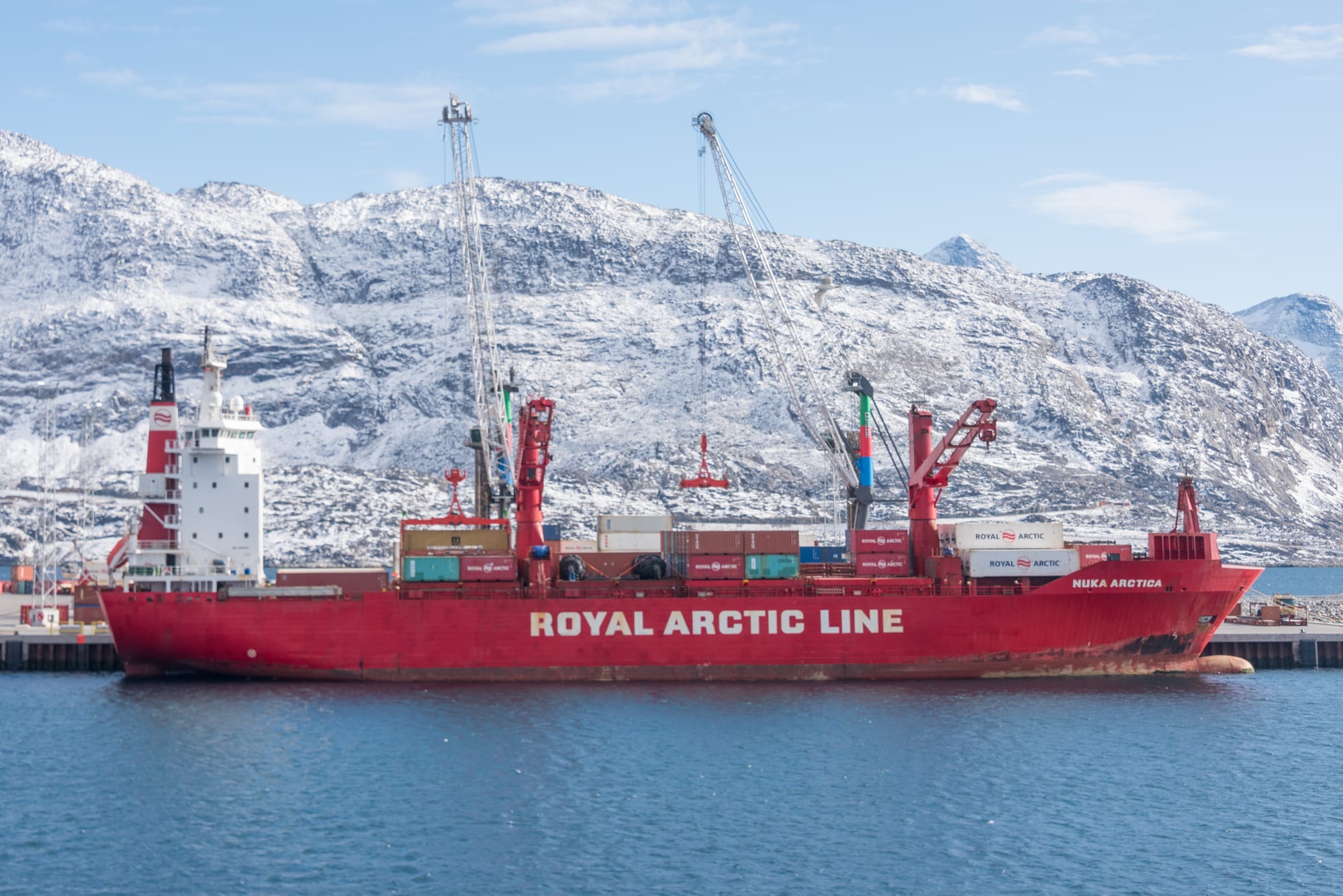
Greenland is the largest island on Earth, and about four-fifths of it is a permanent ice sheet up to three kilometres thick. People live only on the ice-free coastal fringe — around 57,000 of them, nine in ten Greenlandic Inuit, the Kalaallit. It is geographically part of North America, politically part of the Kingdom of Denmark, and, since it left the European Community in 1985, the only territory ever to have done so. It has had self-rule since 2009, with a legal path to full independence whenever its people choose to take it.
A short history
- c. 2500 BCE
First peoples
Palaeo-Eskimo cultures arrive from Arctic Canada.
- c. 985 CE
Erik the Red
Norse settlers from Iceland found colonies in the south-west.
- c. 1200–1300
The Thule migration
The ancestors of today's Inuit arrive from the west.
- 15th century
The Norse vanish
The Scandinavian settlements die out.
- 1721
Hans Egede
A Danish-Norwegian mission colony is founded at Godthåb (Nuuk).
- 1774
The monopoly
The Royal Greenland Trade closes the island to outsiders.
- 1953
County of Denmark
Colonial status ends; intensive "Danization" follows.
- 1979
Home Rule
Greenland gets its own parliament and government.
- 2009
Self-Government
Expanded autonomy, resource rights, and a route to independence.
Waves of arrival
People reached Greenland in several distinct migrations from the Canadian Arctic — the Saqqaq and then the Dorset cultures — each of which appears to have died out or withdrawn.
The Norse came from the east. Erik the Red, exiled from Iceland, sailed west around 985 and gave the island its inviting name. Two settlements on the south-western fjords grew to a few thousand people, farming livestock and exporting walrus ivory, with a bishop's seat and stone churches. Norse Greenlanders reached North America around the year 1000.
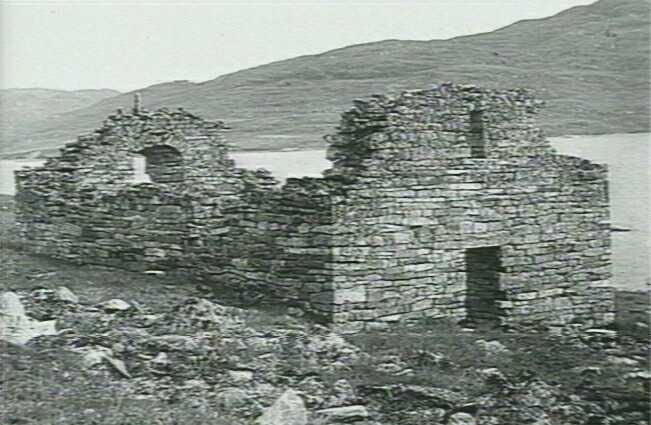
Why the Norse vanished is still argued — a cooling climate, exhausted soils, the collapse of the ivory trade, isolation from Norway, friction with the Inuit. By the late 15th century they had disappeared.
The Thule, and the Danes
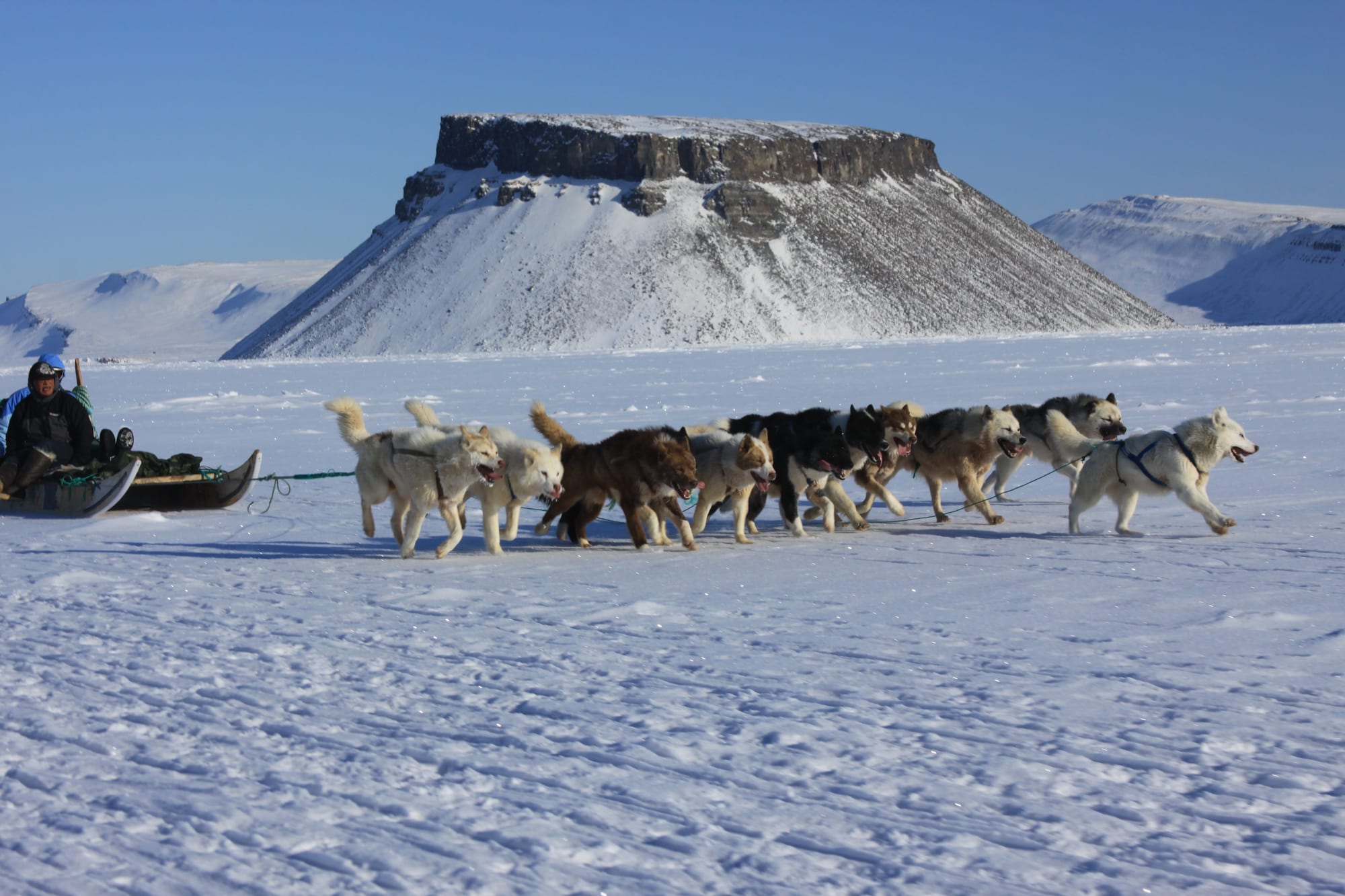
The ancestors of today's Greenlanders were a separate people: the Thule culture, who spread from Alaska across the Canadian Arctic and reached northern Greenland around 1200–1300, moving down both coasts with dog sleds, kayaks and harpoons. They overlapped the last of the Norse, and their descendants have lived in Greenland continuously ever since.
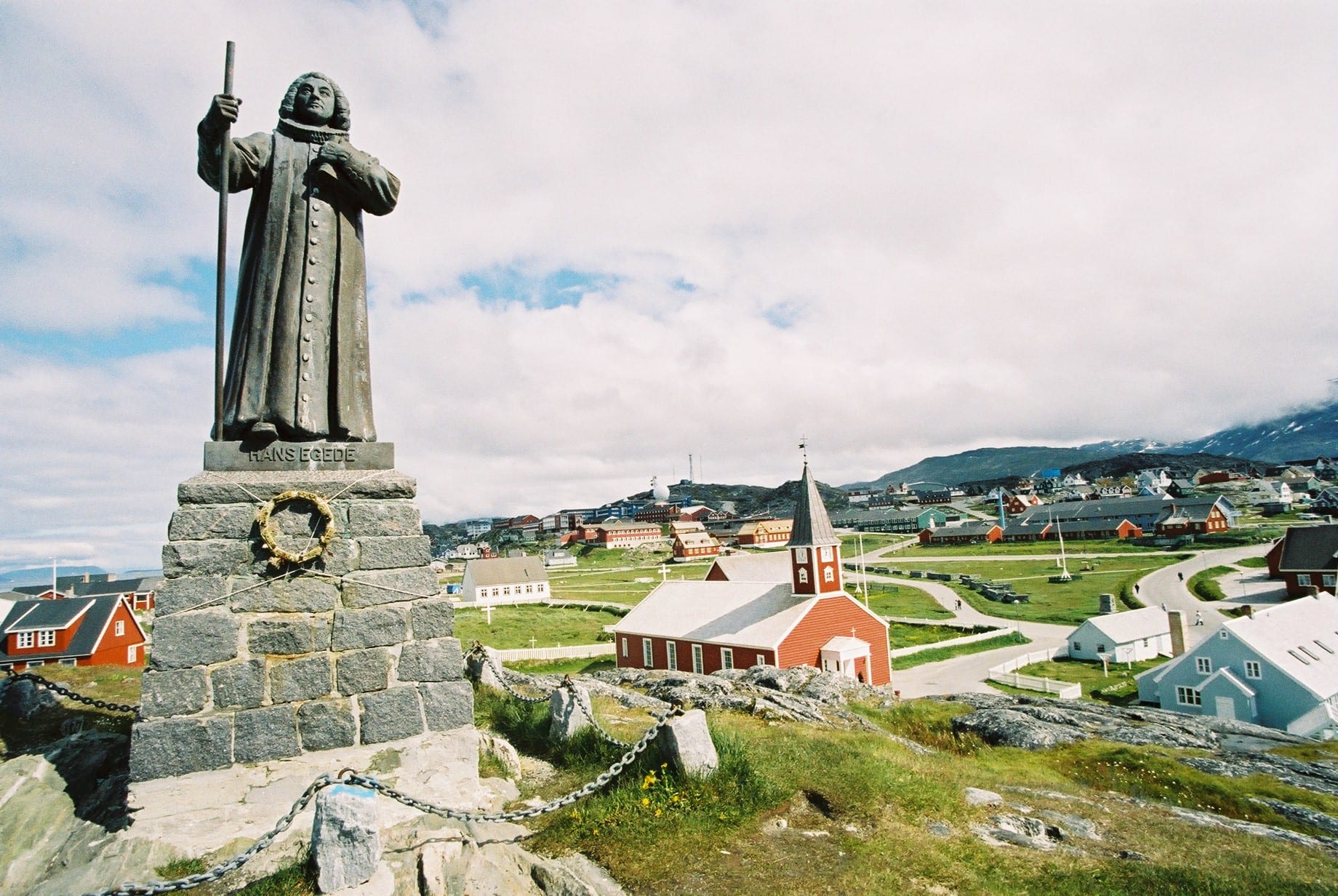
Denmark-Norway claimed Greenland as former Norse land, and in 1721 the missionary Hans Egede founded a colony at Godthåb — now Nuuk — hoping to find the lost Norse Christians. He found only Inuit, whom the mission set about converting. From 1774 a royal trade monopoly sealed the island off from the outside world for nearly two centuries.
Modernisation and its costs
When Germany occupied Denmark in 1940, the United States took over Greenland's defence and supply, building airbases — including the far-northern Thule base in 1951, for which an Inuit village was forcibly relocated. Cryolite from Greenland was vital to wartime aluminium.
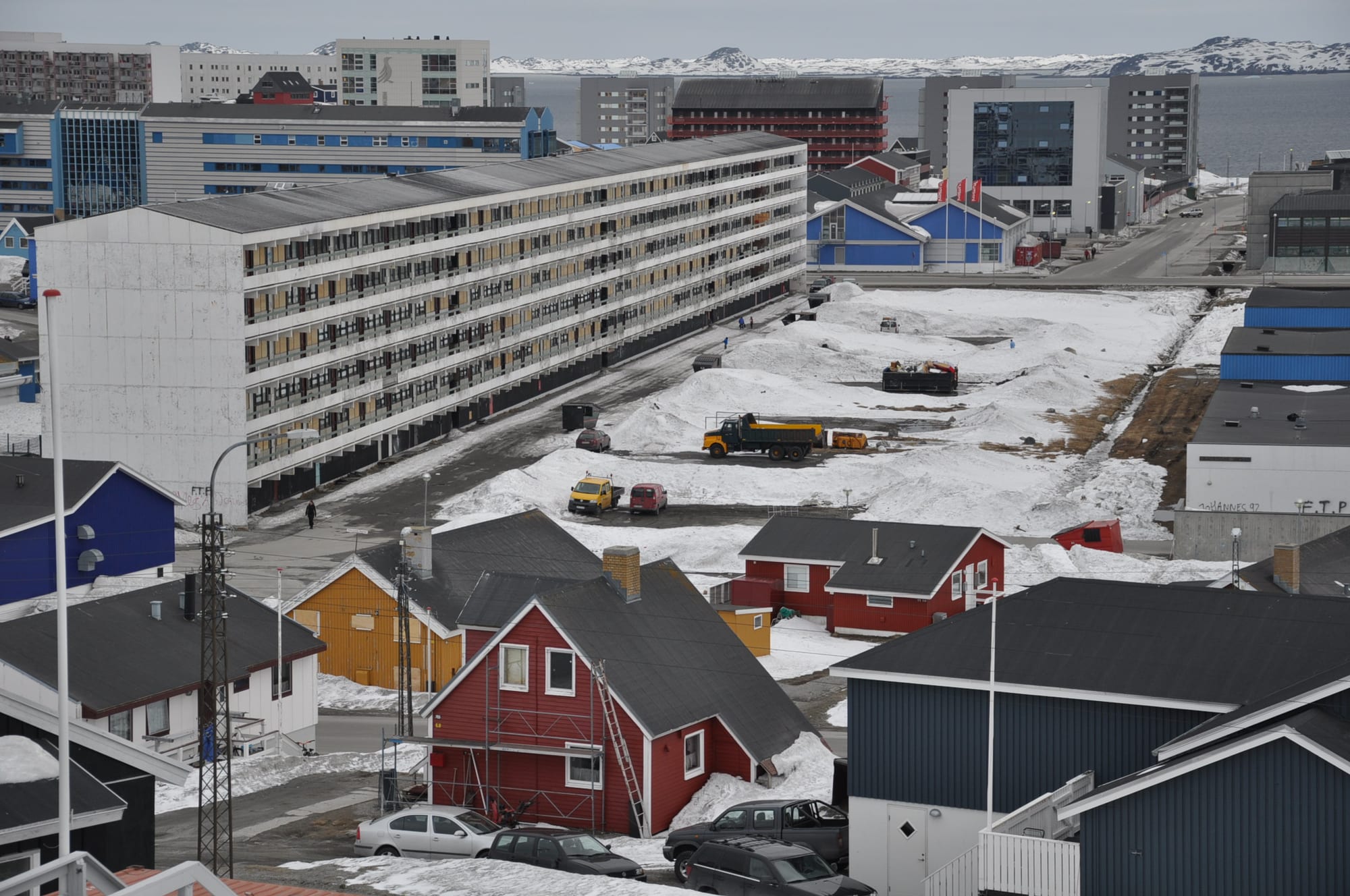
In 1953 Denmark ended Greenland's colonial status and made it an integral county. The modernisation policies that followed concentrated the scattered population into a few towns with Danish-style apartment blocks, built an industrial fishing economy, and made Danish the language of advancement — a wrenching social change, run largely by Danish officials. The same years saw a birth-control campaign that fitted contraceptive coils in thousands of Greenlandic women and girls, often without consent, now the subject of a formal inquiry.
Toward independence
A 1979 referendum brought Home Rule — a Greenlandic parliament and government running most domestic affairs, and Greenlandic as the official language. In 1982 Greenland voted to leave the European Community over fishing rights. The Self-Government Act of 2009, following another referendum, went further: it recognised the Greenlandic people under international law, transferred rights over underground resources, and set out how Greenland could become fully independent — which would end the Danish annual grant that funds about half the public budget.
The economy still rests on fishing and that subsidy. A melting ice sheet has drawn outside interest in Greenland's minerals and shipping routes, and renewed attention from the United States, which has twice offered to buy the island and keeps a missile-warning base there. Most Greenlanders want independence eventually, but not at the price of their standard of living.
What Greenland carries
Greenland's history is a sequence of peoples meeting an unforgiving environment — some who did not last, one Norse colony that failed, and the Thule Inuit who endured and became a nation. The modern chapter is about undoing a colonial relationship on Greenlandic terms: enough self-rule to decide its own future, and a slow, deliberate approach to the moment it might.