Culture & Customs · Gibraltar
Gibraltar: Two Tongues, Many Faiths, One Rock
A people who switch between English and Spanish in a single sentence, synagogues, churches and a mosque on one small peninsula, and a calendar that runs from the Three Kings to a sea of red and white
By Worldlore Editorial · 30 September 2026
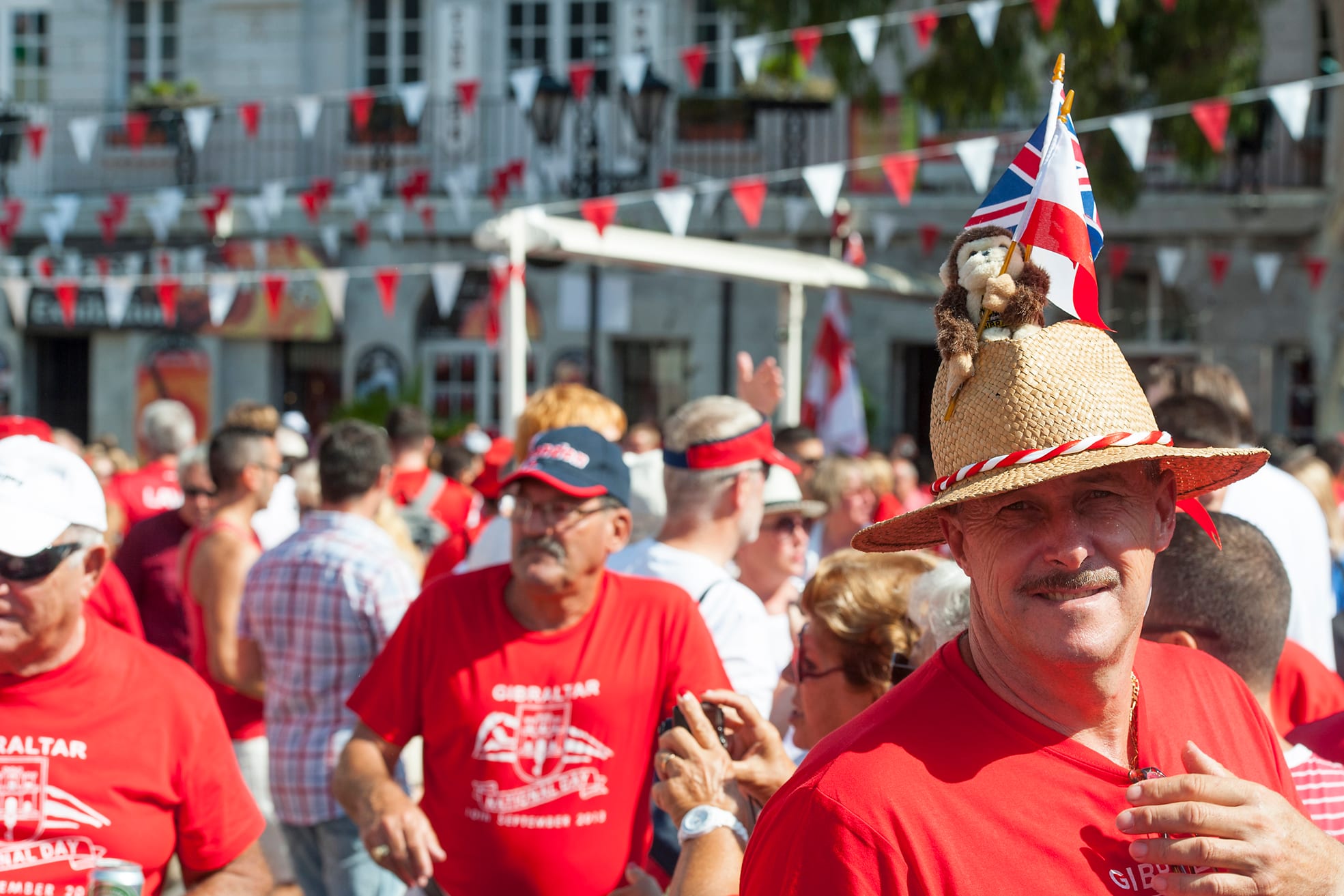
On the morning of 10 September, Gibraltar turns red and white. Main Street is busy from early on, flags hang from balconies, and whole families, babies included, are dressed in the territory's colours. By midday a crowd has gathered for the political rally; later there is music, and after dark a display lights up the bay. The day marks the anniversary of the 1967 referendum in which Gibraltarians voted by an overwhelming majority to remain under British sovereignty rather than pass to Spain, which continues to claim the territory. For Gibraltarians, though, National Day is as much a family occasion as a political one, with relatives gathering for long meals together. It is the one day of the year when the whole community of a small, crowded peninsula turns out at once, and it says a great deal about a people who see themselves as something distinct: the Llanitos.
Faith, identity and values
Religion in Gibraltar is shaped by centuries of trade and settlement from around the Mediterranean. Roman Catholics make up close to two-thirds of the population, 63.5 per cent at the 2022 census, although the share of people with no religion more than doubled in the decade after 2012. The Church of England, the Jewish community and smaller Muslim and Hindu communities complete a religious map unusually varied for a place of fewer than 40,000 people.
The patroness of Gibraltar is Our Lady of Europe, a devotion that the Catholic diocese traces back more than 700 years. Her shrine stands at Europa Point, the southern tip of the Rock, and houses the centuries-old statue at the heart of the devotion. In 1979 Pope John Paul II confirmed Our Lady of Europe as principal patroness of the diocese, and her feast falls on 5 May, when the diocese marks the day with Mass and celebrations in her honour.
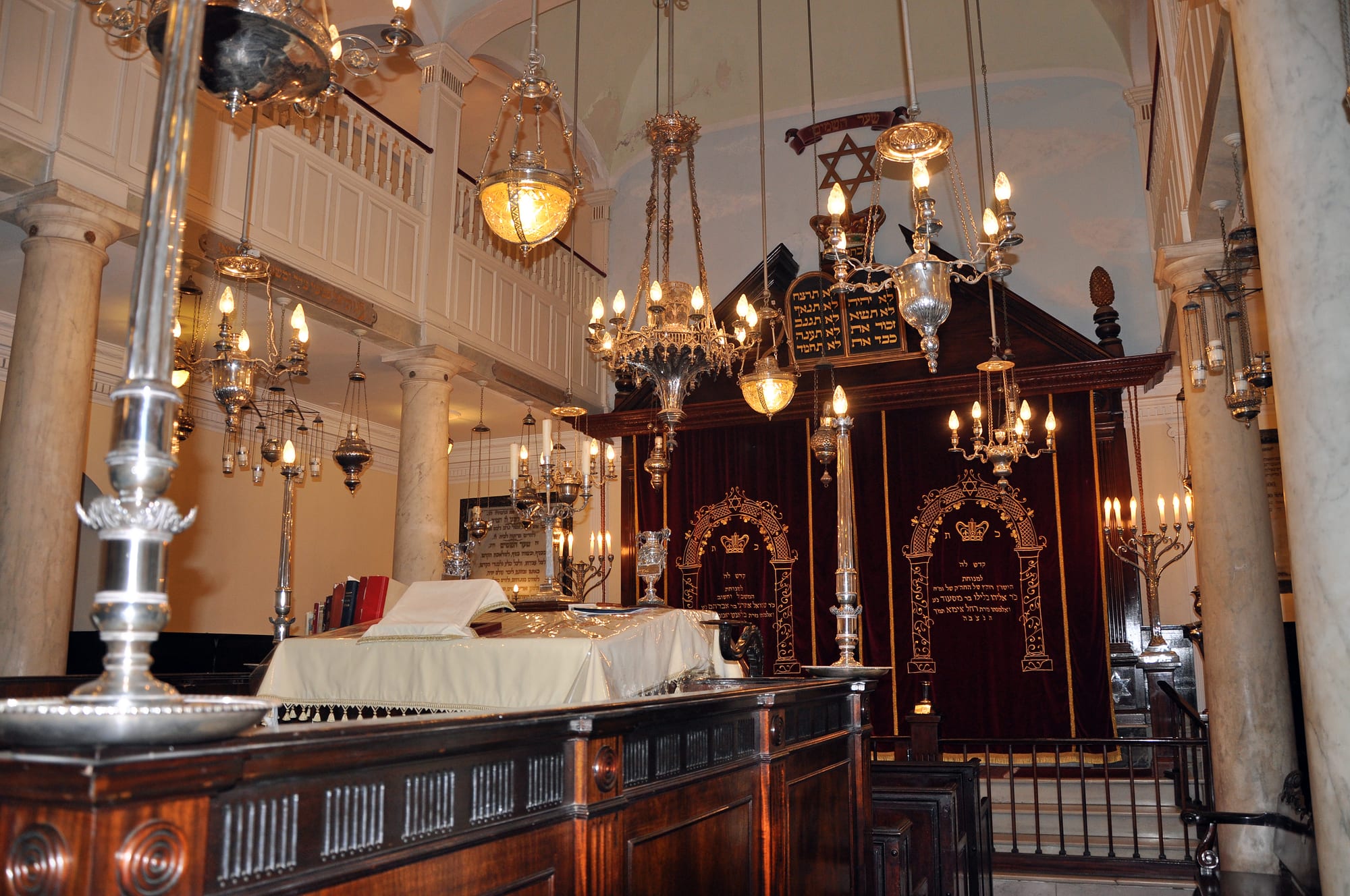
The Jewish community is one of Gibraltar's oldest threads. In 1724 the governor granted land in Engineer Lane to a merchant, Isaac Nieto, who founded a congregation on the model of Bevis Marks in London and named it Sha'ar HaShamayim, "Gate of Heaven". The present building, largely from 1812, hides behind a plain town-house façade an interior of marble floors, dark wood and hanging lamps; it was the first synagogue to operate on the Iberian Peninsula after the expulsions of Jews from Spain and Portugal in the 1490s. Today the community numbers several hundred and keeps four synagogues. Its leaders speak warmly of the way faiths live alongside each other on the Rock, and that sense of coexistence is a genuine source of local pride.
Identity in Gibraltar is a subtle matter. The territory keeps many British institutions, yet much of its daily culture is Mediterranean, and scholars of the territory describe a hybrid identity that is neither simply British nor Spanish. The Gibraltarian sense of self is expressed above all through language, and through occasions such as National Day that affirm the community's right to decide its own future.
Greetings and meeting people
English is Gibraltar's official language and the language of school, government and business, and it is the natural choice for any visitor. What is heard in homes, cafés and on the street, though, is often Llanito: a fluid switching between Andalusian-flavoured Spanish and English, laced with words borrowed from other Mediterranean languages. A speaker may begin a sentence in one language and finish it in the other, and the switch itself is part of the style. Researchers writing in The Round Table describe Llanito as a way for Gibraltarians to assert an identity of their own, separate both from Spanish claims and from a blanket Britishness. It is also under pressure: English is becoming ever more dominant, and many younger Gibraltarians speak little Llanito even though they learn Spanish at school.
Because identity matters so much, it is worth remembering that a Gibraltarian is not a Spaniard, nor simply a Briton abroad, and it is courteous not to assume either. Showing an interest in the place's own story, and in its way of speaking, is a natural way into conversation.
Hospitality and being a guest
Social life in Gibraltar is close-knit to an unusual degree: with a small population packed into a tiny territory, families, schoolmates and neighbours meet constantly, and big occasions are shared by almost everyone. Family meals are at the heart of celebrations, National Day included, and the calendar of public events is generous, organised in large part by the government's cultural agency. Visitors are welcome to join in, whether at the Three Kings' Cavalcade, the Calentita Food Festival, or the crowds of National Day.
Visitors to places of worship, which are unusually numerous and varied for the territory's size, should dress modestly and behave quietly, particularly during services. Religious communities are active and visible, and the Catholic calendar of processions and feast days is part of the rhythm of local life.
Festivals and life's big moments
The year opens with the Three Kings' Cavalcade on 5 January, when a parade of floats makes its way through the town, and sweets are handed out to the waiting crowds. Holy Week follows the Catholic calendar. On Good Friday the outdoor Stations of the Cross wind through the town, and processions carry religious statues through the streets. May brings the feast and procession of Our Lady of Europe. Spring and early summer bring a cultural programme of exhibitions, concerts and competitions, and the Calentita Food Festival.
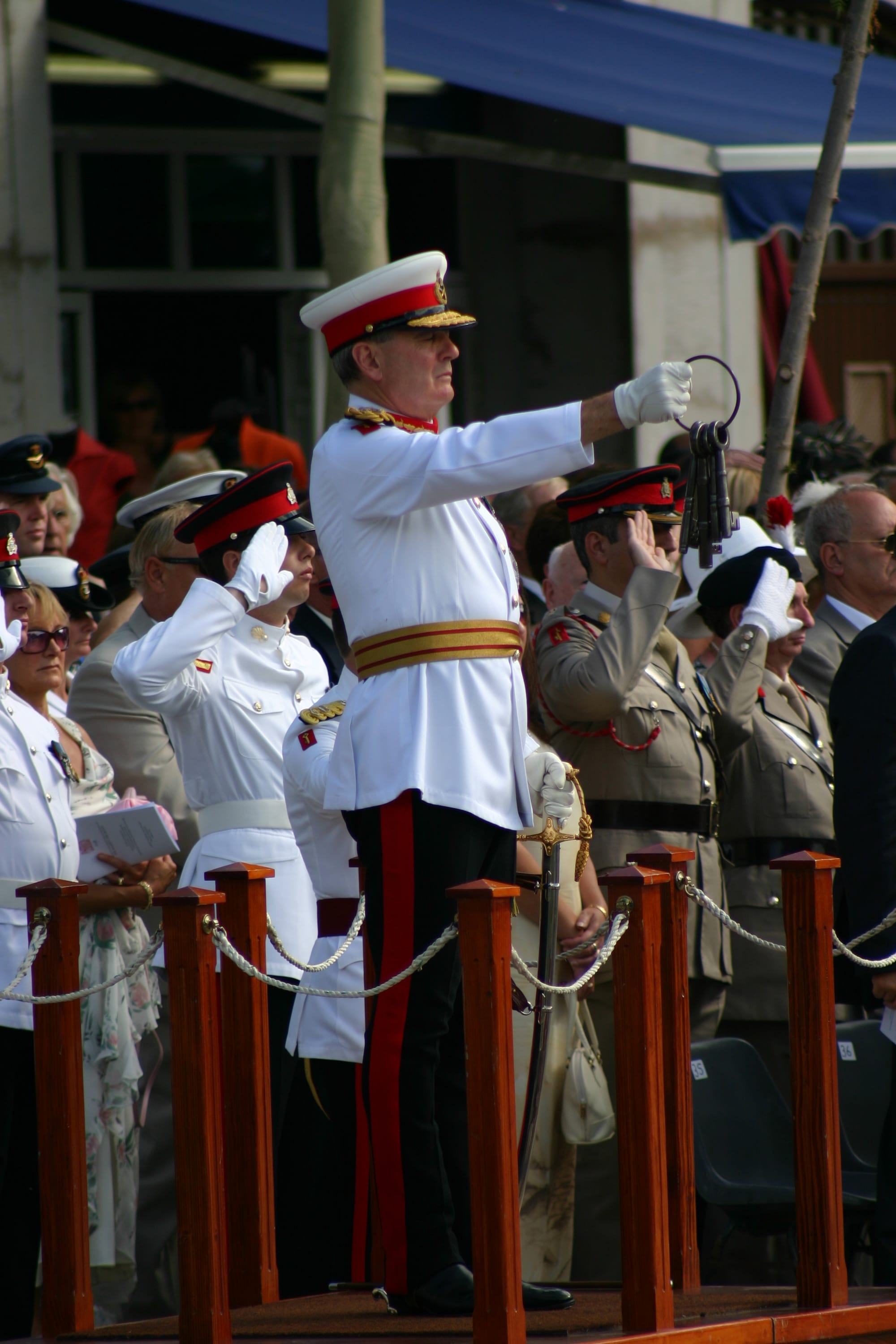
National Day, on 10 September, is the high point of the public calendar, organised by the Self Determination for Gibraltar Group with the government's cultural agency: music and performances from the morning, the rally around midday, a rock concert in the evening and a display over the bay at night, long a fireworks show from the Detached Mole and in 2025 a drone display. Military heritage has its own place too. Once a year the Royal Gibraltar Regiment, with military bands, parades in Casemates for the Ceremony of the Keys, in which the governor hands the Keys of the Fortress to the Port Sergeant. A re-enactment association performs a version of the ceremony along Main Street every Saturday at noon, in period red and white uniforms.
Weddings in Gibraltar are shaped partly by its marriage rules, which allow residents and non-residents alike to marry there, with ceremonies at the registry or at approved venues outside it. Civil partnerships are provided for in the same way.
Arts, crafts and music
Gibraltar's cultural life is closely bound to its sense of community. Gibraltar Cultural Services, working for the Ministry of Culture, runs a year-round programme: spring visual arts exhibitions at the Gustavo Bacarisas Gallery; art and short-story competitions; concerts; and heritage events. Language itself has become a subject of study and display: since 2022 academics from the University of Cambridge have been researching Llanito, and events and exhibitions have explored the local way of speaking and its prospects.
History is performed as well as studied. The re-enactment association's Saturday ceremonies in period uniform, sometimes with volleys from Napoleonic-era muskets, keep the story of the fortress in the public eye, and the group sometimes swaps its red and white for the uniforms of later regiments from Gibraltar's military past.
Dos and don'ts for visitors
- Do use English to open a conversation; it is the official language and always appropriate.
- Do show an interest in Llanito and Gibraltar's own history; both are sources of pride.
- Do dress modestly and keep quiet in churches, synagogues, the mosque and the temple, especially during services.
- Do join in public events such as the Three Kings' Cavalcade or National Day; visitors are welcome.
- Don't assume Gibraltarians are Spanish, or simply British; the identity is their own.
- Don't treat the sovereignty question as small talk; it is a serious and personal matter for many people.
- Don't miss the Saturday midday re-enactment of the Ceremony of the Keys on Main Street.
What to take away
Gibraltar packs an extraordinary mix of languages, faiths and traditions into a tiny space, and visitors who take its people on their own terms — as Llanitos, rather than as anyone else — will find a community both proud and welcoming.