Daily Life · Gibraltar
Gibraltar: A Border Crossed Twice a Day
A British territory of 6.8 square kilometres where more than half of private-sector jobs are held by people who commute in from Spain every morning, and where Llanito, a running blend of Andalusian Spanish and English, is still widely heard on the street
By Worldlore Editorial · 30 September 2026
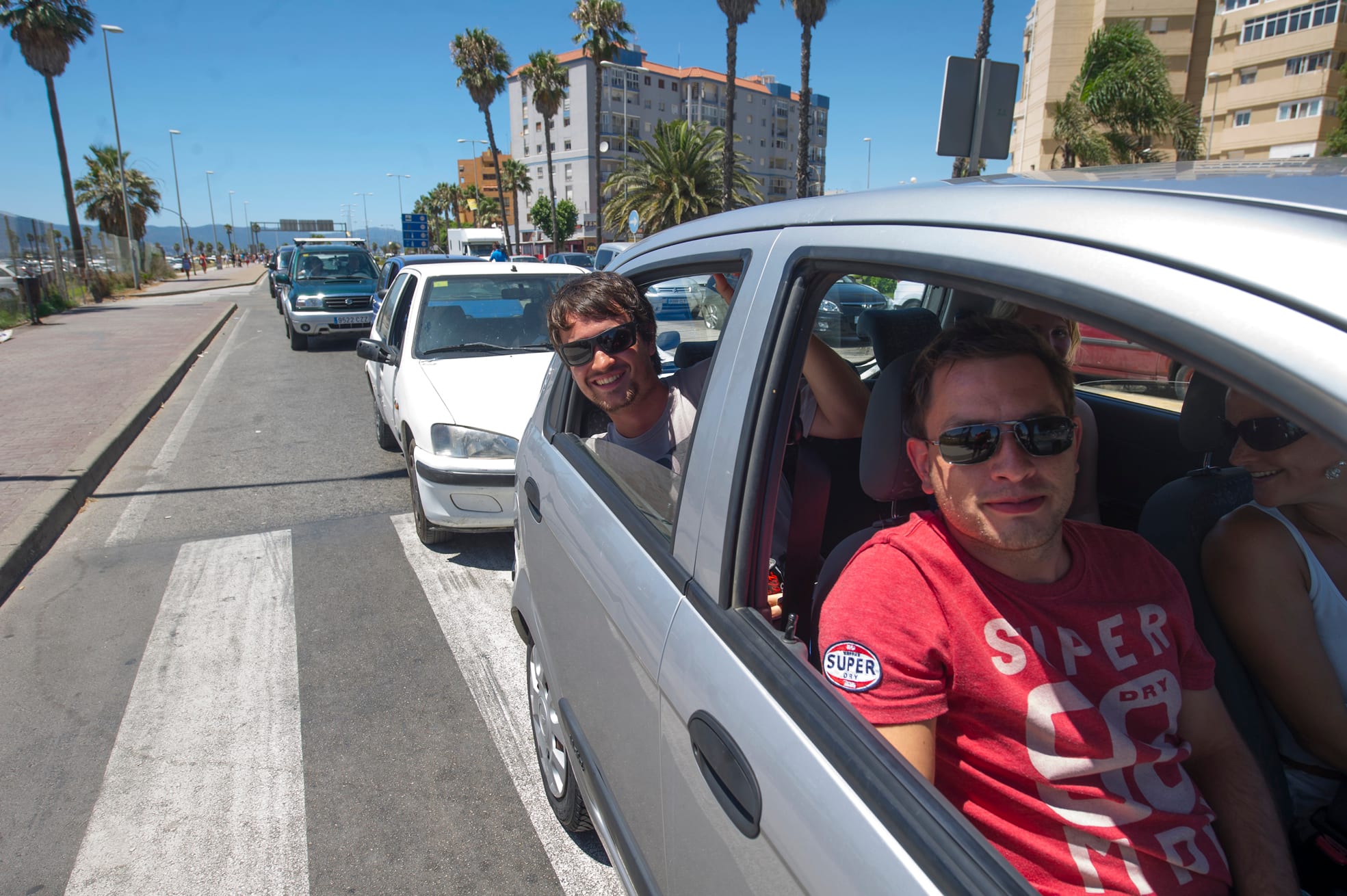
Gibraltar packs around 38,000 residents into 6.8 square kilometres of rock and reclaimed land, one of the highest population densities anywhere, and an ordinary working day here depends on a border most countries don't have to think about. Around 58 per cent of private-sector jobs are held by frontier workers who live in Spain, so the morning and evening crossing of the border is as much a part of daily life as any office routine; since July 2026, under a treaty between the UK and the EU, the land frontier has had no routine passport or customs checks. English is the official language, and increasingly the everyday one, but many Gibraltarians also speak Llanito, a fluid, constantly switching mix of Andalusian Spanish and English that outsiders can follow only with practice.
Family and home life
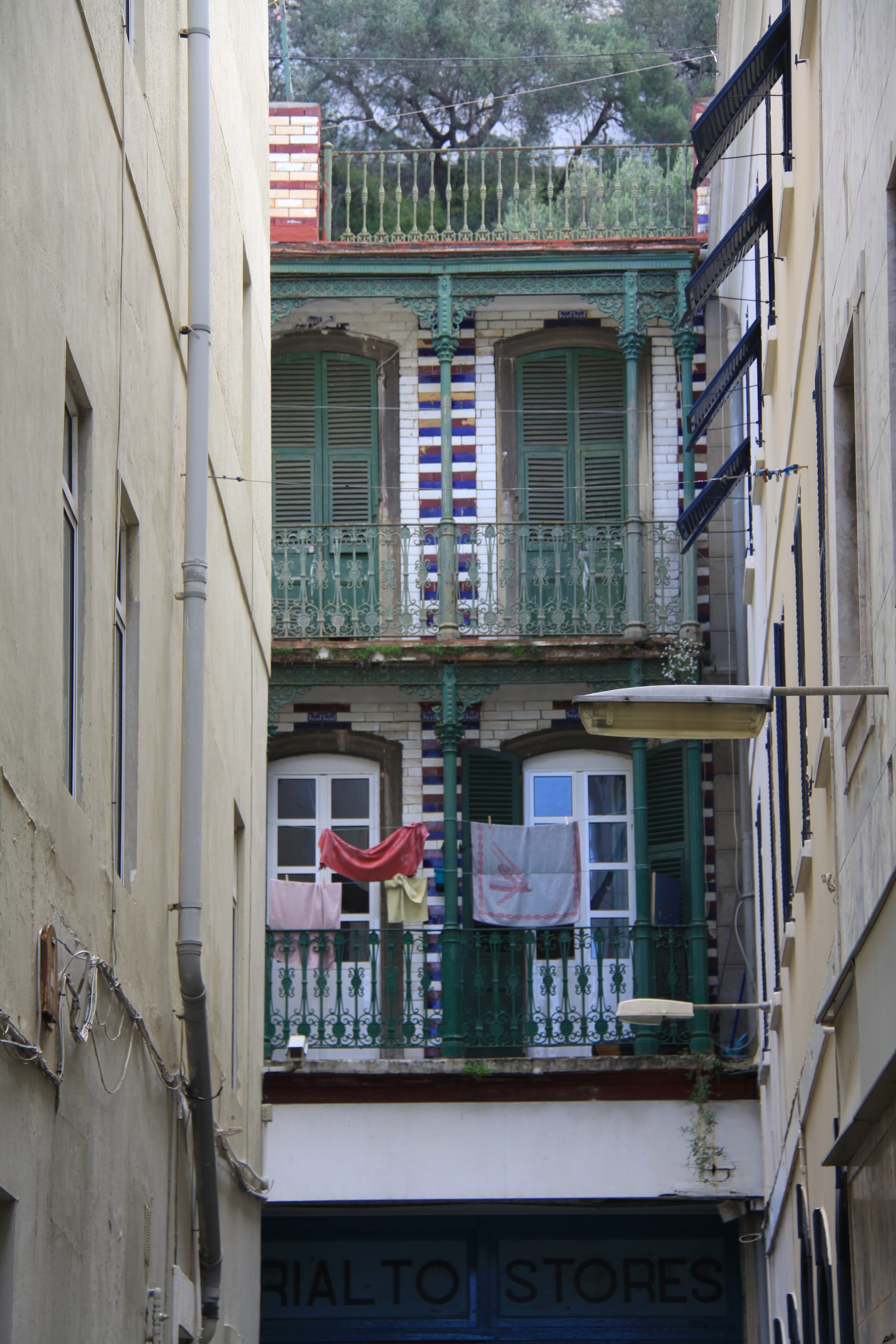
Space is the defining fact of Gibraltarian housing: with the whole territory smaller than most single city districts, homes are close together, often in dense terraces or blocks, including land reclaimed from the sea to make room for new housing. Older townhouses with shutters and balconies, in a mix of Genoese, British and Andalusian styles and still lived in, sit alongside modern flats, and it is common for extended family to live within a short walk of one another simply because there is nowhere far to live. Gibraltar's religious makeup reflects centuries of trade and settlement rather than a single dominant tradition: alongside a Roman Catholic majority of about 72 per cent and a Church of England minority tied to Gibraltar's British status, established Jewish, Hindu and Muslim communities, some dating back generations, are a genuine part of the territory's social fabric, not a recent addition.
Work, school and the rhythm of the day
Unemployment in Gibraltar is exceptionally low, around one per cent, and a private sector led by financial services, online gambling, maritime services and tourism runs substantially on frontier workers commuting in each day from Spain, many of them from La Línea just across the border. That daily cross-border flow shapes the rhythm of the working day, with the frontier busiest at the start and end of office hours. Schools follow the English system and the National Curriculum, teaching in English with Spanish as a core subject, and English is increasingly the language of home too: many younger Gibraltarians speak little Llanito.
Community life and public spaces
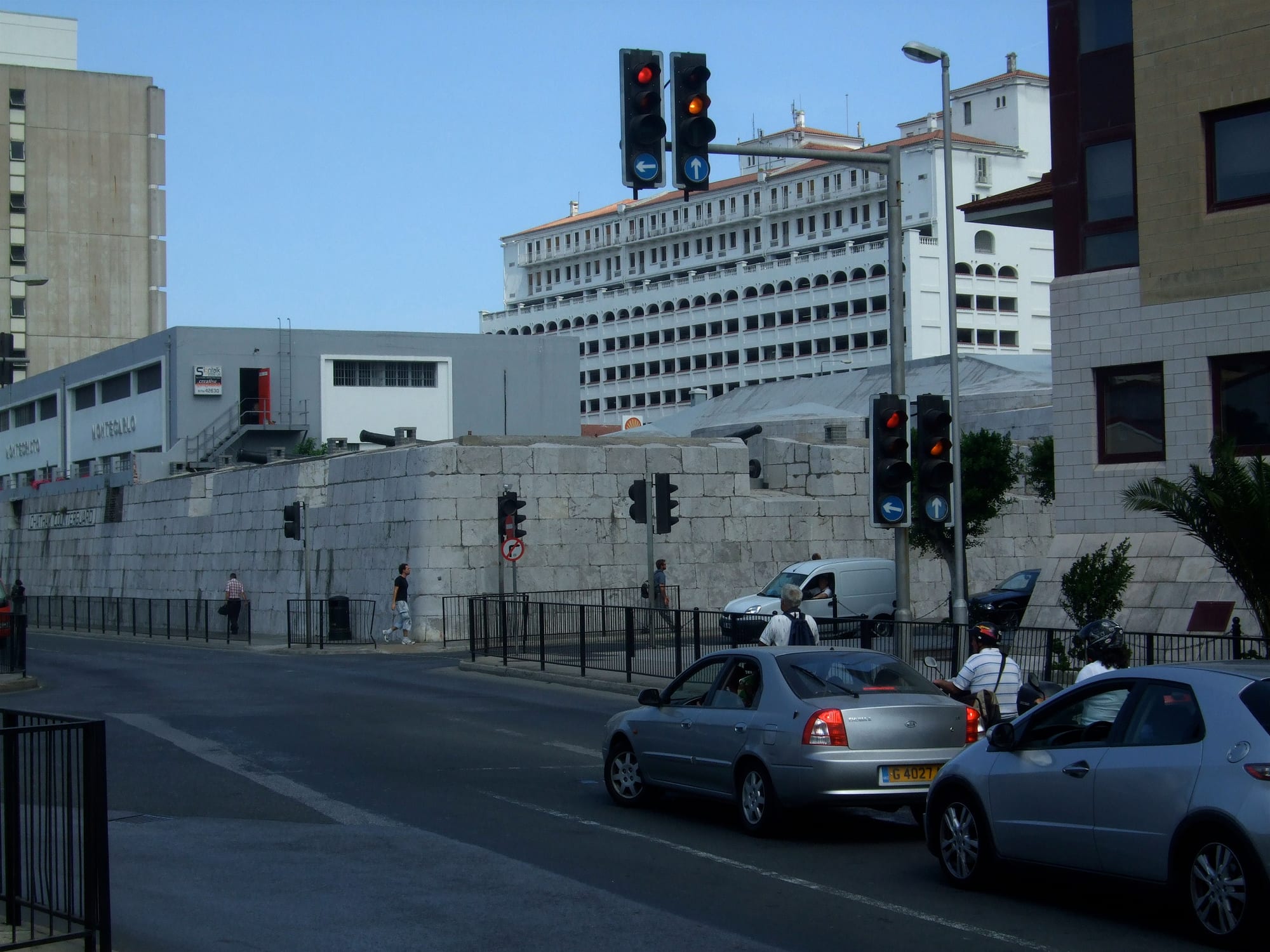
Gibraltar is small enough to be genuinely walkable, and Main Street, pedestrianised and lined with shops, many of them familiar from British high streets, functions as the territory's real public living room, drawing both residents and day-trippers from across the border. Because almost everything is within walking distance, cars matter less for daily errands than they might in a larger country, even though the road network is often busy with cross-border traffic. Grand Casemates Square, at the northern end of Main Street, is lined with pubs, bars and restaurants and is the main outdoor gathering point for events and evening socialising.
Free time and weekends
With Spain a short walk or drive away, a weekend trip across the border for a meal, a beach day or shopping is a normal and frequent part of life for Gibraltarians, not a special outing. Within the territory, the Upper Rock nature reserve, its trails, caves and Barbary macaques, is as much a place locals go for a walk as a tourist attraction. Football is a popular sport, and Gibraltar National Day on 10 September, a public holiday when the streets fill with red and white, is the day much of the territory turns out together.
A visitor's ordinary day
Gibraltar uses the Gibraltar pound, at par with and interchangeable with sterling, though Bank of England notes work here too; euros are accepted in many shops, often at a less favourable rate, and cards are widely accepted. Most visitors arrive on foot across the frontier from La Línea in Spain, which since July 2026 has had no routine passport or customs checks, so crossing on foot is quick. Once inside, the town centre is entirely walkable, and a car is more hindrance than help given the narrow streets. Since 2023 road traffic to Spain has used a tunnel, but pedestrians still walk across the airport runway, which closes briefly whenever a flight lands or takes off.
What to take away
An ordinary day in Gibraltar is shaped by its size and its border in equal measure: a community small enough that everyone's daily walk overlaps, and a workforce that quite literally crosses an international frontier to get to the office.