Food · Germany
Germany: Food and the National Dish
A vinegar-marinated pot roast slow-cooked for days, a sausage culture with hundreds of regional variations, and beer gardens that double as the country's most reliable dining rooms
By Worldlore Editorial · 16 September 2026
A cuisine of hundreds of regional variations
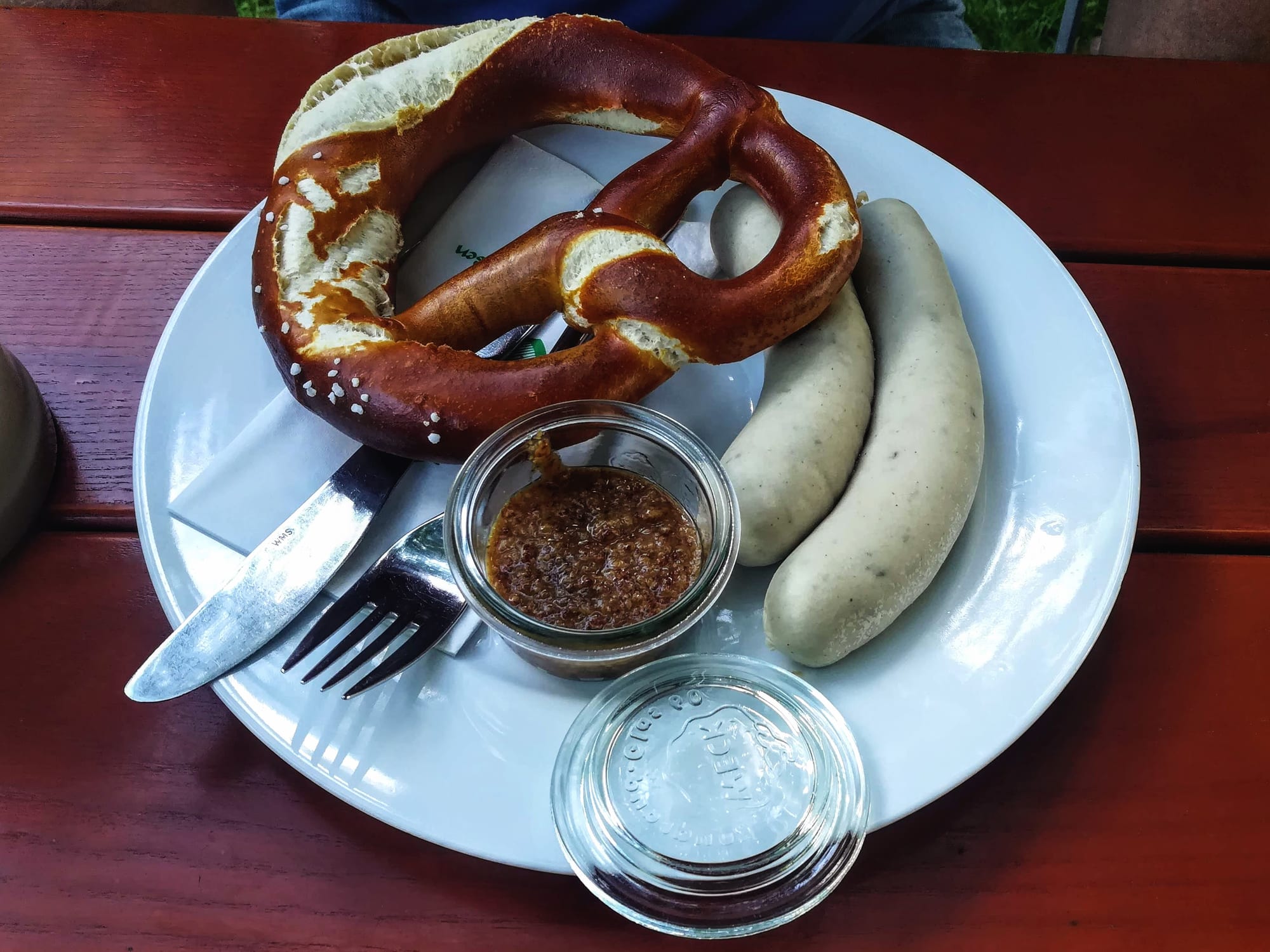
German food resists easy summary more than most European cuisines, since so much of it varies sharply from region to region — Bavaria's food owes more to Austria, the north leans on fish and the Baltic, and the Rhineland has its own distinct sweet-and-sour cooking style. What holds it together is a shared reliance on bread, potatoes, pork and cabbage, and a bakery and beer culture found consistently everywhere.
The national dish: sauerbraten
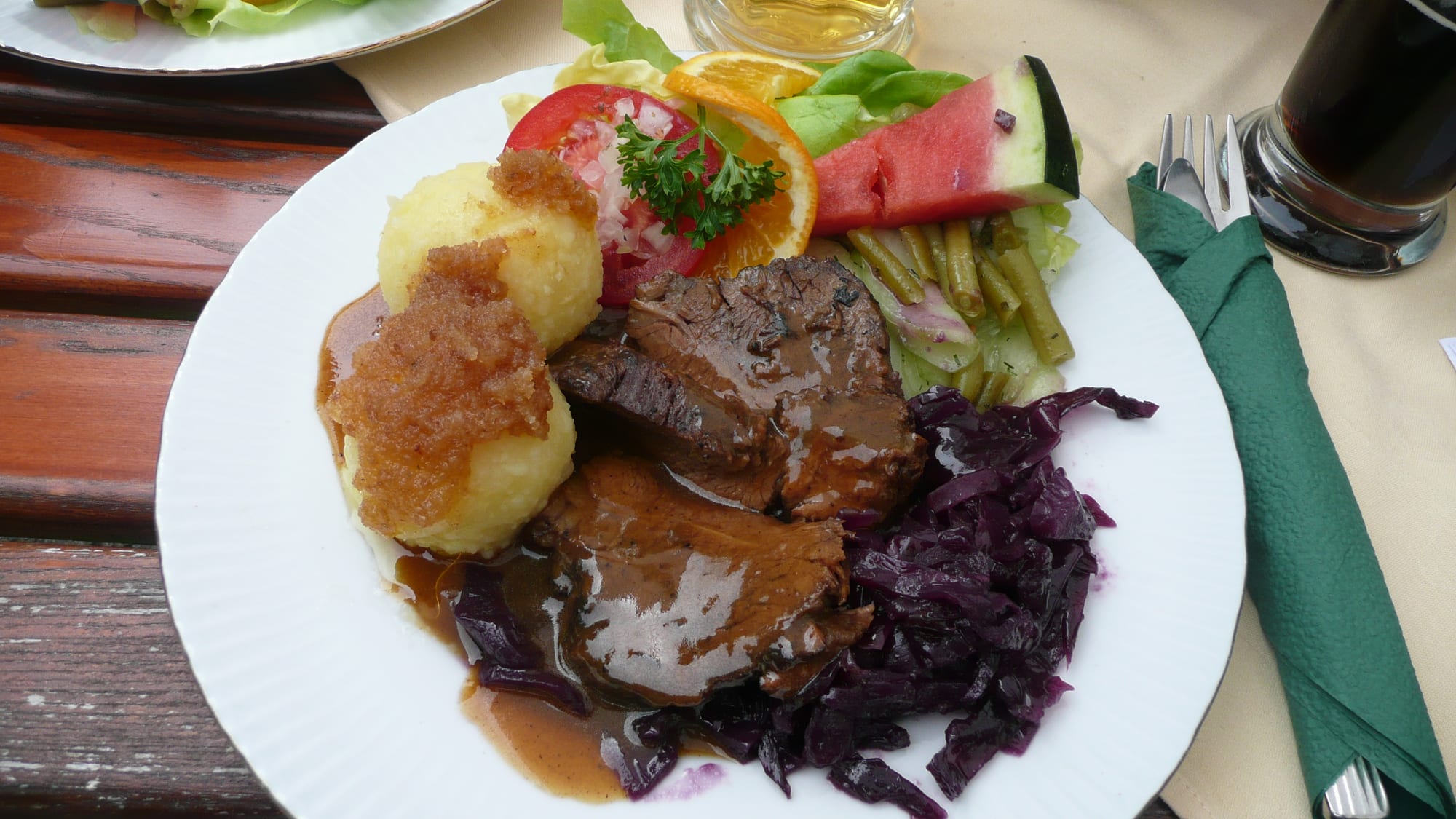
Sauerbraten, beef (or, in some regions, other meats) marinated for days in a mixture of vinegar, wine and spices before being slow-roasted, is widely regarded as Germany's national dish. The long marinade both tenderises the meat and gives the dish its distinctive tangy flavour, and it is traditionally served with potato dumplings and red cabbage. Regional versions vary considerably — Rhenish sauerbraten is often sweetened with raisins, while Saxon and Franconian versions differ again.
Bread, sausage and the everyday pantry
Germany produces an extraordinary range of bread — several hundred registered varieties, from dense dark rye loaves to soft white rolls — and an equally wide sausage tradition, with regional wurst varieties numbering in the hundreds as well. Potatoes, cabbage in its many forms including sauerkraut, and pork round out the everyday base that most German regional cooking builds from.
History and region on the plate
Germany's regional food differences trace back to the country's long history as a patchwork of independent kingdoms, duchies and free cities before unification in 1871, each of which developed its own culinary identity that never fully merged into one national style. Trade routes, religious differences between the Protestant north and Catholic south, and simple geography — coastal fish in the north, alpine dairy in the south — reinforced those regional distinctions further.
From the coast to the Alps
Northern Germany leans on herring, other fish and potatoes, closer in spirit to its Scandinavian and Baltic neighbours; Bavaria in the south is sausage, pretzel and beer country with strong Austrian influence; and the Rhineland in the west favours a sweeter, more sauce-driven style, visible in dishes like Rheinischer Sauerbraten itself.
Dishes to know
Five more to recognise across Germany:
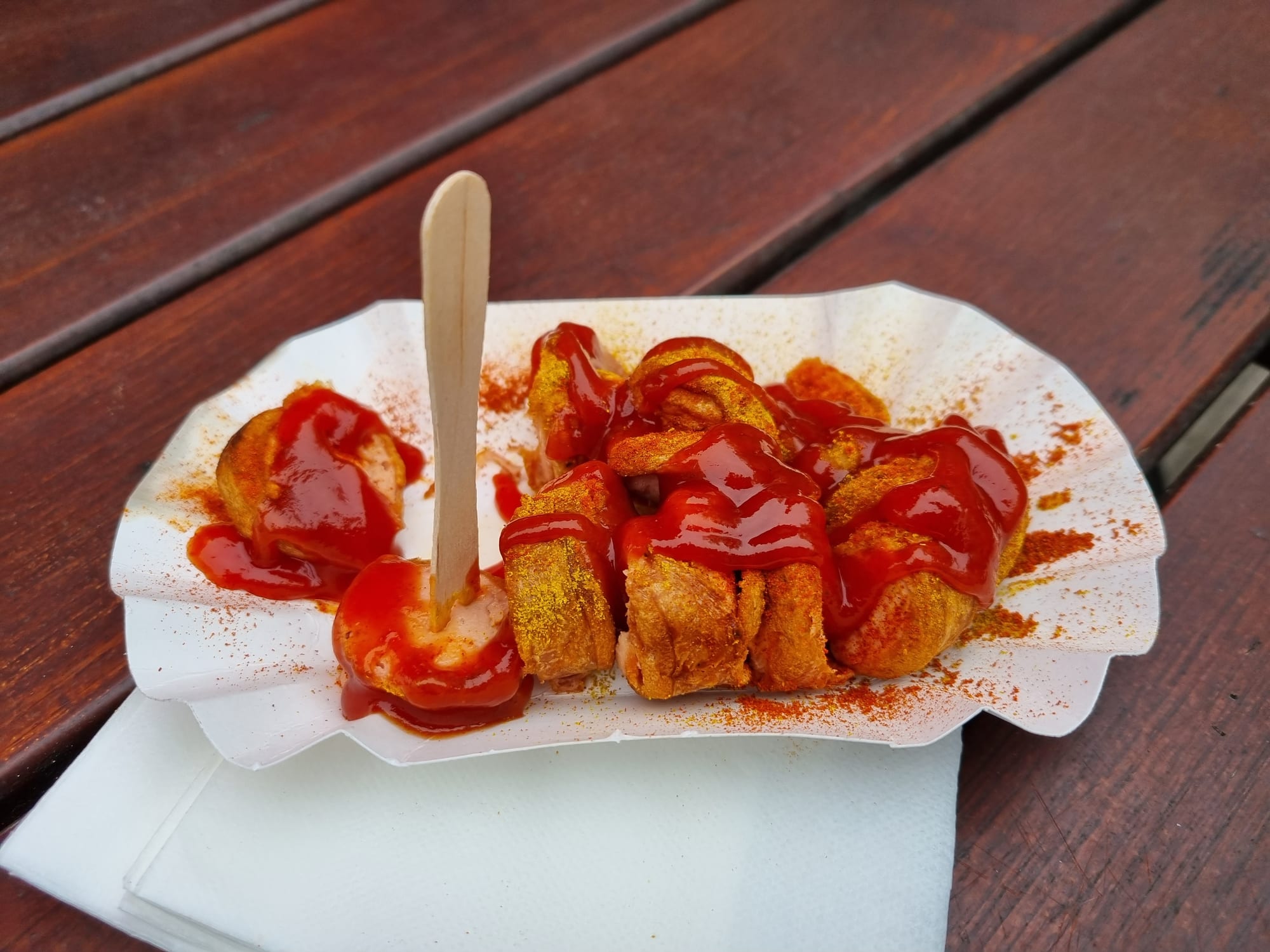
- Currywurst — sliced sausage topped with curry-spiced ketchup, a
20th-century Berlin invention now found nationwide.
- Schweinshaxe — roasted pork knuckle with crackling skin, a Bavarian
specialty.
- Königsberger Klopse — meatballs in a creamy caper sauce, originally
from the historic region of East Prussia.
- Spätzle — soft egg noodles, a specialty of southwestern Germany often
served alongside cheese as Käsespätzle.
- Black Forest cake — a chocolate, cherry and cream cake named for the
Black Forest region in the southwest.
Drinks
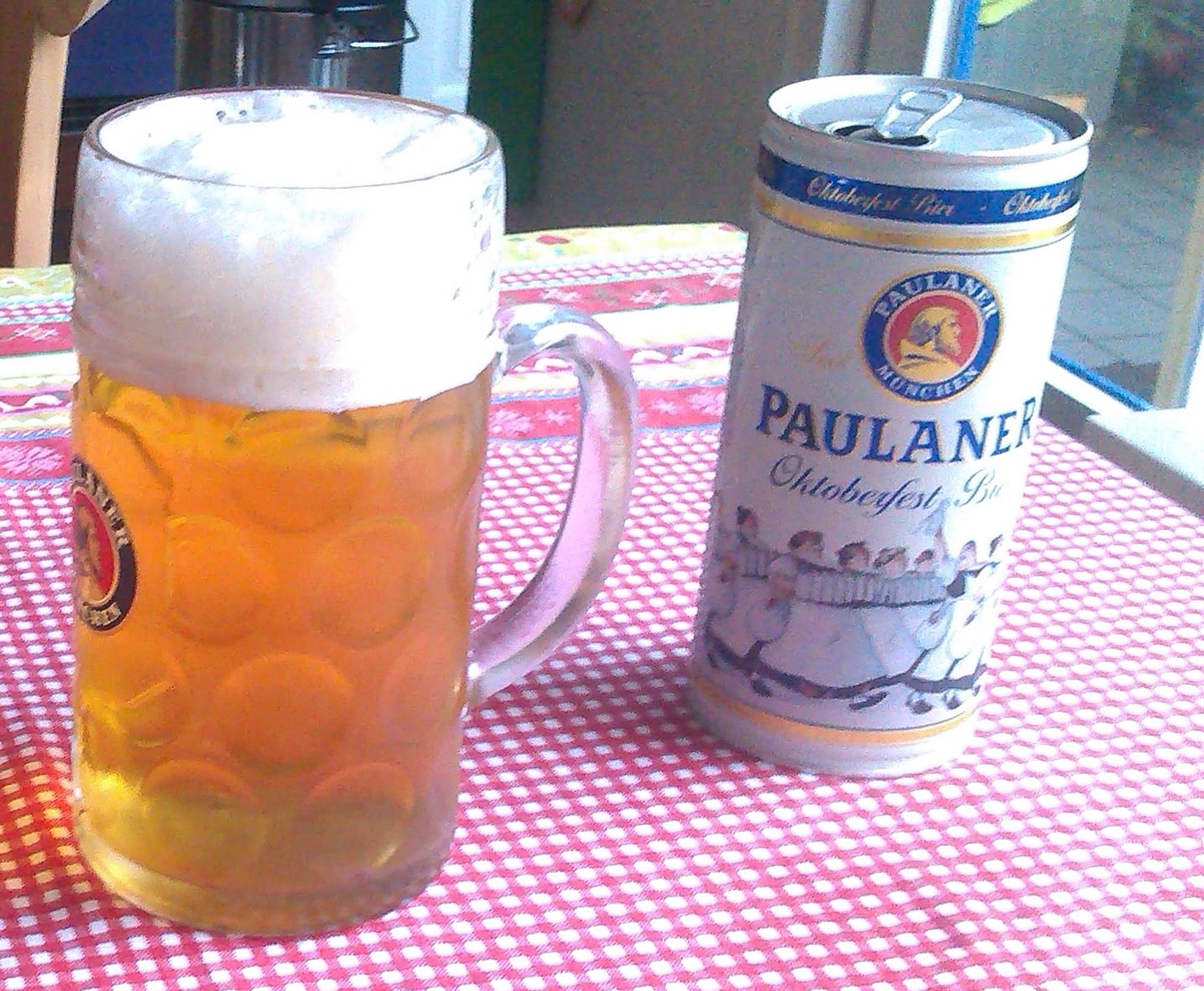
Beer is central to German food culture, governed in part by the centuries-old Reinheitsgebot purity requirements, and brewed in hundreds of distinct regional and local styles. Riesling and other white wines from regions like the Mosel and Rhine valleys are also well-regarded, and coffee and cake, taken as an afternoon ritual called Kaffee und Kuchen, remains a genuine everyday custom.
Eating as a traveller
Vegetarians will find bread, cheese, egg noodles and an increasing range of modern vegetarian options in cities, though traditional German cooking leans heavily on meat. Tap water is safe throughout the country. A beer garden, often allowing visitors to bring their own food alongside drinks bought on site, is one of the most approachable and genuinely local ways to eat and drink in Germany.
What to take from the table
Sauerbraten, patient and tangy, is the dish that best represents German cooking's core techniques — but the real story of German food is regional: what counts as a defining dish changes considerably depending on which part of the country you're sitting in.