History · Germany
Germany: A Nation Assembled Late
A thousand years of fragmentation under the Holy Roman Empire, unification by Prussia in 1871, two world wars and the Holocaust, forty years split in two, and reunification in 1990
By Worldlore Editorial · 19 September 2026
A country younger than its history
Germany as a single nation-state is young — it dates from 1871 — but the German lands have a very long past, and for most of it they were not one country but hundreds. The central fact of German history before 1871 is fragmentation: a patchwork of kingdoms, duchies, church territories and free cities loosely roofed by the Holy Roman Empire. The central facts after 1871 are unification, two catastrophic wars, the Holocaust, forty years of division, and a reunification that is still, in some ways, being worked through.
A short history
- 9 CE
Teutoburg Forest
Germanic tribes destroy three Roman legions; Rome halts at the Rhine.
- 800
Charlemagne
Crowned emperor; East Francia later becomes the German kingdom.
- 962
The Holy Roman Empire
Otto I is crowned; a fragmented realm begins its 844-year run.
- 1517
The Reformation
Luther's theses split Western Christianity.
- 1618–1648
Thirty Years' War
War on German soil kills a huge share of the population.
- 1806
The empire ends
Napoleon dissolves the Holy Roman Empire.
- 1871
Unification
Bismarck's wars create the German Empire under Prussia.
- 1933–1945
Nazi Germany
Dictatorship, the Second World War, and the Holocaust.
- 1949
Division
The Federal Republic and the German Democratic Republic are founded.
- 1990
Reunification
East Germany joins the Federal Republic.
The empire that was not one
Rome never conquered Germania east of the Rhine — the destruction of Varus's legions in the Teutoburg Forest in 9 CE fixed the frontier. After the Frankish centuries, Otto I was crowned emperor in 962, beginning the Holy Roman Empire: an elective monarchy over a territory that grew steadily more decentralised, until real power lay with local princes, prince-bishops and city councils. It was, in Voltaire's line, neither holy, nor Roman, nor an empire.
Reformation and war
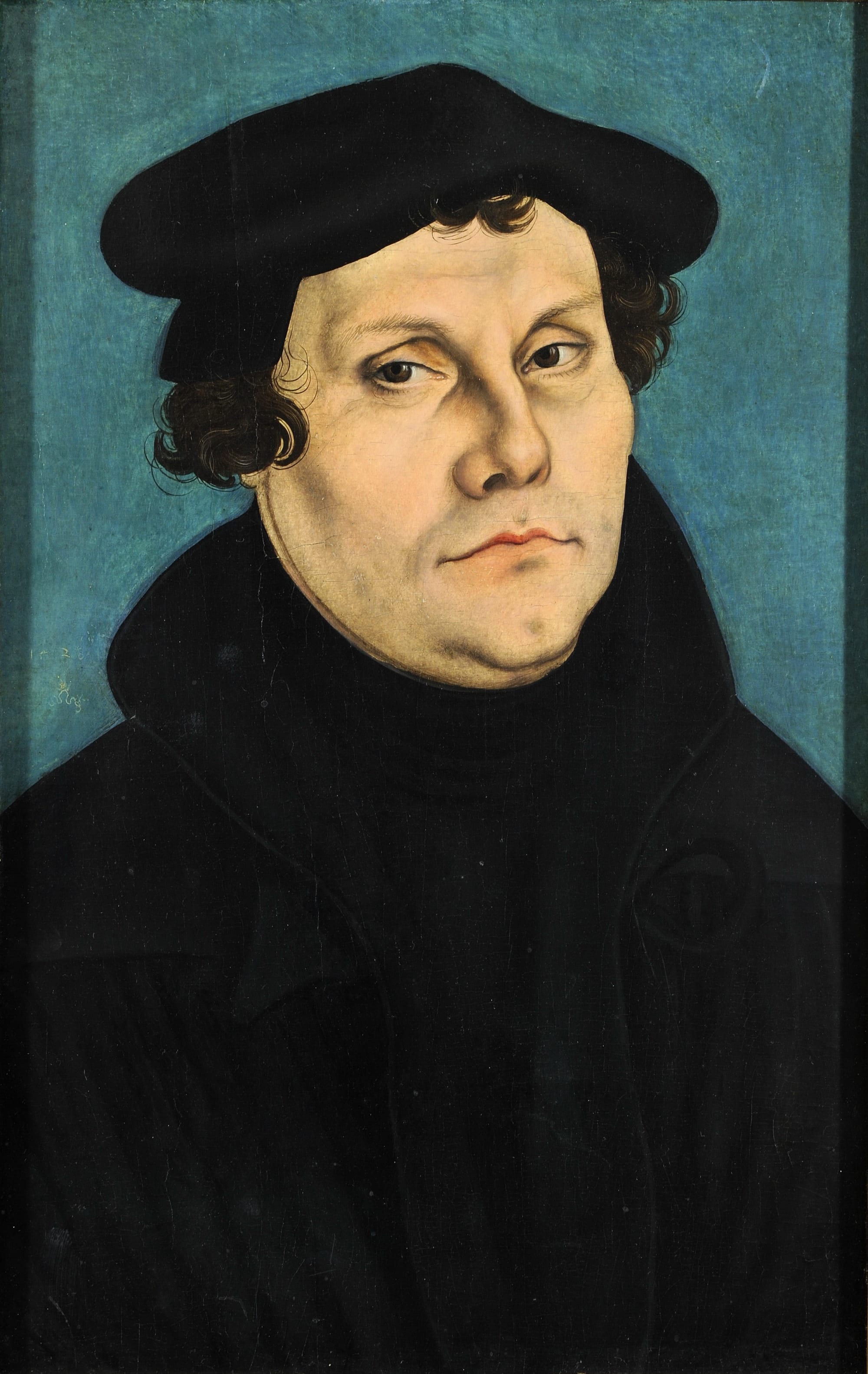
In 1517 an Augustinian friar, Martin Luther, published 95 theses against the sale of indulgences. Printed and spread within weeks — Gutenberg's press had been invented in Mainz around 1450 — they broke Western Christianity apart.
The religious split led, after decades of tension, to the Thirty Years' War (1618–1648) — fought mostly on German ground and killing perhaps a third of the population in the worst-hit regions. The Peace of Westphalia that ended it locked in the fragmentation, confirming each prince's sovereignty. Over the following century two German powers rose above the rest: Habsburg Austria, and a fast-growing Brandenburg-Prussia under the Hohenzollerns.
Unification by Prussia
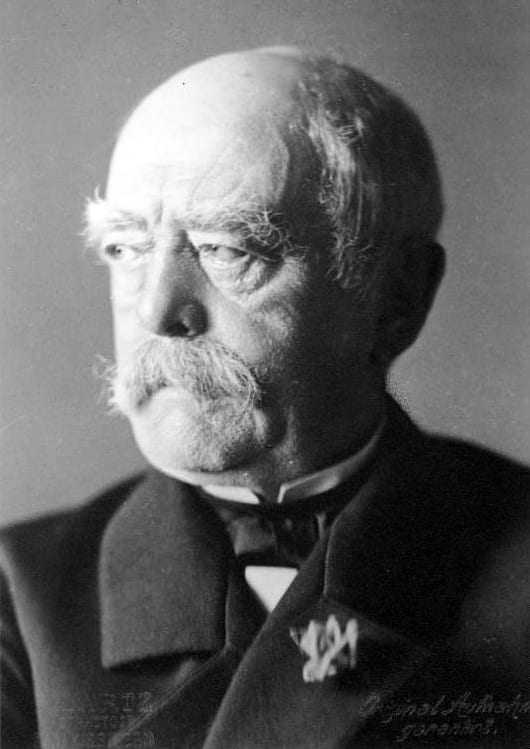
Napoleon abolished the Holy Roman Empire in 1806 and redrew the map. The German Confederation that followed the Congress of Vienna in 1815 was still a loose league of 39 states, and the liberal-national revolutions of 1848 failed to unite them. Unification instead came from Prussia, and from its minister-president Otto von Bismarck, through three short wars — against Denmark in 1864, Austria in 1866, and France in 1870–71.
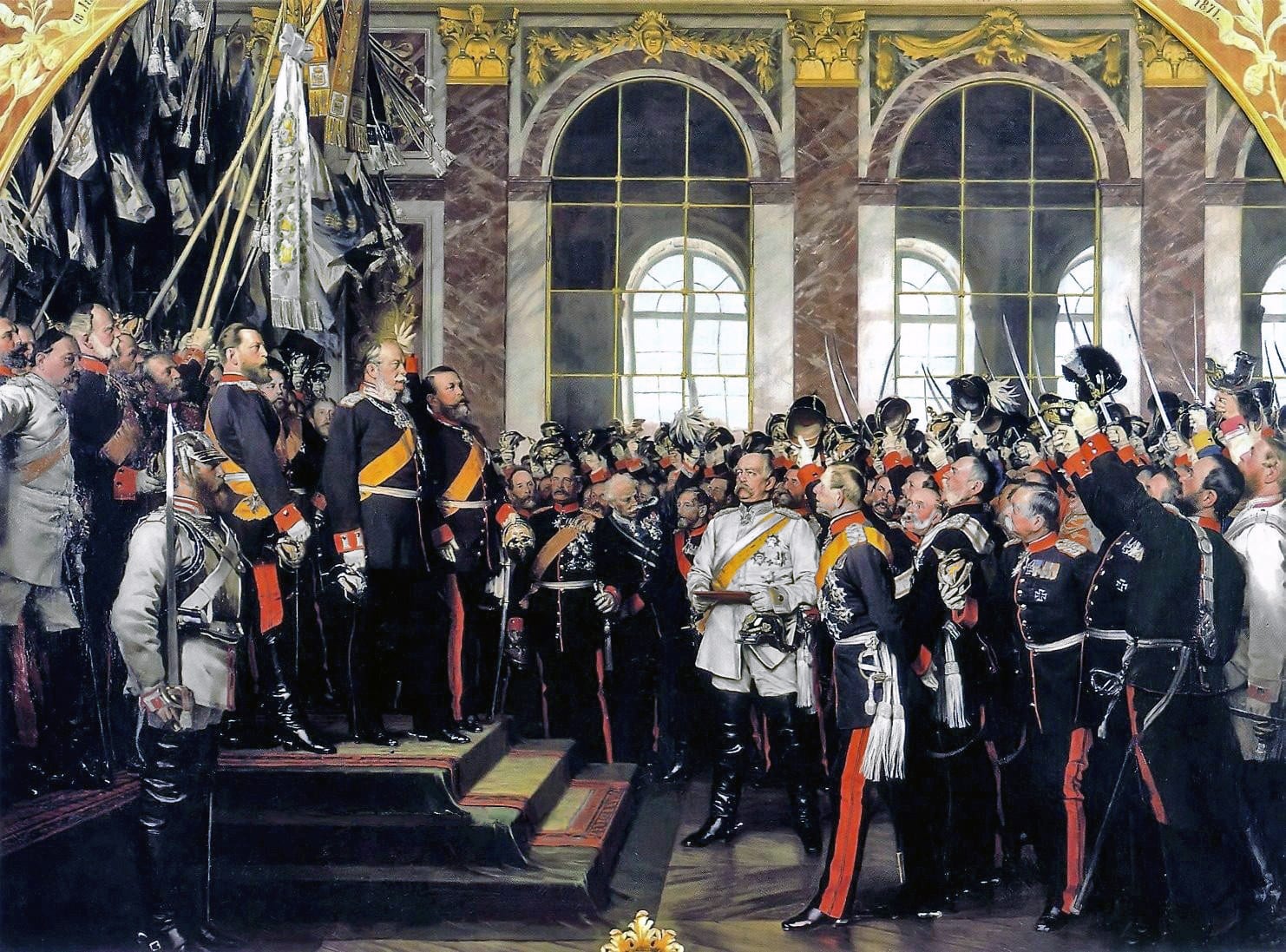
The German Empire was proclaimed in the Hall of Mirrors at Versailles on 18 January 1871, with the Prussian king as Kaiser. It industrialised at speed, acquired African and Pacific colonies — carrying out the Herero and Nama genocide in South-West Africa after 1904 — and, under Wilhelm II, entered a naval arms race with Britain.
The world wars
Defeat in the First World War brought the Kaiser's abdication in 1918 and the Treaty of Versailles, whose war-guilt clause, reparations and territorial losses were bitterly resented. The Weimar Republic that followed was democratic but battered — hyperinflation in 1923, a brief recovery, then the Depression from 1929, which destroyed it. Adolf Hitler was appointed chancellor on 30 January 1933.
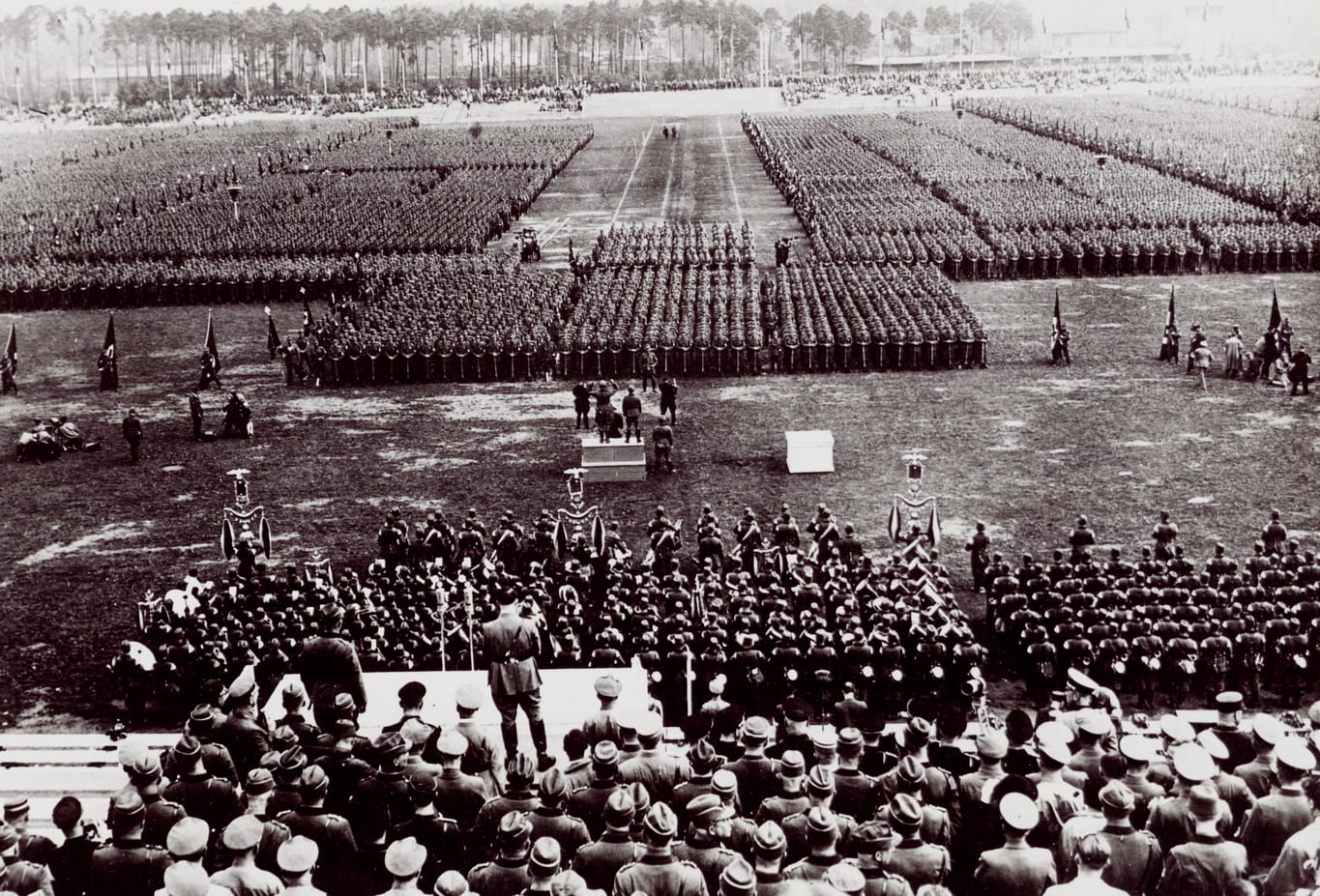
The Nazi dictatorship rearmed, annexed Austria and Czechoslovak territory, and on 1 September 1939 invaded Poland, starting the Second World War in Europe. It conquered most of the continent and carried out the Holocaust — the systematic murder of six million Jews, alongside Roma, disabled people, Soviet prisoners and others. Total defeat came in May 1945: Germany's cities in ruins, some seven million Germans dead, its eastern territories gone, and around twelve million ethnic Germans expelled from the east.
Division and reunification
The victorious powers split Germany into occupation zones. In 1949 the western zones became the Federal Republic and the Soviet zone the German Democratic Republic. West Germany had an "economic miracle", joined NATO and the European project, and — slowly, painfully — confronted the Nazi past. East Germany became a one-party surveillance state; it built the Berlin Wall in 1961 to stop its people leaving.
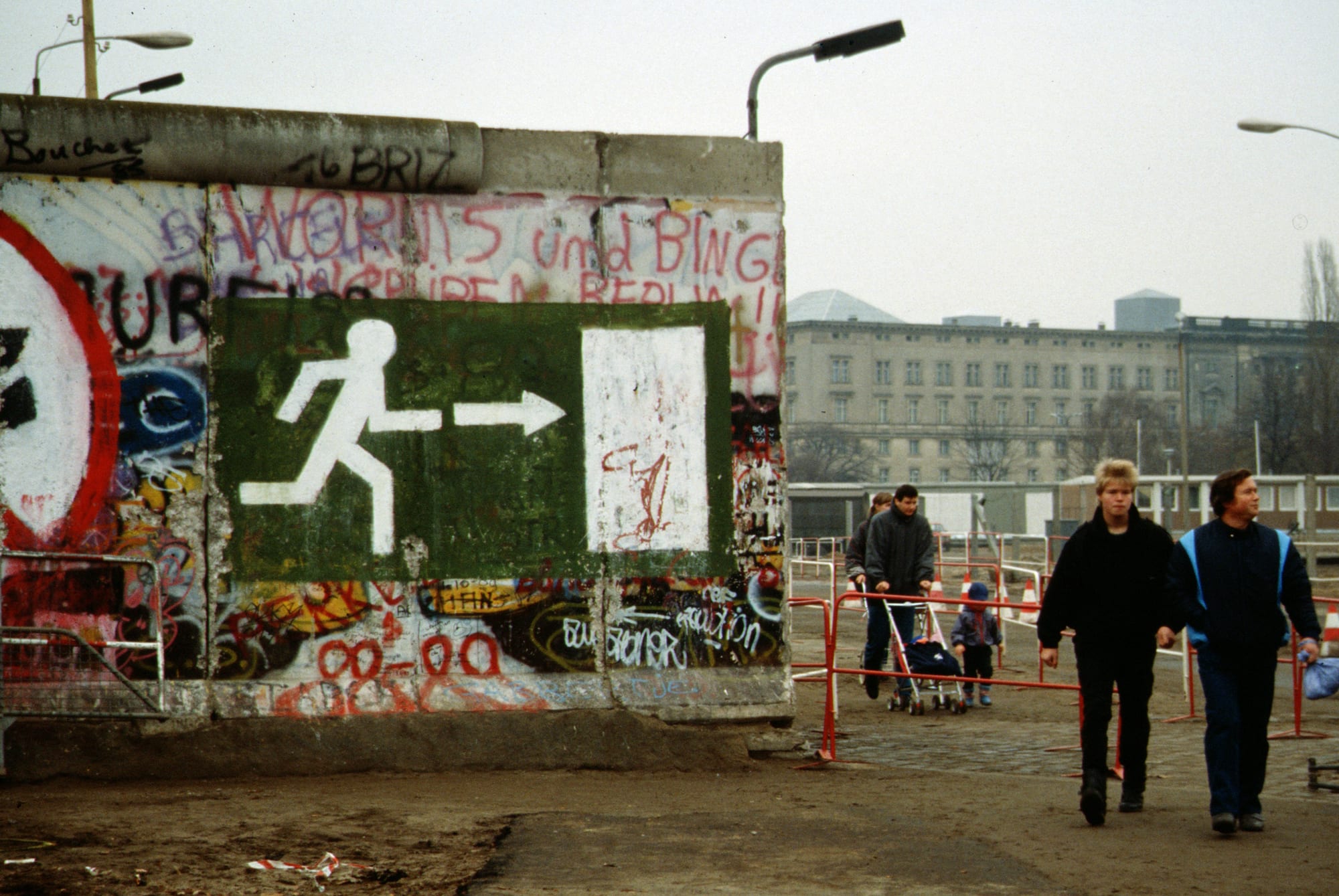
The Wall fell in November 1989, and East Germany joined the Federal Republic on 3 October 1990. The capital moved back to Berlin.
Germany now
Reunified Germany absorbed the cost of rebuilding the east, anchored the euro, and under Angela Merkel (2005–2021) steered the eurozone through its debt crisis and admitted about a million refugees in 2015. Russia's 2022 invasion of Ukraine forced an abrupt end to decades of dependence on Russian gas and a sharp rise in defence spending — a shift the government itself called a Zeitenwende, a turning of the times. Germany is now the European Union's largest economy and, not always comfortably, its central power.
What Germany carries
Germany spent most of its history as an idea rather than a state — a language, a culture, a loose empire — and only 75 years of the modern era as a single peaceful democracy. The 1871 unification put enormous power in the middle of Europe before the country had settled what to do with it; the answer, twice, was war, and the second time, genocide. Postwar Germany built its identity around remembering that, and around binding itself tightly into Europe so it could not happen again.