Culture & Customs · The Gambia
Gambia: Greet Everyone, Share the Bowl
A Muslim nation where no conversation starts without a proper greeting, a meal is shared from one bowl, griots sing the history of families, and every ceremony ends in drumming and dance
By Worldlore Editorial · 30 September 2026
A visitor steps into a family compound in the middle of the day. Before any question can be asked, the greetings begin: peace be upon you, and upon you peace; how is the day, how is the family, how are the people of the house? Family names are repeated back and forth, each one a courtesy not only to the person present but to their relatives and ancestors. On a mat nearby, a large bowl of rice has been set down, and those sitting around it wave the newcomer over to wash their hands and join in. No invitation was needed. In the Gambia, taking time over a greeting and sharing whatever food there is are among the first duties of daily life, and a guest who does both is quickly made welcome.
Faith, identity and values
The Gambia is overwhelmingly Muslim. According to the US State Department, about 96 per cent of the population follows Islam, most of them Sunni, alongside an Ahmadiyya community of around 50,000, while Christians, mostly Roman Catholics, make up about 3.5 per cent. Many people also mix Indigenous beliefs with Islam and Christianity. The constitution forbids the establishment of a state religion, and the two faiths live closely together: intermarriage between Muslims and Christians is common, and families and neighbours join in celebrating each other's religious holidays.
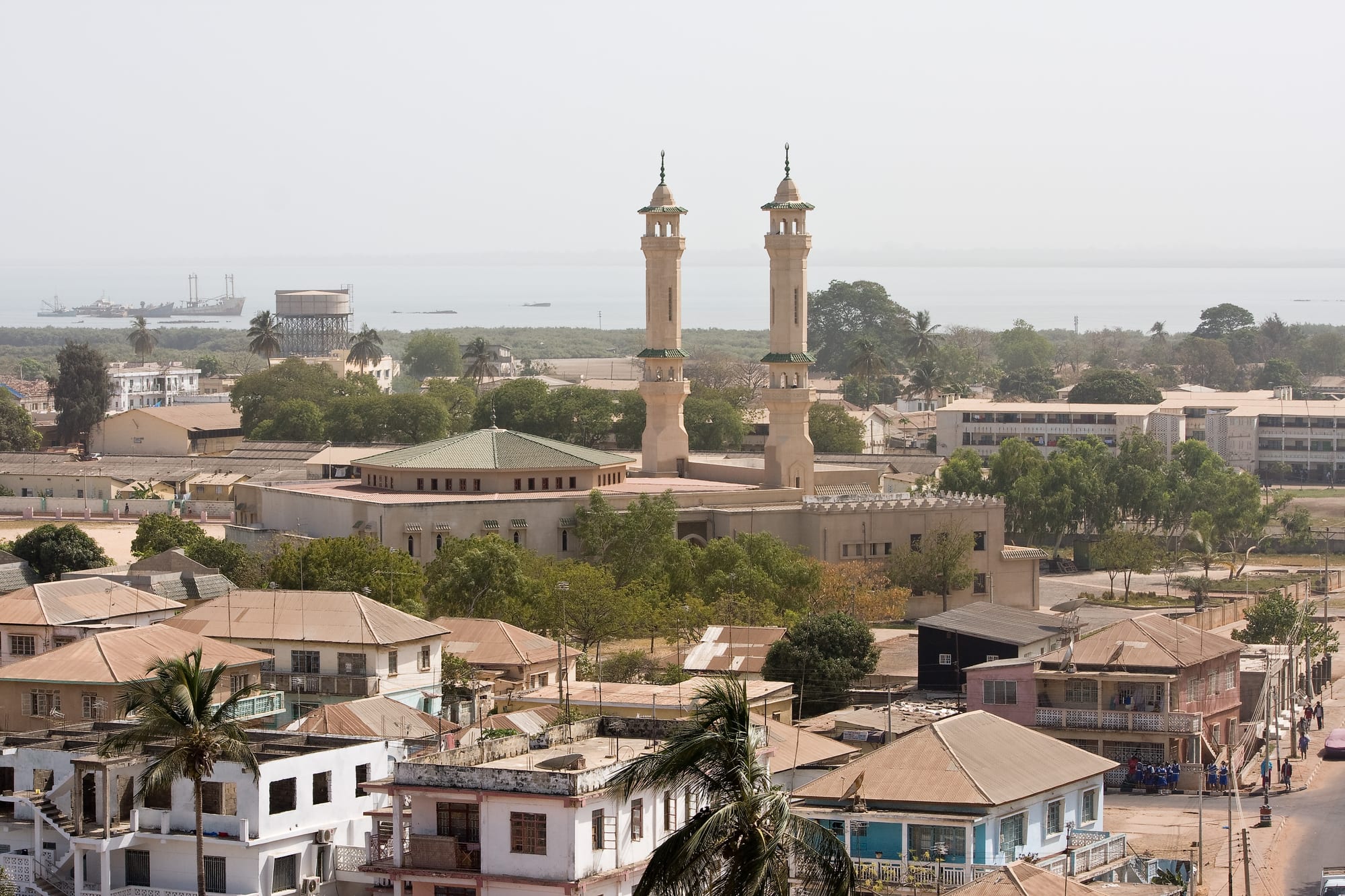
Religious life is woven into the community. In a village, the imam leads prayers in the mosque, attends ceremonies to perform the religious rituals, and sits on the council of elders. Some imams are also Koranic teachers or marabouts, holy men who offer prayers and make protective charms. Authority follows age. The eldest man of the founding family serves as the village head, the Alikaaloo, and with the heads of the related family groups he forms the council that governs village affairs. Visitors on official business are expected to call on the village head first, and offering kola nuts to the head and to one's hosts is the traditional way to introduce oneself and show respect.
The values that underpin this order are widely shared: family, kinship and lineage; the higher status given to elders; respect for parents and for authority; generosity, sharing and a strong sense of community; and modesty, cleanliness and good conduct. Parental blessing and a good home upbringing are also among the values held in highest regard.
Greetings and meeting people
Greeting is the foundation of every encounter. Whether in the market, in the street, at an office or on the telephone, Gambians expect a greeting before any conversation begins, and people are taken aback if someone launches straight into a request, however quick. "Salaam alekum" is the standard greeting, and a simple "hello" in English is also acceptable. Exchanges can be long, even between people who saw each other only hours earlier, because acknowledging another person and asking after their family is a priority. Everyone is expected to greet everyone else, regardless of wealth or status. The flip side is telling: Gambians may show anger not with harsh words but by refusing to greet someone, which is taken as a serious insult.
Handshakes are frequent and are always made with the right hand. In villages, women are not normally expected to shake hands. To greet a group, or someone at a distance, people raise their clasped hands instead, and a person who is working or eating may offer an arm. A younger person greets an elder first and avoids looking them directly in the eye as a mark of respect. Displays of physical affection are generally avoided in public.
Forms of address reflect the importance of family. In official settings people may be called by a title or surname, but traditionally a younger person addresses an older one by a term of relationship: "senior" for an older sibling, "uncle" or "aunt", or "father" and "mother", followed by the name, for anyone old enough to be a parent. Gambians will often address a foreign acquaintance warmly as "my friend", "my brother" or "my sister".
Hospitality and being a guest
In a Gambian home, no one needs to be invited to a meal. Food is shared with whoever is present, and a visitor who arrives while people are eating is immediately asked to join. Meals are usually eaten from a large communal bowl set on a mat. Shoes come off before stepping onto the mat, and in many compounds, especially in the countryside, men and women eat from separate bowls. Hands are washed from a shared basin before and after eating, and only the right hand is used to eat, even by those who are left-handed; guests are often offered a spoon, and using it is perfectly acceptable, though joining in with the hand is appreciated.
The meal begins when the eldest present gives the signal with the word "Bismillah", "in the name of God". The bowl is divided, invisibly, into sections, and each person eats from the part directly in front of them; taking food from someone else's section is rude. The host shares out the pieces of meat, fish and vegetables placed in the centre. Any bones or grains that fall are put on the bowl's cover, never back in the bowl. Talking is kept to a minimum during the meal. At the end, diners praise the "sweetness" of the food, and the host replies "Alhamdulillah", "thanks be to God".
Many Gambians feel uncomfortable being watched while eating, so anyone nearby is invited to share the food. It is polite to wash and at least taste the meal even without being hungry; someone who does not wish to eat should say thank you and move away or occupy themselves with something else, rather than watch others eat. A guest visiting a village for the first time may be honoured by being served separately. Beyond the bowl, attaya, strong sweet green tea, is brewed and shared in homes, on the street, at work and at every kind of occasion, and the unhurried time spent over it is a mainstay of social life. Gifts are part of hospitality too: people bring presents for their hosts when they travel, and for their own families when they return.
Festivals and life's big moments
The great festivals of the year are Koriteh, which marks the end of the Ramadan fast, and Tobaski, the feast of sacrifice, celebrated in remembrance of the Prophet Ibrahim's devotion. Families work hard to provide a ram for the sacrifice, and new clothes are essential: tailors are overwhelmed with orders in the weeks before, and many people travel back to their home villages to spend the festival with their families. Gifts are exchanged at Tobaski, Koriteh and Christmas alike. During Ramadan, visitors are asked to be respectful towards those who are fasting.
A child's arrival is marked with great discretion followed by open celebration. Pregnancy is traditionally not spoken about, out of concern for the baby. Seven days after the birth comes the naming ceremony, known as ngente, which blends Islamic practice with local custom and is observed by the Mandinka, Wolof, Fula and Jola, each with their own variations. In the morning an elder shaves the baby's hair or cuts a lock, says a silent prayer and whispers the chosen name into the infant's ear, and a griot then proclaims it aloud. An animal is slaughtered, and its meat is shared with guests and those in need; kola nuts, cakes and other foods are handed round, and guests bring small gifts for the baby and for the griots. The day ends with a large meal, drumming and dancing.
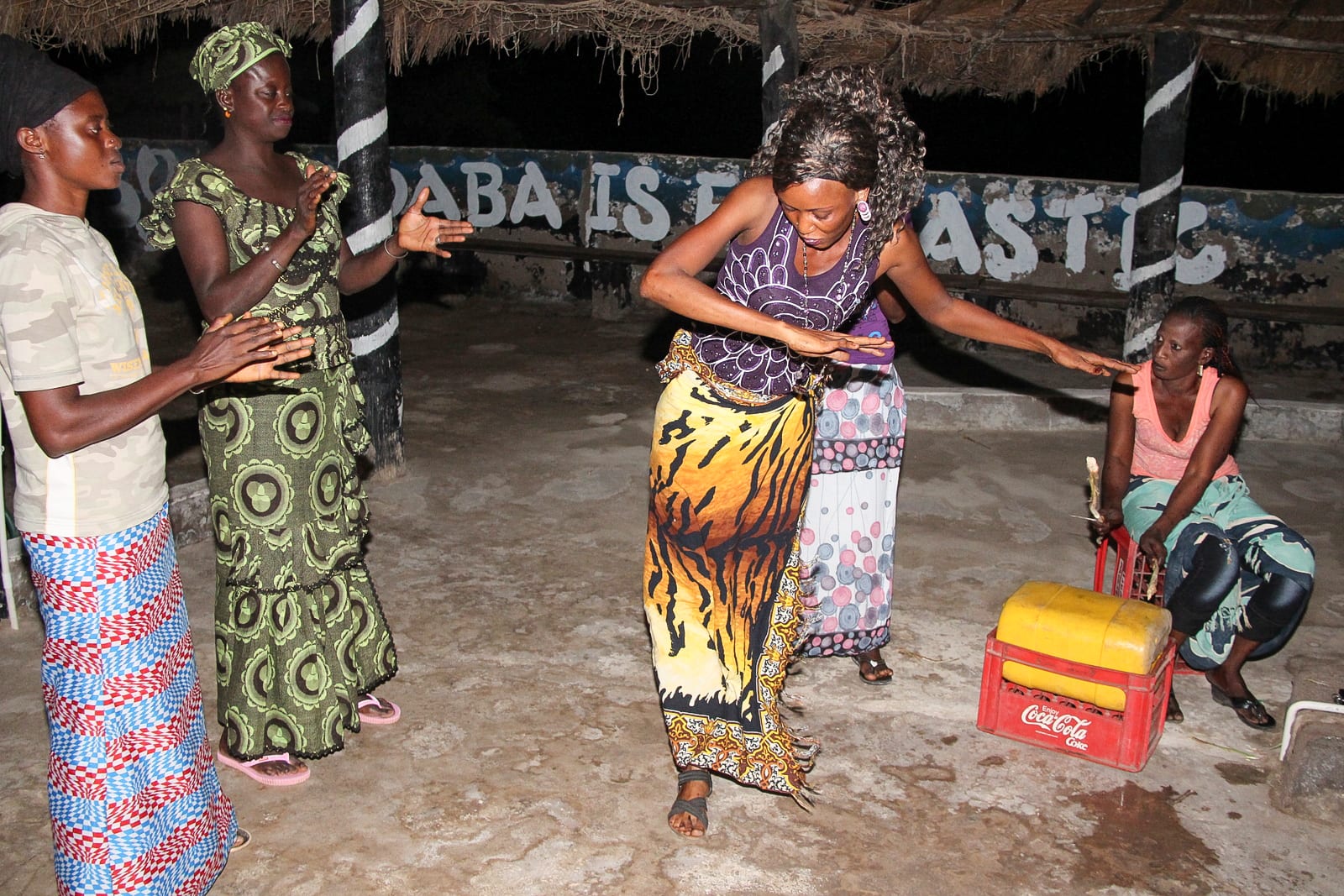
Marriages have traditionally been arranged between families, though less so in the towns. The suitor's family formally sends kola nuts to the parents of the woman, and in Islamic law a daughter may not be married without her consent; if she and her family agree, the kola nuts are shared among relatives, friends and neighbours. The marriage is "tied" by a religious leader in the bride's compound, in the presence of the fathers or guardians, often without the couple themselves, and is followed by feasting, drumming and dancing. Guests contribute food or money to the couple, the bride's parents and the griots. Often months later, the bride is counselled by neighbourhood elders on the responsibilities of marriage, her hair is ritually braided, and after dancing late into the night she is taken to her husband's home.
At a death, the community is alerted by a loud wail, and mourners, especially women, express sympathy with open weeping. Following Muslim practice, the body is washed, wrapped in a white shroud and buried the same or the next day, usually after prayers. Friends give money or food to the bereaved family, and the family in turn gives charity on the third, seventh and fortieth days after the burial. A widow traditionally mourns for four months and ten days.
Among the Mandinka, the Kankurang appears during the initiation of boys, a rite on UNESCO's list of intangible cultural heritage. The Kankurang is an initiate masked in the bark and red fibre of the faara tree, clothed in leaves and painted with plant dyes, and is regarded as a guardian of order and justice who drives out evil spirits. During the initiation period the boys learn the rules of community life, the medicinal uses of plants and the skills of hunting. In public processions the Kankurang dances with machetes while followers carrying sticks and palm leaves beat out rhythms and sing. Spectators offer money and call for its mercy, and women and children run from its path as it approaches.
Arts, crafts and music
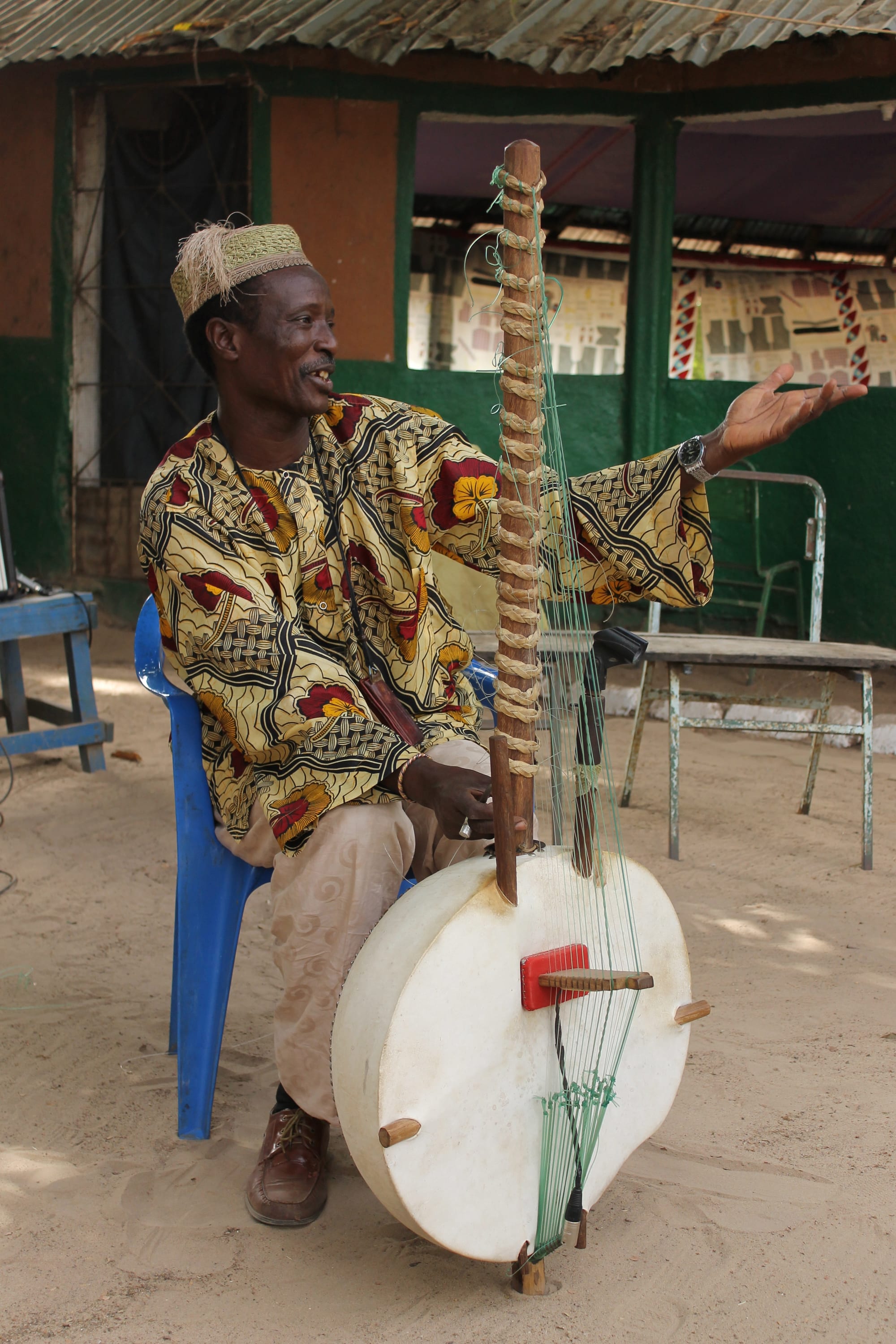
The jali, or griot, is the keeper of memory. Jalis belong to hereditary families of oral historians and musicians who recite genealogies, sing praise songs and carry the history of lineages down the generations; members of such families are said to be born with the kora. The instrument itself is made from a large half calabash covered with cowhide, with a long wooden neck and leather tuning rings, and its 21 strings are played with four fingers to produce either dazzling cascades of sound or a delicate accompaniment to spoken narrative. Griots remain part of every ceremony, and at weddings and naming ceremonies they are traditionally given presents or money for their songs.
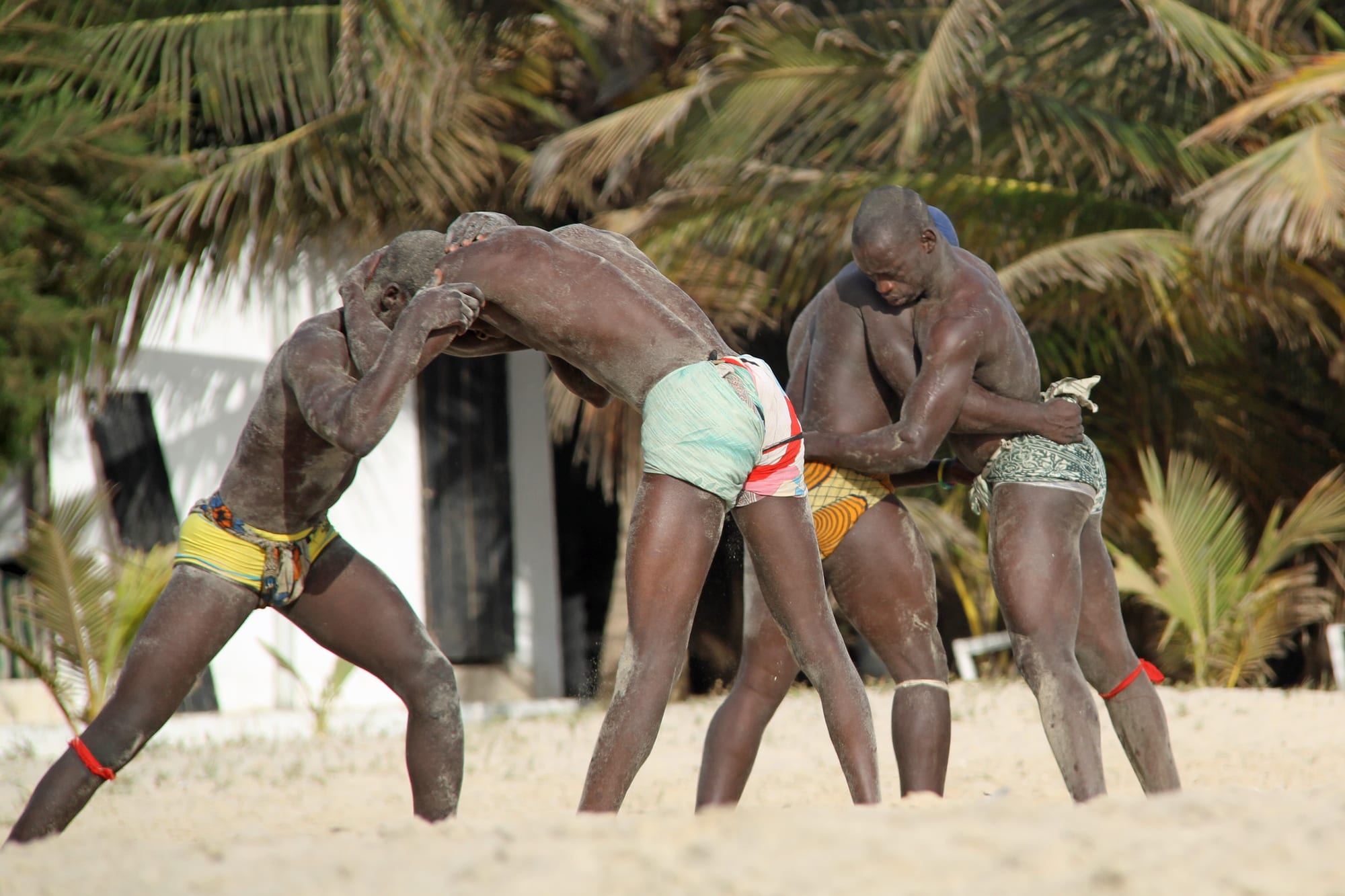
Traditional wrestling is both a sport and a spectacle. Bouts are pure grappling, without the hand blows permitted in the Senegalese style, and were once among the greatest entertainments in the country, with star wrestlers celebrated in songs and showered with gifts by their admirers. Many wrestlers wore amulets made of animal skin and sprayed themselves with protective concoctions, displaying them openly to unsettle their opponents.
Dress is an art of its own. Tailors' shops line the streets, and cloth of every kind, from imported cotton prints to local tie-dye, batik and narrow strips of hand-woven cotton, is made into flowing gowns worn by men over loose trousers and by women over wrapped skirts, often elaborately embroidered. Women's head ties match their dresses, men often wear caps or a fez on religious occasions, and braided and plaited hairstyles are regarded as works of art.
Dos and don'ts for visitors
- Do greet people before asking anything, even a quick question; "salaam alekum" or a simple hello will do.
- Do let elders be greeted first, and use the right hand to greet, eat, and give or receive anything.
- Do remove shoes before sitting on the mat around a shared bowl, and eat only from the section directly in front.
- Do taste the food when invited to join a meal; to decline, say thank you and move away rather than watch others eat.
- Do bring a contribution of food, money or a small gift when invited to a naming ceremony or wedding.
- Do dress modestly away from the beach, and be discreet about eating and drinking in public during Ramadan.
- Don't show physical affection in public.
- Don't approach a Kankurang procession casually; keep a respectful distance and follow local guidance.
What to take away
In the Gambia good manners begin with a greeting and end with a shared meal, and visitors who give time to both will find themselves treated less as strangers than as members of the family.