Culture & Customs · French Guiana
French Guiana: The Touloulou Chooses
A French department on the edge of the Amazon, where a masked woman leads the dance, carved patterns carry messages of love, and a visitor to a forest village waits to be offered a seat
By Worldlore Editorial · 30 September 2026
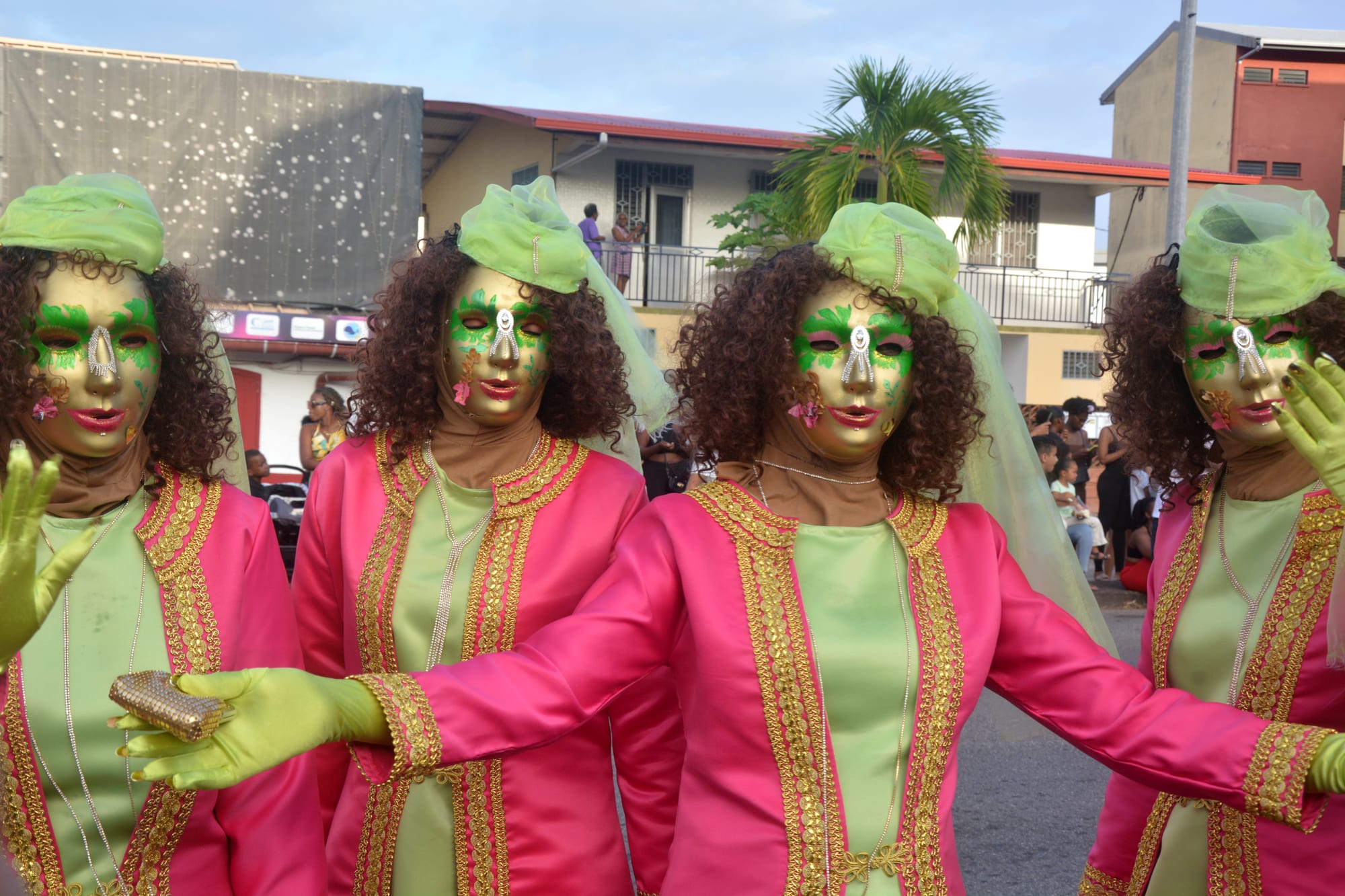
Late on a Saturday night in carnival season, the dance hall is full. Along the edge of the floor the men wait, some wearing a hat or a bright shirt so they can be picked out in the crowd. Then the Touloulous arrive: women disguised from head to toe in gowns, gloves, wigs and masks, not a centimetre of skin showing, their voices and even their walk altered so that no one can tell who they are. A Touloulou crosses the floor, takes a man by the hand and leads him out to dance. He may not refuse, and he may not try to lift her mask. For one season of the year, the usual order is turned upside down. The scene belongs to French Guiana's Creole culture, but it says something about the territory as a whole: a place of many peoples and many codes, in which knowing the rules of each setting, and respecting them, matters a great deal.
Faith, identity and values
French Guiana is an overseas department and region of France on the north-east coast of South America, and French law, schools and institutions apply here as in the rest of the country. French is the official language, but Guianese Creole is widely spoken, alongside several Amerindian languages and the languages of the Maroon peoples. Few places of its size hold so many distinct communities. The Creole population took shape during the era of slavery and developed its own ways of living, knowing and celebrating, of which carnival is the best known. The Maroons, also called Bushinenge, descend from Africans who escaped enslavement on the plantations of neighbouring Suriname; four Maroon peoples, the Aluku, Ndyuka, Pamaka and Saamaka, together number many tens of thousands in French Guiana. Amerindian peoples such as the Kali'na, Palikur, Teko, Wayana and Wayãpi were here long before any of them. Since the late 1970s a Hmong community, resettled from Laos, has added its own traditions, and families from Brazil, Haiti, Suriname, mainland France and elsewhere have added more.
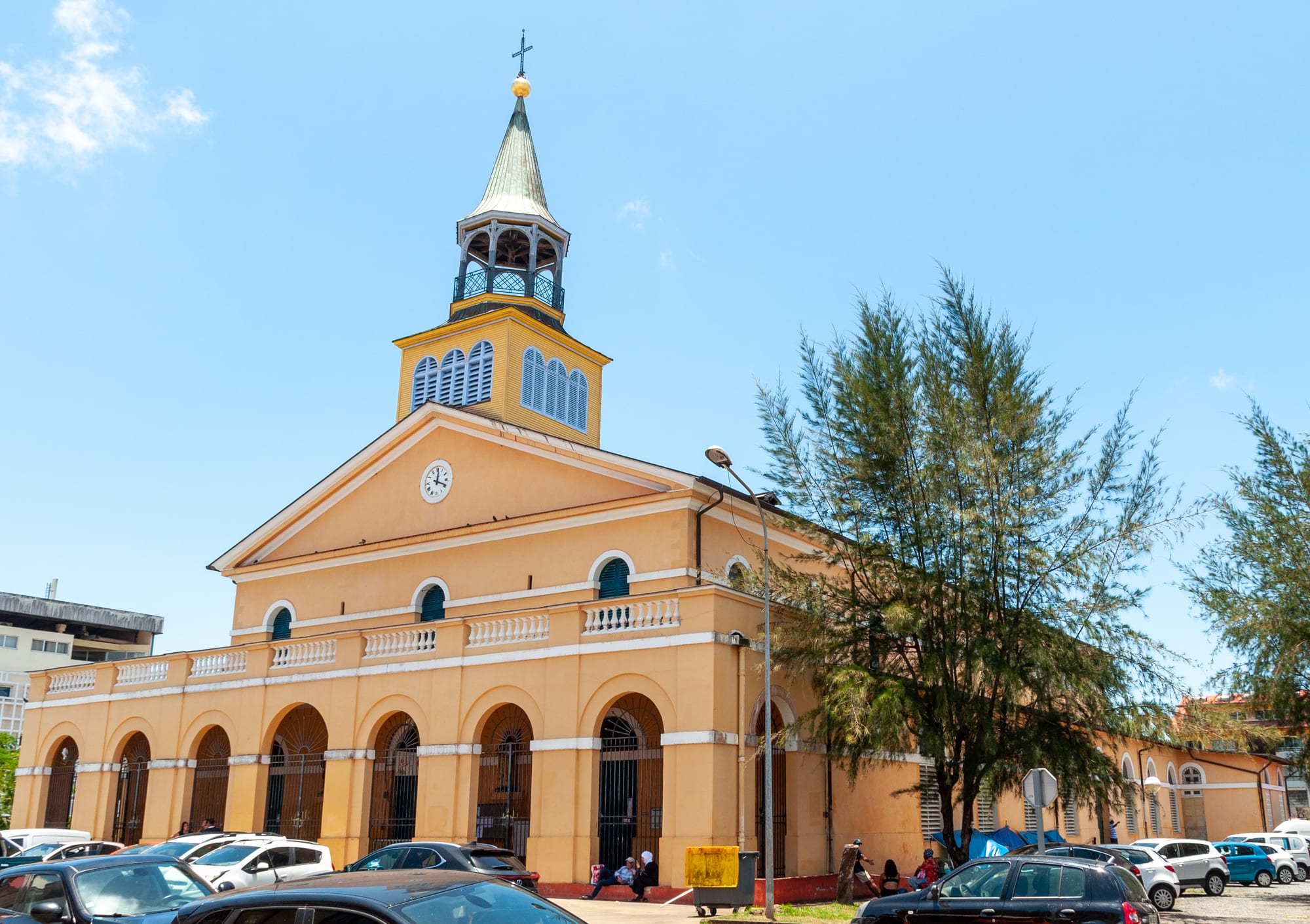
Catholicism is the majority faith, and the Christian calendar shapes the rhythm of the year, from Epiphany through carnival to Lent and Easter. Other churches are also present, and Amerindian and Maroon communities maintain their own spiritual traditions, including rites that guide the souls of the dead. What ties the territory's communities together is less a single set of beliefs than a habit of coexistence: each group keeps its customs while taking part in a shared Guianese identity.
Greetings and meeting people
In the towns of the coast, everyday manners broadly follow those of mainland France, with French the language of offices, shops and schools and Creole the language of many homes and conversations. The more distinctive codes belong to the Amerindian villages along the rivers of the interior, where visitors are guests in someone else's living space and are expected to behave accordingly.
The national park that covers much of the south publishes guidance for visitors to Amerindian communities, and it gives a clear picture of the local etiquette. Villages are often reserved for extended families, and arriving uninvited is seen as an intrusion; visitors should come with a family member or someone who knows the residents. The open-sided shelter known as a carbet may look public, but it is a family's private space, and walking into or through one, lifting the lids of cooking pots or handling belongings is not acceptable. Once a visitor has been welcomed, an invitation to sit follows, perhaps with a bench being set down nearby, two people shifting along to make room, or a simple word. If no one offers a seat, the newcomer is probably not welcome.
Speech carries weight. The spoken word matters greatly in these communities, and a promise made aloud is expected to be kept; even coming to talk about a subject can be taken as a first commitment. At the same time, people may say "yes" to avoid conflict without meaning it, so pressing for an answer is unwise, and it helps to pay attention to what is felt as well as what is said. Command of French varies between generations, and an interpreter or cultural mediator can be valuable. Photography is a sensitive matter: images of residents have in the past been used on postcards and souvenirs without their consent, and in some villages people do not wish to be photographed at all.
Hospitality and being a guest
In Amerindian villages, hospitality often centres on cachiri, a traditional drink of fermented cassava, and the word also refers to the gathering itself, when people meet to talk while drinking it. Its customs are precise. No one should turn up to a cachiri without being invited. The first calabash offered should be accepted and finished, since refusing it or leaving it is frowned upon; after that, guests may drink as much or as little as they wish. Cachiri must never be thrown on the ground, and a calabash is passed on to a neighbour, or returned promptly to whoever served it, to keep the round moving. Men and women sit in separate spaces. The park advises visitors not to bring alcohol into villages, not to drink it there and not to offer it to residents.
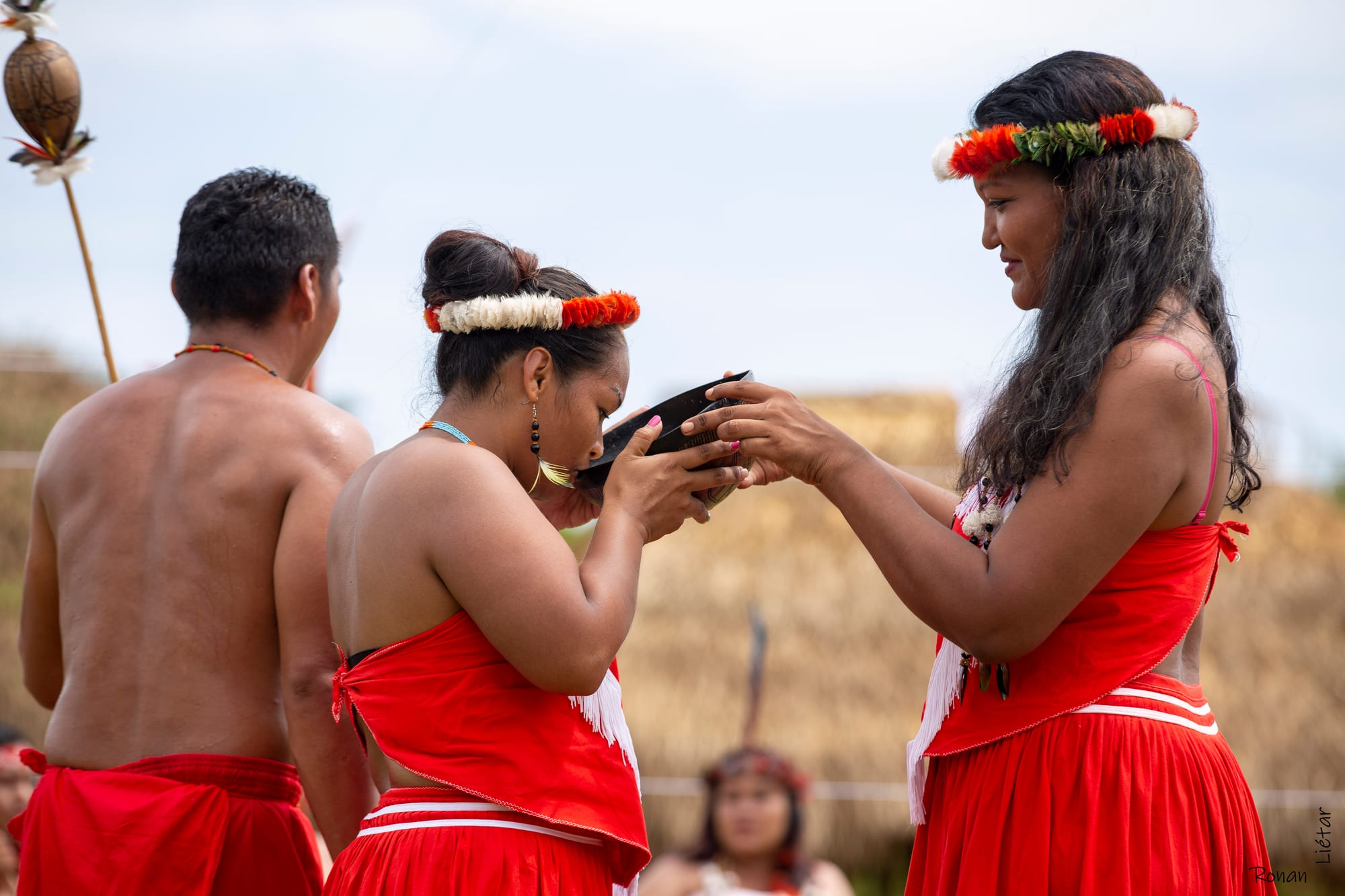
Daily life in river villages brings other courtesies. Most people wash in the river, and bathing is treated as a private moment, so visitors wait their turn a little way from where residents are washing. The minimum dress in living areas and for bathing is a skirt or wrap with a top for women and shorts for men. Some women wear traditional dress with the chest uncovered, and staring is considered disrespectful. Fruit trees belong to whoever planted them, or to their family.
On the coast, the shared table follows a seasonal rhythm of its own. From Epiphany until Ash Wednesday, the galette des rois is eaten in abundance, shared among families, colleagues, classmates and clubs, usually on a Friday. A small charm is hidden inside, and whoever finds it chooses a king or queen, who must then provide the drinks and the galette the following Friday, so the round continues week after week through the carnival season.
Festivals and life's big moments
Carnival is the great event of the year. The season opens on the first Sunday after Epiphany and runs until Ash Wednesday, and it begins with the arrival of Vaval, the carnival king, whose entrance is staged differently each year. On Sunday afternoons, costumed groups parade through the streets with their bands, while on Friday and Saturday nights the Touloulous rule the masked balls held in dedicated dance halls. The rules of the ball are well known: the women do the inviting, and the men may neither refuse nor unmask them. Anonymity is everything, and experienced Touloulous change their perfume, their shoes and the way they speak so as not to be recognised. A reverse version, the tololo ball, in which masked men choose unmasked women, has grown up in recent decades.
The final days are public holidays and carry the most tradition. On the Monday, the day of burlesque weddings, men parade in wedding dresses and women in men's suits, singing that they are married all the same. Tuesday belongs to the red devils, when revellers dress only in red and black. Ash Wednesday is a day of mock mourning: costumes turn black and white, female devils called djablès walk the streets, and Vaval, who "died" the night before, is burned on a pyre as wailing mourners and the crowd look on.
Other dates carry deep meaning. The abolition of slavery is commemorated every year on 10 June, a public holiday fixed by national decree. The Hmong community celebrates its New Year towards the end of each year, notably in the village of Cacao, with dances, sports, cultural evenings and a contest for the finest traditional costume.
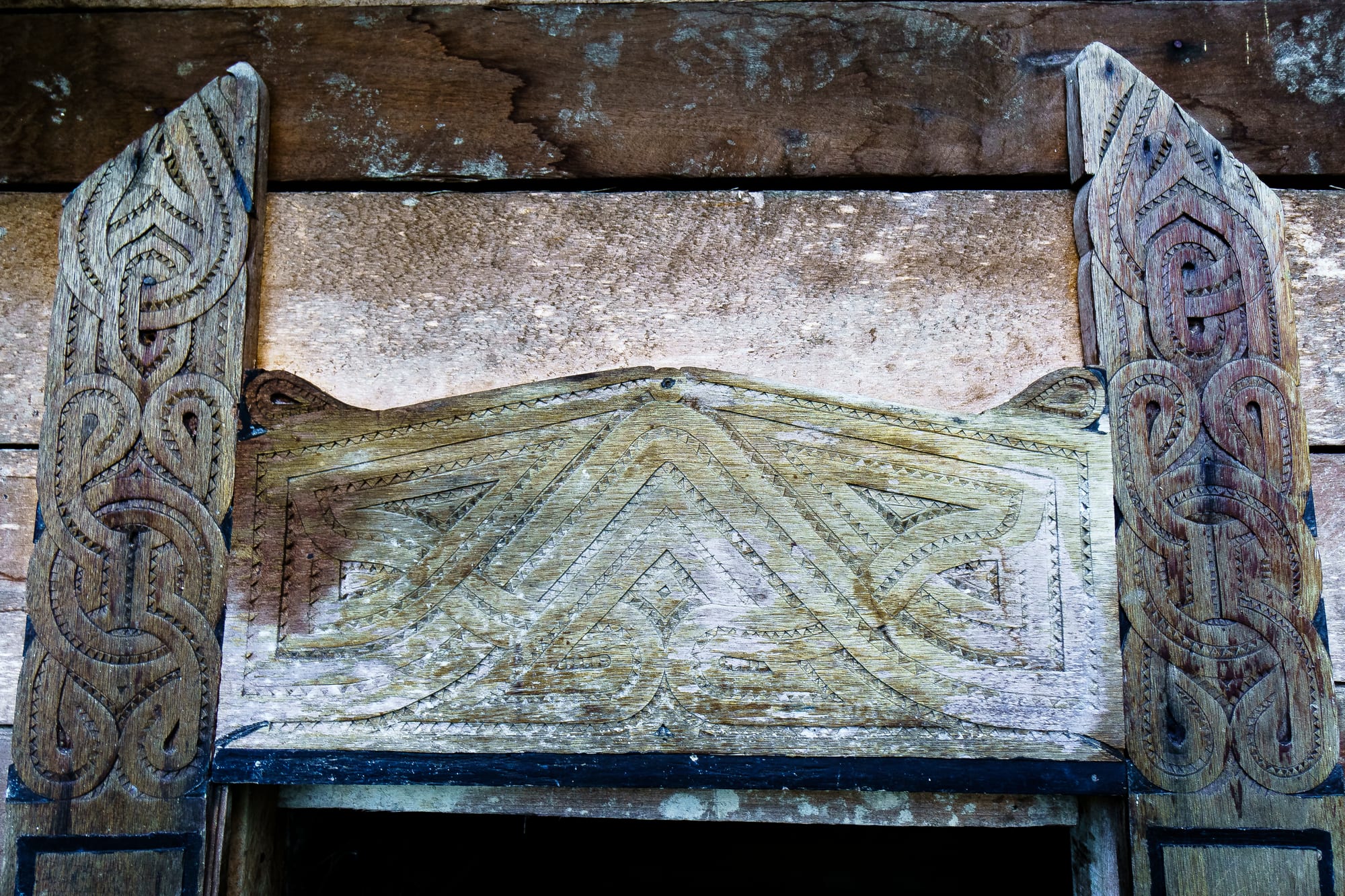
Weddings reflect the territory's layers. As everywhere in France, the legal ceremony takes place at the town hall, and a religious wedding may only follow it. Maroon tradition adds its own gestures: carved objects such as paddles and combs have long been made by men as gifts for the women they love. Mourning customs vary between communities. Among the Kali'na, the Epekodonon ceremony lifts mourning months, sometimes a year or more, after a death. Relatives prepare cachiri and hold several days of rites, both to guide the soul onwards and to free the living from their grief, after which normal social life resumes.
Arts, crafts and music
Tembe is the signature art of the Maroon peoples. It is a style of lines and bands that cross and interlace in complex, balanced patterns, applied to carved wood, painting, engraved calabashes, embroidered cloth and even hairstyles. For generations it decorated everyday objects: stools, combs, paddles, trays for winnowing rice and the gables of houses. Women still decorate the calabashes used at home and embroider traditional wrap skirts and capes, while men carve. From the late twentieth century tembe also moved onto canvas, and in recent decades a number of tembe artists have built reputations well beyond their own communities. The full meaning of many motifs is kept by the carvers and traditional authorities rather than shared with everyone.
Amerindian communities are known for basketry woven from natural fibres, including baskets, mats and jewellery. Carnival, meanwhile, is a craft in its own right. Groups rehearse with their musicians and choose a theme for each Sunday's costumes, and a Touloulou's outfit, from long gloves and hood to mask, wig and borrowed shoes, is assembled with great care. Carnival music is live, with orchestras playing the dance halls through the season and songs specific to each of the final days.
Dos and don'ts for visitors
- Do apply to the prefecture at least 15 days in advance to visit the villages of the regulated zone in the far south.
- Do go to Amerindian villages only with an invitation or someone who knows the residents, and wait to be offered a seat.
- Do ask before photographing anyone, and respect signs or requests that forbid photography.
- Do accept and finish the first calabash of cachiri if it is offered, and never pour it on the ground.
- Don't bring alcohol into Amerindian villages or offer it to residents.
- Don't enter or walk through a family's carbet, or touch belongings and cooking pots.
- Don't make promises lightly in a village; a spoken commitment is expected to be kept.
- Don't try to unmask a Touloulou, and don't turn down her invitation to dance.
What to take away
French Guiana asks visitors to read each setting on its own terms, and those who respect the codes of the dance hall and the forest village alike will find a territory remarkably open to sharing its traditions.