Daily Life · French Guiana
French Guiana: A Coastline Between the Forest and the Launch Pad
A French department where euros and the metric system meet a Creole, Maroon, Amerindian and Hmong population squeezed onto a narrow coastal strip, with the Amazon at their back and a working spaceport up the road
By Worldlore Editorial · 30 September 2026
An ordinary day in French Guiana runs on French administrative time — the euro, the metric system, the French school system and a mairie in every town — laid directly over a population and a landscape that owe very little else to mainland France. More than 90 percent of the territory is rainforest, so most people, whatever their background, live along a single narrow coastal strip between Saint-Laurent-du-Maroni and the Brazilian border. That strip holds a remarkably varied population, Creole, Maroon, Amerindian, Haitian, and Hmong communities among them, and, at Kourou, a working European spaceport whose launch schedule occasionally reorders daily life for everyone nearby.
Family and home life
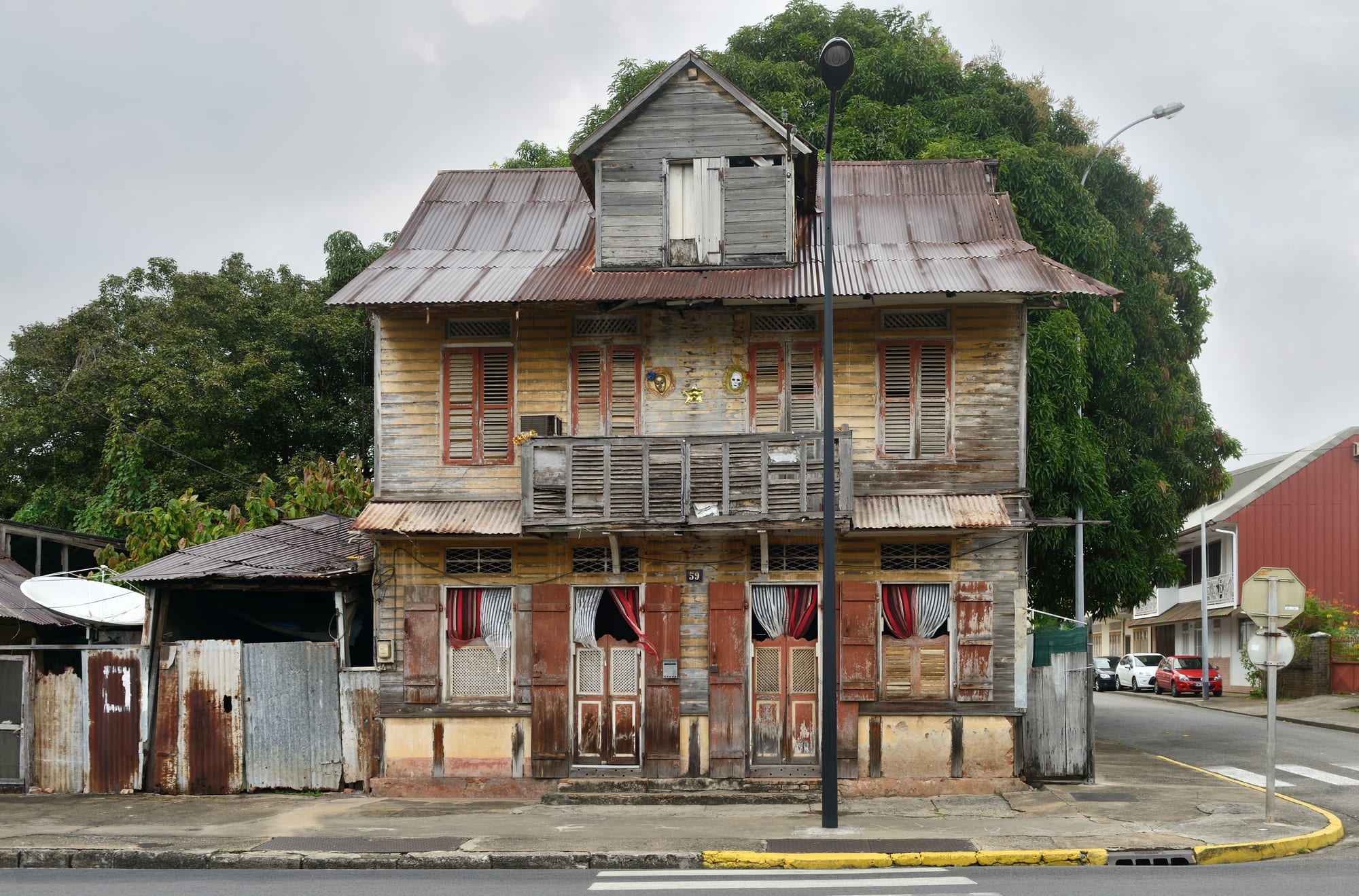
Cayenne, the capital, and the coastal towns hold traditional wooden Creole houses, many now weathered but still lived in, alongside newer concrete housing; further along the coast and up the rivers, Maroon and Amerindian communities maintain distinct village structures and extended-family arrangements with roots in West and Central African and Indigenous traditions respectively. Hmong families, resettled from Laos in the 1970s, form close farming communities, most visibly around the inland village of Cacao, where farming supplies fruit and vegetables to coastal markets. The population is young and growing quickly, swelled by migration from Haiti, Brazil, and Suriname, and families across these different communities tend to be larger, with a birth rate well above that of mainland France.
Work, school and the rhythm of the day
The economy runs on the public sector, the Guiana Space Centre and its contractors, construction, and gold, both licensed mining and a large informal trade that draws workers from across the Brazilian and Surinamese borders. Schooling follows the French national curriculum, with a school calendar adapted locally, despite the very different setting. A large part of the economy depends on jobs linked to the Space Centre at Kourou, where launches are a familiar event, and, for the Îles du Salut just offshore, a launch towards geosynchronous orbit, whose path passes over the islands, means they must be evacuated.
Community life and public spaces
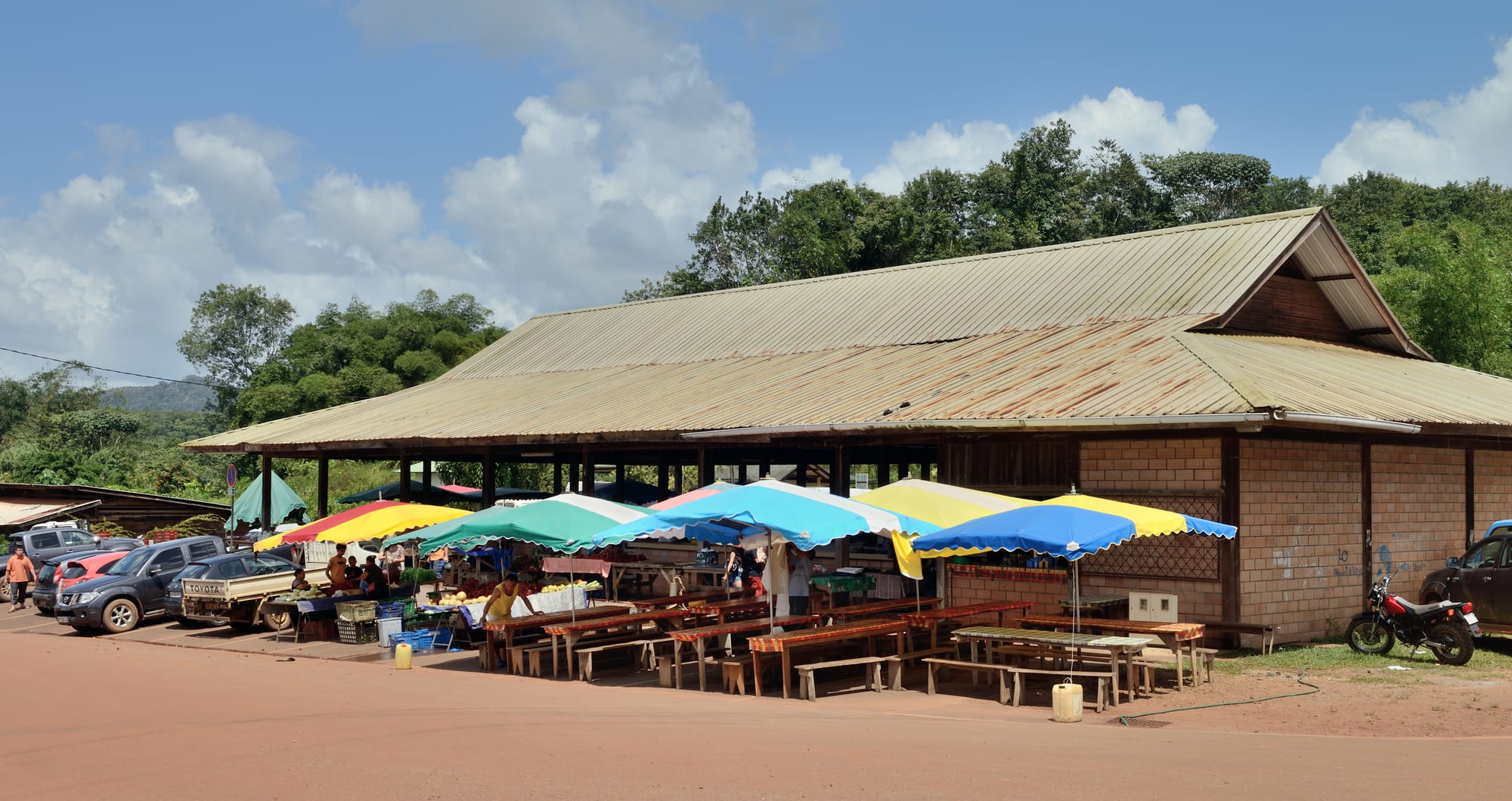
Village markets are the main gathering point outside the towns, and the Hmong-run covered market at Cacao, reached by a road that runs inland from the coast, is among the best known: stalls of fruit, vegetables, and prepared food that draw buyers from well beyond the village itself. Cayenne's own central market and its brightly restored Creole houses anchor the capital's public life, alongside the ruined Fort Cépérou above the old town. The coastal highway, the only road linking Saint-Laurent-du-Maroni, Kourou, Cayenne, and the border at Saint-Georges, is the territory's single public thoroughfare in a practical sense, since the vast interior has almost no roads at all and is reached instead by river pirogue or small aircraft.
Free time and weekends
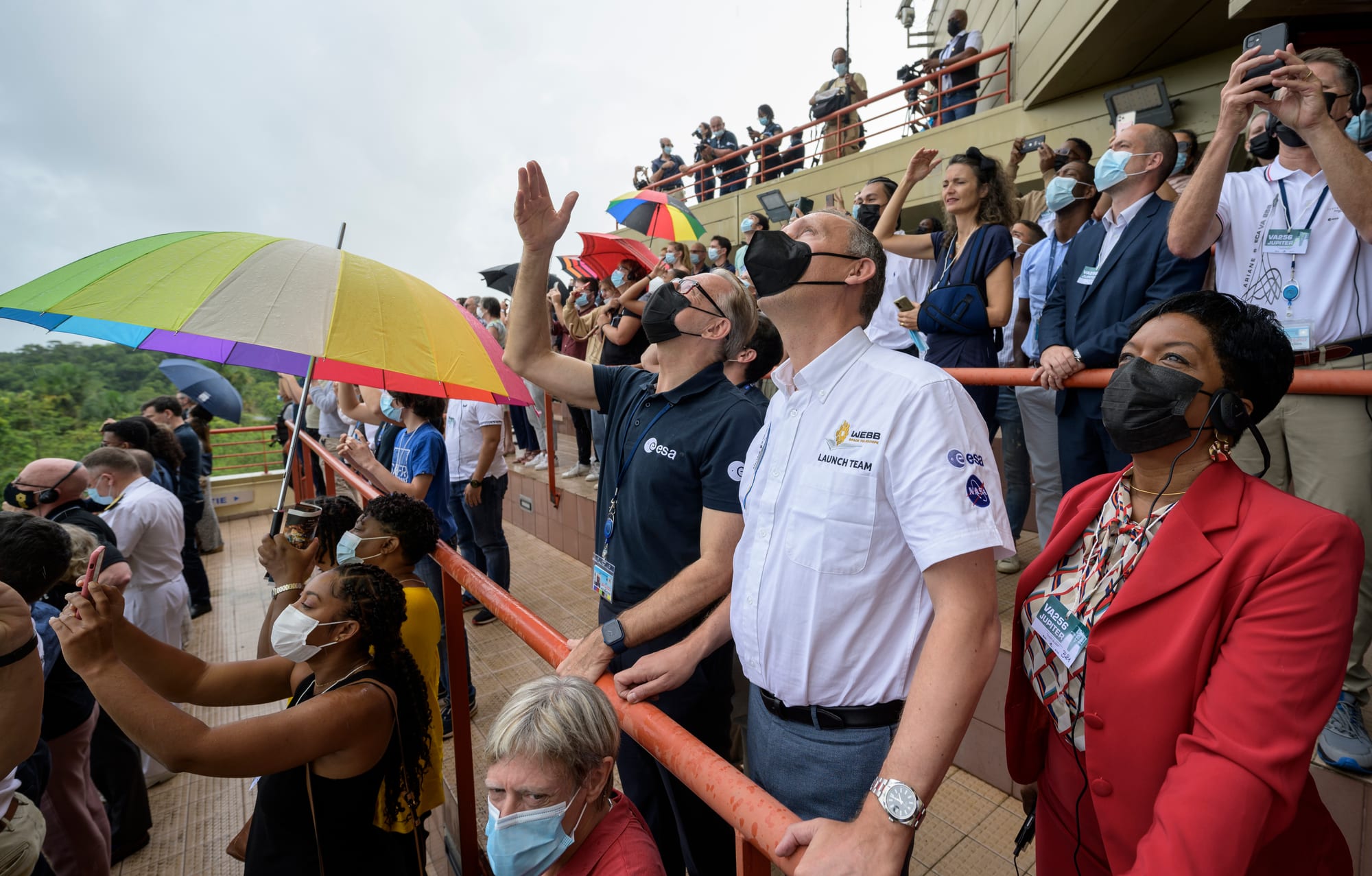
Carnival is one of the biggest fixtures of the year, a months-long season running from Epiphany to Ash Wednesday and building to the Touloulou masked balls, when disguised women choose their dance partners. Family gatherings, church for the territory's Catholic majority and other Christian communities, and, where the coastal road allows, a trip to the beaches near Rémire-Montjoly fill an ordinary weekend. Rocket launch days themselves have become something of a shared local spectacle, with public viewpoints around Kourou filling up whenever a launch is scheduled and open to viewing.
A visitor's ordinary day
The currency is the euro and cards are widely accepted in Cayenne and Kourou, but cash is necessary in the interior, at markets, and in river villages. A yellow fever vaccination certificate is required for entry and can be checked on arrival, so it is worth carrying it at all times. The coastal highway is straightforward to drive between the main towns, but the interior has essentially no road network, so reaching it means booking an organised pirogue trip or a small flight well in advance rather than travelling independently. Guiana Space Centre tours and public launch viewing must be reserved ahead of time, and it is worth checking the launch calendar before planning a visit to Kourou or the Îles du Salut.
What to take away
What defines an ordinary day in French Guiana is the layering of a fully French administrative and legal framework onto a Creole, Maroon, Amerindian, and Hmong Amazonian society, with a European spaceport's launch schedule occasionally reaching into that ordinary day in a way no other French department, or almost anywhere else, experiences.