History · Estonia
Estonia: The Northern Crossroads
A Finno-Ugric people on the Baltic shore — seven centuries under German, Swedish and Russian masters, two decades of freedom between the wars, a Soviet half-century, and a revolution set to song
By Worldlore Editorial · 19 September 2026
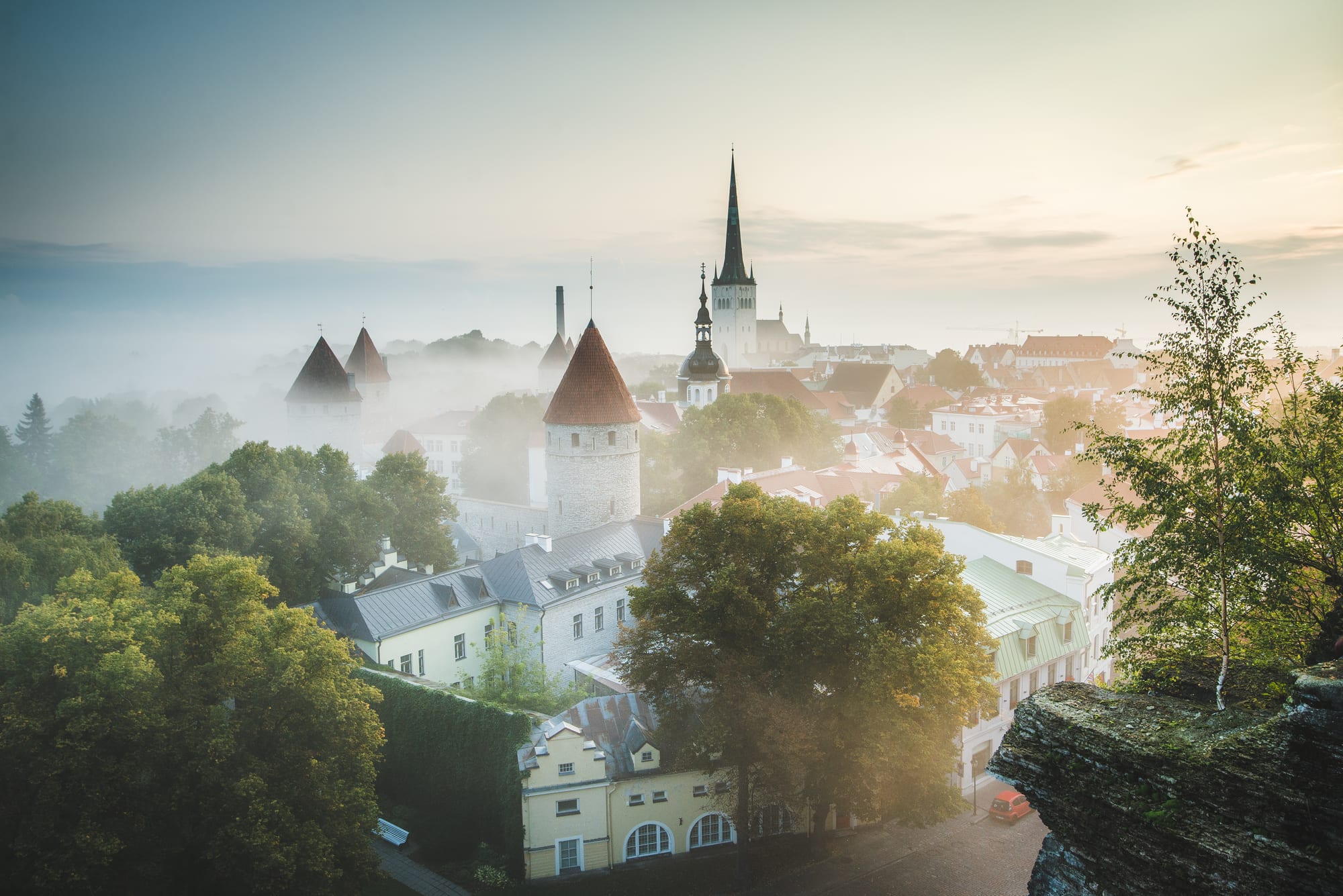
A small people on an exposed coast
Estonians are a Finno-Ugric people — their language a cousin of Finnish, unrelated to the Germanic, Slavic and Baltic tongues that surround them. They have lived on this stretch of the Baltic since the retreat of the ice, and for most of recorded history someone else has ruled them: German knights, Danish kings, Swedish crowns, Russian tsars, Soviet commissars. Estonia has been an independent state for only about fifty years out of the last eight hundred — the two decades between the world wars, and the period since 1991. Its survival strategy has been cultural: language, literacy, and above all song.
A short history
- from c. 9000 BCE
Settlement
Finno-Ugric hunters occupy the eastern Baltic coast.
- 1208–1227
The Northern Crusades
German and Danish crusaders conquer and Christianise Estonia.
- 1219
Tallinn
The Danes found the fortress town of Reval.
- 1343–1345
St George's Night
A major Estonian revolt against the German landlords is crushed.
- 1561–1710
Swedish rule
Tartu University is founded (1632); folk memory calls it "the good old time".
- 1710–1918
Russian Empire
Estonia is a Baltic province; the German nobility keeps its power.
- 1869
First Song Festival
Choral singing becomes the ritual of Estonian nationhood.
- 1918–1920
Independence
Estonia declares statehood and wins the War of Independence.
- 1940
Soviet annexation
Occupied under the Nazi–Soviet pact; deportations follow.
- 1988–1991
The Singing Revolution
Mass singing and the Baltic Way restore independence.
Crusade and conquest
Before the 13th century Estonia had no state — a patchwork of self-governing counties and parishes, pagan, and known to Norse sailors mainly as a dangerous coast. Between 1208 and 1227 the Livonian Brothers of the Sword and the Danish king conquered and forcibly Christianised it, the last corner of mainland Europe along with Lithuania to be Christianised by the sword. The Danes founded Tallinn — Taani linn, "Danish town" — in 1219.
What followed was a social order that lasted seven centuries: a German-speaking nobility and clergy, the Baltic Germans, on top; Hanseatic merchant towns like Tallinn and Tartu in the middle; and Estonians as the peasantry. A great revolt on St George's Night in 1343 was put down, and the north was sold to the Teutonic Order. The Estonian language survived because the Lutheran Reformation, which arrived in the 1520s, wanted people to read scripture in their own tongue.
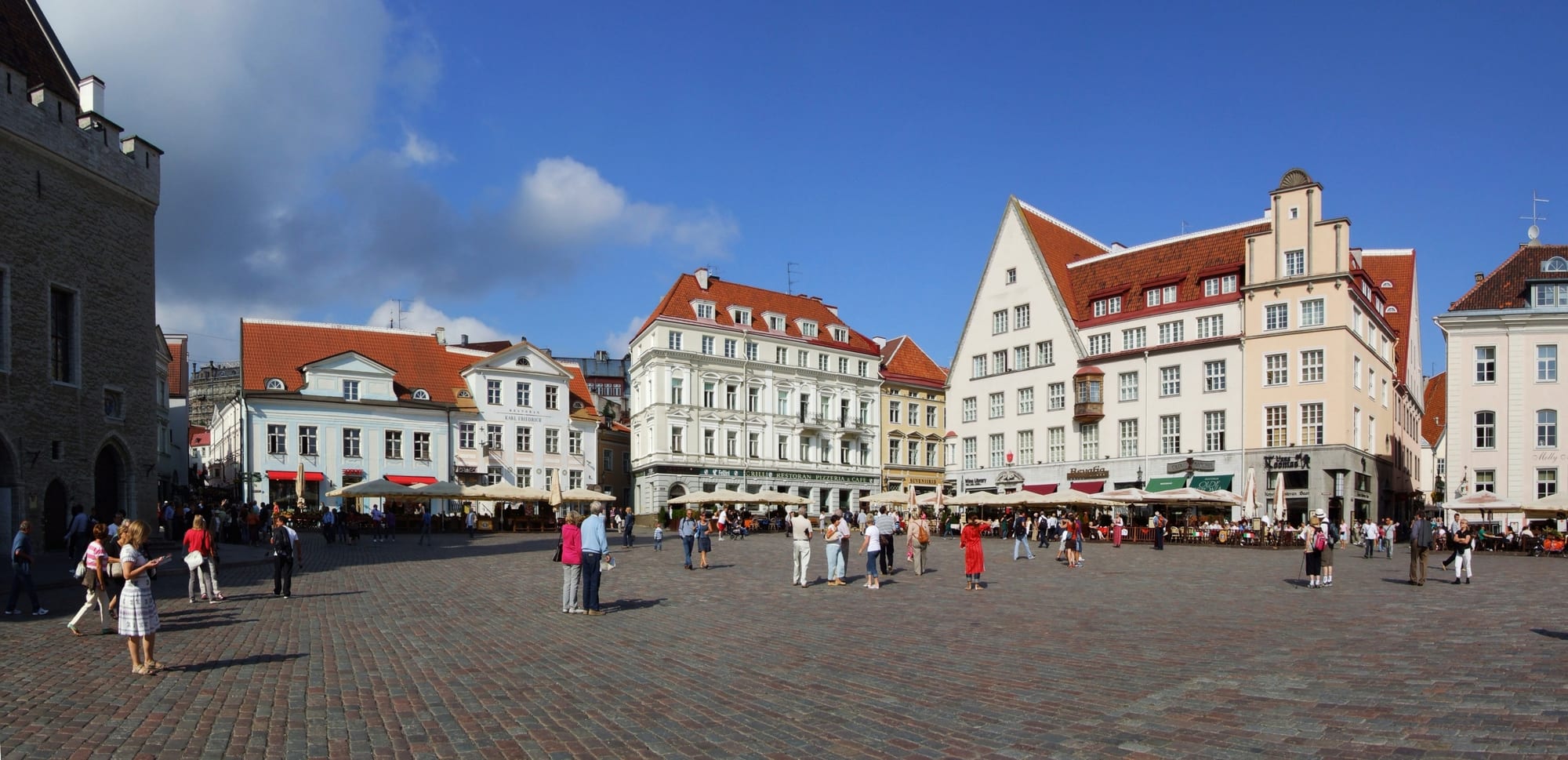
Swedes, then Russians
The old Livonian order collapsed in the Livonian War (1558–1583), and Estonia was carved up. Sweden took the north and, by 1629, the mainland — a period folk memory softened into "the good old Swedish time", with the founding of Tartu University in 1632 and the first books printed in Estonian. Then Peter the Great's Russia conquered the territory in 1710. The tsars left the Baltic German nobles in charge of their own provinces, church and language; serfdom, which had actually deepened under Swedish and Russian rule, was abolished in 1816–19 — but without land, so the peasants stayed dependent.
The awakening
By the mid-19th century Estonian peasants were highly literate, and a national movement grew out of that. The folk epic Kalevipoeg was assembled around 1857–61; the first national Song Festival was held in Tartu in 1869, and became the defining ritual of Estonian identity — tens of thousands of singers in a single massed choir. An Estonian press and Estonian societies followed, pushing back against both German dominance and, later, tsarist Russification.
Twenty years of freedom
The Russian Empire fell in 1917, and Estonia declared independence on 24 February 1918. It was immediately occupied by Germany, and then had to fight the Estonian War of Independence (1918–1920) against both Soviet Russia and Baltic German forces. Victory brought the Treaty of Tartu, in which Soviet Russia recognised Estonia "for all time".
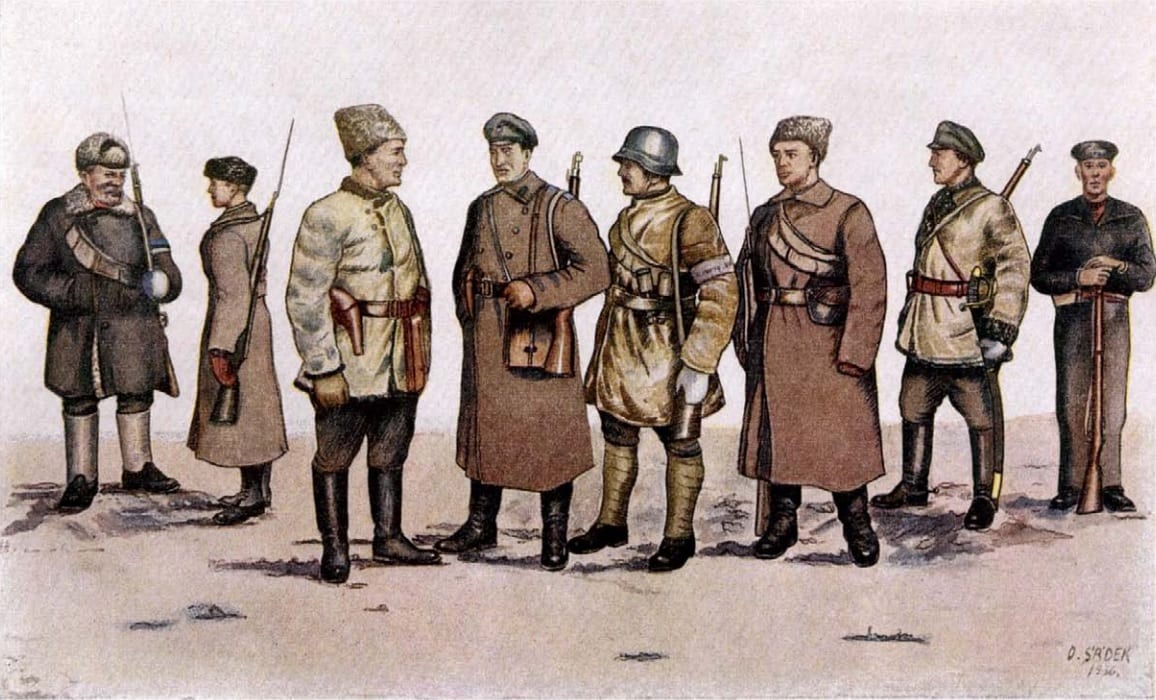
The first republic broke up the German estates in a sweeping land reform and ran a parliamentary democracy — until 1934, when, as elsewhere in interwar Europe, Konstantin Päts staged a self-coup and installed an authoritarian "Era of Silence". Democratic or not, it was Estonia's own state, and it lasted just twenty-two years.
The Soviet half-century
The Molotov–Ribbentrop Pact of August 1939 assigned Estonia to the Soviet sphere. Moscow forced through military bases, then occupied and annexed the country in June 1940 after a rigged election. In June 1941 some 10,000 people were deported east. Nazi Germany occupied Estonia from 1941 to 1944 — its small Jewish community was murdered or driven out — and then the Soviets returned, sending tens of thousands fleeing across the sea to Sweden and Finland.
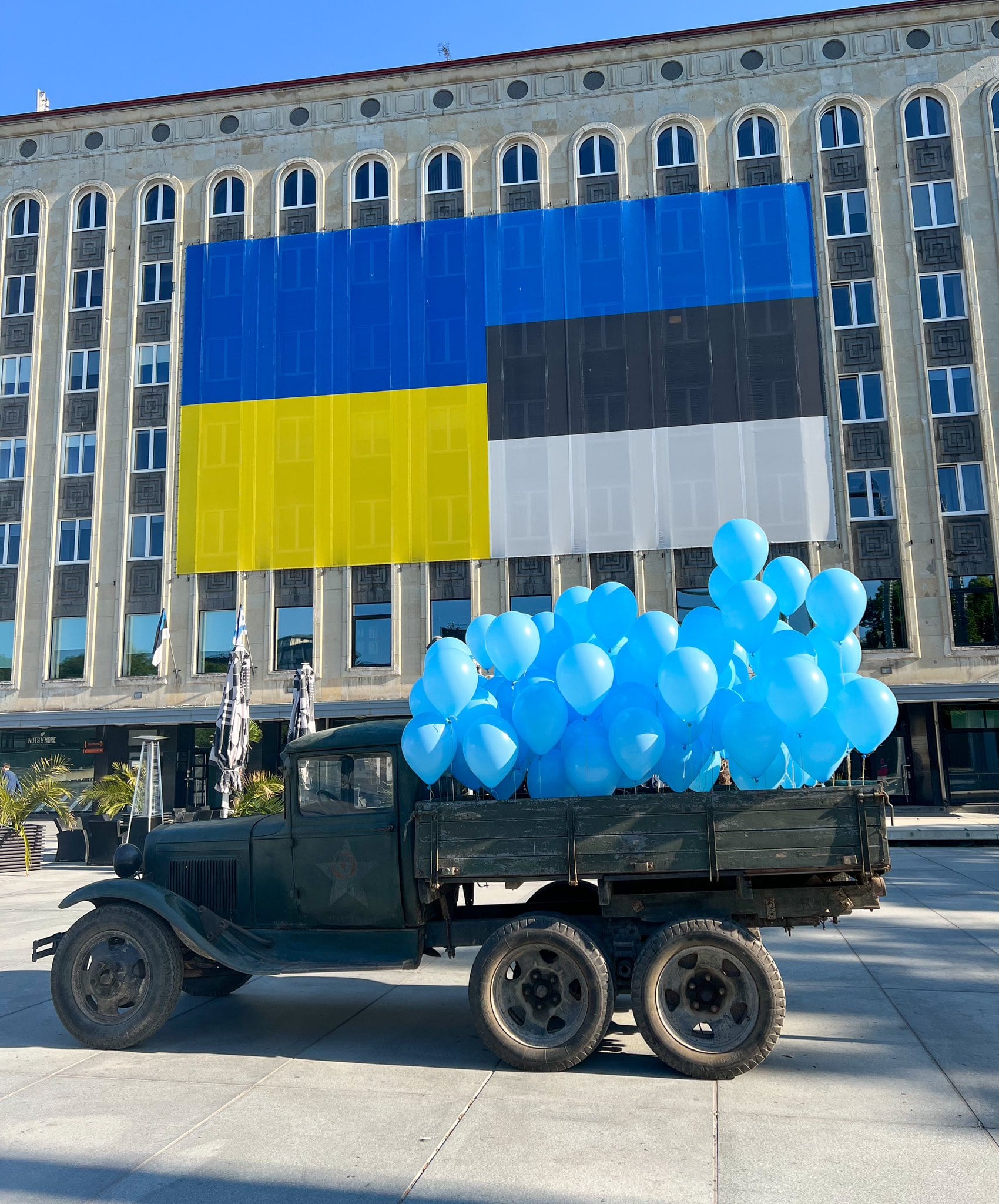
The March 1949 deportation of roughly 20,000 people, mostly women, children and the elderly, forced through collectivisation and ended the armed resistance in the forests. Decades of Soviet industrialisation then brought large-scale Russian-speaking immigration, cutting the ethnic Estonian share of the population from about 97 per cent to 62 per cent by 1989. The United States and many other Western states never recognised the annexation as legal.
The Singing Revolution
From 1987 the Soviet grip loosened, and Estonians filled the opening with song. A protest against planned phosphate mining broke the silence; in 1988 hundreds of thousands gathered at the Tallinn song grounds to sing banned national anthems; a Popular Front formed.
A revolution set to song
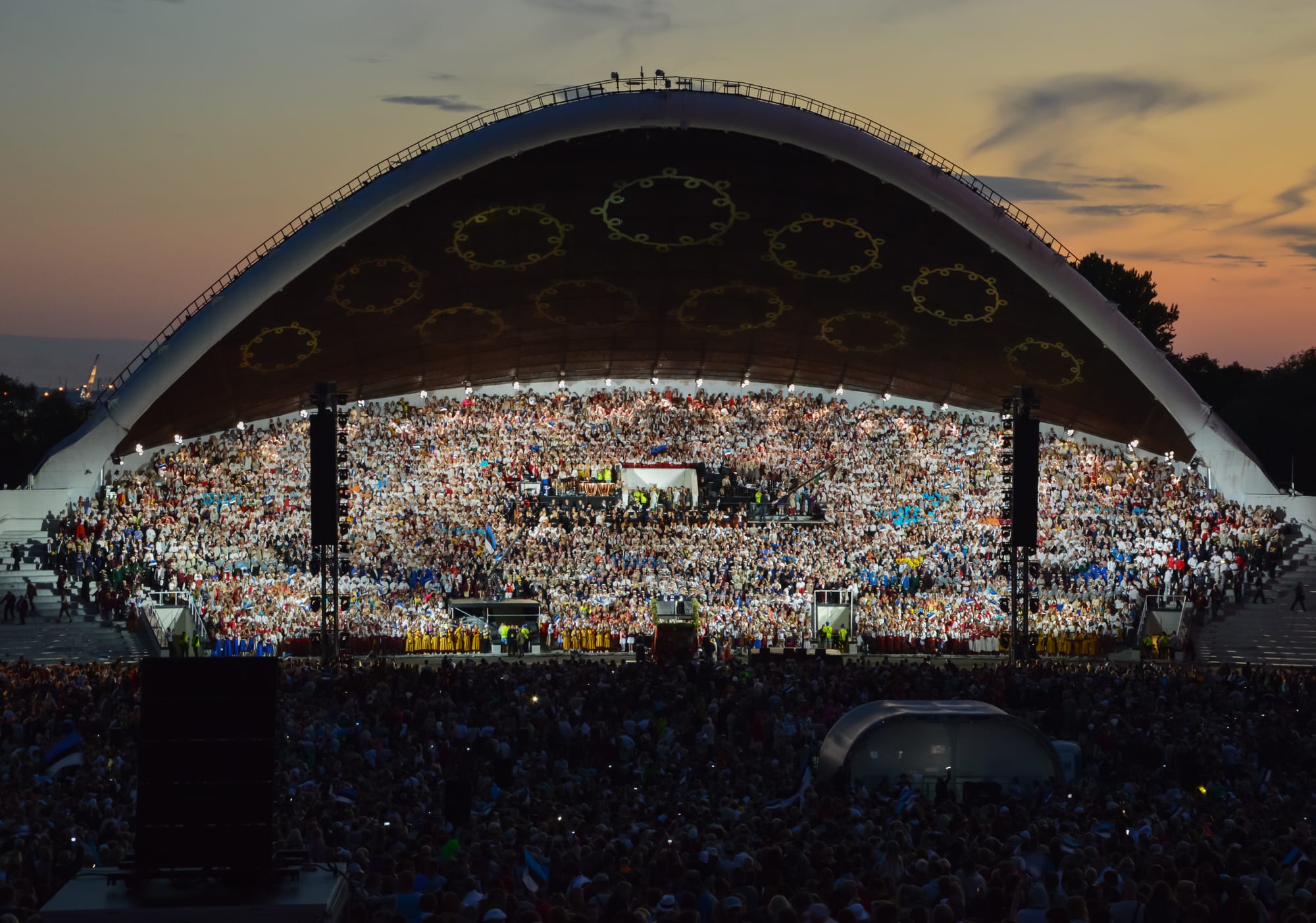
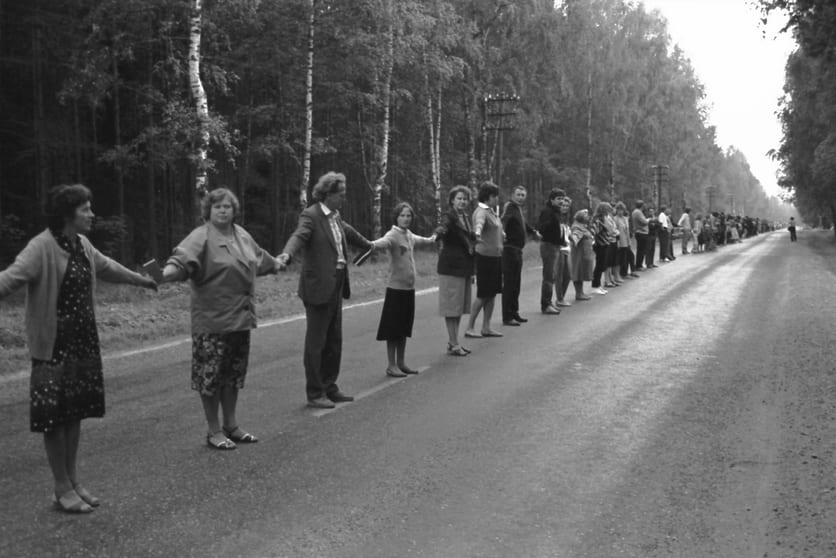
Estonia declared the restoration of its independence on 20 August 1991, during the failed coup in Moscow. Recognition came within weeks; the last Russian troops left in 1994.
Return to Europe
Independent Estonia moved fast: a flat income tax, a currency pegged first to the Deutsche Mark, rapid privatisation, and a deliberate "return to Europe" that brought NATO and EU membership in 2004 and the euro in 2011. It also built one of the world's most digital states — online voting, digital identity, e-residency — and produced Skype. Relations with the large Russian-speaking minority have been the persistent strain: restrictive citizenship rules left many stateless, and the 2007 relocation of a Soviet war memorial in Tallinn set off riots and a pioneering wave of cyberattacks attributed to Russia. Since 2022 Estonia has been one of Ukraine's most forceful supporters.
What Estonia carries
Estonia's history is the story of a small nation that kept its language and its sense of itself through seven centuries of foreign rule, and twice — in 1918 and in 1991 — turned a collapse of empire into a state of its own. The song festival that began in 1869 as a cultural gathering became, 120 years later, the form the independence movement took. Few countries can point so exactly to what held them together.