Culture & Customs · Estonia
Estonia: Song, Sauna and the Quiet Forest
One of the least religious countries in Europe, where reserve hides a generous welcome, shoes come off at the door, the forest is treated with respect and the whole nation still gathers to sing
By Worldlore Editorial · 30 September 2026
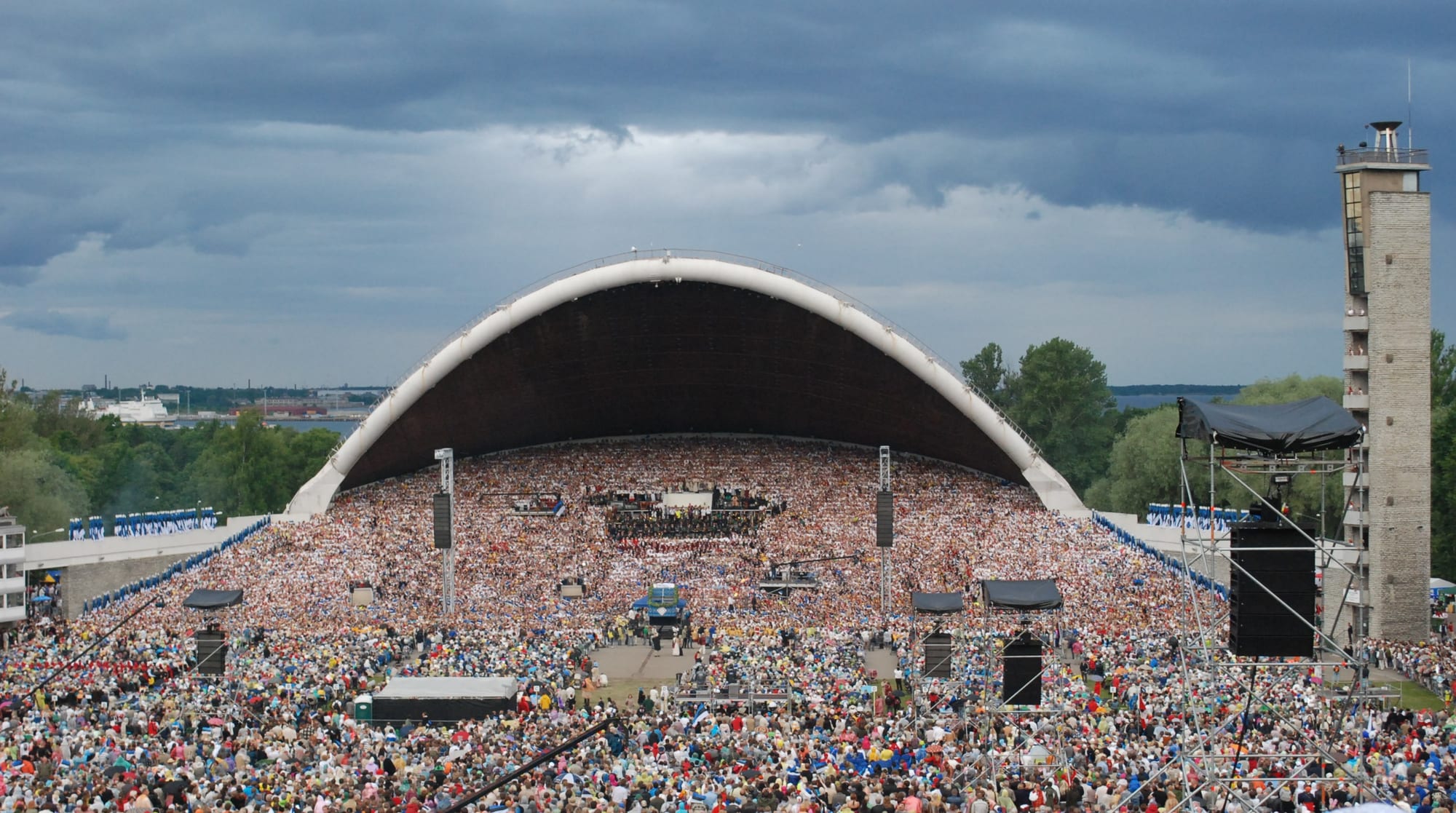
Evening falls slowly over the song festival grounds. On a vast arched stage, tens of thousands of singers stand shoulder to shoulder, many of them in folk costume, before a crowd spread across the slope in front of them. More than 31,000 people took part in the 2025 celebration. The event's artistic director has described it as being like a religious service of the Estonian people. It says something important about a country that is otherwise known for its reserve: Estonians may be sparing with small talk and embraces, but when they sing together, they sing as a nation.
Faith, identity and values
By formal measures, Estonia is one of the least religious countries in Europe. In the 2021 census, 58 per cent of people said they had no religious affiliation and 29 per cent reported one, while the rest did not answer. Orthodox Christians made up 16 per cent of the population and Lutherans 8 per cent, a share that has fallen steadily from 14 per cent in 2000. Affiliation is much lower among ethnic Estonians, just 17 per cent, than among the country's Russian, Ukrainian and Belarusian residents, and far higher among older people than the young.
Low church attendance does not mean an absence of the sacred. For many Estonians, nature carries that weight. The national tourism board notes that the forest is still regarded as a place where one should not shout, a habit rooted in pre-Christian beliefs about guardian spirits. Many sacred natural sites are known across the country, among them sacred groves, called hiis, and their survival is unusual for a developed European country. A small native faith, maausk, is practised at some of these places. Old superstitions and folk beliefs also linger in everyday life.
The core social values are modesty, self-reliance and respect for other people's space. Estonians do not tend to go to extremes of emotion or sentimentality, and trust is built slowly. But reserve is not indifference. Once a friendship forms, the country's EU researcher portal notes, an Estonian becomes an easy-going companion, a generous host and a loyal friend, and the tourism board observes that people who say little about their private lives often open up during a long walk or in the sauna.
Greetings and meeting people
A handshake with direct eye contact is the normal greeting between people who do not know each other well. Warm hugs and kisses on first meeting tend to have the opposite effect to the one intended: they make many Estonians uncomfortable, and are kept for special people at special moments. Conversation starts gently, and silences are not treated as awkward gaps to be filled.
Public behaviour is quiet. Loud displays of emotion are frowned upon, and the rowdy conduct of some visiting groups, such as noisy stag parties, is a well-known source of irritation, even though Estonians themselves enjoy a convivial drink. Keeping a comfortable distance and not pressing new acquaintances with personal questions go down well.
Hospitality and being a guest
An invitation into an Estonian home is not given lightly, and it is there that the warmer, more generous side of the national character tends to show. Shoes come off at the door: it is considered polite to remove them on entering someone's home, not least because the streets are muddy, wet or snowy for at least half the year. A request is not always made, because it is simply assumed; outdoor shoes should stay on only if the host clearly says so.
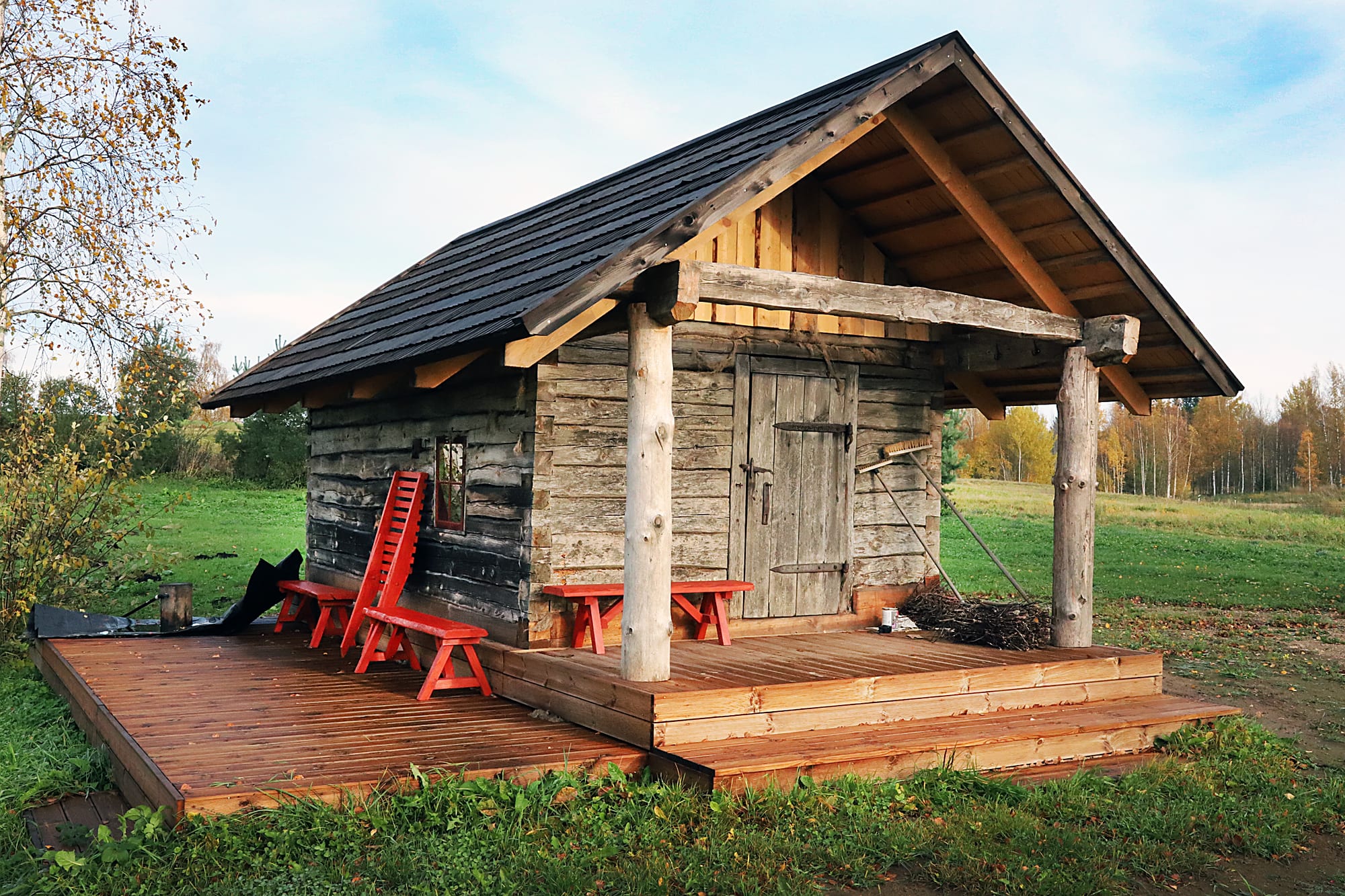
The sauna is the other great setting for hospitality. Traditionally heated on Saturdays, and also before major festivals and family events, it is valued as much for quiet conversation as for the heat. In the smoke sauna of the south-east, which is on UNESCO's list of intangible heritage, the stove is heated with wood in a room without a chimney, so that the smoke circulates inside. Bathers sit together until they sweat, throw water on the hot stones to raise the steam, and beat themselves with whisks of leafy branches; families take turns hosting one another, and meat is smoked in the sauna too. Being invited to share a sauna is a gesture of friendship, and it is often where the most honest conversations happen.
In restaurants, a tip of around 10 per cent rewards good service; otherwise, rounding up the bill is enough.
Festivals and life's big moments
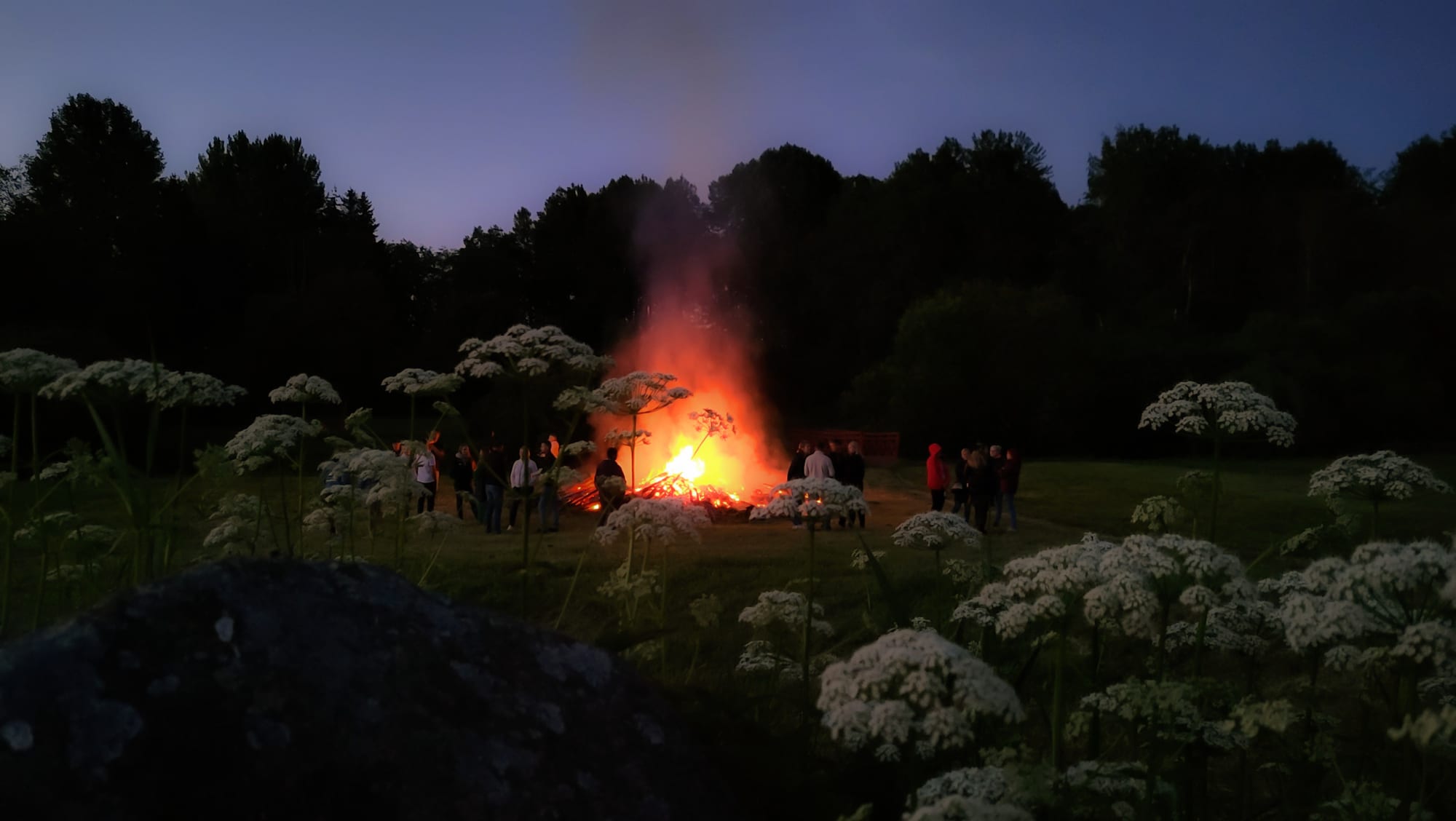
Midsummer is widely considered the most important holiday of the year, surpassing even Christmas, and both 23 and 24 June are national holidays. On Midsummer Eve, families and friends leave the towns for the countryside to gather around a great bonfire, singing, dancing and staying up through the white night. Young people jump over the flames for prosperity and to ward off bad luck, or swing as high as they can on village swings. Couples go into the forest in search of the fern flower, which is said to bloom only on that one night, though ferns never flower at all, and young women may put nine different kinds of flowers under their pillow in the hope of dreaming of a future spouse. Since 1934, 23 June has also been Victory Day, marking a decisive battle of 1919 in the War of Independence.
Independence Day, 24 February, marks the declaration of 1918. It begins at sunrise in the capital, where the blue, black and white flag is raised on the Pikk Hermann tower to the national anthem, with choirs, a blessing and a reading of the declaration, followed later by a military parade.
Late autumn is soul time in the folk calendar, when the dead were believed to visit the living. On All Souls' Day, 2 November, families once heated the sauna for the departed and set out food for them; today, candles are placed in windows and at graves. The same season brings mardipäev, St Martin's Day, on 10 November, when children in dark clothes, masks and false beards go from house to house singing for treats, and kadripäev, St Catherine's Day, on 25 November, when they go round in pale women's clothing; Kadri was regarded as a guardian of cattle through the winter.
Christmas centres on Christmas Eve. Traditionally the house was prepared, everyone bathed in the sauna, and families went to church, afterwards lighting candles on relatives' graves, a quiet ritual that continued through the Soviet years. Children visited by Father Christmas are expected to recite a poem, sing or dance before receiving their presents.
Life's milestones have old roots. Folk weddings once lasted several days and were full of ritual song, including singing contests between the bride's and groom's sides. The key moment was the tanutamine, when the bride was given the bonnet of a married woman. Later the bride's wreath replaced the bonnet, and the guests' cry of "Kibe!", "bitter!", to make the couple kiss survives at weddings today.
Arts, crafts and music
Singing is the heart of Estonian culture. The first national song festival was held in Tartu in 1869, during the national awakening, and the tradition of holding the great celebration every five years was established in the years of independence. Since 1928 it has been held at the Tallinn Song Festival Grounds, with a dance festival alongside, and the song and dance celebrations of Estonia, Latvia and Lithuania are on UNESCO's list. In the late 1980s, mass singing on those grounds became a form of peaceful protest, remembered as the Singing Revolution.
Some regional traditions are strong enough to be recognised in their own right. Seto leelo, the polyphonic singing of the Seto people of the south-east, is on UNESCO's list: a lead singer delivers each line and a choir, usually made up entirely of women, joins in for the final syllables and repeats it. On Seto Kingdom Day, the finest lead singer is crowned the King's "Mother of Song".
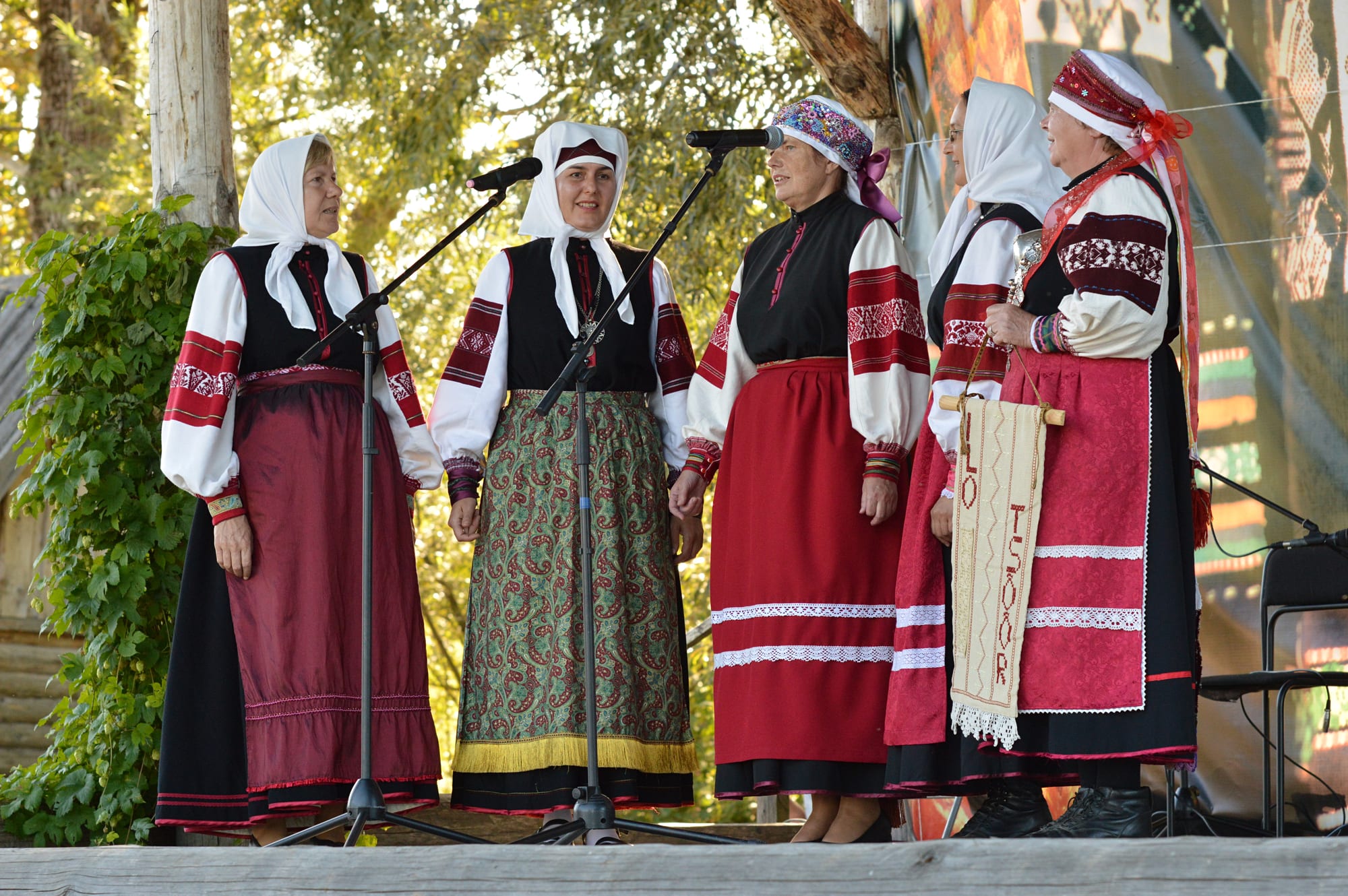
On the island of Kihnu, where the men long went to sea to fish and hunt seals, women became the custodians of tradition. They weave the island's brightly striped woollen skirts on traditional looms and knit mittens and stockings with symbolic patterns, keep alive songs in the ancient Kalevala metre, and preserve the island's traditional wedding. The Kihnu cultural space was among the first elements UNESCO recognised in Estonia. Craft knowledge is protected elsewhere too: the building and use of expanded dugout boats in the Soomaa wetlands is on UNESCO's list of heritage in need of urgent safeguarding. Folk costume, meanwhile, is not kept only for museums; it is worn with pride at song festivals and national celebrations.
Dos and don'ts for visitors
- Do shake hands on meeting, and keep hugs and cheek kisses for close friends and family.
- Do take shoes off when entering a home unless the host clearly says otherwise.
- Do accept an invitation to the sauna if one is offered; it is a gesture of friendship.
- Do give people space and let silences be; reserve is not unfriendliness.
- Do tip around 10 per cent for good restaurant service, or round up the bill.
- Don't shout or make needless noise in the forest, which many Estonians regard as a special place.
- Don't expect loud displays of emotion, and avoid rowdy behaviour in public.
What to take away
Estonia rewards patience: behind the handshake and the quiet lie a generous table, a sauna shared with friends and a national love of song, and visitors who respect the silence will find the warmth that follows.