Culture & Customs · Dominican Republic
Dominican Republic: Blessings, Bachata and the Limping Devil
A Catholic nation devoted to its Virgin, where children still ask their elders for a blessing, merengue and bachata are learned young, and every February the devil comes out to be mocked
By Worldlore Editorial · 30 September 2026
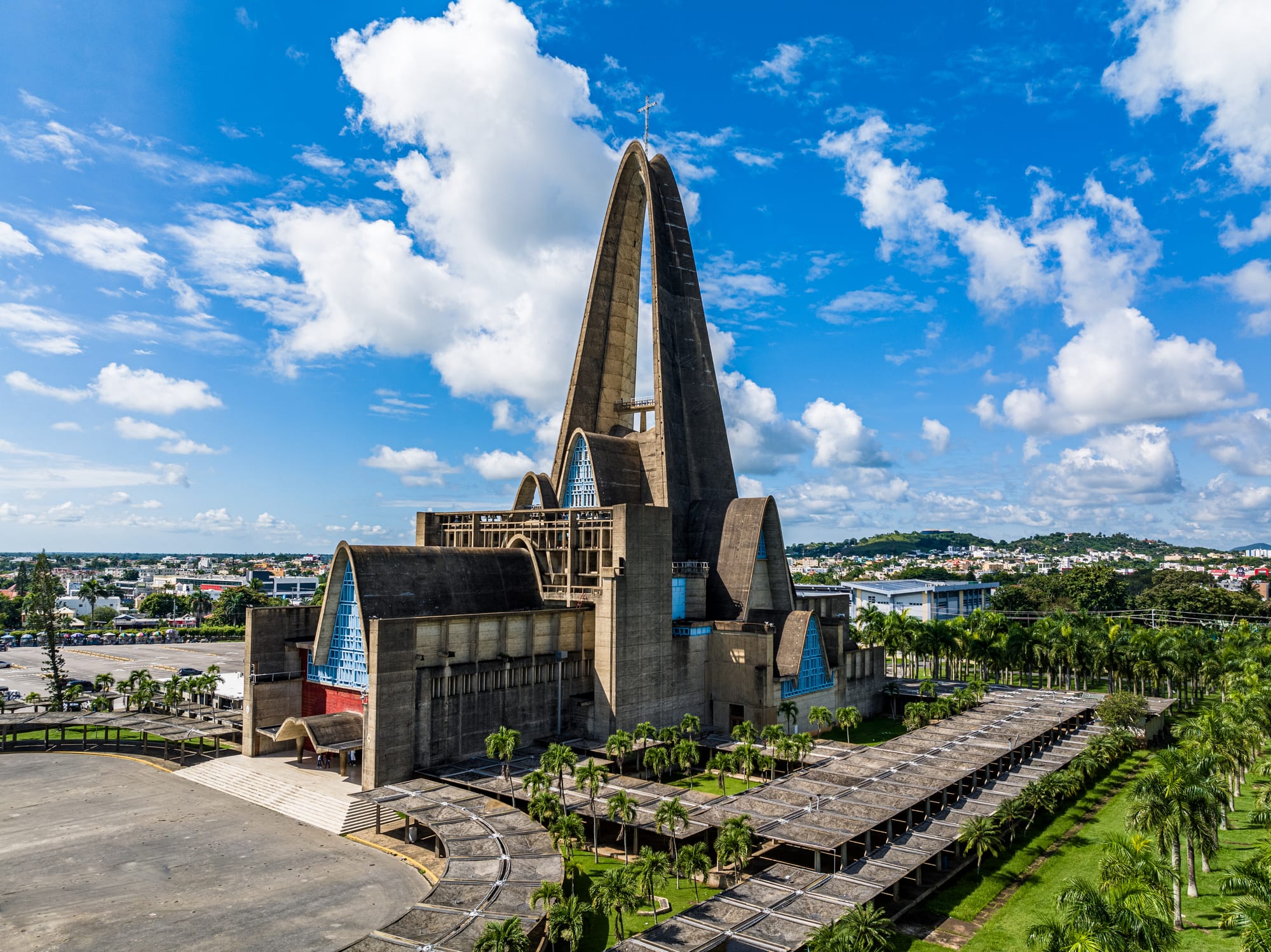
On the eve of 21 January, the grounds of the basilica that houses the country's most venerated image of the Virgin Mary fill with people who have travelled from every corner of the Dominican Republic. Many have spent the night outside, in tents, on inflatable mattresses or on the bare ground, as a mark of sacrifice. Some arrive barefoot and dressed in white. Long lines form to reach the altar where the image of Our Lady of Altagracia rests, and pilgrims carry candles, flowers and religious pictures as tokens of thanks or of hope. Many are keeping a promesa, a vow made to the Virgin in exchange for a recovery from illness, a safe birth or some other grace, and the vow obliges them to return year after year, for as long as they live. Faith in the Dominican Republic is warm, personal and deeply bound to family, and few moments show it as clearly.
Faith, identity and values
Catholicism is woven into Dominican public life. Under a concordat with the Holy See signed in 1954, it is the official religion of the state, and national holidays include days traditionally observed only by Catholics. The best known is 21 January, the feast of Altagracia, a national holiday since 1924, two years after her image was crowned under Pope Pius XI; many families keep a novena of prayers in the days leading up to it. Surveys cited by the US State Department put Catholics at more than half of the population, evangelical Protestants as the next largest group, and a significant minority with no declared religion. The same report notes that Catholic traditions remain intertwined with marriage, family gatherings, education and politics, and that an unknown number of Dominicans also draw on syncretic beliefs such as Santería.
Popular faith has long run alongside formal doctrine. A Library of Congress study of the country observed that many people felt they could best approach God through intermediaries, above all the saints, and that popular practice was often far removed from strict orthodoxy. Devotion to the Virgin, whom Dominicans call their spiritual mother, is still the most visible expression of that instinct. Religion is also a social matter: the Peace Corps warns its volunteers that newcomers to a community are frequently asked what faith they follow and invited along to the local church.
Beneath faith lies family, the fundamental unit of Dominican society. The same study described loyalty to relatives as an ingrained and unquestioned virtue, learned from early childhood: relatives are the people to be trusted and relied on. The circle of trust is widened through compadrazgo, the bond created when godparents are chosen at a baptism or a marriage. The tie links not only godparent and godchild but the two sets of parents, and it is expected to be strong and enduring.
Appearance matters too. A popular Dominican saying holds that "the passenger is known by his luggage", and that "a rip means carelessness, a patch means humility". Neatness and cleanliness are taken as signs of self-respect whatever a family's means, and most people bathe at least twice a day, in the morning and again in the afternoon or evening.
Greetings and meeting people
Greetings are treated as a basic courtesy rather than an optional extra. A "buenos días", "buenas tardes" or "buenas noches" opens most encounters, often followed by questions such as "¿cómo va todo?", how is everything going, or "¡cuánto tiempo!", it has been so long. Walking into a room or a small shop without a greeting can come across as abrupt.
Within families, one greeting carries particular weight: the bendición, or blessing. It passes above all from children to their parents, from nephews and nieces to their aunts and uncles, and from grandchildren to their grandparents, who are asked for their blessing on arriving and on leaving. The exchange is a small daily act of respect for the older generation. Religious language runs through ordinary greetings more widely as well: "Dios te bendiga", God bless you, is a common way for Christians to greet or bless someone, and the usual answer is "bendición" or "amén".
The way people speak to one another also marks the weight of a relationship. Spanish offers an informal "you", tú, and a formal one, usted, and the choice is not simply a matter of age or rank. The Library of Congress study noted that compadres traditionally addressed each other as usted, even when they were already relatives, as a sign of the respect the bond demands. For visitors, usted is the safe choice with older people and in any formal setting until invited to be more familiar.
Hospitality and being a guest
The Peace Corps describes Dominicans as known for their generous hospitality to foreigners, and that generosity is expressed above all through food and time. A visitor to a family home will usually be offered something to eat, and the Peace Corps advises its volunteers that they will be offered, and most likely expected to accept, traditional dishes, including meat, when visiting families. Politely taking at least a little is the safest course. Social life often gathers on the family porch, where people talk for hours, and an invitation to sit and stay a while is worth accepting.
Dress is part of good manners. Clothes are expected to be clean and neat, and people will form judgements based on appearance and personal hygiene. Revealing clothing is out of place in professional settings, and women with bare shoulders may be refused entry to government buildings.
An invitation to church is a common gesture of welcome. Accepting is appreciated, but the Peace Corps notes that it is possible to decline politely if the church or religion is not one's own, and doing so without offence is usually a matter of tact rather than excuse.
Festivals and life's big moments
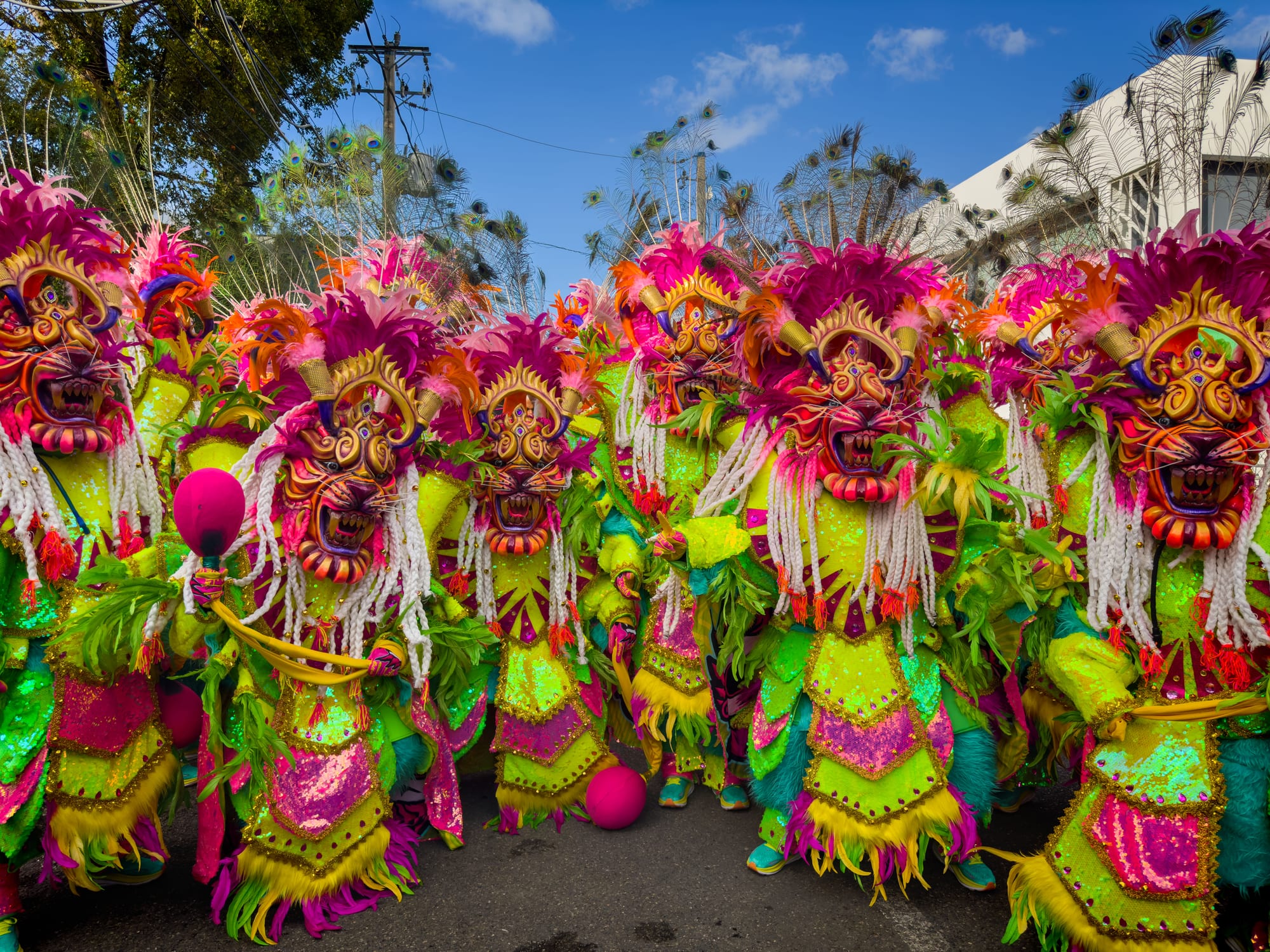
Carnival fills February. According to the Ministry of Tourism, its roots reach back to the colonial era; the custom of disguise almost vanished during the Haitian occupation of 1822 to 1844, then returned after independence, no longer tied to religious feasts. Today towns across the country hold colourful parades on each Sunday of February, sometimes running into March, and the season closes with a national carnival parade in the capital on a Sunday in March, bringing together characters from all over the country. The celebrations meet the Independence Day holiday on 27 February.
The star is the diablo cojuelo, the limping devil, in a bright caped costume hung with small bells, little mirrors and maracas and a horned mask. The costume is a parody of pretentious medieval knights, and the figure is called a devil precisely because it mocks the devil. Around him gather a cast of stock characters: Roba la Gallina, a man dressed as a woman with an umbrella, who calls on the young people of the town as her chicks; Se Me Muere Rebeca, a desperate mother who begs sweets for her sick daughter and hands them out to children; Califé, a poet in a black suit who recites verses mocking political, social and cultural figures; Los Indios, representing the Taíno; and Los Tiznaos, faces blackened with charcoal, representing enslaved Africans.
Merengue has its own day. A presidential decree in 2005 made 26 November National Merengue Day. The Cocolo dance dramas, created by the descendants of workers from the British Caribbean islands who came to labour in the sugar fields, were traditionally performed at Christmas, on the feast of Saint Peter and at carnival.
Life's milestones follow the Catholic pattern for most families, with baptism the moment when godparents are chosen and the lifelong bond of compadrazgo begins. The Library of Congress study found three accepted forms of marriage, civil, religious and the free union, with many couples beginning in a free union and formalising the partnership once they were older and more secure. Death is marked by a wake, and many Catholic families then hold the novenario, nine days of prayer for the soul of the dead person, which a priest quoted by the newspaper elCaribe recommends beginning immediately after the burial. Psychologists describe these gatherings as fundamental to grieving, since they give relatives and neighbours a set time and place to mourn together.
Arts, crafts and music
Merengue is the national dance, and many people, including small children, know the steps. Its traditional sound comes from three instruments: the tambora, a two-headed drum, an accordion-like melodeon, and the güira, a metal scraper; UNESCO also lists the saxophone among its instruments today. Couples dance it together, turning in circles with flirtatious gestures. UNESCO notes that it appears in almost every part of life, from school to parties and even political campaigns, that it is passed on informally, by watching, joining in and imitating, and that it draws people from every social class.
Bachata, also on UNESCO's list, grew out of the bolero mixed with other Afro-Antillean styles such as son, cha-cha-cha and merengue itself. The word originally meant a lively gathering or party rather than a style of music. One or two guitars lead, over bongos, maracas, a güiro and bass, and the lyrics dwell on love, passion and nostalgia. The couple dance, built on a simple eight-step pattern with a pronounced hip movement, is learned from a young age at family and community celebrations, and many academies, studios and schools now teach it.
Older Afro-Dominican traditions survive in smaller communities. The Brotherhood of the Congos celebrates the Festival of the Holy Spirit at Pentecost with prayers, song and dance, and a procession carrying a dove that represents the Holy Spirit. The Cocolo dance drama blends music and dance of African origin with plots and figures drawn from the Bible and medieval European literature, but UNESCO warns that only one ageing troupe remains active.
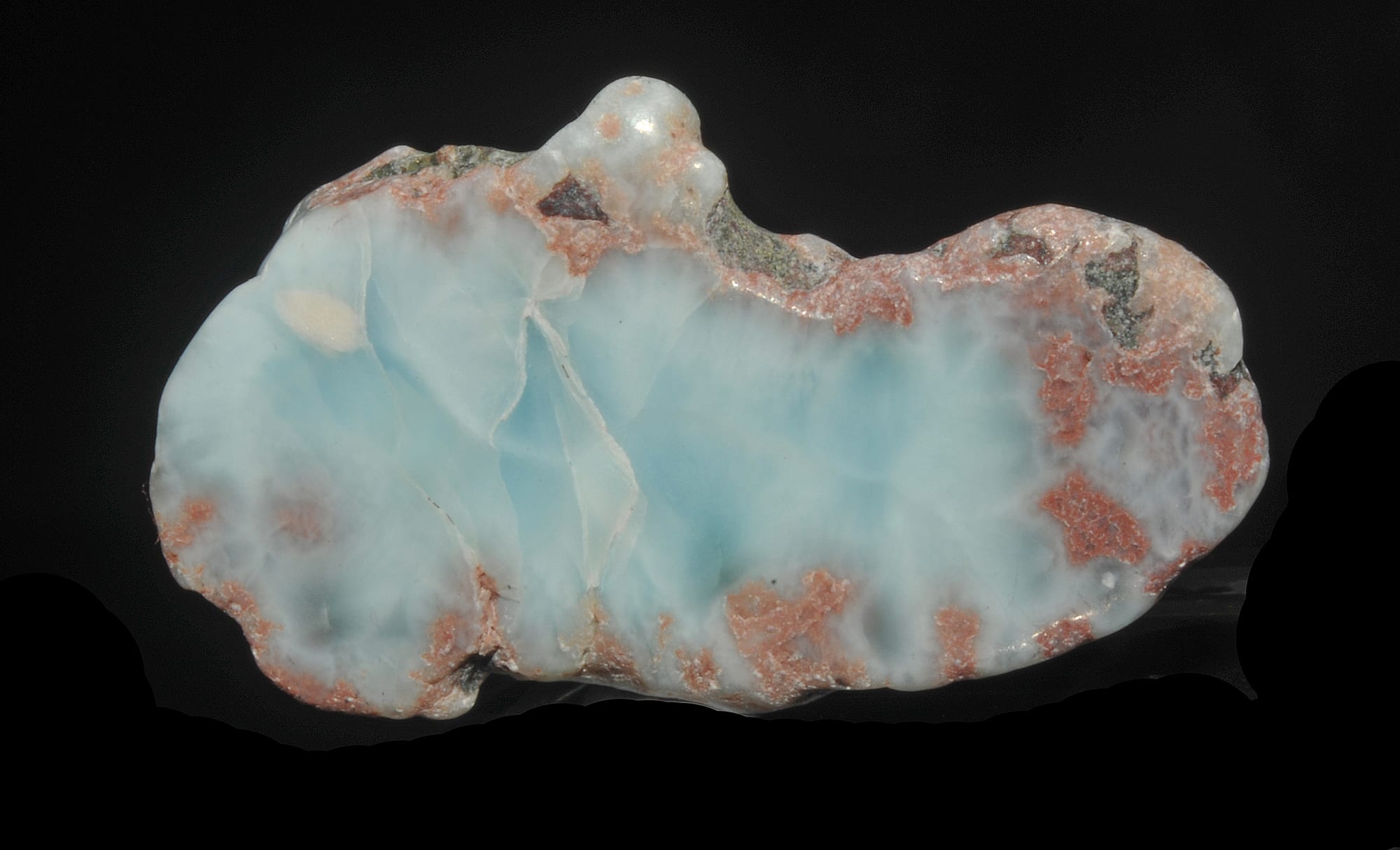
Two natural materials underpin the island's jewellery trade. Larimar, a rare blue variety of pectolite of volcanic origin, is found only in deposits in the south-west of the country, around Barahona, and much of it is worked by local jewellers and craftworkers. Dominican amber, which often holds plant and animal fossils millions of years old, is the other mainstay of traditional jewellery, and the Ministry of Tourism ranks the two as the country's most sought-after gems. Among other crafts, the muñecas sin rostro, faceless dolls moulded in clay, have become a symbol of national identity and pride; their missing features, according to the presidency's own cultural series, stand for the mixing of peoples that shaped the Dominican nation.
Dos and don'ts for visitors
- Do greet people with "buenos días" or "buenas tardes" before anything else, including in shops.
- Do use the formal usted with older people and in formal settings until invited to do otherwise.
- Do dress neatly and cleanly; people judge appearance, and shorts and flip-flops are out of place in offices.
- Do accept at least a little of any food offered in a family home.
- Do feel free to decline an invitation to church, as long as it is done politely.
- Do plan around carnival Sundays in February and the national parade in the capital in March, whose date changes each year.
- Don't wear bare shoulders or revealing clothes into government buildings or professional settings.
- Don't expect to master merengue straight away; many Dominicans learned the steps as small children.
What to take away
In the Dominican Republic, faith, family and music are hard to pull apart, and a visitor who greets people properly, accepts what is offered and joins the dance will find that warmth returned.