History · Djibouti
Djibouti: The Gatekeeper of the Red Sea
A hot, small territory at the mouth of the Red Sea — a French coaling station and railhead that became the world's most crowded cluster of foreign military bases
By Worldlore Editorial · 10 September 2026
A country that is mostly a location
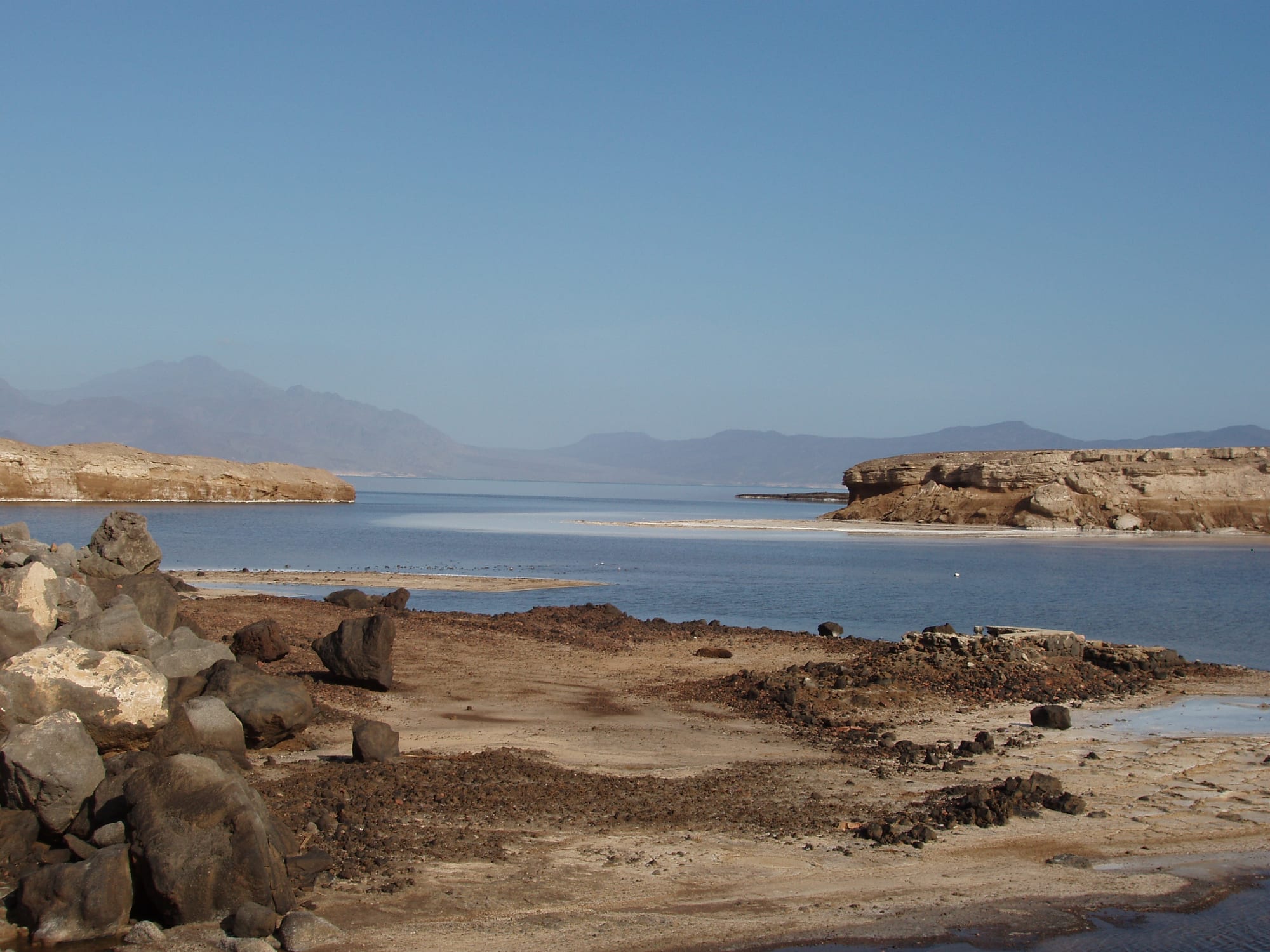
Djibouti is one of the smallest countries in Africa, a wedge of volcanic desert on the Horn, and one of the hottest and driest places on the planet. It has almost no farmland, no minerals, and barely more than a million people, two-thirds of them in the capital. What it has is a position: it sits beside the Bab-el-Mandeb strait, the 30-kilometre gateway between the Red Sea and the Gulf of Aden through which a large share of the world's shipping and oil must pass. Djibouti's entire history — as a caravan port, a French railhead, and now the host of American, French, Chinese, Japanese and other military bases — is the history of turning that position into rent.
A short history
- to 19th c.
Sultanates and caravans
Afar sultanates and Issa Somali clans; Tadjoura is an outlet for the highland caravan trade.
- 1862–1888
France arrives
France buys Obock, signs treaties, and founds the port of Djibouti.
- 1897–1917
The railway
A line from Djibouti to Addis Ababa makes the port Ethiopia's outlet to the sea.
- 1958 / 1967
Referendums
Votes to stay with France, amid Somali nationalist agitation and fraud claims.
- 27 June 1977
Independence
The Republic of Djibouti, under Hassan Gouled Aptidon.
- 1991–2001
Civil war
An Afar rebellion against Issa-dominated rule.
- 2002 onward
The base boom
The US, then Japan, then China build military bases alongside the French.
Sultanates, caravans, and the French
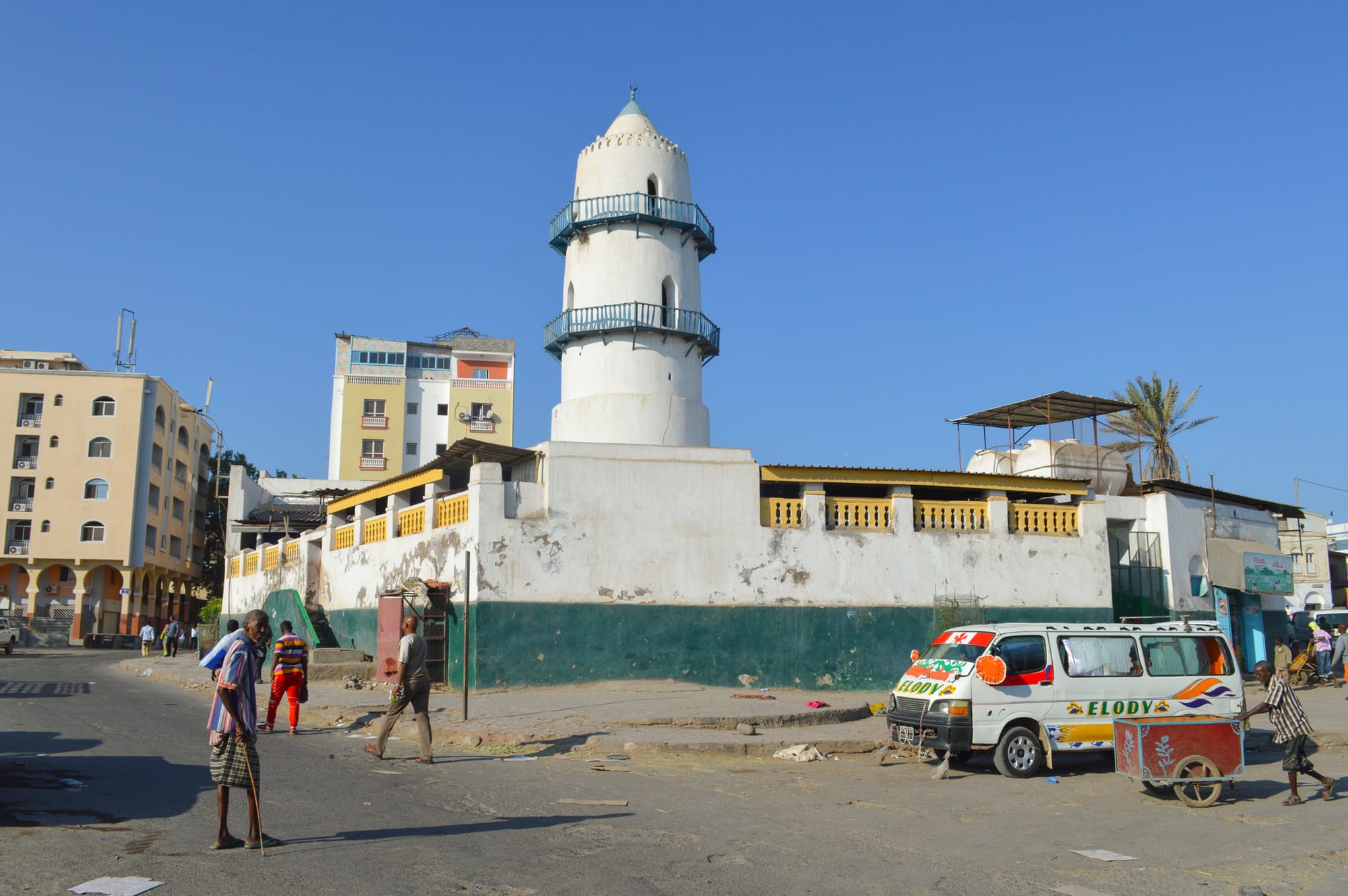
The coast was home to Afar and Somali herding peoples for thousands of years, and part of the ancient Red Sea trade world. The Gulf of Tadjoura was an outlet for the caravans of ivory and enslaved people that came down from the Ethiopian highlands, and small Afar sultanates — Tadjoura, Rahaita, Aussa — controlled the routes, while the Issa Somali held the south. Islam had arrived by the 9th century.
France came looking for a coaling station on the route to Indochina, to match British-held Aden across the strait. It bought the port of Obock in 1862, signed treaties with Afar sultans, and in 1888 founded the town of Djibouti, which became the capital of the colony of French Somaliland. The decisive act was the railway: built between 1897 and 1917, the line from Djibouti to Addis Ababa made the port the main gateway to the sea for landlocked Ethiopia — which it has been ever since, and which is the reason the town exists.
Independence, deferred and delayed
The colony's future was contested between Somali nationalism — which wanted it inside a "Greater Somalia" — and Afar and French interests. Referendums in 1958 and 1967 returned votes to stay with France, but the 1967 vote was marred by expulsions of Somalis and allegations of fraud, and France renamed the territory the "French Territory of the Afars and the Issas" to look even-handed. Pressure kept building, and a third referendum in 1977 finally produced independence, on 27 June, with the Issa Somali leader Hassan Gouled Aptidon as first president.
Gouled ran a one-party state dominated by the Issa. Afar resentment turned into civil war between 1991 and 2001, when an Afar rebel movement fought the government; power-sharing deals ended it while leaving Issa dominance in place. Gouled's nephew, Ismail Omar Guelleh, took over in 1999 and has ruled since, removing term limits in 2010 and winning re-election repeatedly in votes the opposition rejects.
The base economy
Djibouti has monetised its geography like nowhere else. France kept its largest overseas garrison here after independence. After 2001 the United States established Camp Lemonnier, its only permanent base in Africa and the hub for its counter-terrorism and drone operations across the Horn and Yemen. Then came Japan's only overseas military base, in 2011, and — a few kilometres from the Americans — China's first overseas base, in 2017, a landmark in China's global reach. Italy, Saudi Arabia and European anti-piracy missions have facilities too.
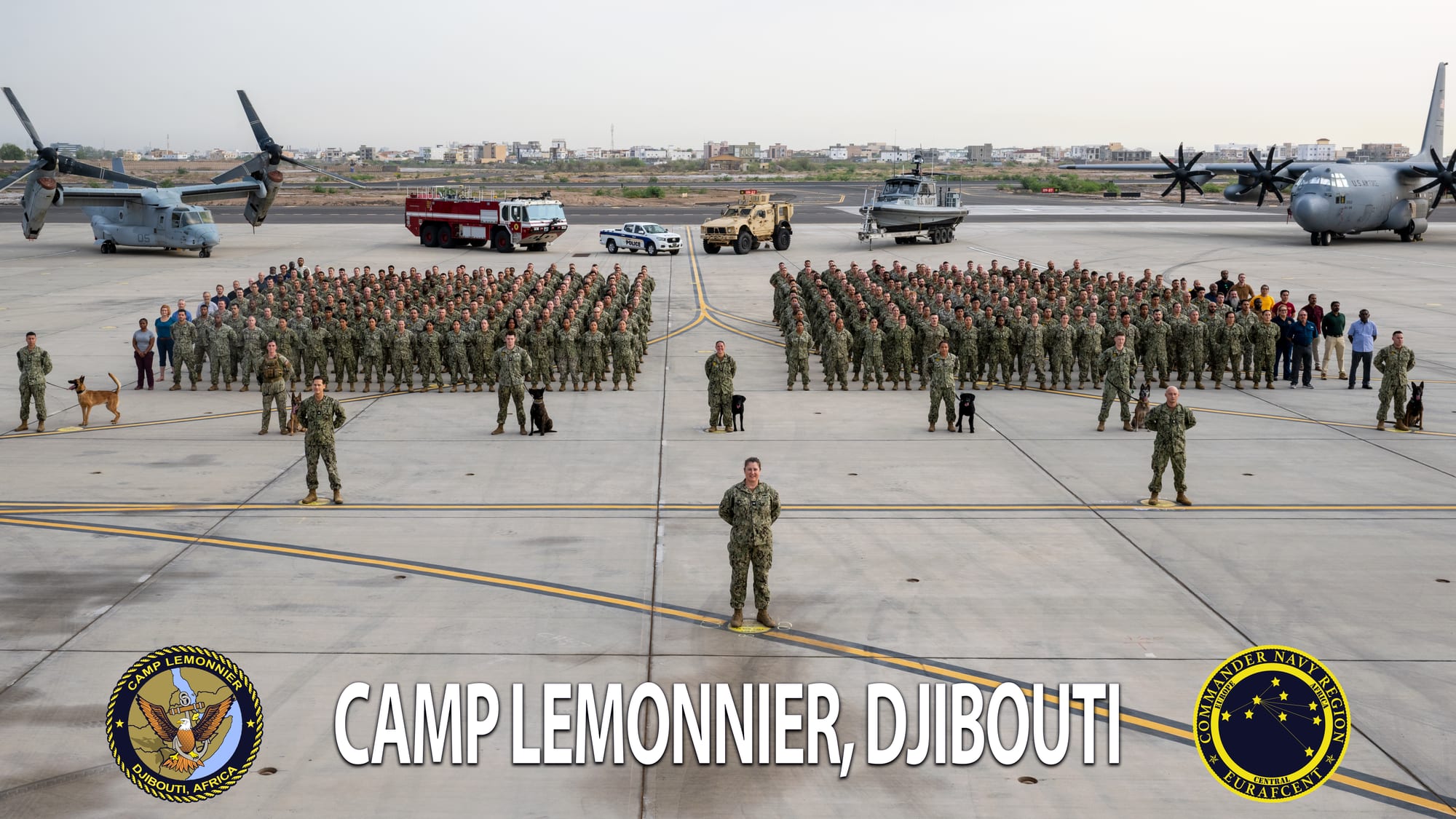
The rents from those bases — hundreds of millions of dollars a year — are a mainstay of the state budget, and keeping rival powers housed side by side without incident is Djibouti's central diplomatic task.
Ports, Ethiopia, and China
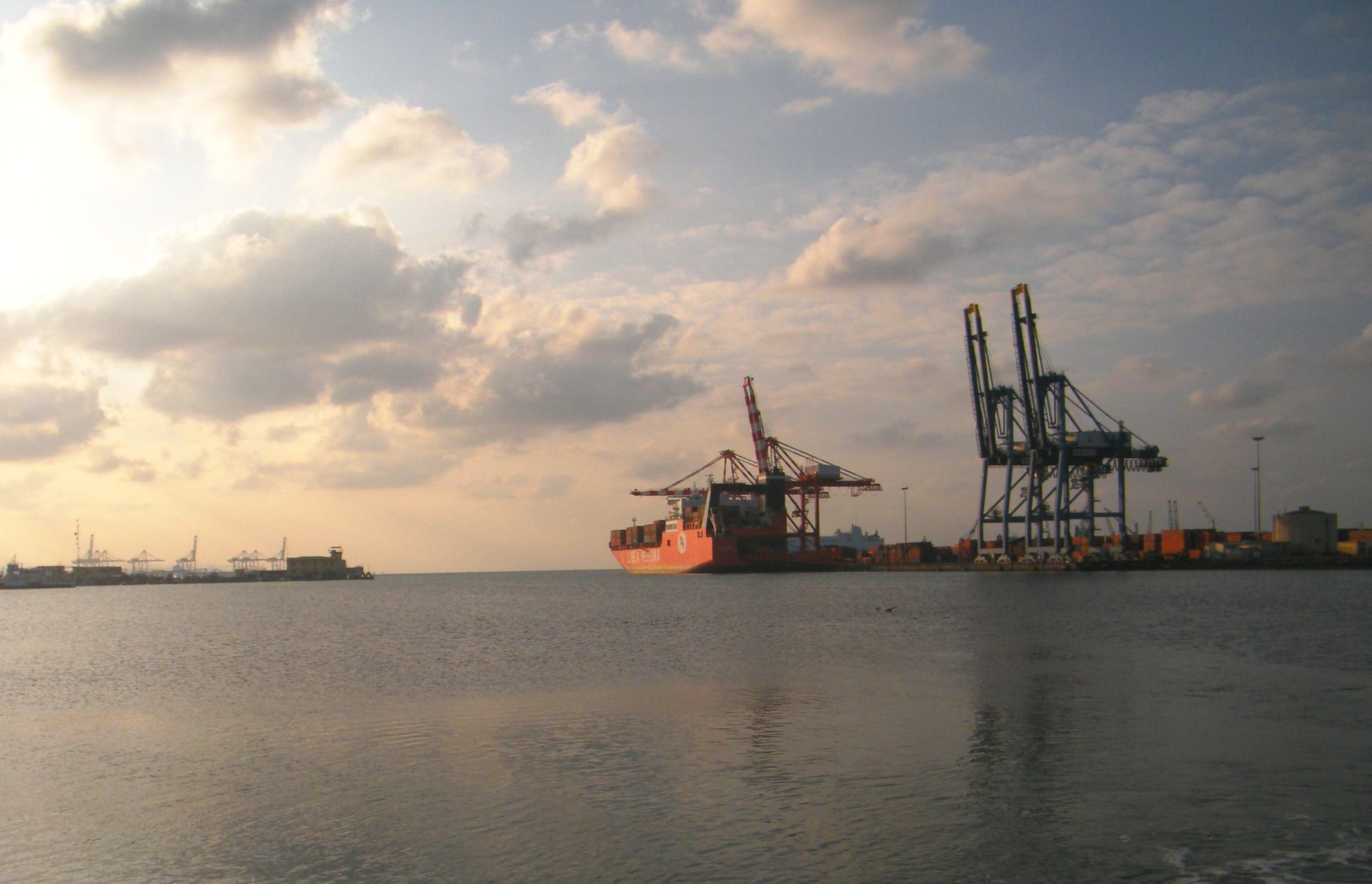
Djibouti's other lever is Ethiopia's dependence. With more than 120 million people and no coastline, Ethiopia moves the overwhelming majority of its trade through Djibouti's ports. China has financed and built a new standard-gauge railway to Addis Ababa, new port terminals, a water pipeline and a free-trade zone — leaving Djibouti heavily indebted to Beijing and firmly inside the Belt and Road.
What Djibouti carries
Djibouti is a small, poor, tightly governed country in a punishing climate, with few resources of its own and an unresolved Afar–Issa divide beneath its politics. But it occupies one of the most valuable few square kilometres on any map, and it has spent its independence renting that value out — to France, to the caravan trade's modern successor in Ethiopian shipping, and to every major power that wants a foothold on the Red Sea.