Culture & Customs · Curaçao
Curaçao: Harvest Songs and Forbidden Drums
A Catholic island with a sand-floored synagogue, a greeting owed to everyone in the room, and an African musical heritage that survived years of prohibition to become a source of pride
By Worldlore Editorial · 30 September 2026
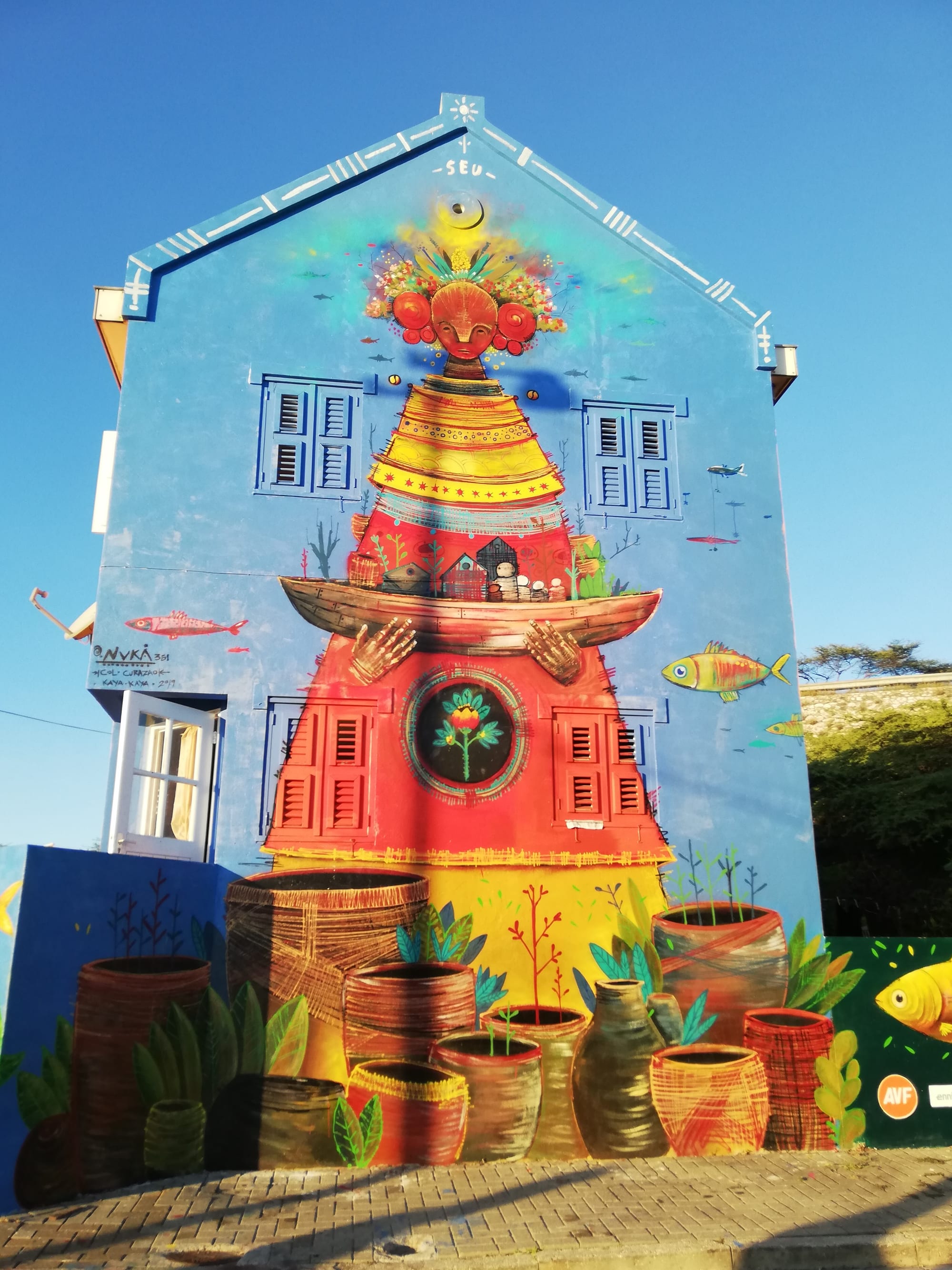
On Easter Monday, the streets of Willemstad fill with thousands of people in folklore dress, many of them carrying baskets of harvest produce on their heads. They move to the beat of drums and the call of a lead singer, dancing the wapa, a step that imitates the motions of planting and gathering in the fields. This is the Marcha di Seú, the harvest parade, and its roots lie in the plantation era, when enslaved Africans gave thanks in song and dance for whatever an arid island had managed to yield. Organisers call it the Thanksgiving of Curaçao, and some insist it has grown bigger than Carnival. In one morning it gathers most of what defines the island's culture: an African inheritance, a Catholic calendar, a creole language, and a deep attachment to doing things together.
Faith, identity and values
Curaçao is a predominantly Catholic island. In the 2023 census, just over 68 per cent of residents identified as Roman Catholic, down from about 73 per cent in 2011. Pentecostal churches account for nearly 6 per cent, Protestant churches for around 3 per cent and Adventists for about 1 per cent, while a little over 3 per cent report no religious affiliation. The Catholic year of feast days, Lent and Easter shapes the public calendar, and Sunday remains a day kept largely for family.
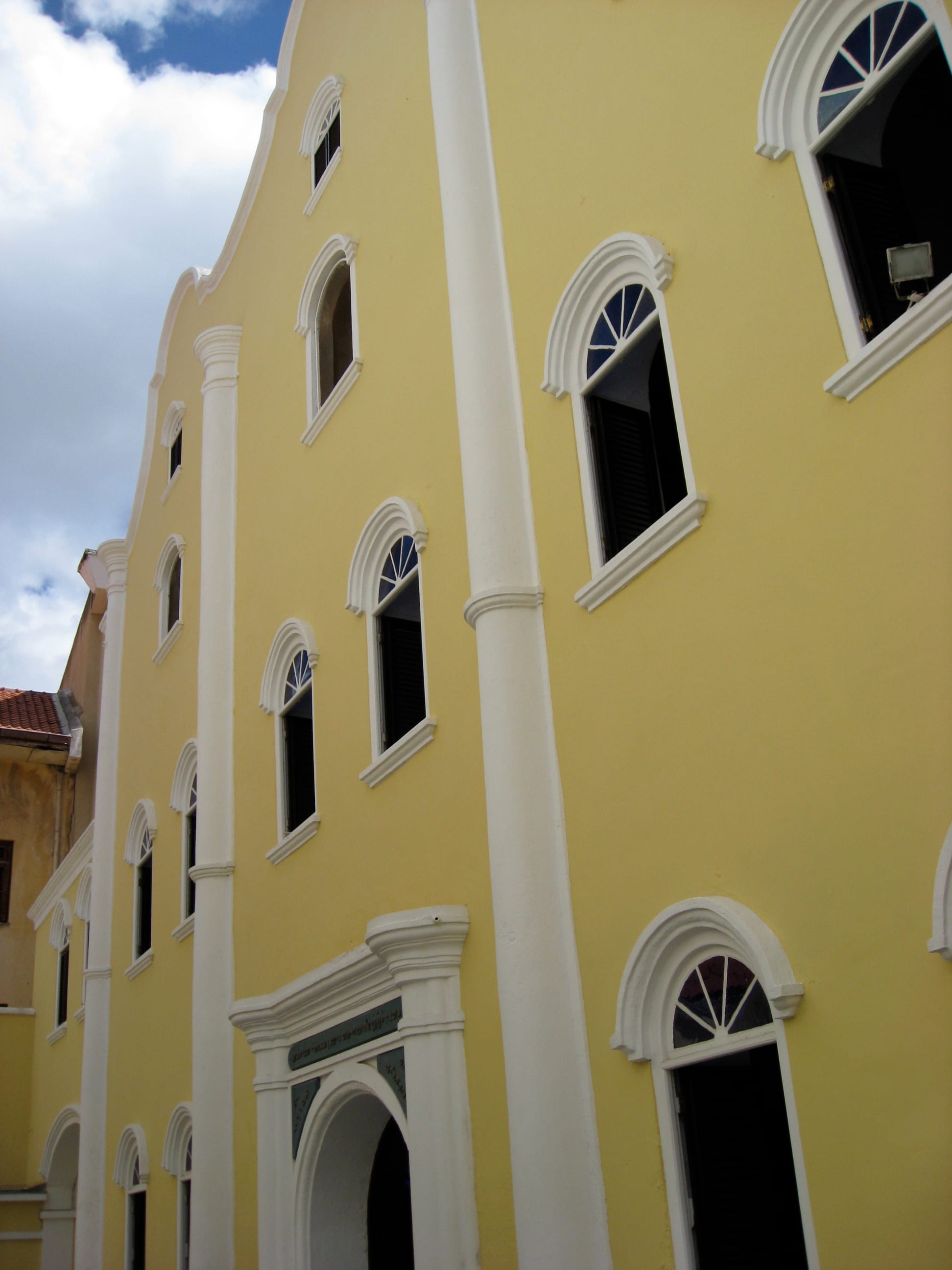
The island is also home to one of the oldest Jewish communities in the Americas. Its congregation traces its roots to Spanish and Portuguese Jews who reached the Caribbean in the mid-seventeenth century, and its synagogue, Mikvé Israel-Emanuel, was consecrated in 1732. It is the oldest synagogue in continuous use anywhere in the Americas, and it still serves a congregation today. Visitors are welcome on weekdays but must show valid identification at the door.
Beneath the church calendar runs an older layer. Montamentu, an African Caribbean religion with roots in the ancestor veneration of the slavery era, reveres Catholic saints alongside African deities, while tambú grew up as festive, non-religious music, dance and song. That African thread, long looked down upon by the colonial authorities and the church, is now openly celebrated as a core part of what it means to be Curaçaoan.
Language is the other pillar of identity. Papiamentu, the creole spoken in most homes, is the language of songs, jokes, sermons and politics, and using it signals belonging in a way that Dutch, English or Spanish cannot. The island's values are communal ones: people look out for their neighbours, share what they have, and expect a certain warmth in everyday exchanges. The figure of the chichi, the eldest sister who holds the family together, is so cherished that it has become a national icon in sculpture.
Greetings and meeting people
Almost every encounter on Curaçao begins with a greeting, and skipping it is noticed. Bon dia is used in the morning, bon tardi in the afternoon and bon nochi in the evening, and they are said on entering a shop or bakery, on reaching a service counter, and even when passing neighbours in the street. Walking past people in silence can come across as strangely cold. The greeting is less a formality than an acknowledgement that the other person matters, and it opens the way for everything that follows.
Visitors are not expected to speak Papiamentu, and English, Dutch and Spanish are all widely understood. Yet a bon dia on arrival or a danki, "thank you", on leaving is almost always met with a smile, and is taken as a sign of respect for the island's culture rather than simply its beaches. Island life also runs at its own pace. Appointments may start later than planned and paperwork can take longer than expected, and visible impatience tends to be read as rudeness. Taking time to acknowledge people and to exchange a few friendly words is part of getting anything done.
Hospitality and being a guest
Hospitality is valued highly, and it centres on sharing. When friends or family gather, food is laid out for everyone present, and there is almost always enough for an extra guest, who is simply expected to join in rather than hang back politely. Declining an invitation to eat can seem stand-offish; accepting a plate is the easier and warmer response.
Sunday is the great day for these gatherings. Many shops and offices close, and families spend the day together at home over a long meal or a barbecue, or at the beach. For visitors, it is a day to plan around rather than a day for errands. Away from gatherings, the island's customs of courtesy carry into public space too: beachwear is kept for the beach, and more modest clothing is expected in town, in restaurants and at places of worship.
Festivals and life's big moments
Carnival is the island's great public celebration, and its organisers' motto, "Karnaval pa un i tur i pa uni tur", means "Carnival for one and all and uniting one and all". The season builds for weeks before Lent, and at its heart is tumba, an upbeat, African-rooted rhythm that has become the island's favourite dance music. Each year singers compete in the Tumba Festival to be crowned Tumba King or Queen, and the winning song becomes the road march, played again and again at parades, jump-in street parties and celebrations throughout the season. There are parades for adults, teenagers and children, so the festivities are shared across generations.
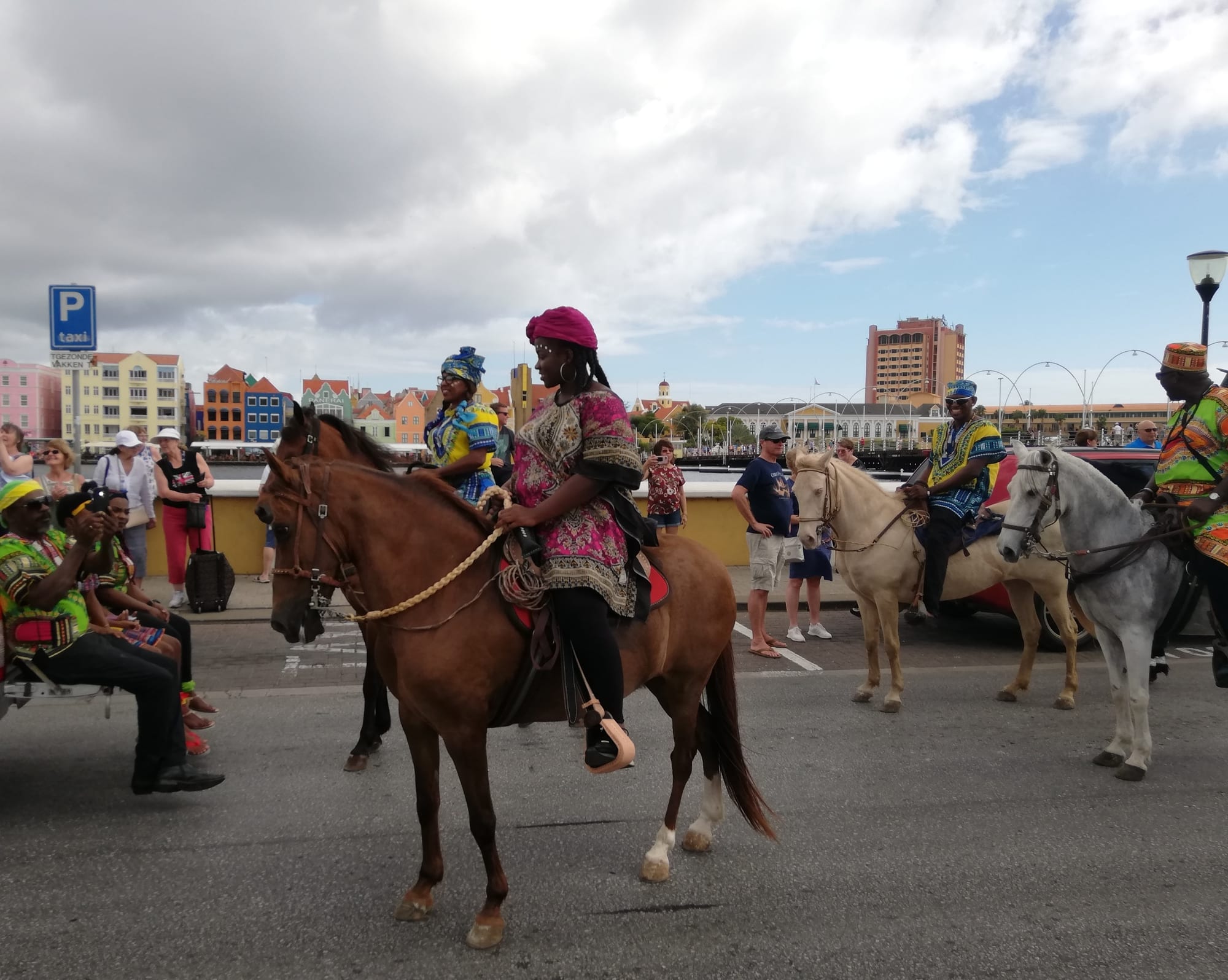
Seú follows on Easter Monday. The parade has been formally organised since 1976, and the season around it includes a song festival whose winner takes the title of Kantadó Mayó and leads the singing, as well as the election of a Reina Seú, or Seú Queen. Schools rehearse their choreography for weeks beforehand, and a growing number of young people take part, adding their own touches to the tradition. Local snacks and sweets are sold along the route.
Two national days carry particular weight. On 2 July, Dia di Himno i Bandera, Flag and Anthem Day, honours the island's flag and its anthem with flag-raising ceremonies, parades and music. On 17 August, Dia di Lucha pa Libertat, the Day of the Struggle for Freedom, commemorates the slave revolt of 1795 and its leader, Tula, who is honoured as a national hero.
The year ends loudly. The days between Christmas and New Year are the traditional season for tambú, when drums sound at gatherings across the island. On New Year's Eve, crowds gather to watch pagaras, enormous strings of firecrackers that can stretch the length of a street, go off in a long, deafening roar as the old year is seen out.
Arts, crafts and music
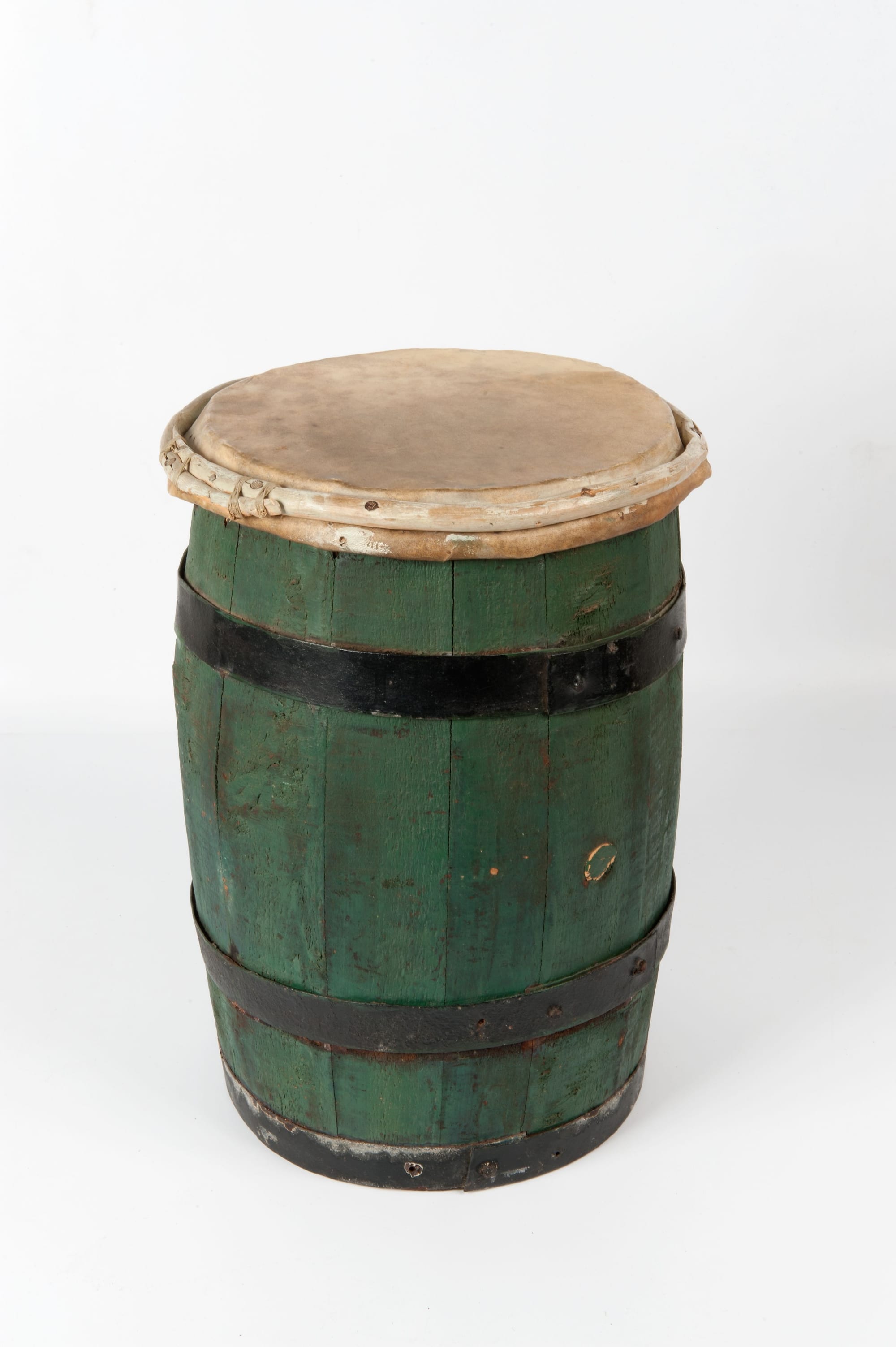
Tambú is often called the Curaçao blues. It began among enslaved Africans as a way to express grief and frustration, and its songs once told of the abuses of plantation life; later they turned to politics and everyday events. A lead singer, male or female, calls out a line and a chorus answers. The tambú drum is accompanied by the chapi, the iron blade of a hoe struck with a metal stick, and other percussion including the wiri and the agan, while bystanders keep time by clapping. Couples dance close to one another, but custom holds that they must not touch.
That history of defiance made tambú a target. Colonial authorities and the Catholic Church campaigned against it, and between 1936 and 1952 its music, dance and gatherings were banned outright. It survived in secret, and even after the ban was lifted, strict permit rules applied to public tambú events until 2012. Some older islanders still regard it with suspicion, but it has been reclaimed as heritage and is listed on the Dutch national inventory of intangible cultural heritage.
Alongside tambú and tumba sits a rich body of labour songs, sung while working in the fields, many of which are still remembered. Seú music, with its graceful wapa steps, carries the same heritage into the harvest parade.
Storytelling belongs to the same African inheritance. Kompa Nanzi, the cunning trickster spider whose stories crossed the Atlantic from West Africa, remains a fixture of childhood, and Het Curaçaosch Museum uses him to guide children through its art collection in lessons written in both Dutch and Papiamentu.
Rural life is remembered at Kas di Pal'i Maishi, a small museum in a traditional adobe house with a thatched roof, which shows how the Afro-Curaçaoan rural population once lived. In a more modern vein, the Chichi sculptures — rounded, brightly painted figures of the big sister who looks after everyone — are handmade and hand-painted on the island by local craftspeople, and have become one of Curaçao's best-known works of popular art.
Dos and don'ts for visitors
- Do greet people with bon dia, bon tardi or bon nochi when entering a shop or passing others in the street.
- Do try a word or two of Papiamentu, such as danki for "thank you"; the effort is warmly received.
- Do accept food when it is offered at a gathering; sharing is the norm and there is usually plenty.
- Do keep beachwear for the beach and dress more modestly in town, in restaurants and at places of worship.
- Do bring valid identification when visiting the Mikvé Israel-Emanuel synagogue, which opens to visitors on weekdays.
- Do expect Sundays to be quiet, with many shops and offices closed for family time.
- Don't photograph people without asking first.
- Don't show impatience when things run late; a slower pace is part of island life.
What to take away
On Curaçao, culture is something done together — a greeting to everyone in the room, a plate shared with whoever turns up, a drum that outlasted its own prohibition — and visitors who join in with the same warmth will find it returned many times over.