Attractions & Natural Wonders · Curaçao
Curaçao: Nine Attractions and Natural Wonders
A row of Dutch gabled houses painted in sherbet colours, a floating bridge that swings open for ships, blowholes on a wild north coast, and a reef you step into from the shore
By Worldlore Editorial · 19 September 2026
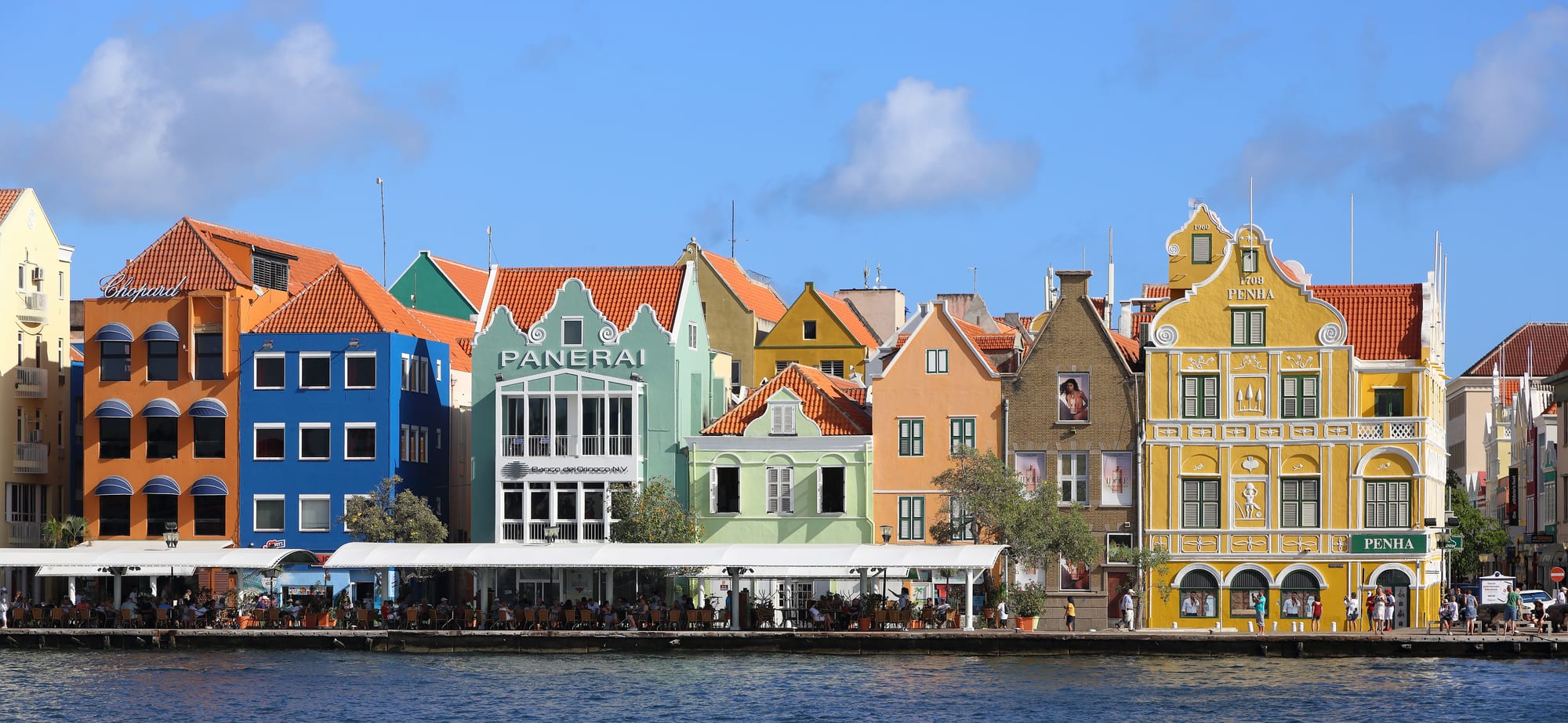
The big island of the ABCs
Curaçao is the largest and most populous of the Dutch "ABC" islands (with Aruba and Bonaire), off the coast of Venezuela. It is drier and less resort-driven than Aruba, with a mixed African, Dutch, Sephardic Jewish, and Latin American heritage, a language of its own (Papiamentu), and a capital that is one of the best-preserved colonial port cities in the Americas. The coast alternates between calm, reef-fringed coves on the leeward side and a battered, cliffy windward shore.
The nine below cover the city, the wild west end, and the sea. It is warm, sunny, and windy year-round, and outside the main hurricane belt.
1. Willemstad
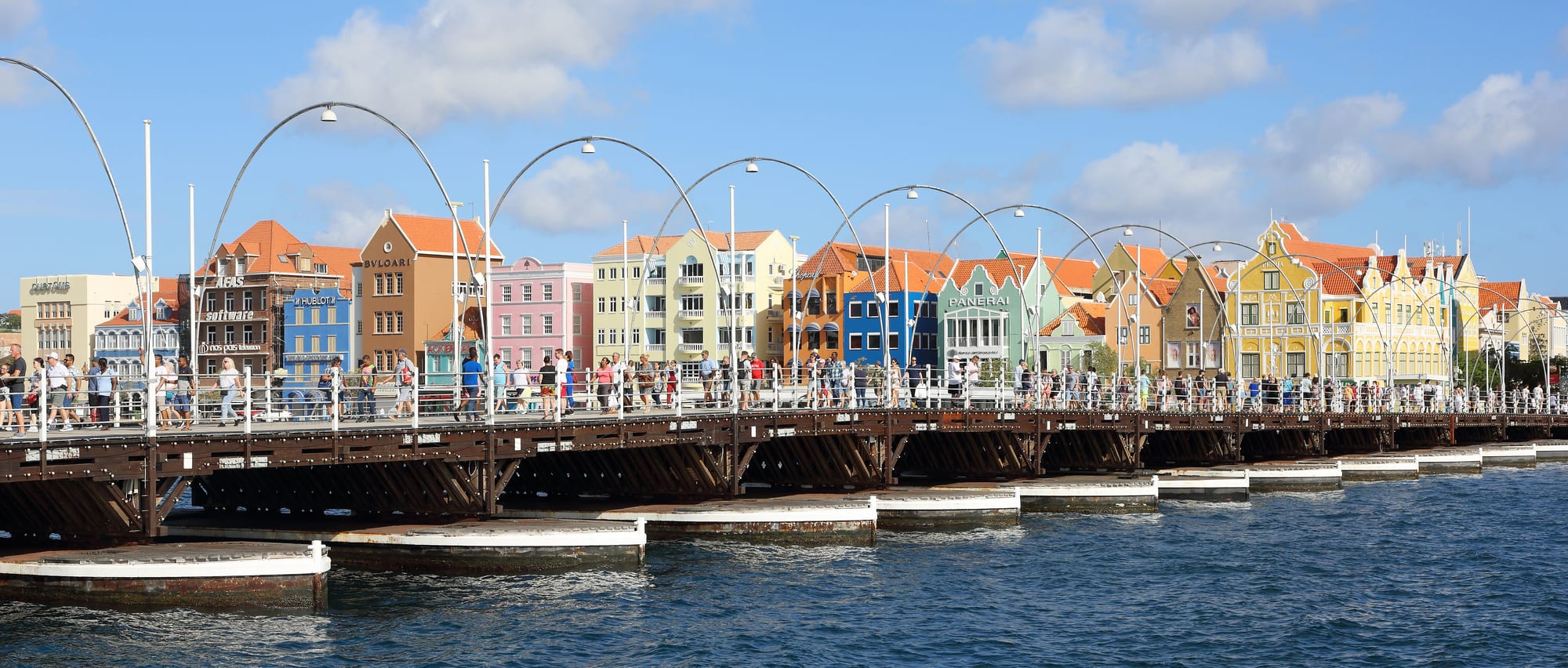
Willemstad is split by a narrow channel — St Anna Bay — into Punda (the old merchant quarter) and Otrobanda ("the other side"). The whole historic centre, with its Dutch gabled warehouses painted in candy colours, is a UNESCO World Heritage Site. In Punda: the Handelskade waterfront, the floating market of Venezuelan boats, and Mikvé Israel-Emanuel, the oldest continuously used synagogue in the Americas, with a sand floor. Linking the two halves is the Queen Emma Bridge, a pontoon walkway that motors open several times a day for ships.
2. Christoffel National Park
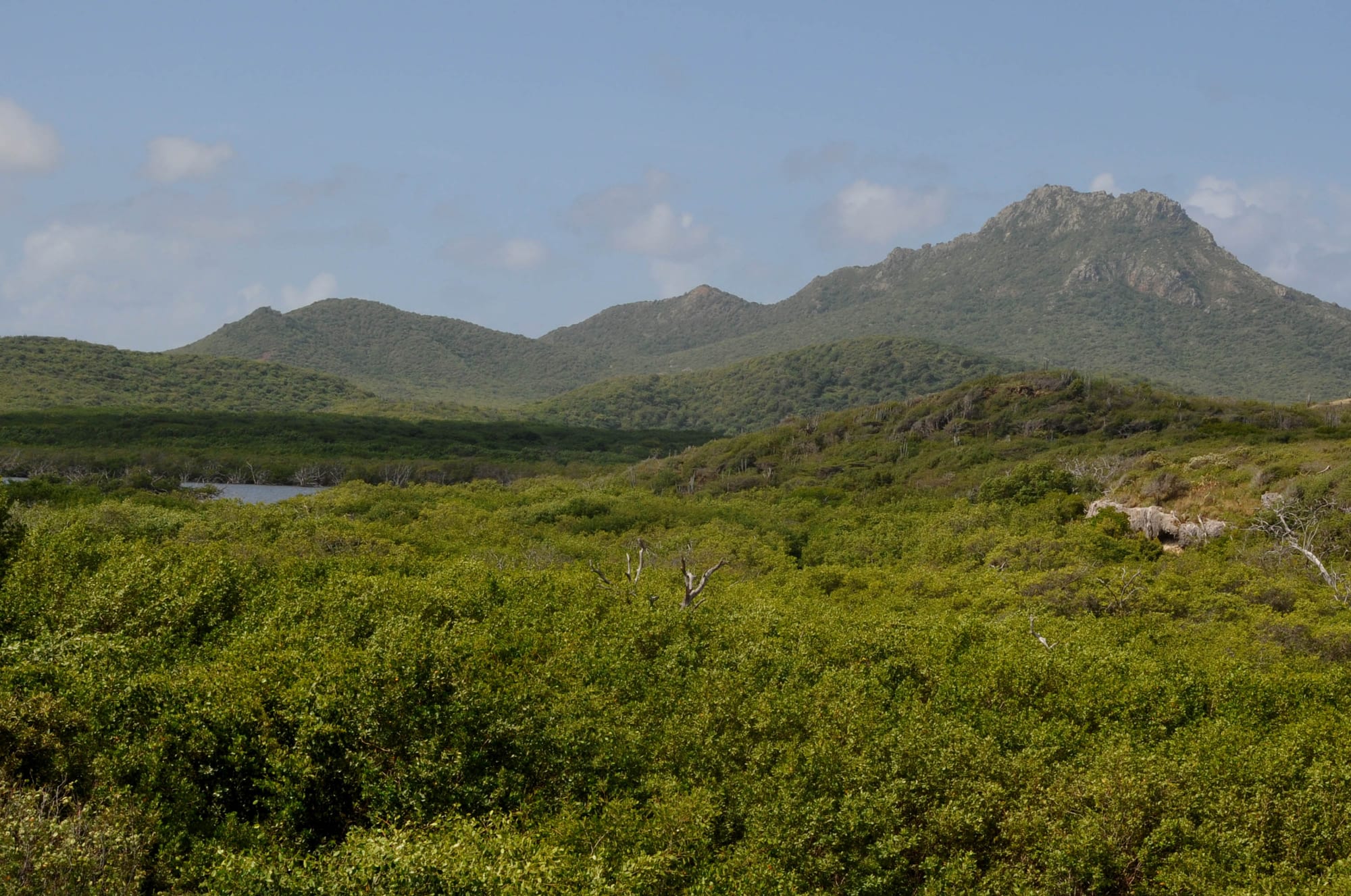
The 20-square-kilometre Christoffel park protects the dry forest and old plantation land of the northwest, rising to the 372-metre Mount Christoffel — a steep, hot two-hour scramble to a summit view over the whole island and, on a clear day, Venezuela. The park has driving loops, walking trails, orchids, the rare Curaçao white-tailed deer, and Amerindian rock paintings at a cave.
Come at dawn for the climb and the wildlife; the park closes early.
3. Shete Boka National Park
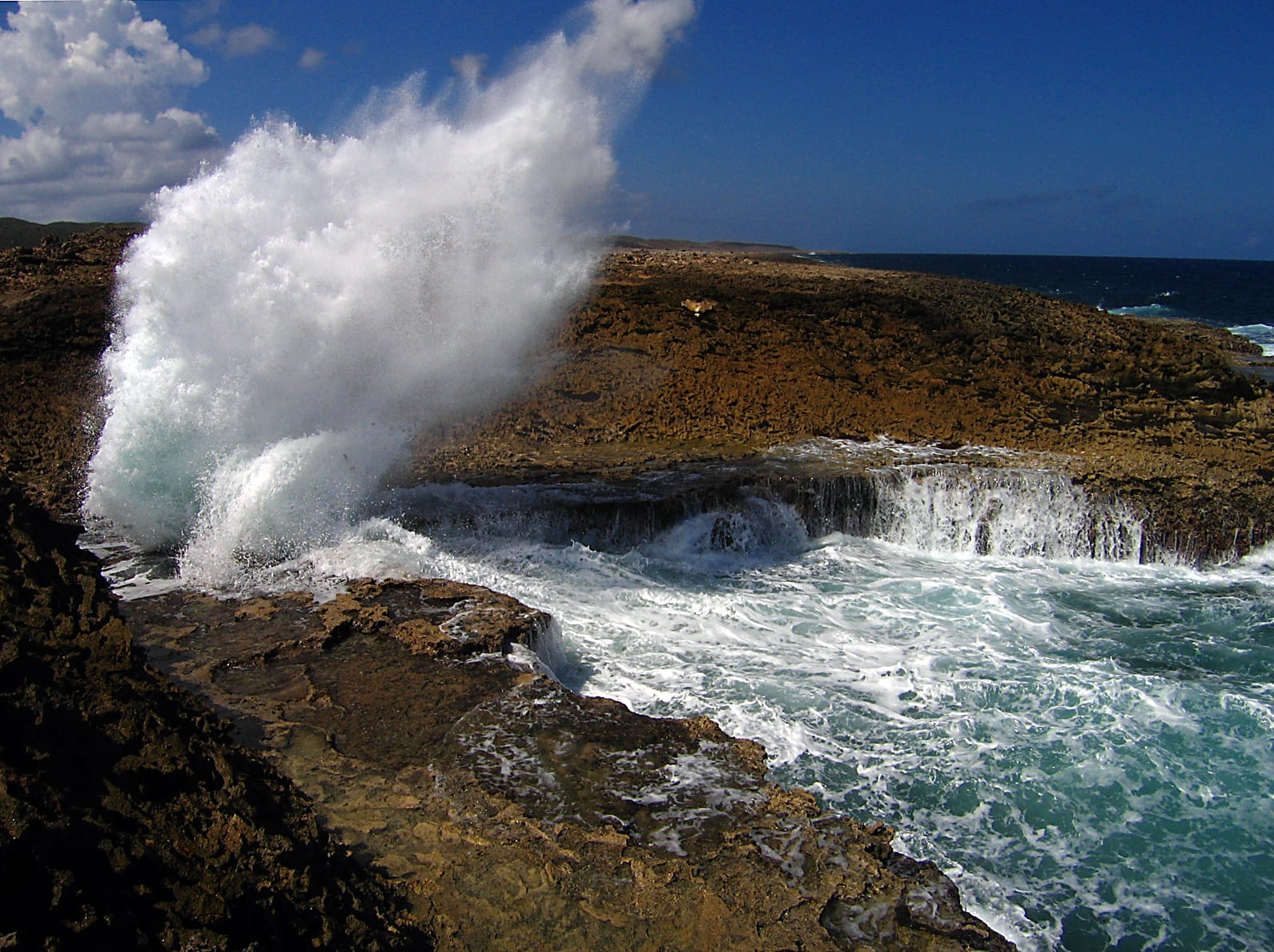
On the wild windward coast next to Christoffel, "Shete Boka" ("seven inlets") protects a stretch of low limestone shore where the Atlantic swell pounds in — sea turtles nest in the coves, and at Boka Tabla you can stand in a cave and feel the whole cliff shudder as waves crash into it. A rough coastal track links the inlets and blowholes.
It is a place for watching the sea, not swimming in it.
4. Grote Knip and the west-coast beaches
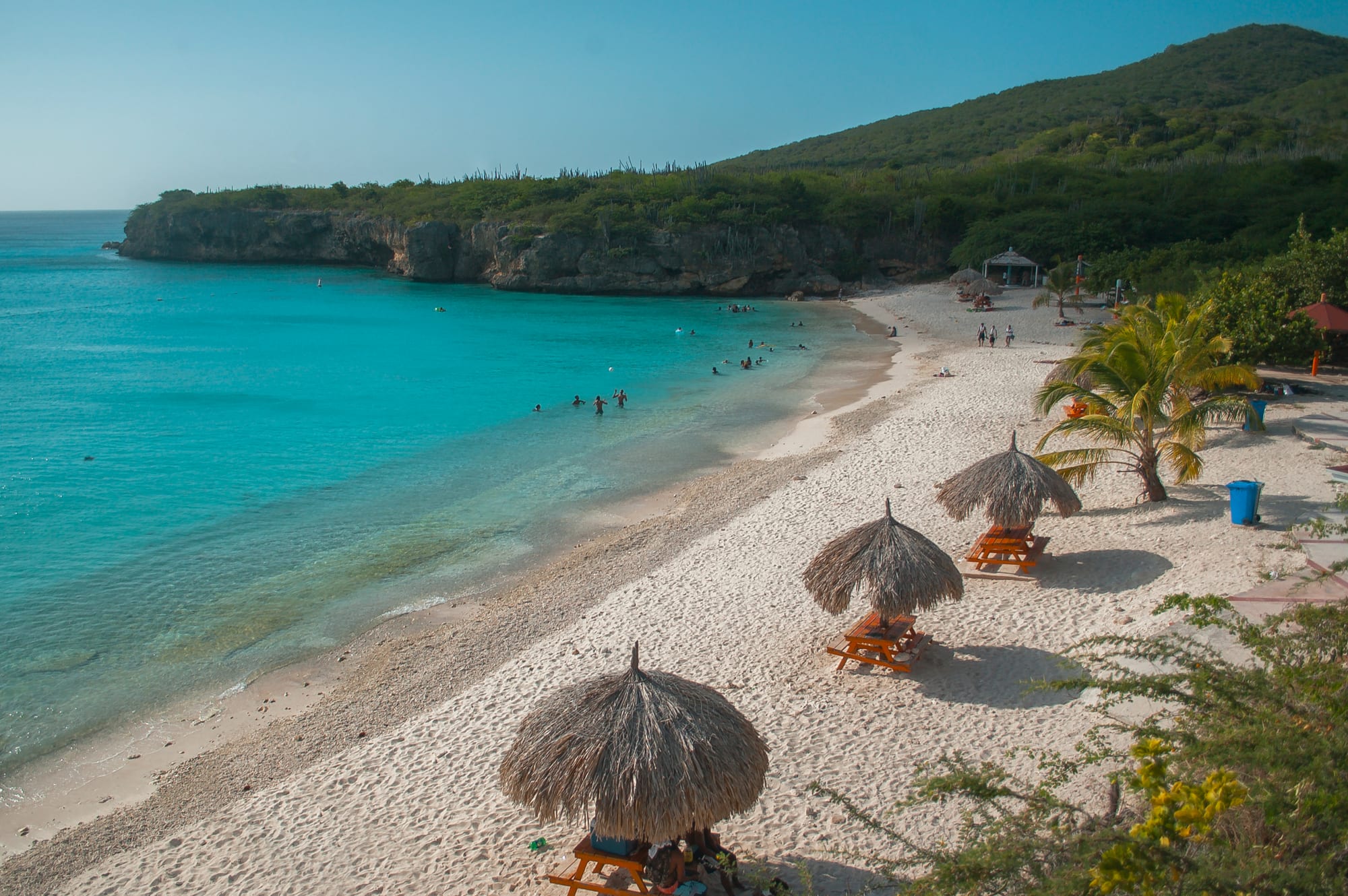
The sheltered northwest coast is where the postcard beaches are — a string of small coves set into the cliffs, most of them free and backed by little more than a snack van. Grote Knip (Kenepa Grandi) has the brightest water and a cliff to jump from; Kleine Knip and Playa Jeremi are quieter neighbours.
Many have a fringing reef right off the sand, so the swimming and the snorkelling are the same activity.
5. Diving and the house reefs
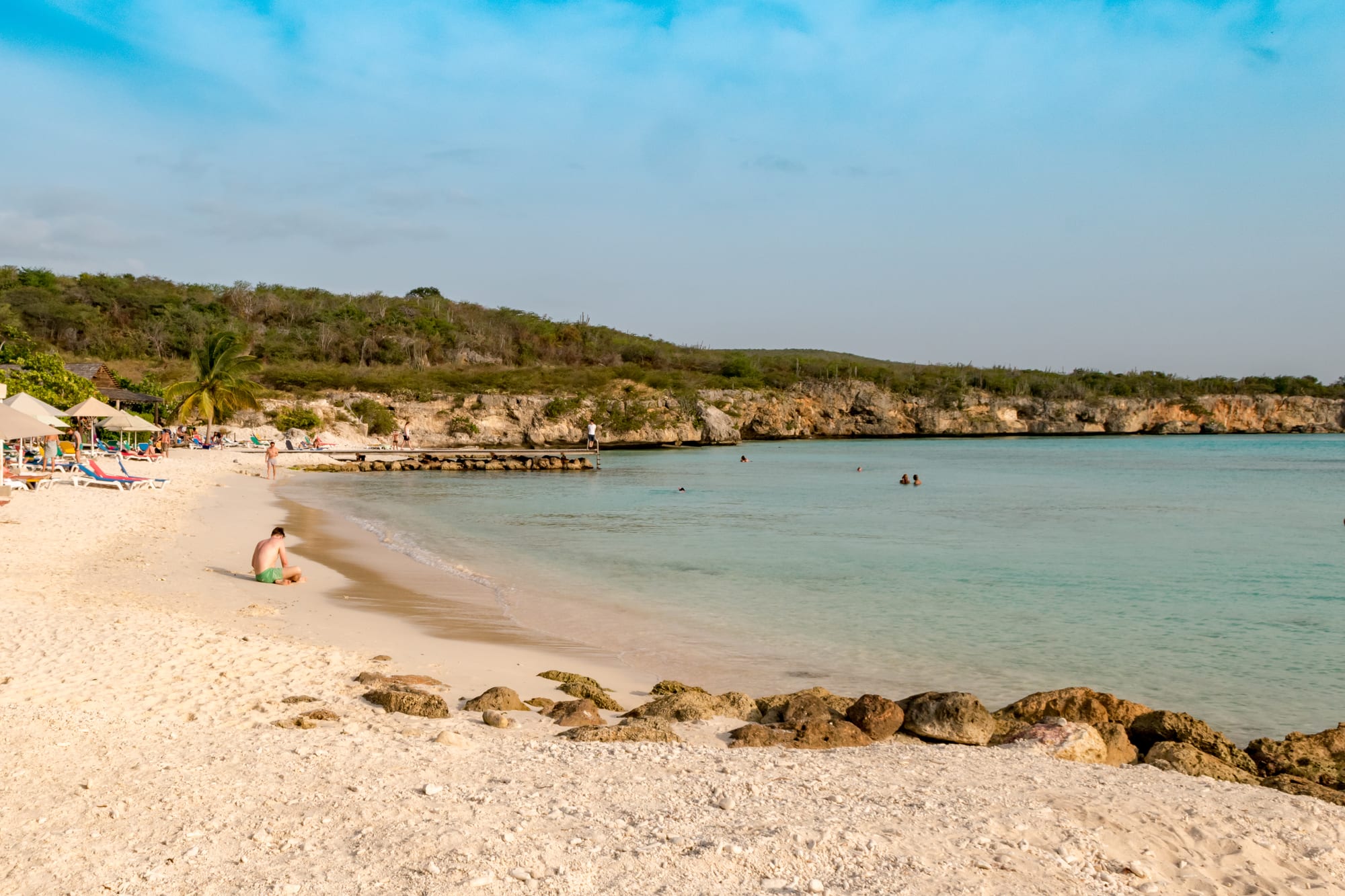
Curaçao is a serious diving and snorkelling destination, and its speciality is shore diving: much of the leeward coast has a reef that starts a few metres out and drops off, so you can gear up on the beach and swim to it. Popular sites include Porto Mari's double reef, the Tugboat wreck at Caracas Bay, and the "Mushroom Forest" of coral pillars in the northwest.
The Curaçao Sea Aquarium, near Willemstad, runs a "dolphin academy" and animal encounters for non-divers.
6. The Hato Caves
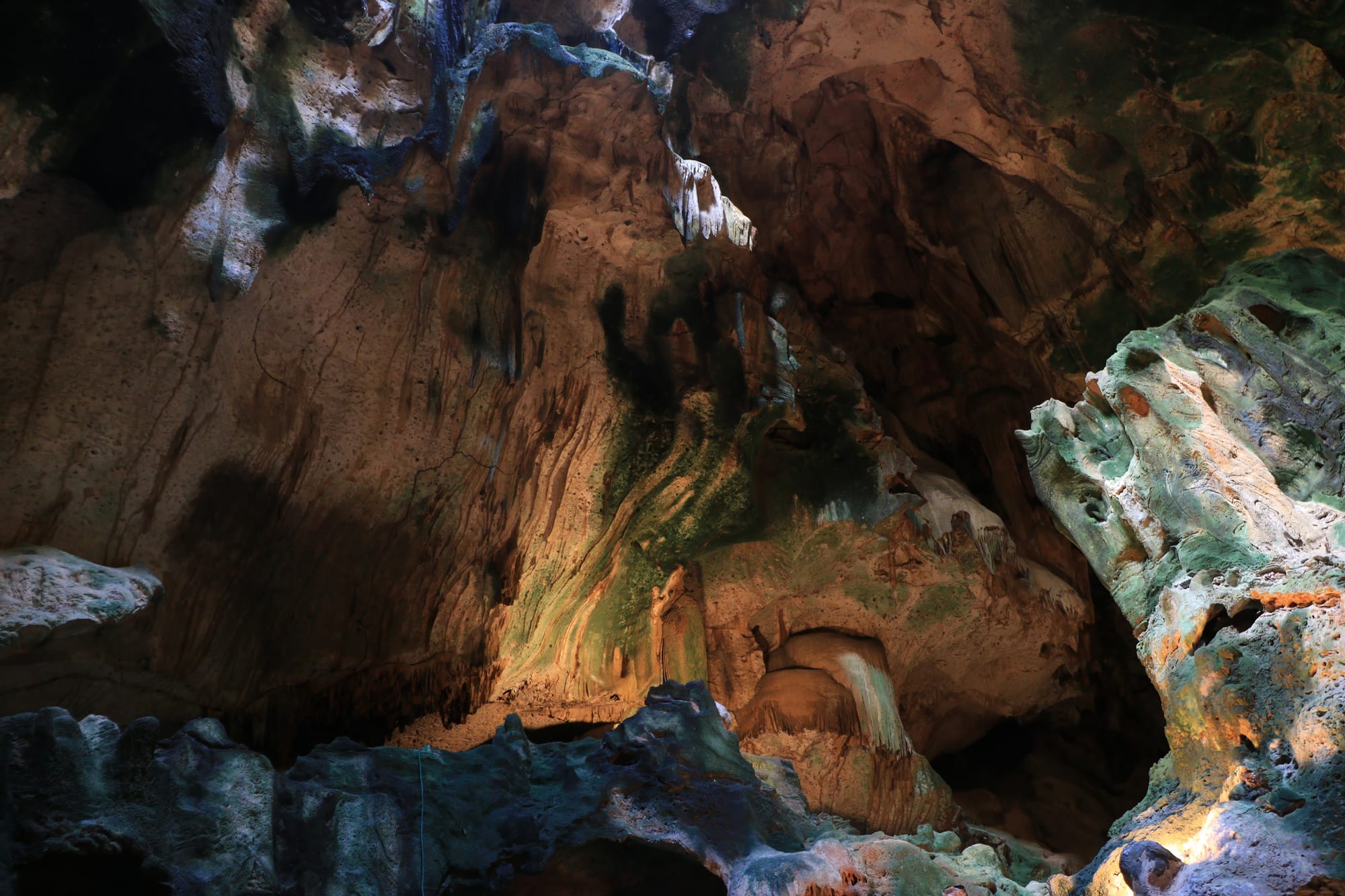
North of Willemstad, near the airport, the Hato Caves are a system of limestone chambers — a former coral reef, lifted out of the sea — with stalactites and stalagmites, an underground pool, a colony of long-nosed fruit bats, and Amerindian rock drawings near the entrance. Guided tours run through the main chambers.
It is an easy stop, often combined with the nearby Kura Hulanda museum in Willemstad, which covers the transatlantic slave trade in unusually direct terms.
7. Klein Curaçao
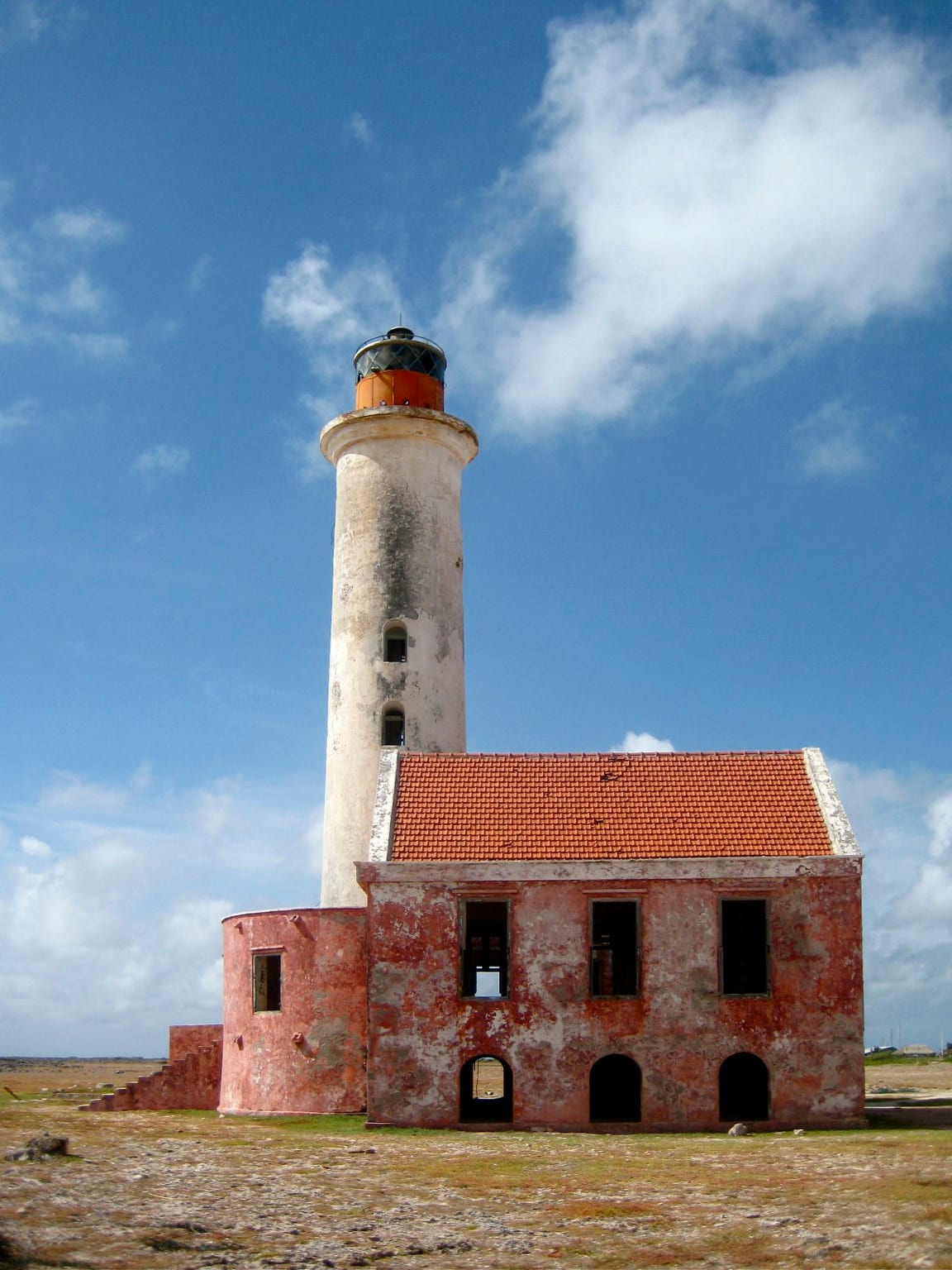
"Little Curaçao" is a flat, barren island about 10 kilometres off the southeast coast, with a fine white beach on its leeward side, an abandoned pink lighthouse, a few shipwrecks, and nothing else. Day-trip catamarans and speedboats run out from the main island for snorkelling, a barbecue lunch, and a few hours on the sand.
The crossing can be rough; sea turtles are often seen on the reef.
8. The Jan Kok flamingos and the salt pans
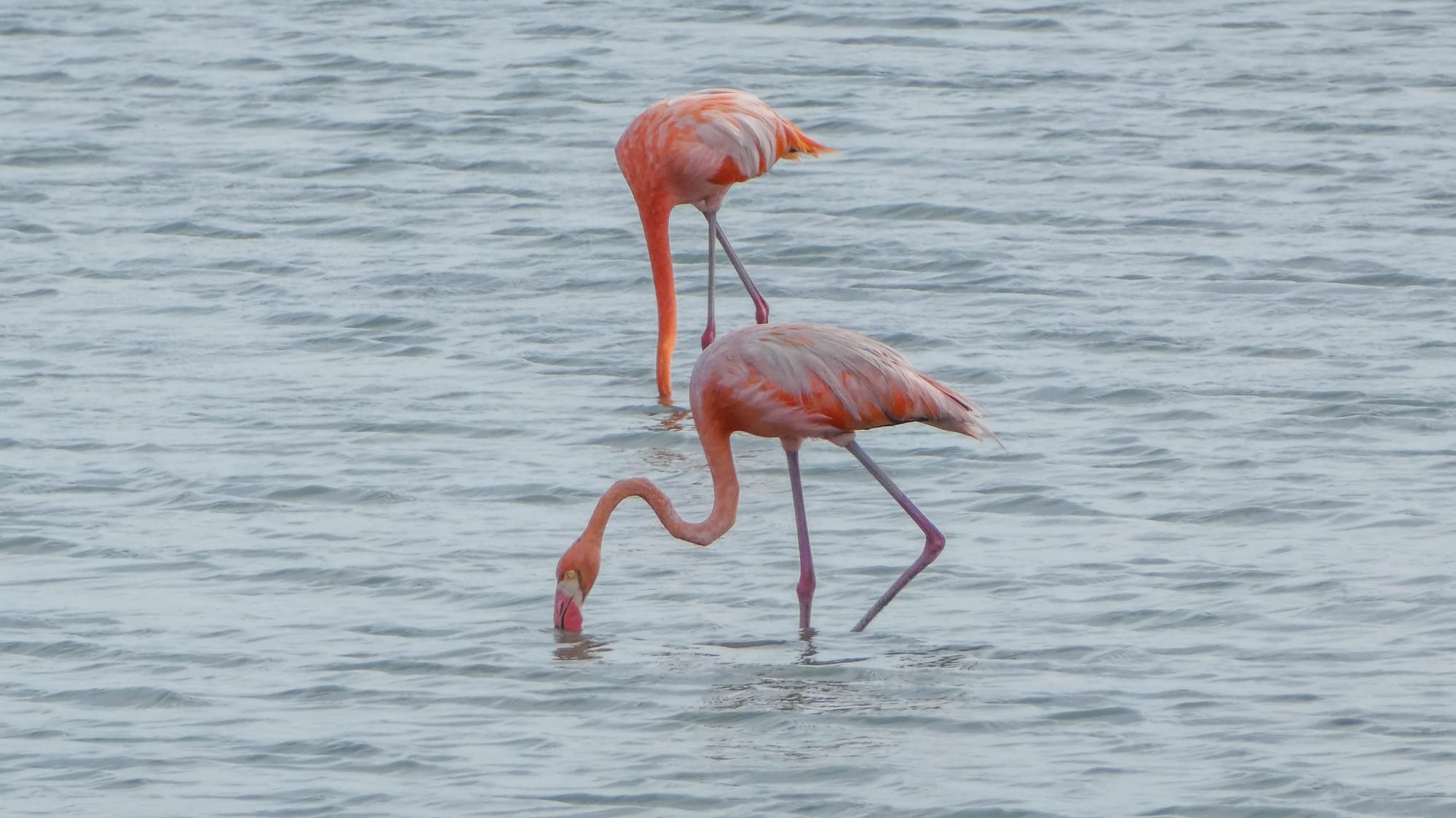
Curaçao's former salt-harvesting lagoons are now feeding grounds for flamingos that commute across from Bonaire. The pans at Jan Kok, on the south coast near Willemstad, and at Sint Willibrordus are the most reliable places to see them, usually in the early morning or late afternoon, feeding in the shallow pink water.
Keep well back — they spook easily and fly off. A historic plantation house (landhuis) at Jan Kok has a bar and a good sunset view.
9. The landhuizen and the interior
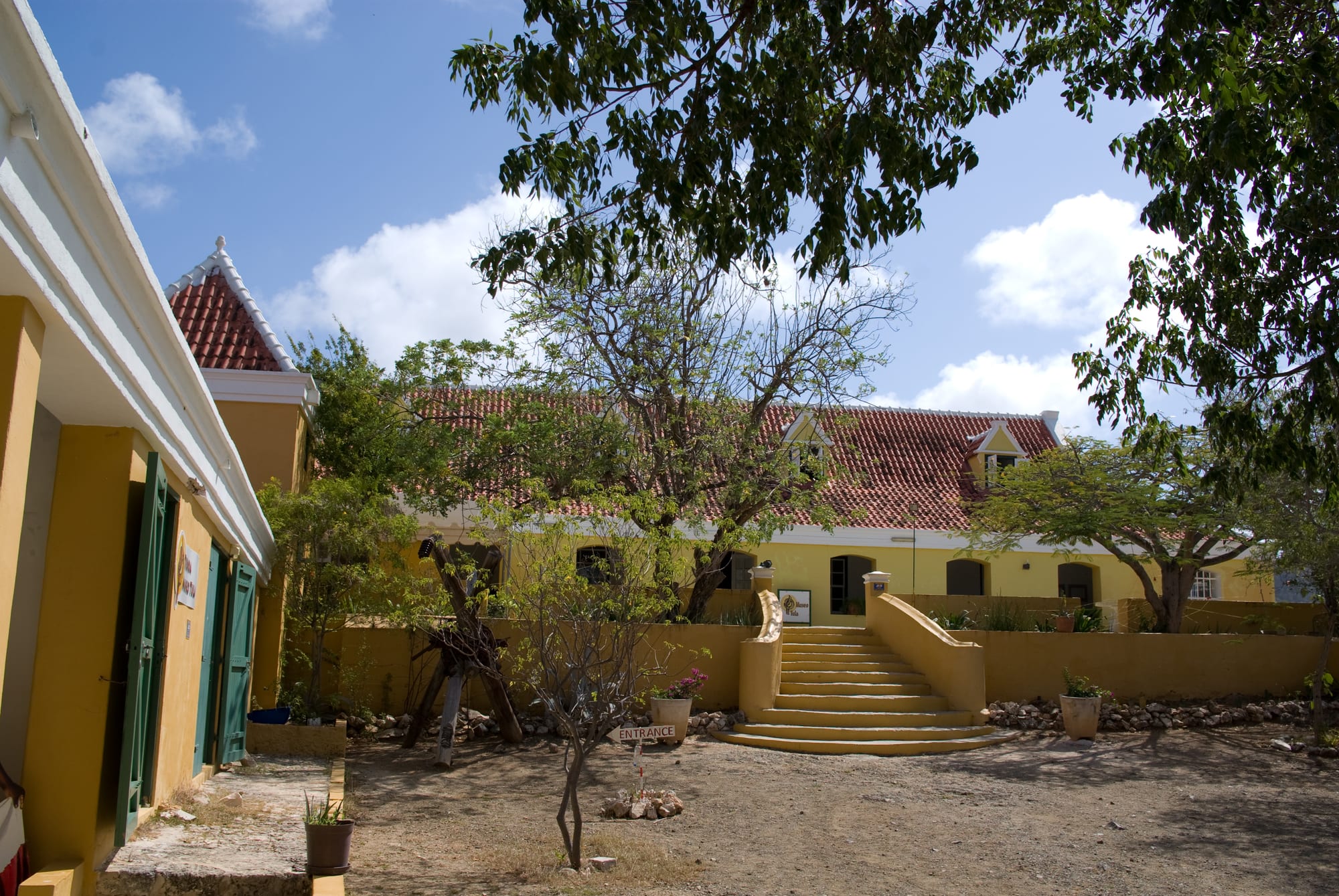
Scattered across the arid interior are dozens of landhuizen, the ochre-and-white manor houses of the old plantations, several restored as museums, restaurants, or galleries — Landhuis Kenepa tells the story of a major 1795 slave revolt that began there. The village of San Juan and the district of Banda Abou have the best concentration.
The interior also has the Christoffel and Shete Boka parks, ostrich and aloe farms, and the Hato Caves — enough for a full day's drive away from the coast.
Curaçao is an easy, self-drive island: a few days in and around Willemstad for the architecture and the reef, and a day or two at the wild west end for the parks and the best beaches.