Culture & Customs · Cuba
Cuba: Saints, Drums and the Ten-Line Verse
Catholic saints who double as Yoruba orishas, a kiss on the cheek and an open door, and a musical inheritance that UNESCO has recognised again and again
By Worldlore Editorial · 30 September 2026
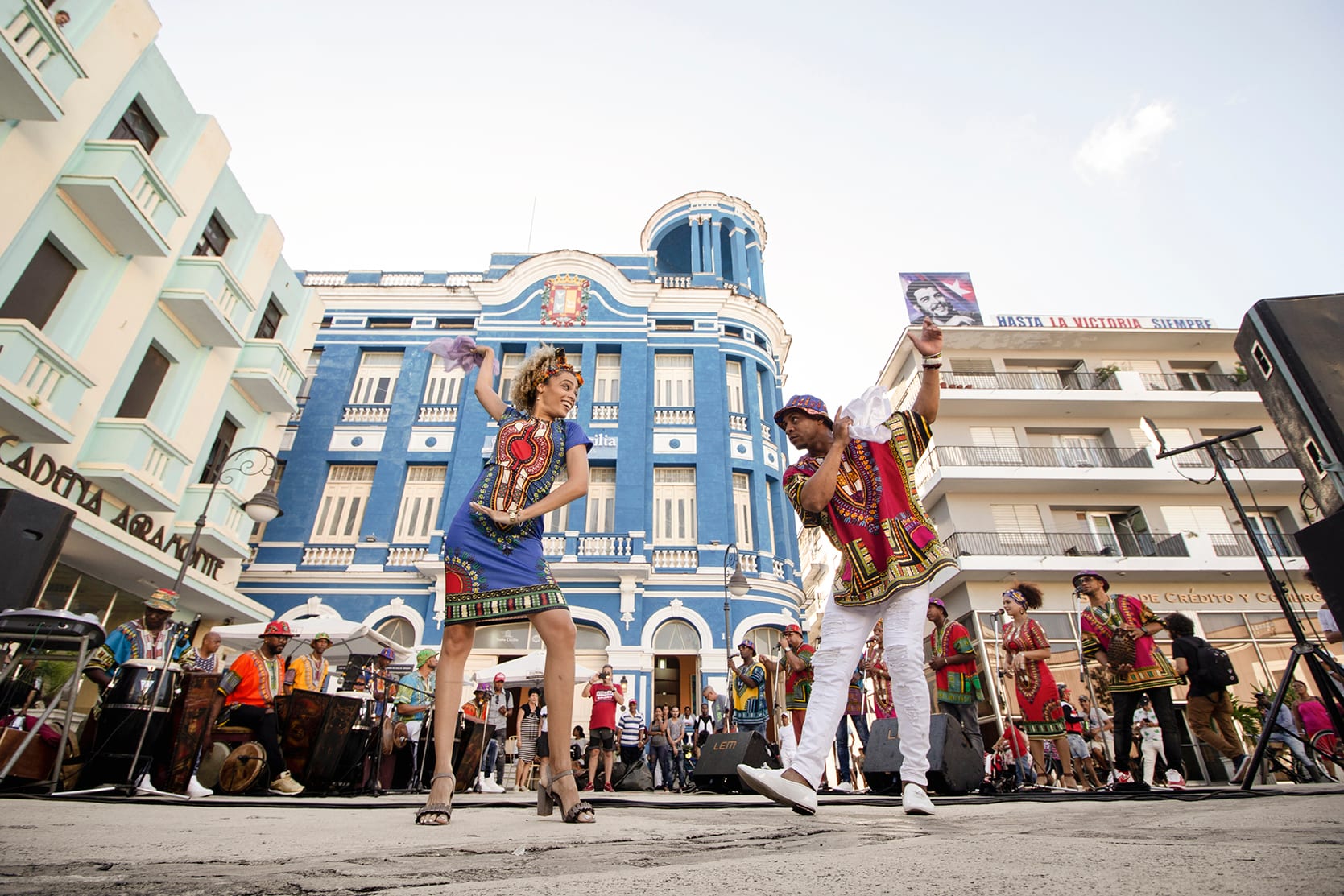
Late in the afternoon, in a courtyard or a street corner, a rhythm starts. It may be played on proper drums, or on everyday utensils from the home or the workplace. A voice rises in a chant, others answer it, hands begin to clap, and a couple steps into the space that has opened up in the crowd, the dancers circling one another with a mixture of grace, sensuality and play. This is rumba, born among the descendants of enslaved Africans in the poorer neighbourhoods of Cuba's port cities, and it holds much of what makes Cuban culture distinctive: African and Spanish roots braided together, a talent for making much out of little, and a conviction that joy is best shared out loud and in company.
Faith, identity and values
Religion in Cuba is layered and hard to count. There is no independent census of religious affiliation; the Catholic Church estimates that around 60 per cent of Cubans identify as Catholic, and Protestant churches, among which Pentecostals and Baptists are thought to be the largest, account for perhaps 5 per cent. Alongside and often intertwined with Christianity are religions with African roots: the Yoruba-derived tradition that outsiders call Santería and adherents often call Regla de Ocha, Lucumí or Orisha worship, and Palo, which draws on the religion of the Kongo. Many people take part in both Catholic and Afro-Cuban practice, and some Afro-Cuban initiations require Catholic baptism, so the two are difficult to separate.
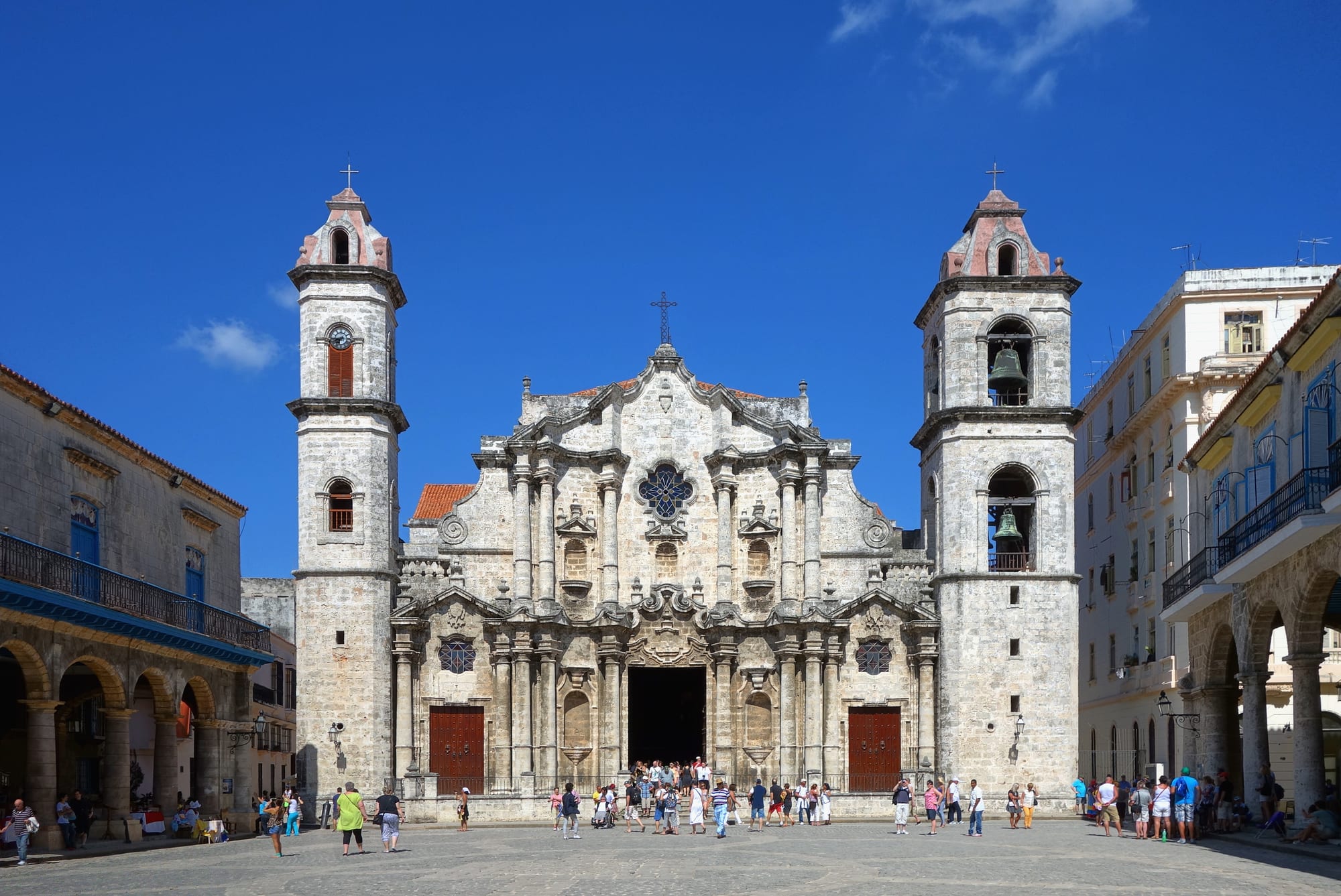
Santería centres on maintaining relationships between people and spiritual beings called orishas. In the colonial era the orishas came to be linked with Catholic saints, which allowed enslaved Africans to keep honouring their own deities under the cover of Catholic devotion. The pairing endures most visibly in the Virgin of Charity of El Cobre, the country's patron saint, whom Santería followers also venerate as Ochún. According to tradition, her small statue was found floating in the Bay of Nipe in 1612 by two Indigenous brothers and an enslaved African boy. Known affectionately as Cachita, she appears in tattoos, street murals and home altars, and as the parish priest of her basilica has put it, it is impossible to talk about Cuba without talking about her. She is a figure who reaches across divisions, revered by Catholics and Santería followers alike, and by Cubans on the island and in exile.
For decades after the 1959 revolution the state was officially atheist, until a 1992 constitutional change made it secular, and Pope John Paul II's visit in 1998 was seen as a sign of a thaw. Protestant missionary activity has increased since the 1990s, and Santería in particular is reported to be gaining followers, with some estimates cited by the Associated Press suggesting that as many as 70 per cent of Cubans practise at least some aspects of it. The US State Department reports that public religious activity remains subject to state approval, and that religious groups continue to describe surveillance and pressure from the authorities.
Beyond religion, Cuban identity was forged in the long struggle against Spanish rule, and Afro-Cuban music and dance became central to how the nation represents itself. Generosity and hospitality are highly valued qualities. Cubans also like to argue, and to argue heatedly, but such arguments are often more performance than conflict, a way of relieving tension; truly serious disagreements tend to be handled with more subtlety.
Greetings and meeting people
Greetings are warm and physical. Men usually greet each other with a handshake, and a kiss on the cheek is the usual greeting with women. Touching as a sign of affection is not taboo, and Cubans are generally comfortable with physical closeness and do not keep up defensive personal boundaries. A friendly greeting with eye contact, and a moment of conversation before getting down to business, is the norm even in official settings.
In more formal situations people start with señor, señora or a professional title and the surname, and move to first names when the other person does. The revolutionary form of address compañero or compañera, "comrade", is still heard in institutions, but it is a word visitors are better advised to leave to Cubans.
Conversation is lively, and it can be loud. Complaining and arguing heatedly are part of ordinary talk, and a raised voice is more often a sign of engagement than of real anger. Music, dance, sport, literature and food are safe and welcome subjects. Direct criticism of the government or the revolution, relations with the United States, and questions about someone's income or access to scarce goods are better left alone unless a Cuban raises them first; curiosity is welcomed, but judgement is not.
Hospitality and being a guest
Cuban hospitality has an open-door quality. In many neighbourhoods houses are not fenced off, doors are left open, and visitors are welcomed as a matter of course. Being generous and hospitable is one of the qualities Cubans value most.
In a country of long queues and chronic shortages, that generosity often comes at real cost to the host, and a meal or even a cup of coffee offered to a guest may represent considerable effort. Invitations are best accepted warmly and appreciation shown openly, while complaints about shortages are best kept to oneself. Once a relationship has formed, a modest gift from home is usually well received.
Many households are large and span several generations, with grandmothers often central to family life and to bringing up children, so a guest in a Cuban home is likely to meet several generations at once.
Festivals and life's big moments
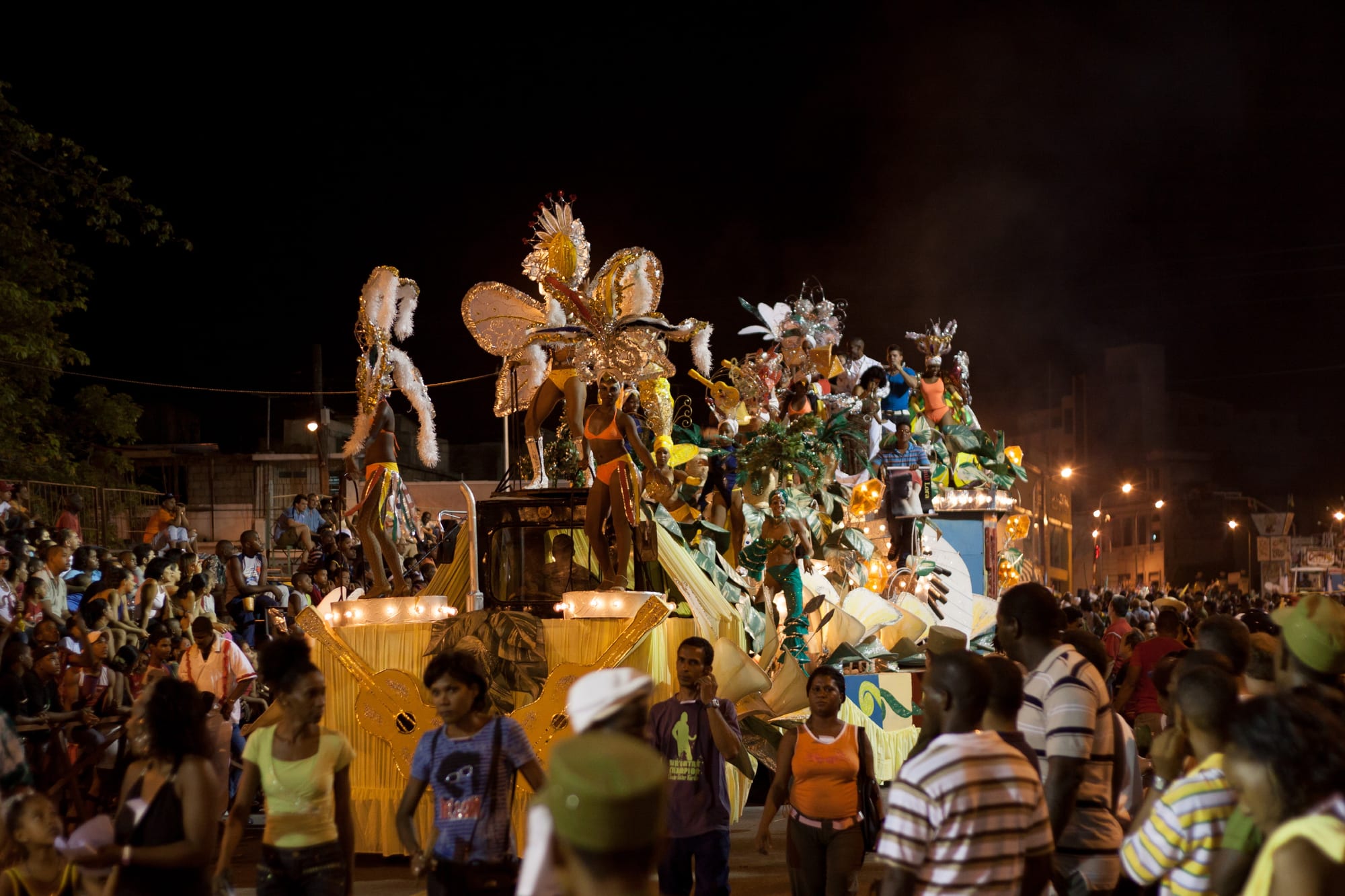
Two dates stand out in the national calendar. The first of January marks the triumph of the revolution in 1959 as well as the new year, and 26 July commemorates the 1953 attack on the Moncada barracks, a date that coincides with carnival, a time of song and dance, outlandish costumes and a great deal of eating and drinking.
The religious year has two great moments of popular devotion. On 8 September, the feast of the Virgin of Charity, thousands of Cubans take to the streets and churches to honour and pray to the patron saint, whom Pope Benedict XV proclaimed patroness of Cuba in 1916 after veterans of the wars of independence petitioned for it. Pilgrims travel to her basilica at El Cobre to ask for health, success and a better future, while in towns across the country her image is carried in procession from churches dedicated to her, followed by crowds bearing bouquets of flowers, though high prices and shortages have made such offerings harder to afford. The feast draws Catholics, followers of Afro-Cuban religions and even some who profess no faith at all.
The second devotion belongs to San Lázaro, the Lazarus of the parable, pictured as a beggar covered in sores with dogs at his feet and crutches under his arms, and venerated in Santería as Babalú Ayé, the orisha who governs illness and healing. From the afternoon of 16 December and through the night, thousands of pilgrims make their way to his national sanctuary at El Rincón, a former leprosarium on the outskirts of Havana, for his feast on 17 December. Many dress in sackcloth or purple and carry purple candles and flowers, and some fulfil promises made in hard times by walking barefoot, going on their knees or dragging themselves along the road. Catholic masses, drums and Yoruba prayers meet at the shrine, one of the great pilgrimages of the Cuban year.
In the centre of the island, the last months of the year belong to Las Parrandas, a festivity that began in 1820 and is now held in eighteen communities and on UNESCO's list of intangible cultural heritage. In each town, two rival neighbourhoods spend the whole year preparing a surprise: floats, replicas of monuments, lanterns, banners and emblems, unveiled on the night amid fireworks, music and dancing. Each side sends "spies" to find out what the other is planning, and everyone takes part, whatever their age, background or profession.
The most celebrated milestone in a girl's life is her fifteenth birthday, the quinceañera, which marks her coming of age. In Cuba the celebration is above all about photographs: families save for professional sessions in which the girl poses in a series of elaborate gowns and outfits, often collected in a printed album. Parties with an opening dance and family gatherings follow where money allows, and some young Cuban Americans now travel to the island to celebrate their quinceañera among relatives there.
Weddings and funerals reflect the country's mix of faith and politics. After the revolution, the state made provision to formalise common-law unions, and marriage is still encouraged. Funerals may be marked with religious imagery or with a secular ceremony honouring the dead person's contribution to society, and Santería holds that the spirits of ancestors live on.
Arts, crafts and music
Few countries have had so much of their music recognised by UNESCO. Son, the tradition that grew from the meeting of African and European music, is built around the tres, a small string instrument that plays a key musical role, and a dance in which the bass guides the dancers' steps. It can be danced with the man leading the rhythm and steps or to set choreography, mixing improvisation with structure, and it is passed on in families, bands and community gatherings as well as in schools and cultural centres. Rumba, heard in the opening scene, is described by UNESCO as an expression of self-esteem and resistance as well as of grace and joy, and it is still learned largely by imitation within families and neighbourhoods. The bolero, shared with Mexico, turns European poetry, African rhythms and the sentiments of the native peoples of the Americas into songs of feeling, sung everywhere from living rooms and serenades to concert halls.
Punto is the poetry and music of Cuban farmers: a singer improvises or recites a stanza of ten eight-syllable lines over a melody played on plucked strings and percussion, either in a free rhythm or to a fixed beat, and contests and festivals keep the art in public view. Houses of Culture across the country run workshops in it, and there is now an official occupational category for its practitioners.
In the east of the island survives La Tumba Francesa, brought by enslaved people who arrived from Haiti in the 1790s. It fuses the music of Dahomey in West Africa with French ballroom dances, played on three hand drums, each hollowed from a single piece of wood, together with a wooden idiophone called the catá and metal rattles. A lead singer calls and the ensemble answers, and the masón dance gently parodies the French ballroom while the yubá is improvised over vigorous drumming. Of the many societies that once flourished, only three community ensembles still keep it alive.
The state has long supported the arts through institutions such as the Cuban Film Institute and the National School for the Arts, and the National Ballet of Cuba, long directed by the ballerina Alicia Alonso, has been publicly funded to keep performances within ordinary people's reach.
Dos and don'ts for visitors
- Do expect a handshake between men and a kiss on the cheek when greeting women, and follow a Cuban's lead on moving to first names.
- Do accept hospitality graciously; it often comes at real cost to the host in a time of shortages.
- Do seek out live son, rumba, bolero or punto, the heart of Cuban cultural life.
- Do remember that many Cubans combine Catholic and Afro-Cuban devotion; treat both with equal respect, especially at El Cobre and El Rincón.
- Do change money at banks or official Cadeca exchange houses, and change only small amounts at a time.
- Don't mistake loud argument for hostility, but leave political criticism alone unless a Cuban raises it.
- Don't complain about shortages in someone's home.
- Don't photograph military areas or installations; this can be treated as espionage.
What to take away
In Cuba, faith, music and conversation all spill into shared space, and a visitor who greets warmly, argues cheerfully and listens closely to the music will find the island's culture very hard to keep at a distance.