Daily Life · Côte d'Ivoire
Côte d'Ivoire: The Maquis Never Really Closes
Grilled fish and cold drinks served at open-air maquis eateries into the night, a packed gbaka minibus as the default way to get across town, and a rural calendar still set by the ripening of the cocoa pod
By Worldlore Editorial · 30 September 2026
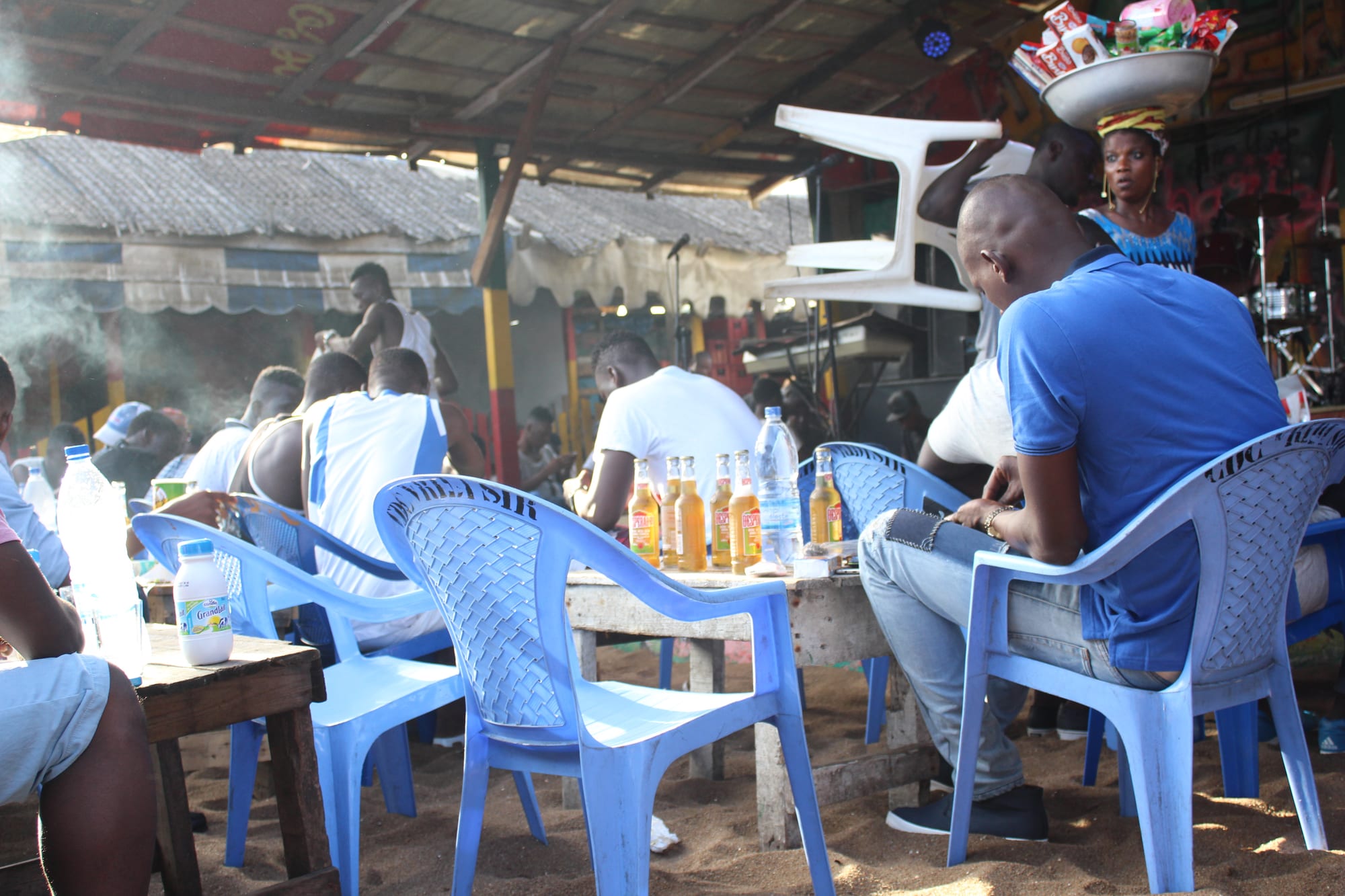
An ordinary day in Côte d'Ivoire starts early and stays busy late. In Abidjan, the country's sprawling economic capital of more than six million people, the morning commute means squeezing into a gbaka minibus or a shared taxi, or crossing the Ébrié Lagoon that splits the city in two. In the cocoa-growing south and west, the day instead follows the farm: tending the plot, drying the beans in the sun, walking the produce to a buying point. By evening, wherever people live, the maquis, an open-air eatery with plastic chairs and a charcoal grill, is where the day is spent unwinding over grilled fish or chicken, often with music playing, sometimes well past midnight.
Family and home life
Côte d'Ivoire's population is drawn from more than 60 ethnic groups plus large communities of migrants from Burkina Faso, Mali, Guinea and elsewhere, so what an Ivorian household looks like varies considerably by region and background. Extended family networks remain important generally, with grandparents, aunts, uncles and cousins often closely involved in raising children. Polygamy was abolished in law in 1964, but older marriages remain recognised and the practice survives in some communities, more often in rural areas than in Abidjan. Housing ranges from dense, informal neighbourhoods and apartment blocks in Abidjan to mudbrick and breeze-block family compounds in rural villages.
Work, school and the rhythm of the day
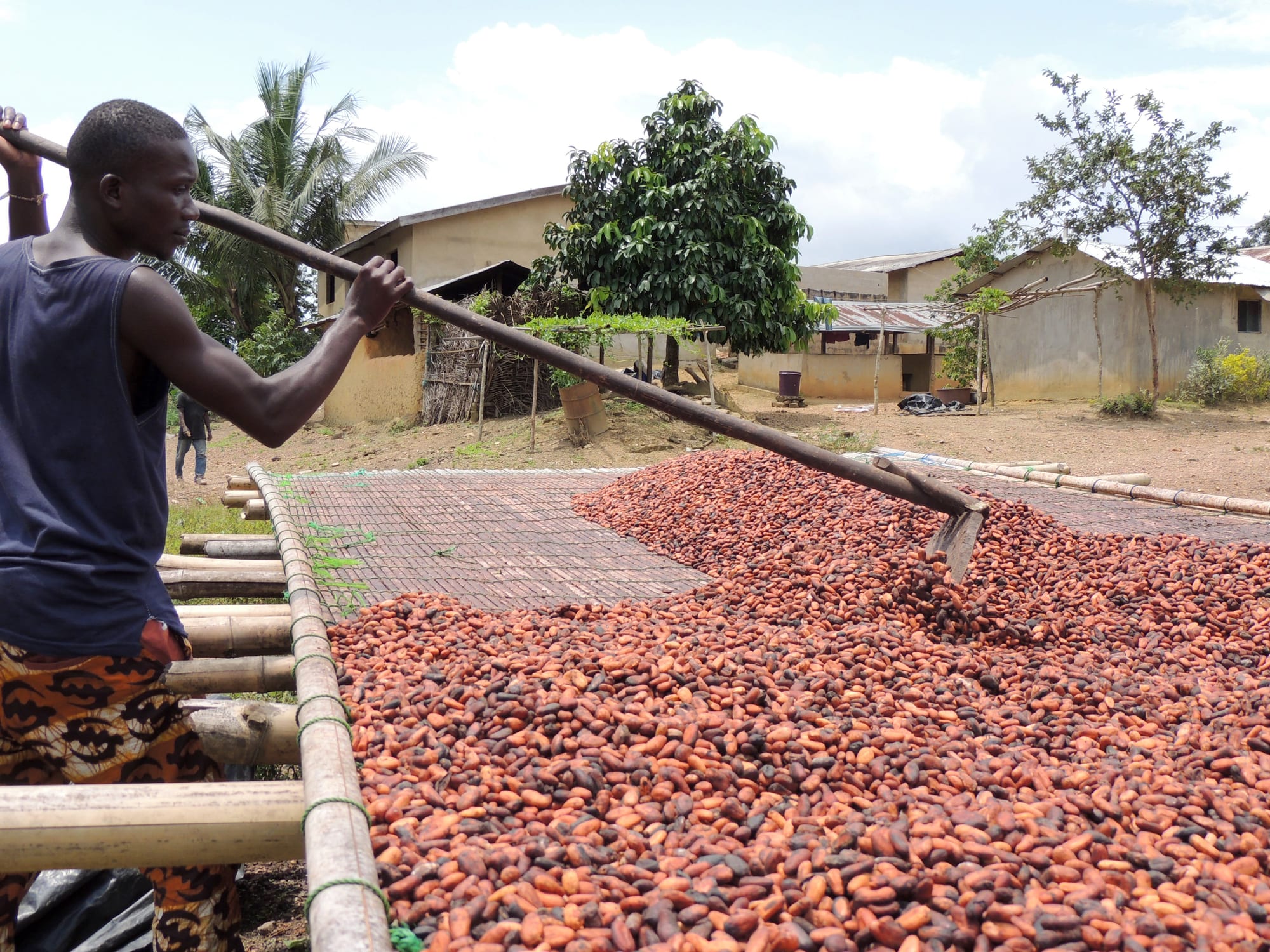
Cocoa shapes the rural economy more than any other crop: Côte d'Ivoire is the world's largest producer, grown almost entirely by smallholders farming just one to three hectares, and the harvest calendar sets the pace of rural life for a large share of the country's farming families. Work on cocoa farms is very often a family affair, with women doing a large share of the physical labour even though men are more often the registered landowners. In Abidjan and the other cities, the economy runs on trade, construction, a growing services sector, and a large informal economy of odd jobs done outside a formal payslip. School follows a system inherited from France and taught in French: six years of primary school, then secondary school leading to a certificate or the baccalauréat.
Community life and public spaces
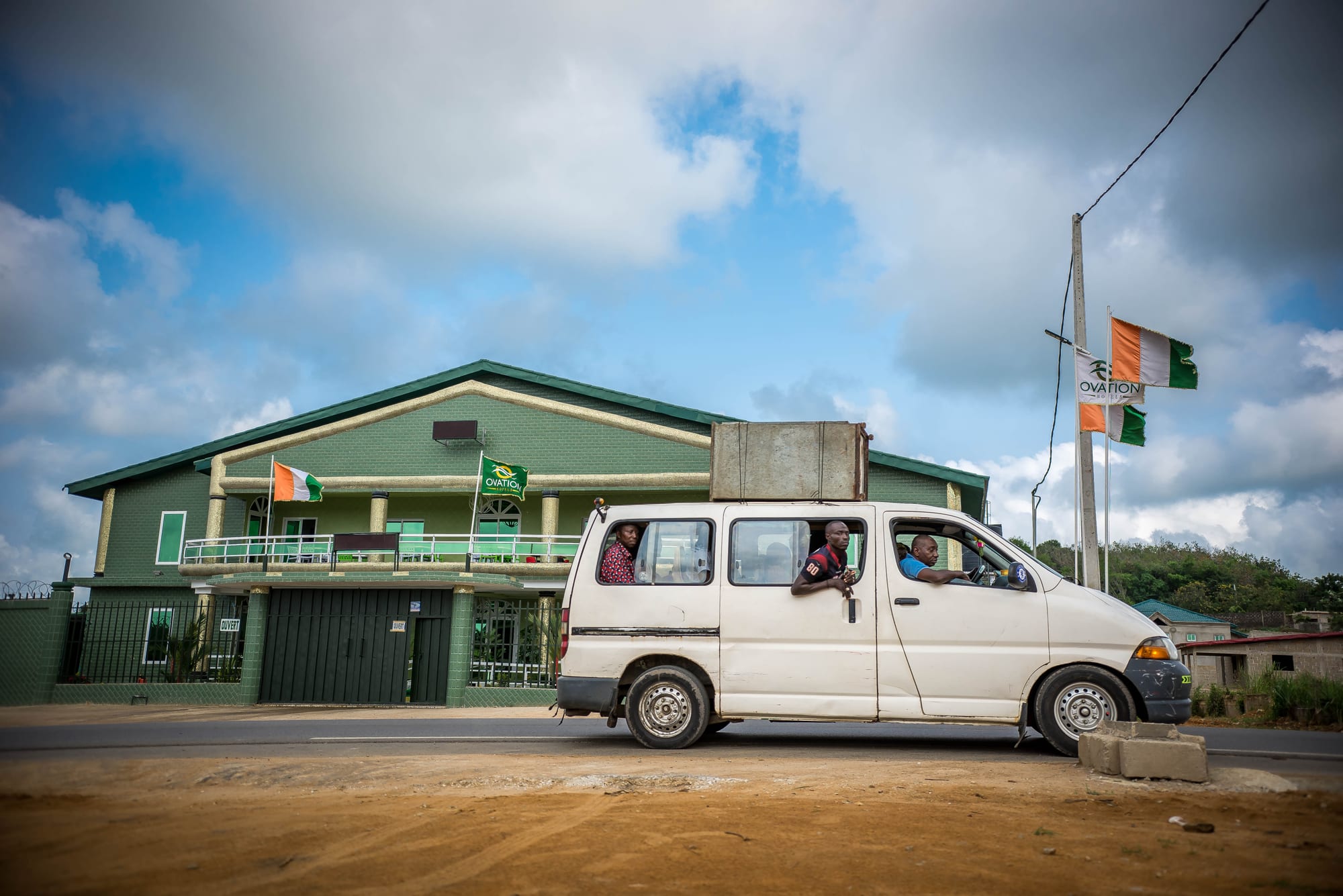
Markets are the everyday hub of trade in every Ivorian town, selling produce, cloth, and prepared food side by side, and in Abidjan, Adjamé's district is home to the country's most important bus station, with buses to every part of Côte d'Ivoire and to neighbouring countries. Getting around the cities means gbaka minibuses, densely packed and running informal routes, along with woro-woro shared taxis and, in Abidjan, boats crossing the lagoon between districts the roads take much longer to connect. The maquis functions as the real neighbourhood common room: often open late into the night, serving grilled food, and often doubling as a place to watch a football match or listen to live music.
Free time and weekends
Football is the country's shared passion, played on any open patch of ground and watched in maquis and at home alike, with the national team's Africa Cup of Nations wins in 2015 and, on home soil, 2023 remembered as genuine national celebrations. Weekends bring family visits, church or mosque depending on the household, and, for those who can afford it, a trip to the beach east or west of Abidjan. Music runs through free time everywhere: the Ivorian coupé-décalé and zouglou styles are played loud in maquis, taxis and homes, not treated as background noise.
A visitor's ordinary day
Cash, in West African CFA francs, is what most transactions actually run on, above all outside Abidjan, and euros exchange most easily. Roads between Abidjan and Yamoussoukro are fast and well maintained, but travel further north or west slows considerably, and police and gendarmerie checkpoints are a routine part of any intercity journey. Gbaka minibuses and shared taxis are cheap and go almost everywhere, though they wait to fill up before leaving rather than running to a timetable, so journeys take patience. A maquis meal of grilled fish or chicken with attiéké, the fermented cassava couscous eaten with almost everything, is an easy, inexpensive way to eat well at almost any hour.
What to take away
An ordinary day in Côte d'Ivoire runs on a handful of durable institutions — the cocoa farm, the gbaka, the maquis that never quite shuts its doors — that carry the country's rural economy and its famously late-running social life side by side.